Plasma is the Most Common Form of Ordinary Matter in the Universe (3 photos)
In classical physics, it is common to distinguish three states of matter, familiar to everyone since elementary school: solid, liquid, and gas. However, in astrophysics and high-temperature physics, this set of concepts is insufficient. 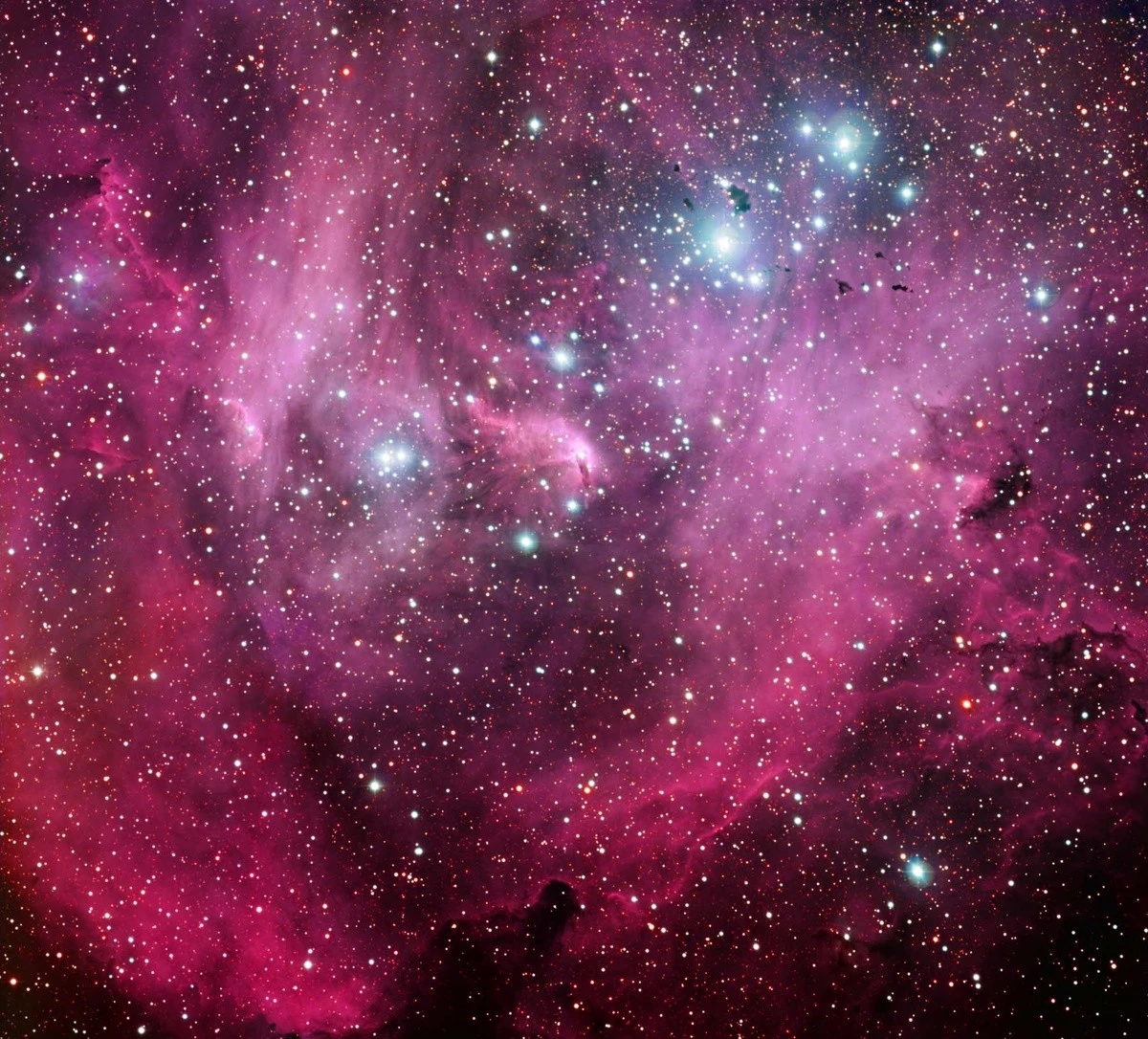
The Chicken Runner Nebula (IC 2944) is a region of active star formation in the constellation Centaurus.
At very high temperatures or under the influence of intense radiation, gas ionizes: its atoms lose some of their electrons, and the matter turns into plasma—an ionized gas containing free electrons and ions.
It is the presence of a large number of charged particles that makes plasma a special form of matter. Unlike ordinary gas, it actively interacts with electric and magnetic fields, and its properties depend not only on temperature and density, but also on how charged particles interact with each other through these fields. This allows plasma to form flows, waves, filaments, and other intricate structures, as its behavior is determined not only by the laws of gas dynamics but also by the action of electromagnetic fields.
Naturally occurring plasma is quite rare on Earth. It is primarily concentrated in the ionosphere—the upper region of the atmosphere extending approximately 60 to 1,000 kilometers above the planet's surface. 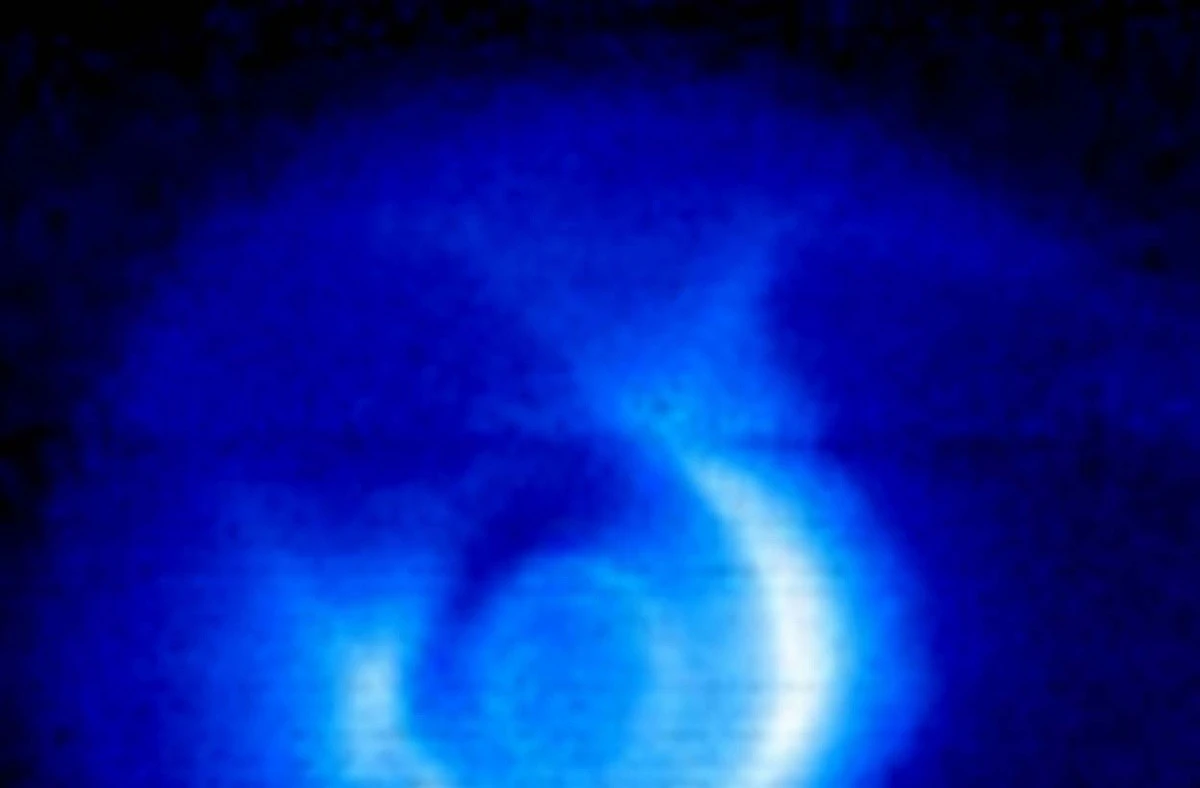
Earth's plasmasphere in deep ultraviolet light: image taken by the EUV instrument onboard the IMAGE spacecraft. The blue glow indicates the relatively cool plasma surrounding our planet.
Here, under the influence of solar radiation, atoms and molecules lose electrons, forming a tenuous plasma shell. Earth's plasma is also generated by lightning strikes, auroras, and some other high-energy atmospheric phenomena.
However, on a cosmic scale, it is plasma—not solids, liquids, or ordinary gases—that is the most common form of ordinary matter. According to modern estimates, between 99% and 99.999% of visible matter in the Universe is in a plasma state. It comprises the Sun and other stars, hot nebulae, stellar coronas, the solar wind, and a significant portion of the interstellar and intergalactic medium.
Plasma plays a particularly important role in stars. At extremely high temperatures, matter there cannot remain as a normal gas: atoms lose electrons, and stellar matter becomes ionized. It is in this plasma environment that thermonuclear reactions occur, which give stars their light and the synthesis of new chemical elements in their cores. Without plasma, neither the Sun itself in its current form nor stellar nucleosynthesis, which gradually enriches the Universe with elements heavier than hydrogen and helium, would exist.
Plasma also underlies many of the processes that determine space weather. Solar flares, coronal mass ejections, magnetic storms, and charged particle flows are all associated with the behavior of plasma and magnetic fields. Therefore, studying plasma is important not only for fundamental science but also for practical applications: the better we understand plasma processes, the more accurately we can predict phenomena that can affect spacecraft, navigation, radio communications, and power systems on Earth. 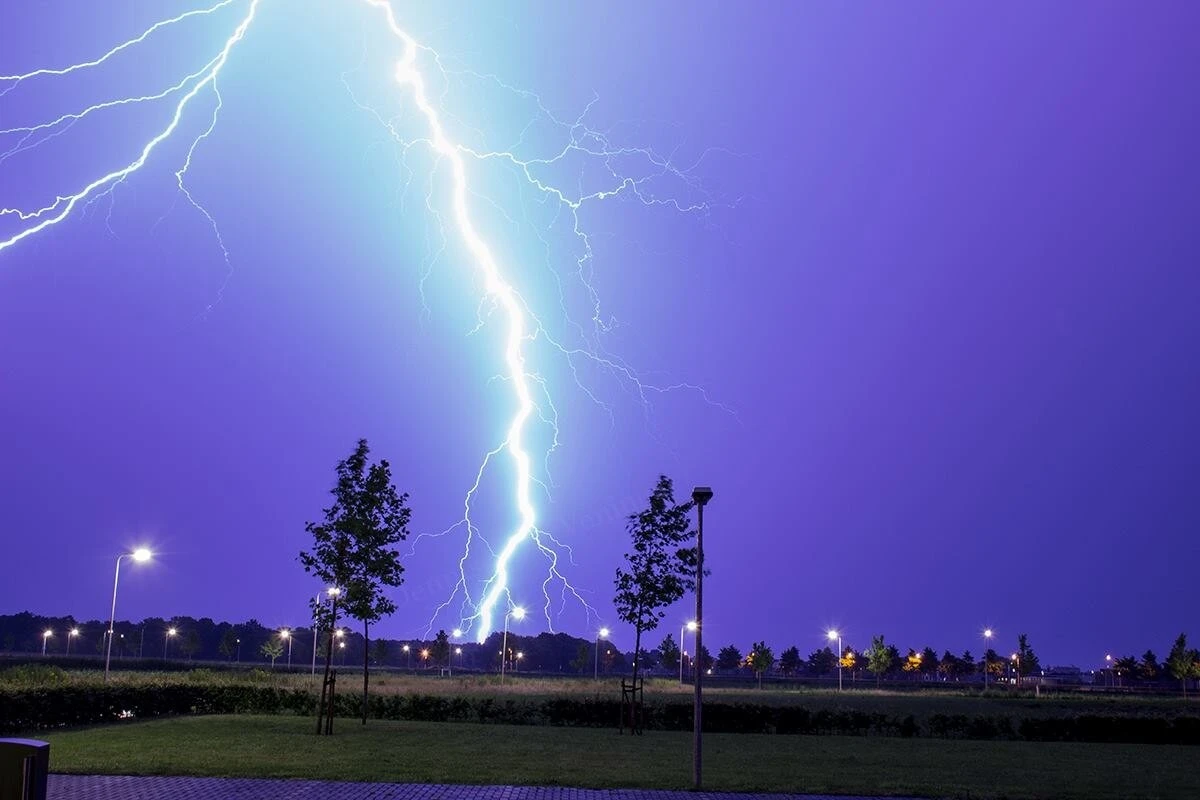
Lightning is one of the most visible examples of plasma on Earth. During an electrical discharge, the air along the lightning channel suddenly heats up, ionizes, and briefly transforms into a plasma state.
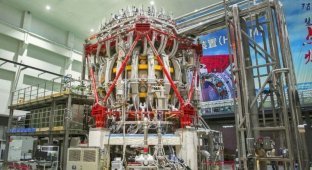
Plasma is not only studied remotely, but has also long been used in terrestrial technologies—from neon lamps and plasma displays to industrial cutters, materials processing systems, and experimental thermonuclear installations.
This creates a curious paradox: we live among solids, liquids, and gases, so they seem to us to be the foundation of the universe. But a broader look at the universe reveals that the familiar terrestrial picture is only a special and rare case. On a cosmic scale, plasma reigns supreme.