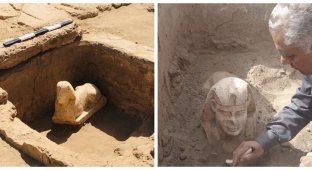
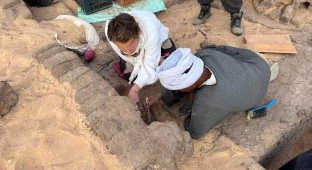
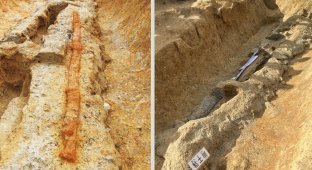
Giza Mirror: Archaeologists are confident they have found a second Sphinx (5 photos)
The history of great discoveries at the Giza Plateau seemed to have ended in the last century. But modern technology proves otherwise: right under the feet of millions of tourists, beneath layers of millennia-old sand, something could be hiding that could revolutionize our understanding of Ancient Egypt. 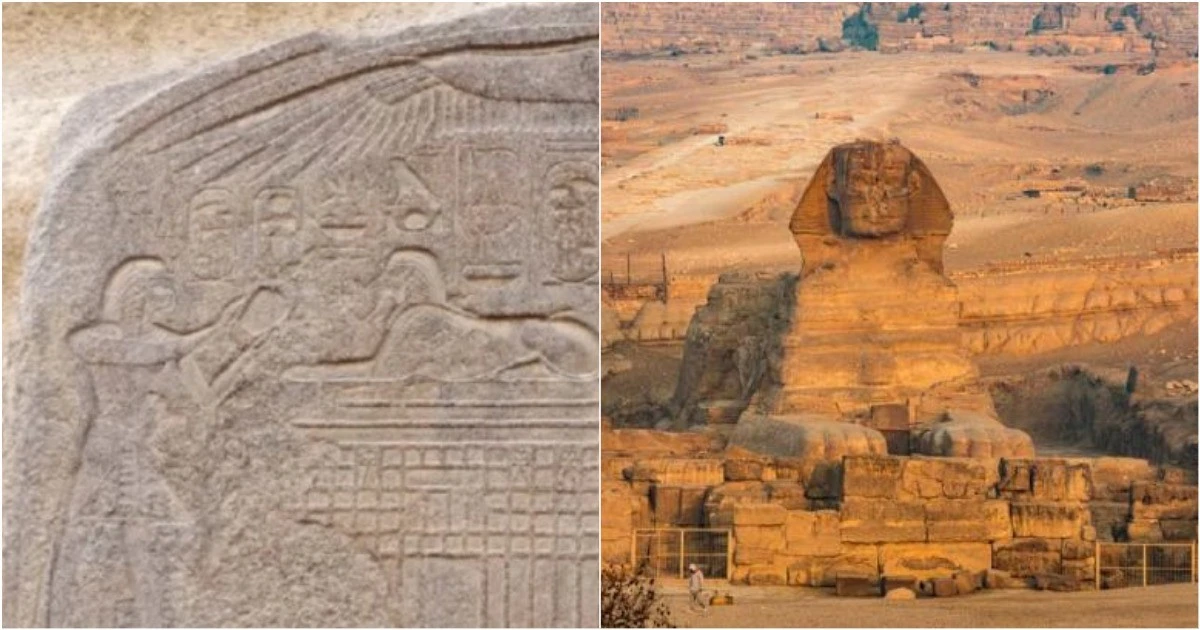
A team of Italian researchers from the Milan Polytechnic announced the discovery of a "second Sphinx," a gigantic monolith hidden beneath a 55-meter-high hill.
The discovery was made possible by the use of satellite interferometry and the latest generation of ground-based ground-penetrating radar. The equipment "punched" the ground in the northwestern part of the plateau, revealing a massive structure of compacted sandstone. The shape and dimensions of the object are virtually identical to the famous Great Sphinx: it is approximately 70 meters long. 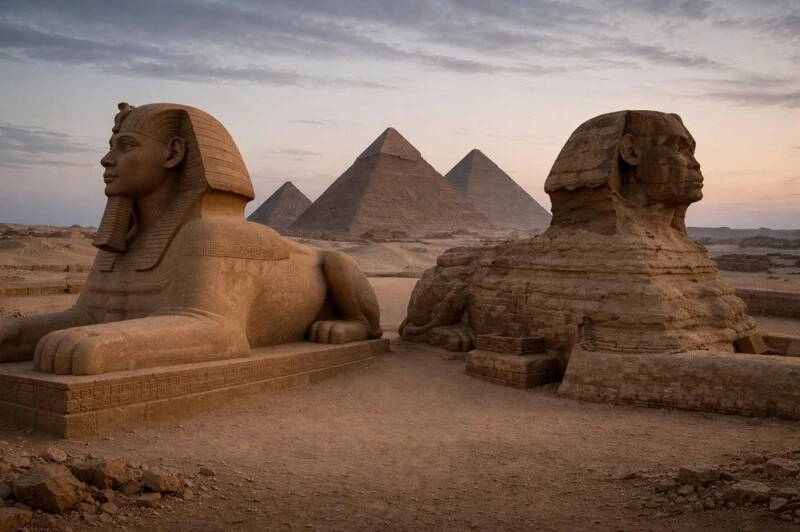
This is what the Sphinxes might have looked like, according to neural networks.
Scientists were particularly interested in internal anomalies. Radars detected a network of vertical shafts and horizontal passages that remarkably duplicate the structure of the voids beneath the paws of the already known Sphinx. This suggests that both monuments are part of a single, larger underground complex, which has remained untouched until now. 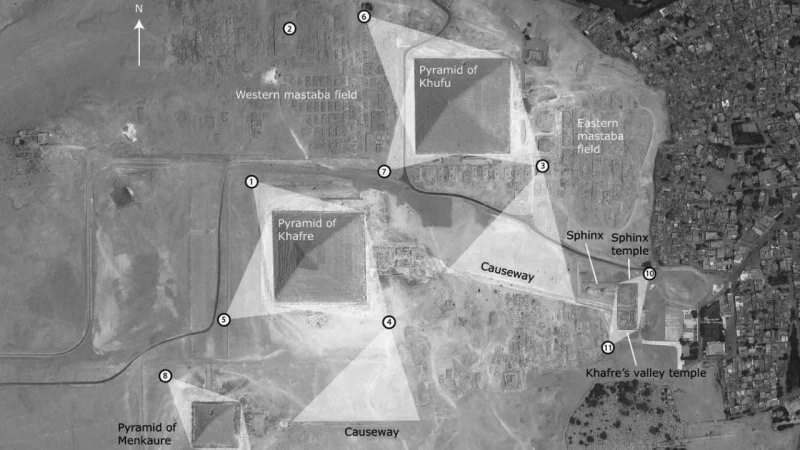
Aerial photograph of the Giza plateau with annotations, pyramids, and the Sphinx.
For older Egyptologists, the idea of a "second lion" long seemed superfluous, but Italian experts point to a fundamental principle of the ancient Egyptian worldview: dualism. In Egyptian mythology, the lion deity was often represented in a pair: Aker (the lion of yesterday) and Ruti (the lion of tomorrow). One looked east, greeting the dawn, the other gazed west, watching the sun fall below the horizon. 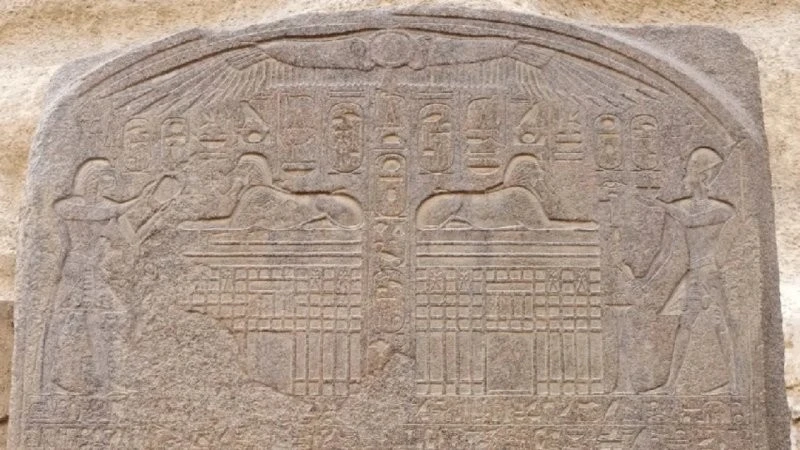
Corresponding fragment of the Dream Stele of Thutmose IV (c. 1400 BC)
Researchers found material confirmation of this theory on the famous "Dream Stele" – a granite slab installed between the paws of the Great Sphinx. Upon close examination, two mirror-image Sphinxes are clearly visible. For a long time, this was considered merely an artistic device symbolizing the unity of Upper and Lower Egypt, but today scholars are inclined to see it as an accurate topographic map of the plateau. 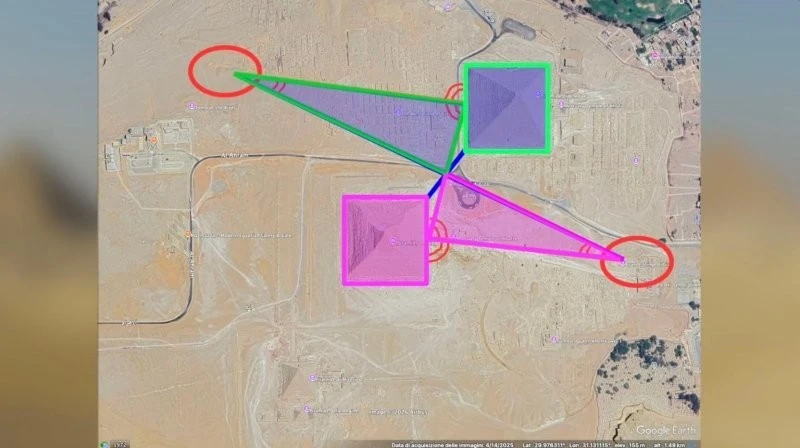
The images show supposed parallels between the Great Sphinx and its supposed underground twin.
At this point, researchers estimate the probability of their discovery at 80%. The final decision rests with the Egyptian Ministry of Tourism and Antiquities. Scientists have already requested permission to conduct micro-drilling, which will allow them to lower a camera probe into the discovered voids.
If Egyptian authorities give the green light, we could witness the largest archaeological event of the 21st century. Opening the hill will either confirm the mirror image theory or grant us access to that legendary "Hall of Records," the existence of which mystics and historians have debated for centuries. For now, we can only watch as modern science slowly but surely lifts the veil of secrecy from the last wonder of the ancient world.