Frog crab: a creature between a crayfish and a crab (11 photos)
Yes, yes, that's exactly it. All the oddities of the frog crab's appearance—except, perhaps, the color of its shell—are explained by the fact that this arthropod is smoothly transitioning into a completely different group of crustaceans. And, apparently, quite successfully! 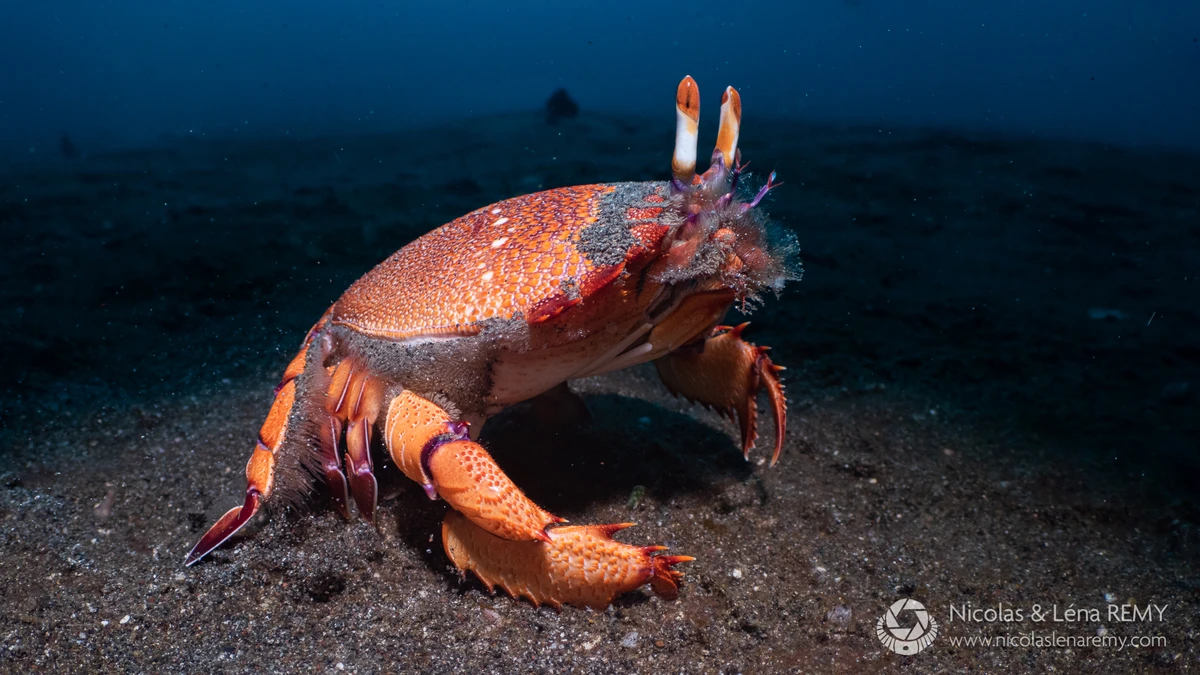
You're going the wrong way! Your evolutionary line of development is in the wrong direction!
See for yourself: a normal crab looks like a shell on legs, the width of which is either equal to or greater than its length. It's round or oval, in short. But the crayfish is fundamentally different. Its cephalothorax is very elongated, and it also has an abdomen, often very massive. 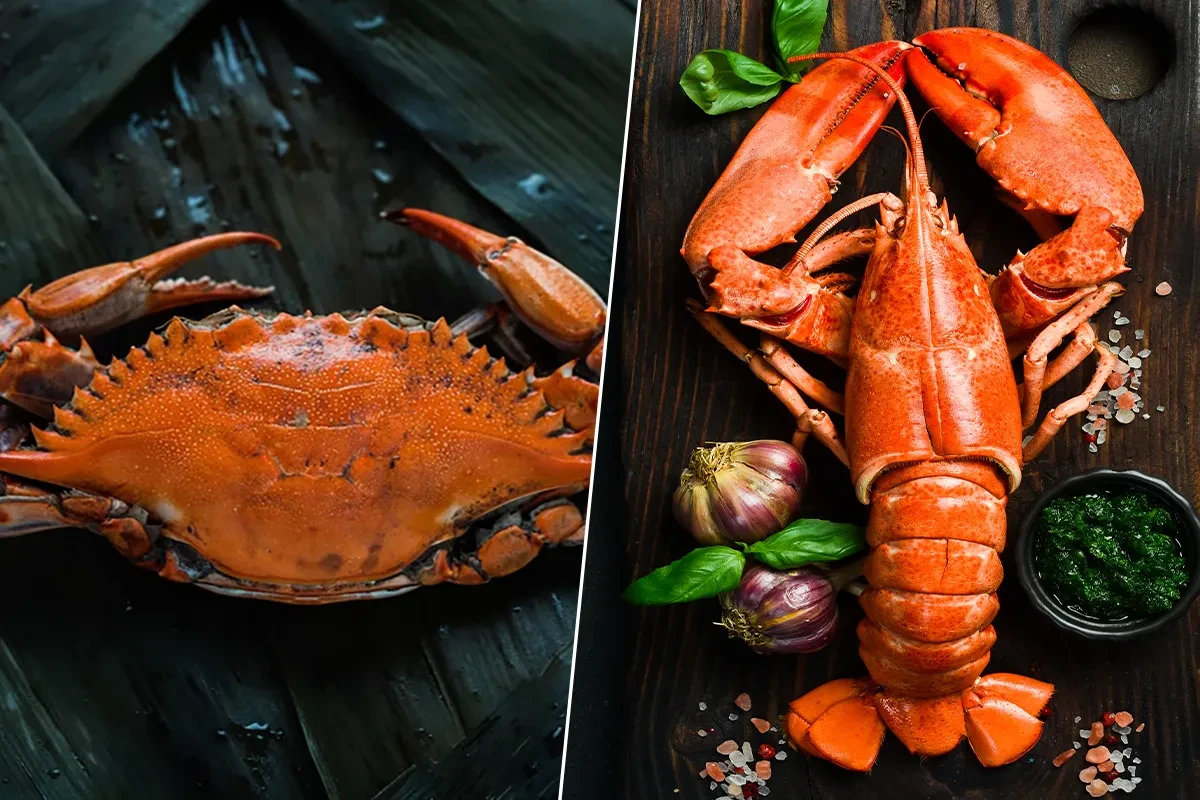
Appetizing photos showing the difference. 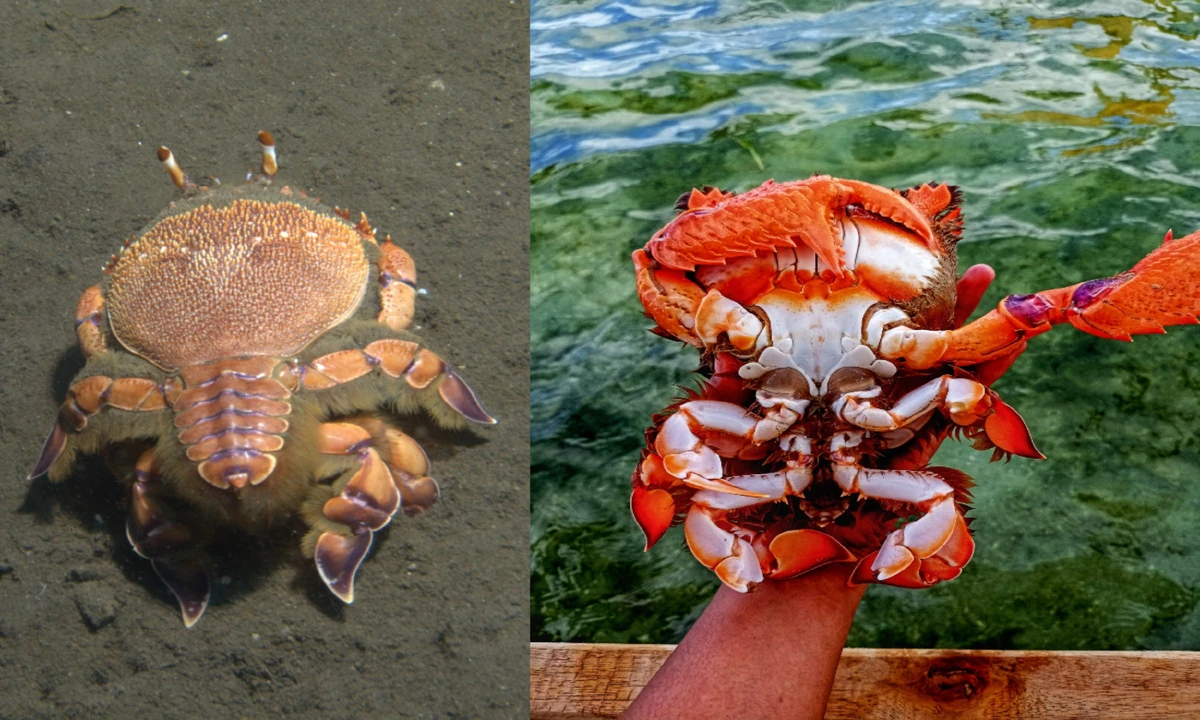
The son of the parents from the previous picture.
Now that you've read the paragraph above, take another look at the frog crab's body structure. It's stuck somewhere in the middle! Its cephalothorax has already stretched considerably in length, but its abdomen clearly can't keep up—it's still very small. However, the consequences of this restructuring have already affected the crab's lifestyle: it's forgotten how to walk sideways. Either forward or backward, as a crab should. 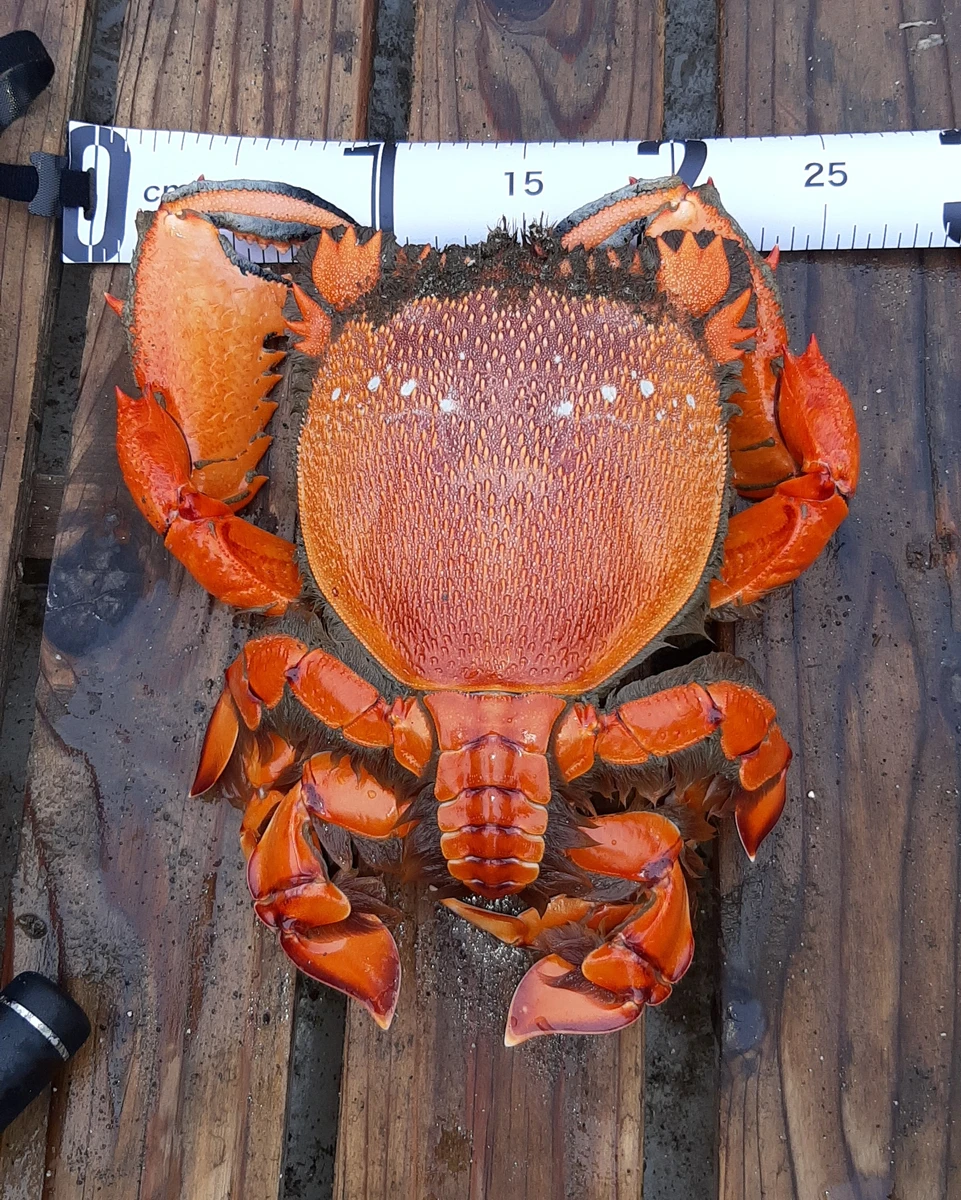
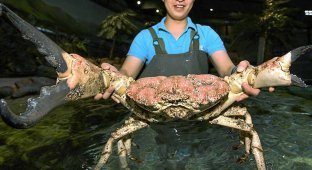
It's evolving, but where to? By the way, these little monsters are pretty big.
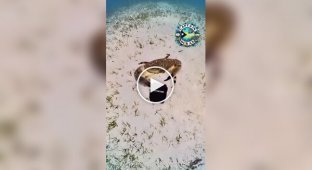
However, the frog crab doesn't usually crawl along the bottom of tropical seas, but sits in the sand, buried up to its eyes. Thanks to the layer of sand, it becomes virtually invisible to passing fish, which the arthropod easily grabs with its crab-like claws. Why crab-like? Because they, too, are caught between two extremes. 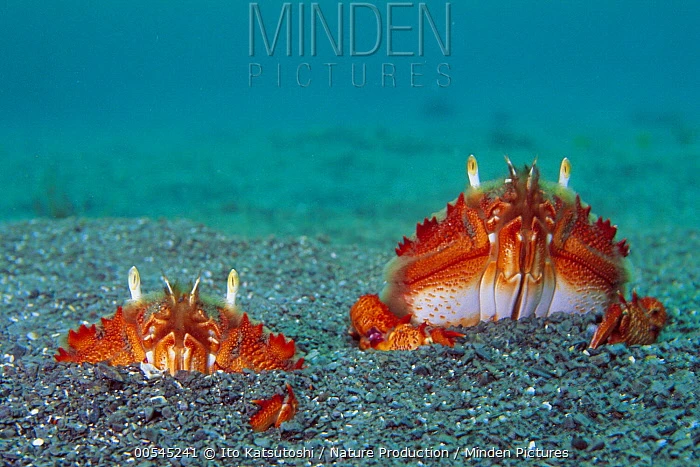
We're sitting comfortably! 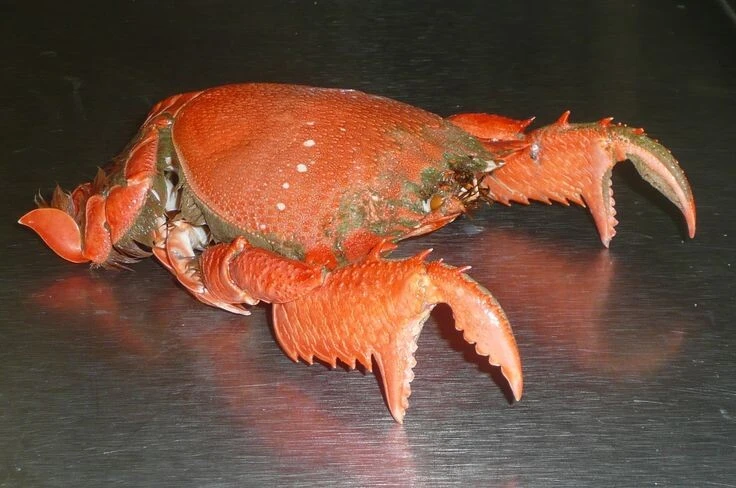
As if they were assembled from parts of a different construction set.
Crabs are accustomed to relying on short, but very wide claws. These may not be very convenient for eating or catching small things, but they are fun for tearing chunks of flesh from carrion or prey, fighting each other, and holding all sorts of cool things. Like a knife, for example. 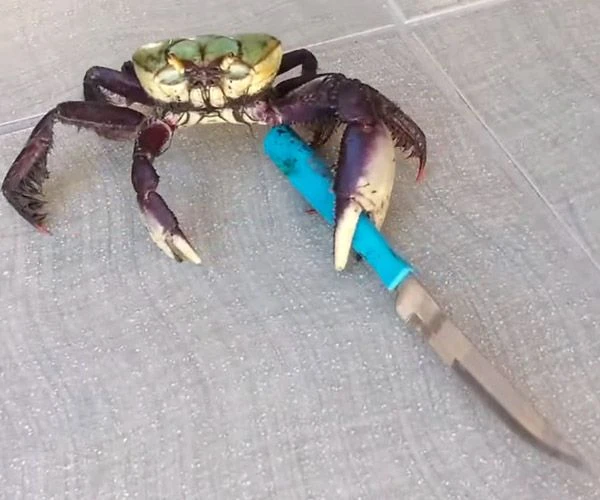
You didn't think we were joking, did you?
Crayfish claws are more like tweezers. They are longer and thinner, making it easier to catch prey with agility and allowing for better dissection. However, these claws are also weaker and less useful in fights or when catching large prey. 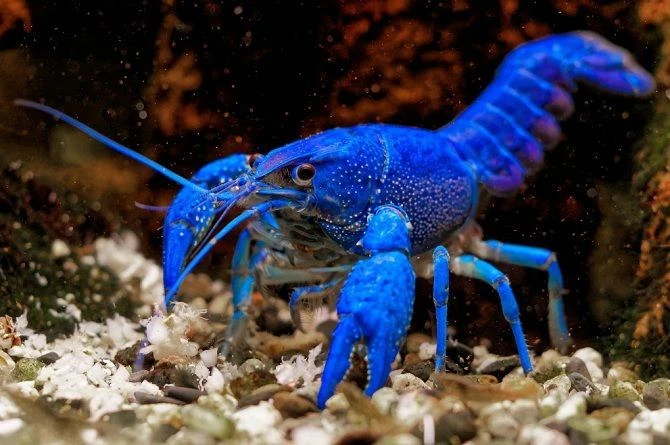
The blue crayfish has come to show you its claws.
Frog crayfish have claws that are both wide and thin, making them equally poor at handling both large and small prey. However, these claws are very useful for scooping up sand, hiding the bright red shell under a camouflaged mound. 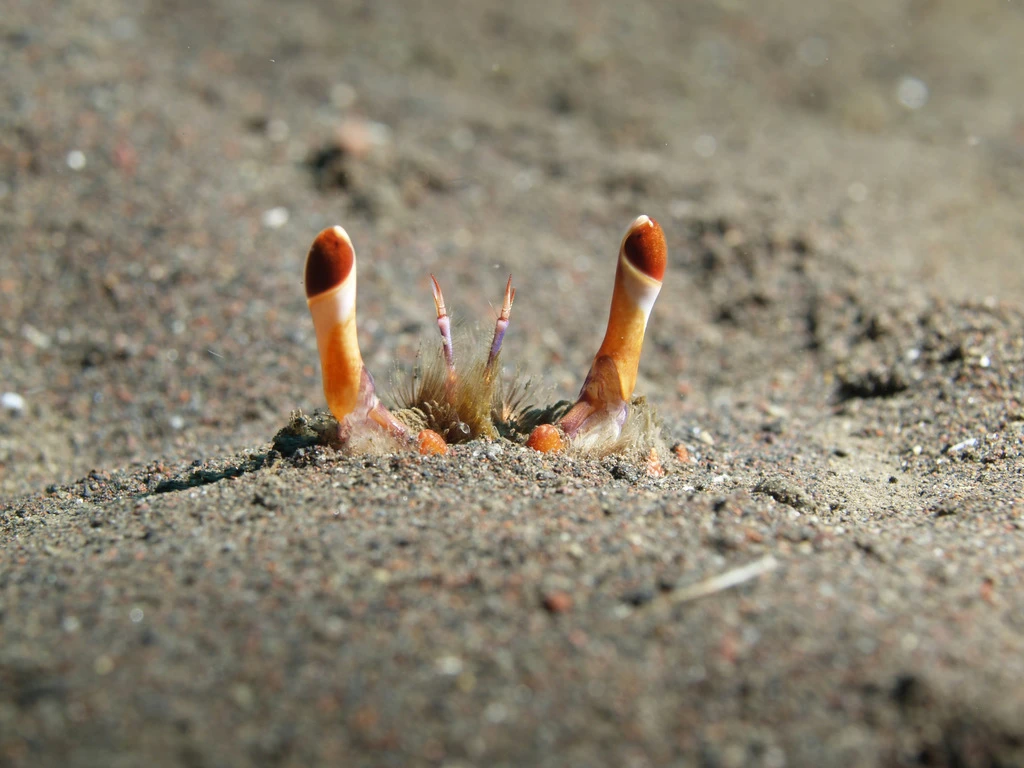
I'm not here. 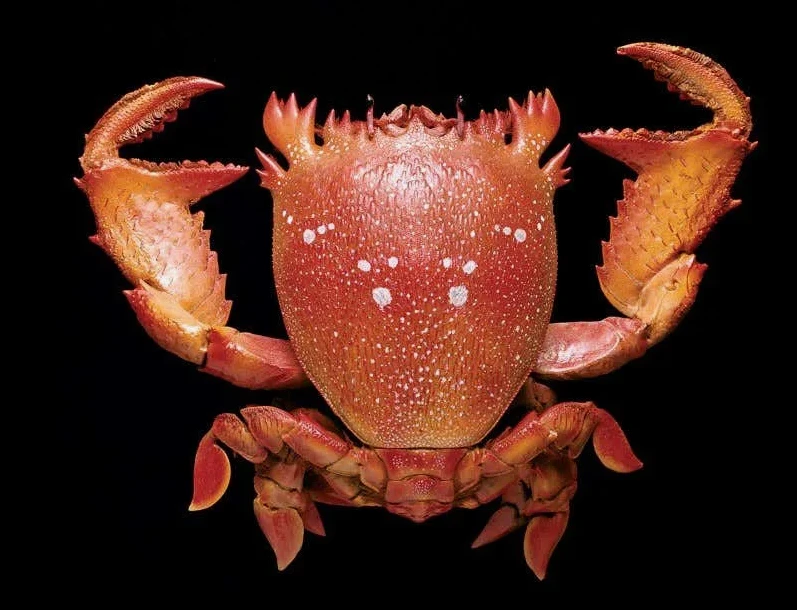
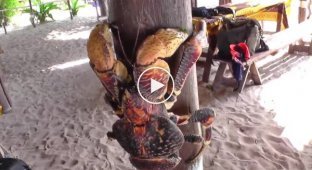
An attempt to create the perfect garden tool.
And most importantly: the red crab's ability to camouflage and catch prey is coupled with excellent fertility—a female can lay up to 200,000 eggs per year. Therefore, this half-crustacean, half-crab creature is a remarkably successful creature that has adapted to life in virtually all coastal regions of the tropical oceans. They're excellent foragers, reproduce quickly, and most importantly for humans, they're quite tasty. Every year, we catch tens of thousands of tons of frog crabs, and researchers still haven't seen any signs of overfishing. 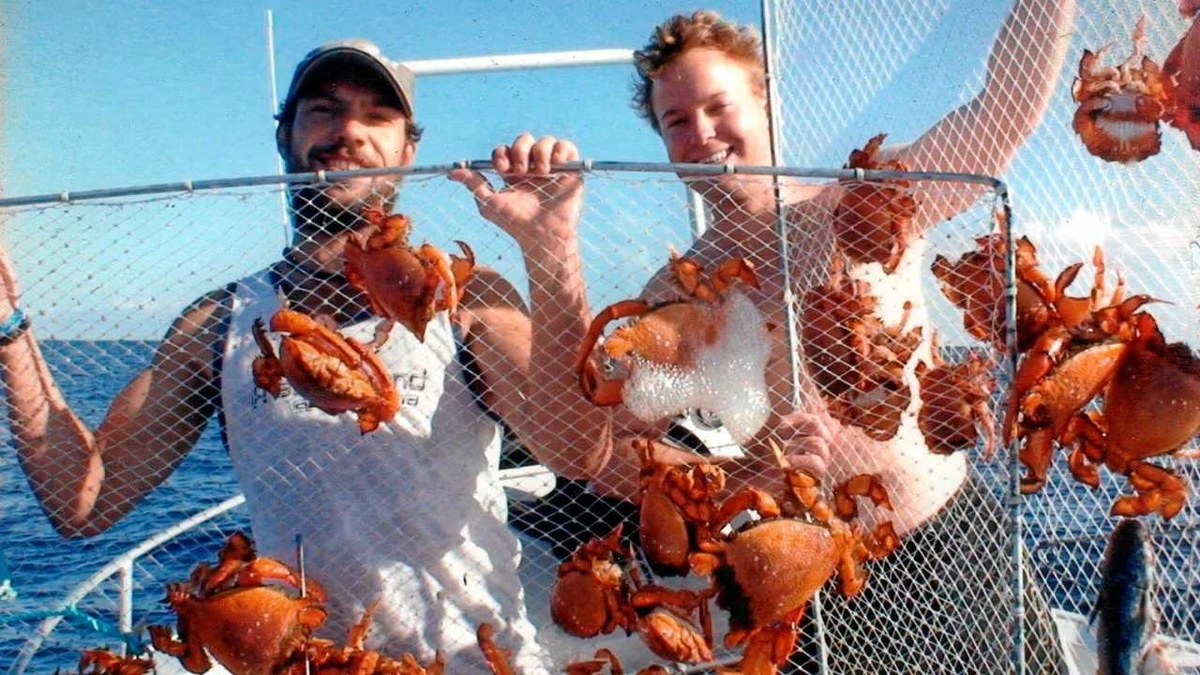
Traps with caught crabs. But these guys are researchers. After numerous measurements, the crabs will be released.