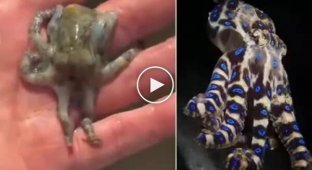
Blue-Ringed Octopus: Its Venom Is Enough to Kill 30 People! (7 photos)
Just imagine: a cephalopod smaller than the palm of your hand can easily dispatch 20-30 people in a row, and its venom is enough to kill a couple more fish! And as if that weren't enough, it's found not somewhere in the depths of the ocean, but in ordinary salt pools on ordinary Australian beaches. Where children play and adults sunbathe. 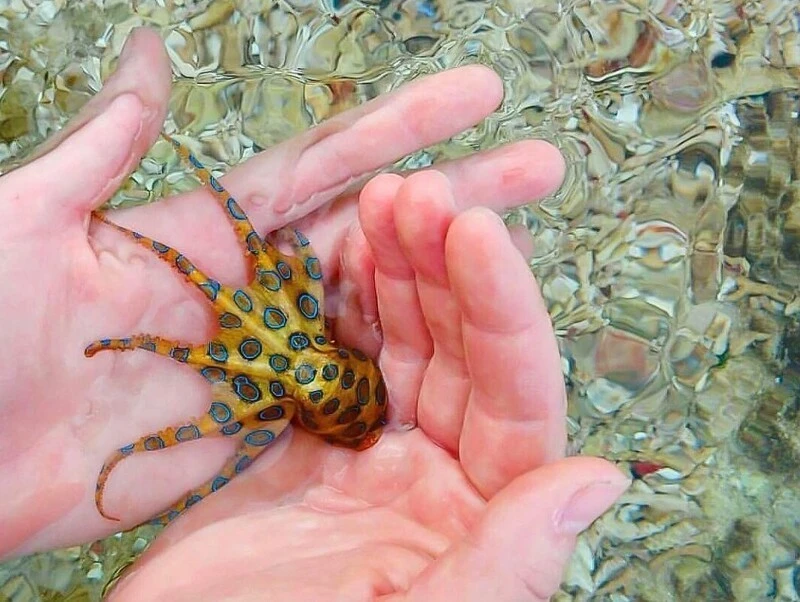
Under normal conditions, blue-ringed octopuses inhabit coastal reefs, as this is the ideal place to hunt small prey and avoid the attention of larger predators. But sometimes, during high tides, they wash up on the coast, where the octopuses get stuck in small puddles and lagoons. And honey badger, don't step in a puddle with a baby octopus in it! 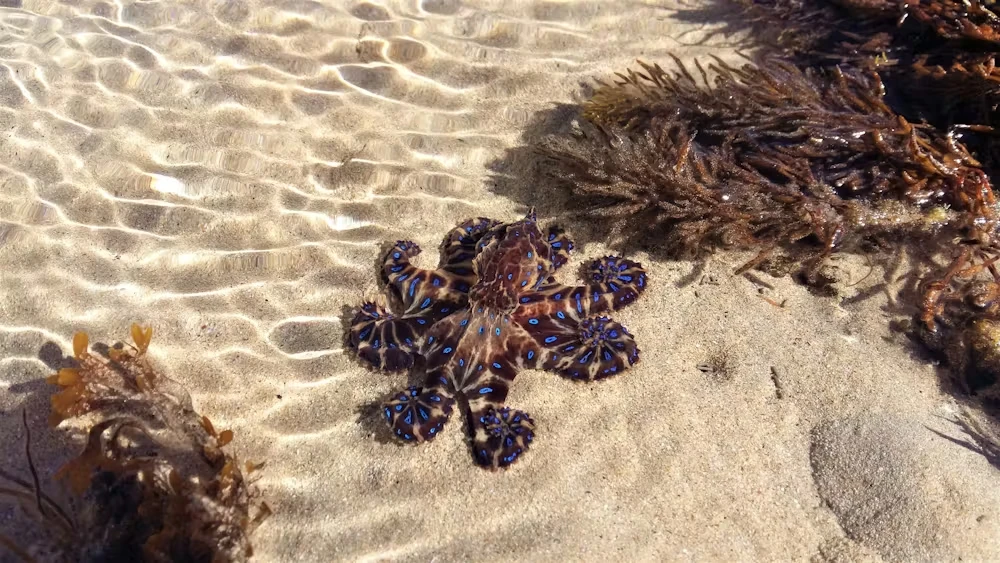
Hey, want to get your feet wet?
A startled ringed octopus will plunge its beak into your leg and inject you with tetrodotoxin, one of the most terrifying naturally occurring neurotoxins. If it doesn't spare the poison, your muscles will begin to fail within two minutes, and you'll die of asphyxiation within six to seven minutes. 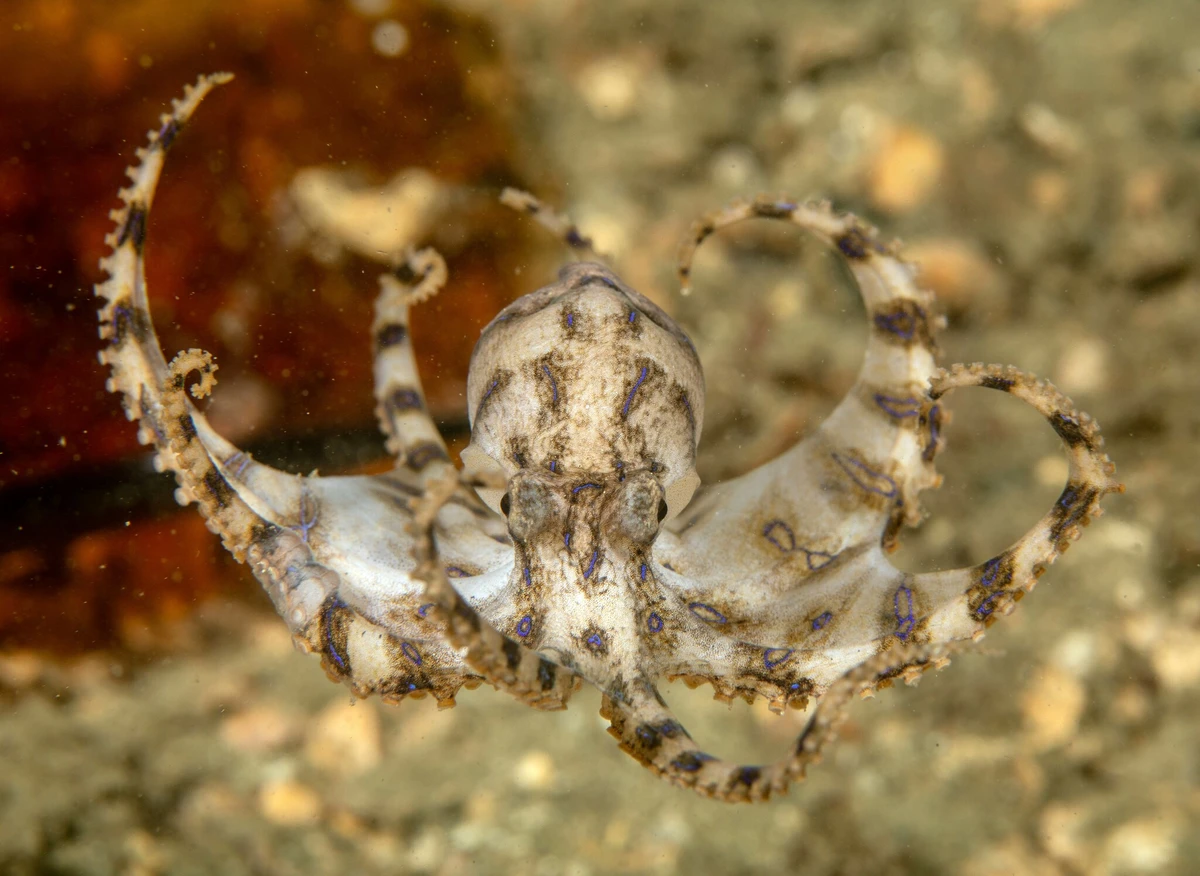
Sometimes octopuses bite people right in the ocean. But it's usually the careless divers who get the nut.
But even if an octopus gives you a tiny dose of venom, your life will hang in the balance. You likely won't feel the bite itself; after 15-30 minutes, you'll start sweating profusely and notice your fingers cramping. And in about 24 hours, you'll be in intensive care, breathing solely on a ventilator. 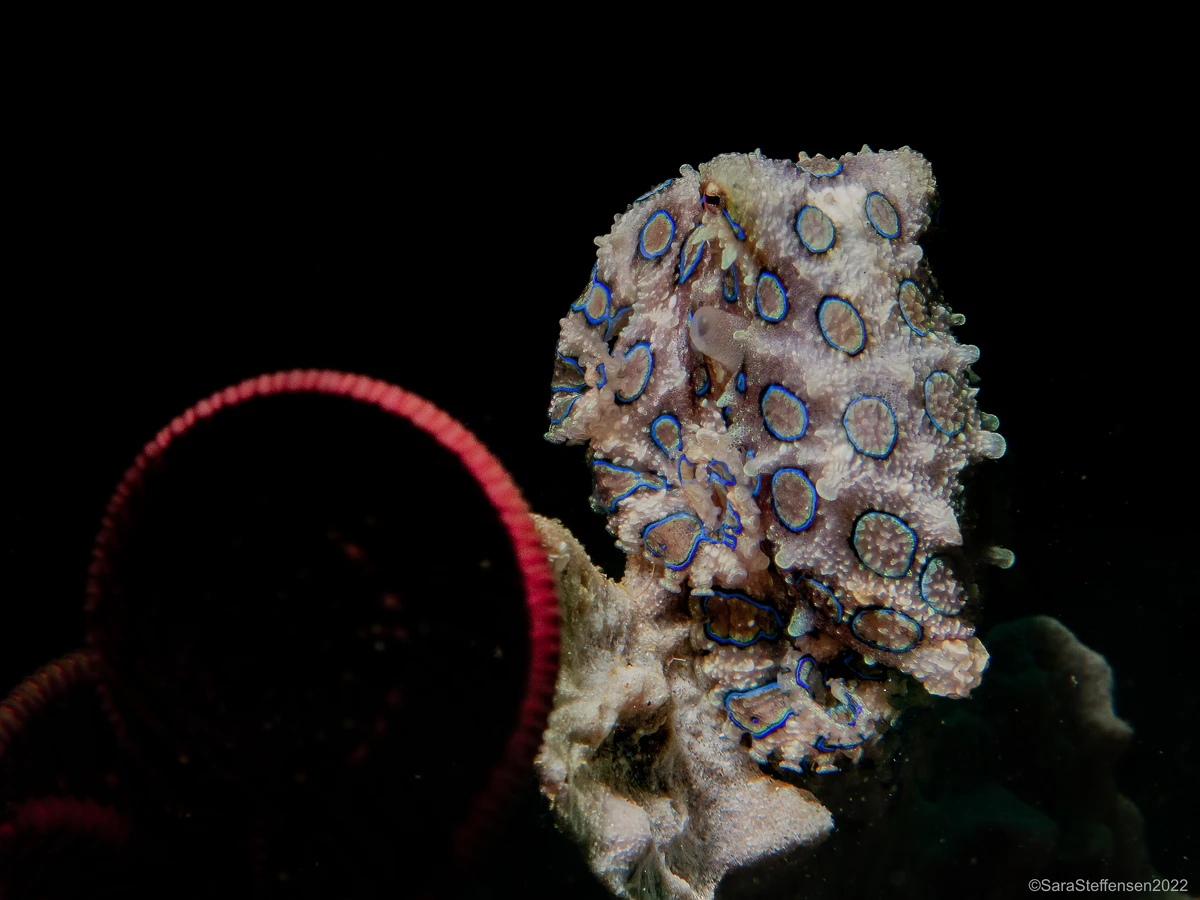
Most of the blue-ringed octopus's venom is concentrated in its venom glands. But all of its organs and tissues are equally toxic.
And given its venom characteristics and its life cycle, the octopus appears surprisingly harmless. Throughout recorded history, octopuses have caused only 16 human deaths. But why have such dangerous creatures caused so little harm to humanity? First and foremost, because people have been warned. Locals know that walking through puddles on the beach is like gambling with death. Even children avoid such puddles and wear thick-soled sandals. And it works perfectly; the blue-ringed octopus bites, on average, only one person per year. 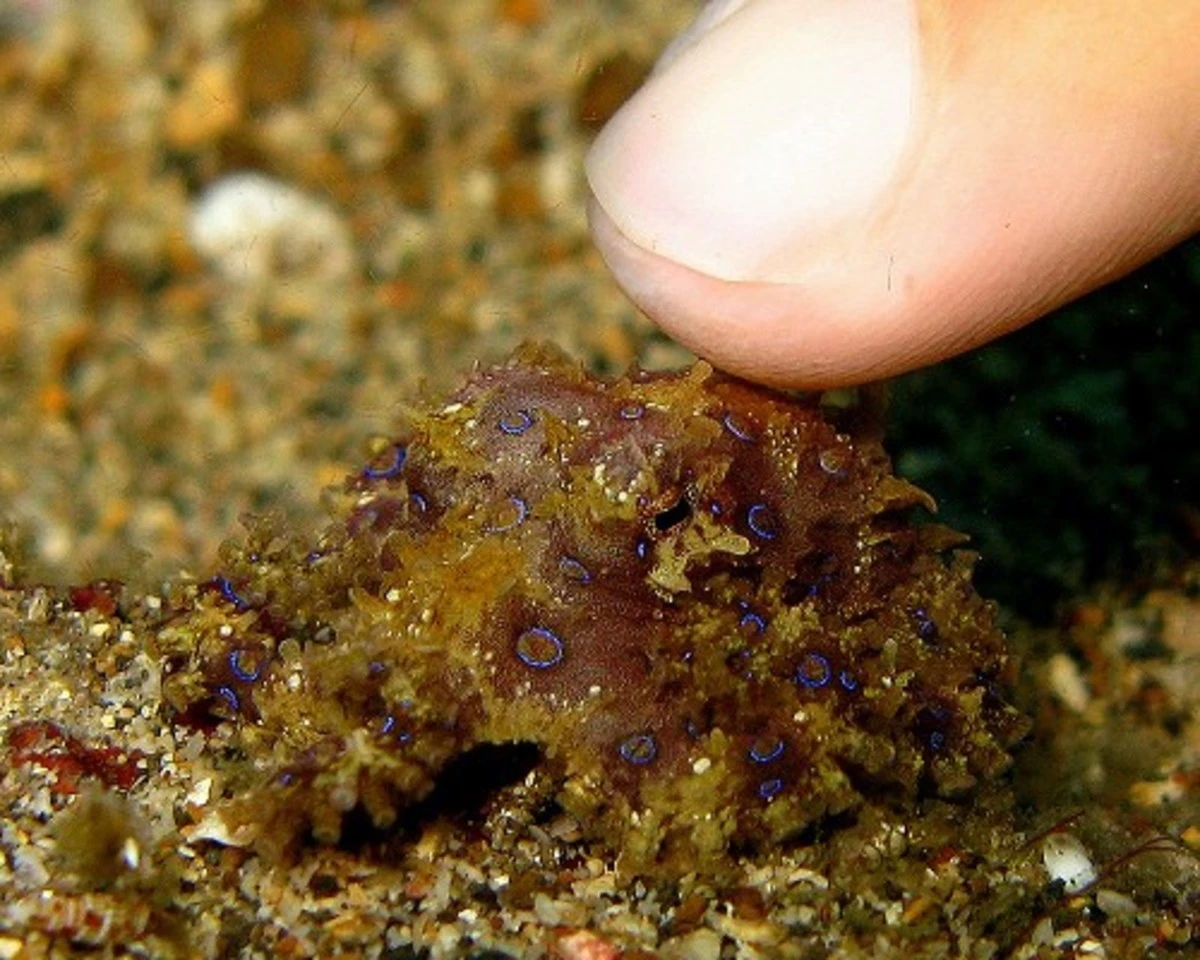
Author: *Explains safety precautions*. Australians meanwhile: *touch octopuses for pretty photos*.
Secondly, the octopuses themselves have done their best. When in a dangerous situation, the cephalopod doesn't attack, but tries to escape and hide by changing the color of its skin to match the surrounding environment. If that doesn't work, it turns bright orange, and the blue rings on its body begin to pulsate, attracting attention. This is how the octopus tries to ward you off and avoid a dangerous fight. Only if the leg doesn't leave the puddle after that will the octopus decide to attack. 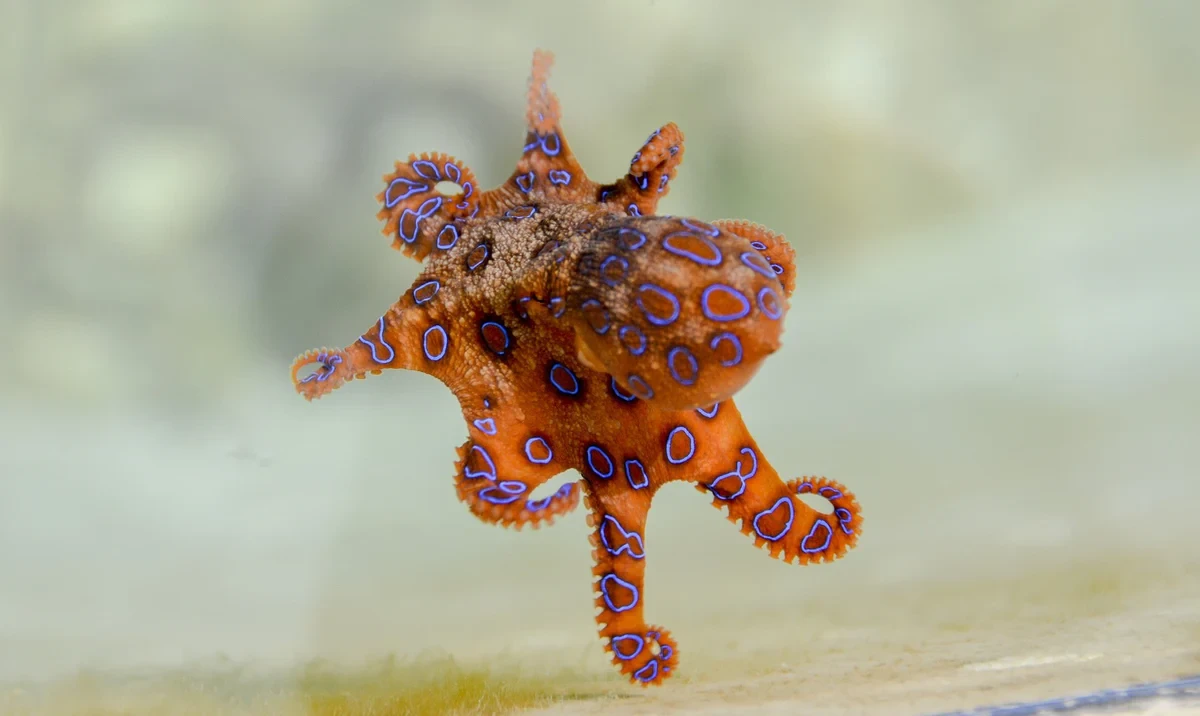
This is what a frightened octopus looks like.
Thirdly, the cephalopod's venom isn't all that dangerous. Yes, it can kill a person in minutes, and there's no antidote. But the venom is easily broken down by the liver, so its effects begin to wear off within 24 hours of the bite. If you hold out for 24 hours, your chances of survival are close to 100%. And within 4-7 days, your body will return to normal, as if the bite had never happened. 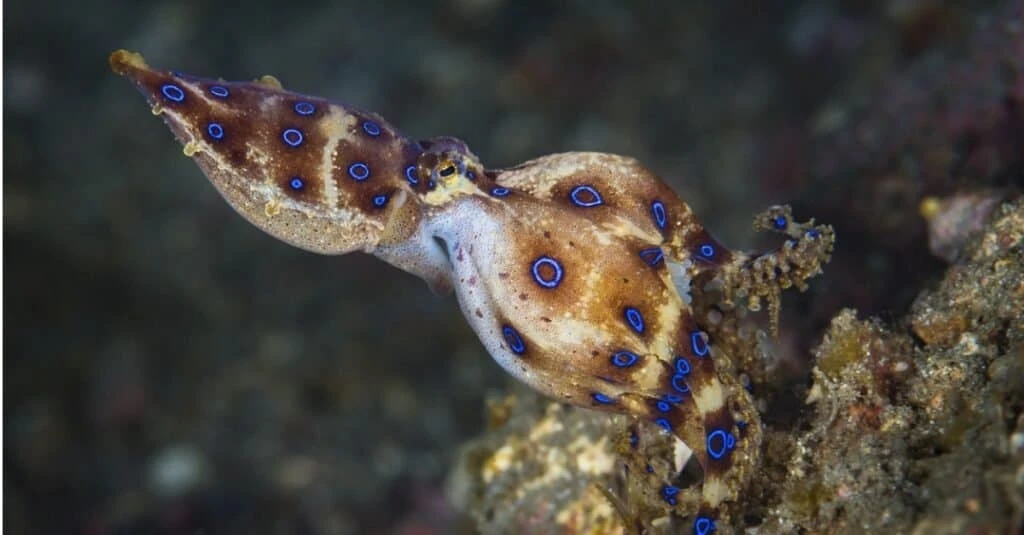
The octopus isn't as scary as they're painted!
But most importantly, 16 deaths is still a lot. Dozens of species of dangerous spiders and deadly jellyfish have claimed one or two lives each over the course of observations and currently pose no serious threat. Unlike the octopus. So, if you're walking along an Australian beach, avoid puddles, just in case.