Giant Pacific Octopus: Lord of the Cold Waters (6 photos)
The giant Pacific octopus (Enteroctopus dofleini) is the largest octopus on Earth. Adults weigh on average between 15 (females) and 50 kilograms (males), and their arm span averages 4-5 meters. A true giant of this species is known to science, weighing 272 kilograms with an arm span of 9.6 meters! 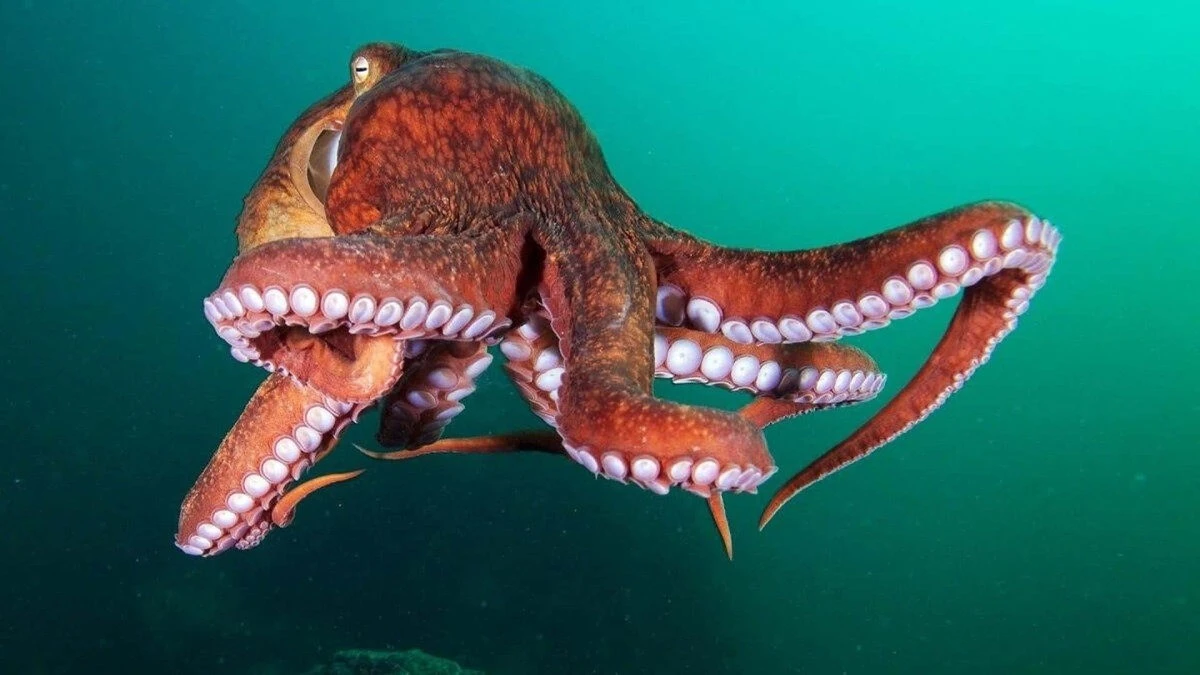
The giant's coloration is usually reddish-pink with fine veins resembling intricate patterns. The undersides of the eight powerful tentacles are gray-white, and they are all covered in a huge number of suckers—females have 2,240, while males have 100 fewer. These suckers provide not only an iron grip but also a keen sense of smell and taste. 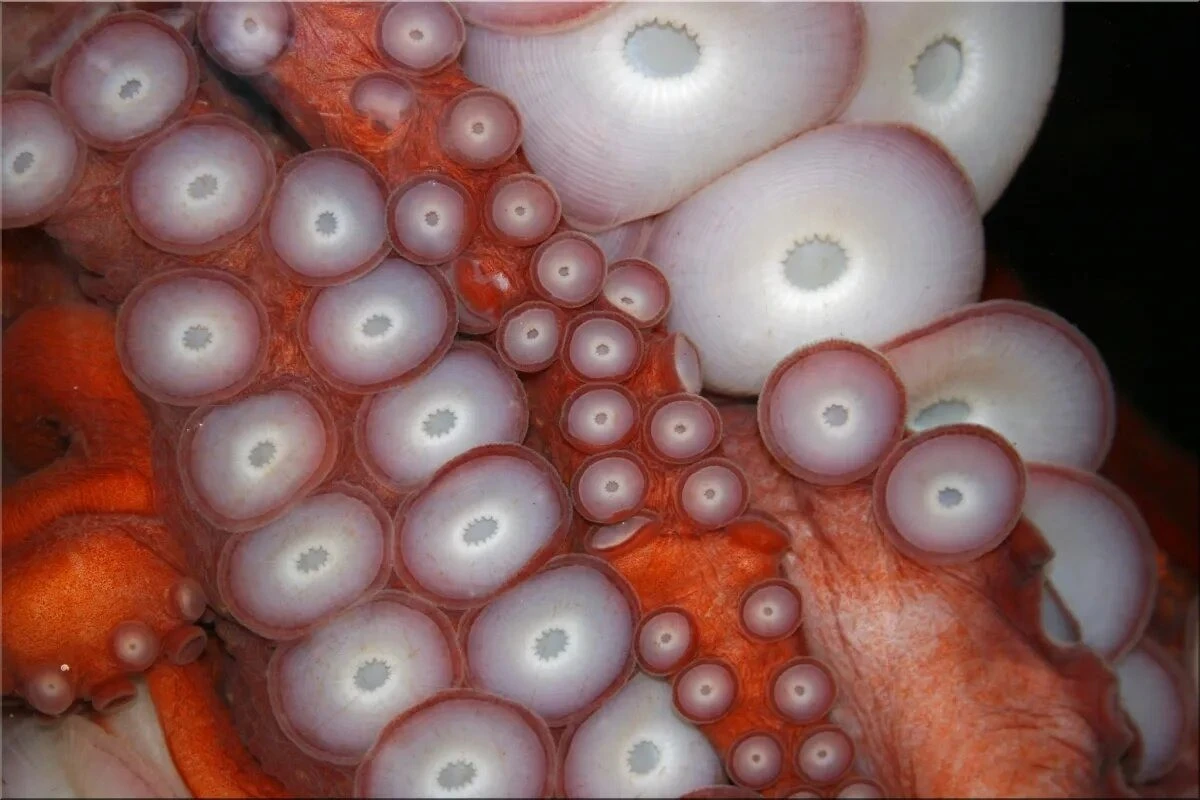
The largest suckers of the giant Pacific octopus measure 6.4 centimeters in diameter and can support a weight of up to 16 kilograms. Like all octopuses, the subject of this article is a boneless cephalopod. This means it can squeeze through any opening where its beak—the only hard part of its body—fits.
Where it lives and how long it lives
The giant Pacific octopus inhabits the cold waters of the North Pacific Ocean, from Korea and Japan to the coasts of Canada, the United States, and Mexico. 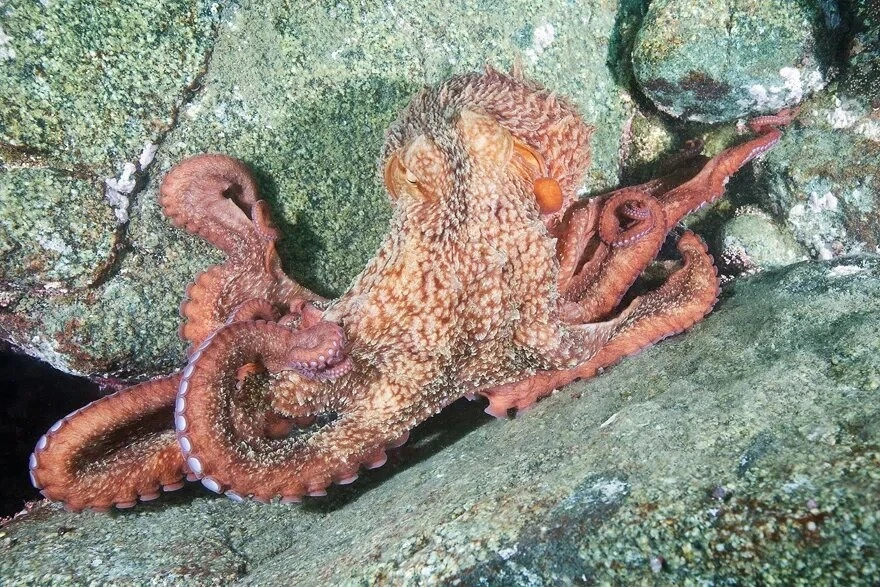
The octopus prefers water temperatures of 15 degrees Celsius and below. It lives in both shallow waters (sometimes even found in tidal pools) and at depths of up to 1,500 meters. This striking creature leads a solitary life, preferring to hide in rocky lairs, crevices, and caves among boulders.
The giant Pacific octopus lives for three to five years, a relatively long lifespan for its species (most other octopuses don't even live to be a year old). Toward the end of its life, it finds a mate, produces offspring, and soon dies.
Hunting and Diet
The giant Pacific octopus is a secretive and voracious hunter. Its diet consists primarily of crabs, shrimp, shellfish, fish, and even other smaller octopuses. Its advanced camouflage catches its prey by surprise, then abruptly grabs it with all eight tentacles and drags it back to its lair. 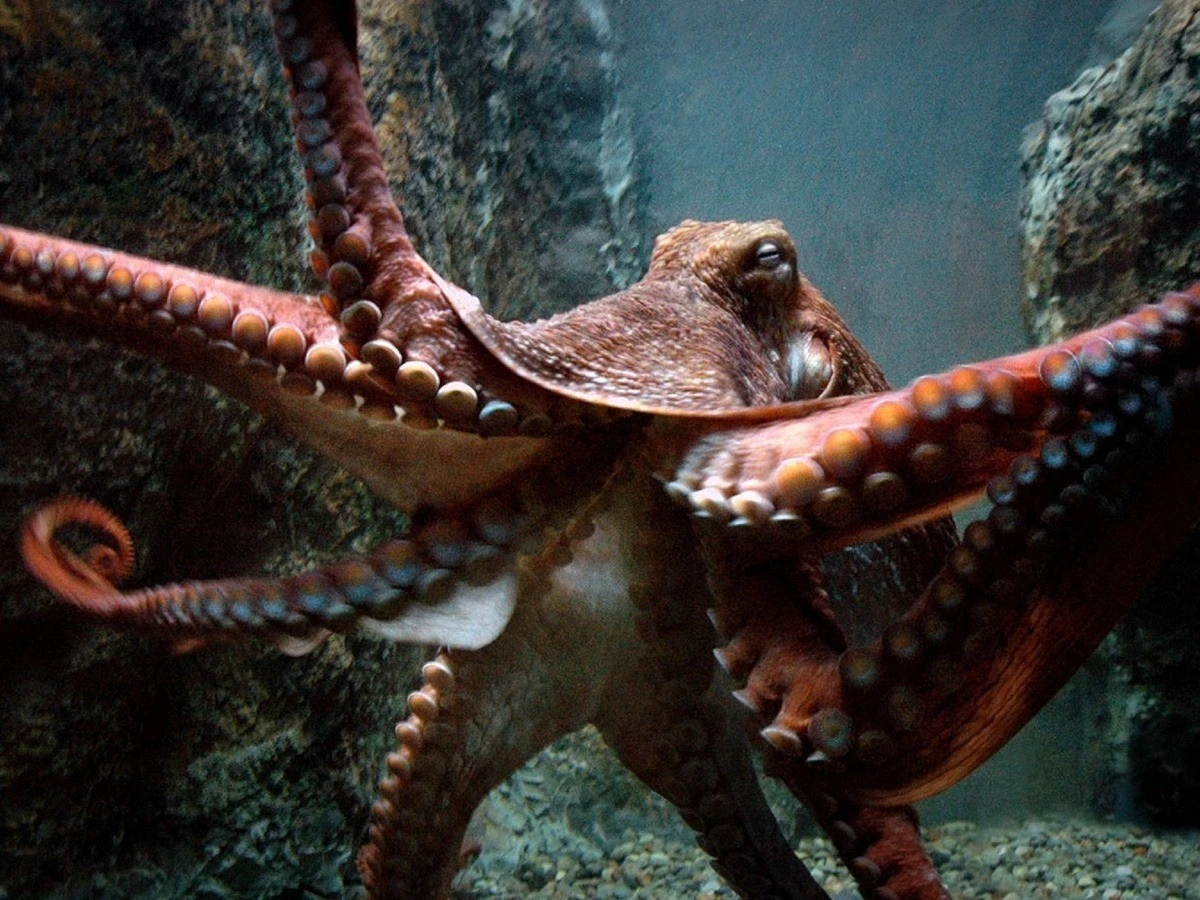
To get to the desired delicacy, the octopus uses three methods to break through the hard shell: simply tearing the prey apart with force, biting it with its powerful beak, or "drilling" the shell. To drill, the predator softens the shell with its specialized saliva, simultaneously scraping the material with its tough tongue, or radula. This process creates a hole through which the octopus injects a toxin that paralyzes the prey and dissolves connective tissue. After a few minutes, the prey is easily torn apart and consumed.
The octopus takes the shells, cleaned of their edible contents, to a "garbage heap" near its lair. Scientists are studying these piles to learn more about the diet of giant octopuses.
Camouflage – A Tool for Survival
Lacking a protective shell, the giant Pacific octopus relies on one of the most complex camouflage systems in the animal kingdom. Hidden beneath its skin are millions of flexible cells called chromatophores, which contain colored pigments. 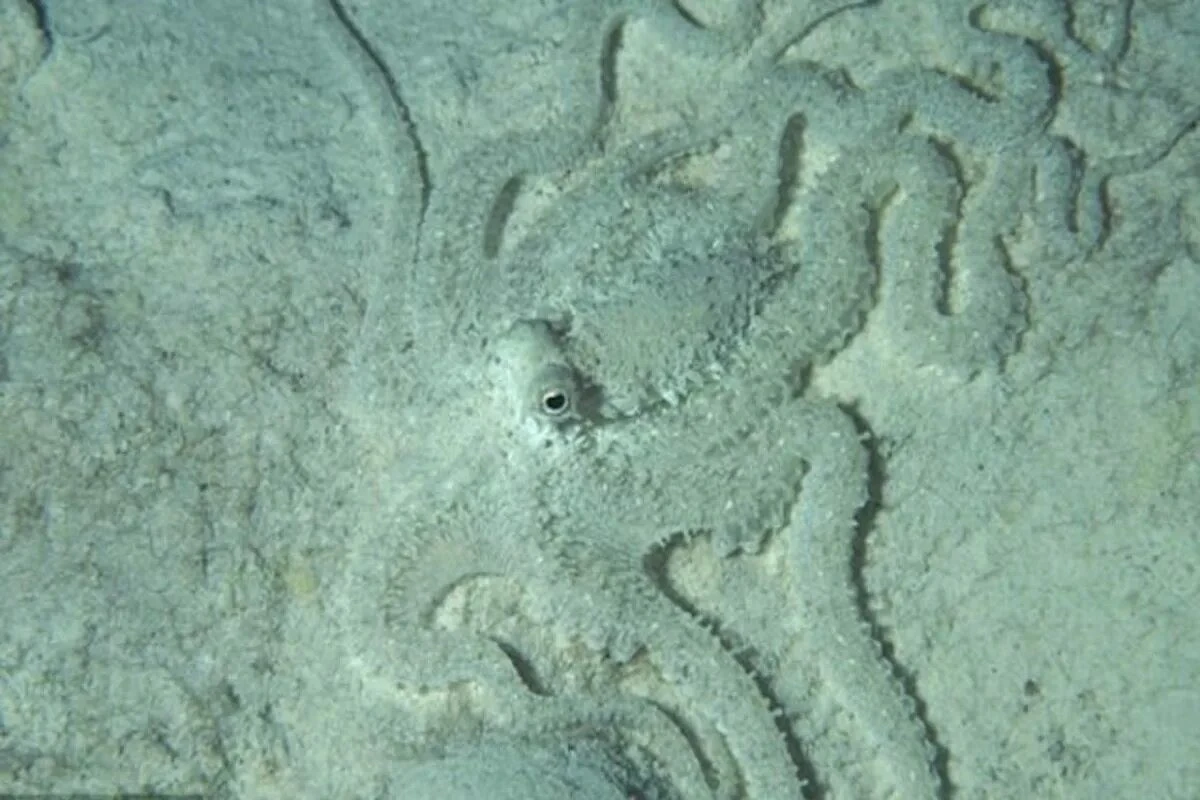
Relying on its extremely acute vision, the octopus effectively recognizes patterns and textures in its environment, and then almost instantly – as if by magic – changes its skin color by expanding or contracting its chromatophores. Remarkably, octopuses are color-blind. How they manage to so accurately mimic the color scheme of their surroundings remains an unanswered question.
Intelligence and Behavior
In the wild, giant Pacific octopuses spend most of their time hiding in dens, seaweed, or camouflaged on the bottom. To move through the water column, they use jet propulsion—drawing water into their body cavity and forcefully expelling it through a siphon (a tubular organ resembling a modified leg), providing a powerful thrust. Along the bottom, octopuses crawl on their tentacles, periodically stopping to blend in with their surroundings to assess the situation. 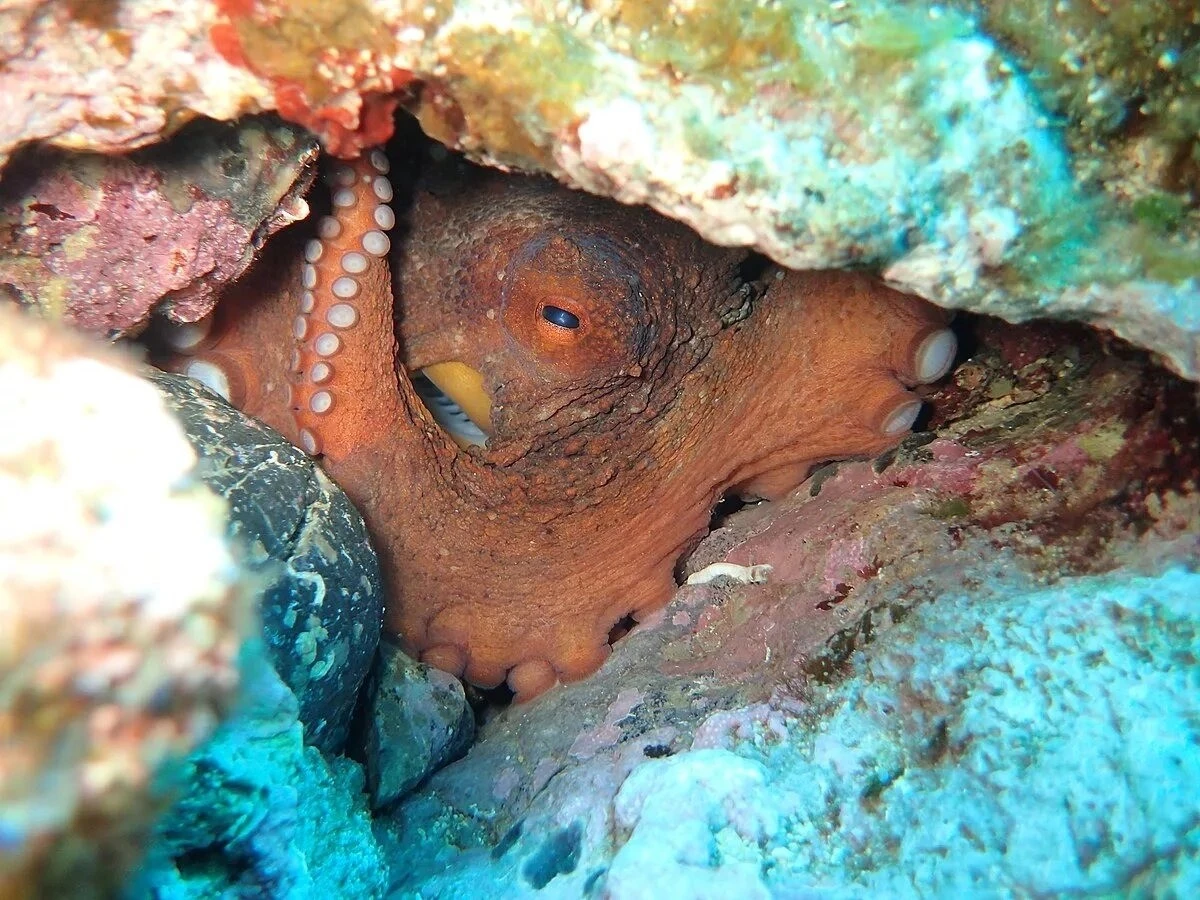
Giant Pacific octopuses are highly intelligent—they can remember human faces, solve puzzles, and even show interest in divers. In aquariums, they are renowned for their ability to escape their tanks—sometimes squeezing through cracks in the lid and exploring neighboring tanks in search of prey or simply out of curiosity.