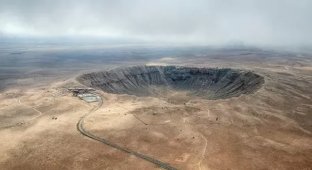
Barringer Crater in Arizona - a giant impact bowl, preserved almost intact
The impact occurred at a velocity of approximately 12 km/s, releasing energy three times greater than that of the Tunguska meteorite. The bulk of the asteroid instantly vaporized, leaving only fragments weighing approximately 30 tons.
Until the early 20th century, the object was considered an extinct volcano due to its proximity to volcanic fields. However, mining engineer Daniel Barringer was the first to hypothesize the crater's impact origin. His hypothesis was only definitively proven in the 1960s by Eugene Shoemaker, who discovered the minerals coesite and stishovite there—forms of quartz that form only under the influence of colossal pressures and temperatures unattainable by volcanic processes. The dry Arizona desert climate prevented rapid erosion, preserving the sharp edges of the rim, which rises 45 meters above the surrounding plain.
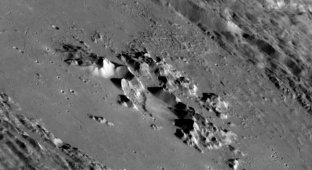
Today, the crater serves as an important research site and astronaut training ground. Because of the striking similarity of its landscape to the lunar terrain, participants of the Apollo missions trained here.