What's Hidden in the "Devil's Bible": A Pact with the Prince of Darkness or the Herculean 30-Year Work of a Lone Monk? (5 photos)
In the National Library of Sweden, a 75-kilogram book lies under armored glass. It's the Codex Gigas, the "Giant Book," created in the 13th century. But its main mystery isn't its size. 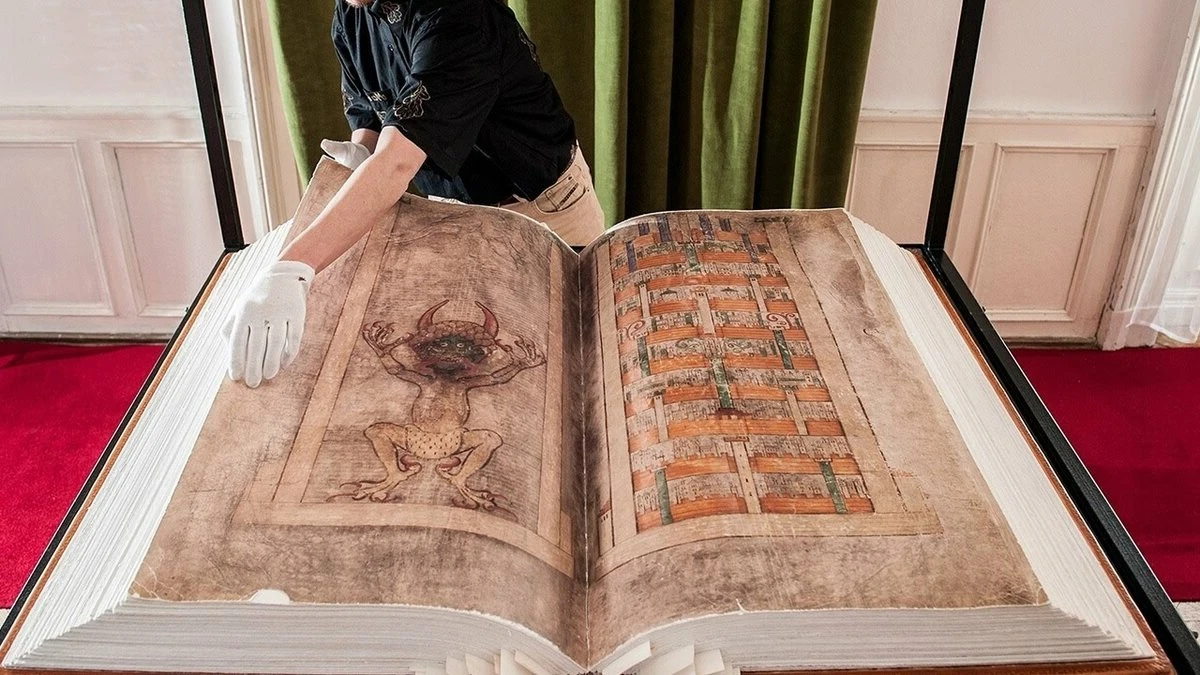
Inside, among the sacred texts, two images are juxtaposed on a separate spread: a lifeless Paradise and a figure of the Devil with scarlet horns. This illustration earned the book the nickname "The Devil's Bible." Paleographers have determined that this entire work—640 pages—was completed by a single person. His hand never wavered during all those years of work. How is this possible? Or is the legend true, and the book was created overnight, but at a price that remains unsaid? 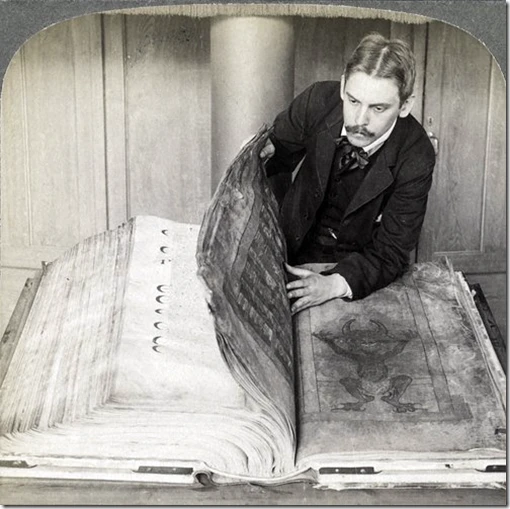
The Legend of the Deal and the Signature That Confounds Everything
According to legend, the monk Herman, sentenced to be immured alive, begged for a chance to create a book of all knowledge overnight. Unable to do so, he summoned the Devil, exchanging his soul for the completed tome. By morning, the book lay on the altar. A historical fact adds to the intrigue: one of the pages bears the scribe's signature: Hermanus Inclusus—"Herman the Imprisoned." This word signified both punishment and voluntary seclusion. Was he a sinner or an ascetic? The signature only deepens the mystery.
The Mathematics of the Impossible
Scientists have begun calculating. The codex contains the entire Bible, encyclopedias, chronicles, and magical formulas. Simply copying this volume would require at least five years of continuous labor. But analysis reveals that the book was written by a single person. And the writing style shows no signs of aging, fatigue, or stylistic evolution. From the first to the last page, the same impeccable precision. This defies human nature. It's as if the book were born whole in a single sitting. 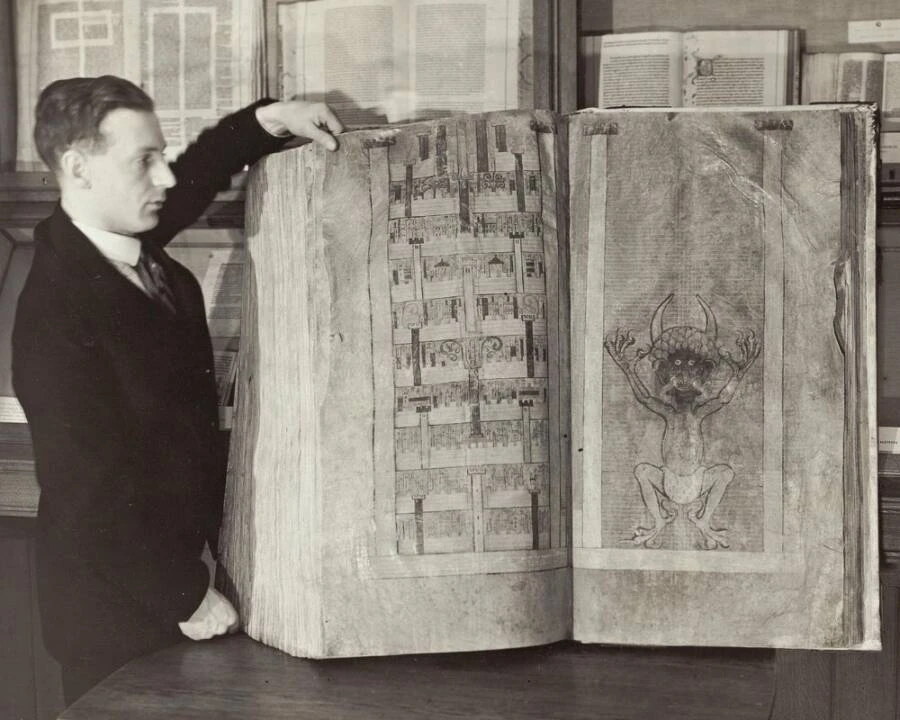
A Stunning Spread: Paradise and the Devil
The center of the mystical halo is the famous spread. On the left is the Celestial City: rows of white towers. But in this Paradise there are no angels or souls. Only cold architecture.
Opposite is the Devil. Depicted not as a pitiful sinner, but as the prince of darkness. His ermine loincloth, the fur of kings, bespeaks his status. He stands in an equally empty landscape. It creates the eerie impression that Heaven and Hell are two sides of the same coin, equally desolate. What was the author trying to say? That salvation is as empty as damnation? 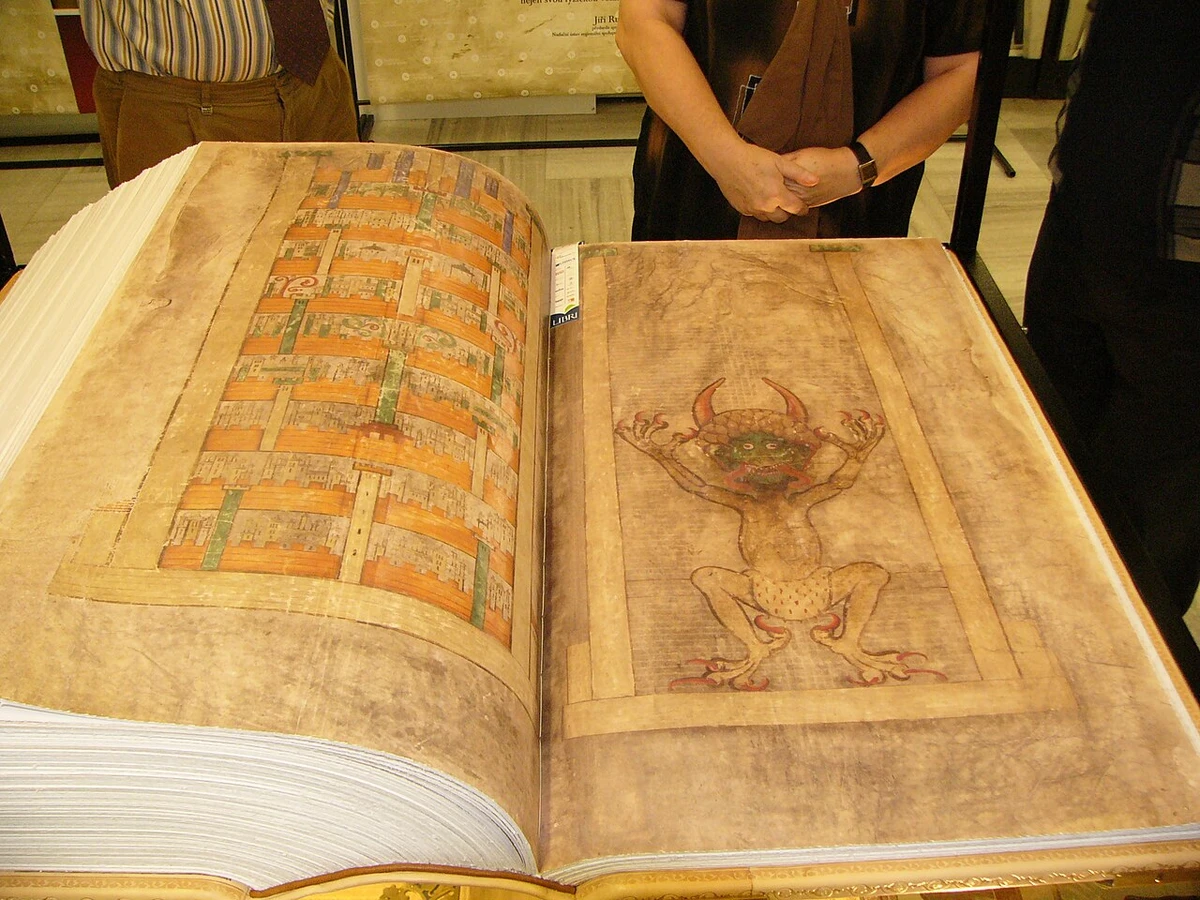
Ten Stolen Pages and a "Curse"
The codex survived wars. In 1697, during a fire in Stockholm, it was thrown out of a window. It is believed that 10 pages fell from the binding and disappeared. Analysis shows that the pages did not fall out; they were carefully cut out. Who did it and why is unknown.
A "curse" is associated with the book. Emperor Rudolf II, obsessed with the manuscript, fell into paranoia and was overthrown. The monastery that sold the book was soon ruined. 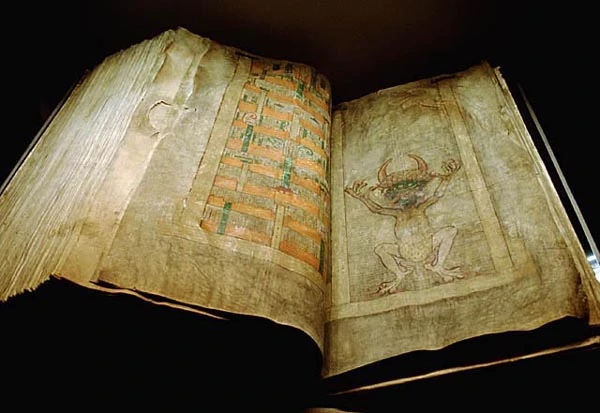
So who was the author?
We face a dilemma. Either believe in the supernatural—in which case the legend of the deal makes sense. Or admit: a genius of such phenomenal concentration lived in the Czech monastery that he was able to become a human printer for many years, leaving no trace of his suffering in his work.
Perhaps the answer is in the signature, Inclusus. Voluntary confinement. A reclusive monk who withdrew from the world for decades to day by day compile the sum total of his time's knowledge into a single volume. Like an act of final prayer, his identity dissolved into his work. And the Devil on the page isn't a co-author, but the final, most terrible temptation he depicted in order to overcome it.
What's more terrifying: admitting that the devil wrote this book, or realizing that it could have been created by one man, who completely subjugated his will to a single, insane goal?