In the Solar System, we know of only two celestial bodies where mountains with consistently snow-white peaks can be seen. The first, of course, is our planet. The second, surprisingly, is the very distant Pluto. The difference is that the white "caps" on Earth are made of ice and snow, while on the distant dwarf planet in the Kuiper Belt, the nature of this coating is completely different. 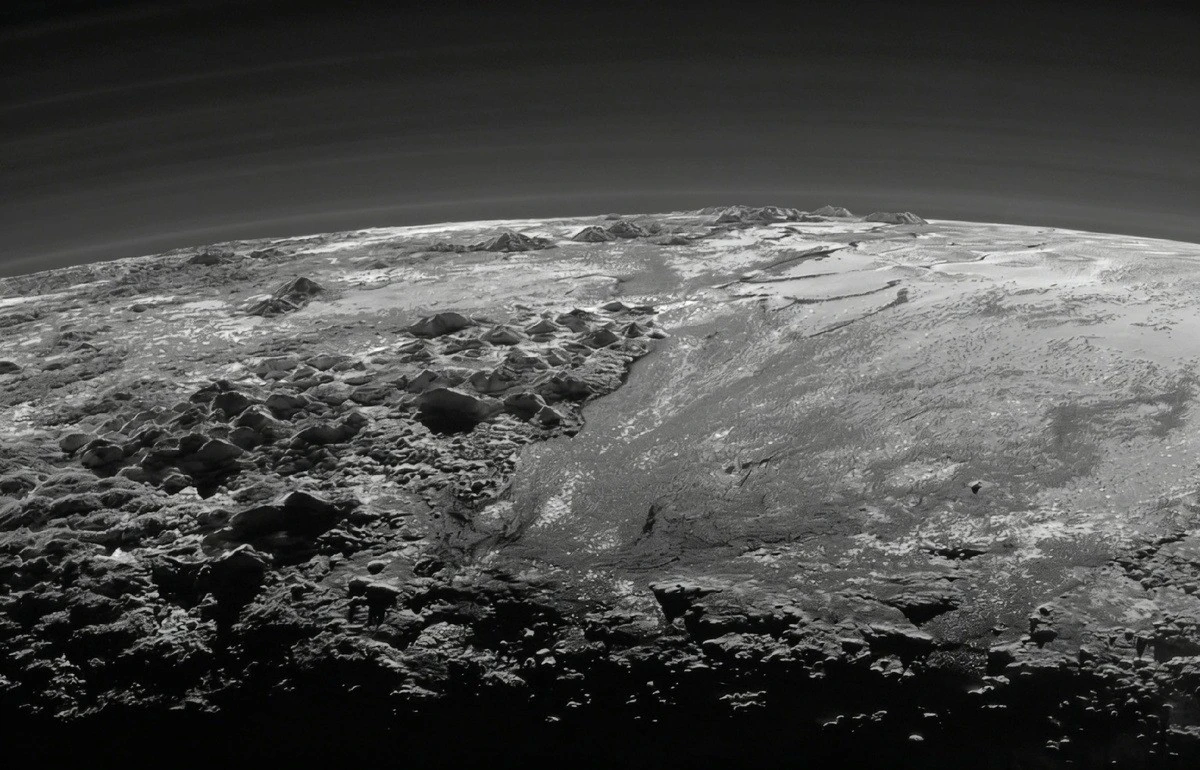
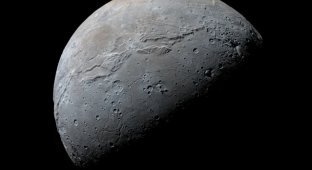
The New Horizons probe's view of Pluto 15 minutes after its closest approach to the dwarf planet. At the time of the image, the spacecraft was approximately 18,000 kilometers away. The image was enhanced using AI. 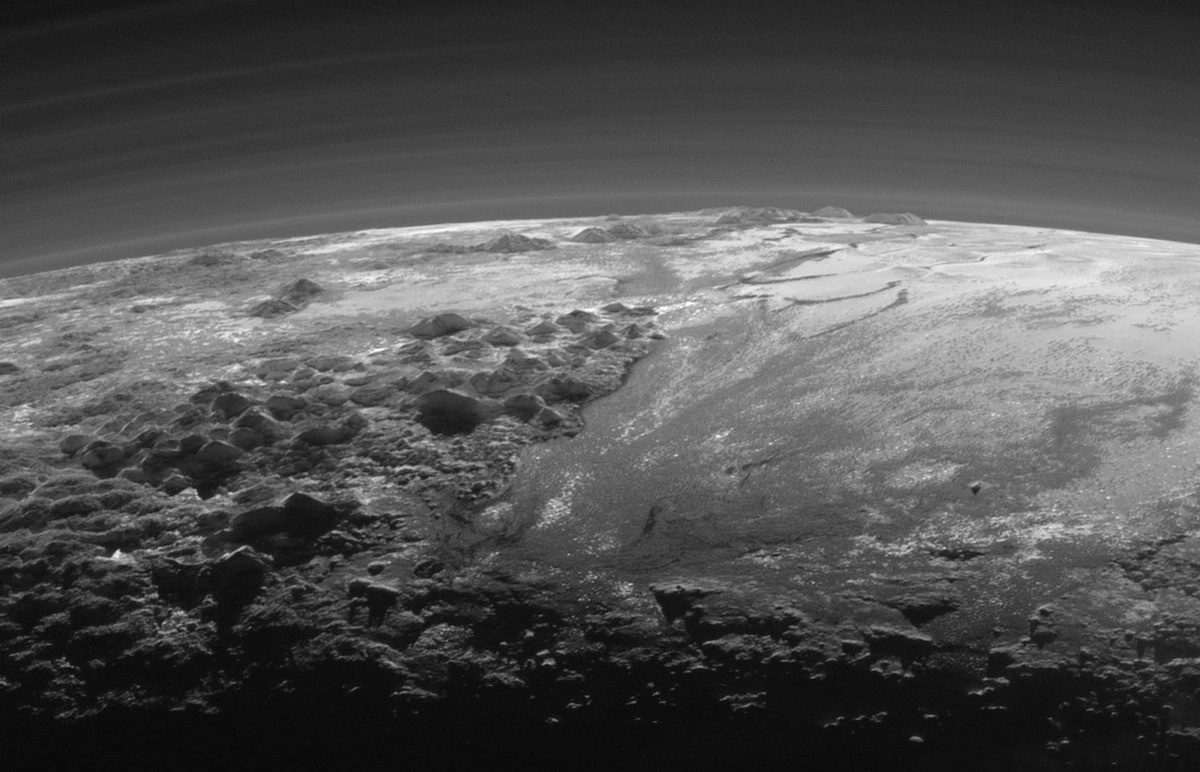
Original image
Data obtained during NASA's New Horizons mission revealed that the tops of Plutonian mountains are covered with a thin layer of methane frost. This is not "snow" in the terrestrial sense, but methane crystals deposited from the atmosphere, which form bright spots precisely on the peaks and ridges. From the outside, this looks very familiar, terrestrial, but the mechanism by which it forms and remains stable is completely different.
Even more surprising is that most of Pluto's rock formations are not composed of solid rock, but predominantly of water ice. This sounds paradoxical until you consider the local conditions: Pluto is so cold (the average temperature is -233 degrees Celsius) that water behaves not like brittle ice in a freezer, but becomes extremely hard and durable.
"The temperature on Pluto is so low that water ice becomes as hard and durable as rock on Earth," explains Tanguy Bertrand, an astronomer at the Ames Research Center in California.
This is why this dwarf planet can harbor enormous water ice plateaus, including the Tenzing Mons*, which rise up to 3.4 kilometers. 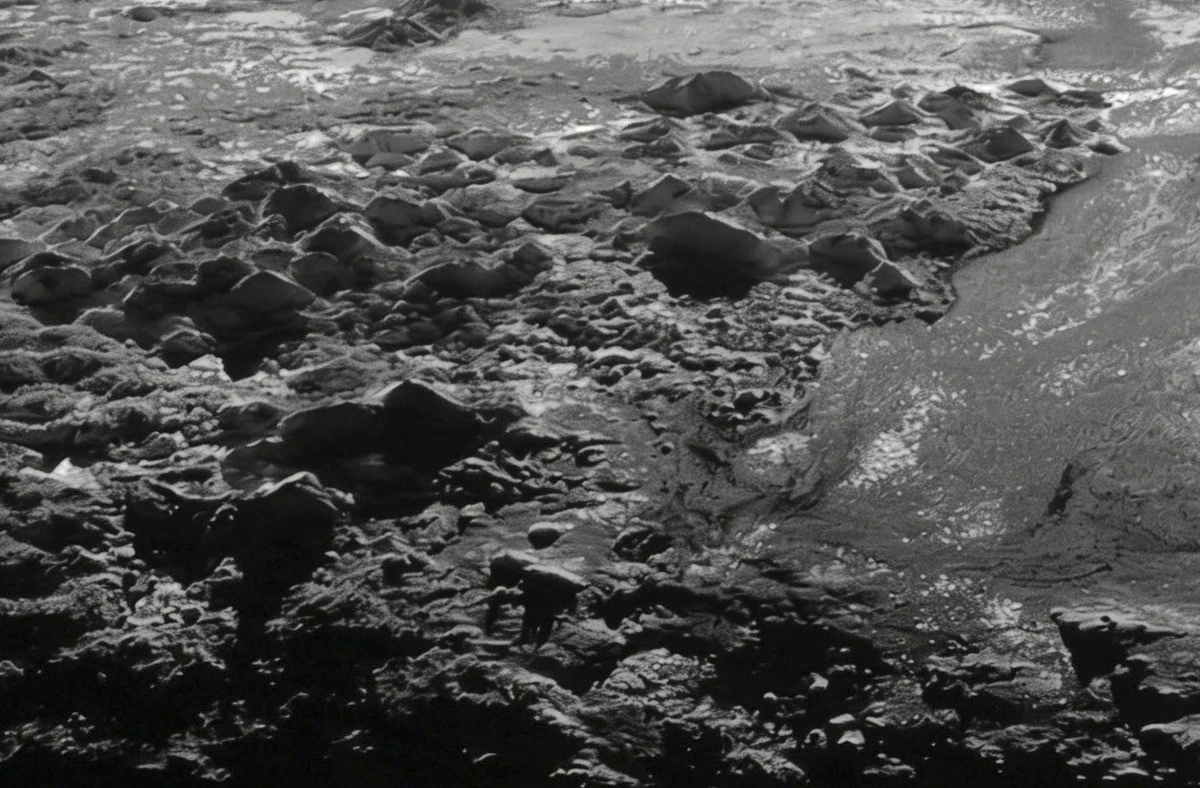
Tenzing Mountains 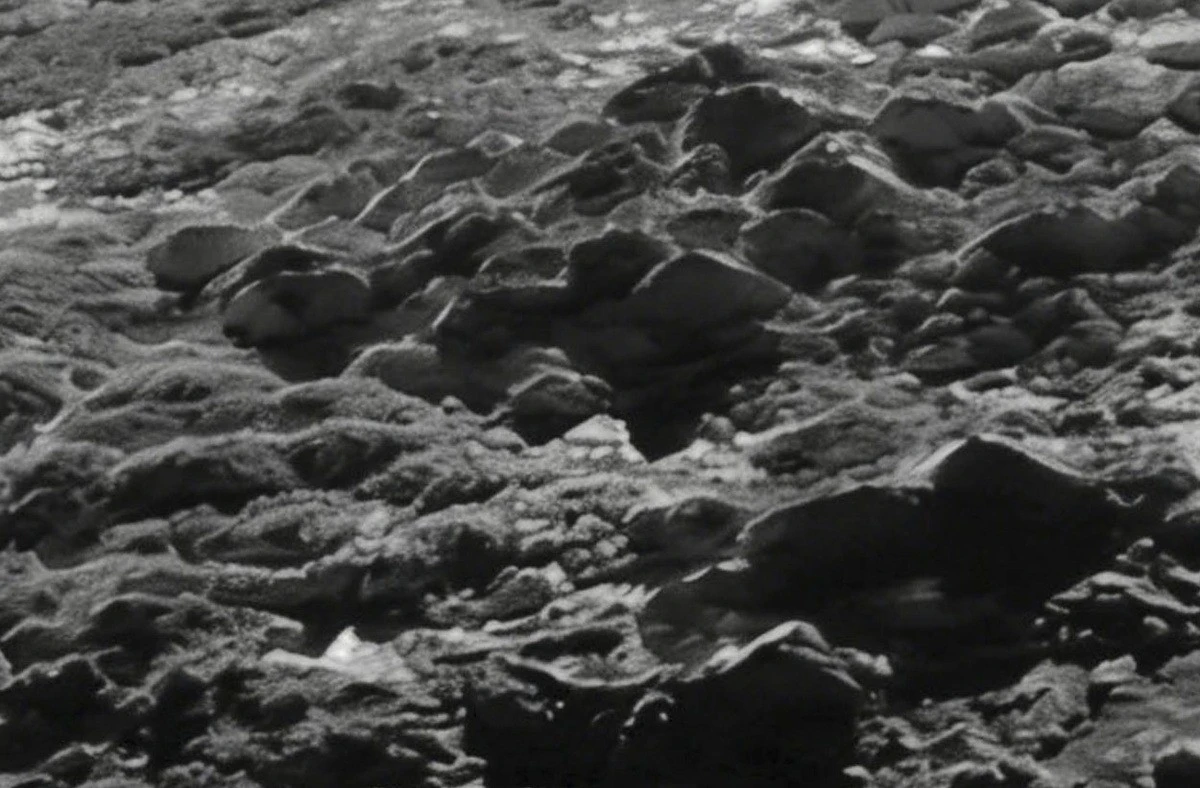
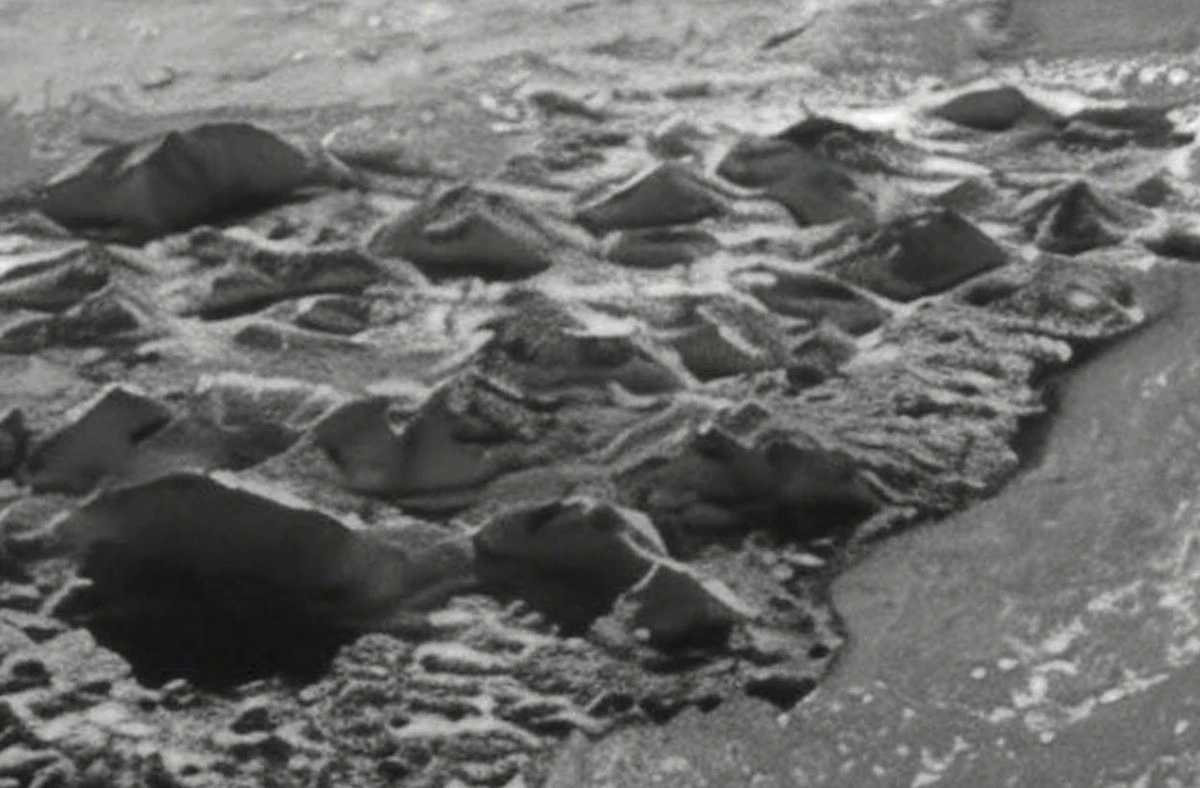
*This Plutonian mountain range Named after Nepalese Sherpa Tenzing Norgay, one of the two first people to reach the summit of the world's highest peak, Everest.
Mountain peaks are ideal places for gases to solidify. There, the pressure is lower, conditions favorable for condensation are more common, and the terrain influences the movement of air masses (Pluto has a very thin atmosphere, sufficient for gas transport). As a result, frozen methane more readily "settles" on the peaks, forming a thin white film and creating the recognizable "Alpine" appearance on the outskirts of the solar system. 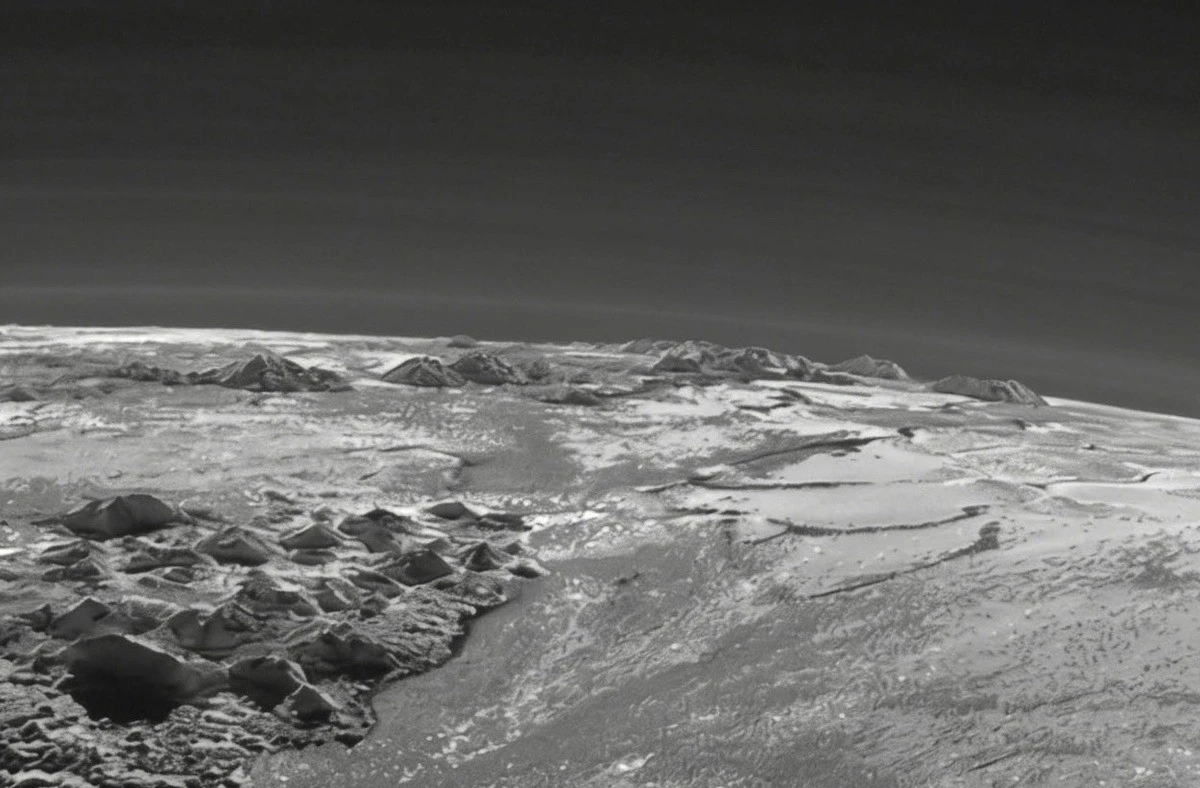
The Hillary Mountains (on the horizon). Maximum altitude: about 1.6 kilometers. 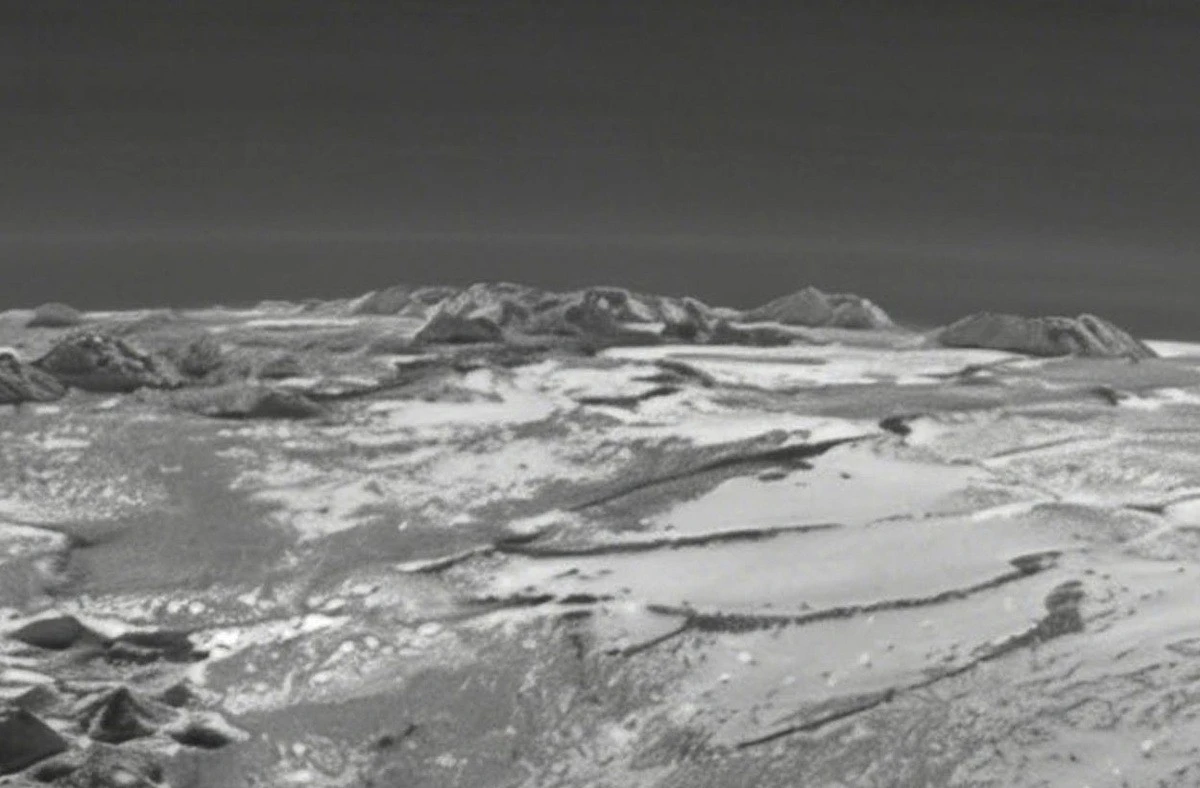
The New Horizons mission revealed that Pluto is not a boring ball of ice, but a highly complex celestial body with an active surface, diverse geological formations, and a "living"—albeit very thin—atmosphere. The methane frost on the tops of the ice mountains is not just an interesting detail, but a marker of the processes that shape the landscapes familiar to Earthlings, where familiar materials behave completely differently. 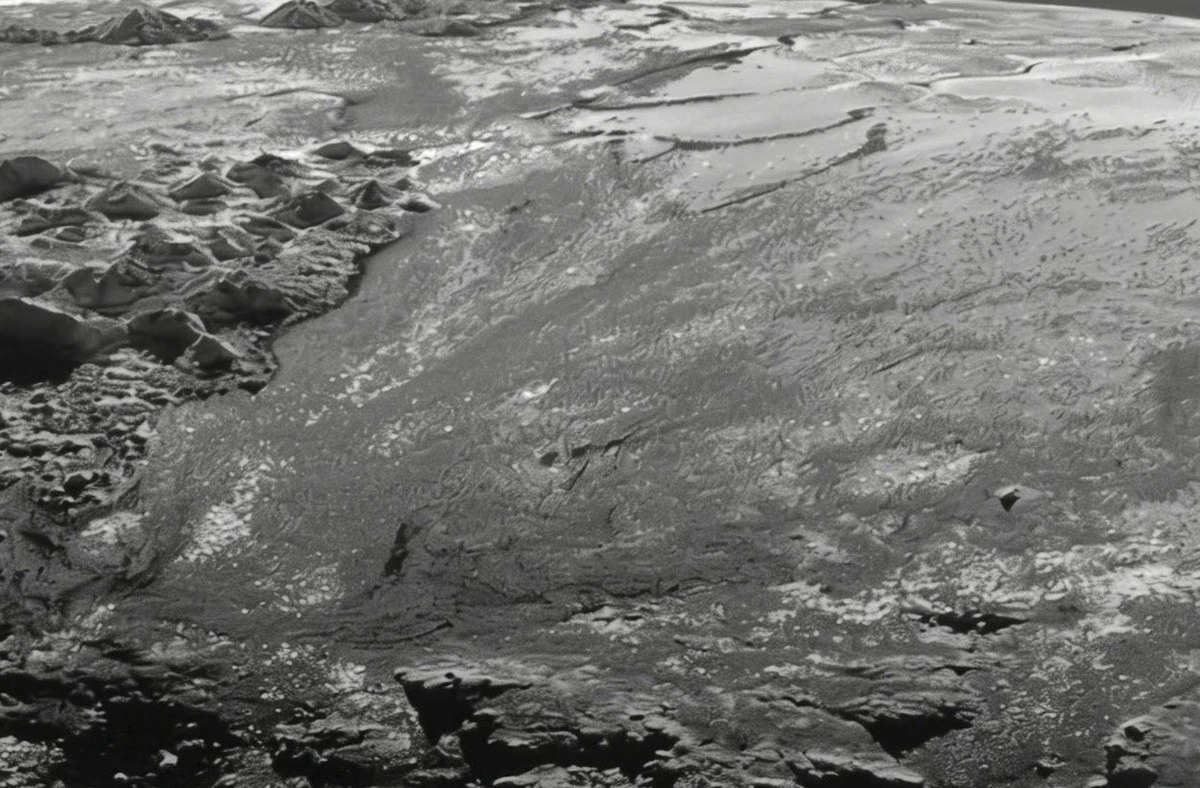
Sputnik Planitia. According to research, a subsurface ocean may be hidden beneath it.
And there's no doubt that a full-fledged mission to Pluto will be organized, as this distant world deserves close attention.
Add your comment
You might be interested in:














How to start a 102-liter engine

Protective film Removing it with a power screwdriver

When a child plays hide-and-seek at a professional level

Man sets up bedroom camera and discovers the reason for his

Super dads who swoop in to save the day

Precision carpentry

Looks like it's time to buy WinRAR

How to hang wallpaper neatly

How metal buckets are made in Pakistan
