I present to you a selection of unique and intriguing photographs from Great Britain, capturing everyday life, events, and atmosphere in the first half and mid-20th century. All photographs have been colorized. 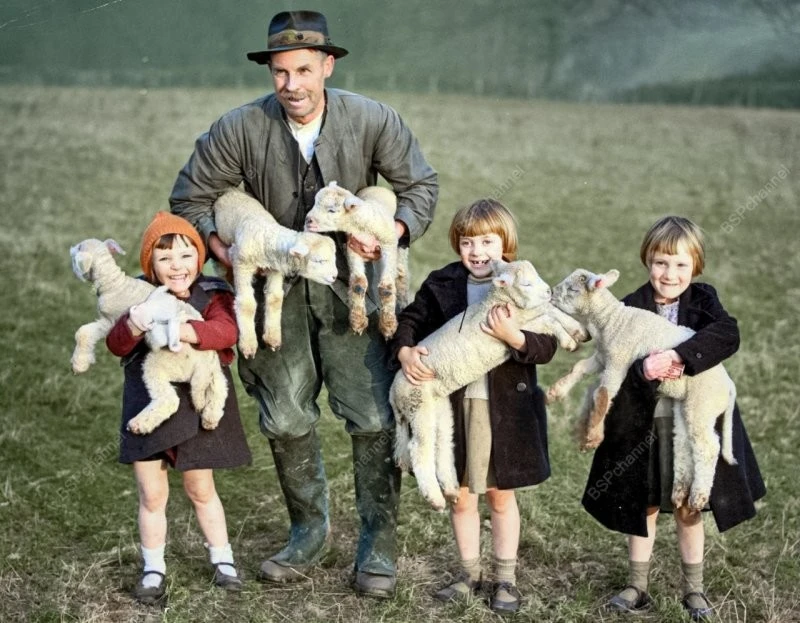
A group of men ride along the railway tracks in a sail-powered trolley at Spurn Head, England, 1922. 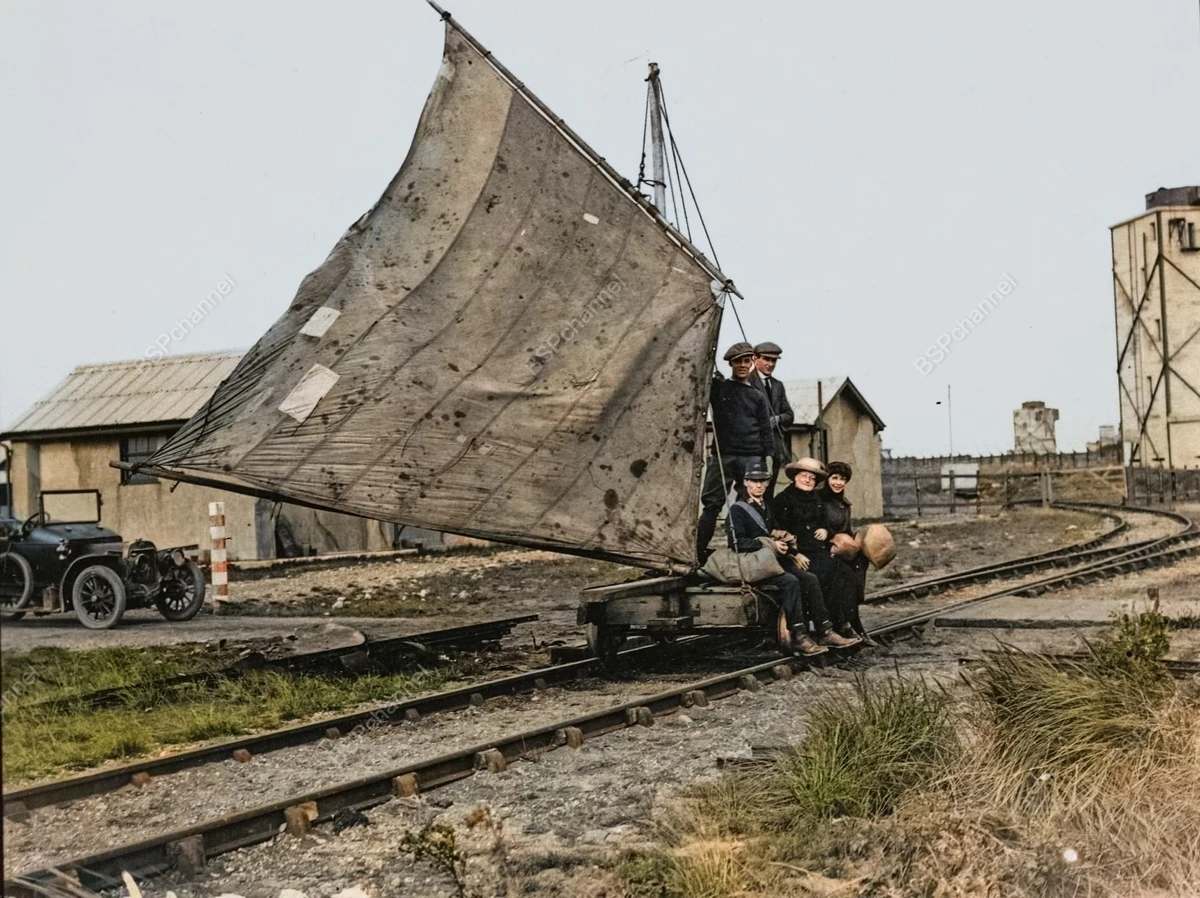
An unusual and rare technical solution that harnessed wind power to propel trains along rails. Such designs were occasionally used in the 19th and early 20th centuries at industrial sidings, construction sites, and in mining, where traction power was lacking and wind provided a reliable and free source of energy.
Entertaining a crowd of children in Hexham, Northumberland, 1950. 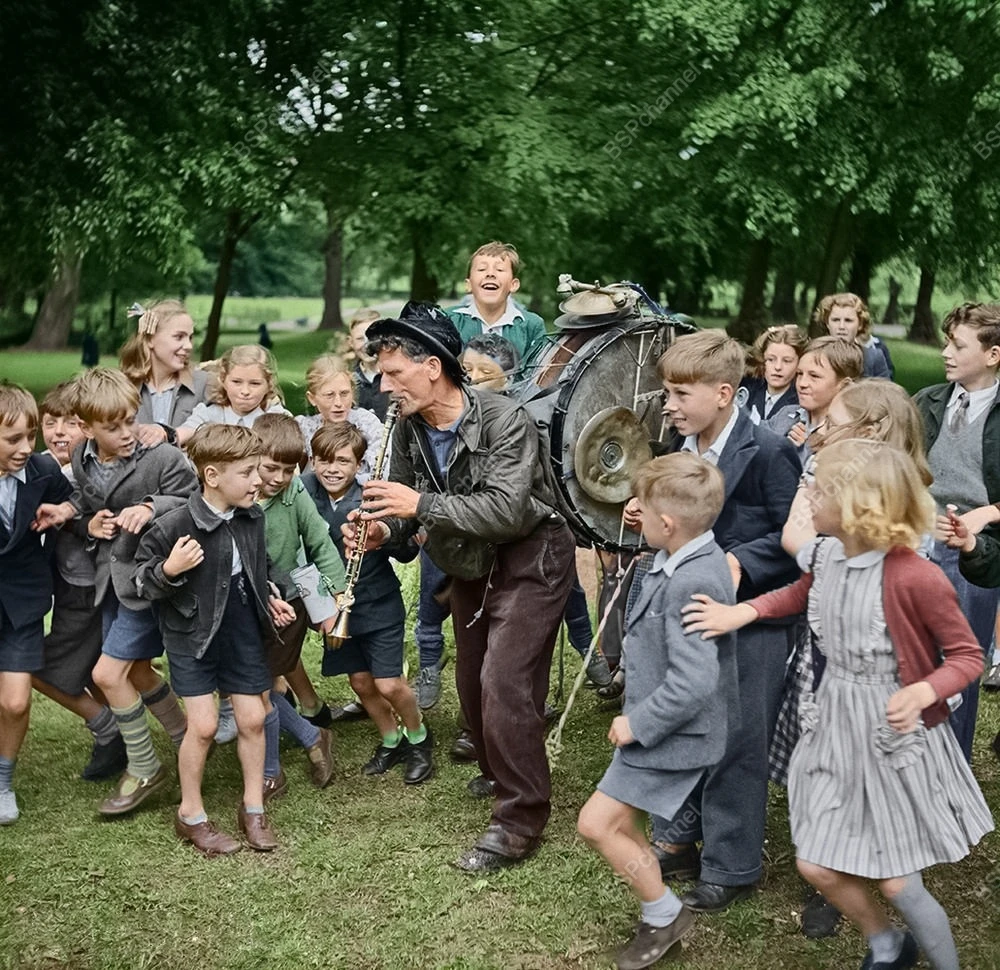
Photographer: Bert Hardy
All British Concordes. Heathrow Airport, 1986. 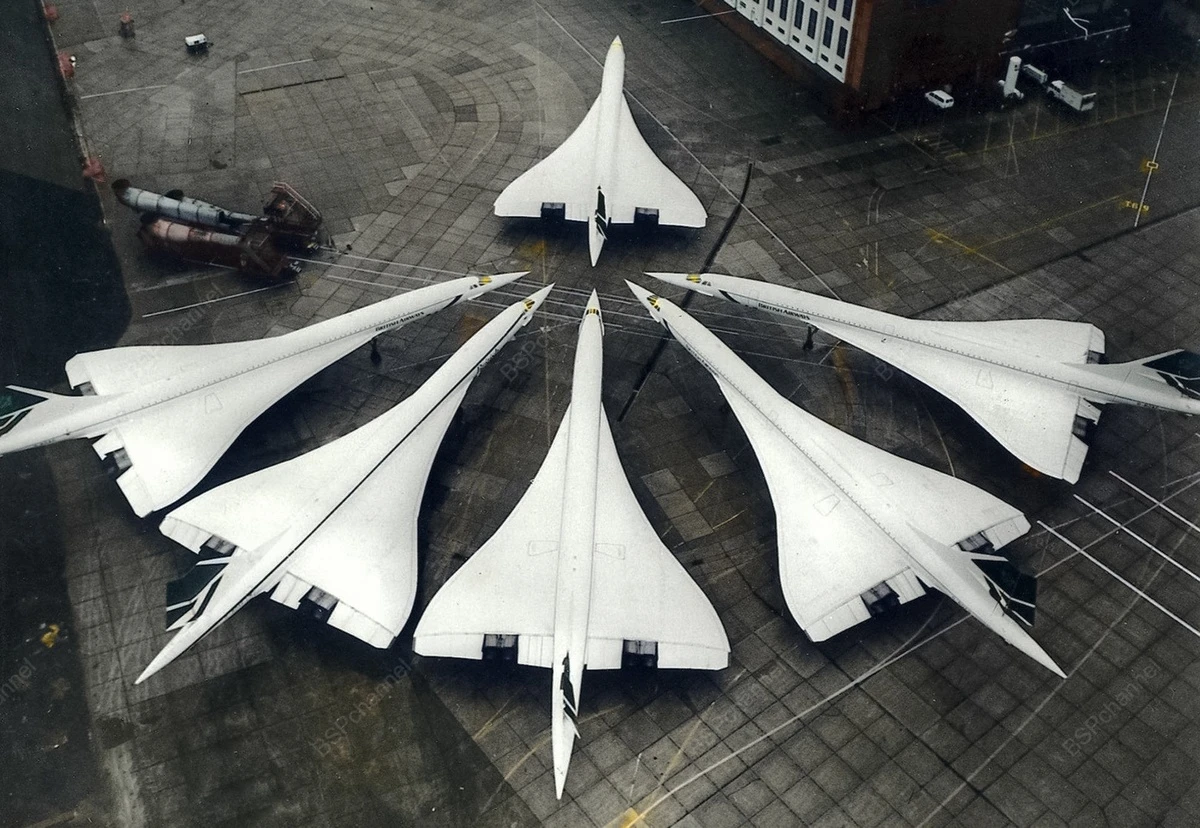
The real Winnie-the-Pooh and Christopher Robin, 1927. 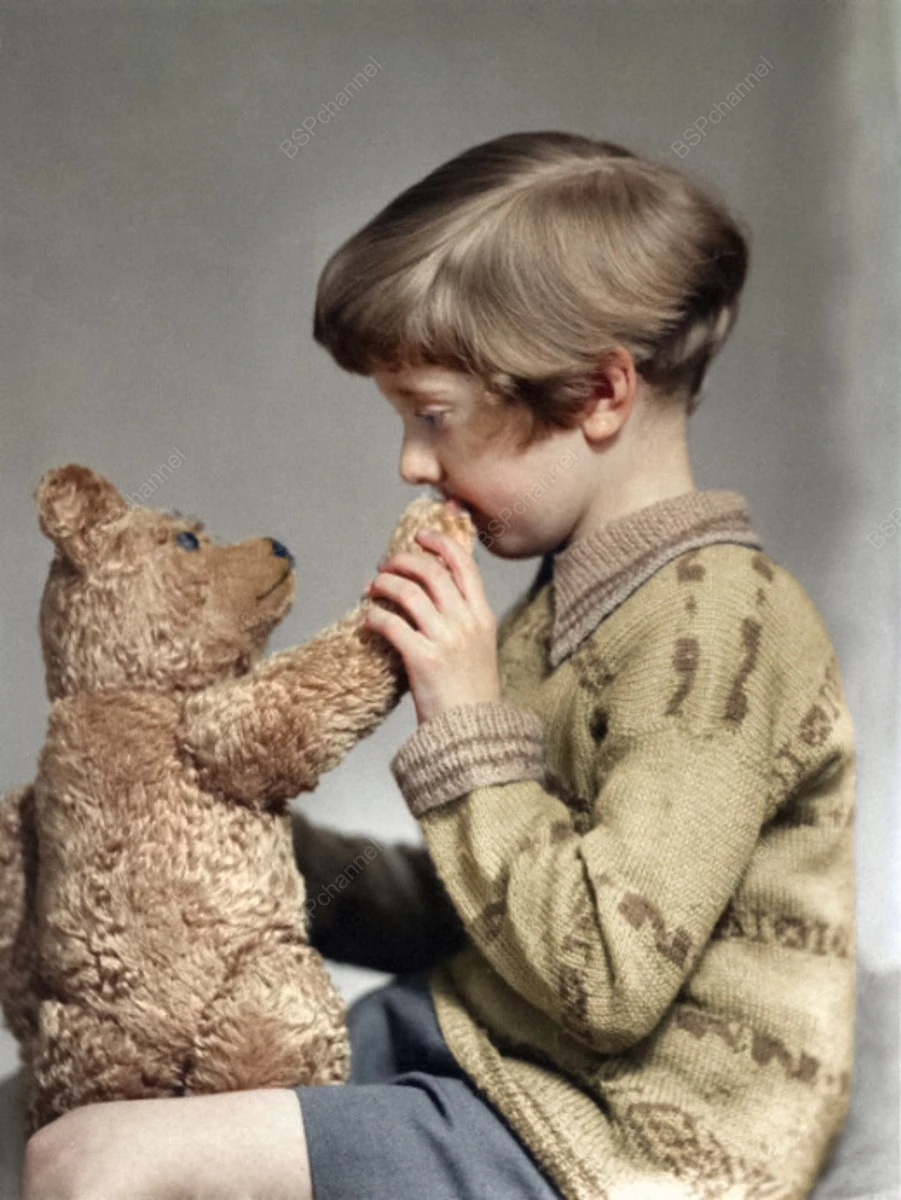
This famous 1927 photograph depicts Christopher Robin Milne, the five-year-old son of writer A.A. Milne, and his beloved teddy bear, Winnie-the-Pooh. The toy was purchased at Harrods in 1921 and was originally called simply "Bear," but the boy himself named it: "Winnie" after the bear he saw at London Zoo, named Winnie (short for Winnipeg), and "Pooh" after a swan that lived with friends of the Milne family. These two names merged into one – Winnie-the-Pooh, and Christopher Robin's childhood games with his toys inspired his father to create a book that became a classic of children's literature.
Backyard. Chelsea, England, 1952. 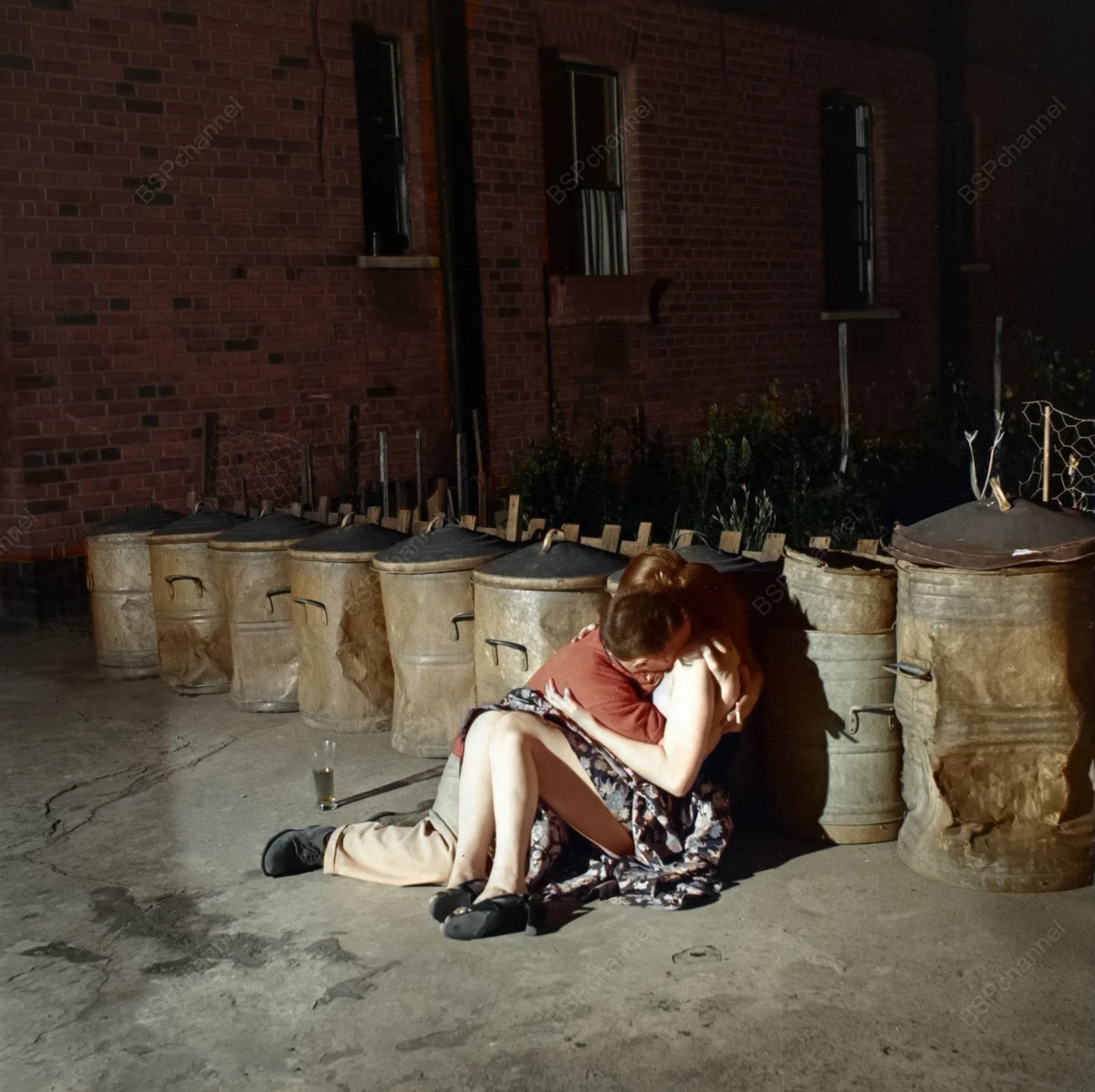
Photographer: Bert Hardy
Members of the British Union of Fascists (BUF) dig a trench across the access road to Hayne Barton Farm, near Exeter, Devon, in an attempt to prevent bailiffs from seizing property, in this case, livestock for unpaid tithes. England, November 30, 1933. 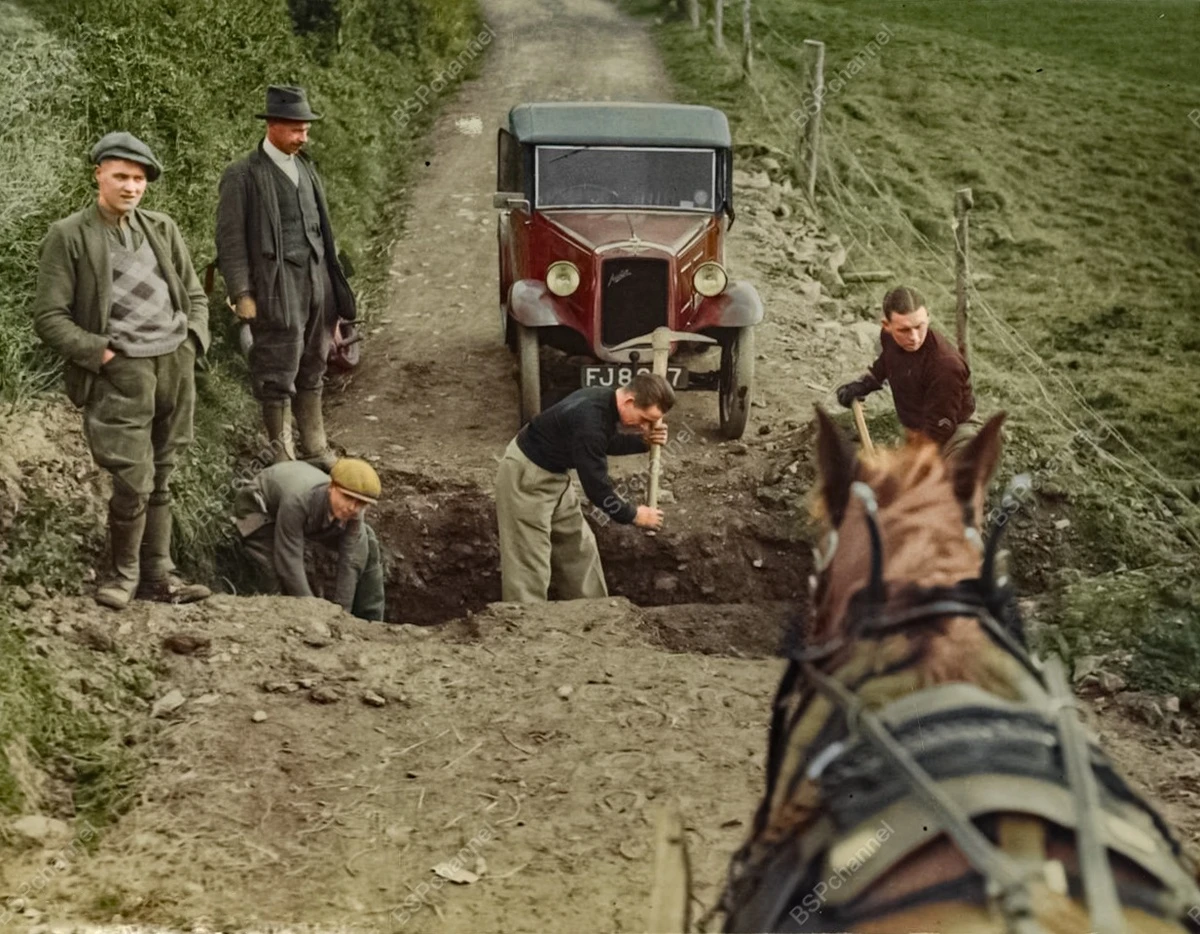
The British Union of Fascists (BUF) was a far-right political organization founded in 1932 by Oswald Mosley. Its members (BUF members) promoted fascist ideology, admired Mussolini and Hitler, and promoted anti-Semitic, anti-communist, and nationalist slogans. BUF members wore black uniforms (hence the nickname "Blackshirts") and organized rallies and clashes with opponents, particularly in working-class areas of London, such as the East End. After the outbreak of World War II in 1939, the BUF was banned, and its leaders, including Mosley, were interned as a threat to national security.
London, 1971. 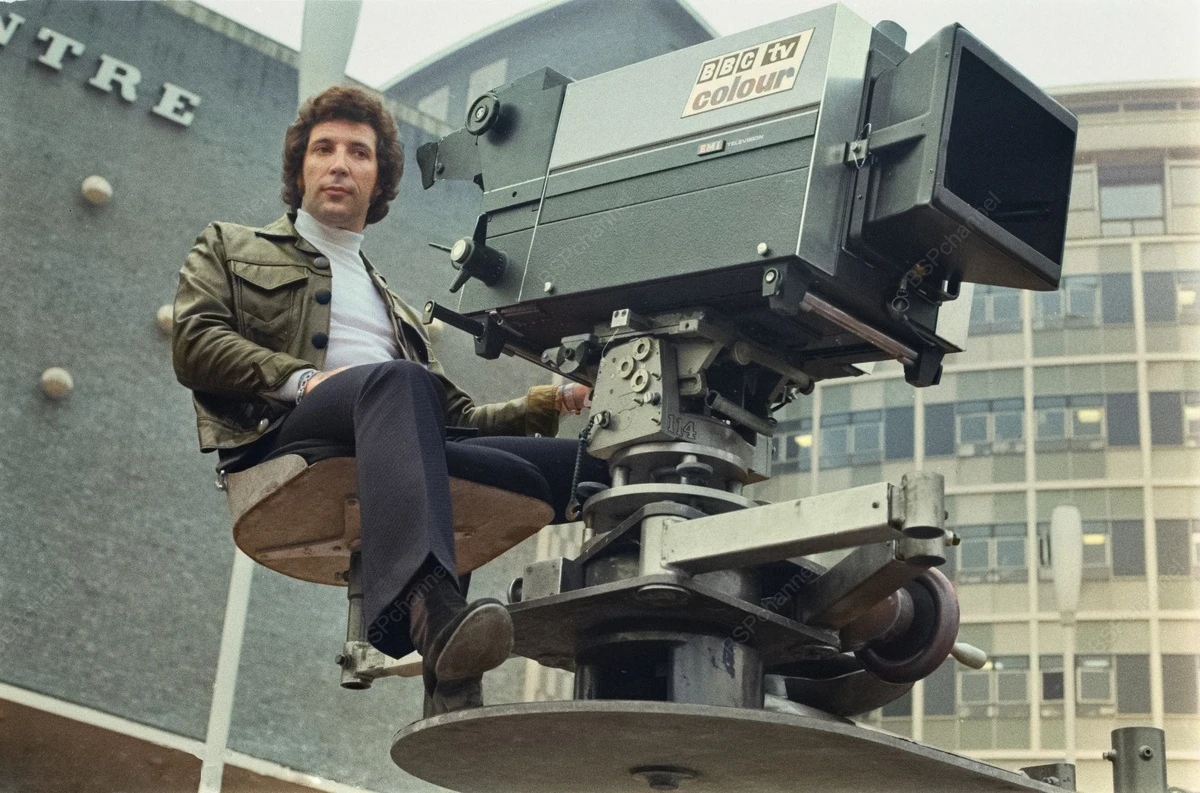
Photographer: Tom Jones.
Richard Lee and Raymond Sutton watch a miniature tram move along the tracks at the 5th Model Railway Exhibition in Central Hall, Westminster, London, 1959. 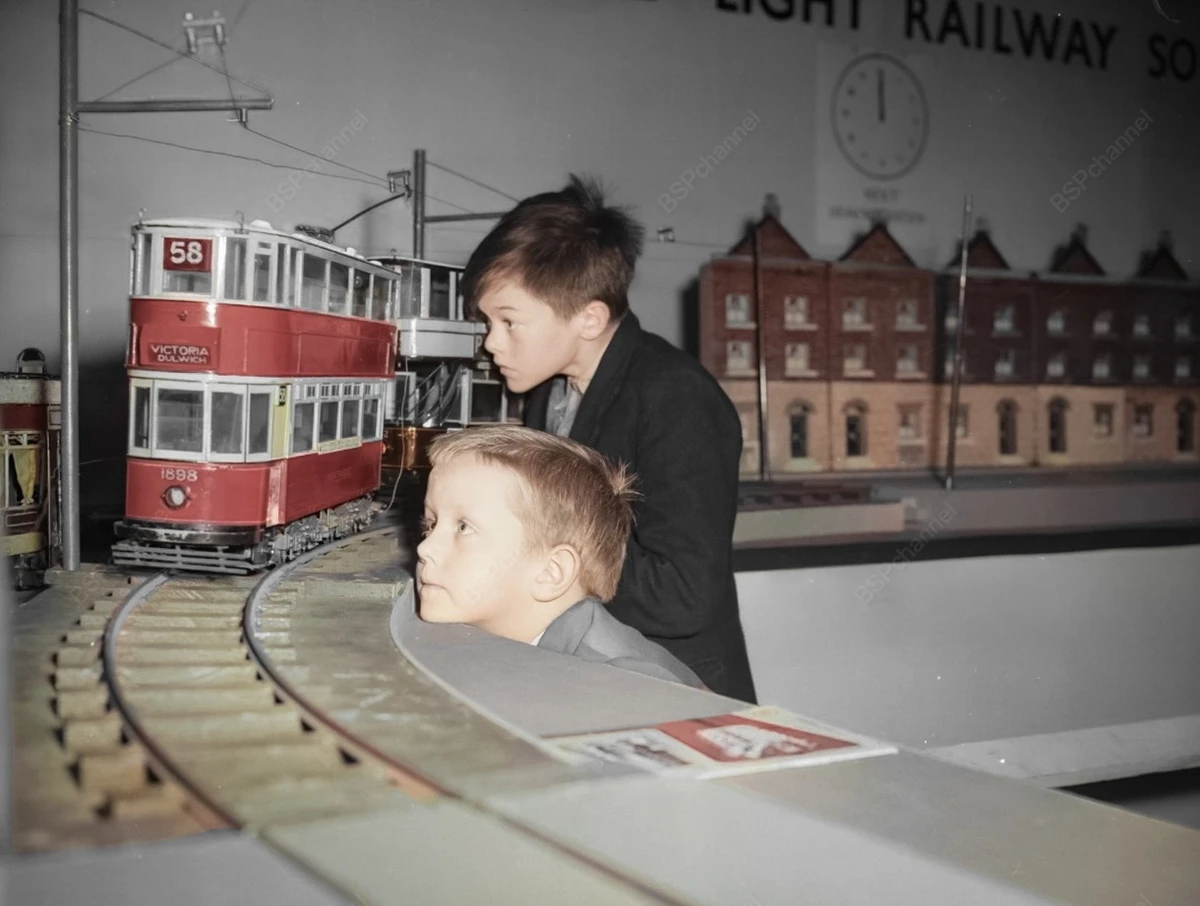
Photographer: Edward Miller
Mark Twain in the House of Commons with Sir John Benjamin Stone, 1907. 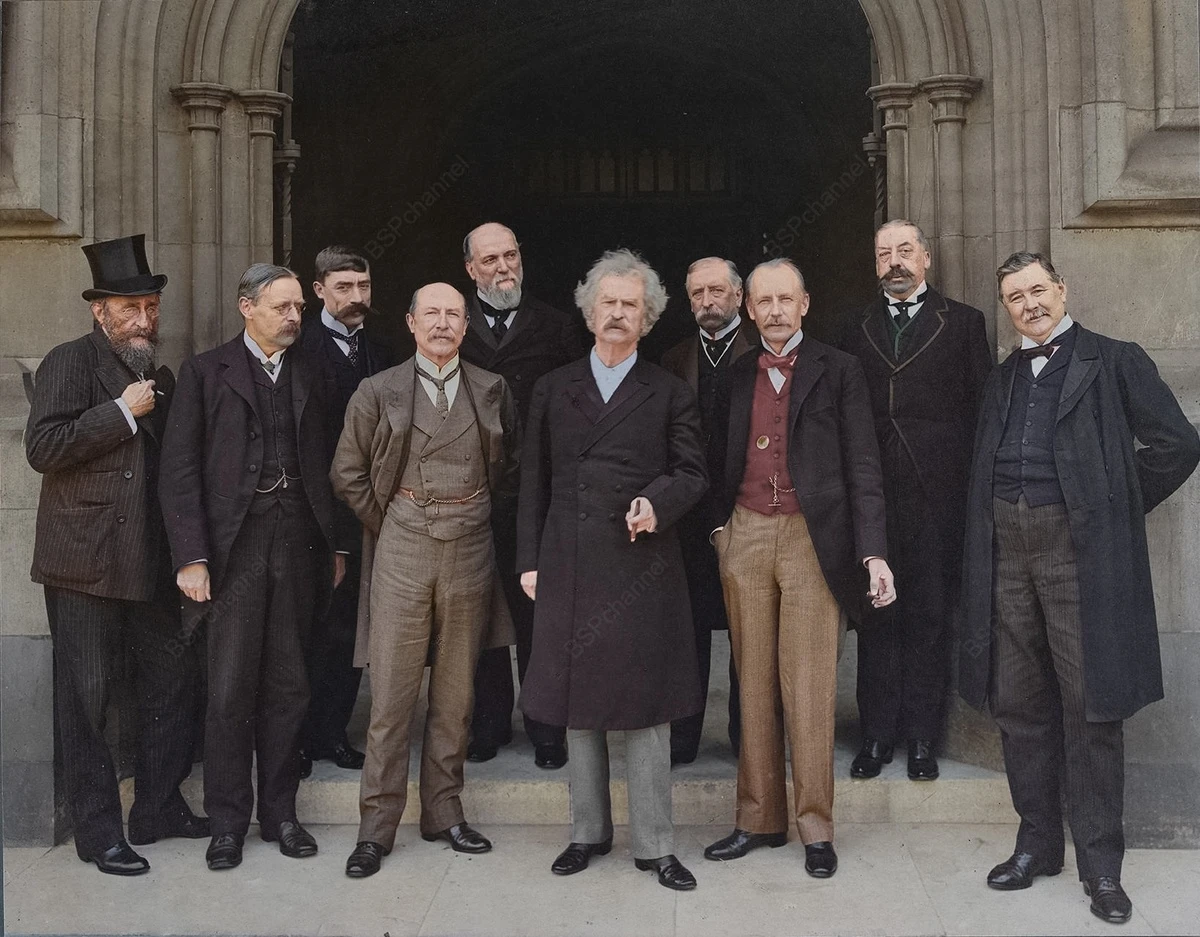
In June 1907, Samuel Langhorne Clemens, the famous American writer, humorist, journalist, and public figure, better known by his pen name Mark Twain, visited the British Parliament Building.
French actress Yvonne Monlaur (1939–2017) poses in a bikini during the filming of "The Inn of Trouble" at Walton Studios in Walton-on-Thames, Surrey, England, 1959. 
Photographer: Allen Newton
Children evacuated from London on a Sussex farm are enchanted by the first lambs of the year on New Year's Day. January 1, 1940. 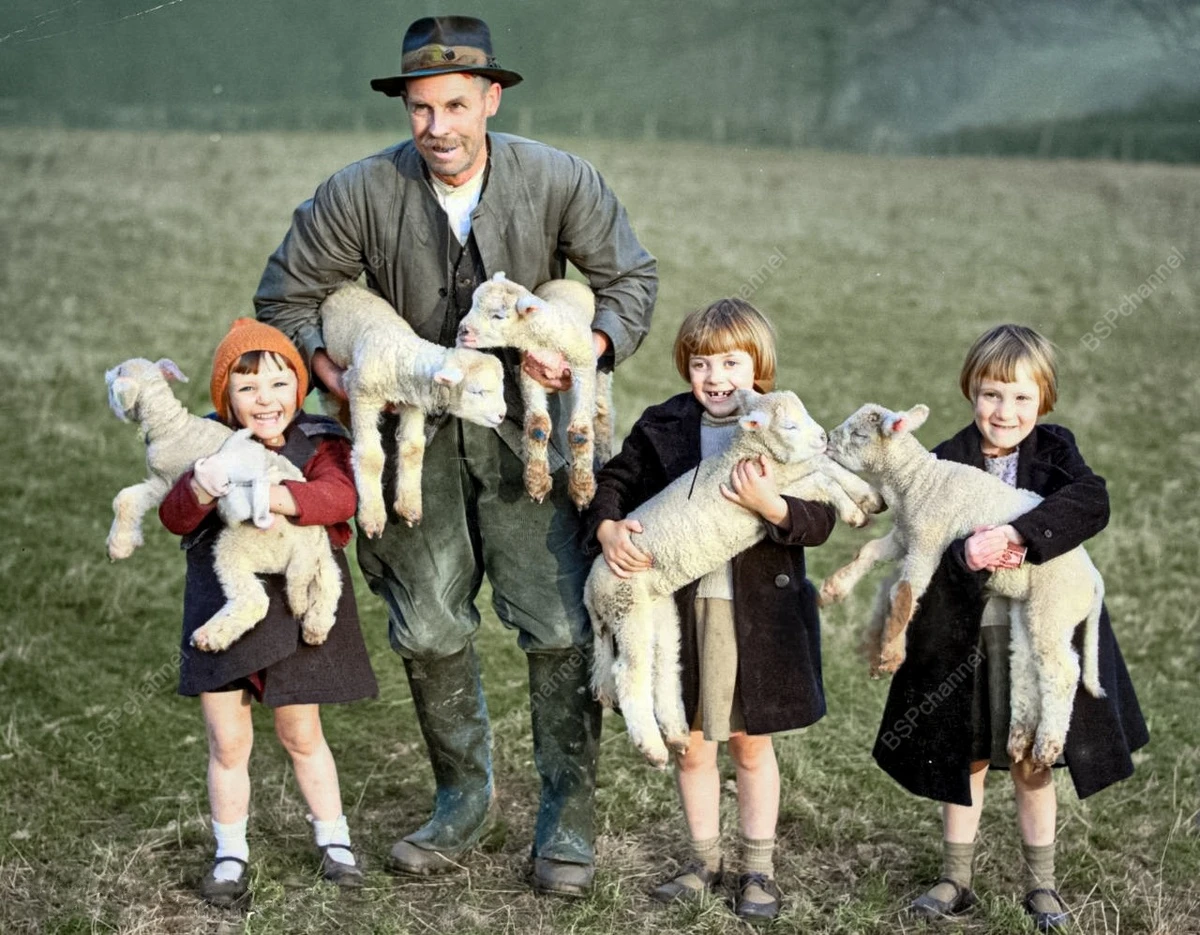
Photographer: Reg Speller
In anticipation of war, the British government launched a massive civilian rescue operation, Operation Pied Piper. Its goal was to urgently evacuate hundreds of thousands of children from major cities, primarily London, to safer rural areas to protect them from the expected Nazi bombing raids. At precisely 4:45 a.m. on September 1, 1939, German troops invaded Poland, marking the beginning of World War II. Even in those early hours, one of the largest civilian mobilizations in British history began. By 5 a.m., children had gathered at Myrdle School in Stepney, each with a name tag around their neck, as if at a train station before departure. By 7 a.m., the students of St. Dominic's Primary School in Hackney arrived with their bundles and suitcases. Across the country—from London to Liverpool, from Birmingham to Glasgow—more than 800,000 schoolchildren reported to designated collection points. When Britain and France officially declared war on Germany on September 3, the evacuation was already in full swing. In just three days, approximately 1.5 million people were evacuated from urban centers, including not only children but also pregnant women, mothers with infants, and teachers. The children were housed in villages, on farms, and in the homes of volunteers, often seeing cows, lambs, or the night sky without city lights for the first time.
Tyneside. England, 1950. 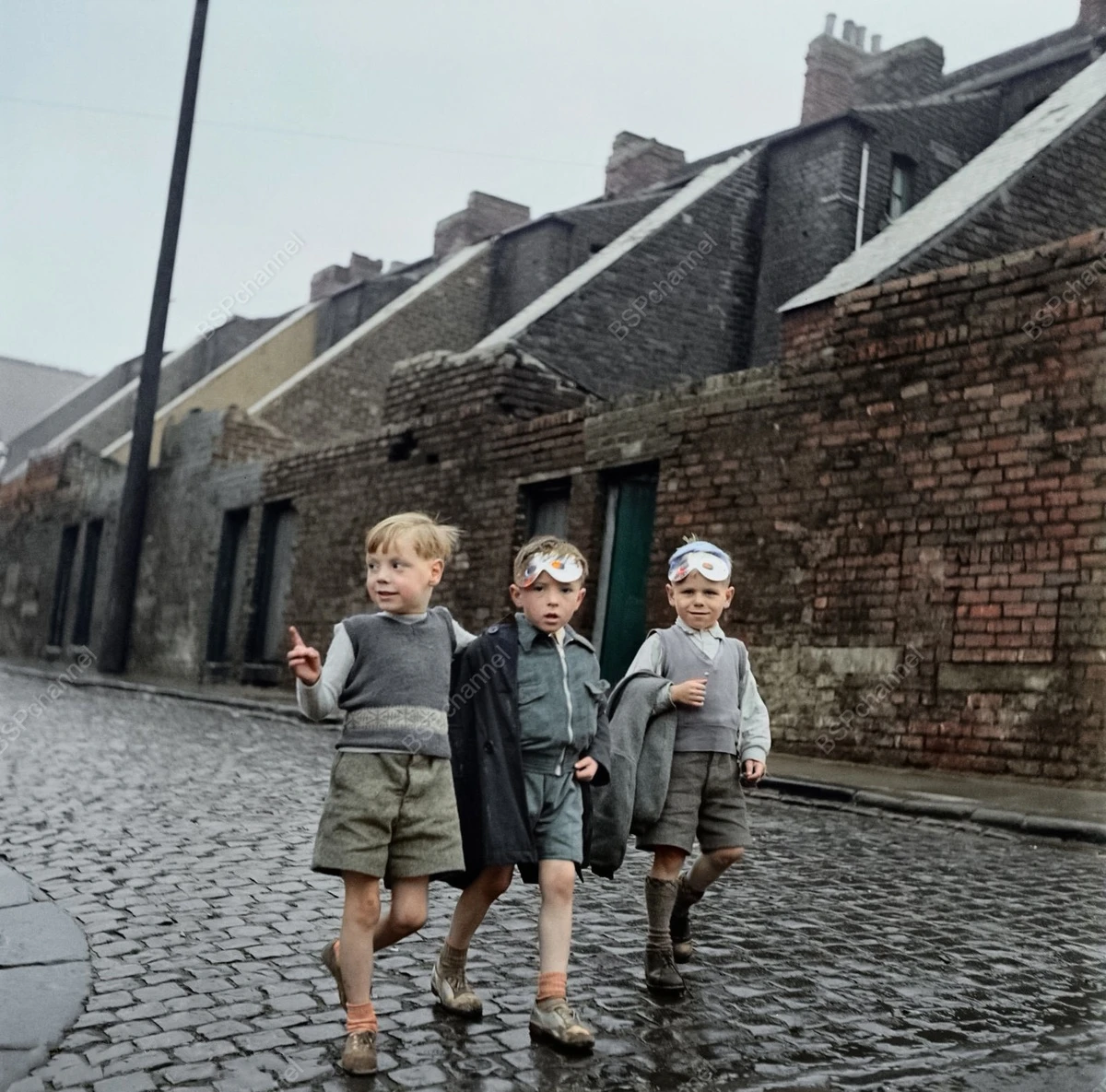
Photographer: Bert Hardy
British television presenter Anthea Redfern, 1971. 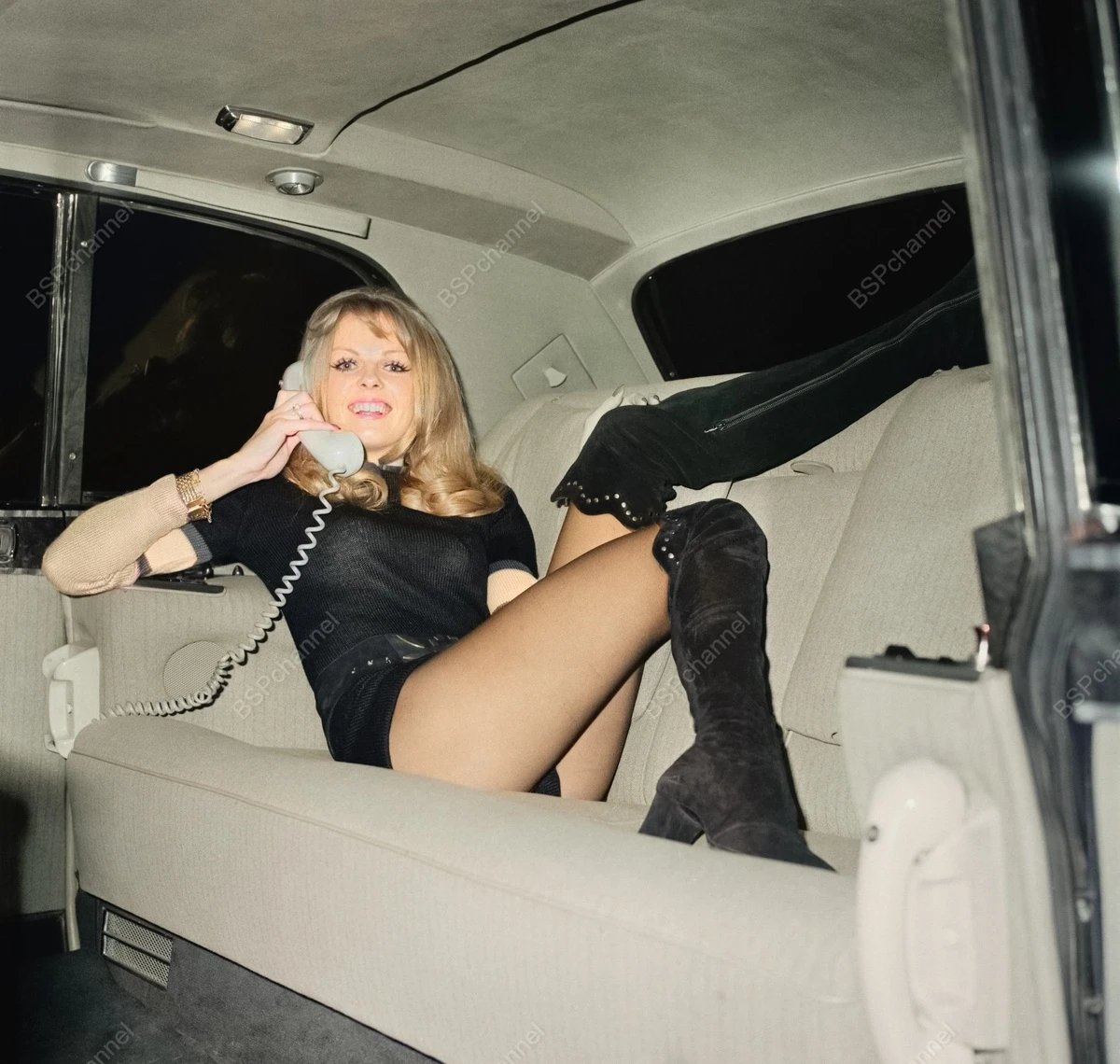
1908 London Olympics. 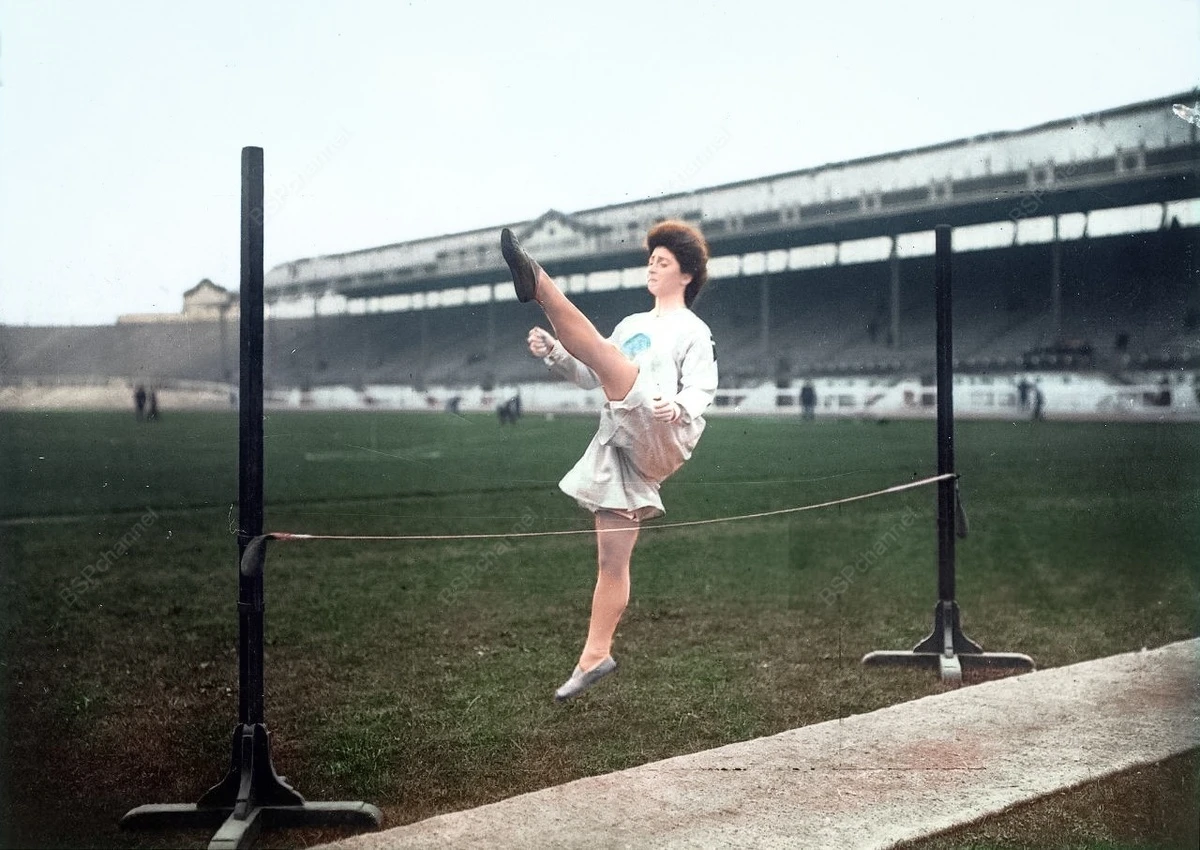
The 1908 London Olympics—the fourth modern Summer Olympics—marked a turning point in the history of the Olympic movement, establishing many traditions that remain an integral part of the Games today. The Games were originally scheduled to be held in Rome, but due to the 1906 eruption of Mount Vesuvius, Italy withdrew from hosting. Within a short timeframe (less than two years), Great Britain assumed this responsibility and hosted one of the largest and most well-organized Games of its time. The event was attended by 2,008 athletes, 1,971 of whom were men and 37 women.
Barrack apes of Gibraltar, 1942. 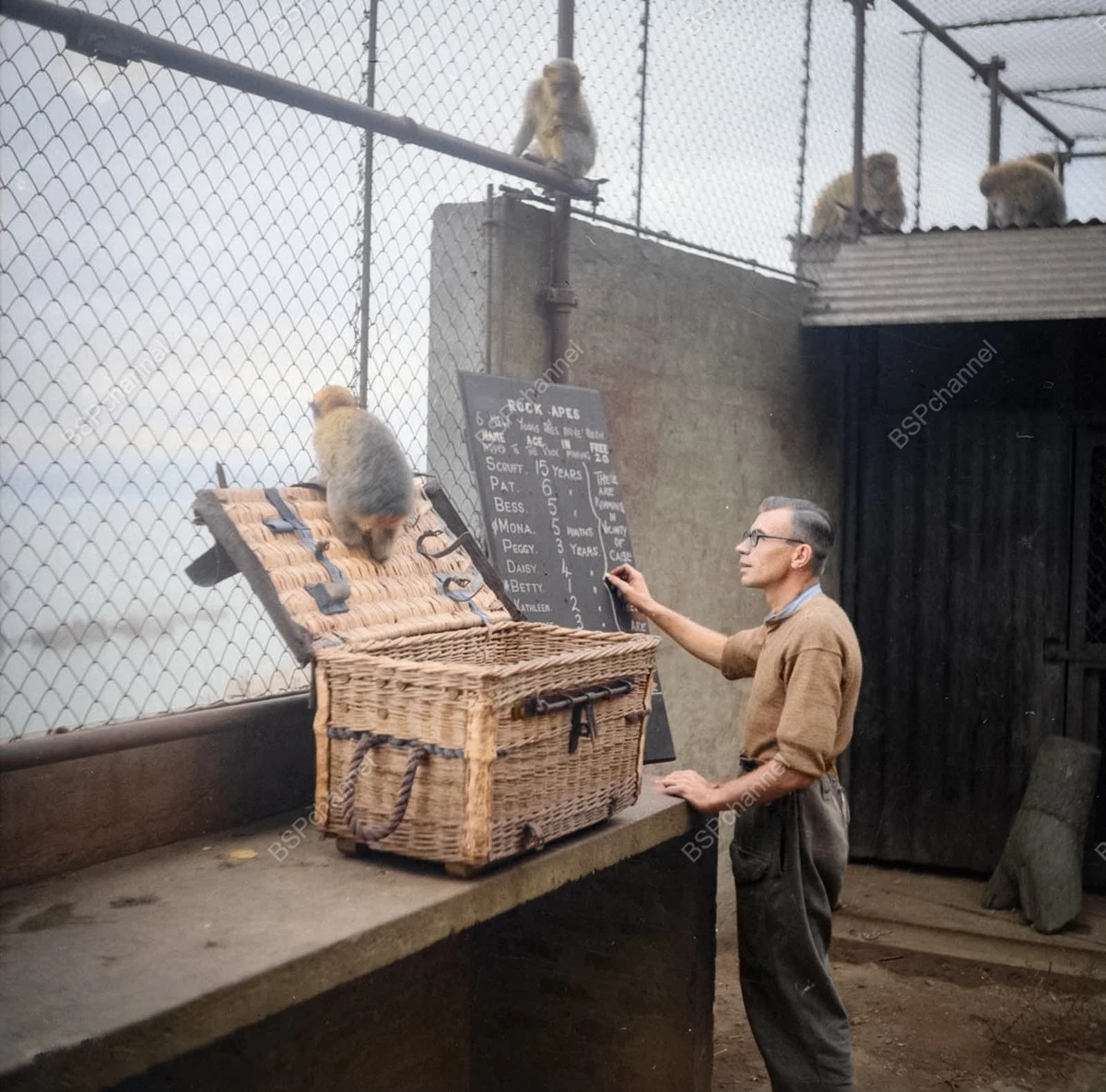
Gibraltar is a British Overseas Territory located at the southern tip of the Iberian Peninsula, at the entrance to the Mediterranean Sea. Despite its geographical location (it borders exclusively with Spain), Gibraltar has been under British sovereignty since 1713, according to the Treaty of Utrecht. Tradition holds that as long as the Barbary ape colony exists on Gibraltar, the territory will remain under British rule. After the population dwindled to just a few individuals, Winston Churchill ordered their numbers to be immediately replenished with Barbary Barbary macaques from Morocco and Algeria.
Concorde flies over the Nelson Monument in London, 1969. 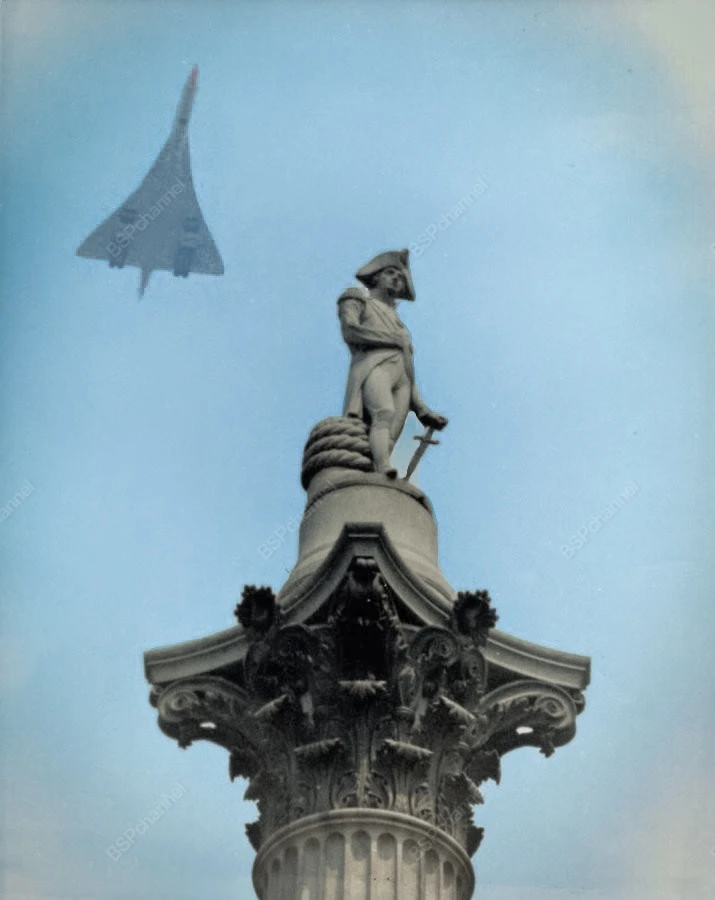
The Ship Inn, Porlock Weir, Somerset, England, 1904. 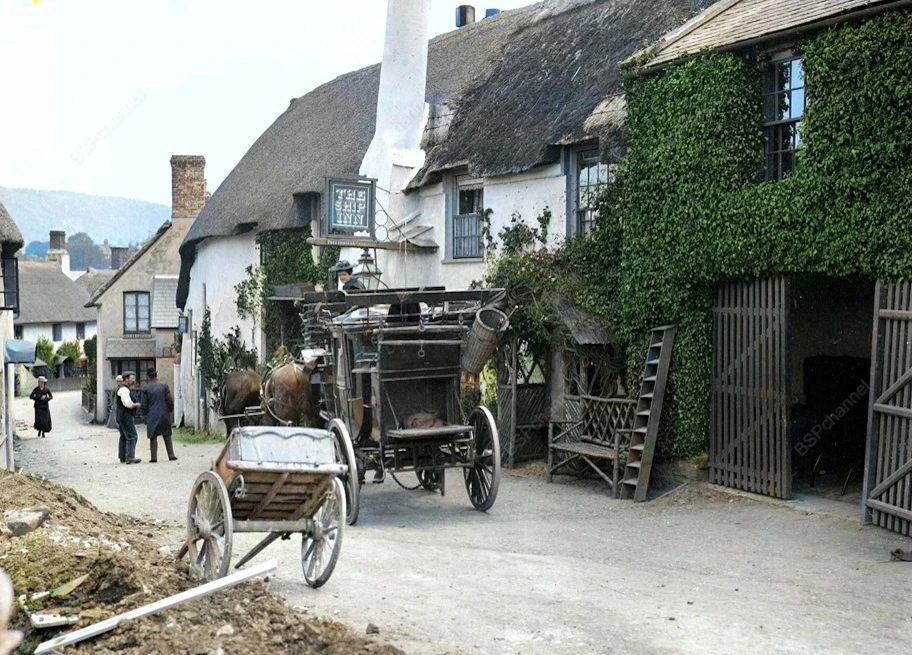
The photograph most likely shows a local omnibus, which regularly runs to the hotel, serving as a shuttle service for guests.
A man feeds pigeons near St. Paul's Cathedral in London, 1920. 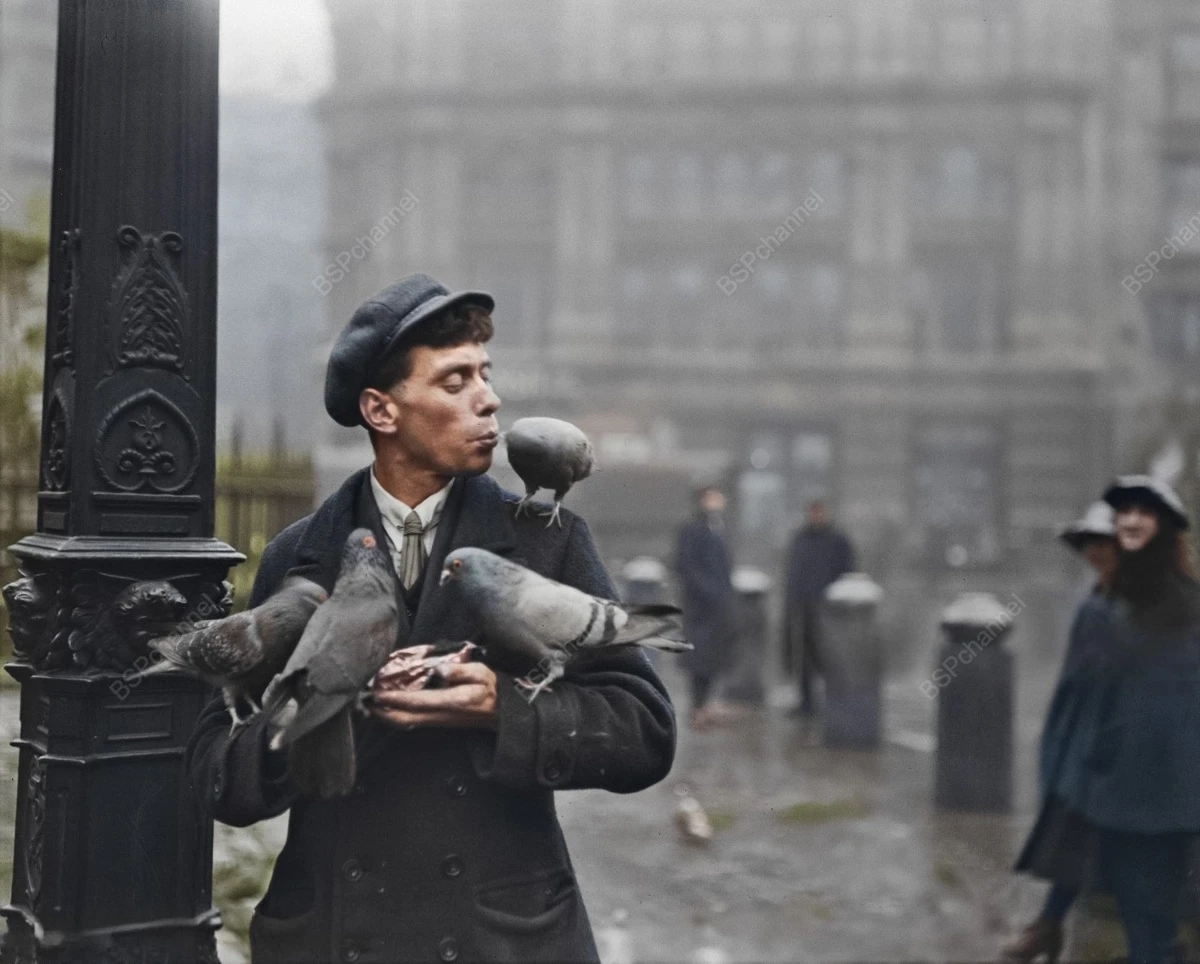
A London bus, 1926. 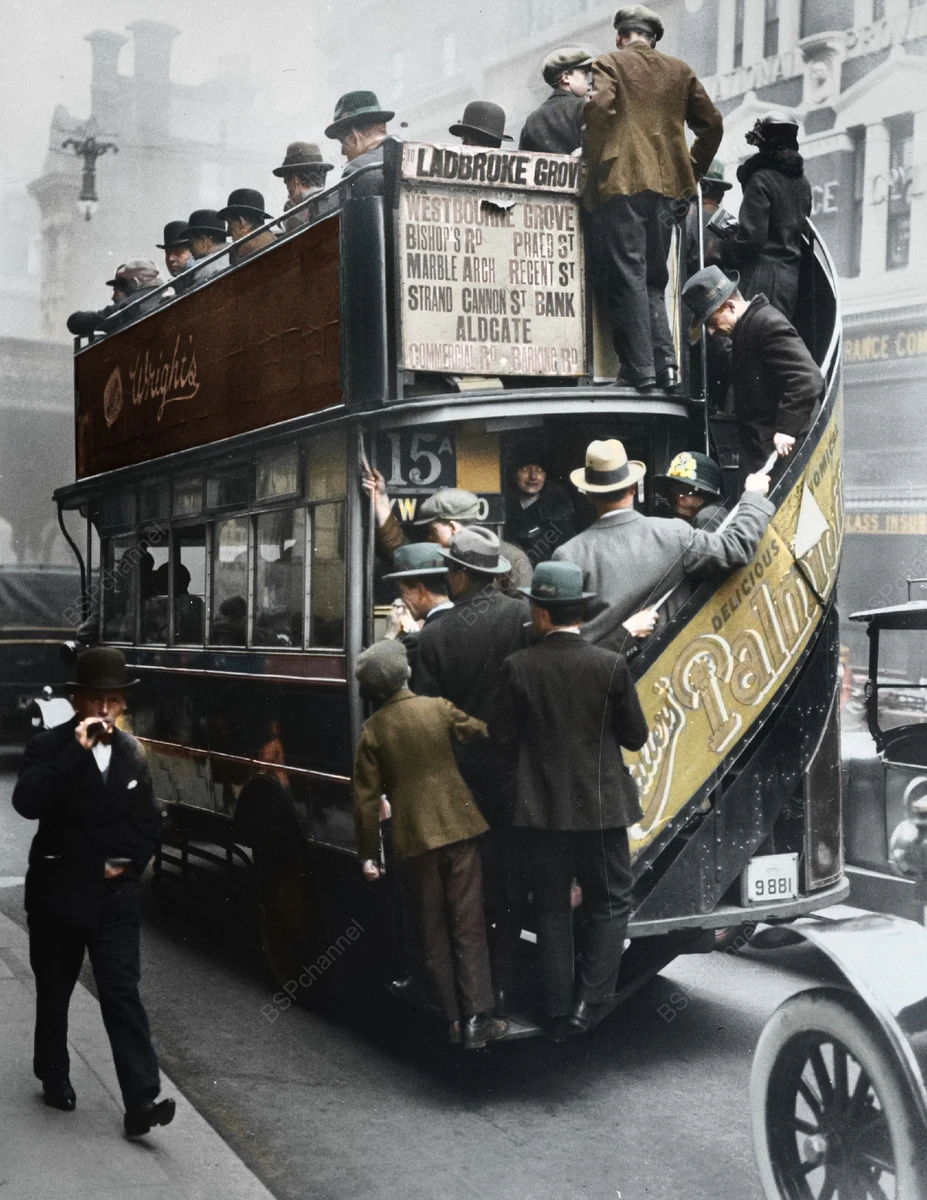
A bus overcrowded with passengers at Ludgate Circus in London during the general strike. The 1926 General Strike in Great Britain was one of the most significant events in the history of the British labour movement and the largest strike in the country's history. It began on May 4, 1926, and lasted nine days, officially ending on May 12. It was sparked by a bitter conflict in the coal industry: the government refused to subsidize the mines, threatening wage cuts and longer working hours for miners. In solidarity with the miners, the Trades Union Congress (TUC) called for a general strike. Over 1.5 million workers from key industries, including railway workers, steelworkers, construction workers, transport workers, and others, took part. Cities were plunged into paralysis: trains stopped running, newspapers were shut down, and ports came to a standstill. However, the government, led by Prime Minister Stanley Baldwin, was prepared for a confrontation: it mobilized police forces and organized the work of "volunteers"—students, civil servants, and army officers—to maintain basic infrastructure. The strike ended without a union victory. The TUC ended the action, deeming it "unproductive," while the miners continued to struggle for several more months, but were eventually forced to accept new terms.
A young Ian Archibald reflects on the consequences of a complex critique of the contestants in the Miss TV Times beauty pageant in London, 1971. 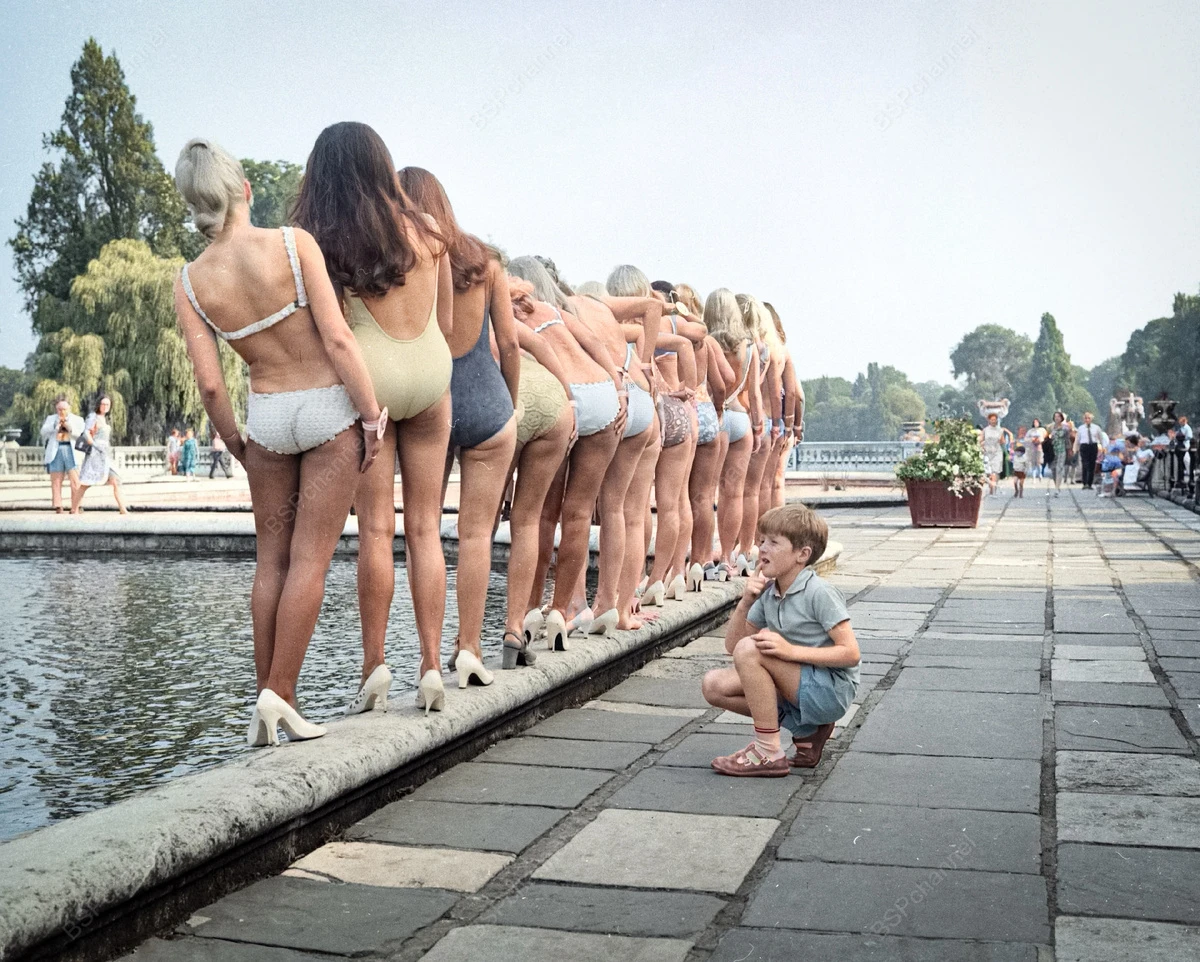
Add your comment
You might be interested in:







Cool pictures. Issue 3788
Curious photos from Britain's past (15 photos)
Chinese Disneyland, which makes you a little scary (6

The best pictures and drawings from the web (15 photos)
Young cheetahs play at sunset (6 photos)
The weather that can't be worse (31 photos)
14 animals with the strongest jaws in the world (15 photos)
A photographer from the USA showed what happens to
Atmospheric abandoned places (19 photos)

How to start a 102-liter engine

Protective film Removing it with a power screwdriver

When a child plays hide-and-seek at a professional level

Man sets up bedroom camera and discovers the reason for his

Super dads who swoop in to save the day

Precision carpentry

Looks like it's time to buy WinRAR

How to hang wallpaper neatly

How metal buckets are made in Pakistan
