The story of how a four-ton steel ball caused an earthquake in a forest and revealed the secrets of the Earth (12 photos + 2 videos)
Hidden away in the wooded surroundings of Mount Hainberg near Göttingen, Germany, lies an old seismic observatory. This station was built in 1902 by the eminent German physicist and geophysicist Emil Wiechert for research in the then-nascent field of Earth science. 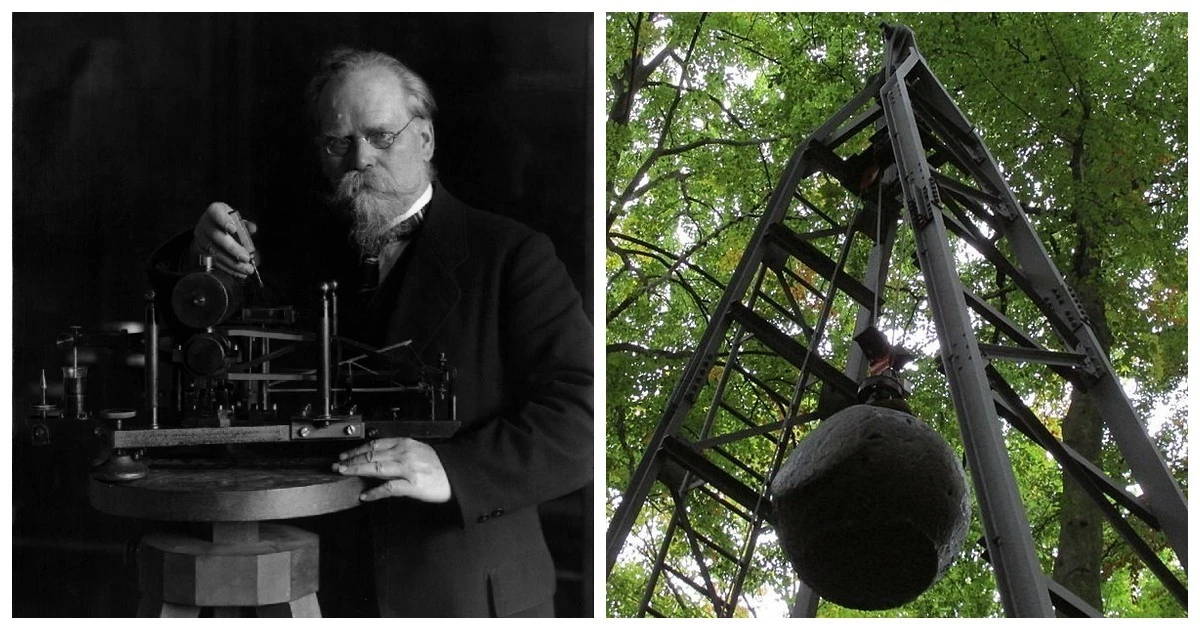
Here he built several seismographs to record tremors. These instruments have been continuously recording data since their inception, making them the oldest operating seismographs in the world. 
Heinberg
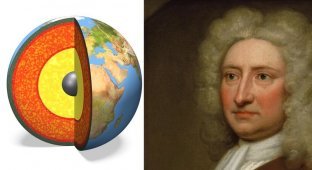
Emil Wiechert sought to unravel the structure of our planet. Several years earlier, he had published the first reliable model of the Earth's interior as a series of concentric shells. 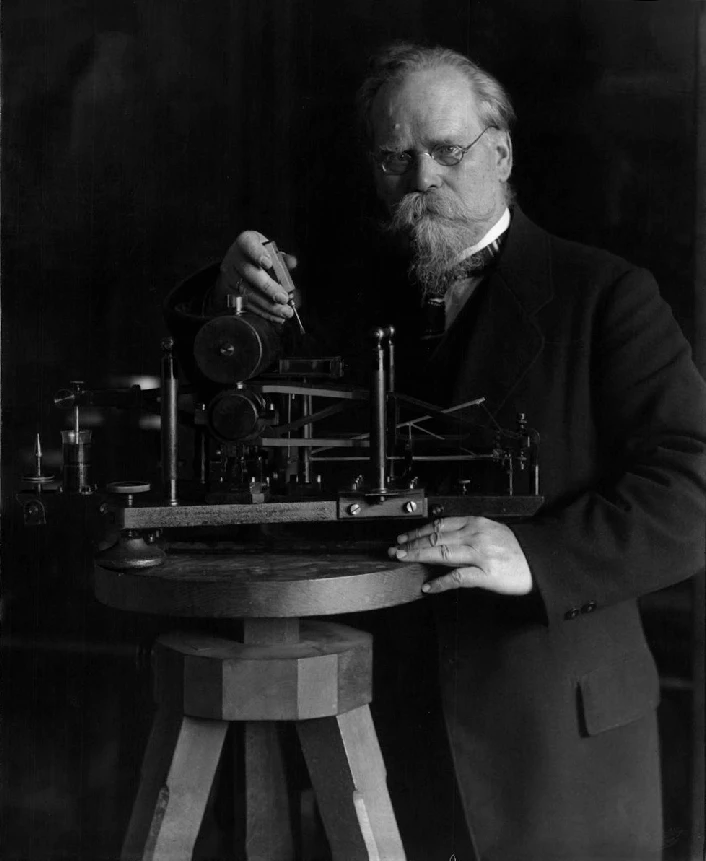
Emil Johann Wiechert — German physicist and geophysicist
The scientist argued that since the density of surface rocks differs from the average density of Earth, the planet must consist of layers of varying density. He correctly concluded that a heavy iron core exists. 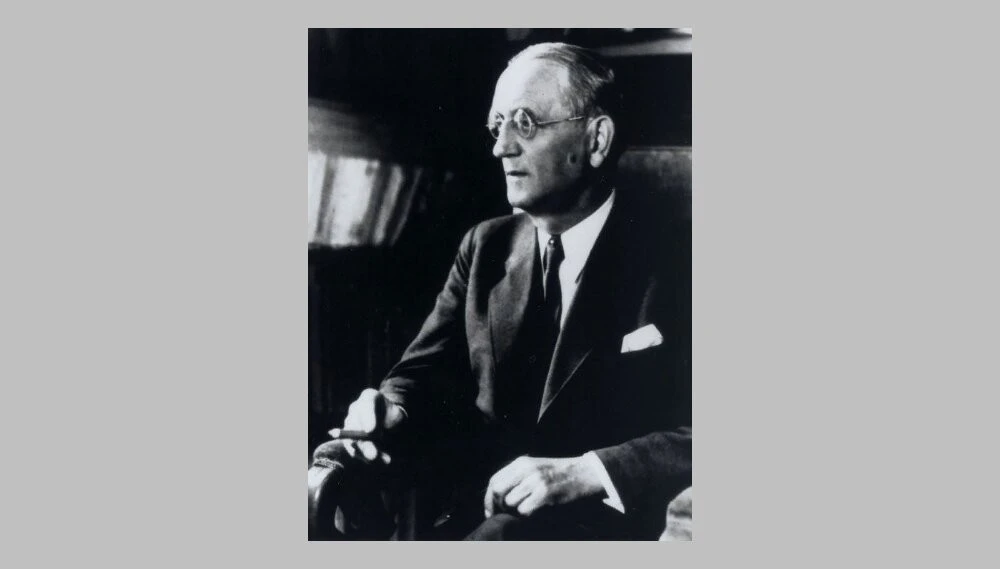
Ludger Mintrop was a German geophysicist and surveyor, one of the first scientists to apply exploration geophysics to oil and gas exploration.
Emil Wiechert was assisted by many brilliant researchers, including the young German geophysicist Ludger Mintrop. 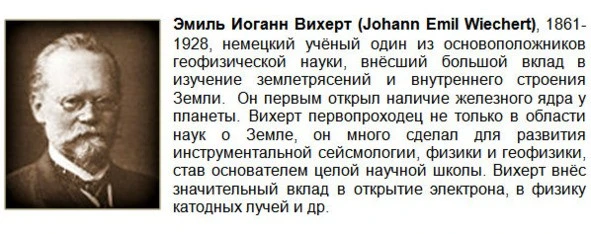
Mintrop, a talented student of Wiechert and one of the fathers of modern geophysics, invented a method for creating artificial earthquakes in 1908. The data obtained from seismographs allowed him to determine the geological structure beneath the surface. He built a 14-meter-tall steel structure from which he dropped a four-ton steel ball onto a shell rock layer. 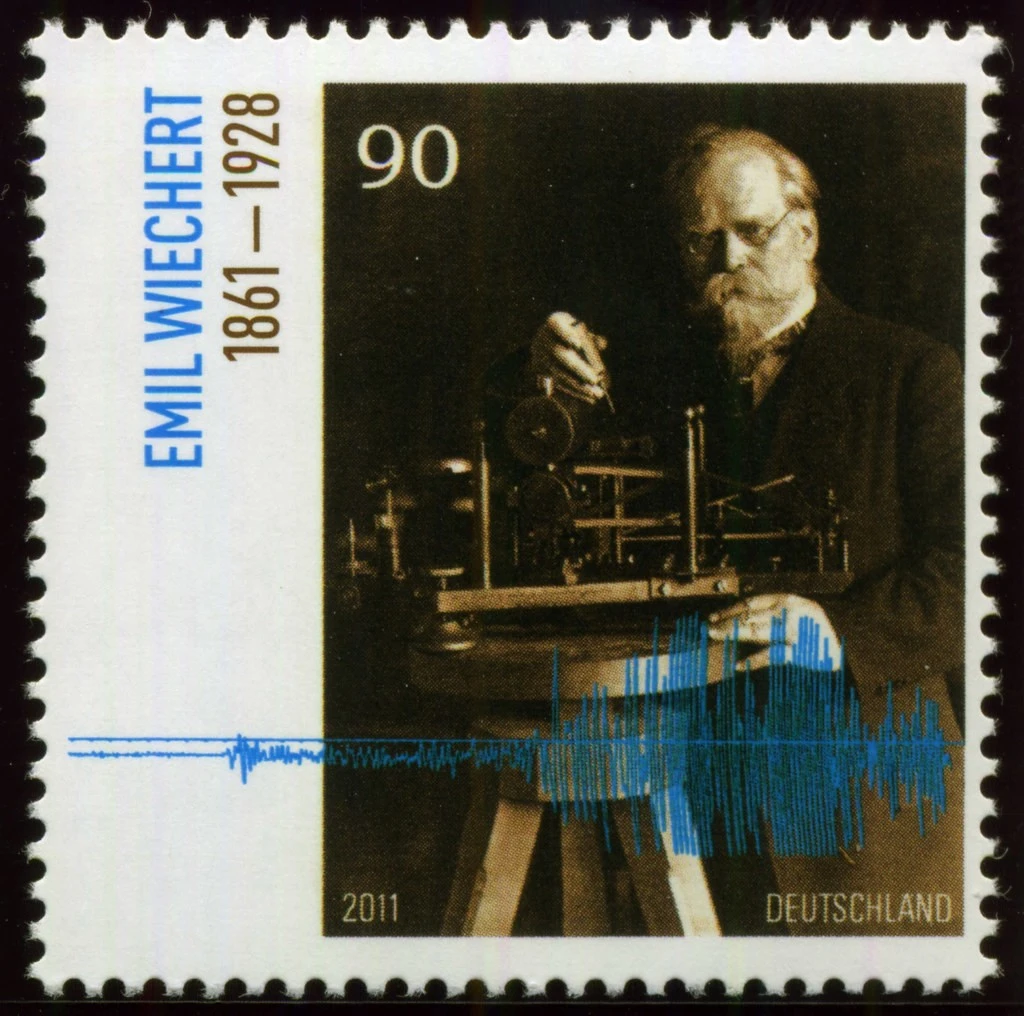
Portable seismographs recorded the artificial seismic waves it generated at various distances from the impact point. The experiment was a resounding success. 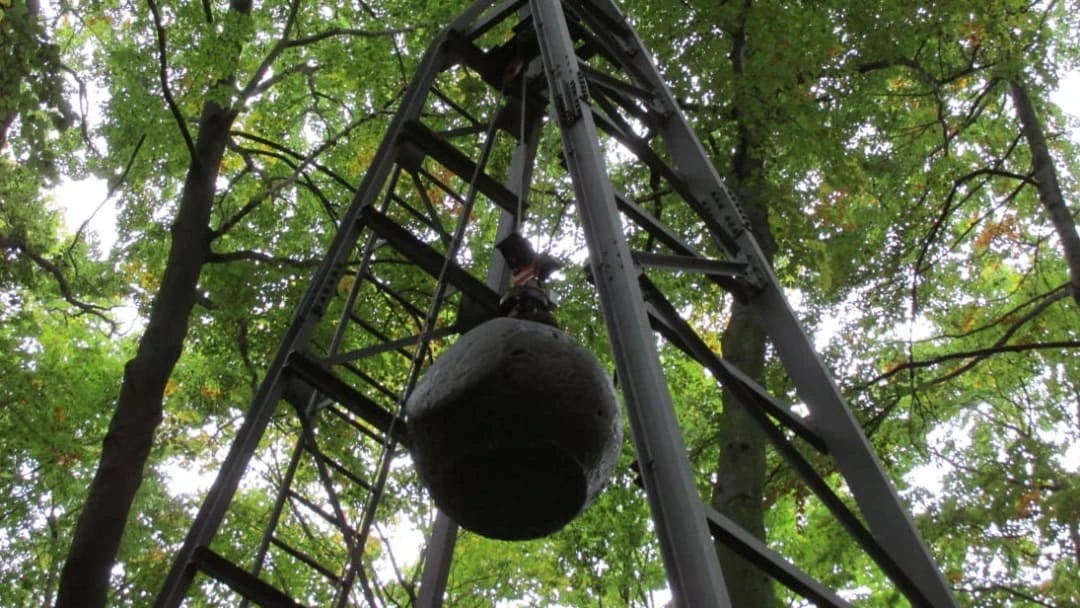
The Ministry of Natural Resources succeeded in creating a three-dimensional image of the subsurface immediately below the surface. This experiment demonstrated that small, localized artificial earthquakes can reveal clear boundaries between rocks, distinguish solid from liquid strata, and draw conclusions about the nature of geological structures near the surface. 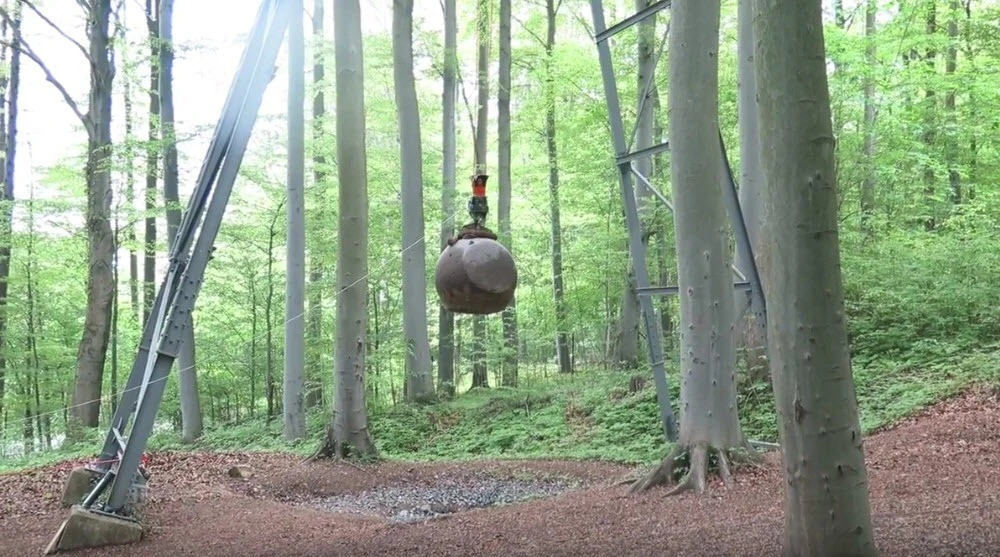
As a result, Mintrop founded Seismos GmbH to explore mineral deposits using seismic waves, although it replaced the heavy balls with dynamite. 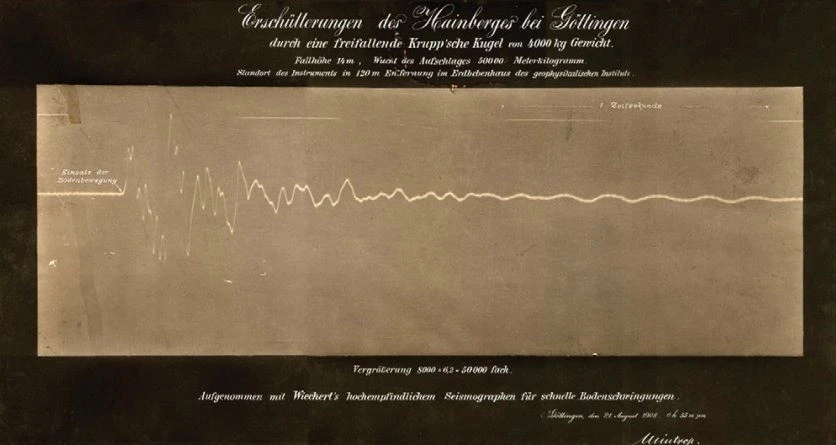
A Wiechert seismograph recording of the shock wave caused by the impact of a 4,000 kg iron ball, August 21, 1908
This method, known as seismic prospecting, is still used by the oil industry to locate hydrocarbon and mineral deposits by creating artificial shock waves and interpreting the results. 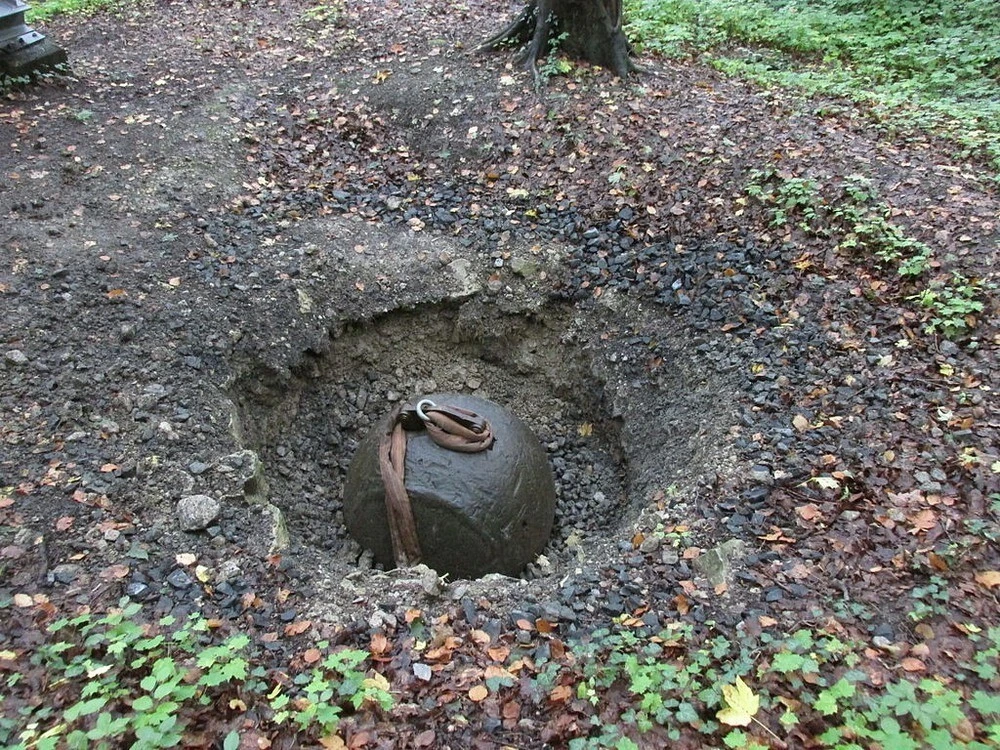
The four-ton steel ball in its steel tower still stands at the seismic station. The design has been modernized, adding an electric motor and a remote release mechanism. The ball is still released for visitors. 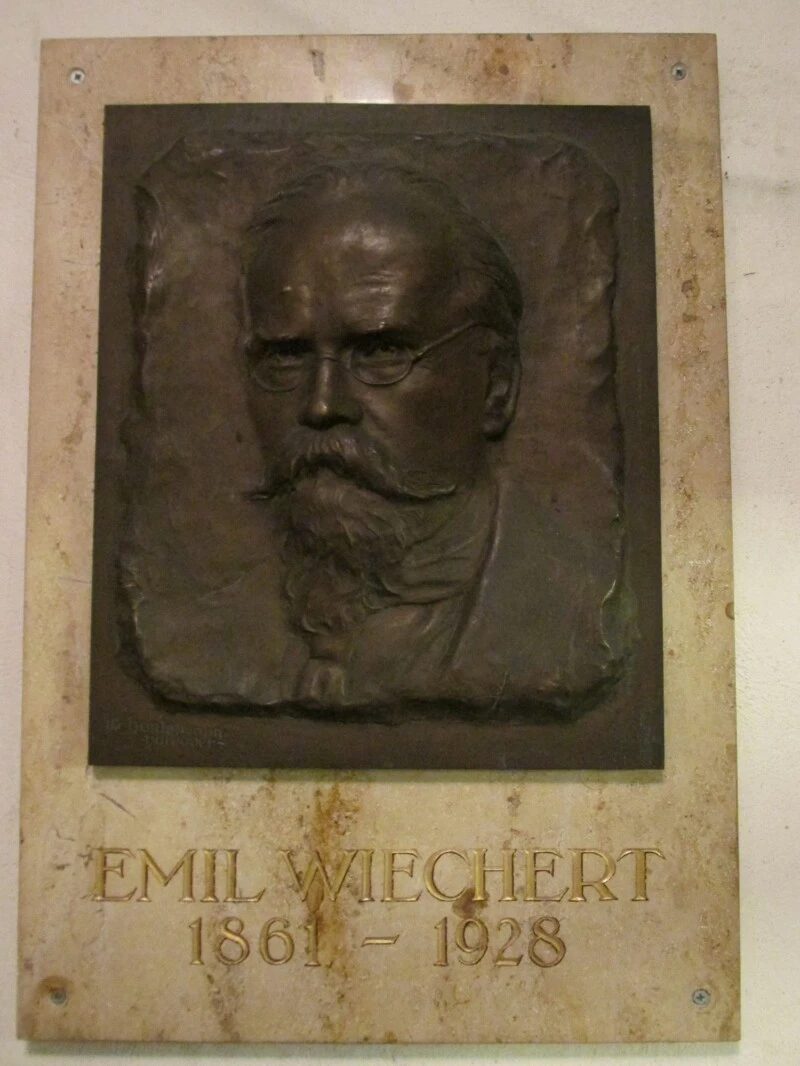
Other unique exhibits can be seen at the station. Visitors can examine the famous inverted pendulum seismograph created by Wiechert in 1902. 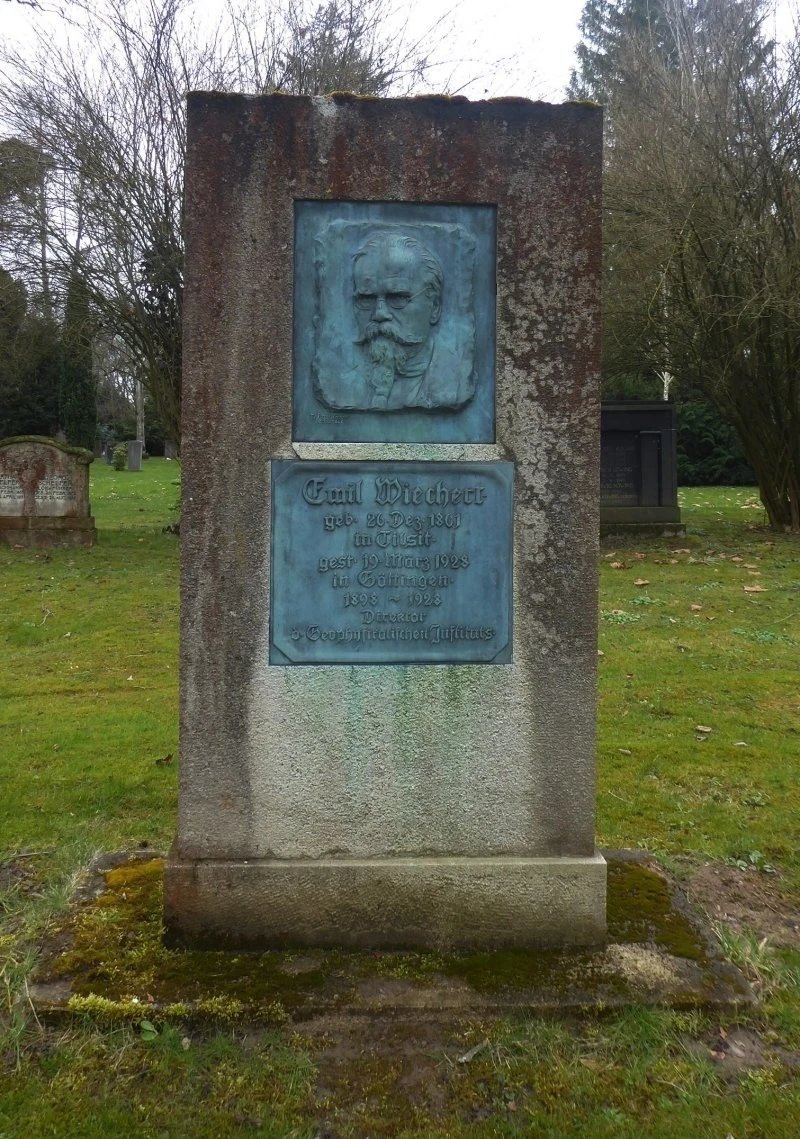
This instrument was radically different from all previous designs. Its base is a heavy mass capable of freely oscillating. The mass is held in equilibrium by the pressure of thin springs above. When the ground vibrates, the frame on which the pendulum is suspended also moves, but the pendulum itself remains virtually motionless due to the inertia of the heavy mass. The oscillations are recorded on paper on a rotating drum.
Wichert's first seismograph recorded only horizontal displacements, but he later designed instruments for vertical measurements as well. Wiichert's seismographs are still in operation at some observatories around the world, continuing to provide invaluable data.