Space Chronicle #4: A review of astronomical images (6 photos)
Space Chronicle is a fascinating journey through space and time through astronomical images. This section features reviews of legendary photographs from the early space missions, as well as the latest images from modern space telescopes, ground-based observatories, and talented amateur astronomers. 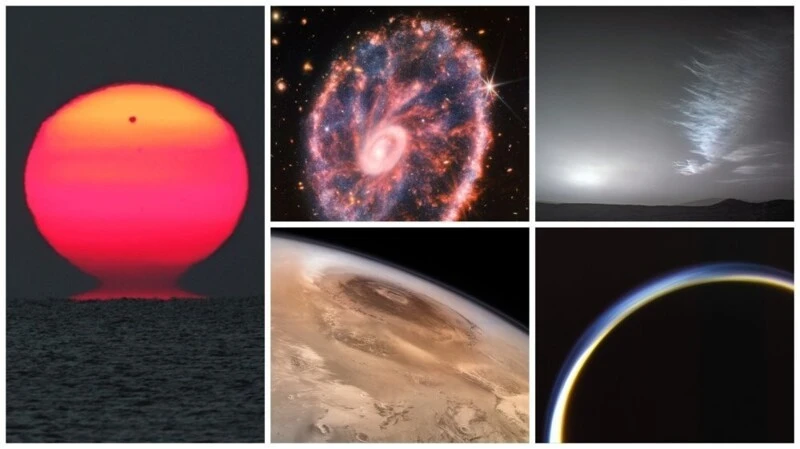
Each image presented here is a window into distant worlds, stories of exploding stars, colliding galaxies, and the countless mysteries of the cosmos that humanity continues to tirelessly explore.
Transit of Venus Across the Sun
This image captures a very rare astronomical moment – the transit of Venus across the Sun. The dark dot at the top of the solar disk is our neighboring planet Venus, passing precisely between Earth and the Sun at dawn on June 6, 2012. This was the second of a current pair of transits – the first occurred on June 8, 2004. 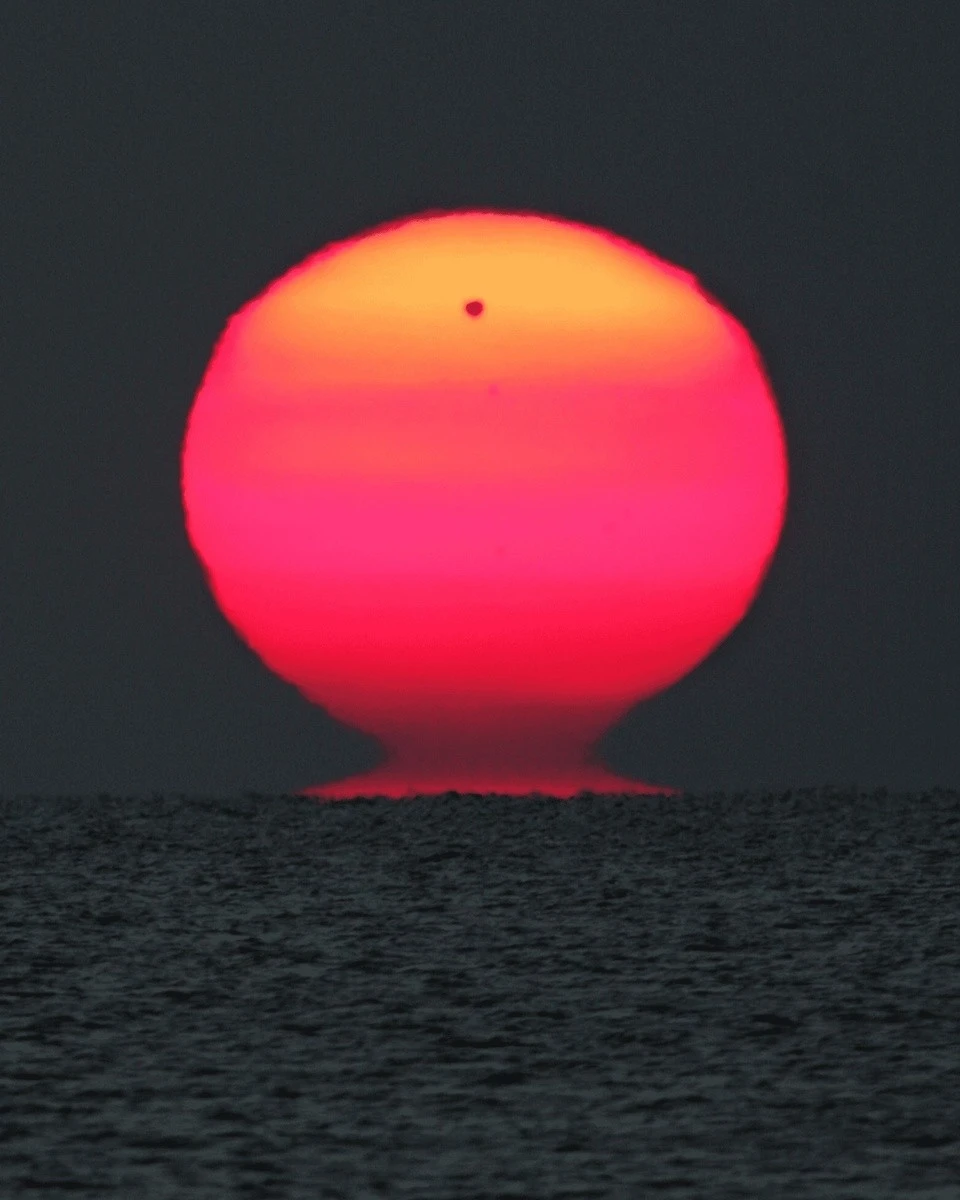
The transit lasted over six hours, and millions of people around the world observed the event through telescopes, binoculars, and even with the naked eye using special solar filters.
Transits of Venus occur in pairs, every 8 years, with more than a century between pairs. This is because the orbits of Venus and Earth lie in different planes, and only occasionally do the three celestial bodies—the Sun, Venus, and Earth—align perfectly.
The previous pair of transits were observed in 1874 and 1882, and the next will only occur in 2117 and 2125. It turns out that the 2012 transit was the last opportunity for all living people to observe this phenomenon.
The image was taken by Bulgarian astrophotographer Emil Ivanov.
The Result of a Cosmic Catastrophe
The Cartwheel Galaxy (ESO 350-40), located about 500 million light-years from Earth in the constellation Sculptor, is a living monument to the head-on collision of two galaxies. 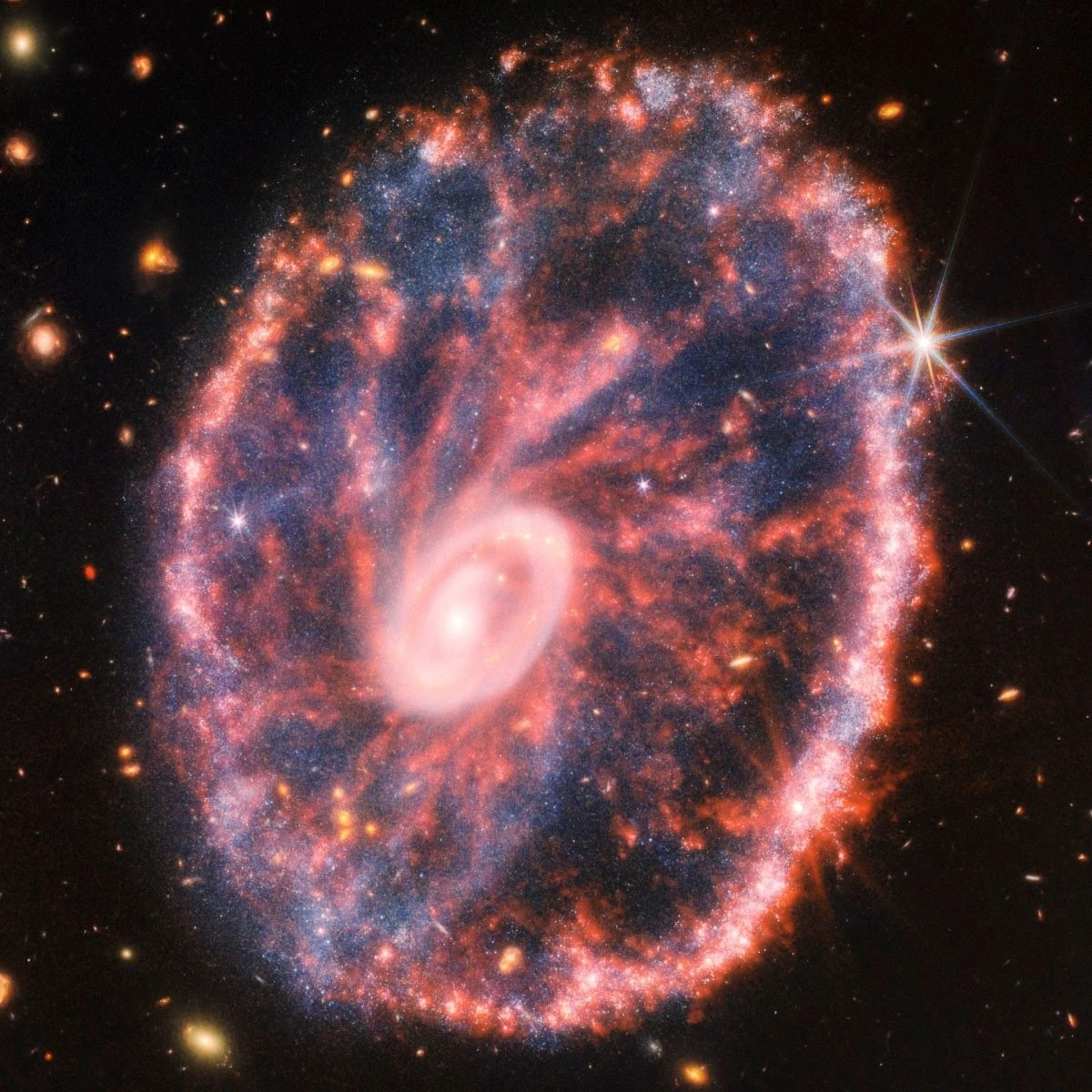
In the past, ESO 350-40 was a spiral galaxy similar to the Milky Way, but about 200-440 million years ago, a dwarf satellite galaxy collided with it. It moved so quickly that it escaped absorption, leaving behind only "scars." This event left behind the characteristic ring structures and radial "spokes," giving the galaxy the appearance of a giant cartwheel.
The outer ring is expanding at about 89 kilometers per second, colliding with surrounding intergalactic gas and triggering intense bursts of star formation. The Cartwheel's core, hiding a supermassive black hole, is surrounded by dense clouds of hot dust and young star clusters.
This image was taken on August 2, 2022, by NASA's James Webb Space Telescope, whose infrared vision allowed it to peer through the dust veils and reveal the galaxy in unprecedented detail.
Martian Dawn
Dawn on the Red Planet. Thin, almost ghostly clouds float above the Martian horizon, illuminated by the first rays of the rising sun. Due to the extremely thin atmosphere of Mars, such cloud formations are rare, and studying them provides scientists with valuable information about climate change on the planet. 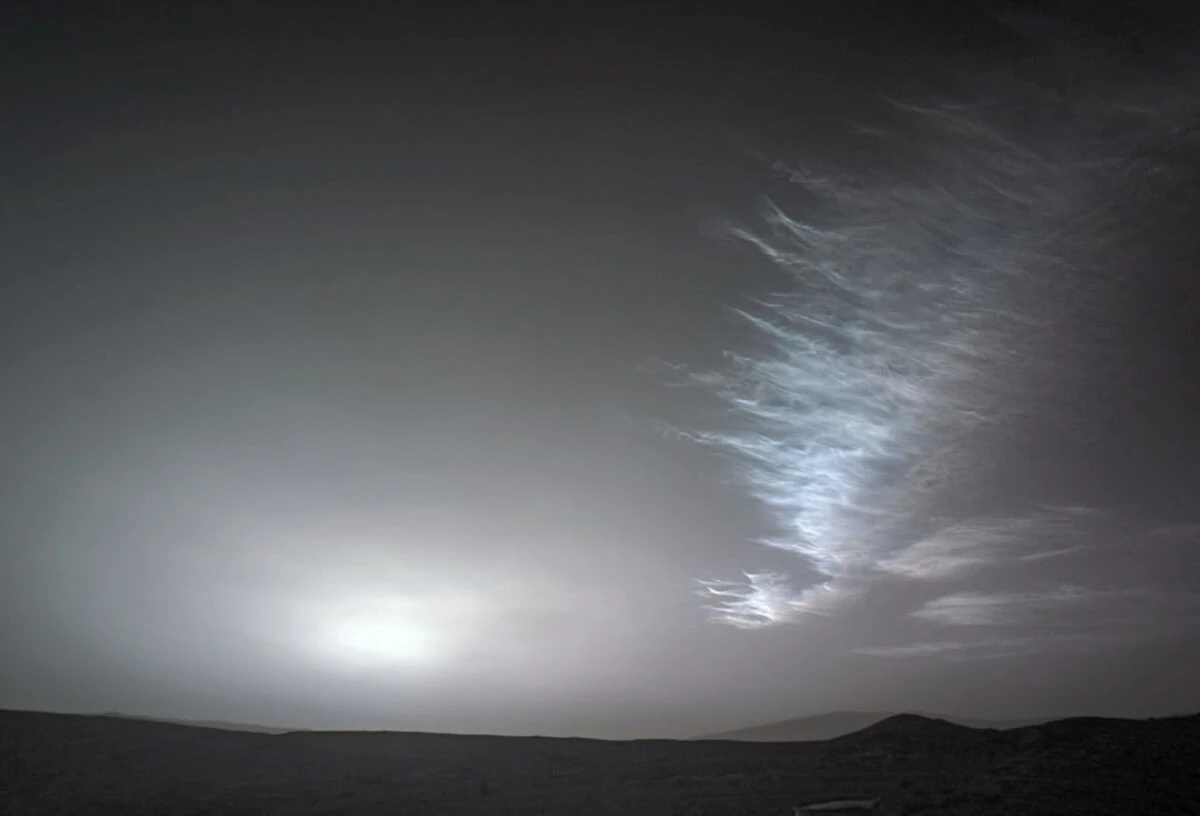
This image was acquired on November 20, 2023, by NASA's Perseverance rover, which has been operating on Mars since February 18, 2021. The rover is located in the 45-kilometer-wide Jezero Crater, which is estimated to be 3.5-3.8 billion years old. This landing site was not chosen by chance: radar studies and orbital images have shown that the crater was once filled with water, forming a lake into which at least one large river and delta flowed. It is in such aquatic environments that primitive microbial life could have emerged billions of years ago, traces of which Perseverance continues to search for.
Perseverance is methodically exploring the crater's sedimentary rocks, collecting samples for eventual return to Earth. Recent findings, including strange "leopard spots" in the rocks, raise the possibility that Mars was once a habitable world.
A Moon with an Earth-like Atmosphere
Titan is Saturn's largest moon and the only moon in the Solar System with a dense atmosphere. Moreover, it is composed primarily of nitrogen, like our own planet's atmosphere. 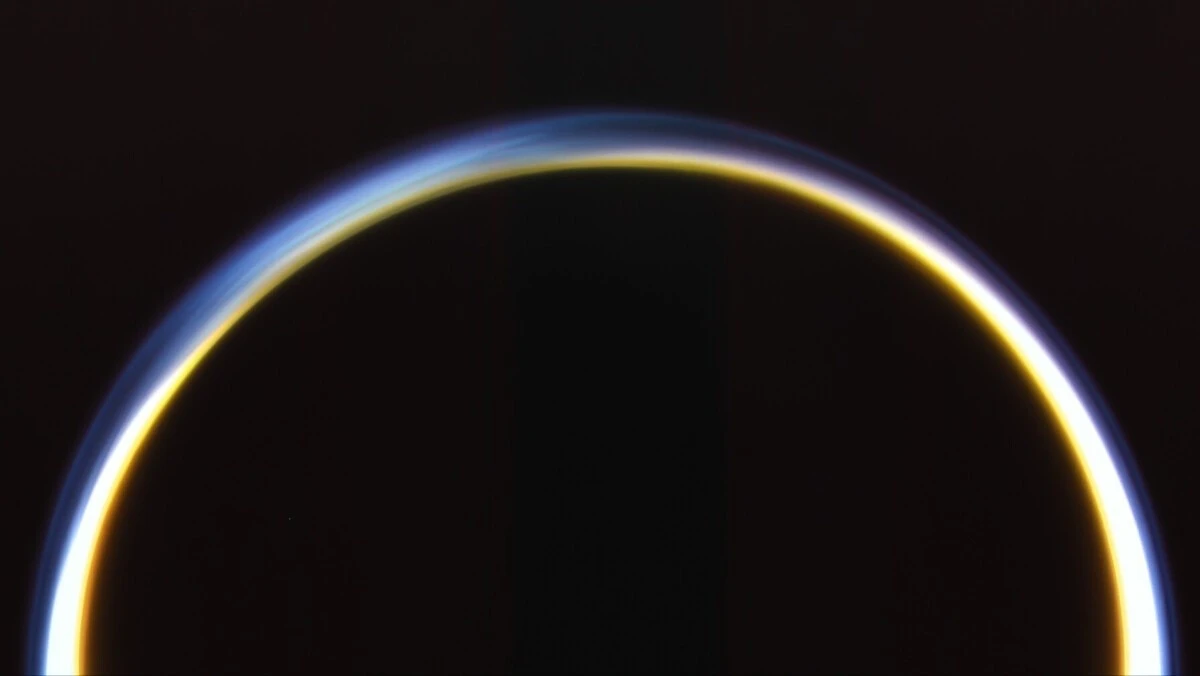
For comparison:
Earth's atmosphere is approximately 78% nitrogen, 20.9% oxygen, and 0.9% argon. The remaining 0.2% is made up of hydrogen, helium, neon, carbon dioxide, and other gases.
Titan's atmosphere is approximately 98.3% nitrogen, 1.6% methane, and argon. The remaining 0.1% is made up of acetylene, diacetylene, carbon dioxide, methylacetylene, propane, ethane, and other gases.
Scientists believe Titan's atmosphere resembles that of early Earth—before cyanobacteria enriched it with oxygen. Researchers studying the origins of life believe that Saturn's moon is a window into our planet's past.
This image was taken on October 26, 2004, by NASA's Cassini spacecraft during its first close flyby of Titan. The image clearly shows high-altitude layers of atmospheric haze and clouds illuminated by the Sun.
The Solar System's Greatest Mountain
This is Olympus Mons, an extinct Martian volcano and the tallest mountain in the Solar System. Its height from base to summit is approximately 26 kilometers, nearly three times higher than Mount Everest. The volcano's base diameter reaches 540 kilometers, making it larger than Enceladus, a potentially habitable 504-kilometer-wide icy moon of Saturn that harbors a subsurface ocean of liquid water. 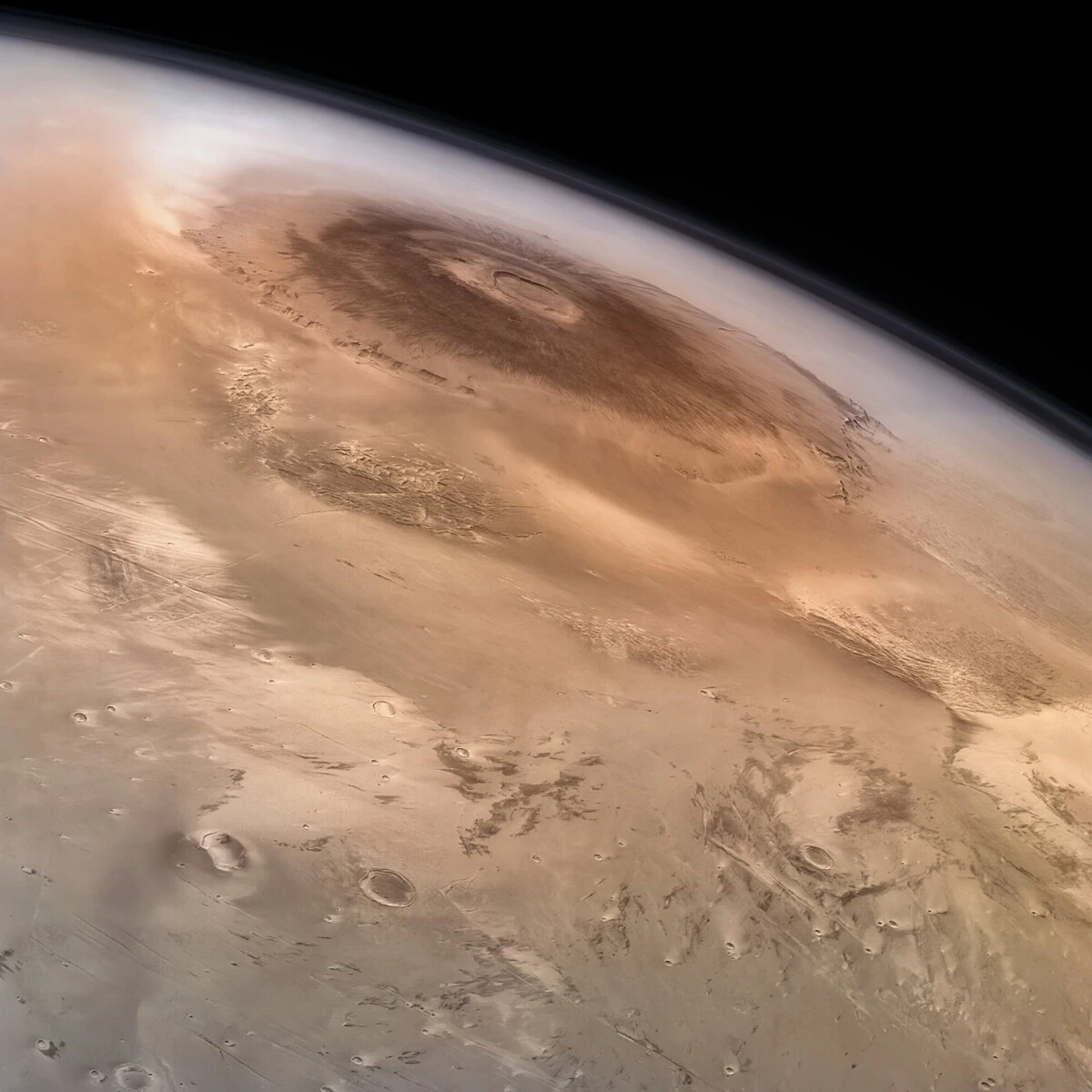
At the summit of Olympus Mons is a caldera measuring 65 by 85 kilometers, with a maximum depth of over three kilometers. The volcano is so large that spacecraft can see it long before they approach the planet.
This true-color image was acquired on February 26, 2021, by the Al Amal orbiter from a distance of 13,007 kilometers from the Martian surface.