Edmond Locard: the genius who solved a criminal from a speck of dust (10 photos)
In 1910, French criminologist Edmond Locard received a unique offer from the Lyon police – to create a specialized scientific unit. 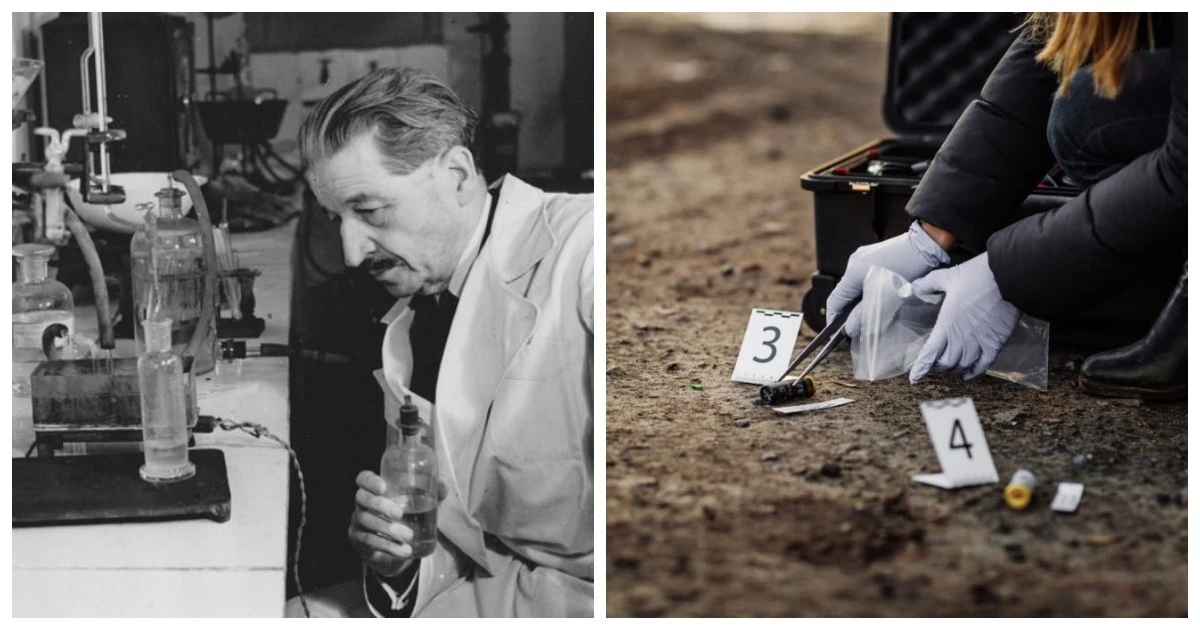
Thus, in two rooms of an abandoned courthouse attic, with just two employees, the world's first police laboratory designed for the systematic analysis of physical evidence was established. 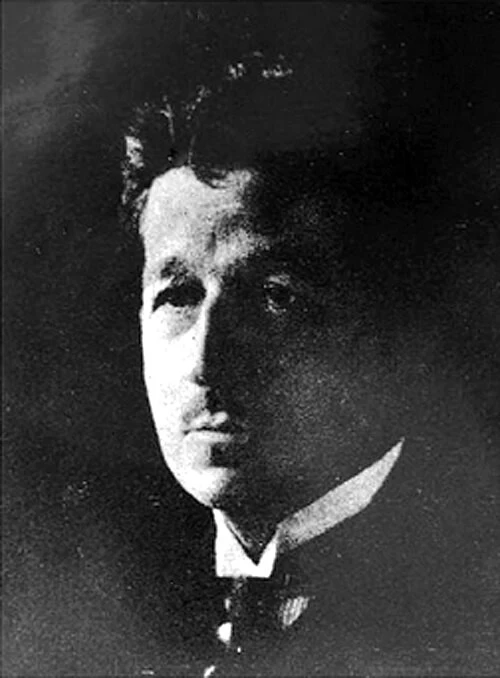
Edmond Locard
Just two years later, in 1912, this modest undertaking was officially recognized. Locard's laboratory became a benchmark, and its findings decisive in the investigation of international crimes. 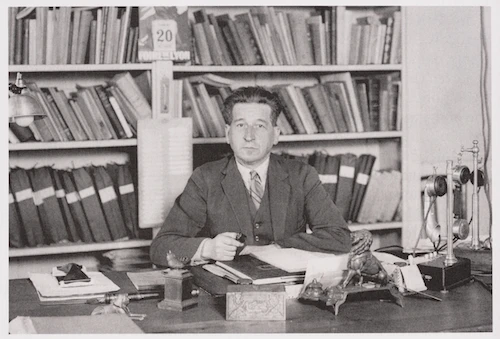
Edmond Locard at his desk
The future genius of criminology was born in 1877. After receiving his medical and legal education in Lyon, Locard became a protégé of Professor Alexandre Lacassane. It was under his influence that Locard developed his credo: any crime inevitably leaves material traces, and the task of the scientist is to find and correctly interpret these invisible clues. 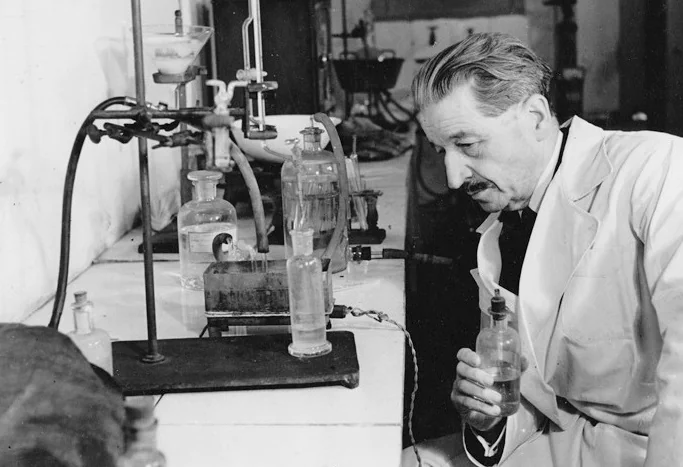
Despite his modest equipment, Locard impressed his colleagues with his methodical approach and attention to what others considered insignificant: dust, microscopic soil particles, textile fibers, and ink compositions. His approach was truly revolutionary, shifting the focus from the obvious to the microscopic. 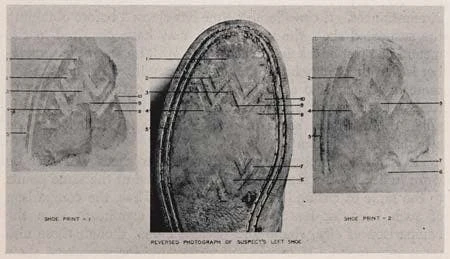
Matching is an important part of working with crime scene evidence.
His experience in French counterintelligence during World War I, where he analyzed damage to the uniforms of fallen soldiers, only strengthened his methods. Locard later formulated these observations into a fundamental postulate, known today as the "Locard principle": "Every contact leaves its trace." 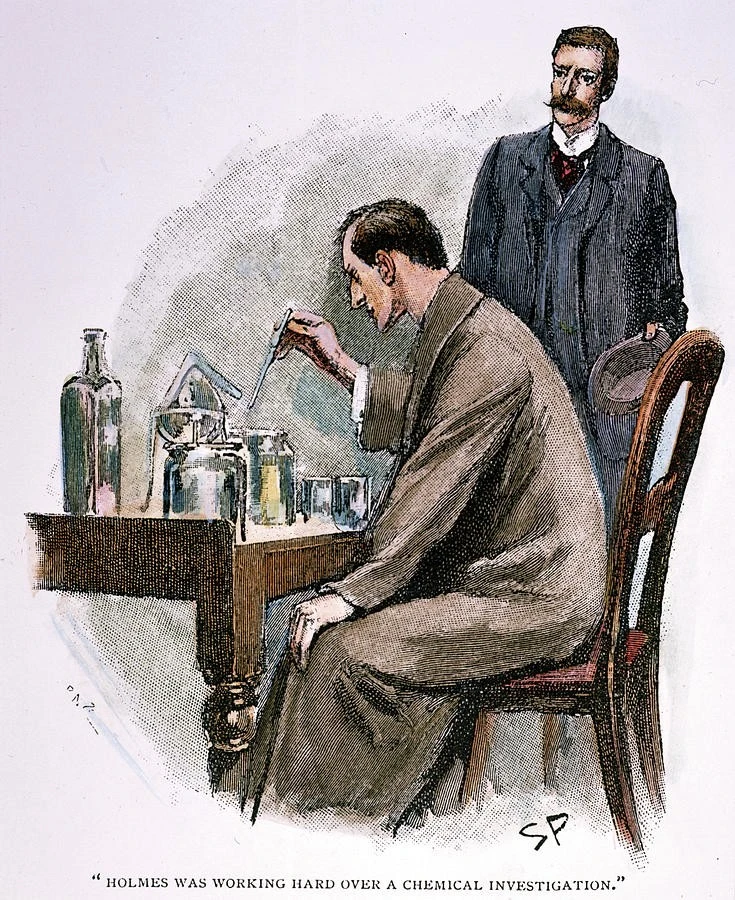
The murder of Marie Latelle vividly illustrated the effectiveness of this principle. The prime suspect was her fiancé, Emile Gurbin, who, however, had a reliable alibi. Locard, examining the contents from under Gurbin's fingernails, discovered microscopic particles of a special pink powder. 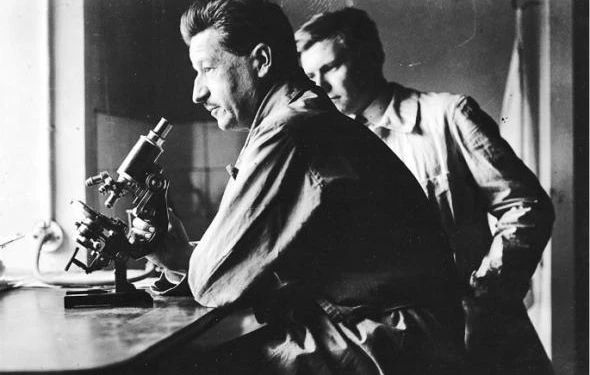
Edmond Locard in his laboratory in the courthouse, founded in 1910
After a painstaking search of Lyon pharmacies, the forensic scientist found a pharmacist who confirmed that he had prepared the powder with this unique composition specifically for the deceased. Faced with irrefutable evidence of contact, Gurben confessed to the crime and exposed the scheme to forge an alibi. This case clearly demonstrated that microscopic evidence can be more eloquent than any words or testimony. 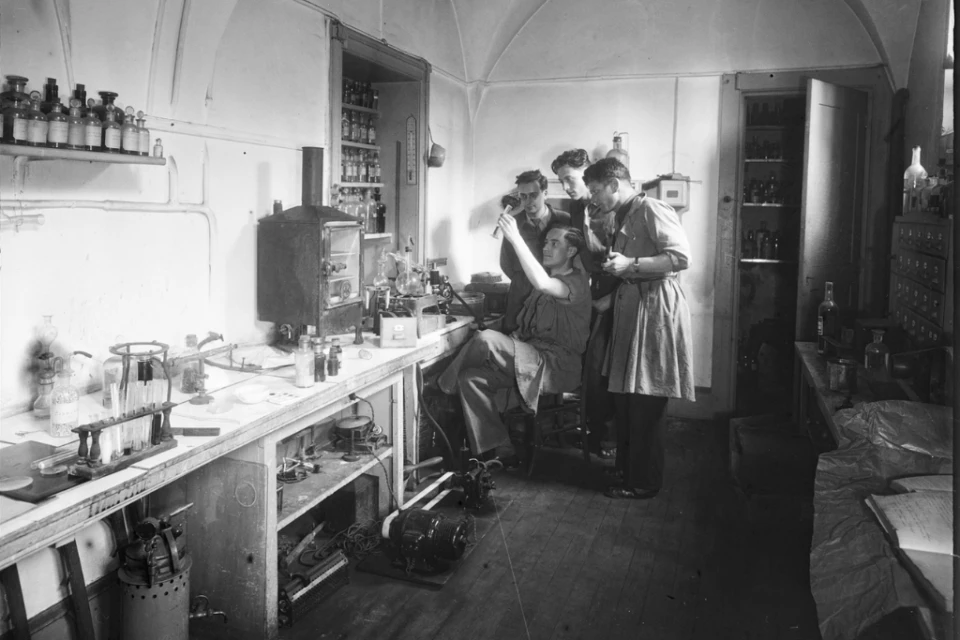
Edmond Locard and his team are busy analyzing in the attic of the Lyon courthouse.
Today, Edmond Locard's legacy remains the cornerstone of all forensic science, from ballistics to genetic fingerprinting. Having risen from his attic laboratory to worldwide recognition, the "French Sherlock Holmes" retired at 73, having helped solve over 10,000 crimes. 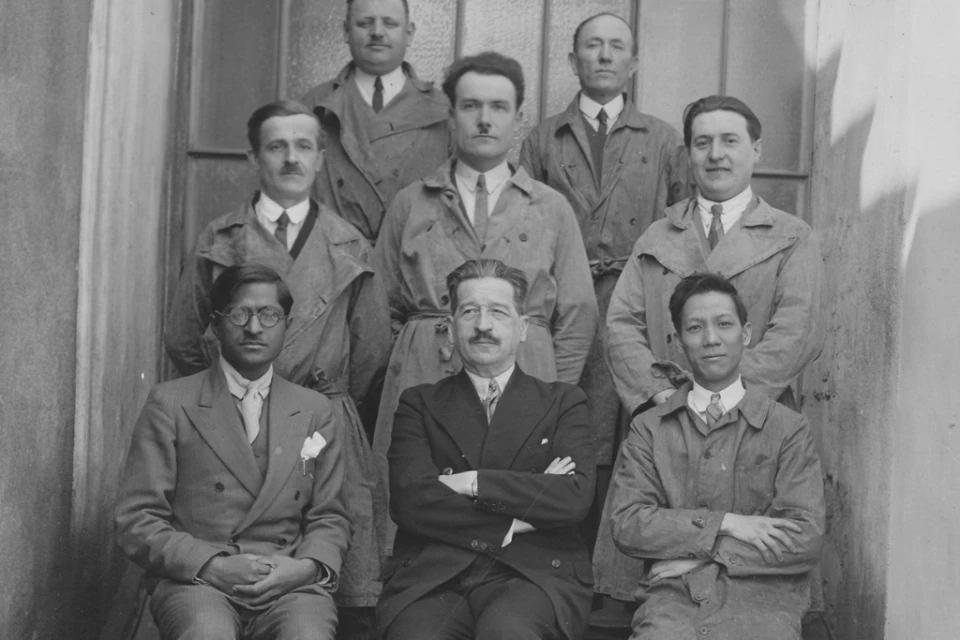
Edmond Locard (center) and his team in 1932
When he died in 1966, Edmond Locard left behind not just a method, but a new era in the fight against crime, which continues in every modern crime lab. 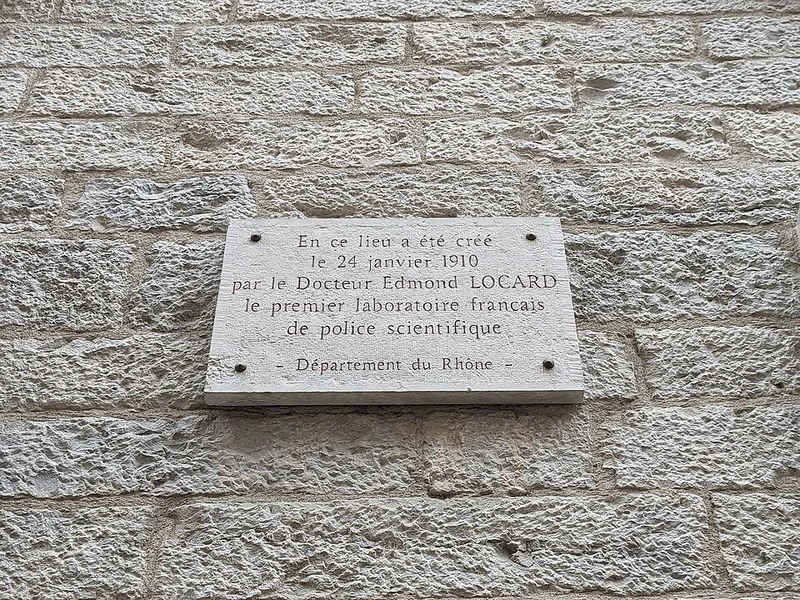
Memorial plaque on the building where Locard founded his lab