A cat is an independent, proud, and fundamentally solitary creature. Or so we think. That is, until we discover a yard where a dozen of these "loners" sleep in the same basement, eat on a schedule, and know perfectly well who's a member and who's not. At that point, the proverb about a cat wandering by itself begins to fall apart suspiciously. 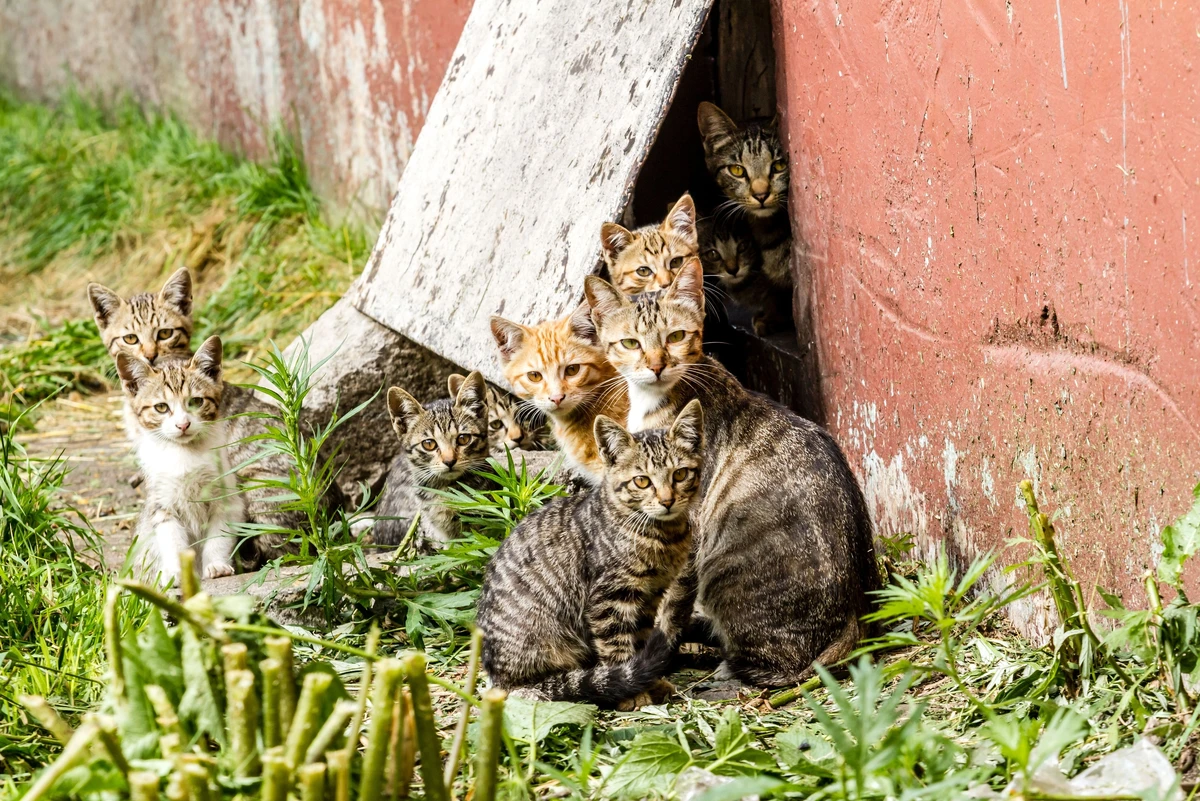
Society: a cat is a solitary animal. Also, cats in any basement near a house:
Cats in the basement of a house are common inhabitants. But the city is an unnatural ecosystem for them. Animals didn't evolve for concrete and trash cans. In the wild, everything is clear: food is obtained through difficult but fair hunts, territory is defended through fights, and a hungry predator can jump out from behind every bush. But noisy streets and concrete jungles turn the usual rules of survival upside down. 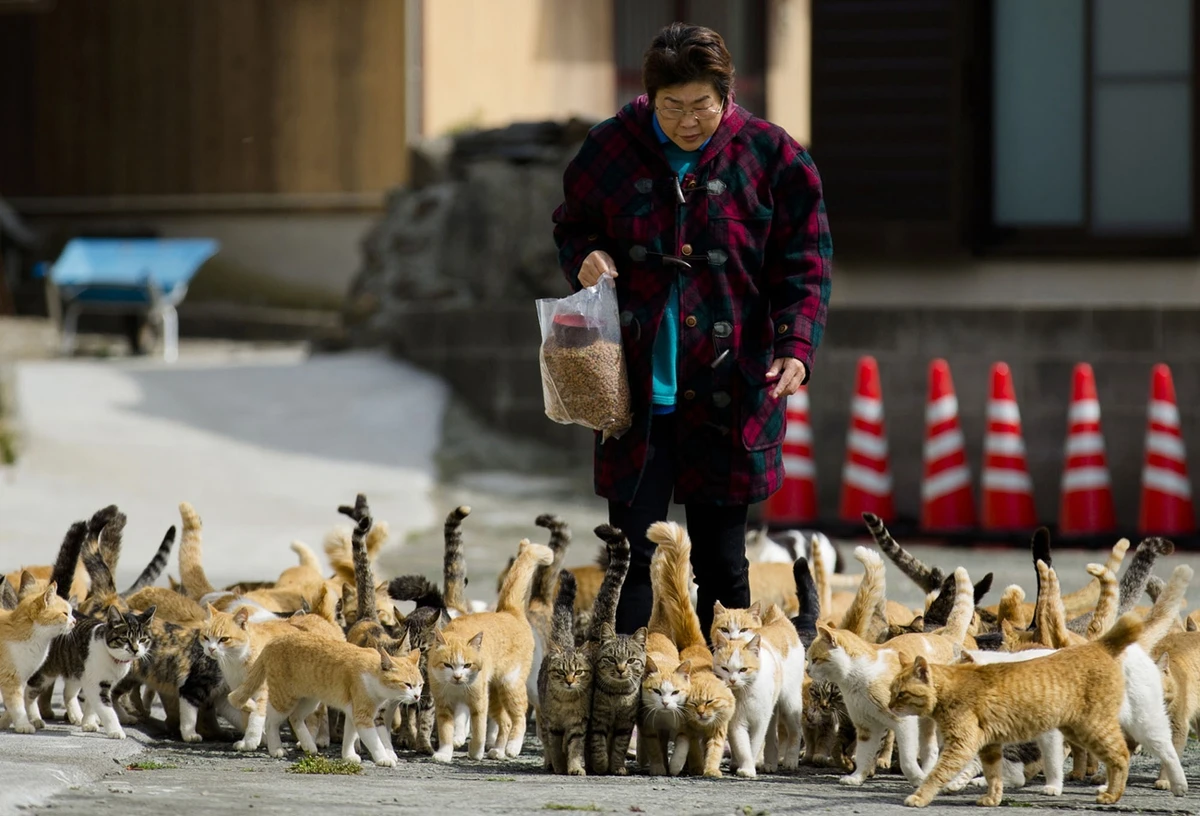
We're not a pack. We're a gang!
First, food production. The city is a rare case in nature, where resources are concentrated in one spot and barely move. Dumpsters, restaurants and markets, basements and heating mains teeming with rodents, and, of course, compassionate grandmothers with bags of chicken heads—all create relatively stable food sources. Getting food in the city is easier, much easier, than in the wild. 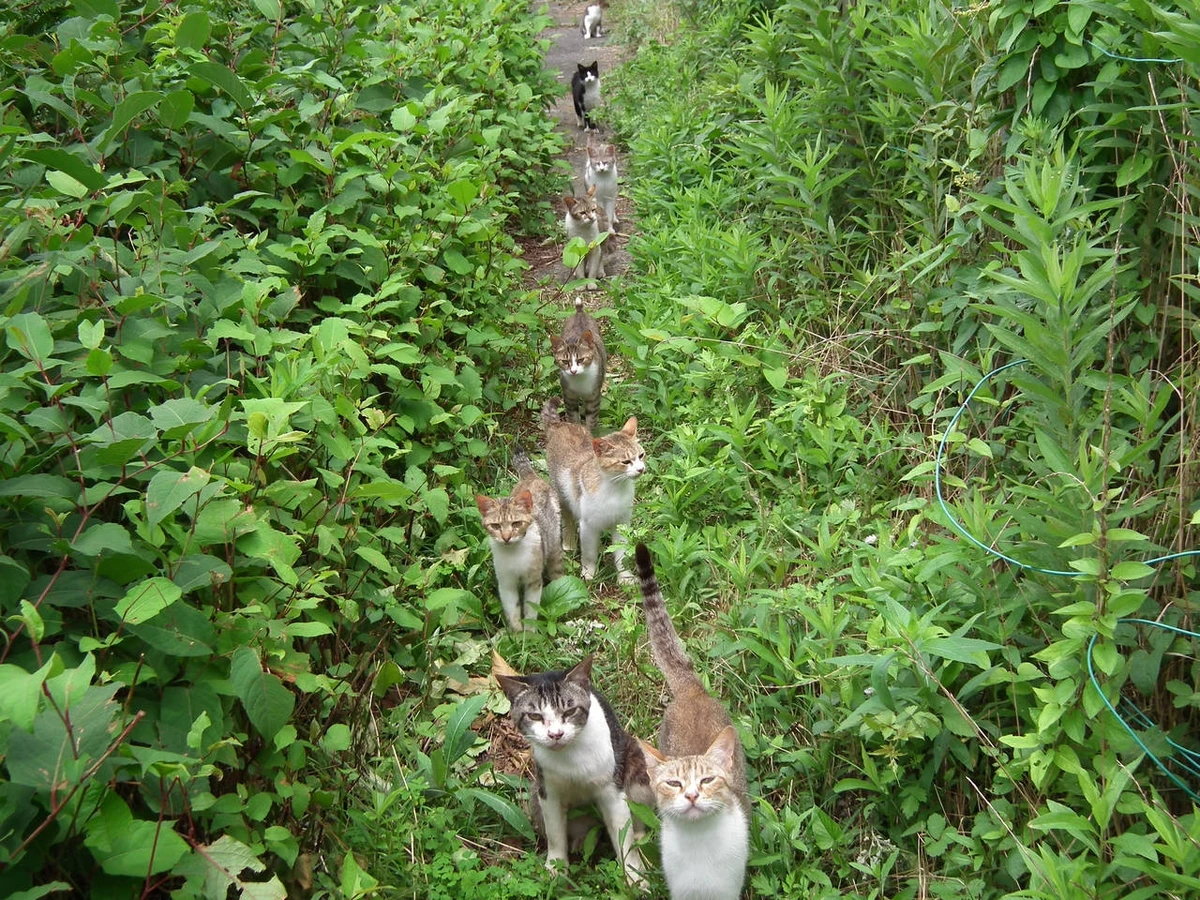
Nature is great, of course. But free food in the epicenter of civilization is even better!
Secondly, there's no way to displace your neighbors. Free grub attracts furry creatures from all over the area, and you get a crowd. In the wild, if a population density becomes high, cats expand their territory, drive out competitors, or even change locations. That doesn't work in the city. Not only is the entire territory limited by walls, roads, and people, but straying too far means losing a guaranteed food source. What's the point? Driving out all the unwanted guests is also physically impossible. It's like tilting at windmills—new cats will keep coming back from neighboring areas. 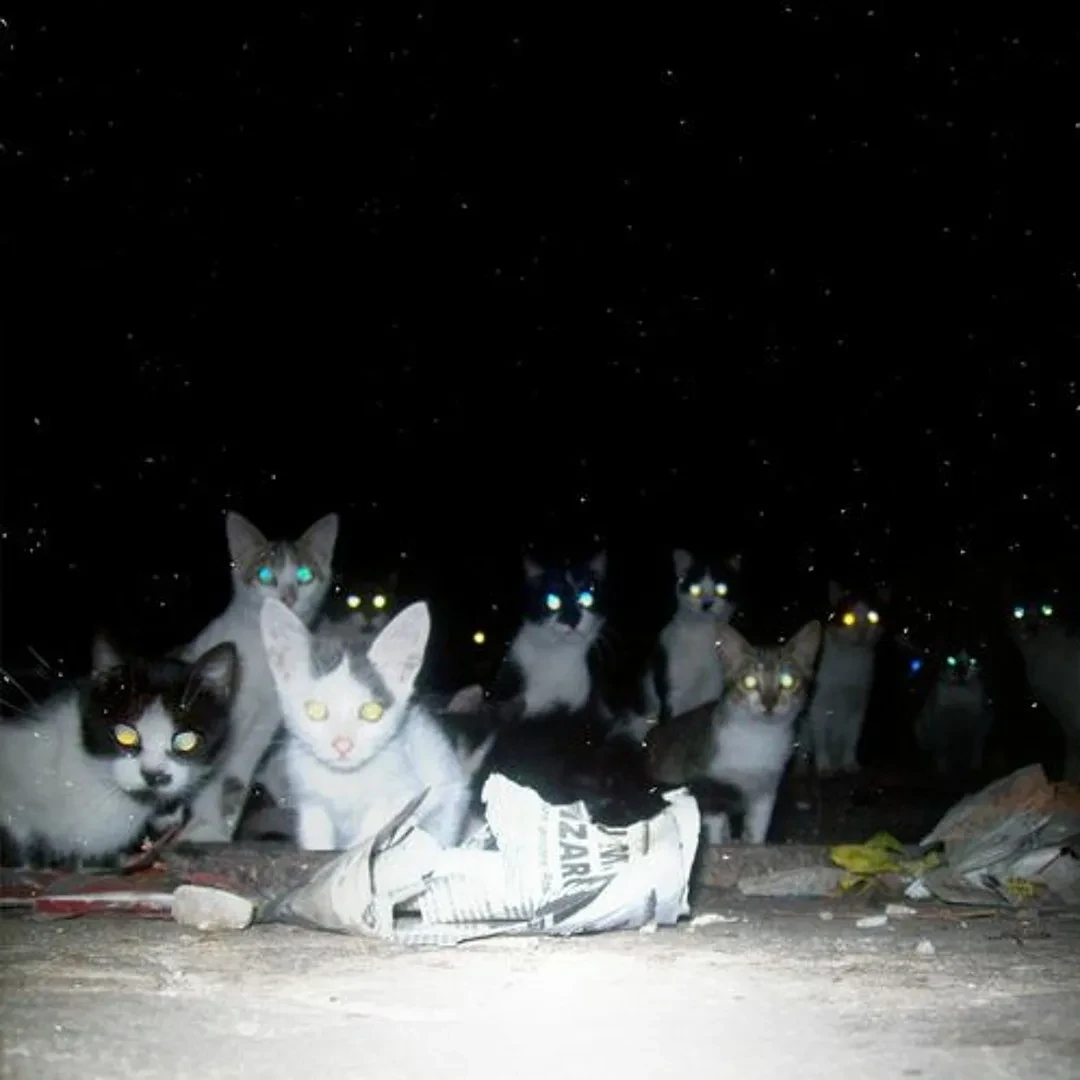
Guys, turn off your high beams, you're blinding us!
Cats aren't stupid enough to constantly squabble. No amount of energy would be enough for that. Instead of endless conflicts, they develop a very interesting form of coexistence—a tolerant matrilineal community. Kinship is almost always at the core of any stable group of stray cats. Such communities are formed around several females related by blood—mothers, daughters, sisters, aunts, and grandmothers. They occupy one or several nearby shelters, roam peacefully within the same territory, and remain close for many years. 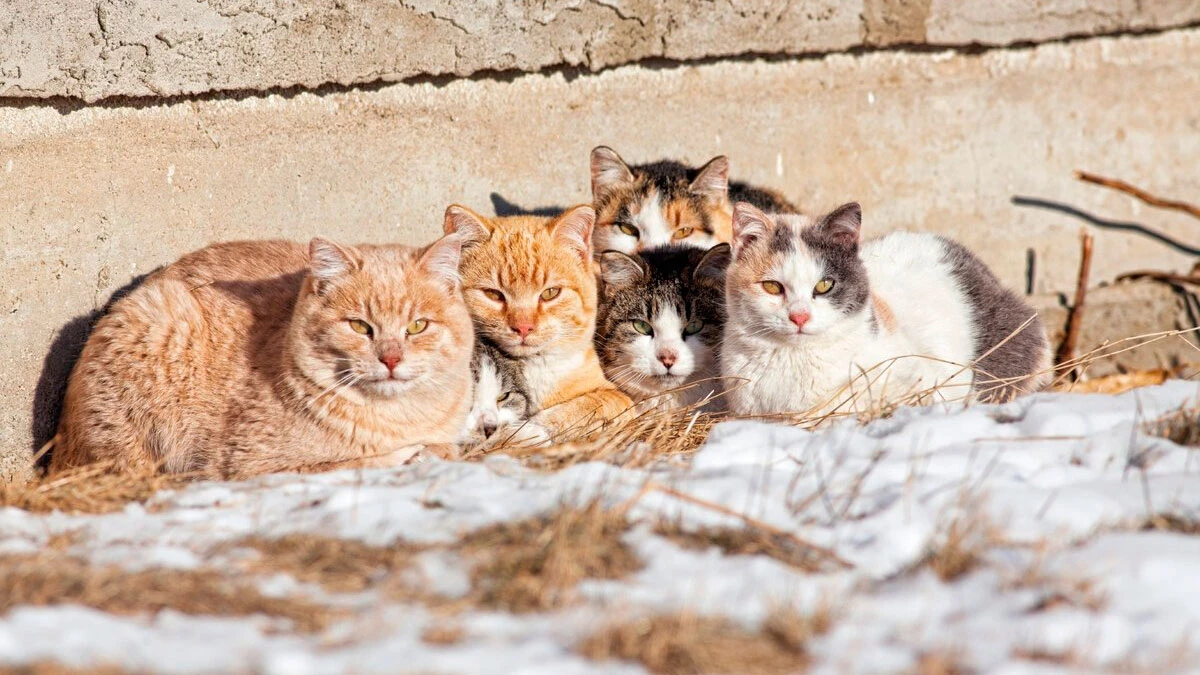
Let's live in peace! At least as long as we have food.
There is no absolute leader or guide in the group. Instead, there is a gentle queen-matriarch. This is usually the oldest and most experienced female in the group—the mother or grandmother of all the other members of the feline community. Such a matriarch rarely fights and rarely displays open aggression—she simply doesn't need to prove anything. Other females voluntarily yield their place at the feeding bowl to her and look to her behavior in tense situations. 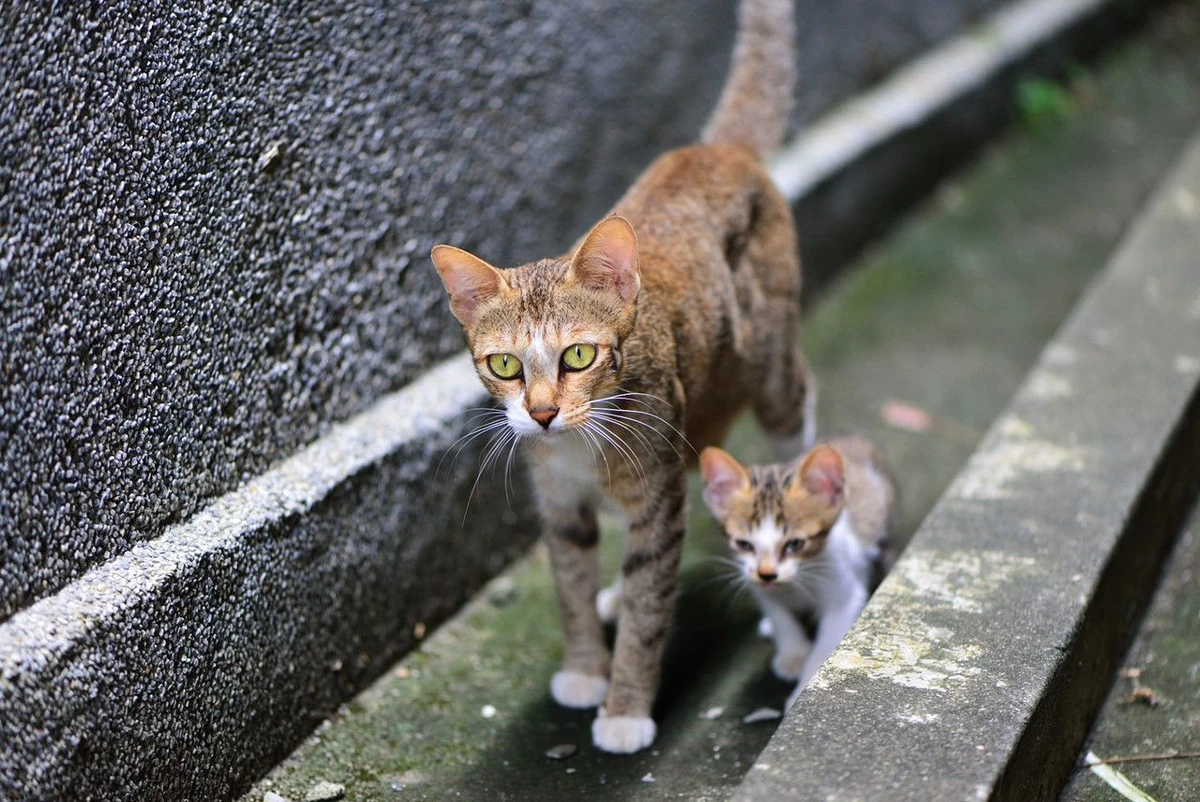
Learning to make pitiful eyes is also a skill.
The matriarch's status is based on predictability, accumulated social experience, and the benefit of the entire group. The queen knows best where to find more food, how to deal with a pack of stray dogs, and how to care for kittens. The fewer conflicts and injuries, the greater the chances of maintaining her territory and raising her offspring. In fact, this is the main goal of feline cohabitation: to raise kittens, protect the den, and stay well-fed. 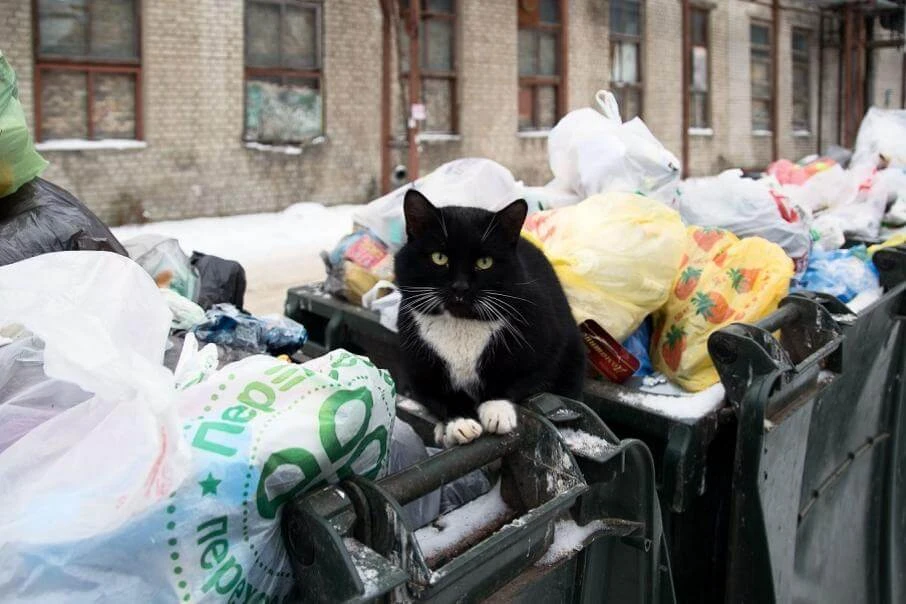
Queen Murka 3, ruler of garbage dumps and mistress of trash cans, invites you to an audience.
And what about the rest of the group? Unlike the hierarchy of wolves and dogs, where each pack member has a specific role, cats' job is to tolerate each other in the same territory. That's enough! They come to the aid of their fellows only in times of dire need—in the spring, at the height of the love season. 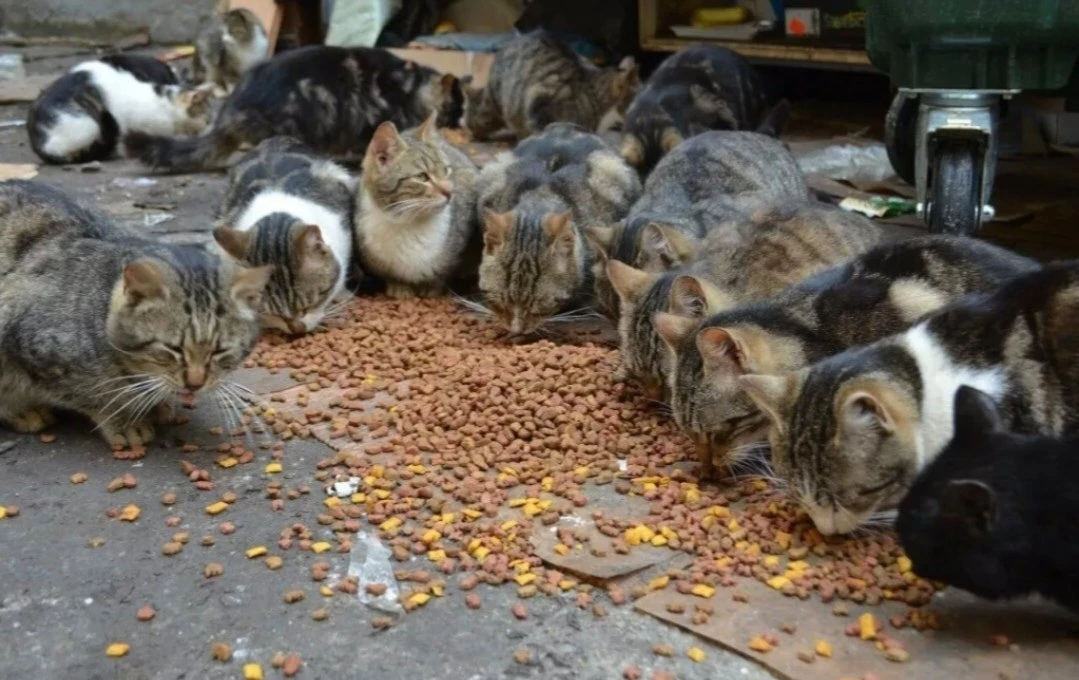
That family dinner where relatives recall all their past grievances and have a huge fight.
It often happens that March Madness overtakes all members of a group at once. This means that one fine day, a cozy den turns into a bustling kindergarten. But it's not just one female who watches over the kittens, but the entire group, which significantly increases the survival rate of the cubs. The females feed the kittens of others, lick them, and protect the den from potential threats. Kittens are too vulnerable, and the territory is too valuable, to be defended alone. But a pack of enraged mothers is quite capable of doing just that. 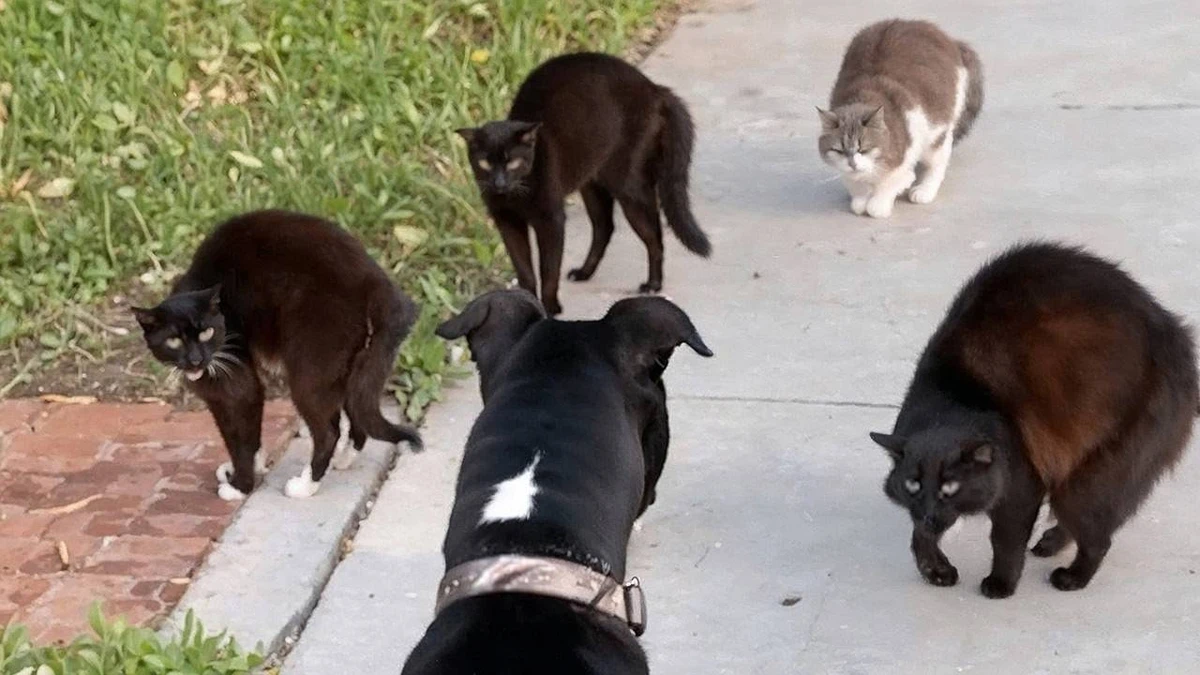
Girls, it's time to show this dog why we're always grooming our nails!
However, total altruism is not to be expected from members of a cat group. For example, they forage exclusively alone. Members of the same pack tolerate group members near their own food source, but if a cat finds a mouse somewhere, she won't share it with the others. And stray cats don't hunt in packs—everyone is on their own when it comes to food. 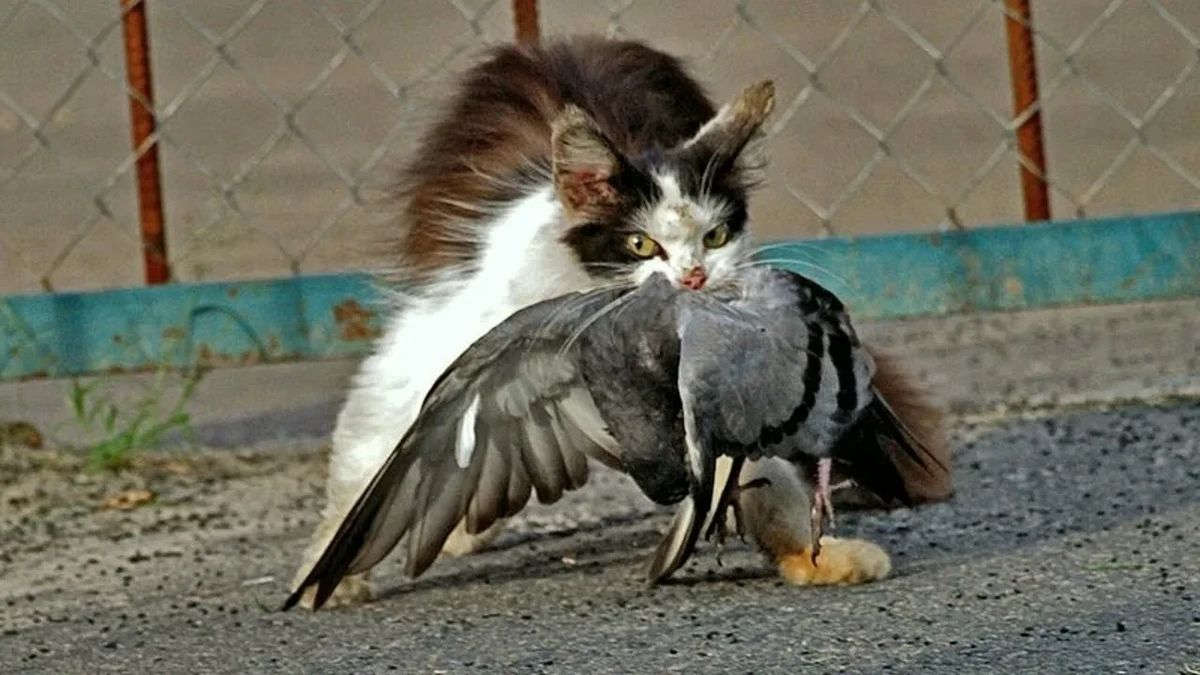
Eliminating a competitor.
Where are the cats in all this? Contrary to the popular notion of the "chief tomcat of the neighborhood," males are not included in the structure of stray cat groups. They don't participate in raising the kittens or guard the den: their presence in the cat pack is usually limited to the short breeding season. When the females go into heat, suitors enter their territory, fight for the right to father a child, and after a successful or unsuccessful wedding, they move on to find a new family. Sometimes a male cat may remain, but this still doesn't make him a member of the group.
Add your comment
You might be interested in:
















Persistence in achieving a goal

A biker prevented a hit-and-run driver from escaping

Not everyone is having fun on the amusement ride

The cutest lunch delivery ever

A book titled "A Guide to Rebuilding

Young women, Dancing and George Michael: nothing superfluous

An apology delivered with a running start

A steam locomotive for "big boys"

Bollywood never ceases to amaze
