The decline of a crypto-emperor: "The Great Schemer" traded the crown of Cambodia for a camera in Beijing (4 photos + 1 video)
Category: Interesting photo stories, PEGI 0+
16 January 2026
On January 8, 2026, a special flight landed at Beijing Airport, marking the end of one of the most daring financial empires of modern times. Under heavy guard, the man who only yesterday was considered the untouchable master of Southeast Asia was escorted down the steps. 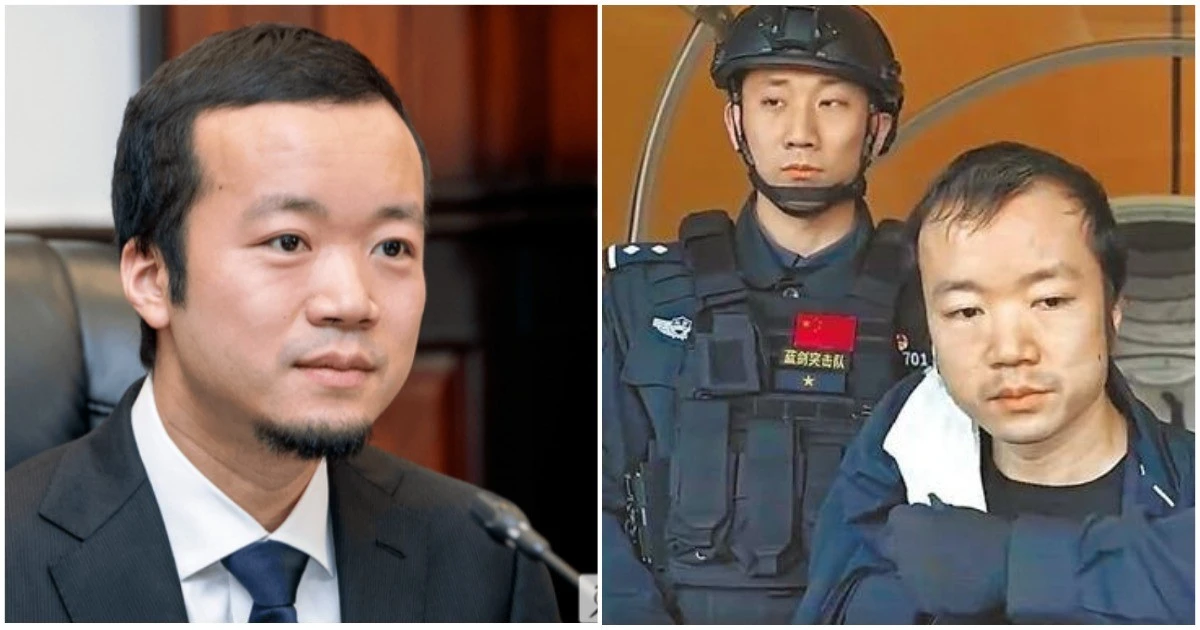
Chen Zhi, founder of the mega-holding Prince Holding Group, has been officially handed over to Chinese authorities. The extradition happened with lightning speed: Cambodian authorities, who had turned a blind eye to their "adviser's" activities for years, were pressured by irrefutable evidence to revoke his citizenship and titles, sending the fraudster straight into the hands of Chinese special forces.
The Path of "Window": From Gambler to Billionaire
Chen Zhi's biography is a classic example of how shadowy titans arose on the murky wave of digitalization in the 2010s. A native of China's Fujian province, he arrived in Cambodia at the beginning of the decade. Having started out managing semi-legal online casinos, Chen quickly realized that blockchain was the ideal tool for laundering colossal sums.
By 2017, he was already heading the Prince Group, a conglomerate with tentacles in aviation, banking, and real estate development. For his generous donations, he was awarded the honorary title of "Neak Okna," and gained access to the highest levels of Cambodian government. However, behind the facade of a noble businessman lurked an army of digital "butchers" who, through thousands of fake social media accounts, siphoned off ordinary people's savings. His passion for luxury knew no bounds: Chen virtually monopolized the market for luxury Cuban cigars in Asia, buying up stakes in major distributors, and collected watches worth the budget of a small town.

Chen Zhi's Headquarters
The collapse came when the "Prince"'s activities began to threaten the national security of several countries at once.
Beijing has not forgiven Chen for the large-scale theft of its own population: billions of yuan were leaking out of the Chinese economy annually through his online platforms.
Washington, in turn, discovered that Chen's companies were laundering money for global crime syndicates through crypto mixers and the anonymous currency Monero.
When the volume of transactions through shell companies in Singapore and London exceeded an incredible $75 billion, Beijing's soft power outweighed Cambodian hospitality. Ultimately, the criminal ended up where he was most awaited – in the dock in China.

Thousands of phones with fake accounts were involved in his schemes.
Today, all that remains of the Prince Group empire are lawsuits. The assets of the "great schemer" have been subjected to the largest-scale ransacking in the history of forensic science. While Chen Zhi is getting used to the prison uniform in Beijing, his assets are scattered around the world.
The US Department of Justice, taking advantage of the fact that transactions were processed through their financial hubs, seized the group's main "wallet" – 127,271 bitcoins (approximately $15 billion) are now frozen in American accounts. Another 126 properties, including mansions and office towers, have been seized.

China, in turn, is nationalizing all of Chen's domestic accounts, attempting to at least partially compensate the defrauded citizens for the losses. The great schemer who dreamed of eternal rule was left with nothing: his cigars were confiscated, his titles were nullified, and everything he “earned” over 10 years was simply dispersed into other people’s state budgets.