Cracks instead of melting: The "Doomsday" glacier began to collapse from the inside faster than predicted (3 photos + 2 videos)
For anyone who was secretly hoping that the Doomsday Glacier would activate just in time for the winter holidays, saving them from having to return to work, don't hold your breath. Global climate catastrophes are progressing more slowly than the looming work deadline, so you'll still have to go to work. Even though processes have been recorded in Antarctica that will change the face of the planet beyond recognition in the future. 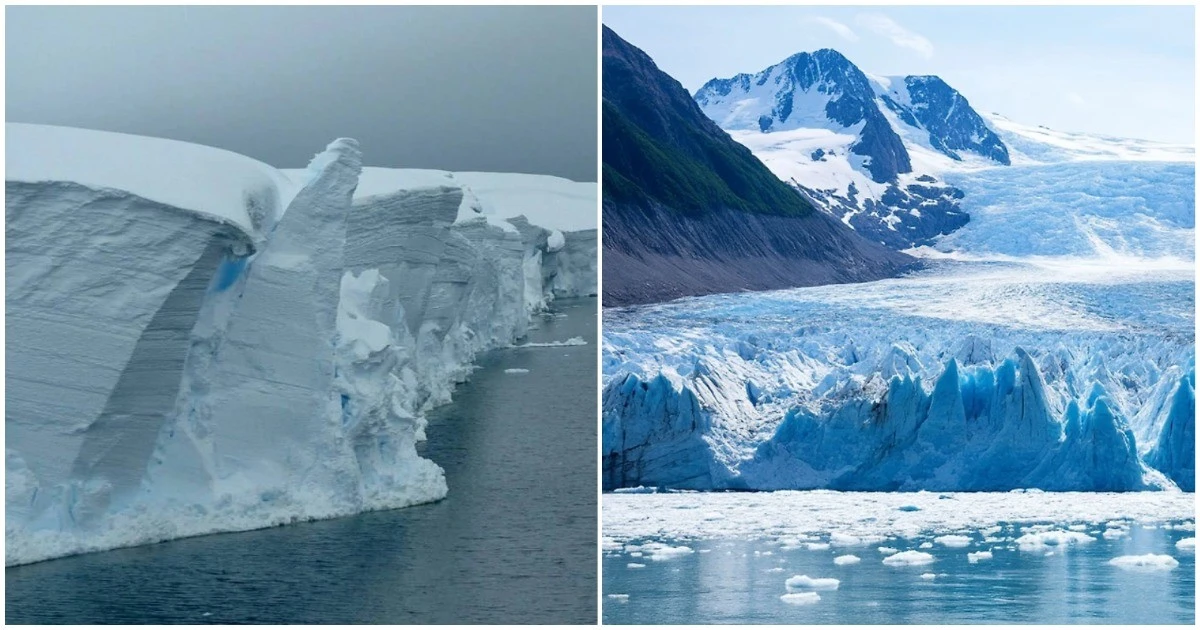
Thwaites Glacier, nicknamed "Doomsday Glacier" for its colossal size and potential threat, has changed its destruction tactics, according to new satellite data from early 2026. It is no longer simply slowly melting under the influence of warm currents. Scientists have discovered that the ice giant has begun to rapidly fracture throughout its entire structure. Satellites have recorded that the total length of internal fractures in critical zones has doubled—from 160 to more than 330 kilometers. 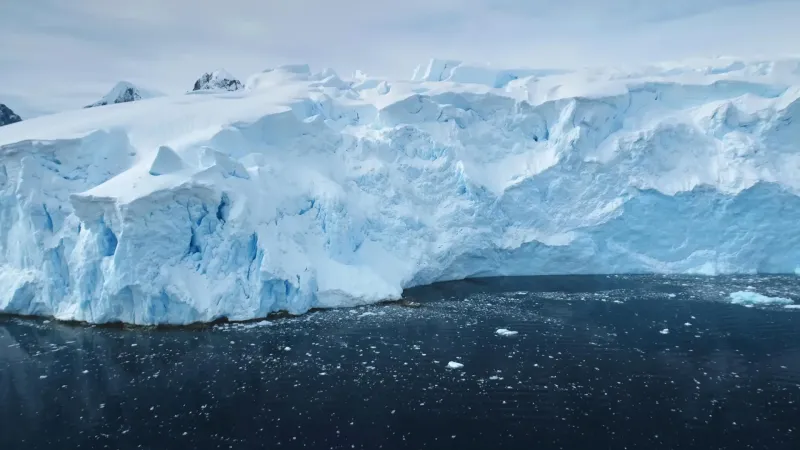
This process is far more dangerous than normal melting: the glacier literally crumbles from the inside, losing its grip on the seafloor. Scientists compare this to a car windshield cracking. When this integrity is compromised, even slight pressure can cause instant collapse. Most alarmingly, the destruction of internal connections is occurring faster than even the most pessimistic mathematical models predicted, depriving the system of its main "brake"—the shelf support. 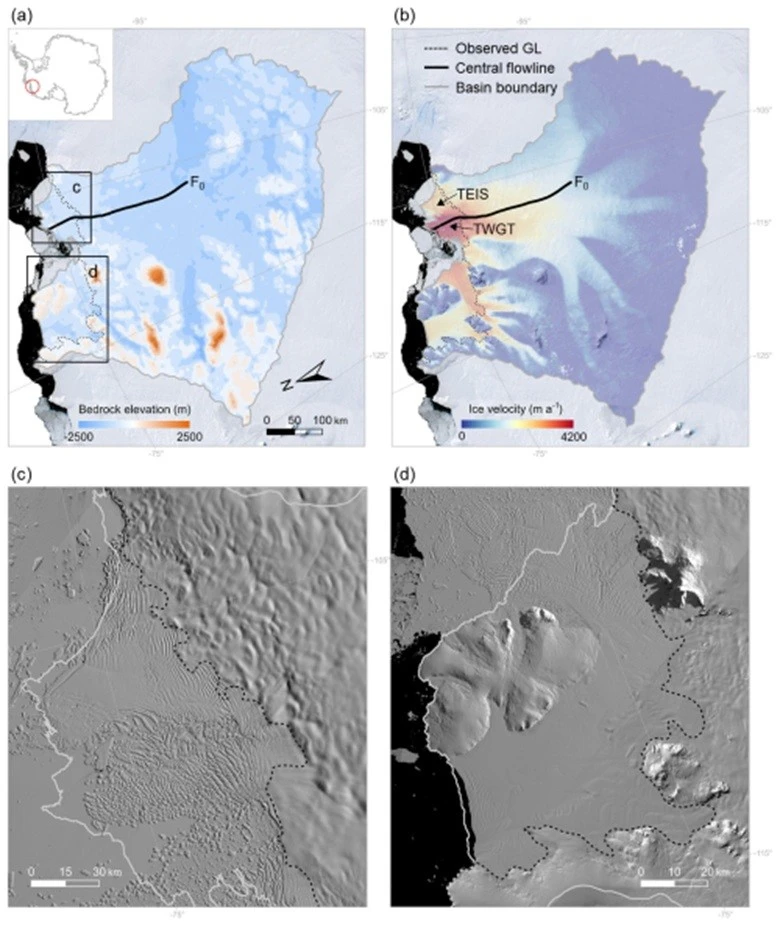
Bedrock Variation and Ice Movement Speed in the Thwaites Basin
To understand the scale of the threat, it's worth looking at the numbers: Thwaites Glacier itself contains enough ice to raise sea levels by 65 centimeters. However, it is a key link holding back the entire West Antarctic ice sheet. If this "plug" were to completely collapse, neighboring ice masses would follow it into the ocean. In such a scenario, global sea levels could rise by 3-5 meters, leading to catastrophic consequences for all of human civilization.
Risk Zone: Who Will Be the First to Go Underwater?
With a sea level rise of several meters, global geography will undergo radical changes. Island states and low-lying coastal cities will be the first to be hit. The Maldives and Kiribati could disappear entirely, as their maximum elevation above sea level is barely above current levels.
Cities such as Shanghai, Bangkok, and Jakarta—cities located in river deltas and on soft soils—will be at extreme risk. In Europe, the Netherlands, whose famous dams are simply not designed for such a high water level, will face serious problems.
Despite the dire predictions, scientists emphasize that the process will not be instantaneous and will take decades. However, the point of no return, when the destruction becomes irreversible, could be passed within the next 5-10 years. While the world continues to live in its usual rhythm, the Doomsday Glacier has already begun its slow but inexorable remodeling of the planet.