The dik-dik is a miniature antelope that tourists stubbornly ignore as they scurry across the savannah in search of the Big Five. Yet a true African surprise is standing right next to them! It bats its glamorous eyelashes and looks at everyone with a mixture of awe, bewilderment, and a strange readiness for action. 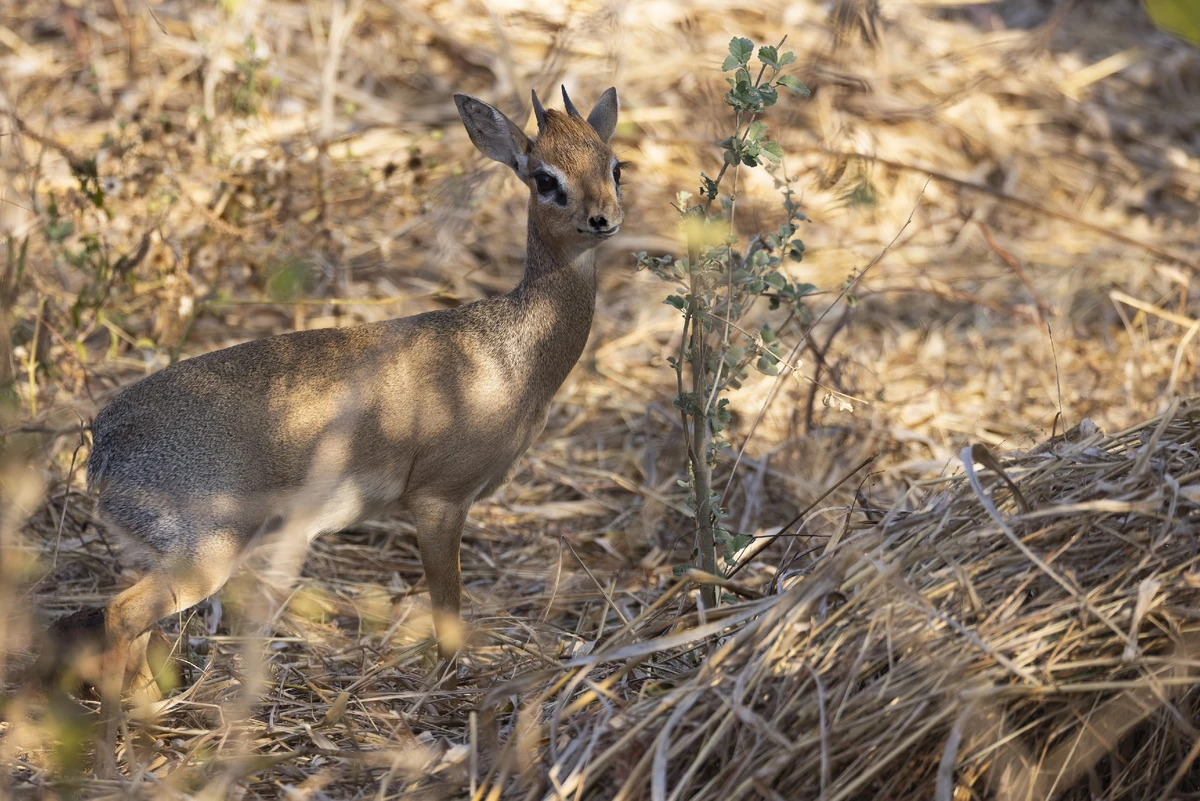
Honey, I didn't go left! Only my nose went left!
To be fair, it's easy to miss a dik-dik in the grass. In Tanzania, I'm photographing Kirk's dik-dik, the largest of the dik-diks. Although the word "largest" sounds almost mocking. They stand 35-45 cm tall and weigh up to 7 kg. Females are slightly larger, but overall, the antelope's dimensions are only slightly larger than the average domestic cat. However, males do have horns. They're tiny, though—just 3-8 cm long. They're often hidden under the crest. 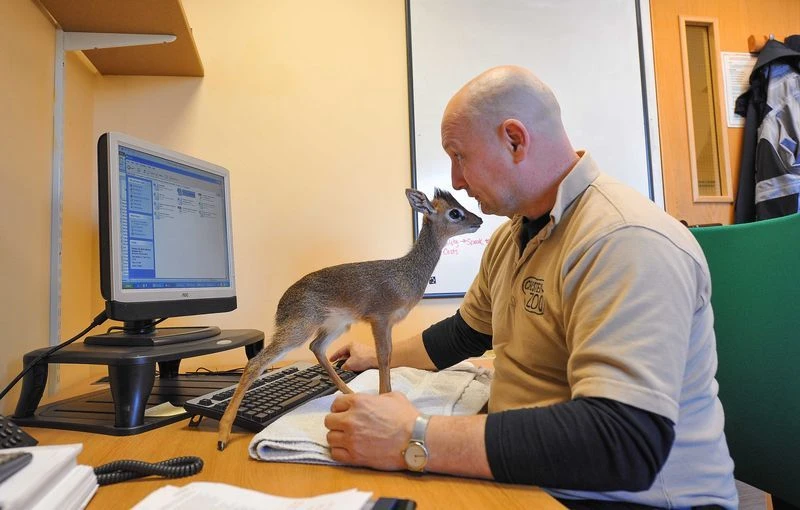
Okay, Google, how do you stop your antelope from climbing on the table?
A slender body, graceful long hind legs, a mobile muzzle, and a miniature size. This antelope is the spitting image of our hare! And in the folklore of East African peoples, the dik-dik occupies the same niche as the oblique one in ours: a small trickster who lives not by strength, but by wit. Among the Maasai and Samburu, it is a master of hidden paths and a symbol of the ability to disappear at the right moment. Among the peoples of Namibia, it personifies knowledge of the desert's secret resources. And in the tales of Bantu and Sudanese groups, it appears as a tiny scout who spots danger before others. Almost everywhere, the dik-dik is the embodiment of wise minimalism: a small hero among giants, who survives precisely because he doesn't try to be more than he is. 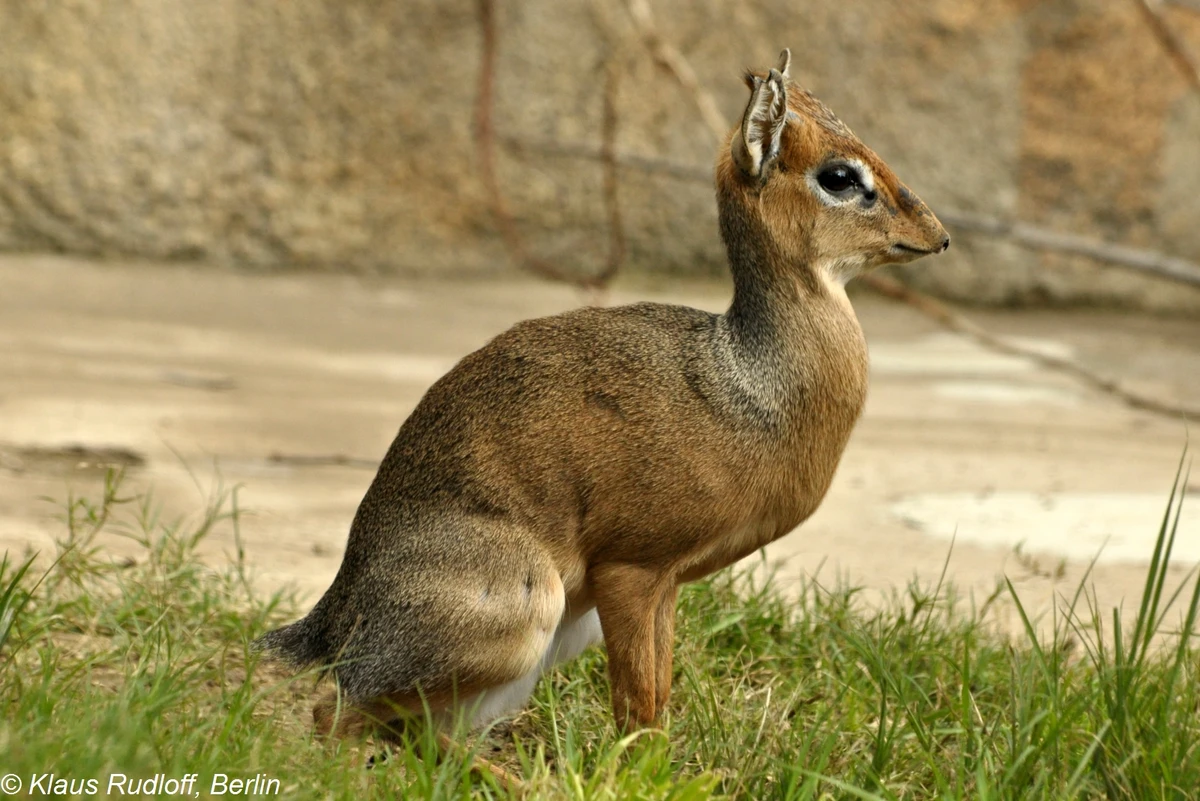
A hare is still a hare, no matter where you are!
The dik-dik's age-old wisdom is not without reason. This animal belongs to one of the most ancient branches of antelope. Its lineage arose more than 10-12 million years ago, when the ancestors of giraffes resembled strange goats on outstretched legs. Since those antediluvian times, the dik-dik's appearance has changed little. It has quietly survived eras and catastrophes, not fitting into documentaries about megafauna, but existing perfectly in its niche. If you can survive being small, quiet, and smart, why become big and miserable? 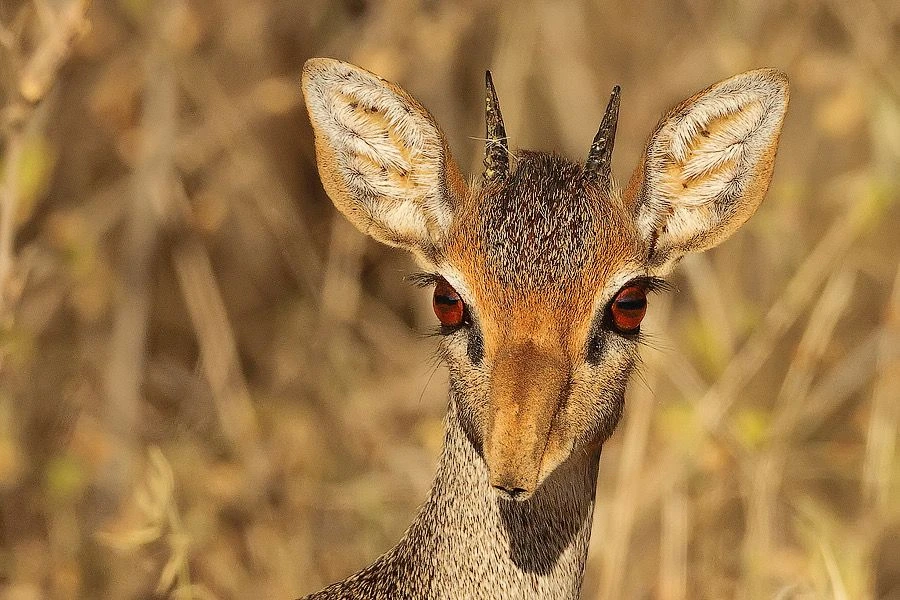
It's clear from its eyes: this antelope has experienced the infinite and the eternal.
The antelope's most noticeable evolutionary legacy is its profile. Hidden within its disproportionately long, proboscis-like nose is a heat exchanger. By passing air through its nasal chambers, the dik-dik cools its blood and loses almost no moisture. The dik-dik's body essentially refuses to waste precious water in the environment. The antelope sweats almost entirely, and its urine is highly concentrated. 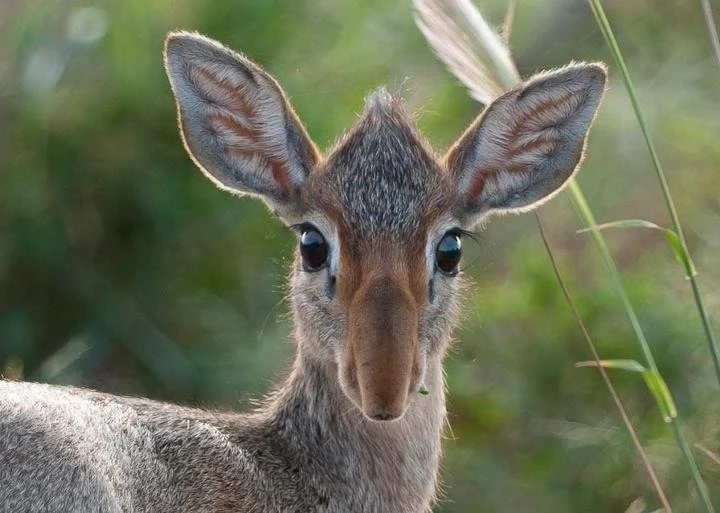
Günther's dik-dik: a head that evolution assembled from spare parts, but the result is brilliant. Photo by: Varvara Dronova.
The fact is that the dik-dik lives where other ungulates would quickly die—in dry, arid lands with open spaces. Therefore, every drop of life-giving moisture is worth its weight in gold. The body stores fluid from food: leaves, shoots, berries, even from dew, which the dik-dik licks from its own nose. It's so successful that the antelope has completely abandoned watering holes! 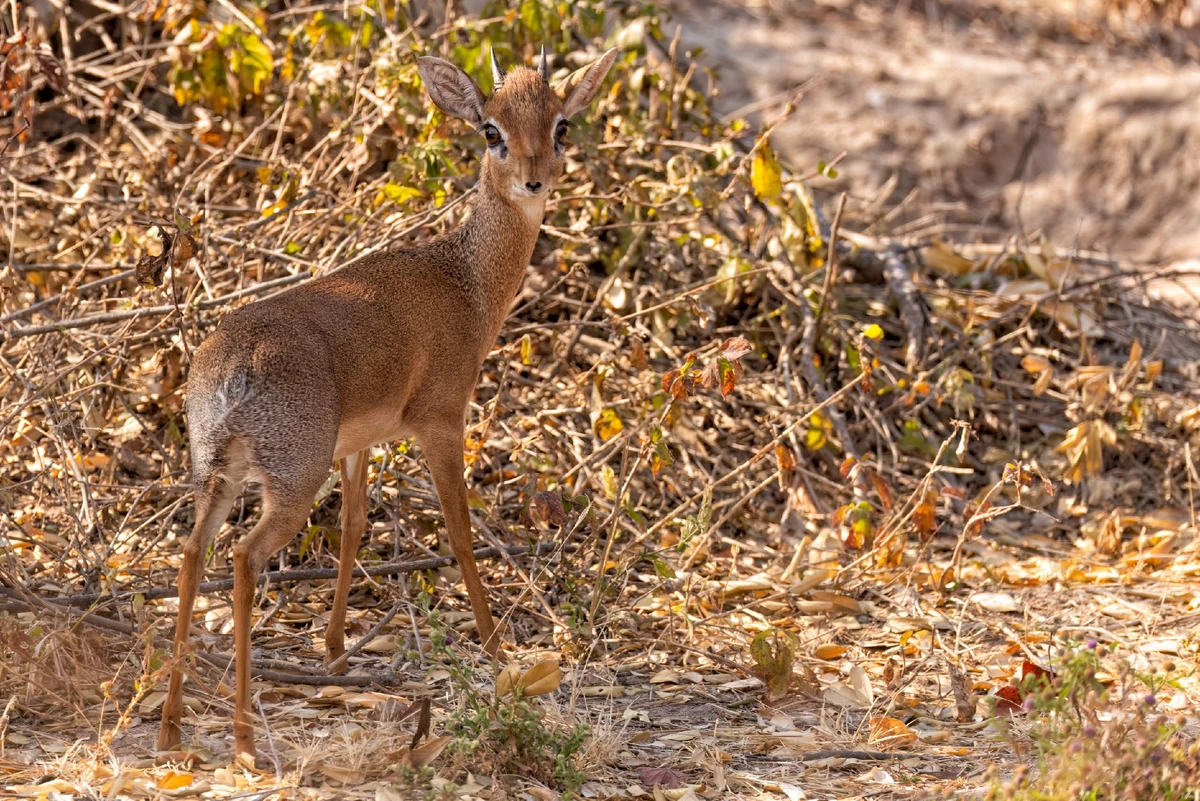
A stealth antelope, caught loading textures. Ruaha (Tanzania), 2024. Photo by Varvara Dronova.
The dik-dik hates tall grass—the dense vegetation obscures its view. Therefore, it lives in the west and east of the continent, stubbornly ignoring central Africa. Why is this? The reason is the ancient climate. When Africa was drier, the shrubland stretched across the continent in a continuous strip. Then the climate became more humid, the forests and savannas merged, and the dik-diks were "cut" into two isolated populations. They do not migrate far and do not travel through dense forests. 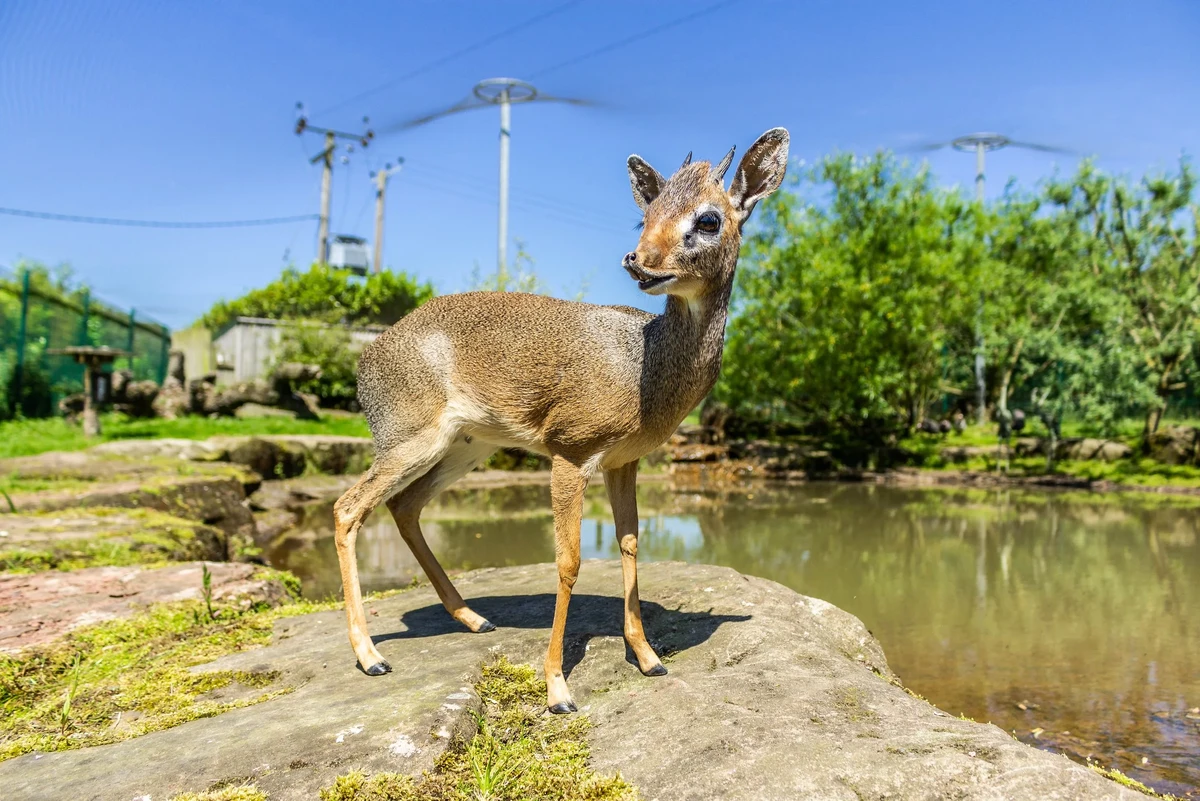
Because the genus' range is divided into two parts of the continent, four species of dik-dik have emerged.
Cartoonishly huge eyes are another characteristic of these ancient ungulates. These gigantic eyepieces create the illusion of a large head. A predator subconsciously doubts: "Maybe the dik-dik is bigger than it actually is?" Incidentally, tiny size is also a primitive characteristic. But even smallness has its advantages! The antelope has many enemies: from eagles to leopards. Young animals are especially vulnerable. But hunters ignore adult ungulates: too little meat, too much effort. 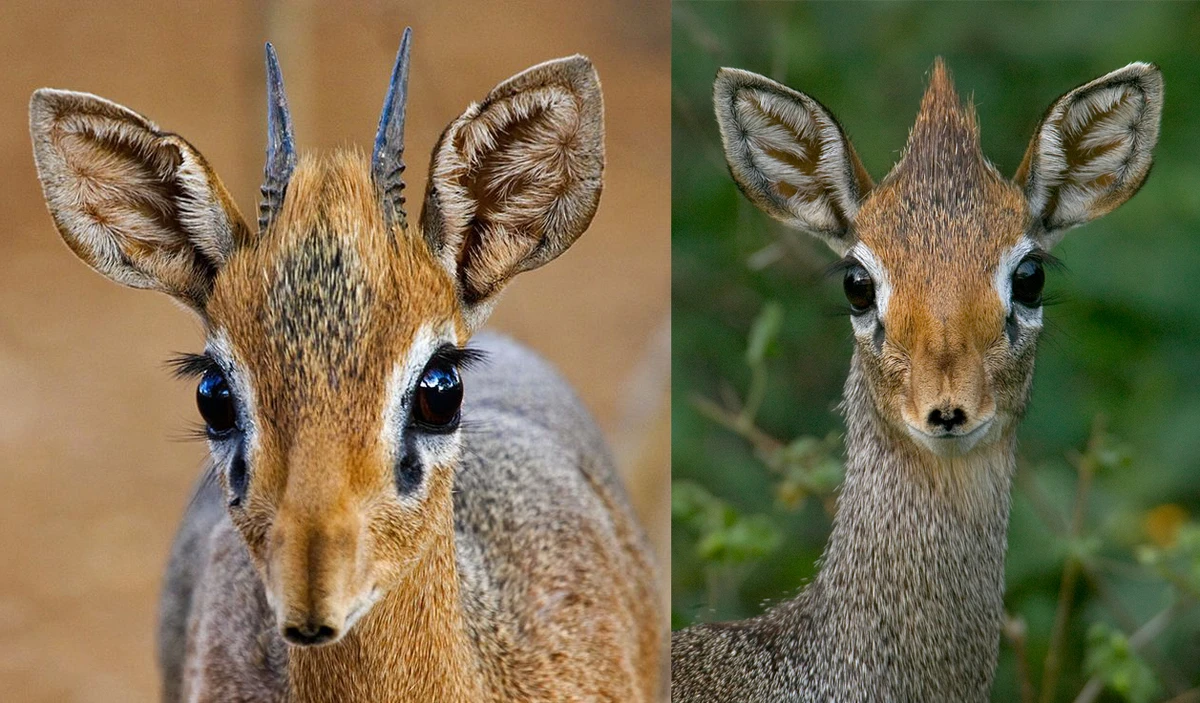
You can drown in affection in those bottomless eyes!
The dik-dik is a master of stealth. If it senses danger, it doesn't run, it disappears. It freezes, becomes a shadow. I see them very often—the antelopes flicker in the golden light, cross the road, stand in the bushes literally within walking distance. But as soon as I point the camera, they disappear into the thicket. They do it so skillfully that the autofocus gives up. If a tiny antelope is spotted, the dik-dik takes off like a clockwork beast. Chaotic leaps, zigzags, jerky sprints—it becomes an unpredictable, elusive speck. Their personal "escape trails" are especially graceful—mini-highways, pre-laid out along the edge of their territory. On them, the dik-dik can reach speeds of up to 40 km/h! Even leopards, with their agility, give up the chase: too nerve-wracking, too difficult, too little benefit. But for a photographer, every successful photo is a small victory. 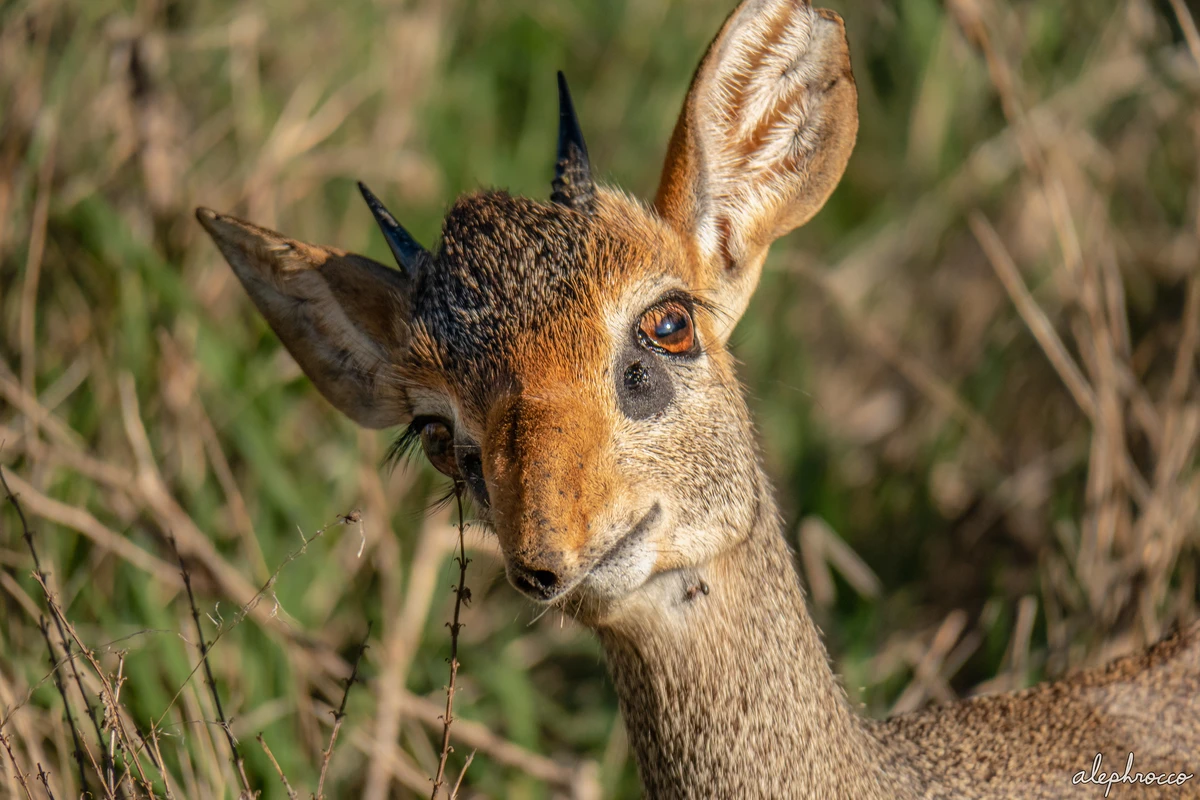
Catch me. If you can.
The bush is the dik-dik's home, and the family is its fortress. These antelopes live in pairs, spending most of their time with their partners. Monogamy is strategic: in a world full of predators, it's unsafe to wander around looking for love. Together, the couple carefully marks boundaries with their tear glands—this is the oldest form of communication among ungulates. 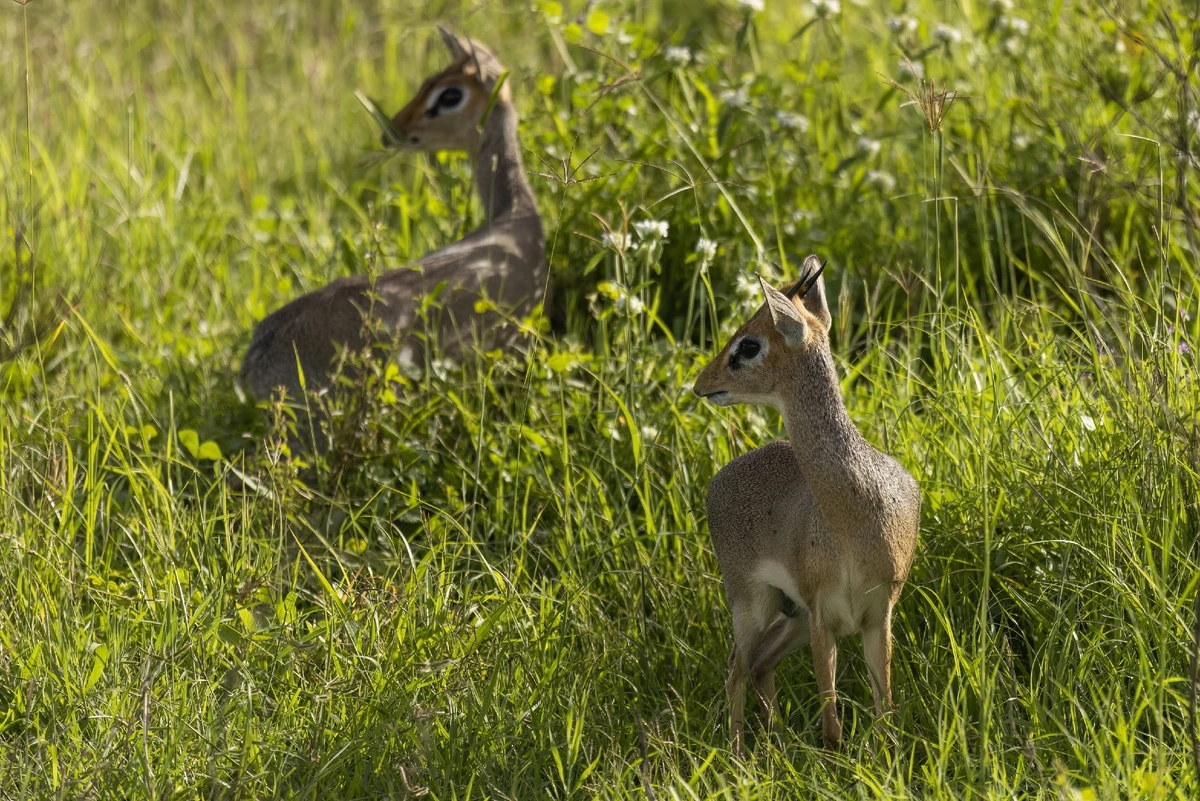
When you're together, and both simultaneously hear "something in the bushes." Marriage strengthens instantly. Serengeti, 2024. Author: Varvara Dronova.
The male makes his daily rounds with the anxious thoroughness of someone triple-checking that an iron is turned off: he refreshes his scent markings 10-30 times a day. Conflicts between neighbors resemble mini-tournaments: the males rush at each other, stop a centimeter away, raise their crests, and pause. Then they repeat. A duel without contact, the one with the stronger nerves wins. 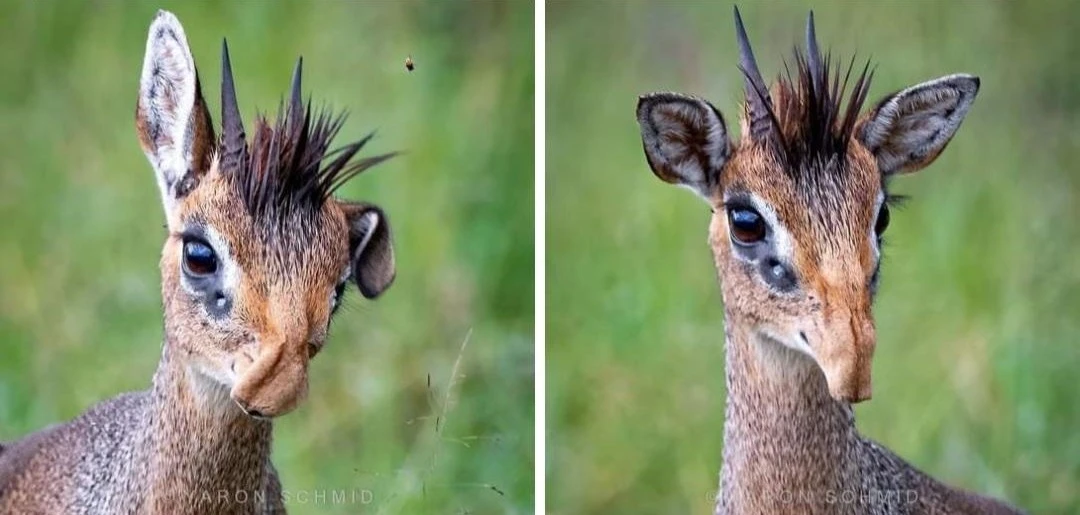
See those giant black spots under their eyes? That's not a disease, they're glands the dik-diks use to mark their territory.
Dik-diks' reproduction is a model of efficiency. Compared to other ungulates, they reproduce like rabbits—antelopes can give birth twice in a season! Gestation lasts about 170 days, and a single cub is born. 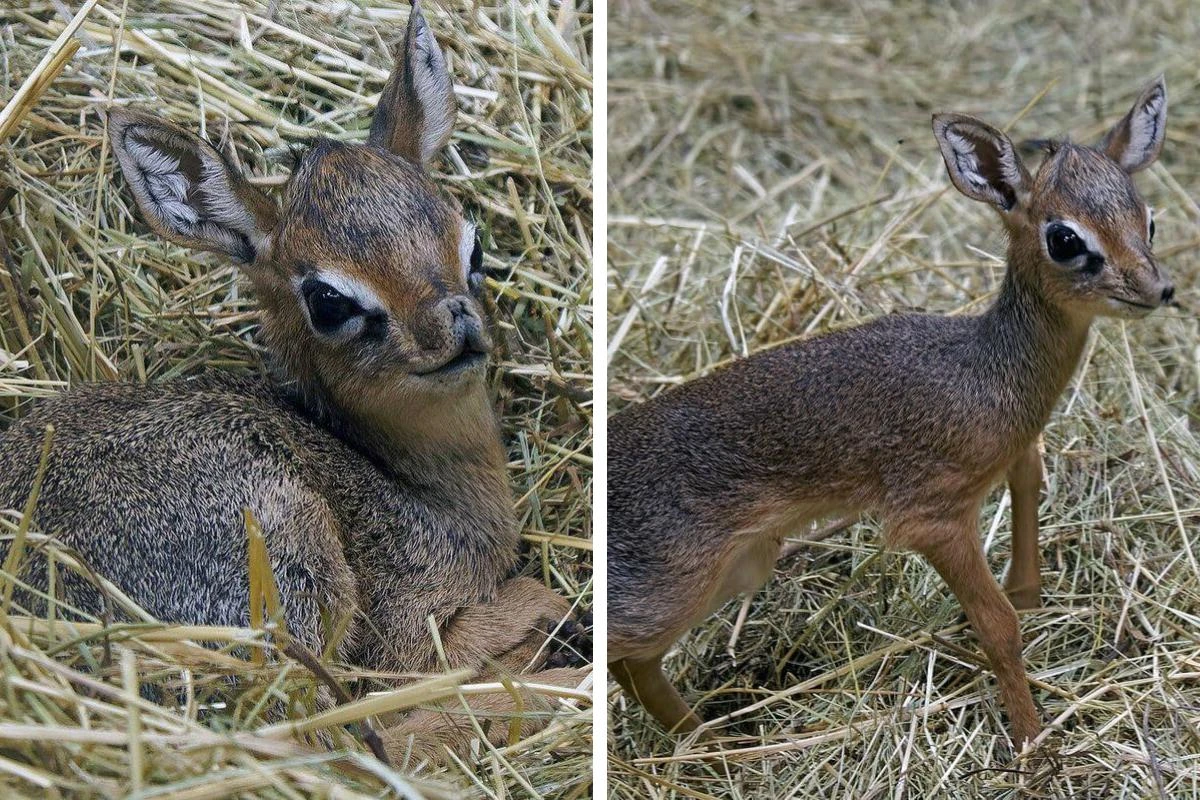
During the first few weeks, the cub lies hidden in the bushes. The mother feeds him quickly and discreetly, placing him at her breast for a couple of minutes.
Calves have a 50/50 survival rate. Lucky? By seven months, the young will reach adult size. The parents urge the calves to emerge into independent adulthood. Males are driven out by their fathers, and females by their mothers. Unlucky? No problem, the couple will go after a second child without further ado. 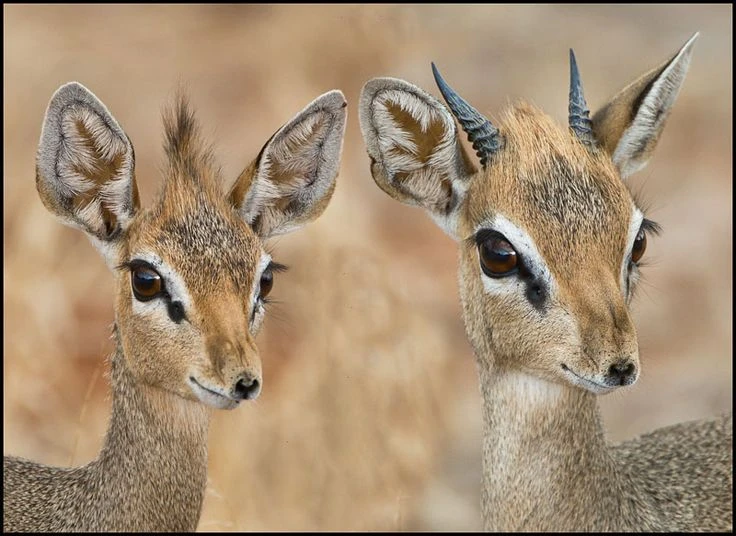
"Mom, Dad, are you throwing a party to celebrate my seven-month anniversary?" "No, son, we threw a party because you'll be leaving soon!"
The dik-dik remains the perfect example of an animal that has made its way into life. It's ancient, but not archaic. Small, but powerful in its scale. Nervous, but resilient. It lives where larger herbivores have no business, despite looking like a stuffed animal. A small living fossil, a figure of folklore, and the perfect hero for those who see the world through more than the prism of the Five.
Add your comment
You might be interested in:









The largest gas station in the world - 120 columns (3

Kiss co-founder guitarist Ace Frehley has died (3 photos)

People saved an extremely rare orange lobster (3 photos + 1

Chinese miniature replica Toyota Land Cruiser 300 (3 photos)

Spectator pit stop

When you move a picture in Microsoft Word
Emotional foal leads rescuers to help horse in distress

Environmental activists poured paint on Stonehenge and

Big changes: 35 entertaining photos from the series

How to start a 102-liter engine

Protective film Removing it with a power screwdriver

When a child plays hide-and-seek at a professional level

Man sets up bedroom camera and discovers the reason for his

Super dads who swoop in to save the day

Precision carpentry

Looks like it's time to buy WinRAR

How to hang wallpaper neatly

How metal buckets are made in Pakistan
