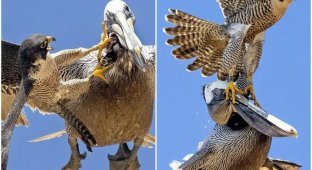
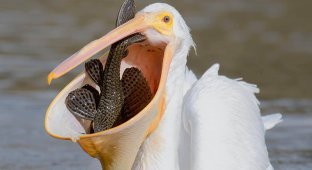
American White Pelican: This Bird's Beak Is a Bottomless Abyss! (10 photos)
What is the American white pelican known for? Its size? Its behavior? Its ecological flexibility? No. It's known the world over for trying to stuff everything in its mouth: cats, dogs, pigeons, capybaras. Even bears! 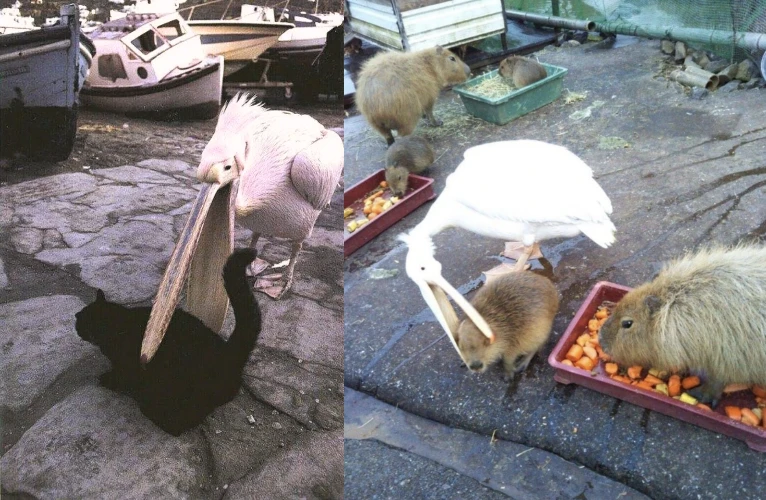
Here are cats, here are capybaras... 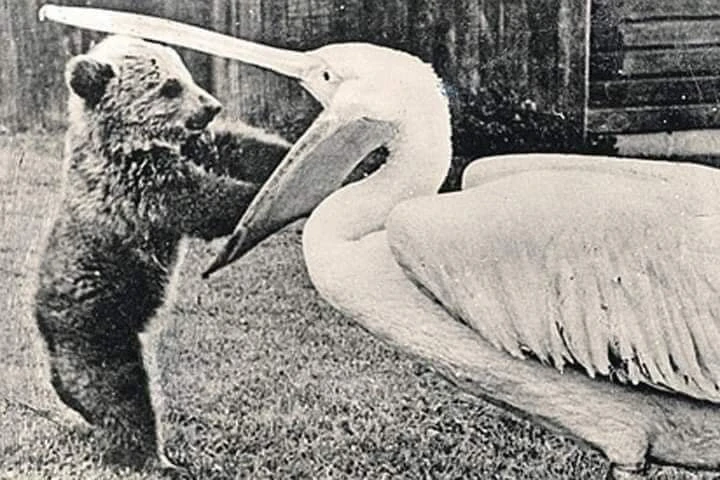
Did you think we were joking when we talked about bears?
At first glance, yes, the pelican really is that voracious. Its size dictates it. After all, this is one of the largest flying birds on the planet, with a wingspan of 3 meters and a weight of up to 13 kilograms. 
Come give me a hug. You and about 10 others to boot!
Furthermore, its metabolism is accelerated even by the standards of already fast birds. Therefore, an adult pelican needs to eat 1.5-2 kilograms of fish per day! And during nesting season, it additionally feeds 1 to 5 chicks, and its food requirement can increase to 3 kilograms per day! 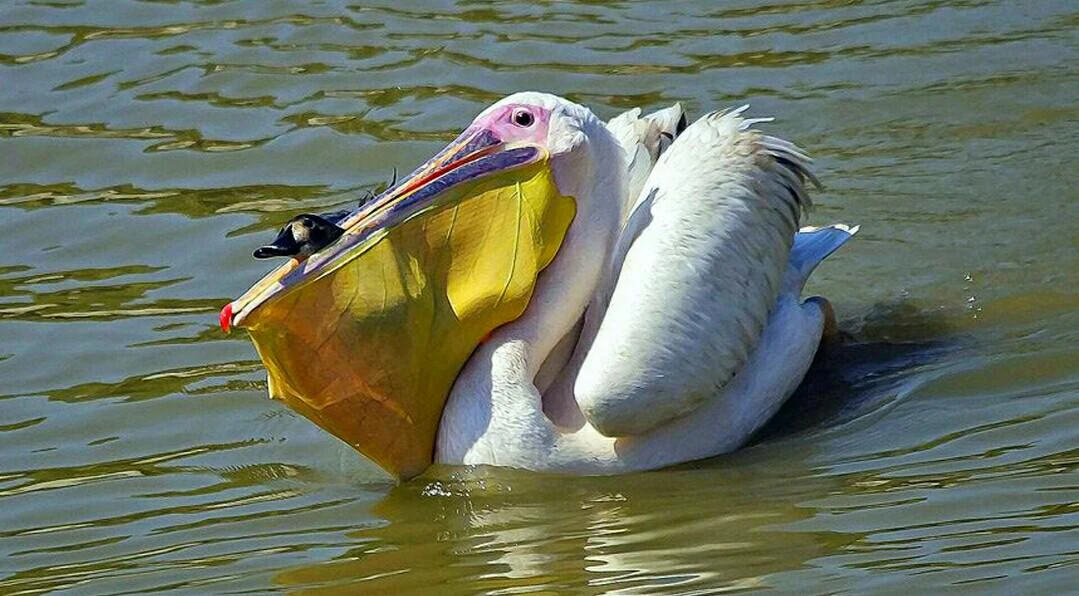
When I went to the store with my bag.
To get the necessary calories, pelicans have to resort to various tricks. For example, they steal prey from others. Pelicans don't just steal food from gulls, cormorants, cranes, and petrels. They're also not averse to stealing treats from each other! Moreover, the birds steal not only in hunting grounds, but also right in the middle of the colony. They're so uninhibited that they can steal food from chicks in a neighboring nest without even a second's thought about the morality of the matter. 
What are you eating there? Show me!
Furthermore, the pelican really does eat anything that isn't nailed down. While fish constitutes the bulk of its diet, it readily swallows small turtles and crayfish, frogs and voles, as well as urban pigeons and garbage from human dumps. Although the latter can cause indigestion. 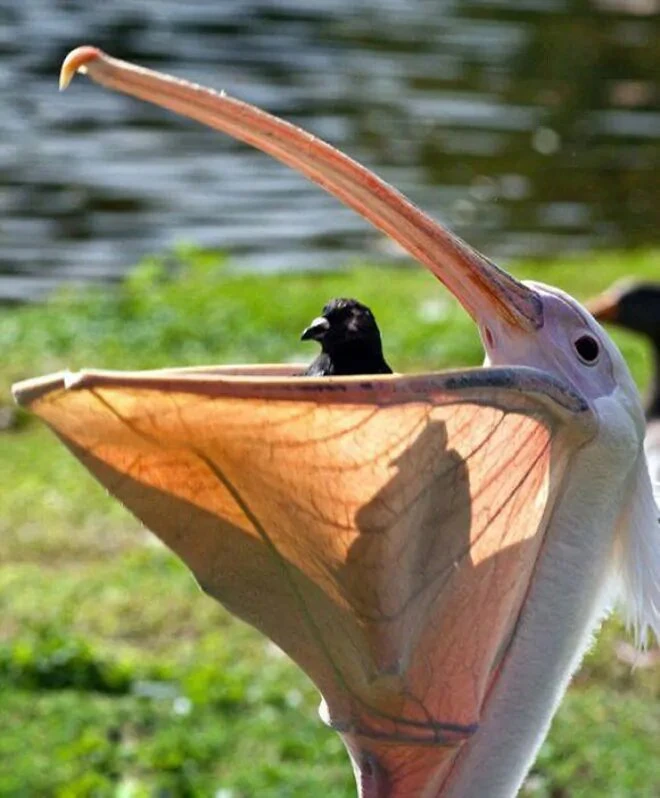
However, hello.
And it seems there's no reason why this large, brazen, and eternally hungry bird can't attack larger prey. But in fact, there is one reason. And that's the structure of their beak and throat. 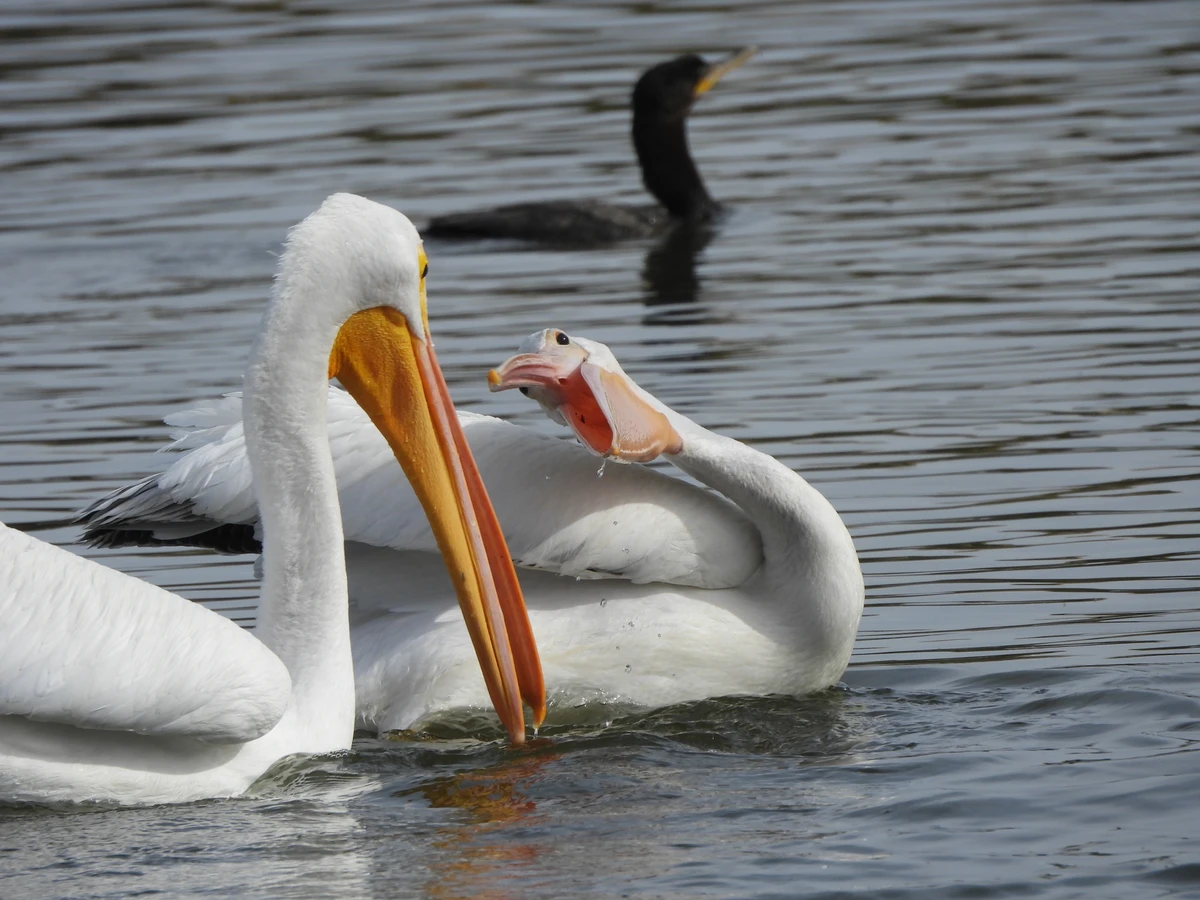
San, stop making faces.
Even though a pelican's beak is quite large—it can hold up to 13 liters of water—its soft, stretchy bottom is very vulnerable and not much stronger than human skin. Pelicans are very afraid of damaging it and don't eat anything heavier than 1.5 kilograms. Moreover, bulkier prey simply won't fit down their throats. What kind of cats and capybaras are they if they can't swallow a hare? Then why do they want to bite off larger animals? Because they irritate them, that's why! 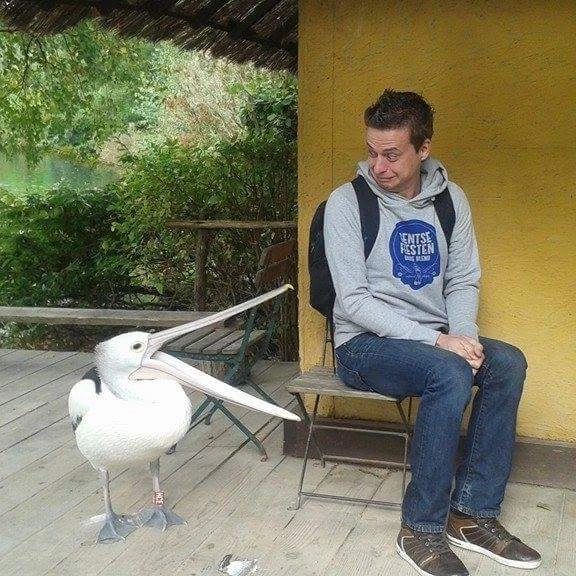
Crime... 
...And punishment.
We didn't say that birds are very impudent for nothing. As soon as they don't like something, they immediately start biting, poking the offender with their beaks, and slapping them with their wings. It's all the more surprising that these antisocial blockheads manage to gather in colonies of up to 10,000 pairs, which also include other bird species. 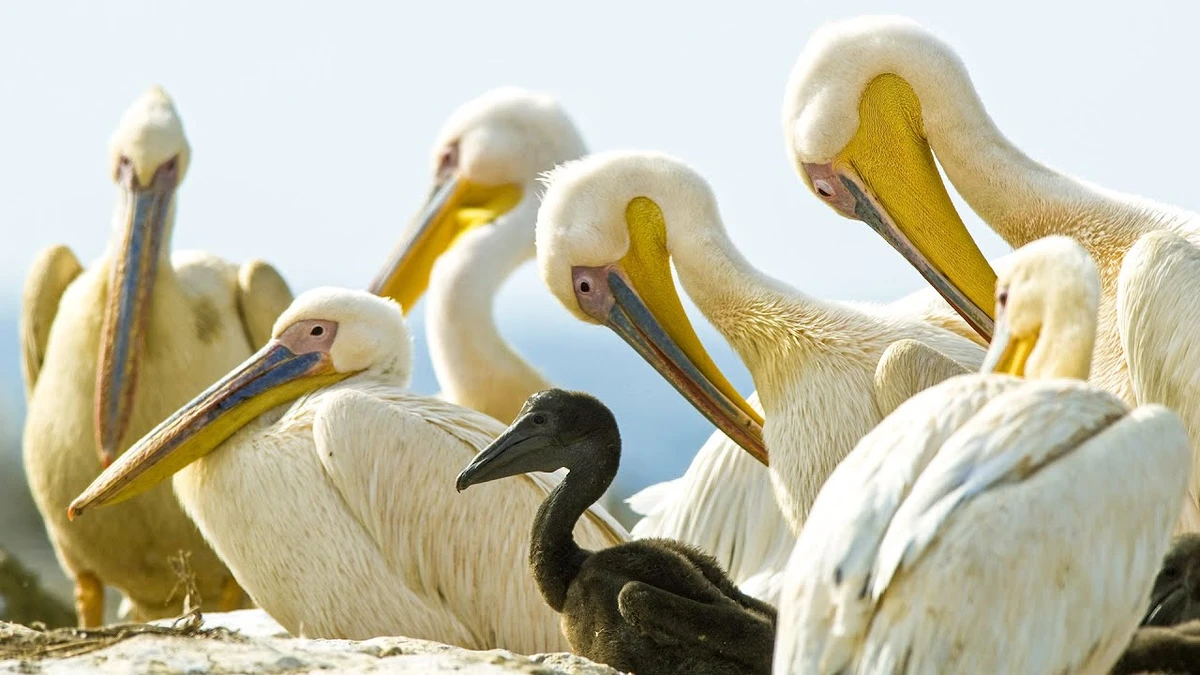
A pelican collective. And no one's eating anyone. For now.
But it's worth acknowledging that sometimes they're driven not only by irritation but also by curiosity. Since the birds' forelimbs long ago transformed into wings, they can't touch objects of interest with their feet. But they can touch them with their beaks. So they probe these unknown creatures, trying to figure out what they are. And then they bite them out of spite! They don't eat them, they just irritate them.