A woman's burial in an upside-down tiara was discovered in Greece (5 photos)
Archaeological research in Boeotia has uncovered the "Lady with the Inverted Diadem," a 7th-century BC find. Scientists have also discovered burials from the Archaic and Classical periods, unique artifacts, and gained new insights into political changes in Ancient Greece. 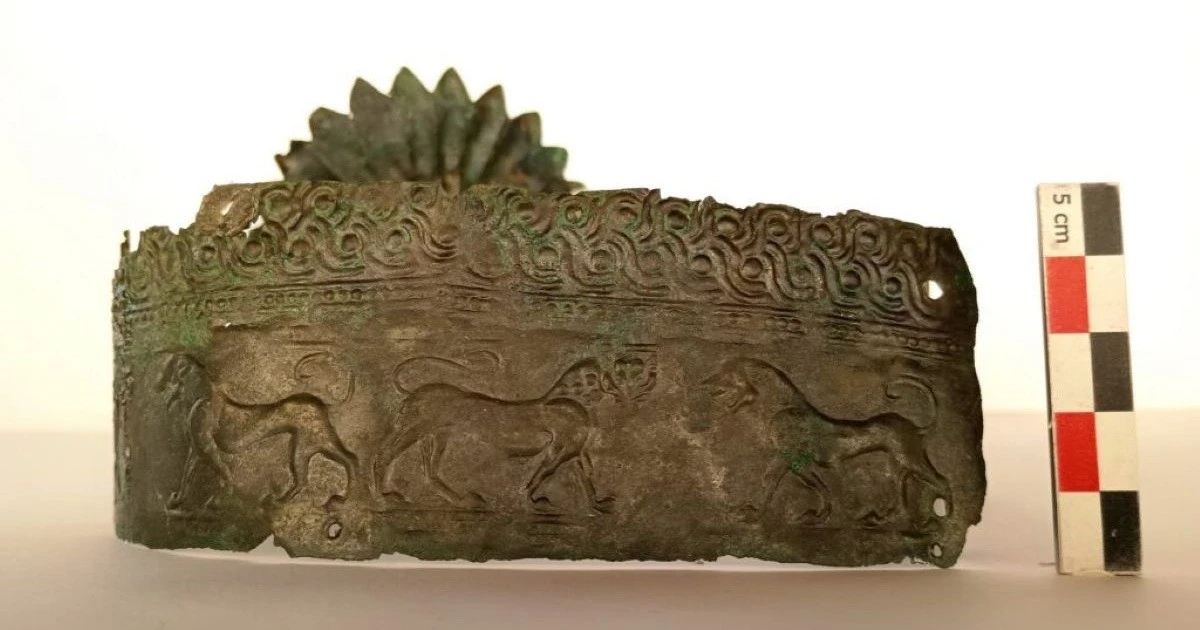
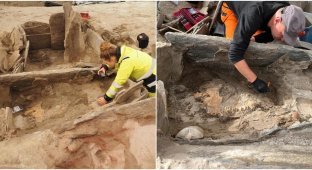
In the quiet eastern foothills of Lake Kifisida, part of the ancient Copais Basin in Boeotia, archaeologists have discovered one of the most significant burials of the Archaic period in Greece. What began as routine work prior to the construction of a solar park unexpectedly led to the discovery of a necropolis and a fortified settlement. These finds shed light on the transition from hereditary royal power to the rise of aristocracy in ancient Greece.
The Ephorate of Antiquities of Phthiotis and Eurytania, headed by Euthymia Karantzali and Aristea Papastathopoulou, receives almost all funding from the Mytilineos Group through its subsidiary METKA ATE. Archaeologist Maria Papageorgiou and her team discovered a cemetery dating from the Archaic and Classical periods during fieldwork. The finds reveal the daily life and burial customs of a thriving lakeside community and point to the political upheavals that transformed Greek society in the 7th century BC. 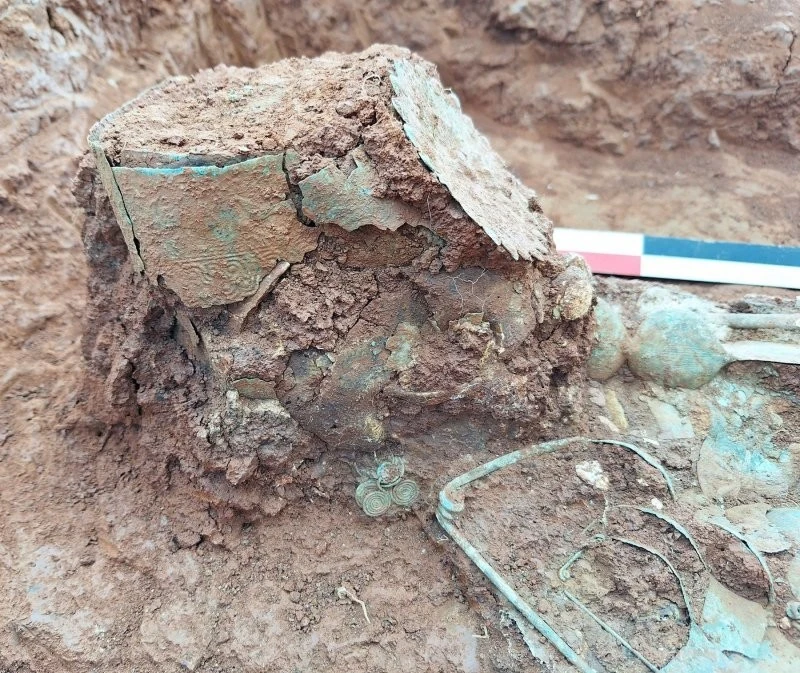
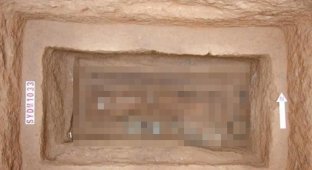
Scientists have found numerous tiled burial pits and traces of cremation pyres underground. At least forty tombs have been excavated so far. It is already clear that the people buried here belonged to a wealthy landowning society. They had access to high-quality goods, handicrafts, and a developed trade network.
The grave of a woman, now called "The Lady with the Inverted Diadem," has attracted particular attention. The burial dates back to the second half of the 7th century BC. Based on the woman's teeth, her age was estimated to be between 20 and 30 years. But the most astonishing thing is the ritualistic treatment of the body and the unusual objects in the tomb.
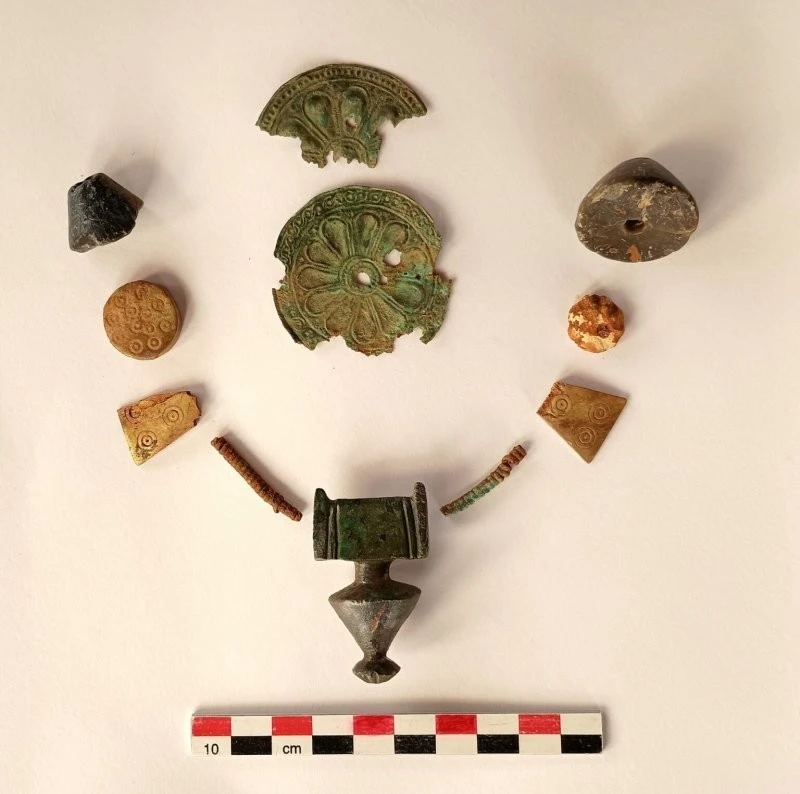
The woman wore an elaborate bronze diadem with a pair of heraldic lions—male and female—symbols of supreme power throughout the ancient Mediterranean. A large sun-shaped rosette once shone in the center of the decoration, indicating rank, prestige, and perhaps even royal descent. 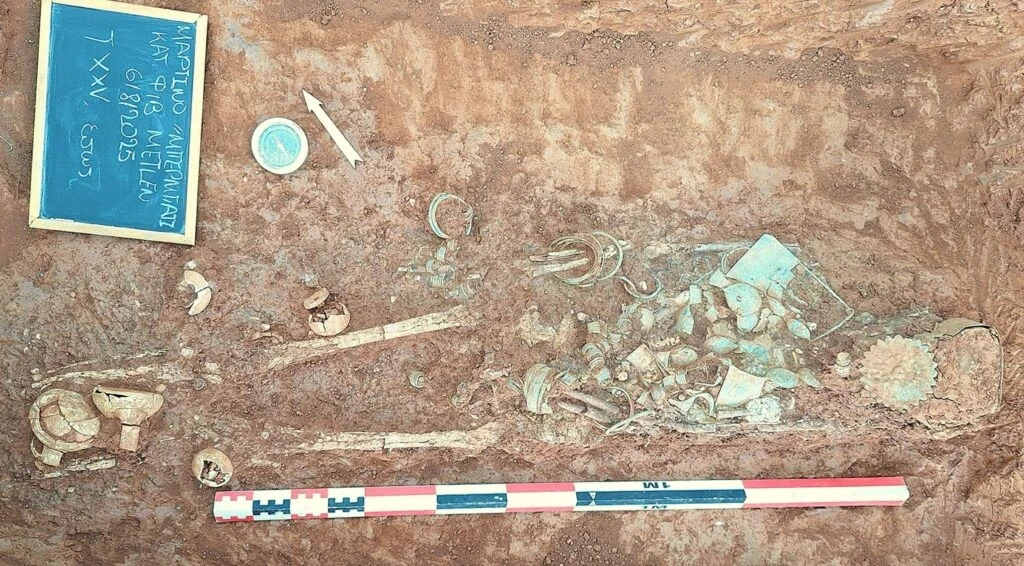
After the woman's death, something astonishing happened: the diadem was found upside down.
The lions were found in a recumbent position, with the rosette underneath, not on the forehead. In all cultures—from antiquity to modern times—an inverted crown symbolizes the renunciation of power, the fall of a ruler, or their voluntary abdication.
Experts believe this ritual may have reflected the significant political changes that occurred in Boeotia and Greece in the mid-7th century BC. At this time, royal power was fading, giving way to aristocracy. The woman buried here likely belonged to an influential family whose authority was waning, and her inverted diadem was a symbol of the collapsing world order.
The richness of the grave goods indicates the woman's high status. Among the finds are two large Boeotian-style brooches with geometric patterns and stylized images of horses. The necklace with a large vase-shaped pendant was crafted with great skill. Ivory jewelry was also found.
Her outfit was complemented by amber beads, fine bronze rosettes, earrings, and bracelets. On her fingers were spiral rings, on almost every knuckle. All these items emphasize not only prestige but also skill and social status. 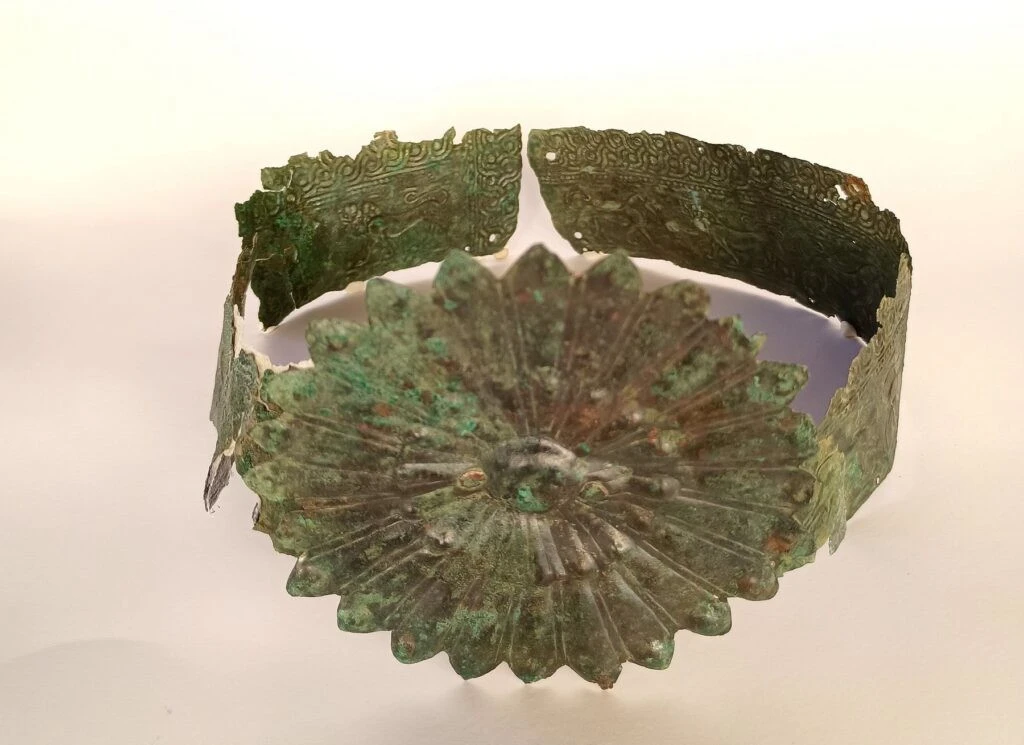
The grave of a four-year-old girl was discovered nearby. She was adorned with a bronze diadem with inlaid rosettes. The girl was buried with jewelry similar to that found in the woman's grave. This suggests family ties. The girl was likely the woman's daughter, niece, or younger relative.
Other tombs in the necropolis also add to our knowledge. A woman who lived in the sixth century BC was buried with a Sian-style kylix depicting roosters and a shawl adorned with mythical creatures and Hermes. Bronze bowls and black-figure pottery attest to the high skill of local artisans and the region's economic development.
The Lady with the Inverted Diadem is one of the most memorable archaeological figures of ancient Greece. She bears symbols of power, even upside down, during her last rites. This woman's tomb reflects the tensions of an era when ancient power structures were crumbling and new political realities were just emerging.