Bronze Age World War: Who Won the First Battle in European History? (8 photos)
Historians long assumed that Northern Europe was a cultural backwater during the Bronze Age. But discovery after discovery along Germany’s Tollense River has completely upended that view. Three thousand years ago, a clash of epic proportions took place there, involving thousands of warriors on each side. Combatants slaughtered one another with bronze swords and wooden clubs. 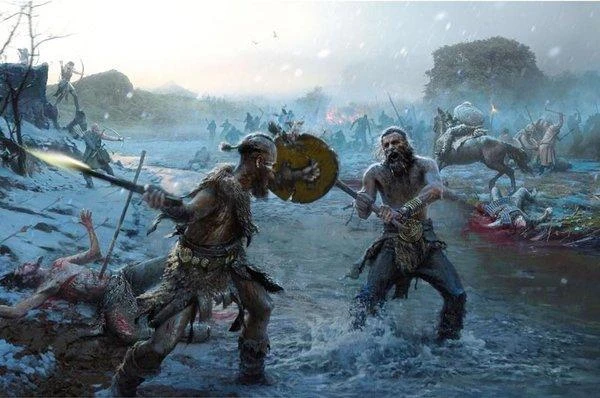
An Unexpected Find
In 1996, amateur archaeologists Hans-Dietrich Borgwardt and his son Ronald stumbled upon human bones along the banks of the Tollense, a small river in Pomerania, Germany. Systematic excavations launched in 2008 revealed that a massive battle between thousands of warriors had raged along the river during the Bronze Age. It remains the earliest known large-scale conflict in Western and Central Europe. 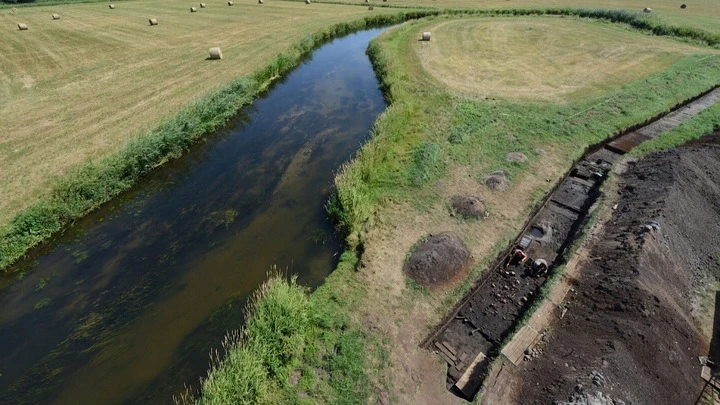
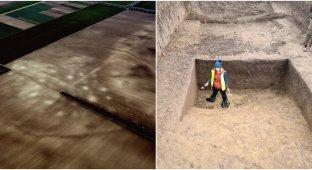
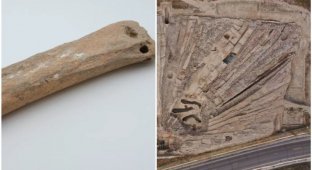
Excavations along the banks of the Tollense
Over eight years of painstaking work, archaeologists and divers surveyed a two-kilometer stretch of the riverbank, uncovering 9,000 bones belonging to at least 125 individuals. The search is far from over, with digs taking place annually. In one 12-square-meter section alone, researchers unearthed 1,500 bones and 20 human skulls. 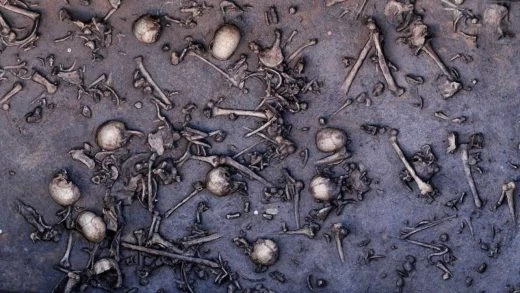
Skulls and bones of the battle's combatants
Alongside the human remains, archaeologists unearthed bone and bronze arrowheads, as well as wooden clubs and mallets. Even a preliminary analysis made it clear that a fierce, large-scale clash had occurred on the banks of the Tollense. But who fought here, when did it happen, and most importantly—what were they fighting for?
Battle for the Crossing
Radiocarbon dating places the conflict between 1300 and 1200 BCE. Archaeologists suspect they have uncovered only a fraction of the casualties, estimating that between 700 and 800 men died in a fight that involved up to 4,000 warriors. Researchers have also identified the likely cause of this brutal slaughter. 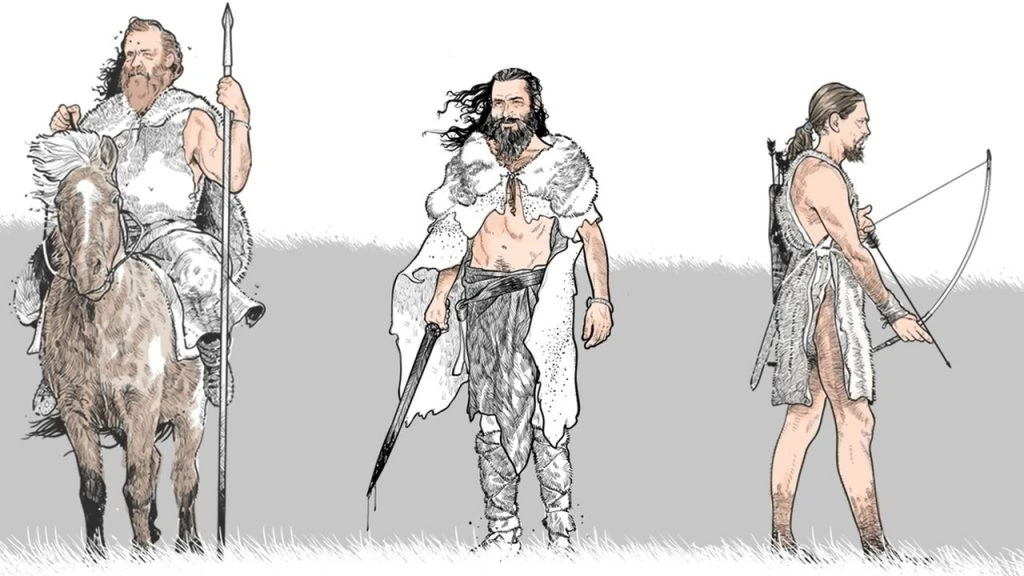
Bronze Age European warriors
These numbers are staggering—not just for the Bronze Age, but even by medieval standards. As German archaeologist Detlef Jantzen noted:
“The event is believed to have occurred less than a century after the Trojan War (traditionally dated to around 1184 BCE), suggesting that complex social organization was surprisingly widespread at the time. Gathering so many people from such distant places in one spot and organizing a battle of this scale was an extraordinary achievement.” 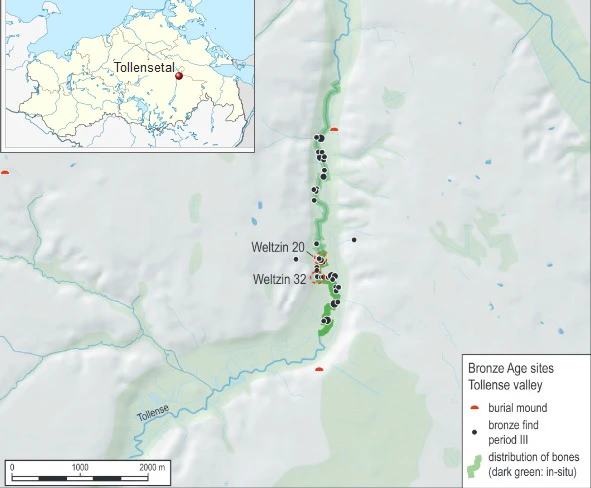
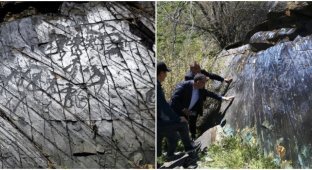
Map of discoveries along the Tollense River
At the time, the Tollense was deeper and wider than it is today. Near the battle site, archaeologists uncovered broken pilings, two layers of timber planking, and remnants of a sand causeway—clear evidence of a major river crossing. Remarkably, this causeway was built 400 years before the battle took place. Near the bridge, researchers located large fortified settlements that had grown wealthy by levying tolls and trading with traveling merchants and caravans.
Wooden Clubs vs. Bronze Swords
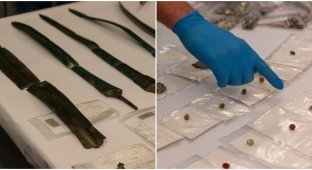
The site is also remarkable because river silt preserved organic weapons that would normally have decayed. The discovery of wooden clubs and mallets sent shockwaves through the scientific community. Yet bone analysis revealed that most of the wounds were inflicted by bronze swords—blades that were noticeably absent from the mud. 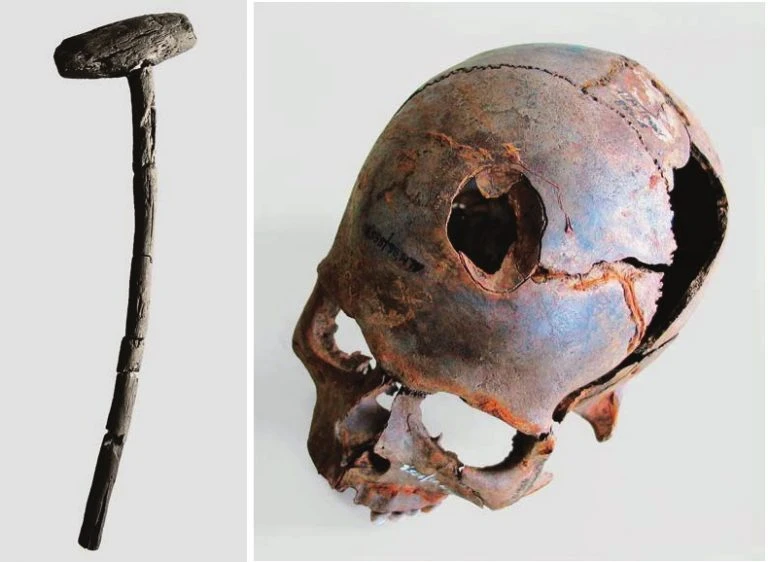
A wooden mallet found at Tollense and the trauma it inflicted
Evidently, the victors stripped the battlefield of valuable metal gear before dumping their enemies' bodies into the river. Bows and arrows were also heavily used, fitted with both bronze and bone arrowheads. While bronze possessed superior armor-piercing capabilities, bone tips tended to splinter upon impact, causing devastating agony to the wounded. 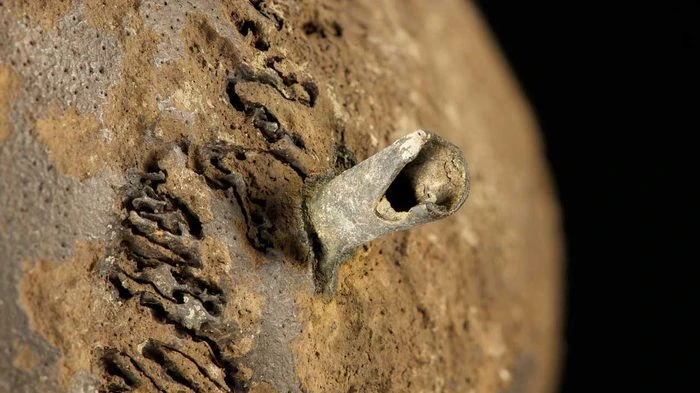
A bronze arrowhead embedded in a human skull
After unleashing volleys of arrows, the opposing forces clashed in hand-to-hand combat using clubs, spears, and bronze swords. Isotope analysis of the fallen warriors' teeth—which records chemical signatures of the food and water consumed during childhood—provided a geographical footprint of where they grew up. 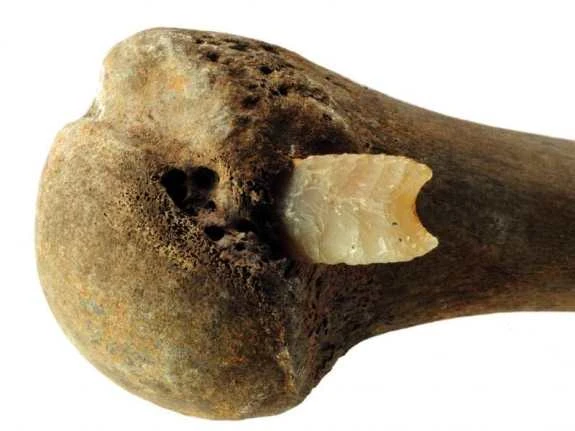
A flint arrowhead embedded in bone
The results were astonishing: many of the fallen were outsiders who had traveled from afar, though their exact origins remain uncertain. Analyzing teeth from 20 individuals, researchers concluded that the invading force was a diverse coalition drawn from across Europe. They had joined forces to seize a lucrative river crossing that had enriched its local masters for centuries. As history would later show, Europe was forged in the fires of conflict—a continent where wars would eventually erupt over the slightest pretext, even a wooden bucket stolen by a neighbor.