Terrors of the Pacific: The Most Terrifying Creatures of the Mariana Trench (13 Photos)
Hidden in the depths of the Pacific Ocean lies the Mariana Trench—a mysterious, pitch-black world that serves as a sanctuary for some of the sea's most frightening yet fascinating creatures. Extending roughly 2,540 kilometers with an average width of 69 kilometers and plunging down nearly 11 kilometers, this abyss exists in perpetual darkness where sunlight cannot penetrate. 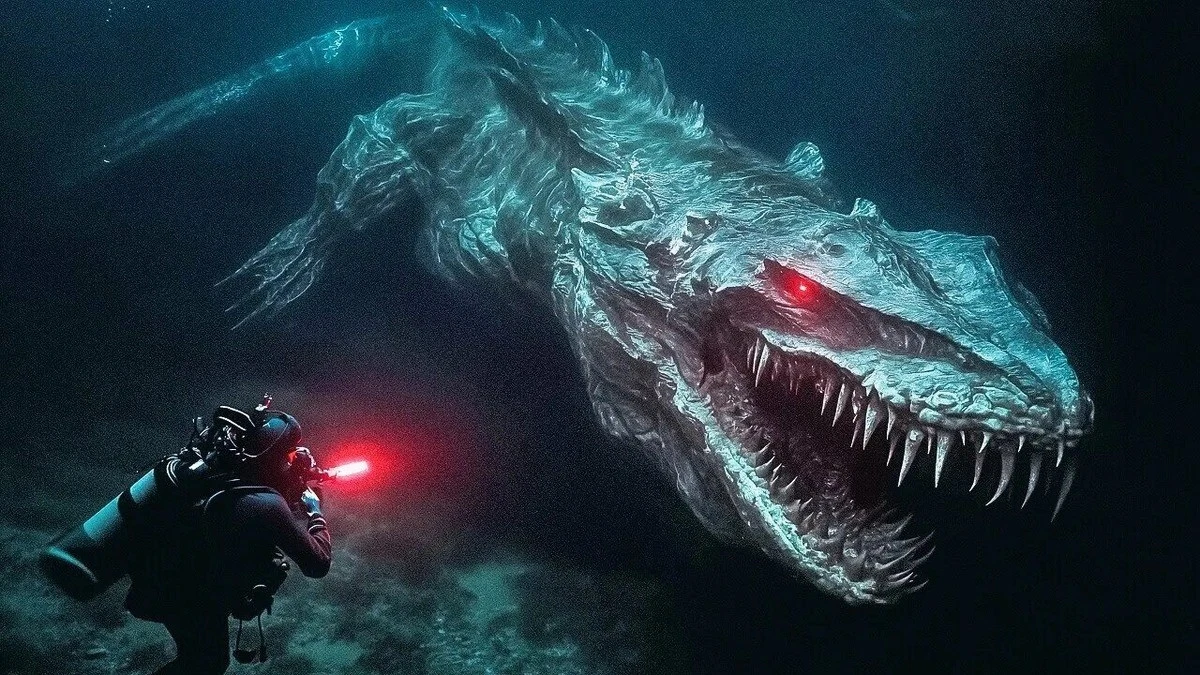
Scientists have discovered a vast array of bizarre creatures here, known as the inhabitants of the Mariana Trench. They have adapted to survive extreme conditions: crushing pressure and total darkness. Thanks to these remarkable physiological adaptations, this underwater abyss has become a treasure trove of extraordinary lifeforms.
Here is a countdown of the ten most terrifying creatures lurking in the Mariana Trench—let's dive in!
Fast Facts 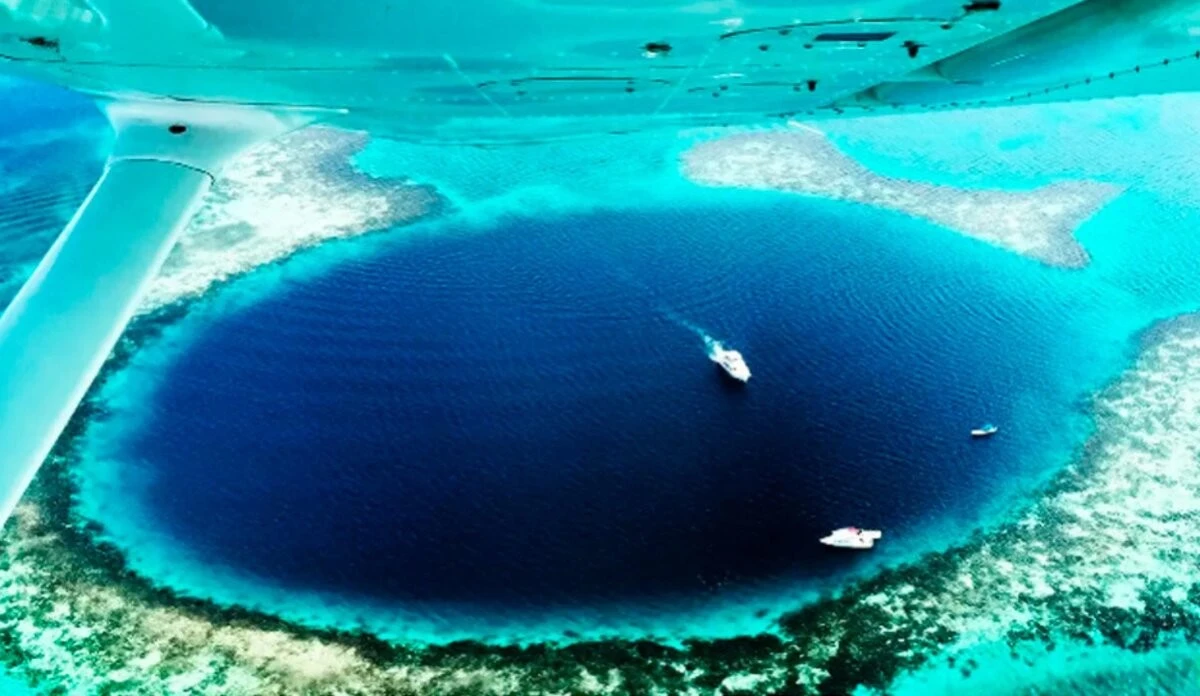
Mariana Trench
1. Pressure: At these depths, water pressure is roughly 1,100 times greater than at sea level (around 108.6 MPa).
2. Light: Sunlight never reaches these depths, leaving the trench in eternal darkness.
3. Temperature: Hovering just above freezing. 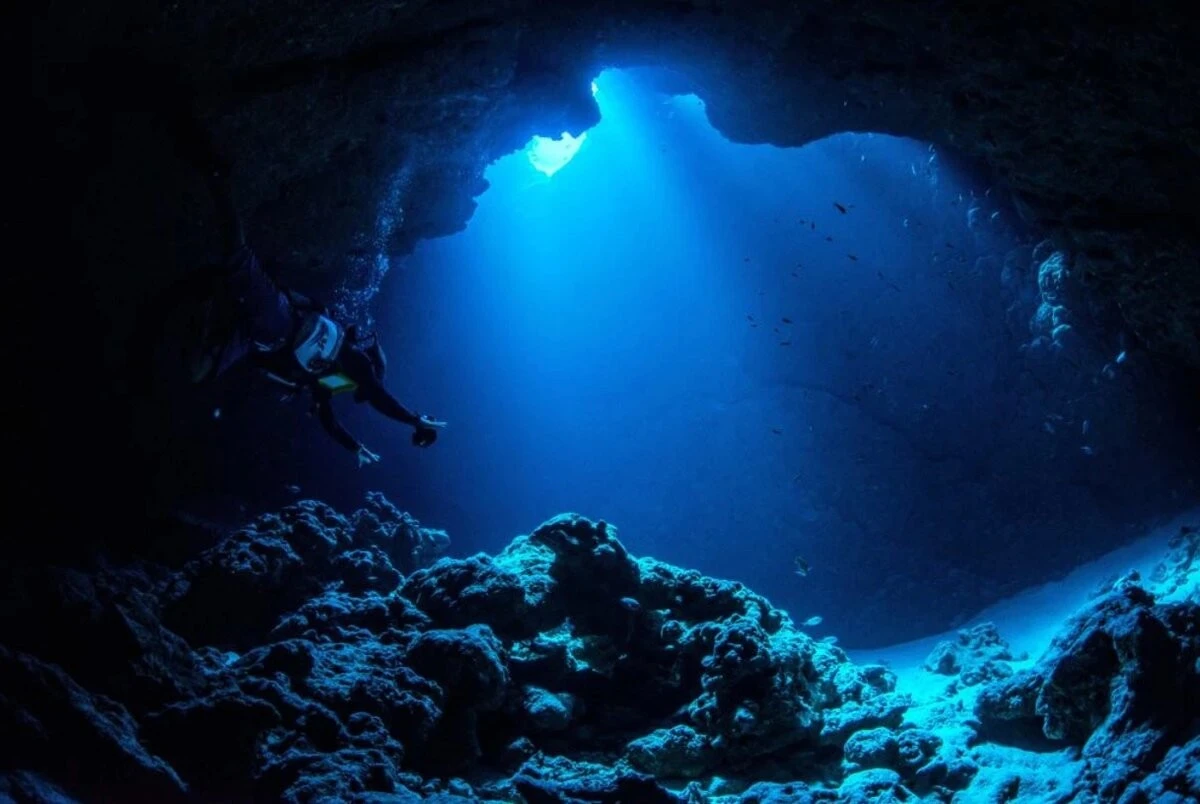
4. Tectonic boundary: The Mariana Trench lies where two tectonic plates collide, as the Pacific Plate slides beneath the Philippine Plate.
5. Protected status: The trench is designated as a U.S. National Monument and marine sanctuary, affording it official protection.
6. Pollution: Research reveals that sediment and water samples from the trench contain elevated concentrations of toxic heavy metals, including mercury and lead.
The Most Terrifying Creatures of the Mariana Trench
Goblin Shark 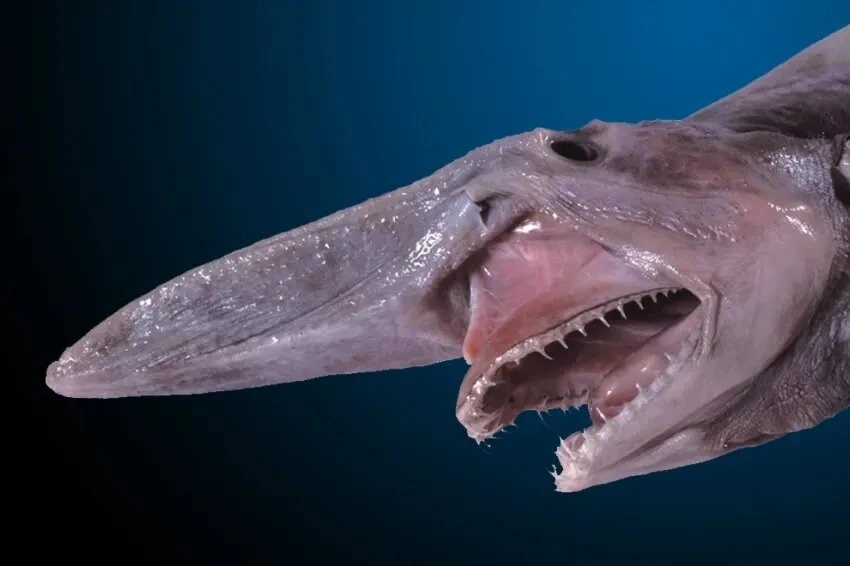
The goblin shark (Mitsukurina owstoni) is instantly recognizable for its bizarre appearance. Its defining feature is a long, blade-like snout packed with electroreceptors that help it track prey in the pitch-black abyss.
Its jaws are uniquely engineered: they can rapidly thrust forward like a catapult to snap up victims before snapping back into place. Its impressive dental arsenal includes 35 to 53 rows of teeth in the upper jaw and 31 to 62 in the lower. Long, needle-sharp front teeth snag fish and squid, while its flatter rear teeth crush hard shells.
The shark’s coloration is almost surreal: translucent skin allows blood vessels to show through, giving it a pinkish hue. Interestingly, this pinkish tint fades after death, turning the carcass a dull brown.
Size varies by sex: males grow to 2.4–3.7 meters, while females reach 3.1–3.5 meters. The largest recorded specimen measured 3.8 meters long and weighed 210 kg. A massive liver makes up to a quarter of its body weight, providing neutral buoyancy so the shark can lazily patrol the water column while conserving energy.
To hunt, it relies on a combination of senses: smell, sight, and electrical detection. Its hunting strategy involves creeping up unnoticed or ambushing prey before making a lightning-fast strike.
Inhabiting depths from 200 to 1,300 meters (or deeper), goblin sharks are found in temperate and tropical waters worldwide. However, they are exceedingly rare—scientists have documented only a few dozen specimens. While it is a predator and could theoretically pose a danger to humans, the chance of encountering one is virtually zero.
Viperfish (Chauliodus) 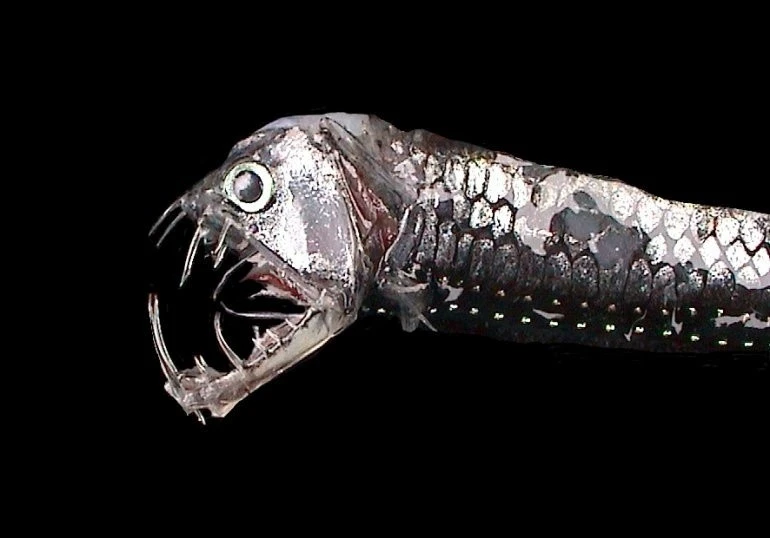
The viperfish, or Chauliodus, is one of the deep sea's most formidable predators. Its main weapon is an enormous mouth packed with long, needle-like teeth—so oversized they cannot fit inside its mouth and curve outward, creating a chilling silhouette. The viperfish uses these fangs to impale prey that ventures too close, leaving no chance of escape.
To hunt in total darkness, it employs a clever trick: a large photophore sits at the end of its elongated dorsal fin, acting as a glowing lure to draw curious deep-sea creatures directly toward its jaws. Once the prey is in range, the viperfish strikes with lightning speed, instantly immobilizing its target.
This strategy is perfectly tailored to the barren deep ocean, where food is scarce. Every strike must count, and its oversized jaws and fangs ensure maximum efficiency.
Black Seadevil Anglerfish 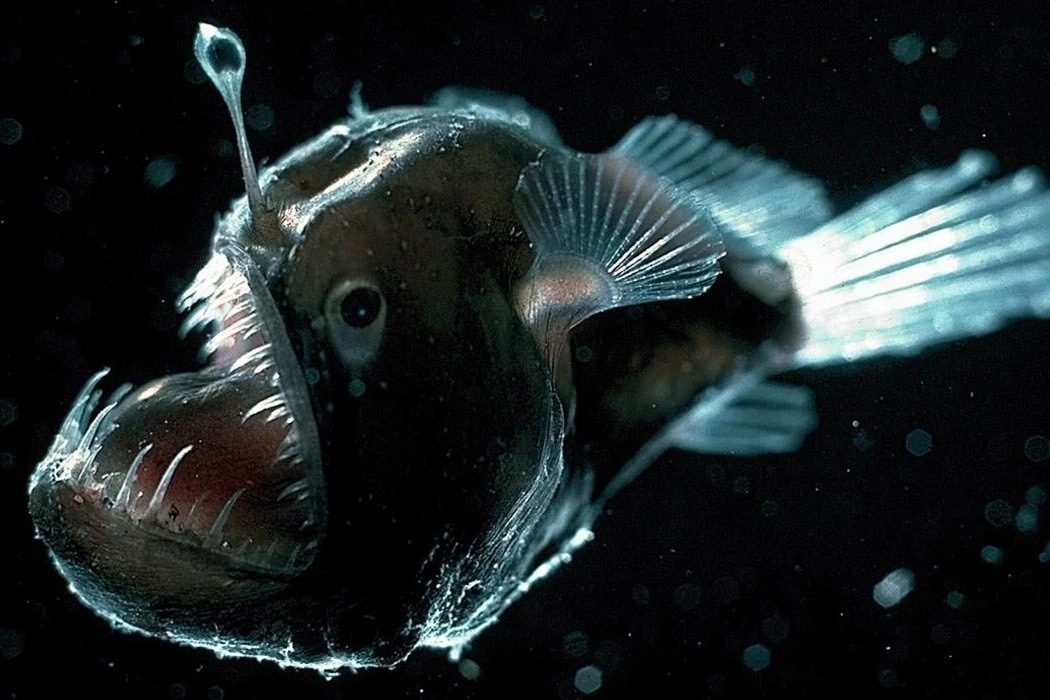
The black seadevil is a deep-sea anglerfish whose nightmare-inducing look seems crafted specifically to terrify. With a spherical body and a head more than twice the size of its torso, its terrifying anatomy revolves around its primary weapon: an enormous mouth.
Inside this gaping maw are rows of thin, needle-sharp teeth angled inward, preventing prey from breaking free once caught. Its jaw mechanism hinges on extendable bones surrounded by folds of skin that ripple in the dark, creating enticing movement to lure in victims.
Its dark coloration ranges from deep brown to pitch black, and it lacks scales entirely. Some species feature sharp dermal spines, adding to their menacing appearance.
Inhabiting the abyssal realm between 1,600 and 3,000 meters below the surface, it relies on a clever adaptation to hunt: a modified fin ray on its head fitted with a glowing organ called a photophore. In the total blackness, this bioluminescent lure acts like a beacon. As curious fish draw close, the seadevil snaps its powerful jaws, trapping them instantly.
Fanfin Seadevil 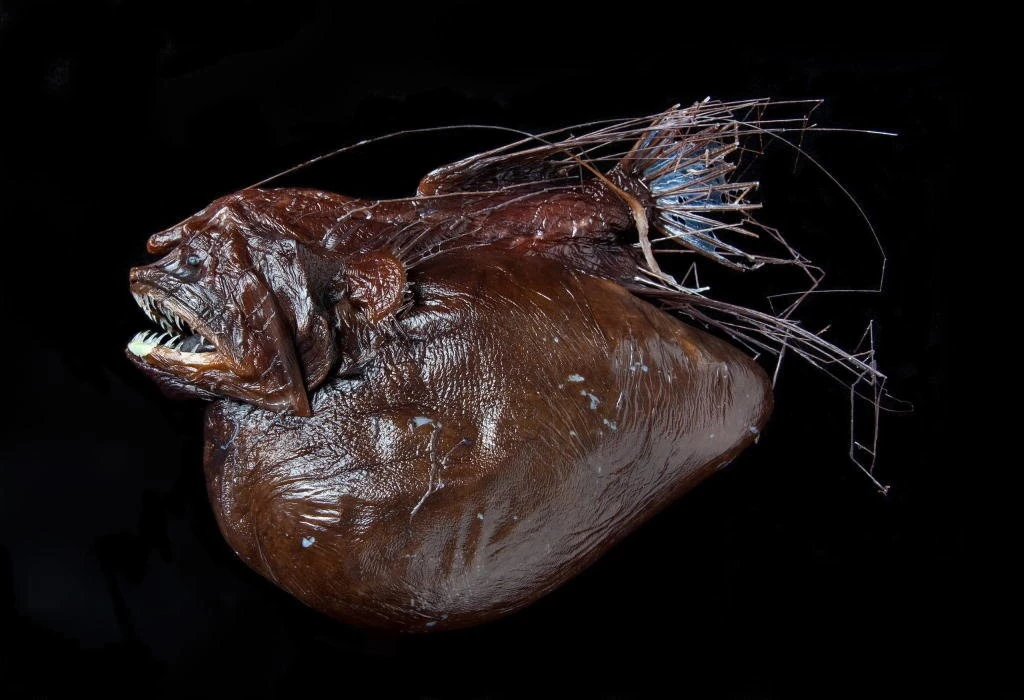
The fanfin seadevil is a remarkable species of deep-sea anglerfish with a truly striking appearance. Its signature feature is a glowing lure that not only attracts prey in the dark, but can also serve as a defensive flash to confuse potential predators.
Equally unusual are the hair-like filaments scattered across its body. These sensitive structures act as vibration sensors, helping the fish detect water movement and navigate a world with virtually no visual cues.
Despite its frightening look, the fanfin is quite small. Females reach lengths of 15 to 20 cm, while males are microscopic by comparison—measuring just around 2 cm. They employ a bizarre reproductive strategy known as sexual parasitism: during mating, the male bites into the female, permanently fusing to her body and losing his own organs until he becomes little more than a sperm-producing appendage.
Deep-Sea Dragonfish 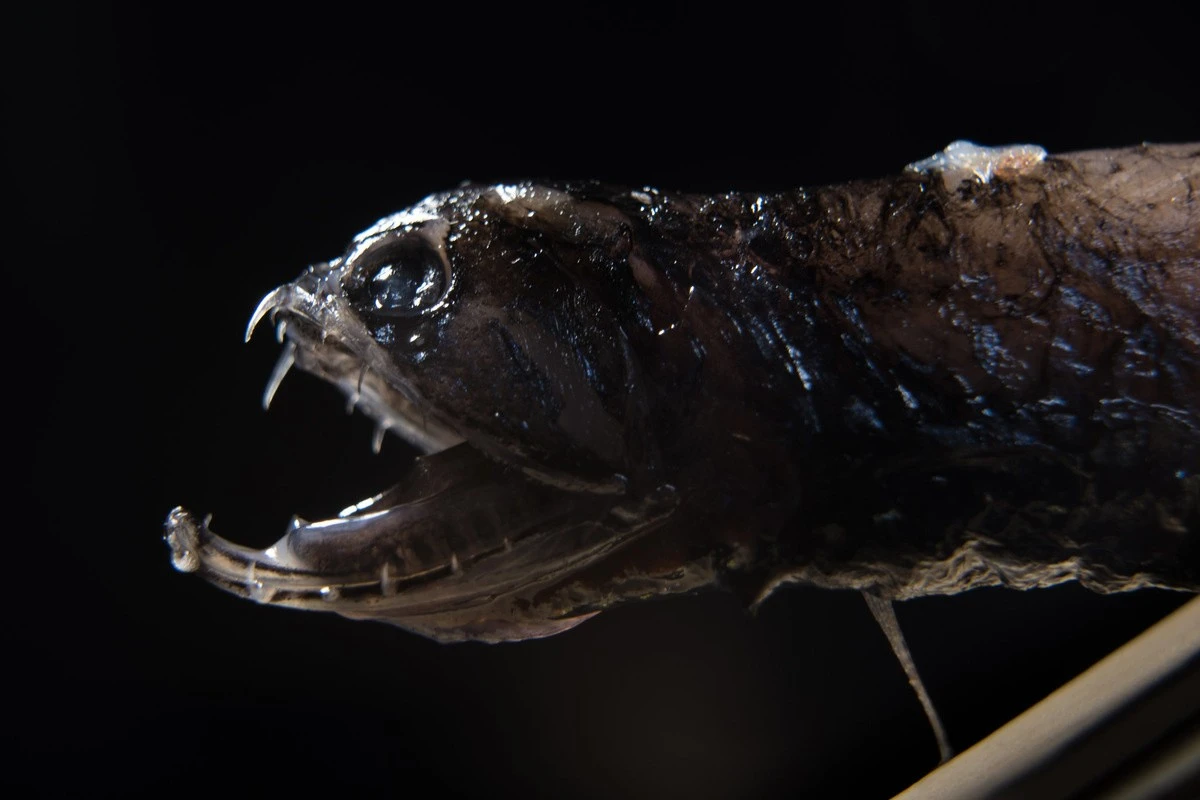
Dragonfish are enigmatic deep-sea dwellers that look like something straight out of a science fiction movie. Despite their terrifying appearance, they are relatively compact, usually ranging from 10 to 20 cm in length.
Their silhouette is unmistakable: a slender, elongated body tapering to a thin tail, paired with disproportionately long jaws lined with fang-like teeth. Their dark coloration—ranging from deep black to dark brown—blends seamlessly into the pitch-black ocean, rendering them virtually invisible to prey and predators alike.
Living at depths of 1,000 to 4,000 meters or deeper, where total darkness reigns, nature has equipped these predators with an effective hunting tool: bioluminescence. The key to their hunting apparatus is a long barbel hanging from the chin tipped with a glowing photophore. Suspended right below the mouth, it acts as a living lure, attracting small fish, shrimp, and squid.
Their hunting tactic is simple yet lethal: they lie in wait in the dark, letting the bioluminescent lure do the work, before ambushing prey with lightning speed. This combination of camouflage, specialized anatomy, and light weaponry makes dragonfish some of the most stealthy hunters of the deep.
Fangtooth Fish 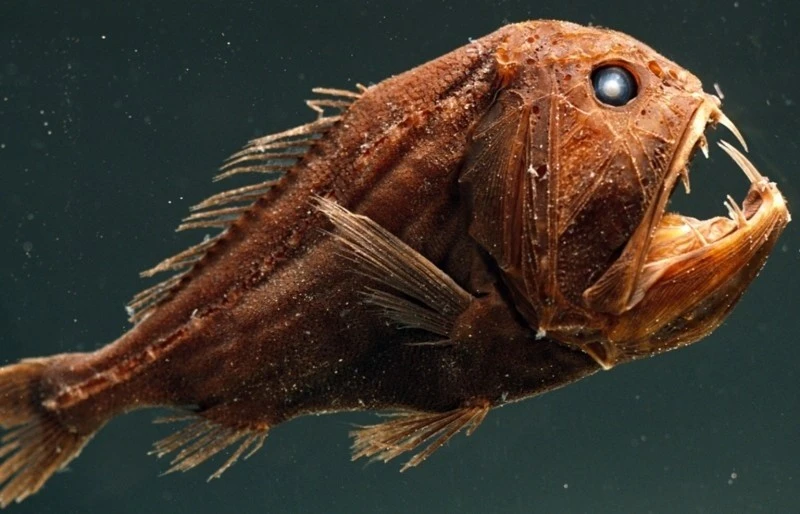
The appearance of the fangtooth fish looks engineered for a horror film. True to its name, it possesses the largest teeth relative to body size of any fish in the ocean. To allow its jaw to close without impaling its own brain, nature provided special socket pockets in the roof of its mouth.
These predators can reach impressive sizes, growing up to 160–200 cm in length and weighing up to 135 kg. With poor eyesight, they rely on other senses—primarily detecting vibrations and water movements—to pinpoint prey in complete darkness. Their hunting can seem almost accidental, with the fish bumping directly into its target, but their acute sensitivity to water currents means they rarely miss.
Their diet consists mainly of squid and organic debris scavenged along the ocean floor. Inhabiting depths down to 2,250 meters where food is scarce and temperatures are freezing, every meal counts. This combination of frightening anatomy and adaptability makes the fangtooth a resilient survivor of the abyssal zone.
Deep-Sea Hatchetfish 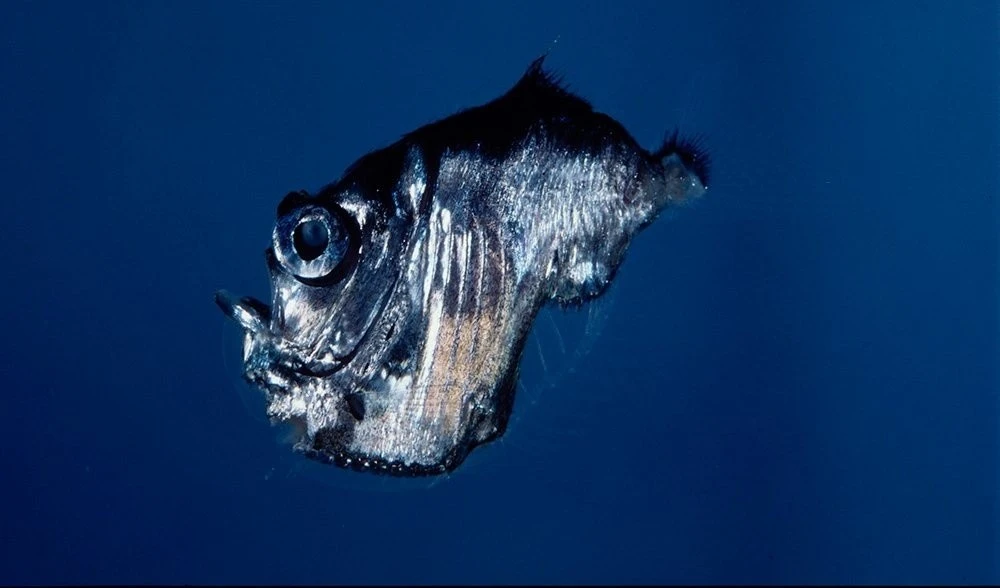
Deep-sea hatchetfish live up to their name: their blade-like bodies are extremely thin, tall, compressed from the sides, and taper sharply toward the tail. Reaching a maximum length of just 9 cm, their unique silhouette immediately stands out.
Their jaws sit at a sharp angle to the body axis, and their large, tubular eyes point directly upward to spot silhouettes against the faint light filtering down from above.
Their ultimate survival trick is counterillumination: photophores lining their undersides emit a dim greenish light directed straight down. From below, this luminescence matches the faint ambient light overhead, rendering the fish virtually invisible to predators lurking beneath. It is a brilliant evolutionary defense mechanism for life in the ocean's twilight zone.
Zombie Worm 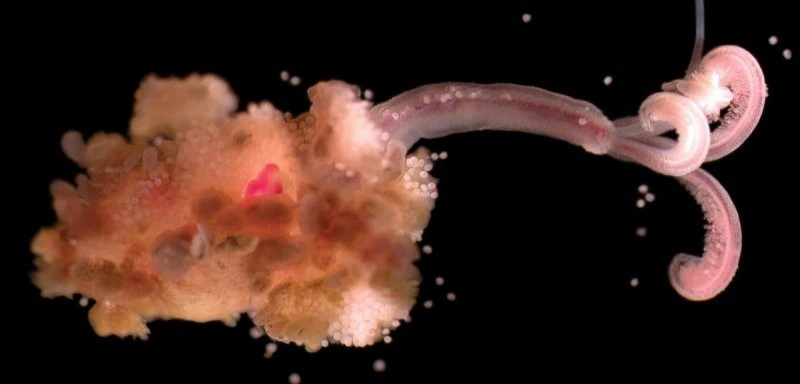
Zombie worms, or Osedax, are fascinating deep-sea creatures whose macabre nickname belies their subtle biological reality. Belonging to the class Polychaeta, these worms thrive on the skeletal remains of large marine animals on the ocean floor.
Visually, Osedax resembles a miniature plant rather than a worm, sprouting directly from the bones of dead whales and other large creatures. At one end, it spreads a plume of delicate feathery tentacles used for breathing. Remarkably, the worm has no mouth or digestive tract.
To extract nutrients from bones, it relies on symbiotic bacteria living in its tissues that consume collagen. To reach these nutrients, Osedax secretes acid to bore through bone tissue. If whale bones aren't available, oceanographers from California discovered they can also feed on shark jaws and teeth.
Another peculiar feature is their reproductive method: microscopic dwarf males live entirely inside the female's body. This strategy ensures reproductive success in an environment where encounters between individuals are extremely rare. Given these extreme deep-sea adaptations, classic zombie tales pale by comparison.
Frilled Shark 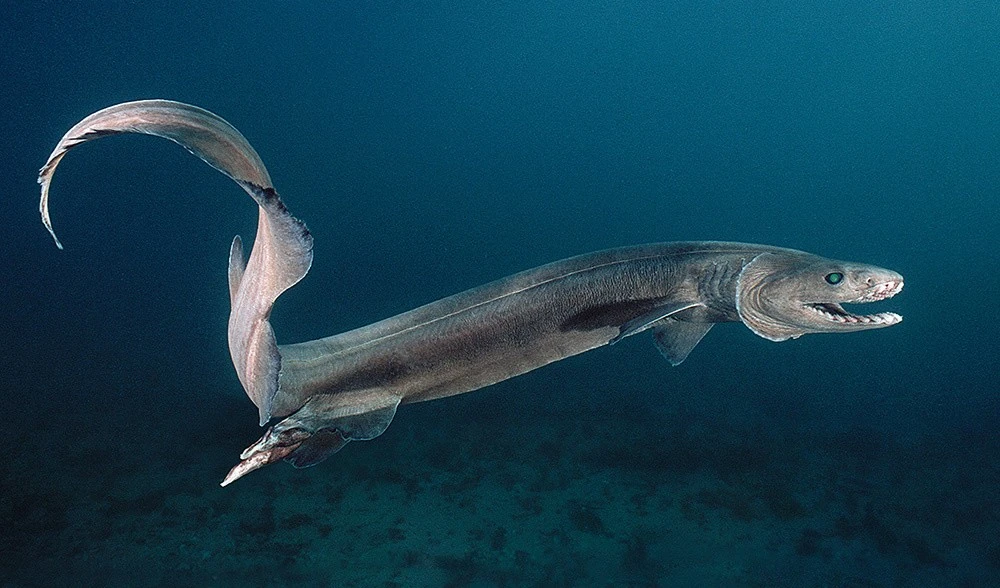
Frilled sharks have long, slender bodies that make them resemble finned eels. Often referred to as "living fossils," they belong to an ancient lineage that has remained virtually unchanged for millions of years. The frilled shark's mouth contains 25 rows of teeth. The maximum recorded length is 2 meters, and their coloration is dark brown.
The frilled shark features wide, collar-like folds of skin covering its gill slits. It feeds on squid, cuttlefish, and various fish, reproducing via aplacental viviparity. Gestation can last up to 3.5 years—the longest known pregnancy of any vertebrate.
The frilled shark poses no danger to humans, as it spends most of its life in the abyss.
The frilled shark looks like a creature out of antiquity: its long, serpentine body resembles an eel equipped with fins. It is rightly dubbed a "living fossil," having retained traits unaltered over millions of years.
A defining feature is the set of wide skin folds framing its head and covering its gill slits, giving it a cape-like appearance. Its dark brown skin helps it blend into the murky depths. With a maximum recorded length of 2 meters, it is not a giant, but its silhouette is unforgettable.
Lining its jaws are 25 rows of small, trident-shaped, inward-curving teeth designed to grip slippery prey like squid, cuttlefish, and fish. This apparatus is ideal for hunting in the dark, snagging nimble prey before it can wriggle free.
Reproduction is equally extraordinary: the species practices aplacental viviparity, with a gestation period lasting up to 3.5 years—an absolute record among vertebrates, driven by slow embryonic development in the cold abyss.
This shark poses no threat to humans; it spends its life deep underwater, making encounters exceedingly rare even for marine scientists.
Vampire Squid 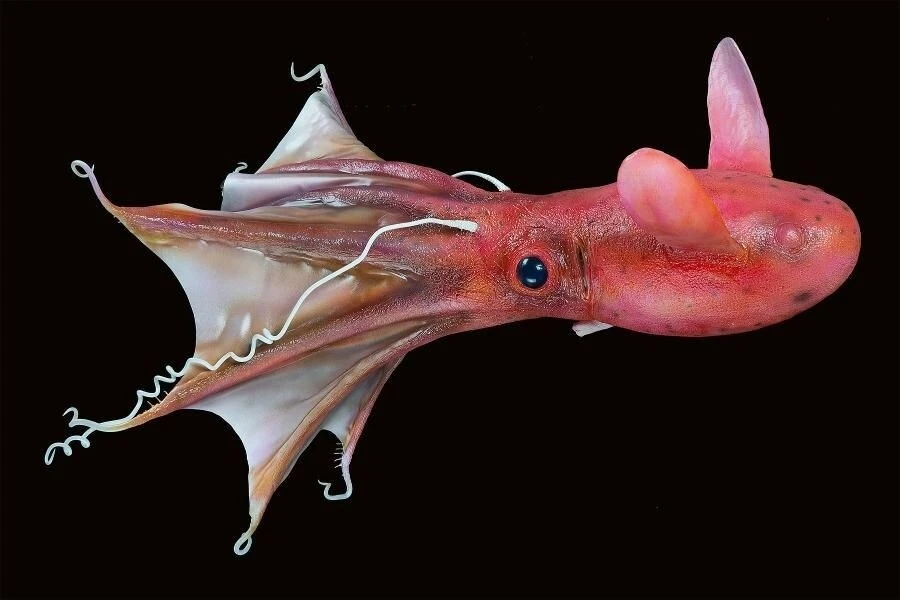
The vampire squid is a unique deep-sea organism and the sole surviving member of its order, Vampyromorphida. It bizarrely combines traits of both squid and octopus, perfectly tailored by evolution for life in the ocean's oxygen-minimum zone.
Its gelatinous body is light and supple, helping it drift effortlessly through the water. Ear-like fins act as paddles, allowing it to maneuver with agility. While rarely exceeding 30 centimeters in length, it leaves a lasting impression with its deep red body, striking blue or red eyes, and webbing between its arms lined with tooth-like spikes.
Despite its ominous name, it does not drink blood. Instead, it feeds on falling organic debris composed of dead plankton, fish scales, and algae. This passive feeding strategy is perfectly suited to an environment where live prey is scarce.
For defense, the vampire squid relies on a suite of remarkable adaptations. Its body is covered in photophores capable of producing disorienting flashes of light to startle predators. When threatened, it curls into a defensive posture, pulling its webbed arms back over its body to expose intimidating rows of fleshy spines—a display that deters attackers and buys time to escape.
Written by Roman Klimov.