1920s Berlin: How a Defeated Nation's Capital Became the Epicenter of Sexual Freedom — and How It All Came Crashing Down (16 Photos)
Berlin in the 1920s remains etched in history as a place where freedom became a way of life for an entire generation. In the wake of defeat in World War I, censorship vanished across the devastated capital. In its place emerged an entertainment industry unlike anything the world had ever seen. Cabarets brimming with political satire and nudity thrived alongside the world’s very first institute of sexology, where gender-affirming surgeries were performed decades ahead of their time. Here is the story of how a city scarred by poverty and war transformed into the global capital of sexual liberation—and why it ultimately ended in the flames of Opernplatz. 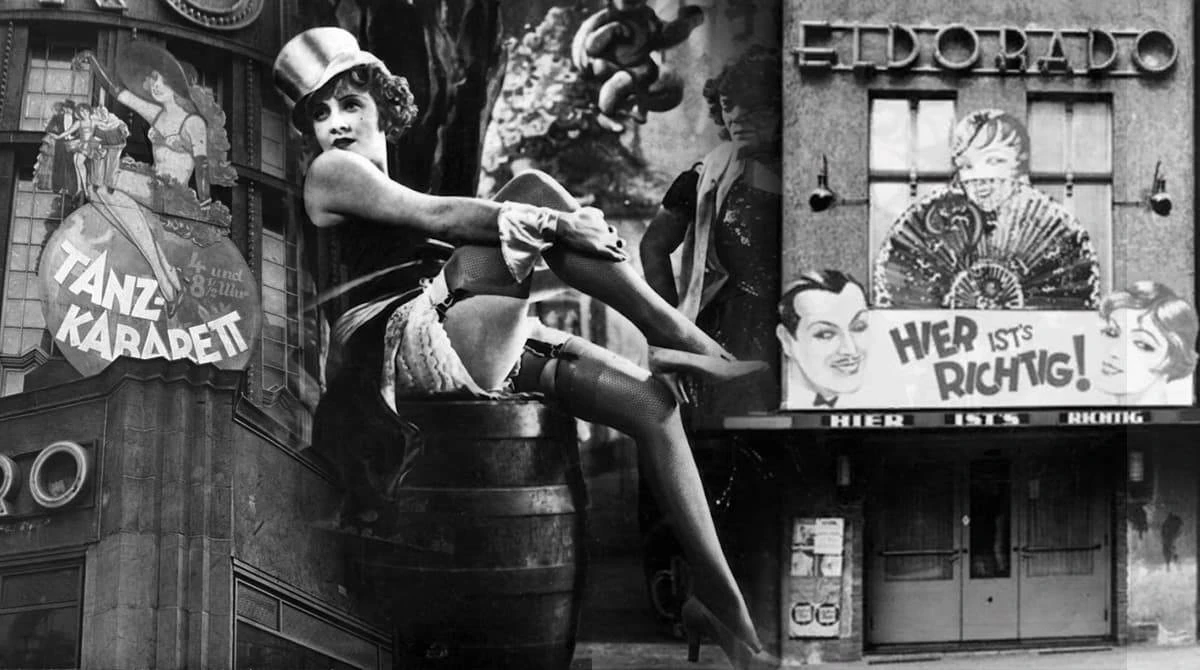
Freedom Born from the Ashes of Empire
Defeat in World War I was catastrophic for Germany. In November 1918, the imperial monarchy collapsed, taking with it the old order rooted in strict censorship and imperial morality. Chaos engulfed the country. Hyperinflation wiped out life savings, street clashes erupted with terrifying regularity, and returning veterans struggled to reintegrate into civilian life. Yet the fledgling Weimar Republic championed democracy and individual liberties, swiftly abolishing state censorship of both the press and public entertainment. 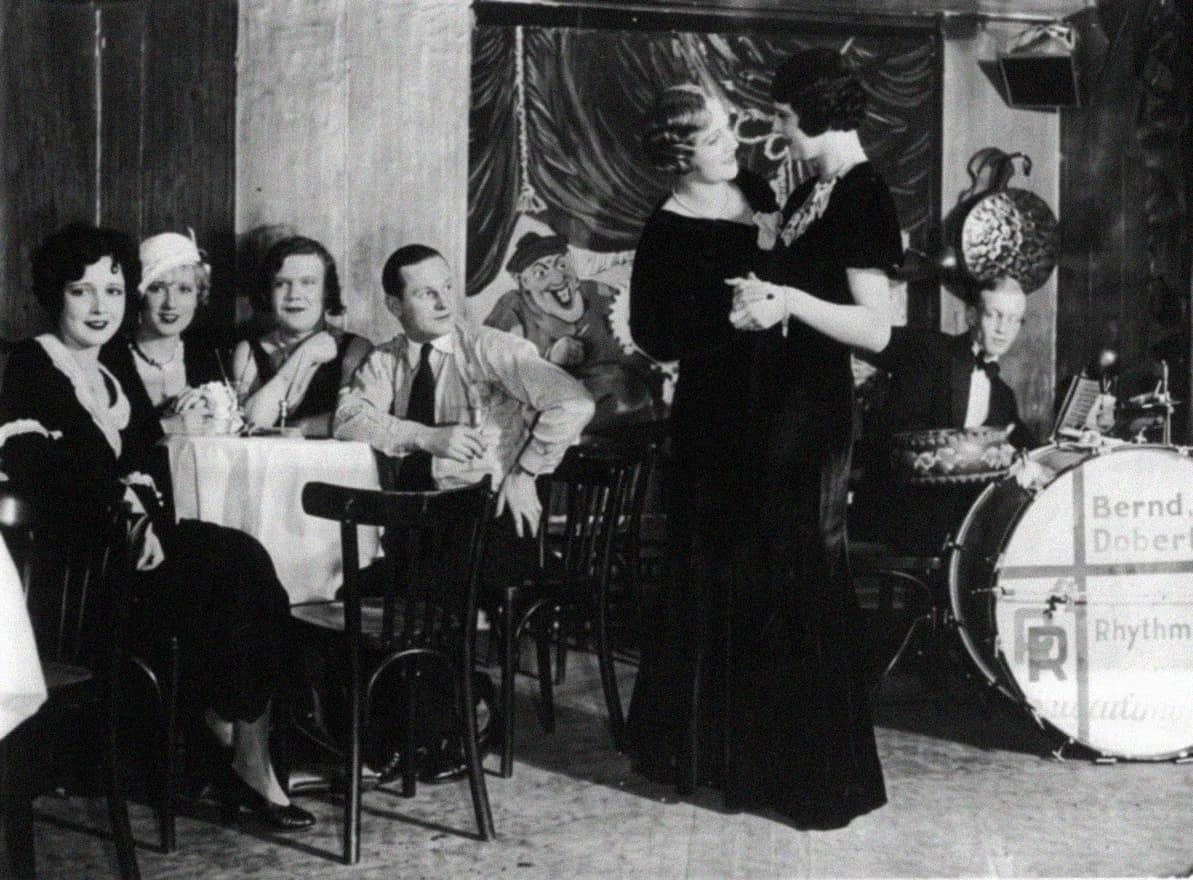
Bohemian parties in the Weimar Republic lasted until dawn
The end of censorship tore down old taboos overnight. What had remained hidden in private salons for decades spilled out into the open. Once the currency was stabilized in 1924, Berlin ushered in the “Golden Twenties”—the Goldene Zwanziger. Bohemians from all across Europe—artists, writers, adventurers, and outcasts—flocked to the city. While the relatively low cost of living was a draw, the real magnet was an intoxicating sense of freedom found nowhere else on earth.
Berlin became an immense laboratory of sensuality. Following the incorporation of surrounding districts like Charlottenburg and Spandau in 1920, the German capital swelled to a population of nearly four million by the middle of the decade. Cabarets stayed open until dawn, and bars and restaurants took over entire city blocks.
Cabarets: Where Sex and Politics Collided
Cabarets served as the ultimate mirror of this new era. Blending elements of a restaurant, bar, and theatre, they allowed patrons to dine while watching dancers, singers, and comedians deliver routines that would today be recognized as stand-up comedy. The stage also crackled with biting political satire, sparing neither the imperial past nor the fragile young republic. 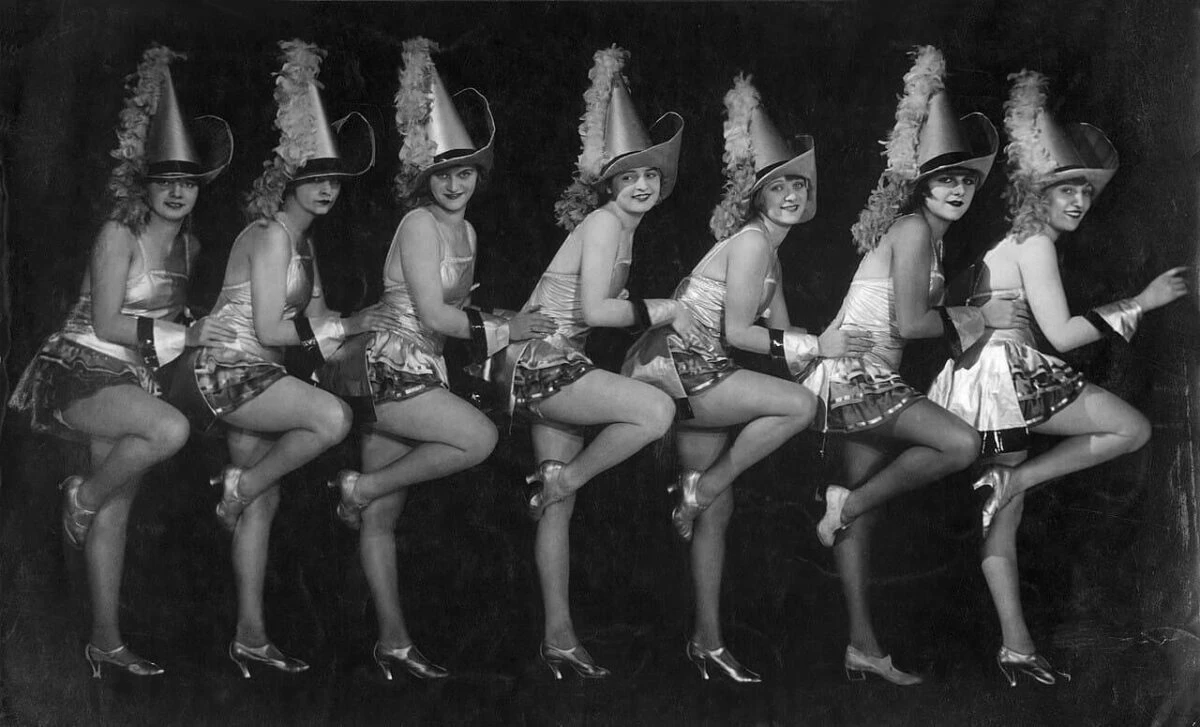
By the late 1920s, provocative dances had become the hallmark of Berlin's nightlife
With censorship gone, two themes dominated the cabaret scene: politics and sex. The most daring venues quickly became legendary: Schall und Rauch (“Sound and Smoke”), Eldorado, and Moka Efti. While conservatives expressed outrage, progressive crowds lined up around the block. Yet even in this vibrant landscape, Moka Efti stood out, earning a reputation as Berlin’s most decadent nightclub. 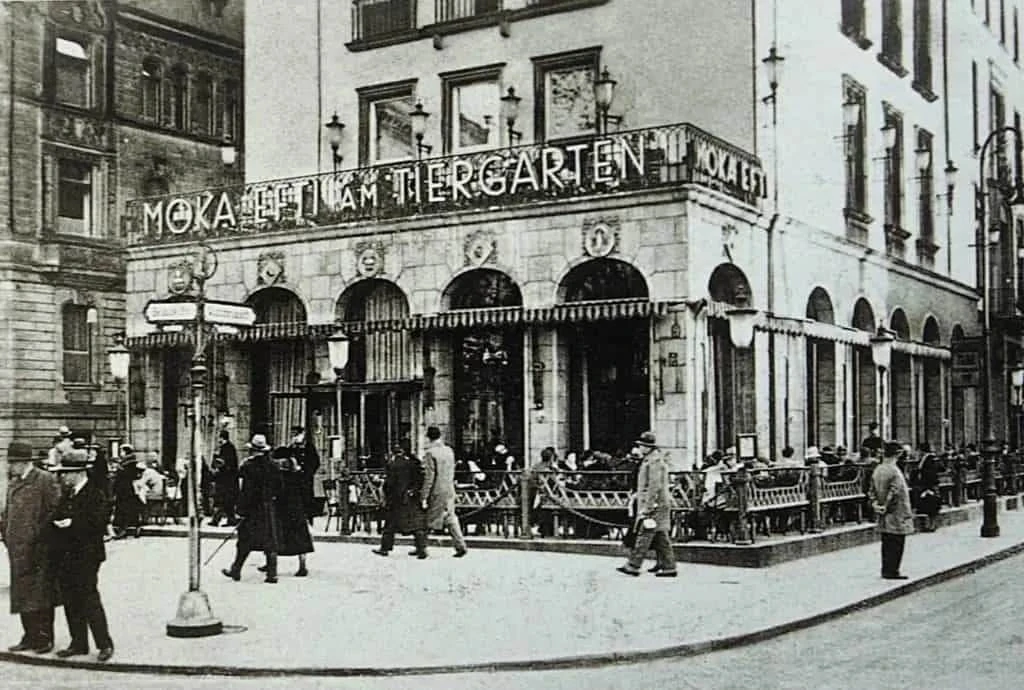
Moka Efti—one of the most decadent clubs in Weimar Berlin
By the end of the decade, fully nude dancers had become a staple of nearly every nightclub. Audiences flocked to these venues for both provocative performances and sharp wit. Performers openly mocked politicians and the outdated imperial order; nudity and satire had become two sides of the same liberated coin.
Icons of the Night: Dietrich and Baker
The cabaret boom created its own stars. In the early 1920s, a young, then-unknown Marlene Dietrich was singing in Berlin cabarets. Even then, she loved turning heads at parties by dressing in men’s suits. Her androgynous style and sharp tuxedos would eventually shatter gender stereotypes worldwide, but it was her role in the 1930 film The Blue Angel that catapulted her to international stardom. 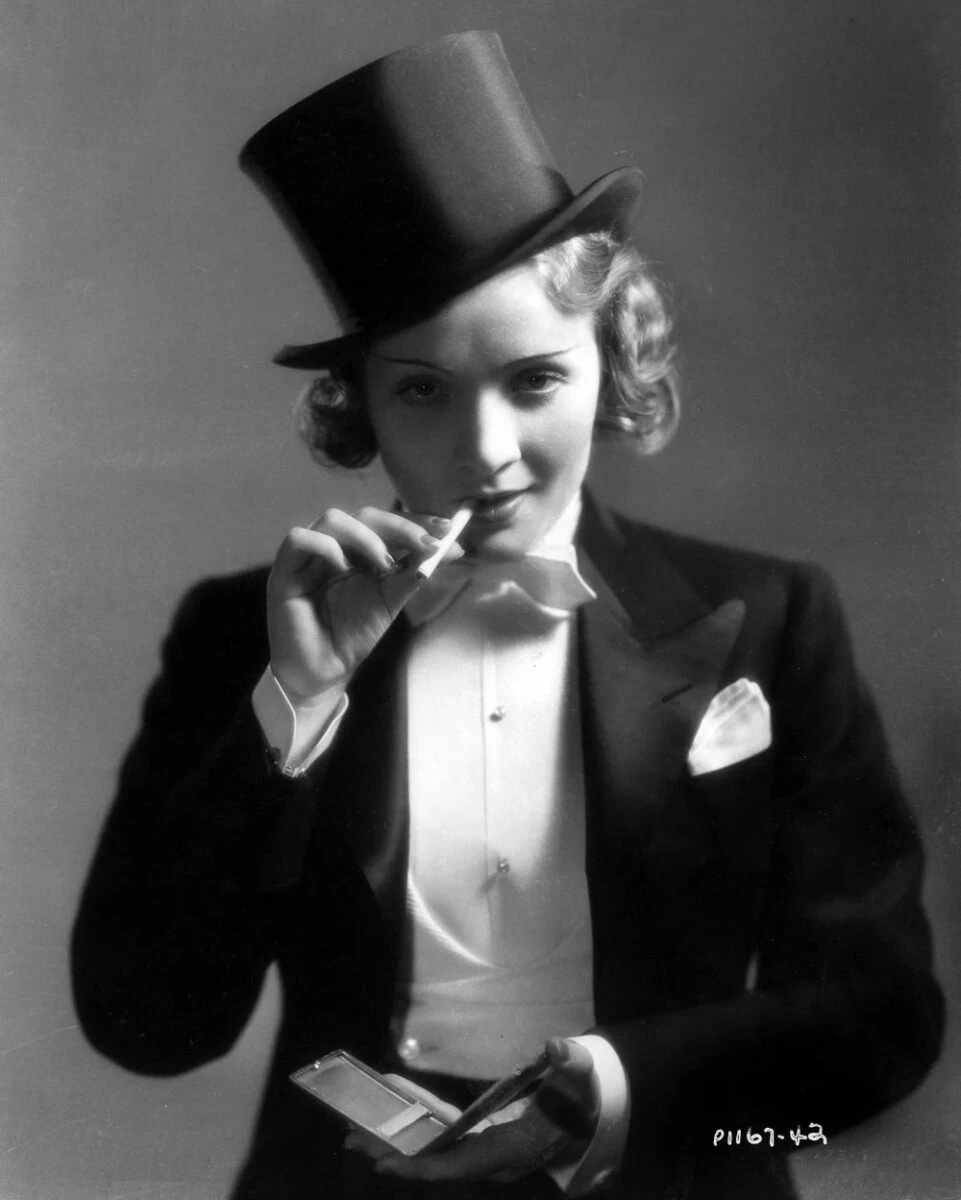
Long before Hollywood, Marlene Dietrich was performing in Berlin cabarets
Between 1925 and 1926, the American performer Josephine Baker took Berlin by storm. Arriving with the Parisian production La Revue Nègre, her sensual dancing caused a sensation. Legend has it that German nudists even invited her to join their community, though Baker politely declined. While her famous banana skirt would debut a little later at the Folies Bergère in Paris, she had already established herself across Europe as an enduring icon of the Roaring Twenties. 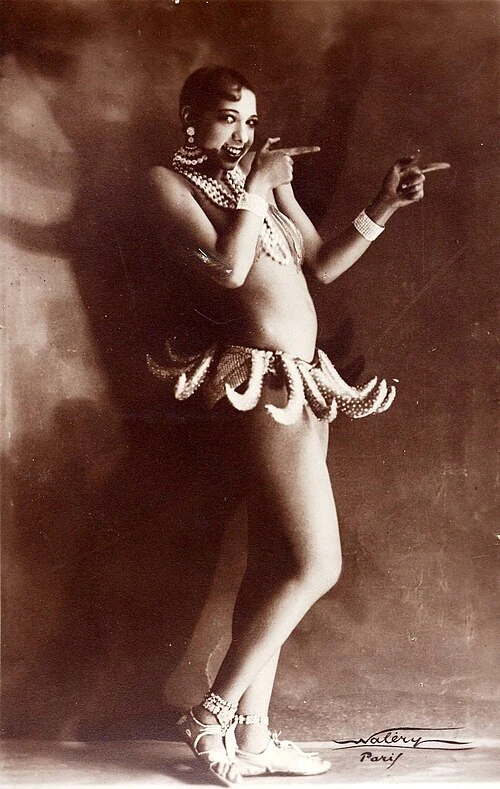
Josephine Baker in her iconic banana costume, a defining image of the Roaring Twenties
Together, both women came to define an era that fundamentally challenged conventional ideas of womanhood.
Dr. Hirschfeld's Institute of Sexology
While nighttime Berlin indulged in revelry, pioneering science was quietly advancing across the city. As far back as 1897, physician Magnus Hirschfeld had founded the Scientific-Humanitarian Committee—the world’s very first advocacy organization for homosexual rights. On July 6, 1919, in the Tiergarten district, Hirschfeld opened the Institute of Sexology, the first of its kind in the world. He was joined in this venture by dermatologist Friedrich Wertheim and neurologist Arthur Kronfeld. 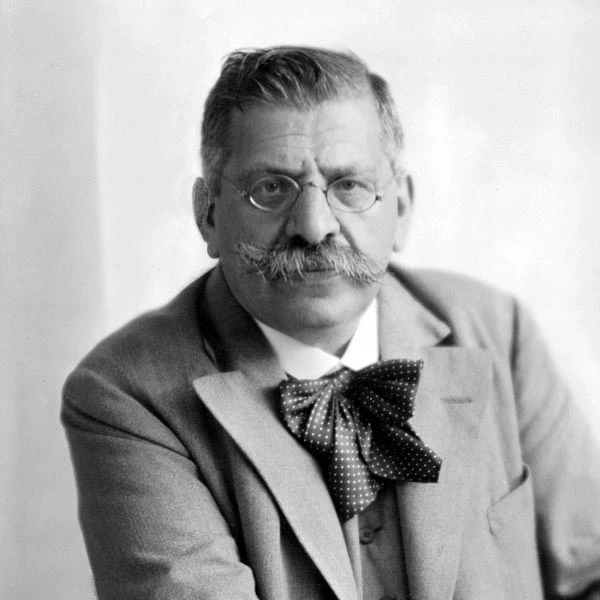
Dr. Magnus Hirschfeld, founder of the Institute of Sexology
The institute was housed in a grand 115-room villa. The Kaiser had once planned to annex the building to the neighboring opera house, but the revolution upended those plans. The facility featured a 200-seat lecture hall, a museum, and surgical suites. Its library held over 20,000 volumes, alongside an archive of 35,000 photographs. Guided by the motto Per scientiam ad justitiam (“Through science to justice”), the institute saw immense demand: in its first year alone, roughly 3,500 individuals made some 18,000 visits. 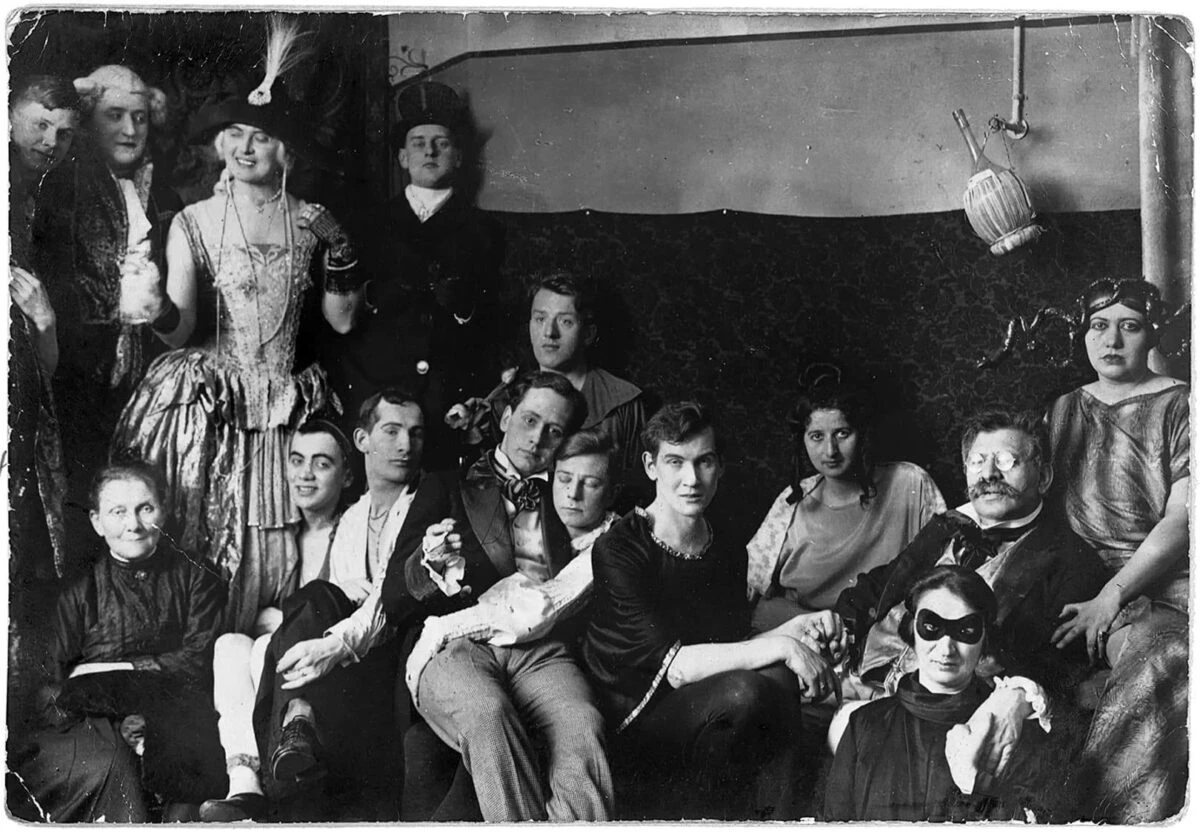
A costume party at Magnus Hirschfeld's Institute of Sexology
Physicians at the institute treated venereal diseases and provided marital counseling. Crucially, however, the institute was the first to offer comprehensive psychological and legal support to gay, lesbian, and transgender people, whom Hirschfeld categorized under his concept of “sexual intermediaries.” The mission was personal as well: the physician lived on the institute's premises alongside his longtime partner, Karl Giese.
Lili Elbe and the Birth of Gender-Affirming Surgery
It was here that the world’s first gender-affirming surgeries were performed. Dora Richter is widely regarded as the first patient to undergo a complete surgical transition, beginning with an orchiectomy in 1922 and followed by vaginoplasty in 1931. Yet the most famous figure to pass through its doors was the Danish painter Lili Elbe. 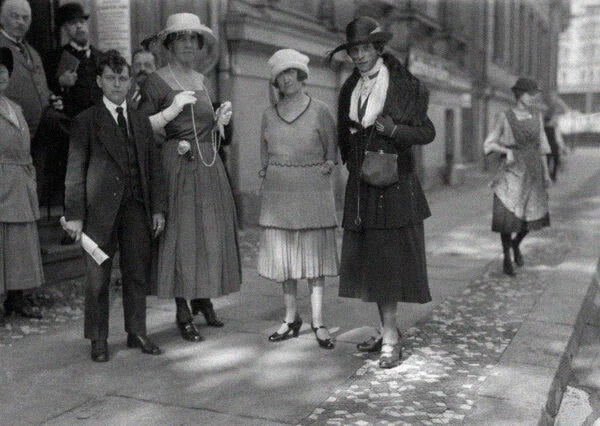
Four transgender people outside the Institute of Sexology. Berlin, 1929
In March 1930, a patient known to Copenhagen society as the painter Einar Wegener arrived at the institute. Her name was Lili Elbe. Surgeon Erwin Gohrbandt performed her initial procedure in Berlin, while subsequent operations took place at the Dresden Women's Clinic under Kurt Warnekros. That October, the King of Denmark annulled Lili's marriage to artist Gerda Wegener; the couple had lived together for nearly two decades, with Lili frequently modeling for Gerda’s portraits. Soon after, Elbe was issued a new passport under her female name. Decades later, her journey became the subject of the 2015 film The Danish Girl.
In 1931, yearning to bear a child, Elbe underwent an experimental uterus transplant. Her body rejected the transplanted organ, leading to a fatal infection. Three months after the surgery, Lili Elbe passed away.
Living in Defiance of the Law
Yet while science pushed forward, the legal code remained unforgiving. Paragraph 175 of the German Penal Code, established in 1871, criminalized homosexual acts between men with prison terms. Hirschfeld campaigned relentlessly for its repeal, gathering over 6,000 signatures on a petition endorsed by the likes of Albert Einstein, Thomas Mann, Hermann Hesse, Stefan Zweig, and Leo Tolstoy. The Reichstag rejected the reform bill in 1898, leaving the statute firmly in place throughout the 1920s. 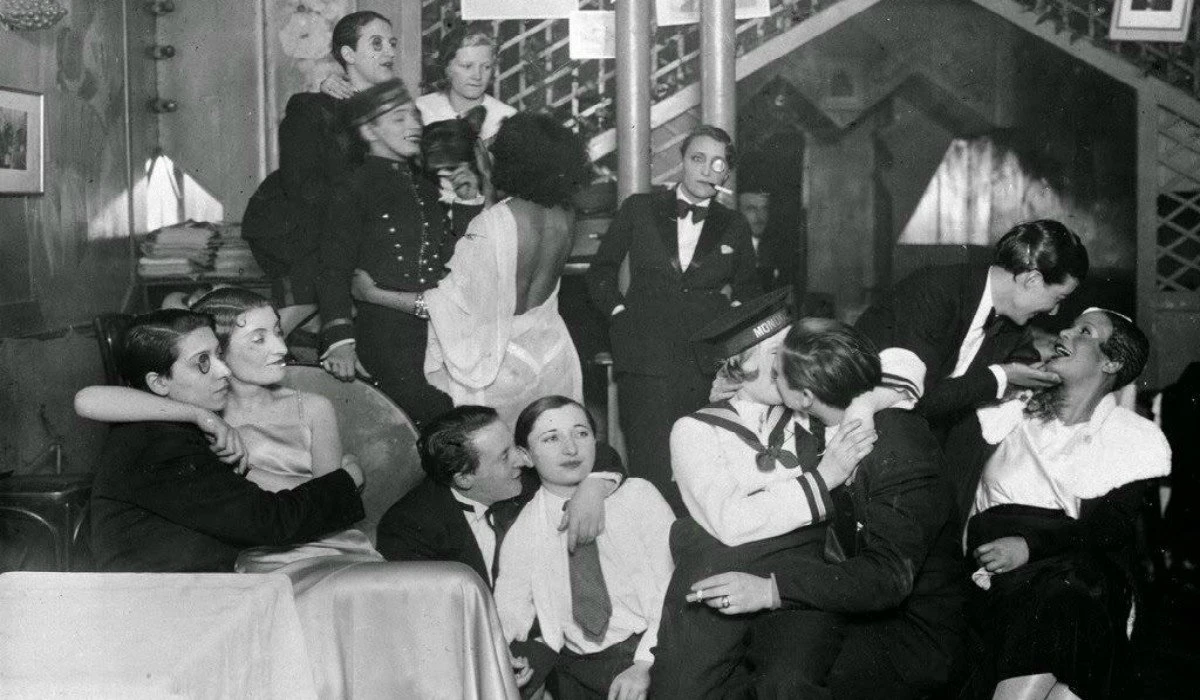
For years, police turned a blind eye to the city's gay scene
In practice, however, the prohibition was rarely enforced. By the late 1920s, Berlin boasted over a hundred gay and lesbian bars, with the Schöneberg district emerging as the world’s first true “gay village.” Berlin had also seen the launch of Der Eigene, the world’s first gay periodical, back in 1896. Over the course of fourteen years, more than 25 publications catering to gay, lesbian, and transgender readers circulated throughout the city. 
The illuminated sign of Europahaus, one of hundreds of cabarets in Weimar Berlin, 1931
In this way, Berlin became the undisputed hub of the queer world. At the same time, prostitution exploded. Brothels and independent escorts catered to every imaginable demand, offering women, men, youths, and even animals, while law enforcement largely chose to look the other way. 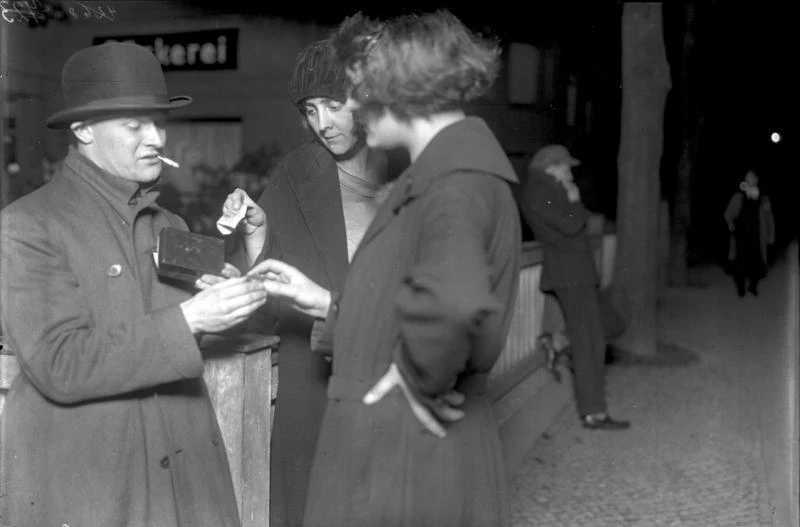
Prostitutes buying cocaine from a dealer. Berlin, 1930
The Dark Underbelly of 'Weimar Sodom'
Behind the glittering facade of nighttime hedonism lay deep social distress. While tourists and bohemians celebrated this newfound freedom, it remained the privilege of a select few. The vast majority of Germans lived in poverty, wrestling with crippling unemployment and the lingering trauma of inflation. 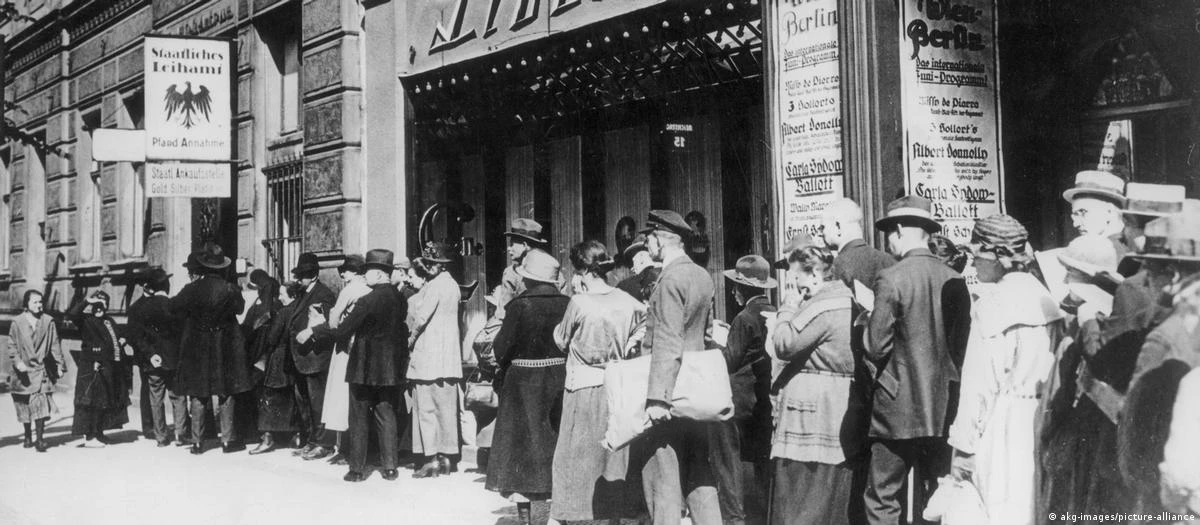
While some revelled in cabarets, others stood in breadlines
For hundreds of thousands of Berliners, the sex trade was no manifesto of liberation—it was simply a means of survival, often the only alternative to starvation. This stark divide fractured society. The conservative majority and right-wing extremists harbored deep resentment toward the capital, viewing it as the ground zero of moral decay. 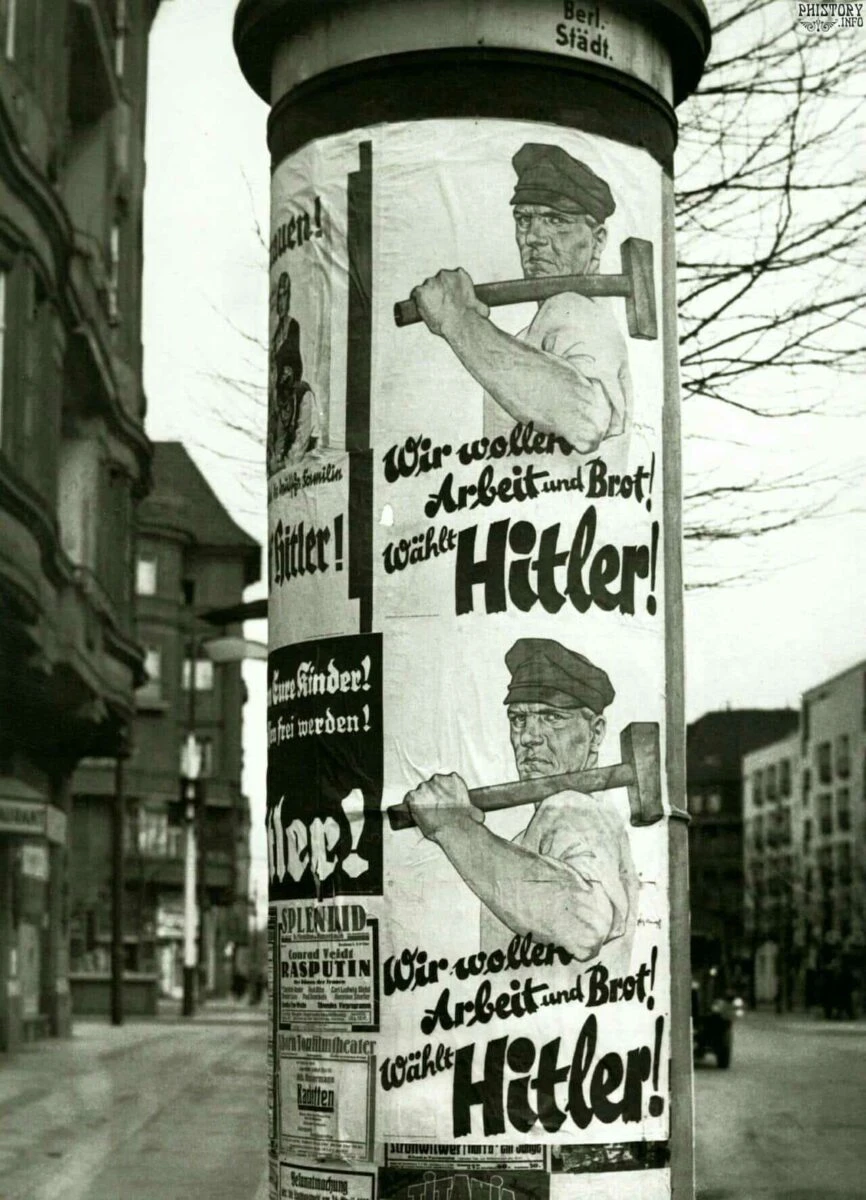
Campaign poster: 'Want work and bread! Vote for Hitler!' Berlin, 1932
Nazi propaganda relentlessly magnified the caricature of a depraved “Weimar Sodom,” framing liberal Berlin as an open sore on the nation’s body that had to be excised. Conservative commentators had already laid the groundwork for this myth, grossly exaggerating the scale of vice to stoke moral panic.
Babylon’s Fall: The Bonfires of 1933
The end came with ruthless swiftness. Adolf Hitler took power in January 1933, and by that spring, the Nazi regime had set about dismantling the pillars of Weimar liberty. On May 6, 1933, Nazi students and stormtroopers stormed the Institute of Sexology. They ransacked the premises, smashed scientific equipment, and carted off its priceless archives by the truckload. 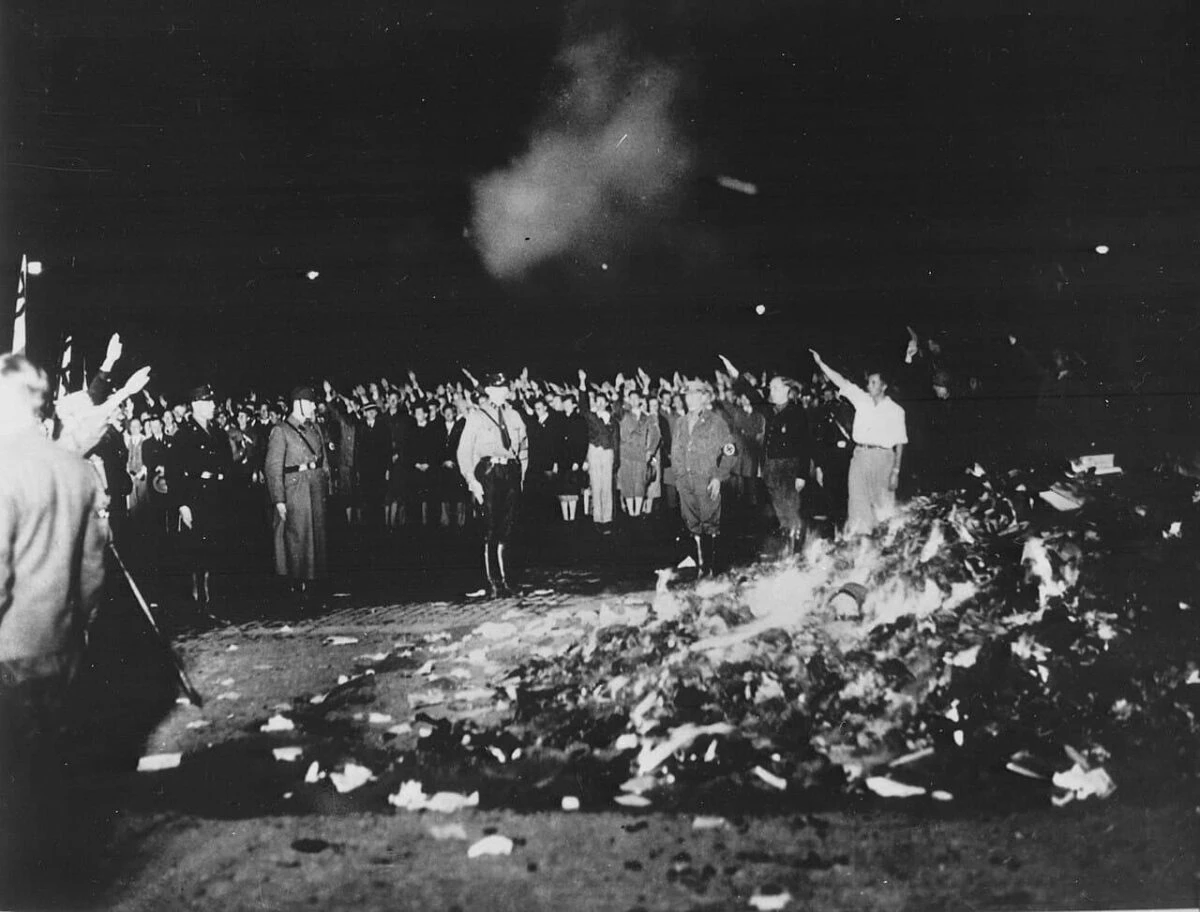
The burning of 'un-German' books on Opernplatz. Berlin, May 10, 1933
Four nights later, on May 10, bonfires illuminated Opernplatz. Nazi sympathizers burned works by Karl Marx, Sigmund Freud, Erich Maria Remarque, and Thomas Mann. Among the ashes was virtually the entire Hirschfeld collection—more than 20,000 volumes. In total, over 25,000 books were destroyed in Berlin that night. Hirschfeld himself was in France at the time; he watched the destruction of his life's work on a newsreel in a Paris cinema. 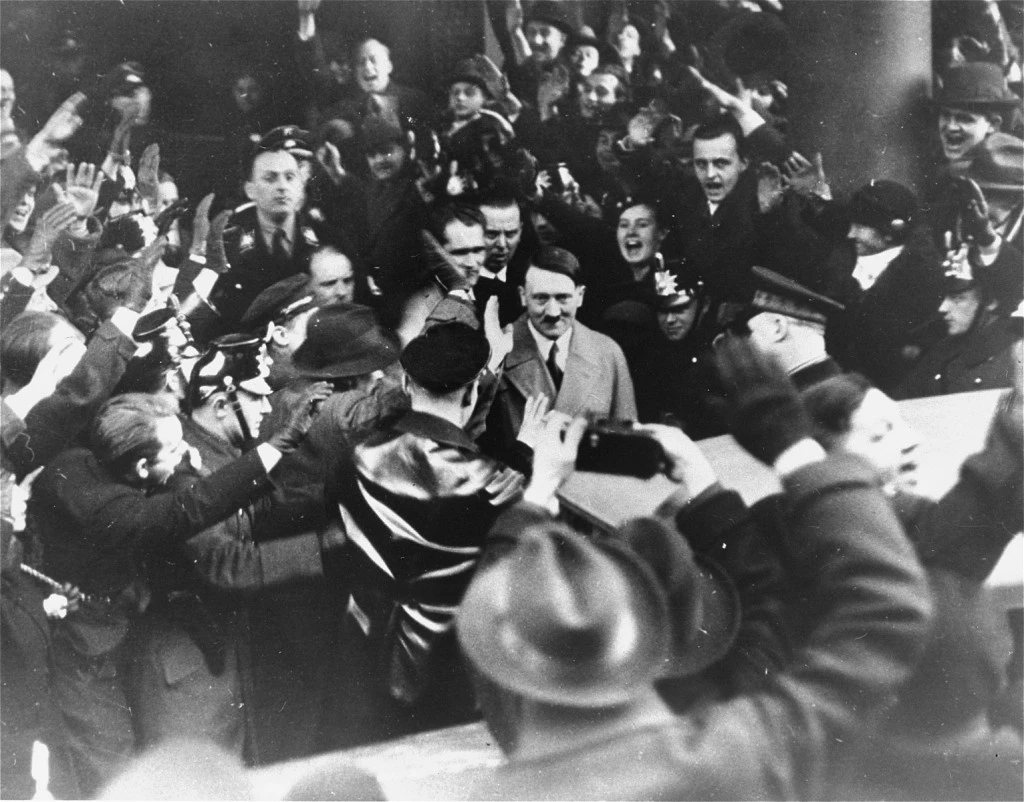
Germans salute Adolf Hitler following his swearing-in, 1933
Hirschfeld never returned to Germany. He passed away in Nice on May 14, 1935, his 67th birthday. The era of daring liberty had given way to the horrors of totalitarianism, and the pioneer behind the world's first sexology institute faded into obscurity for decades.
The story of Berlin’s sexual revolution in the 1920s is a sobering reminder of how fragile social progress can be—especially when disconnected from the economic security of ordinary citizens.
What are your thoughts on the Weimar era and its unprecedented freedoms? Share your view in the comments below!