How the Swiss Army Knife Is Made (39 photos)
Most of you are likely familiar with the Swiss Army Knife—a multi-purpose folding pocketknife equipped with a main blade and various secondary tools, such as screwdrivers, bottle openers, a corkscrew, and more. When not in use, the attachments nest neatly inside the handle and pivot out on an internal hinge when needed. 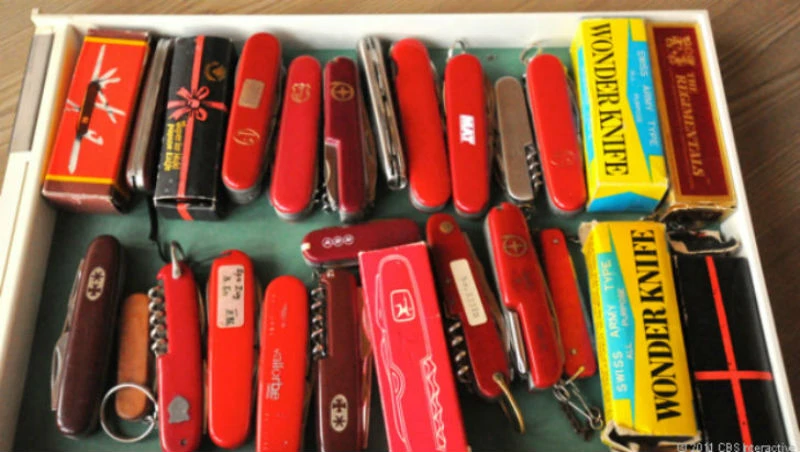
Today, we're taking a tour of a factory tucked away in a small town in central Switzerland, where Victorinox has been manufacturing its world-famous knives since 1891—long before the company adopted its iconic name. 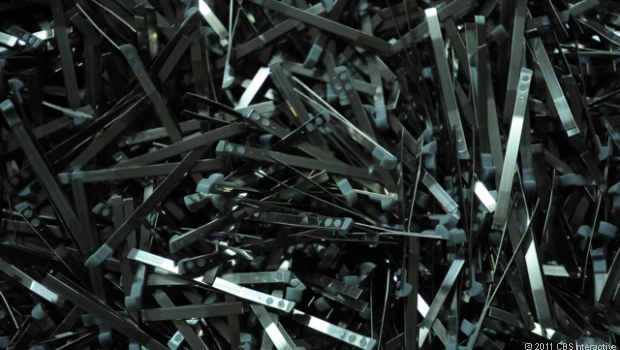
Pictured here is a bin full of tweezers—a staple accessory included in almost every model.
Today, the company produces millions of pocketknives every year across roughly 350 different models. 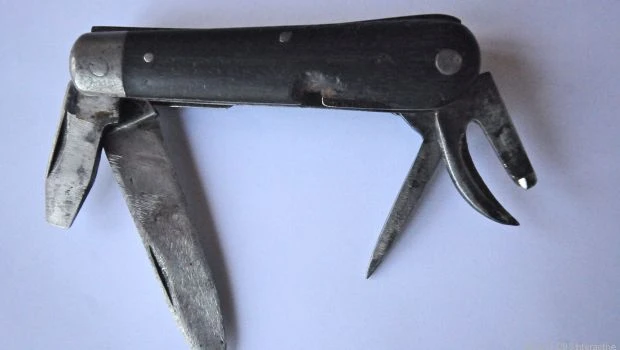
This is one of the original Swiss Army Knife models, dating back to 1891. That was the year company founder Karl Elsener decided to supply the Swiss military with locally made knives. Although it lacked the iconic emblem we know today and Elsener's company had not yet taken the name Victorinox (a portmanteau adopted years later honoring his late mother, Victoria, combined with *inox*, the French word for stainless steel), this knife is unmistakably the direct ancestor of the ones so many of us carry today.
The Swiss government still purchases knives for its armed forces exclusively from this company. Since 1891, only eight official military models have been issued, with the latest introduced in 2008. 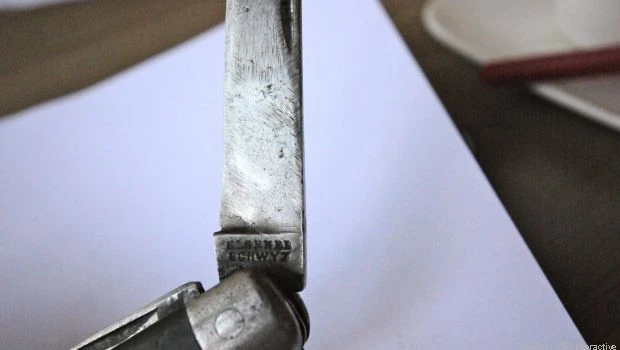
Stamped at the base of the main blade on this original model is the logo of Karl Elsener's company—before becoming Victorinox, the business simply bore its founder's name. 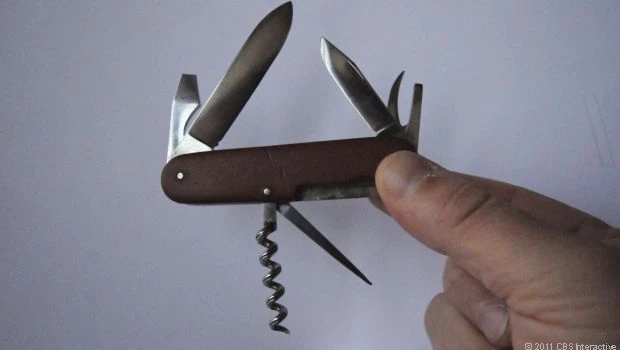
Elsener wanted to create an official Swiss Army Knife specifically for officers and even put a new model into production. However, the Swiss government decided officers could stick with the standard soldier's knife issued to them upon enlistment and chose not to sign an additional contract. Undeterred, the company continued manufacturing officers' knives independently for decades. This model dates to 1931. 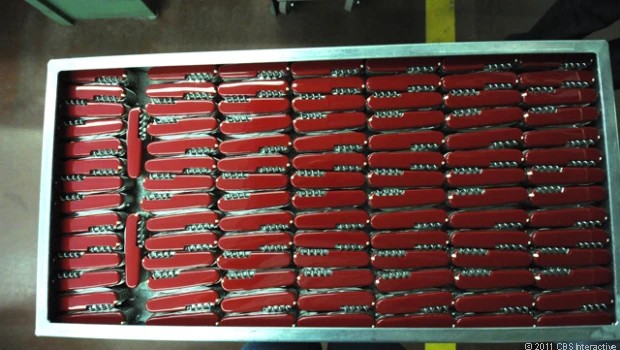
A box of finished pocketknives awaits final packaging and shipment. 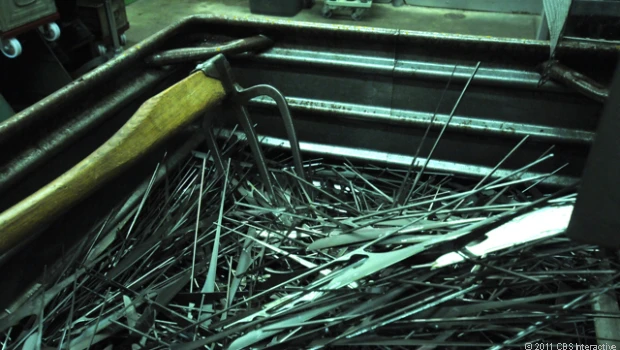
To prevent workers from cutting themselves while pulling freshly stamped blades from bins, a magnetic gripper tool is used. 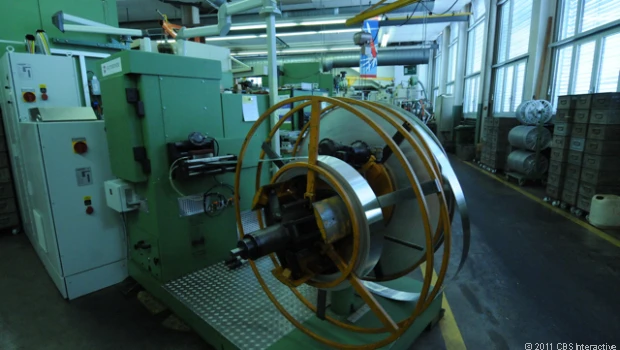
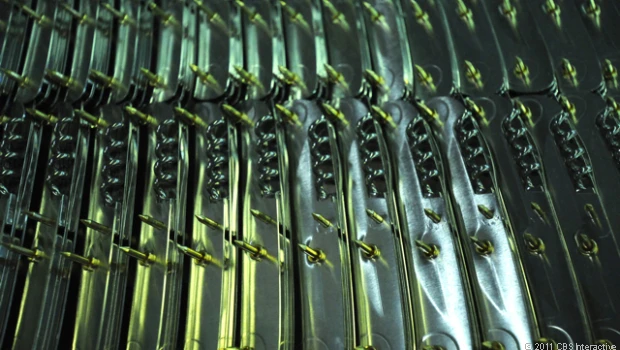
This feeder feeds aluminum strips into a stamping machine to produce the internal dividers that separate tools inside the knife. Dividers are made from aluminum to avoid adding unnecessary weight, while the tools themselves are crafted from stainless steel. 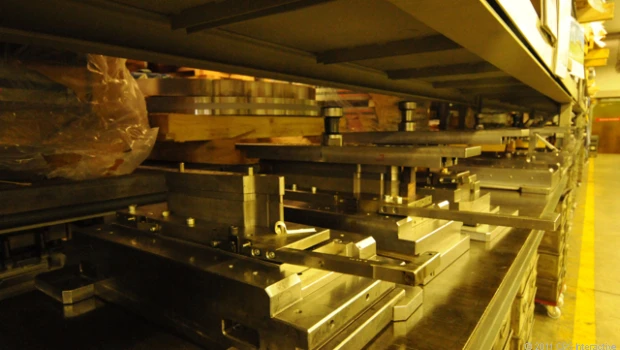
Stamping presses produce over 800 individual components across the knife lineup. 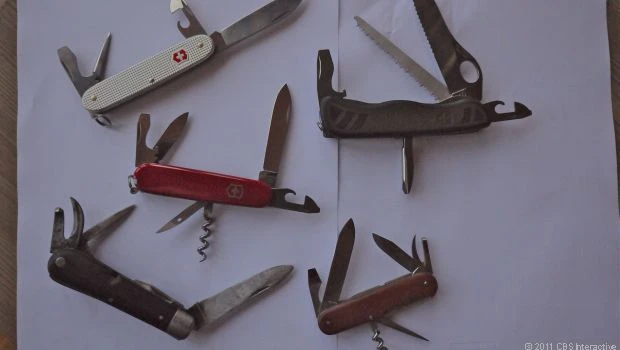
Here you can see the evolution of the Swiss Army Knife, starting with the original 1891 model in the bottom right corner. In the top right corner is the current issue released in 2008.
The previous military issue from 1968 sits in the top left, while the 1931 Officer's Knife is in the bottom left. In the center is a modern commercial model with the classic red scales. 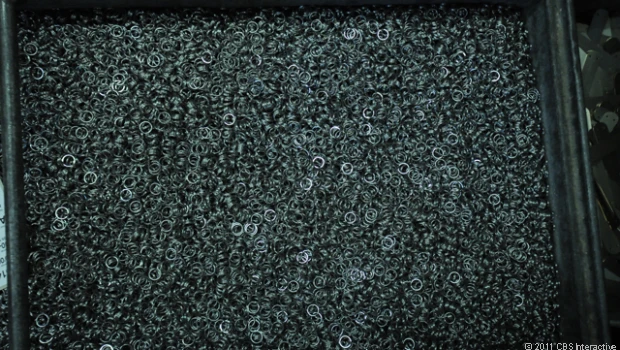
The storage area holds dozens of bins packed with components for Swiss Army Knives.
This bin is filled with keyrings. 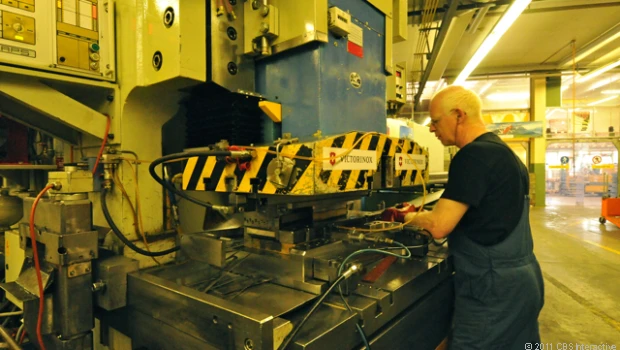
A factory worker loads sheets of stainless steel into a stamping machine that punches out blade blanks. 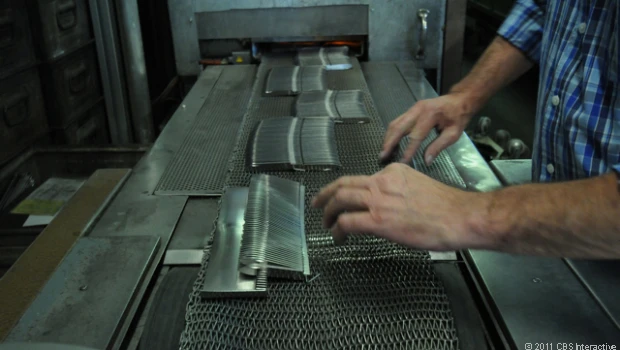
The stamped blade blanks move along a conveyor belt into a heat-treatment furnace. Heated to 1,050 °C to harden the stainless steel, this process ensures the blades will last for decades. 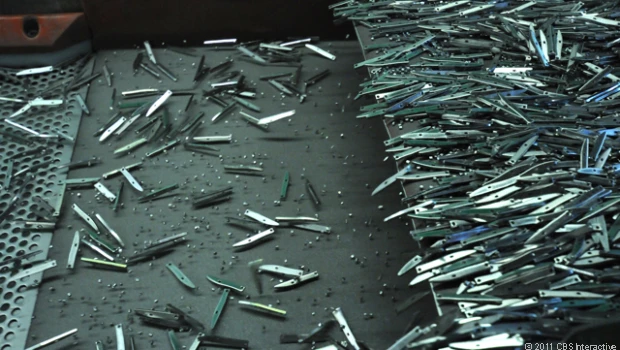
After exiting the stamping press, a mechanical shaker agitates the container of raw blades to knock off any stray metal burrs left over from the stamping process. 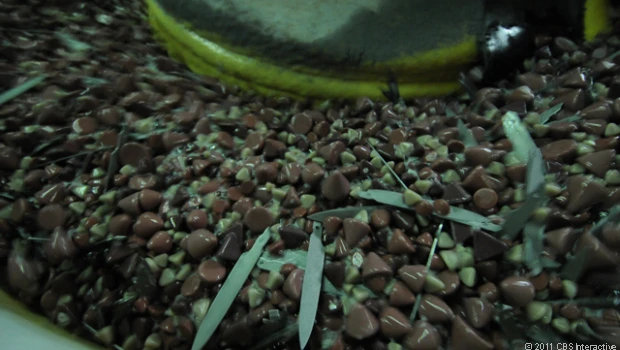
Straight out of the press, the blades have a rough, coarse surface. They are placed into specialized tumbling machines where water and ceramic media polish them continuously for five to eight hours, resulting in a perfectly smooth finish. 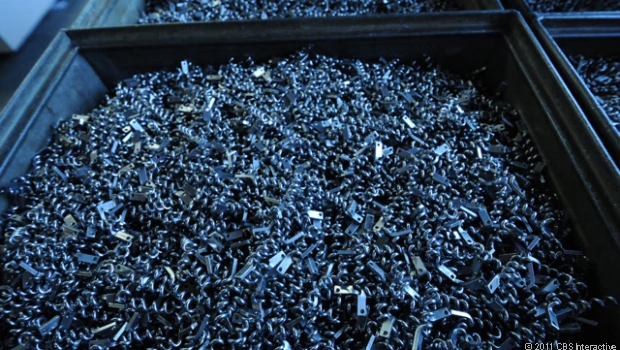
A bin full of corkscrews. 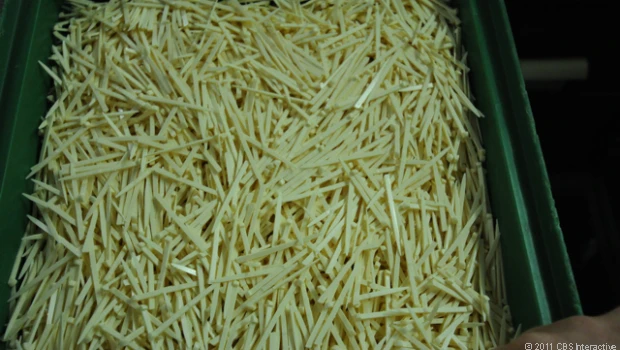
Plastic toothpicks. 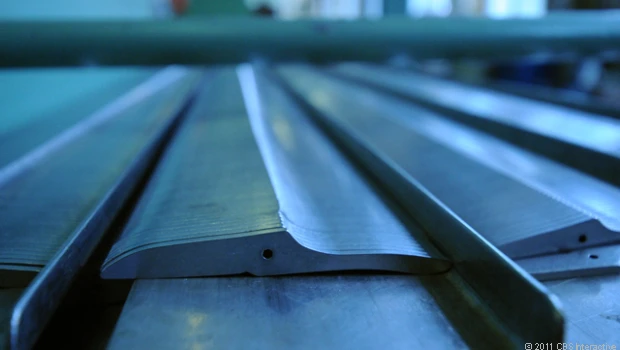
Scissor halves ready for assembly. 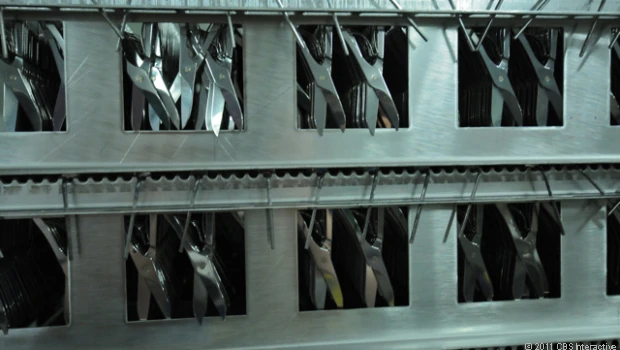
Fully assembled scissors, ready to be sent to the final assembly department. 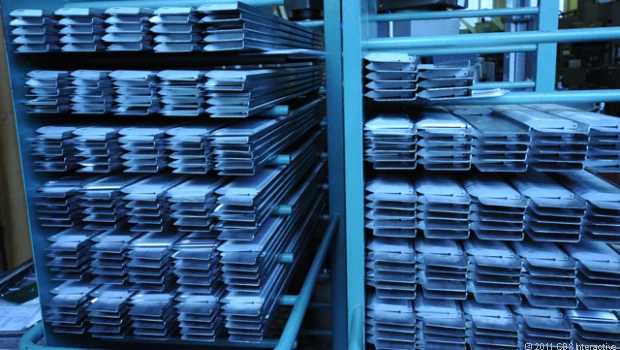
Boxes of small blades destined for traditional compact Swiss Army Knives. 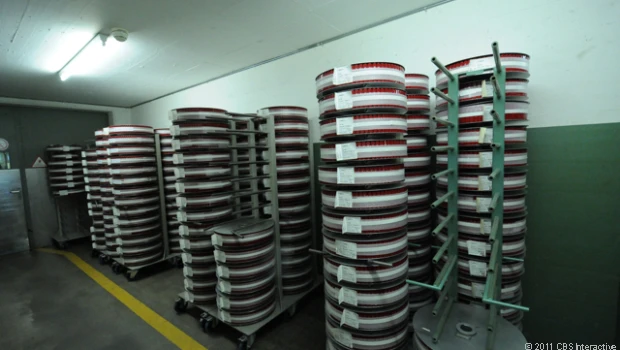
Racks of finished scale handles available in several colors, including classic red and blue. 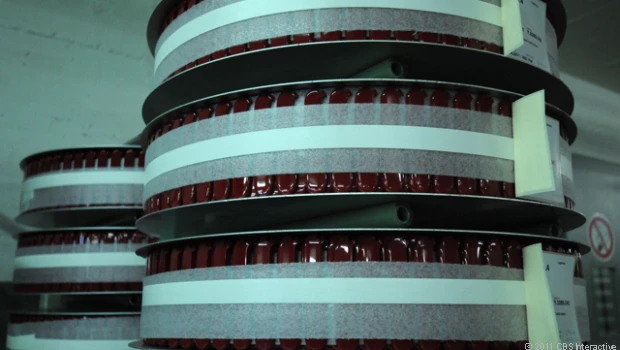
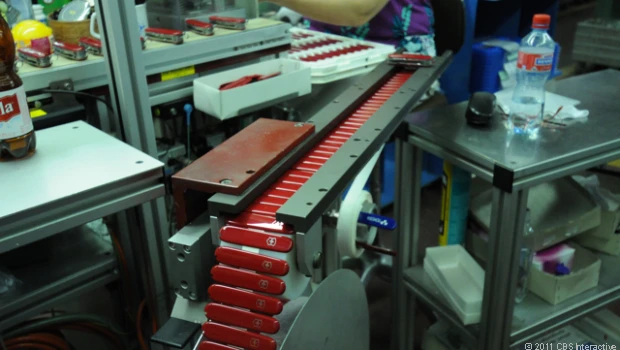
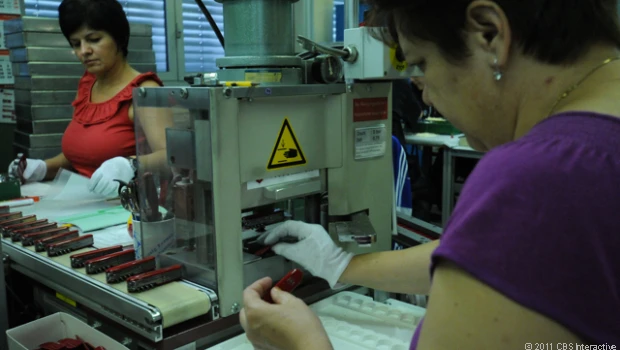
Next, the handle scales, blades, and tool assemblies are placed into a press that snaps the scales firmly onto the body under pressure. The knife emerges virtually complete, missing only its tweezers, toothpick, and keyring. 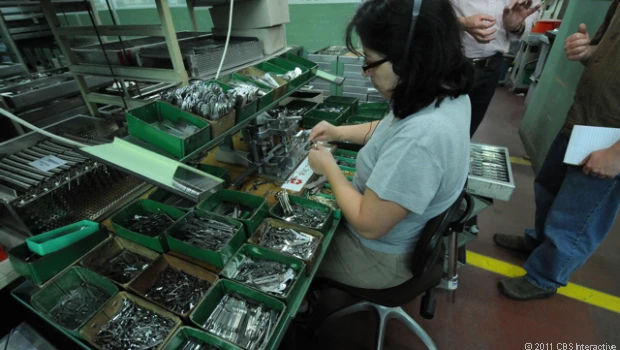
Assembling the knife. 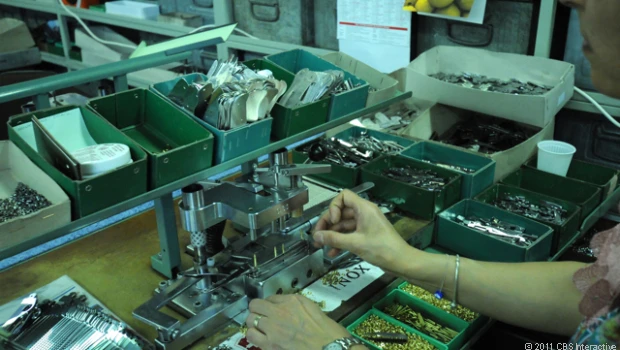
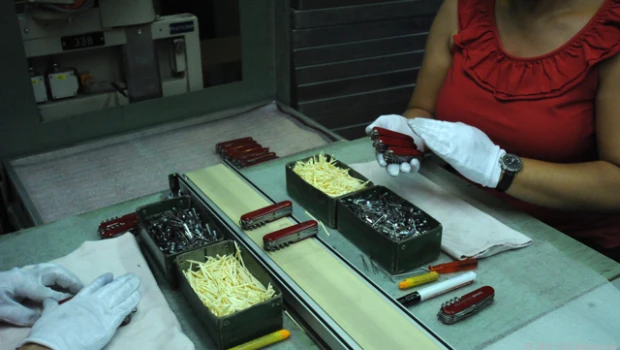
Here are containers filled with tweezers and toothpicks. Workers quickly insert these final accessories into the knives as they move down the line. 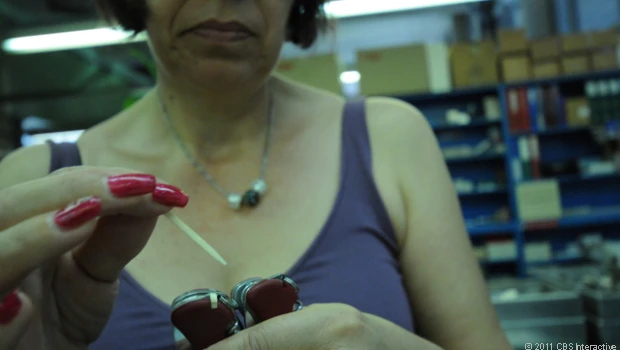
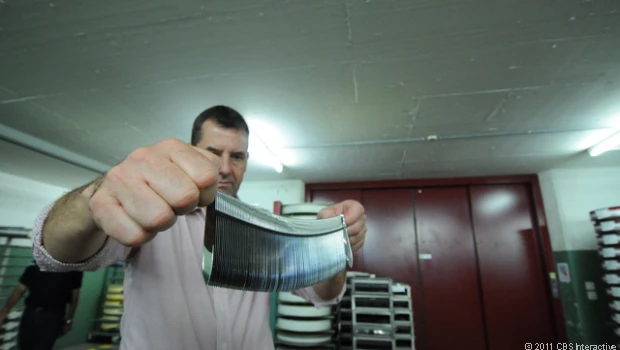
Raw steel stock used for Swiss Army Knife blades. 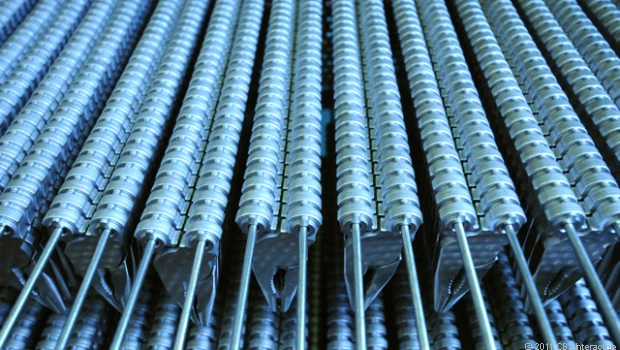
Miniature pliers designed to be built into multi-tool models. 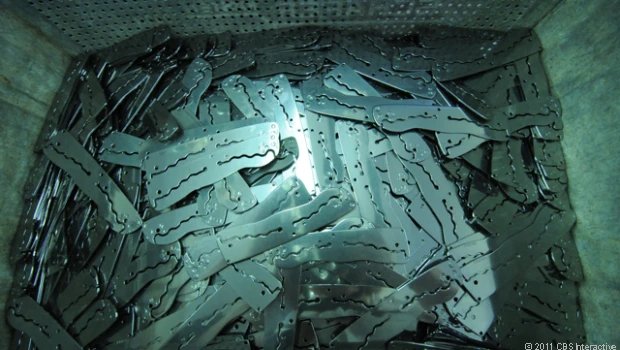
A box of aluminum backspring liners, which hold the main blade securely in place when open. 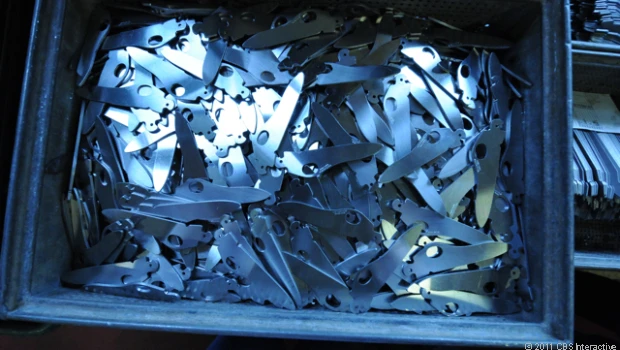
A bin filled with main blades for traditional Swiss Army Knives. 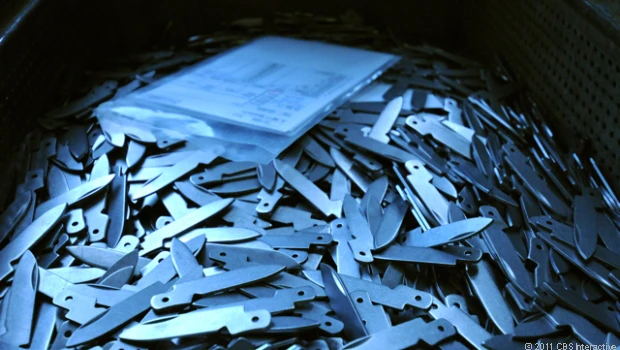
Unsharpened blade blanks. 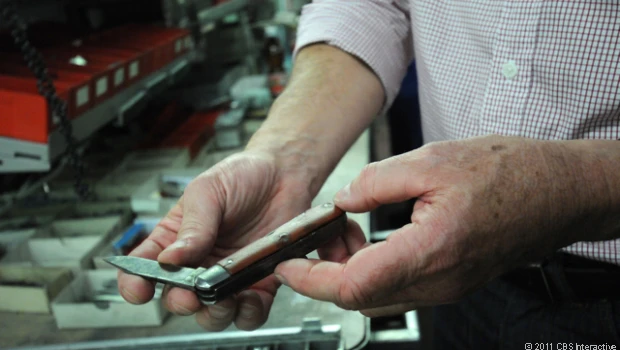
Pictured here: a 1931 knife brought in with a broken main blade spring.
In addition to manufacturing new knives, Victorinox offers an invaluable service for a nominal fee—repairing or replacing virtually any knife produced throughout the company's long history. 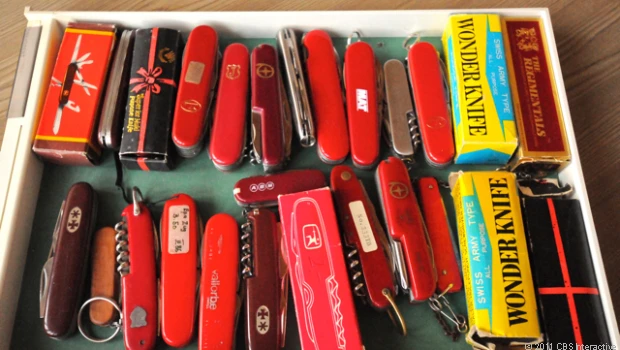
Because of the global popularity of Victorinox knives, cheap and poorly made knockoffs—mostly produced in China—frequently flood the market. 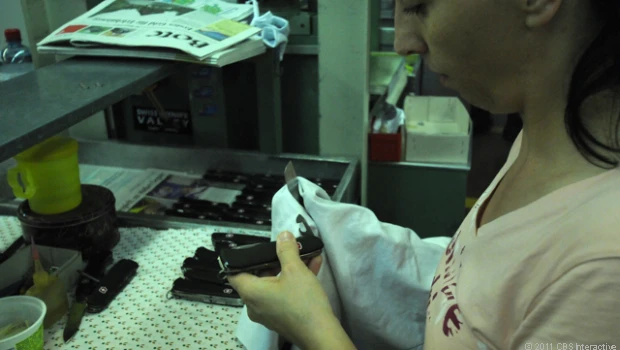
An inspector manually verifies every single part of a finished knife. She uses a protective cloth to avoid injuries while using a tool to test the operation and spring tension of every component. 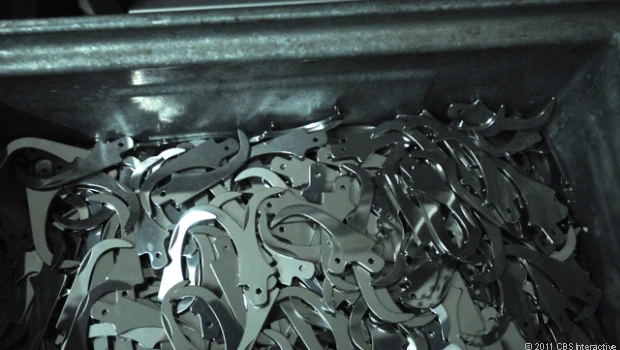
And this specialized attachment on an equestrian model is a hoof pick, designed for cleaning out horses' hooves.