Must-Try Foods in Vietnam: Pho, Rice Paper Rolls, and Sweet Coffee (15 photos)
Vietnamese cuisine has surged in popularity over recent years, celebrated for being exotic, hearty, and remarkably diverse. If you find yourself in Vietnam, here are the most popular national dishes you simply cannot miss. 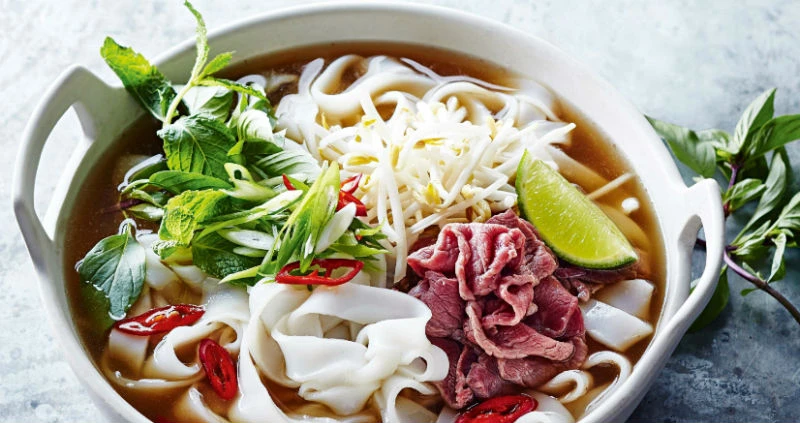
Like many Asian culinary traditions, Vietnamese food revolves around harmony. It’s all about contrasting textures—soft and crunchy—in a single dish, striking a balance among the fundamental taste profiles (sweet, bitter, salty, sour, and spicy), and balancing vibrant colors, spices, and fresh herbs. This philosophy extends even to the harmonious pairing of heating and cooling ingredients based on yin and yang principles.
Other defining characteristics of Vietnamese food include peak freshness—dishes are typically cooked to order on the spot rather than prepared in advance—an abundance of fresh vegetables and herbs, and a fond spot for rich, broth-based meals.
Signature aromatics include lemongrass, ginger, cilantro, Thai basil, mint, lime, and Thai chili peppers. Fish sauce, shrimp paste, chili sauce, and soy sauce are also ubiquitous.
Most Vietnamese dishes aren't inherently fiery; fresh chillies and hot sauces are usually served on the side so you can adjust the heat to your liking. A generous plate of fresh herbs accompanies almost every meal. In local eateries and restaurants, iced green tea is routinely served complimentary as a welcome drink with any order. White bread is hugely popular thanks to the country's French colonial history, though it isn't typically served alongside soups. 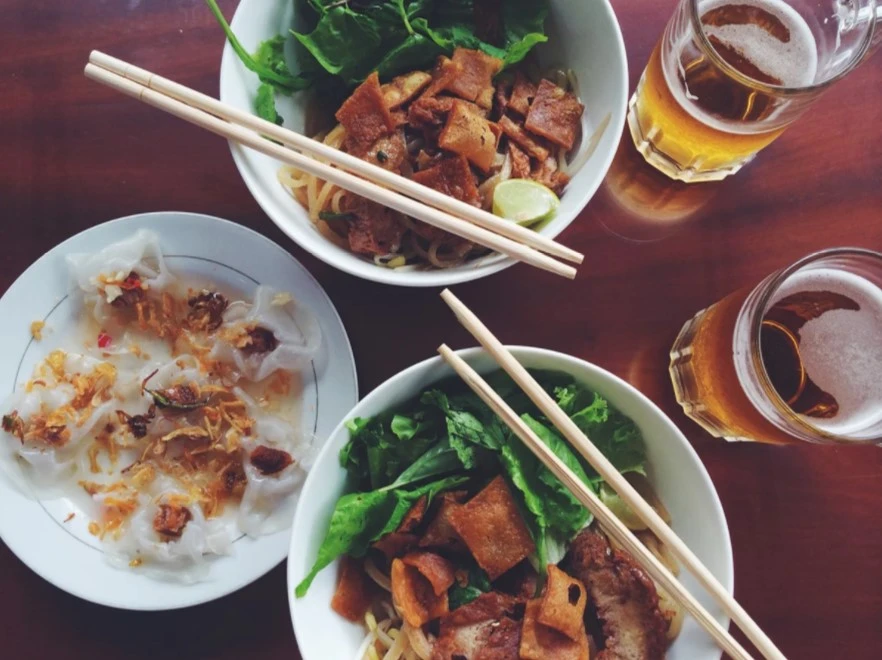
A typical Vietnamese lunch
Fish Sauce and Shrimp Paste
Fish sauce (Nước mắm) and shrimp paste (mắm ruốc, mắm tép, mắm tôm) feature in almost every Vietnamese dish. These distinct seasonings are made from fermented seafood and are invisible to the eye, making them a potential pitfall for vegetarians or anyone with seafood allergies. However, that doesn't mean non-meat eaters need to miss out on Vietnamese cuisine altogether.
Thanks to the strong influence of Buddhism, Vietnam has a rich tradition of monastic vegan cooking. These dishes are strictly plant-based, completely free of animal fats, dairy, and eggs. On the menus of these eateries, you'll still see words like "chicken" (gà), "beef" (bò), "fish" (cá), or "shrimp" (tôm)—but they refer exclusively to plant-based substitutes.
Finding a vegetarian spot is easy: just look for signs reading Cơm Chay, which translates to "vegetarian food." These eateries are frequently found near Buddhist temples.
What to Eat in Vietnam
With such an overwhelming array of exotic dishes available, deciding what to eat in Vietnam can be daunting. Here is a guide to the most popular and delicious dishes you definitely should try.
Phở: The Culinary Symbol of Vietnam 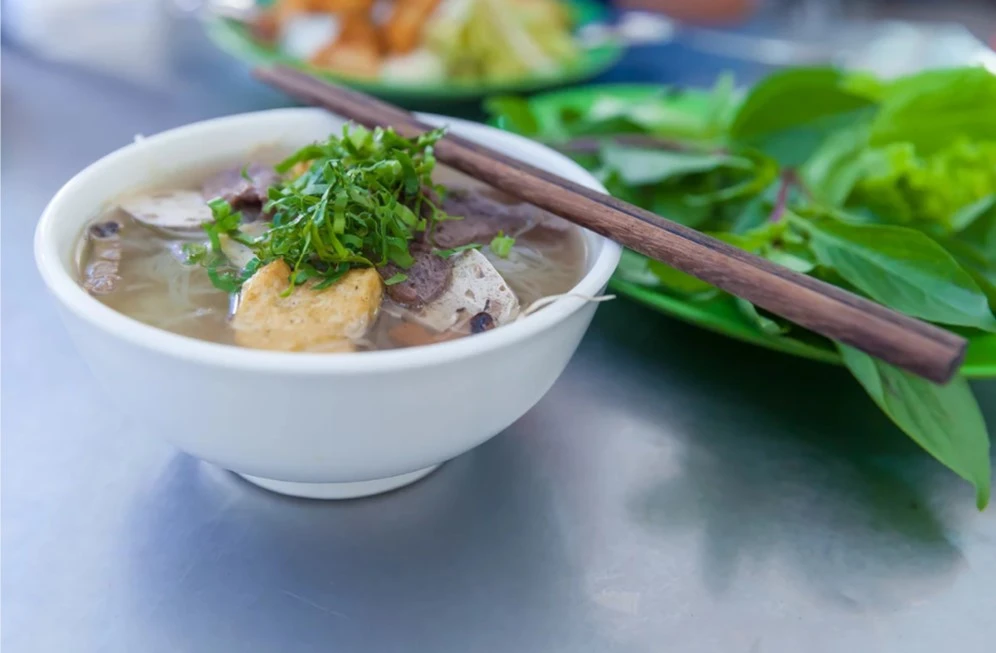
Pho noodle soup
Phở is Vietnam’s national dish and arguably its most famous culinary export. Strictly speaking, Phở refers to the flat rice noodles used to make the soup. Other dishes featuring these noodles also carry the name—such as Phở xào bò (stir-fried pho noodles with beef)—but the iconic soup remains king.
The hot soup version is a staple for locals and tourists alike. The base is a rich, aromatic broth seasoned with spices, made with beef (Phở bò), chicken (Phở gà), or vegetables (Phở chay). While the broth simmers ahead of time, the dish is assembled in seconds: dried noodles are blanched, placed in a bowl with sliced meat or tofu, and scalded with boiling broth. It comes served with a platter of fresh basil, lime wedges, sliced chillies, bean sprouts, and sweet-and-sour hoisin or chili sauce so you can tailor the flavor to your liking. Pho is eaten with chopsticks and a soup spoon. You’ll find it served everywhere from sit-down restaurants to sidewalk stalls cooking broth over charcoal stoves. Sitting on tiny plastic stools at street stalls is an image just as iconic as the classic conical hat.
That said, pho is far from the only noodle soup in Vietnam—every region boasts its own specialty. Other nationwide favorites include Bún bò Huế, a spicy noodle soup with round rice noodles (usually beef, though vegetarian options exist), and Mì Quảng, which features flat yellow noodles topped with savory meats and crushed peanuts.
Bánh Mì 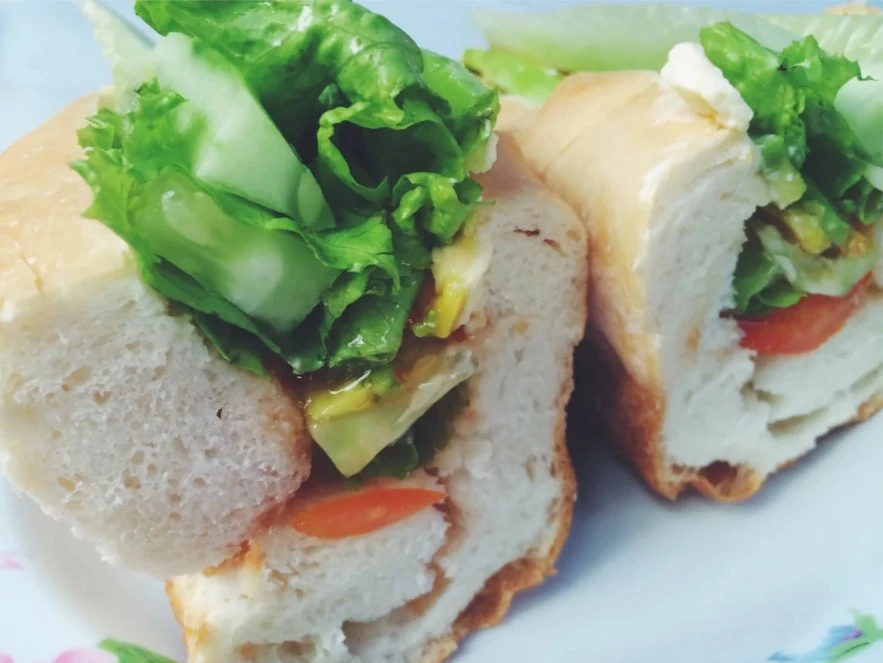
This iconic Vietnamese baguette sandwich stands head and shoulders above a standard sandwich thanks to a few key details. First, it’s packed with crisp herbs and vegetables—sliced cucumber, cilantro, onion, pickled carrots, daikon, scallions, and fresh chili. Second, it's layered with rich sauces like sweet chili, soy sauce, mayonnaise, or scallion oil. Finally, an authentic bánh mì baguette is lightly toasted over charcoal before assembly for an irresistible crunch.
The main fillings are endlessly customizable: savory pâté, cold cuts, grilled meats, sausages, canned sardines, or even melted cheese. You'll mostly spot bánh mì sold from mobile street carts, though many local cafes serve them as well.
Bánh mì is traditionally enjoyed as a quick street snack between meals, wrapped neatly in newspaper. Over time, we even learned to craft our own homemade version, customizing it with all our favorite fixings.
Nem and Cuốn: Spring Rolls and Summer Rolls 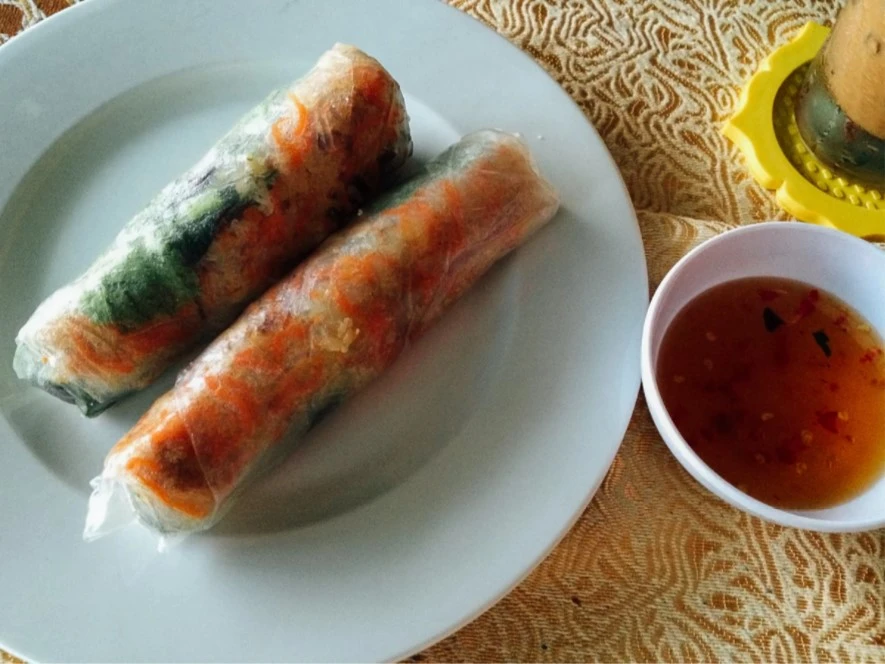
Fresh summer rolls 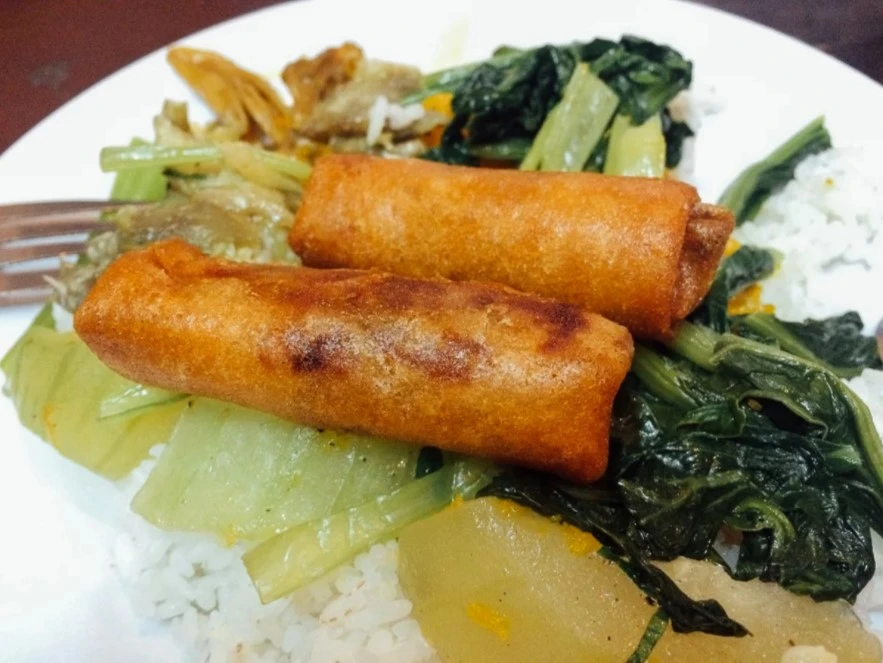
Crispy spring rolls
Vietnamese rolls feature edible rice paper wrapped around various fillings. They fall into two main categories: fresh summer rolls (Gỏi cuốn) and crispy fried spring rolls, known as Nem rán in the North and Chả giò in the South.
Summer rolls are made by rolling soft, moistened rice paper around fresh herbs, vegetables, rice vermicelli, shrimp, or pork, and serving them raw alongside a flavorful dipping sauce. Plant-based versions are widely available at Cơm Chay restaurants. These rolls are relatively large, so a serving of two to four makes for a satisfying meal.
Spring rolls, by contrast, are deep-fried until golden and crunchy, served hot with dipping sauce. They are smaller than summer rolls, with a typical serving consisting of four to six pieces. Fillings range from minced meat and mushrooms to glass noodles, kohlrabi, and root vegetables—with veggie-only options common even in standard eateries. Both styles are typically served as appetizers alongside a main dish.
Bò Lá Lốt 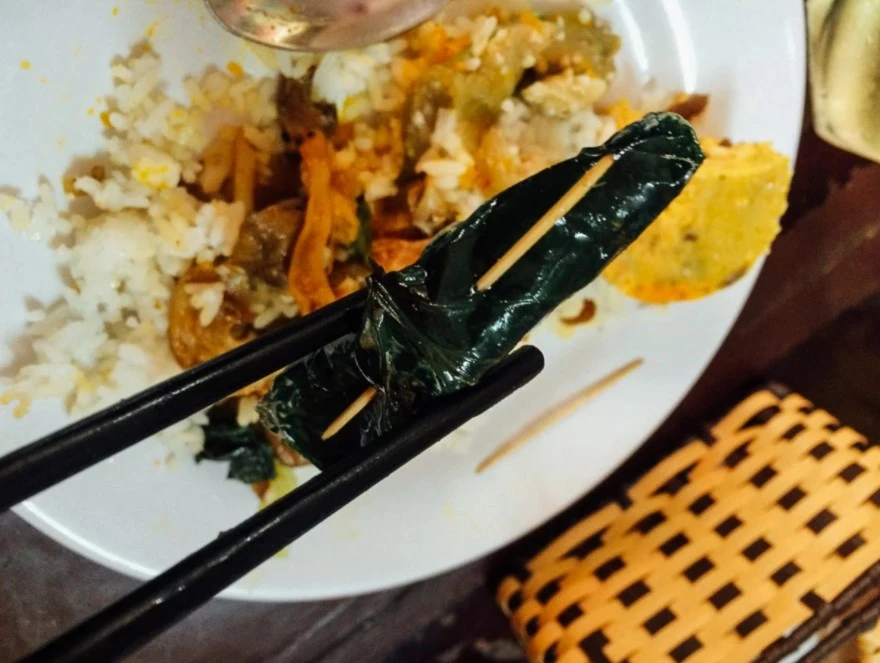
While less internationally famous than pho or bánh mì, Bò lá lốt is a beloved classic among locals and visitors alike. You'll constantly spot street vendors grilling these distinctive green rolls over open charcoal on Vietnamese streets.
The dish consists of seasoned minced beef wrapped in wild betel (lolot) leaves and grilled to smoky perfection. The magic lies in the unique flavor of the lolot leaf—herbaceous, slightly peppery, with hints of citrus and smoke. We even stumbled across a delicious vegetarian version at a local spot in Nha Trang (Quán cơm chay Bồ Đề, 62-64 Huỳnh Thúc Kháng, Nha Trang), and it quickly became one of my personal favorites. It’s an absolute must-try when in Vietnam.
Bánh Bao 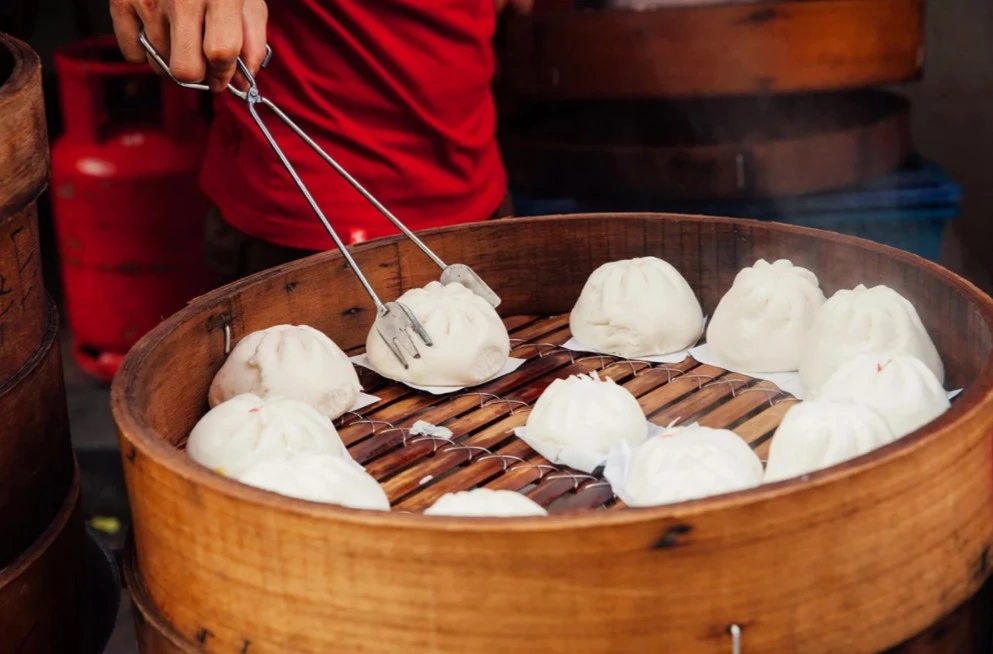
Bánh bao are fluffy steamed yeast buns filled with savory or sweet ingredients. Adapted from Chinese dim sum culture, these steamed buns are widely eaten across Vietnam. The quintessential filling in Vietnamese cuisine is seasoned pork with hard-boiled or quail eggs, though vegetarian and sweet dessert versions are also common.
Lẩu (Hot Pot) 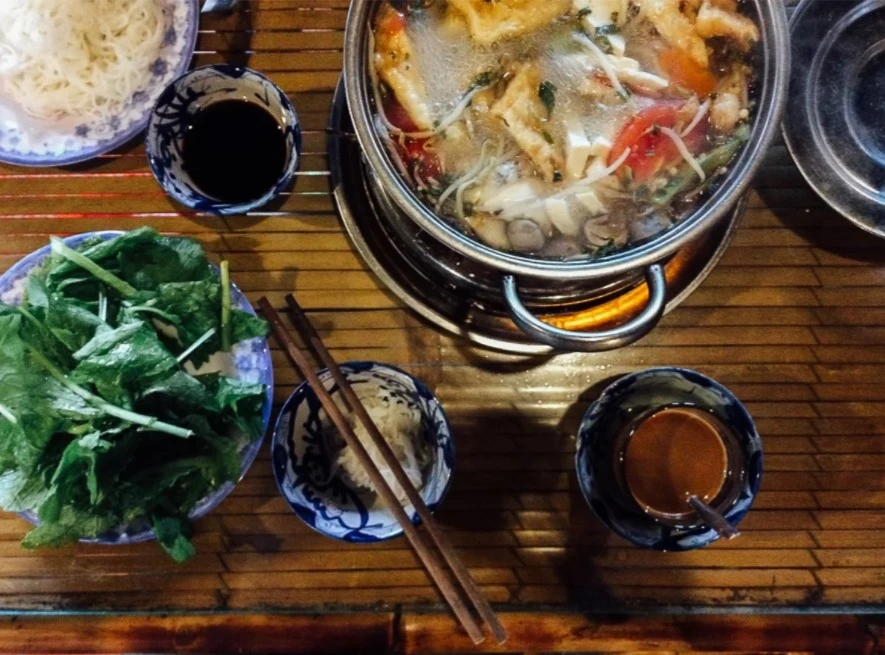
Lẩu, or Hot Pot, is a dining style with East Asian roots popular all across Asia. Rather than a pre-plated meal, it's an interactive dining experience. A portable burner is set in the center of the table with a pot of simmering, seasoned broth. Guests are brought platters of raw ingredients—thinly sliced meats, seafood, mushrooms, fresh greens, and vegetables—to cook directly in the boiling broth at the table. It comes served with cooked rice noodles, which you place in your bowl and top with hot broth and your freshly cooked ingredients.
Hot pot is inherently social and meant for sharing—eating it solo or even as a pair can be a challenge! For Vietnamese families and groups of friends, lingering over a steaming hot pot is a favorite way to catch up and celebrate special occasions.
Bánh Chưng 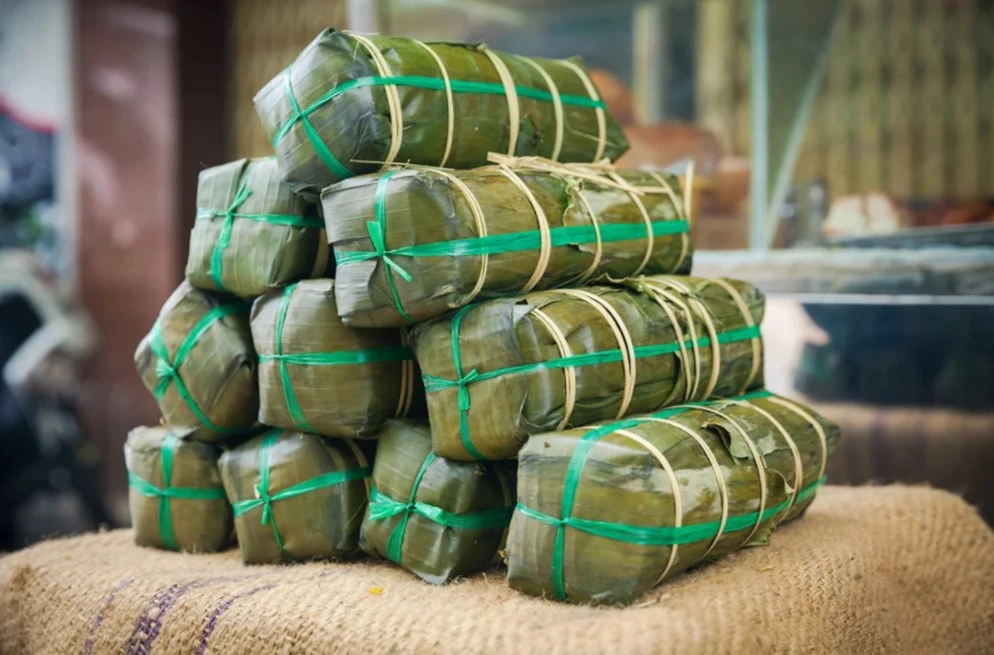
Bánh chưng is a dense, savory square cake made from sticky rice, mung beans, pepper, and pork wrapped tightly in banana leaves. It is a cornerstone of Vietnamese culinary tradition, even if less recognized abroad than pho. It is the signature dish of Lunar New Year (Tết)—alongside its cylindrical southern counterpart, Bánh tét—though you can find it year-round, including vegetarian and sweet adaptations.
Making traditional bánh chưng is a labor of love: preparation takes hours, followed by boiling the parcels for 10 to 12 hours. Throughout Vietnam, you'll also encounter various other banana-leaf-wrapped delicacies made from glutinous rice, both savory and sweet.
Bánh Xèo
Bánh xèo is a crispy, savory Vietnamese crepe made from fried rice flour batter, stuffed with shrimp, pork, bean sprouts, and onions. It is served with fresh lettuce leaves, herbs, and a savory dipping sauce—you wrap pieces of the crispy pancake in lettuce leaves before dipping and eating.
Cơm Đĩa 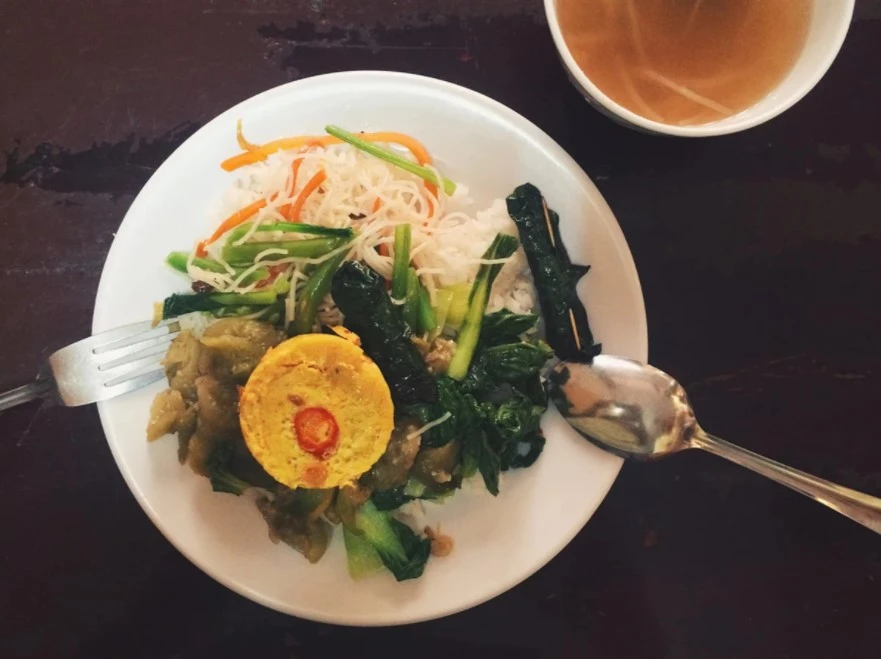
If you want to experience everyday eating in Vietnam beyond soup, look for Cơm Đĩa, which literally translates to "rice plate." It is the go-to daily meal for locals. Built around a bed of steamed white rice, it comes topped with three or four vegetable side dishes and a choice of meats (or tofu and mushrooms for a vegetarian option). Many casual eateries operate cafeteria-style, letting you point and choose your toppings. Plates are usually served with a small bowl of warm broth on the side. Similar rice plate variations include Cơm tấm (broken rice with pork and vegetables), Cơm gà (chicken rice), and Cơm vịt (duck rice).
Chè 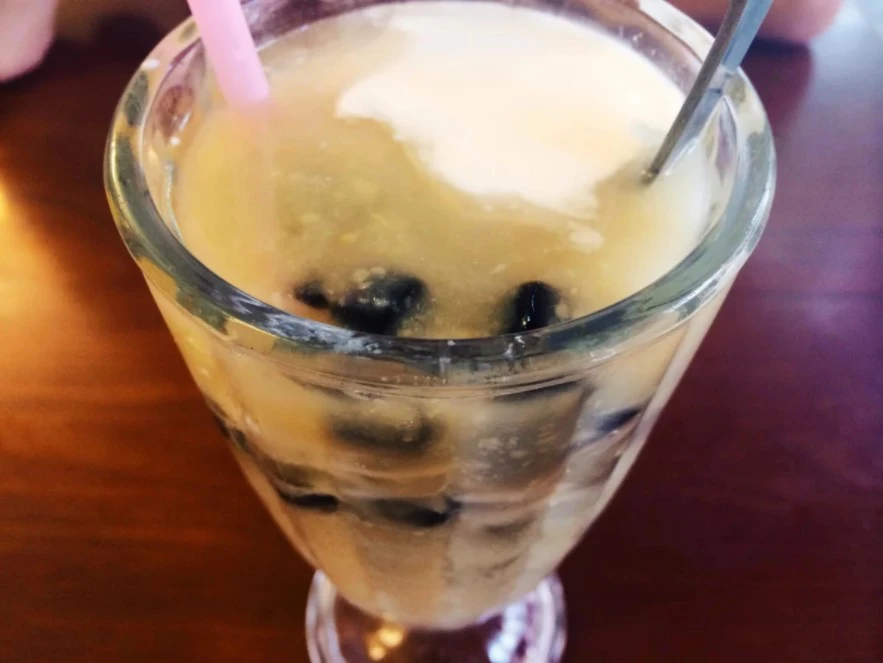
Part drink, part pudding, part sweet soup—Chè defies easy definition. This traditional dessert features combinations of sweet beans, jellies, tropical fruit, lotus seeds, tapioca pearls, taro, corn, and sticky rice, all drenched in sweet coconut milk or syrup. It is usually served chilled over crushed ice in a tall glass, though some warm varieties are served in bowls like soup.
Sinh Tố 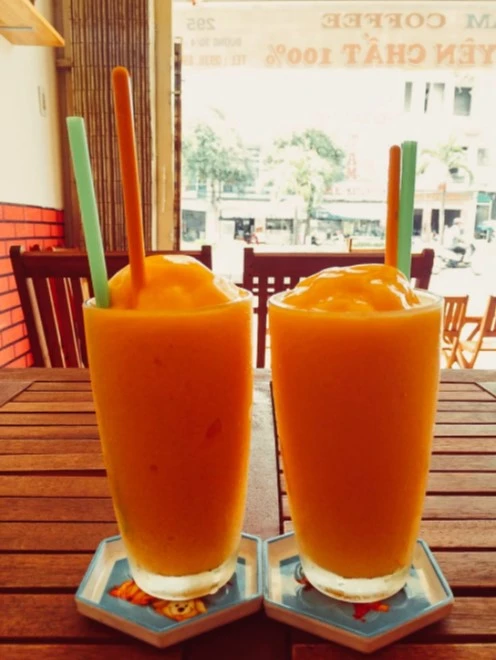
Sinh tố is Vietnam’s answer to the fruit smoothie—a thick, luscious blended drink made with fresh tropical fruit and ice. Vendors often blend in sweetened condensed milk, yogurt, or fruit syrup. A great sinh tố has the silky texture of a melting sorbet and bursts with vibrant fruit flavor.
Cà Phê: Vietnamese Coffee 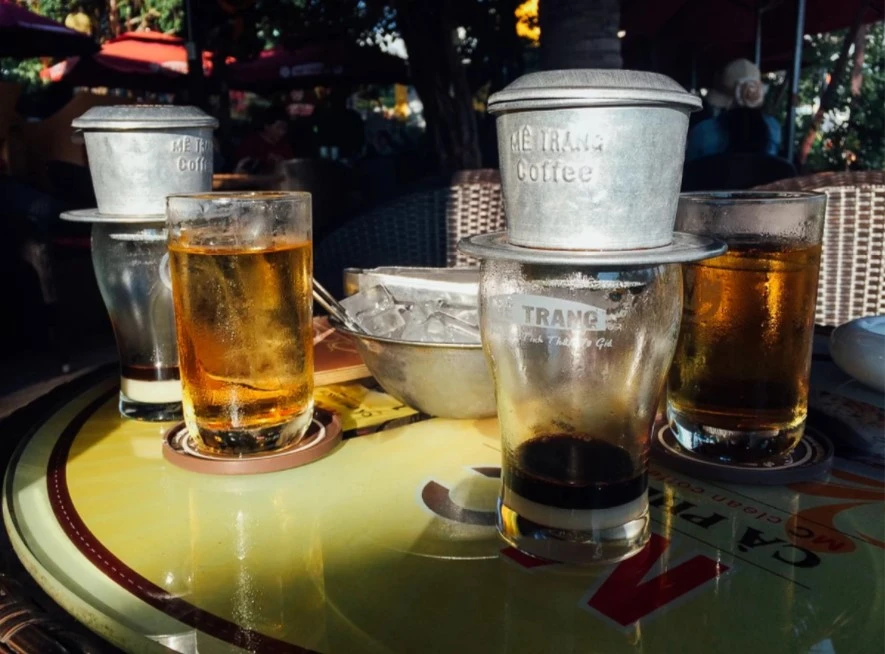
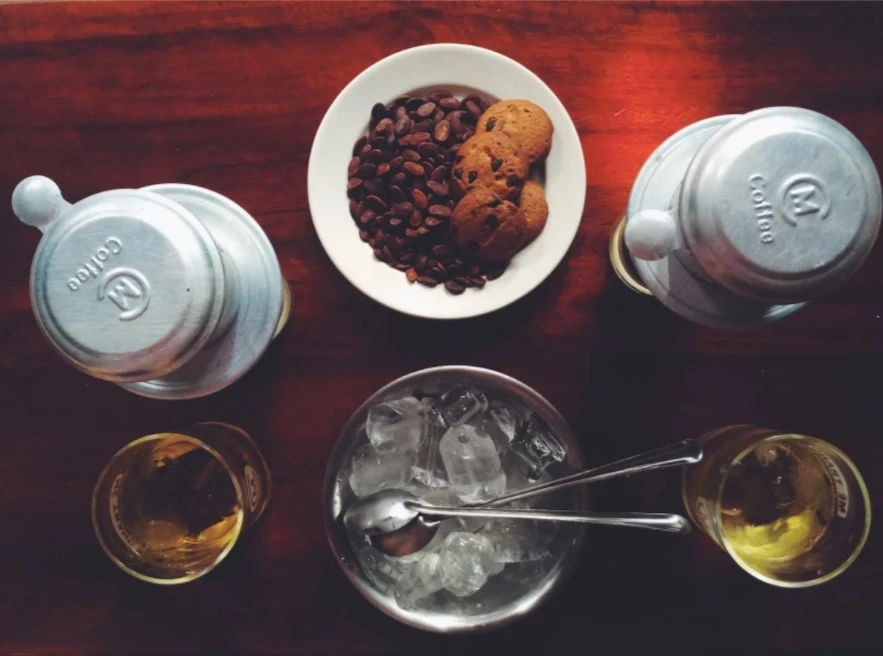
Last but by no means least is Cà phê, Vietnam's iconic coffee. If you drink coffee, trying it here is non-negotiable. Vietnam is the world's second-largest coffee producer after Brazil, with a heavy emphasis on robusta beans. Locals favor a dark roast, which imparts a bold, bitter flavor profile. But Vietnamese coffee is as much about the brewing method as it is about the beans: it's traditionally prepared using a drip filter (phin cà phê) placed directly over a cup. For iced drinks, it may be pre-brewed and poured straight into a glass.
Another defining feature is its sweet balance to the intense bitterness of the roast. Coffee brewed with condensed milk develops rich notes of dark chocolate and roasted nuts, while sweetened black coffee takes on complex undertones reminiscent of cognac. If you prefer your coffee unsweetened, be sure to request it explicitly, as sugar is added by default. Note that asking for milk in Vietnam will net you condensed milk; if you want fresh cow's milk, ask specifically for "fresh milk." Coffee is customarily served alongside a glass of iced green tea, which cafe staff will replenish freely. In Vietnam, coffee drinking is an activity in itself rather than a dessert pairing, so dedicated coffee shops rarely serve food.
Popular Vietnamese Coffee Variations
The classic options include: Cà phê sữa (hot coffee with sweet condensed milk), Cà phê (hot black coffee with sugar), Cà phê đá (iced black coffee with sugar, sometimes shaken with ice to create a rich foam head), and Cà phê sữa đá (iced coffee with condensed milk, either pre-shaken or poured over ice).