The Story of Frank Costello, the Inspiration Behind The Godfather’s Don Vito Corleone (10 Photos)
New York mob boss Frank Costello survived more than his fair share during his lifetime. He was the focus of sweeping federal investigations, the primary target in brutal gang wars, and the survivor of multiple assassination attempts—including one that left him with a bullet graze to the head. Unusually for his line of work, Costello never carried a gun and, despite a life surrounded by violence, died of natural causes at the age of 82. It was Costello who served as the real-life inspiration for Don Vito Corleone, the central figure in Mario Puzo’s novel
The Godfather
and Francis Ford Coppola’s legendary cinematic adaptation. 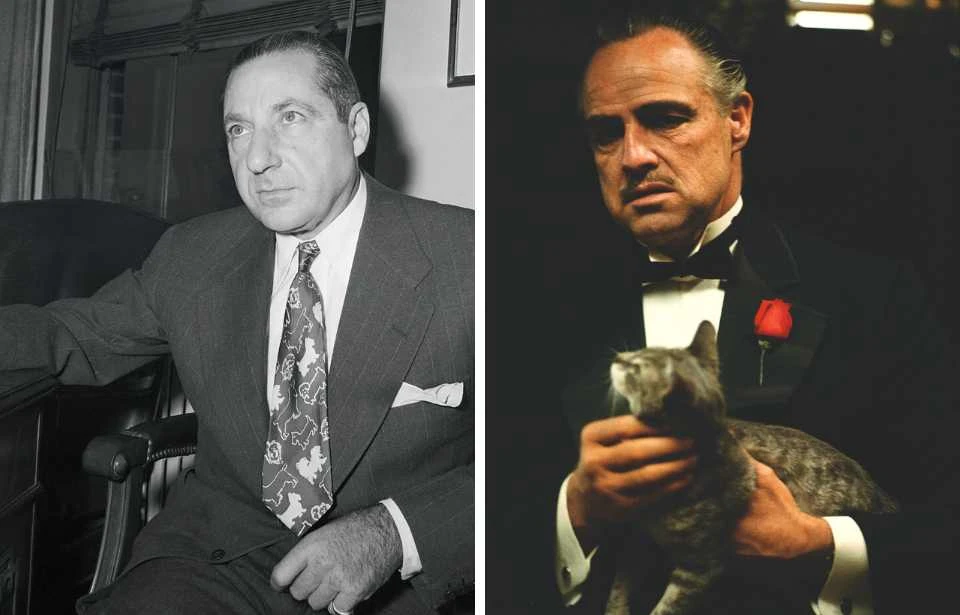
From Calabria to New York: The Early Years
Born Francesco Castiglia in Calabria, Italy, in 1891, the future mob kingpin immigrated to New York with his family in 1895. Life in Manhattan was tough, and before long, young Francesco was drawn into the streets. His older brother introduced him to the notorious Five Points Gang, a predominantly Italian street gang that quickly pulled him into a life of crime. 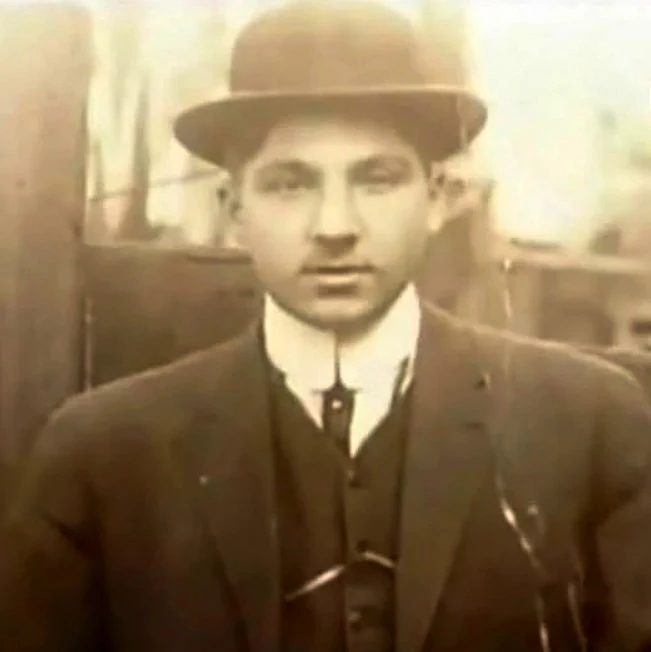
Costello's youth was tumultuous: over the span of a decade, he was arrested multiple times for robbery, illegal firearm possession, and assault. In 1918, he attempted to turn over a new leaf by marrying Lauretta Geigerman and swearing never to carry a firearm again. Despite this personal vow, he couldn't break free from the underworld. By the early 1920s, having adopted the Americanized name Frank Costello, he joined the powerful Morello gang.
Prohibition: An Era of Opportunity
The 1920s ushered in a golden age for organized crime with the advent of Prohibition, which banned the manufacture and sale of alcohol across the United States. Costello leaped into bootlegging alongside rising mob stars like Dutch Schultz, Lucky Luciano, and Benjamin "Bugsy" Siegel. These syndicates controlled massive streams of illicit liquor, often partnering with the Irish mob. Costello and his allies paid lavish bribes to public officials to ensure their shipments moved without interference. 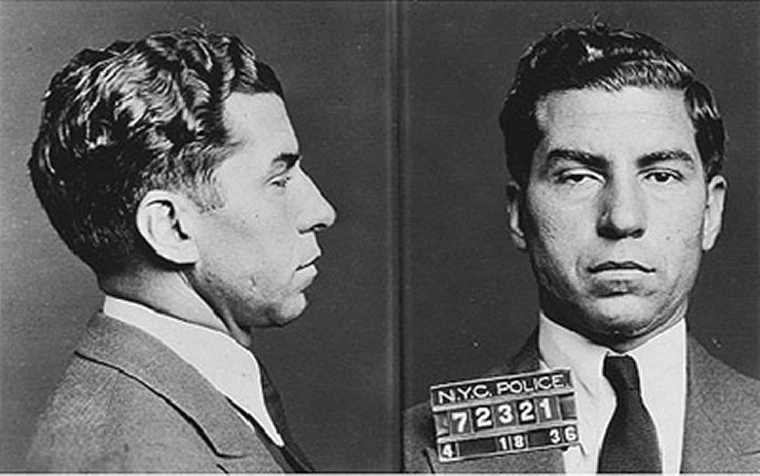
Lucky Luciano
Costello’s chief was Joe "The Boss" Masseria, who joined forces with Irish whiskey bootlegger Bill Dwyer. The scale of the joint Italian-Irish bootlegging empire was staggering. The partners owned fleets of rivercraft and ocean-going vessels capable of transporting up to 20,000 cases of liquor in a single run.
To keep the contraband flowing seamlessly, the syndicates poured fortune into law enforcement payoffs. Bribes allowed Coast Guard officers to routinely look the other way when alcohol laden ships arrived. Even so, in 1926, Dwyer and Costello were caught in a federal bust. Charged with large-scale bootlegging, both men were brought to trial.
The Mob Wars
Frank Costello managed to walk away scot-free after the jury acquitted him of all charges. His Irish partner was less fortunate, receiving a prison sentence. With Dwyer out of the picture, Costello took sole charge of the bootlegging operation. However, he clashed violently with Dwyer's Irish faction, triggering a bloody series of shootouts and bombings that became known as the "Manhattan Beer Wars." 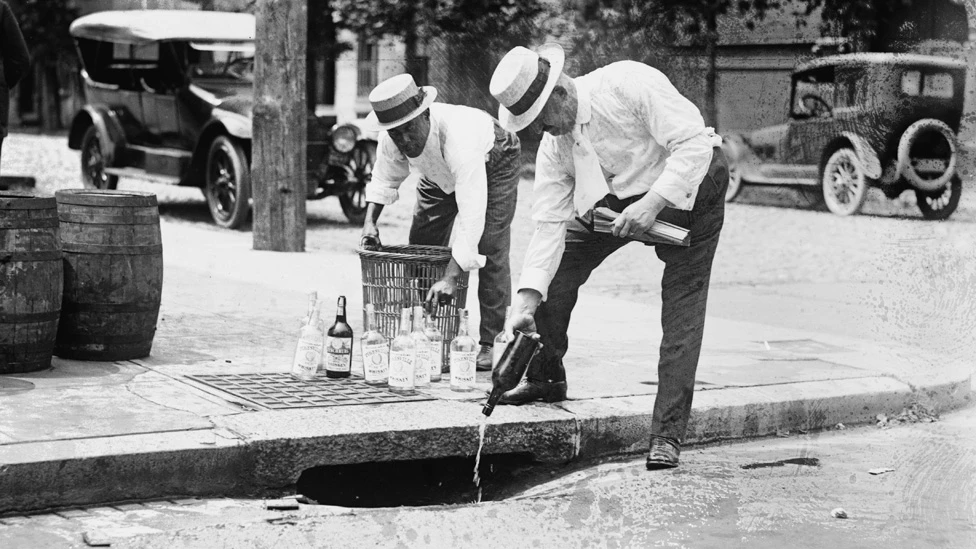
Police destroying bootleg alcohol
Although the conflict ultimately cost Costello his bootlegging network, his standing and authority within the criminal underworld rose sharply. In 1929, violence erupted once again as rival factions fought for control of New York. This time, the struggle pitted Joe "The Boss" Masseria against Sicilian leader Salvatore Maranzano.
Masseria insisted on absolute rule over the New York Mafia and demanded a $10,000 tribute from Maranzano for his safety. This extortion ignited the notorious Castellammarese War. During the conflict, Costello quietly aligned himself with Maranzano, though he firmly refused to participate in the hit on his former boss or his associates. 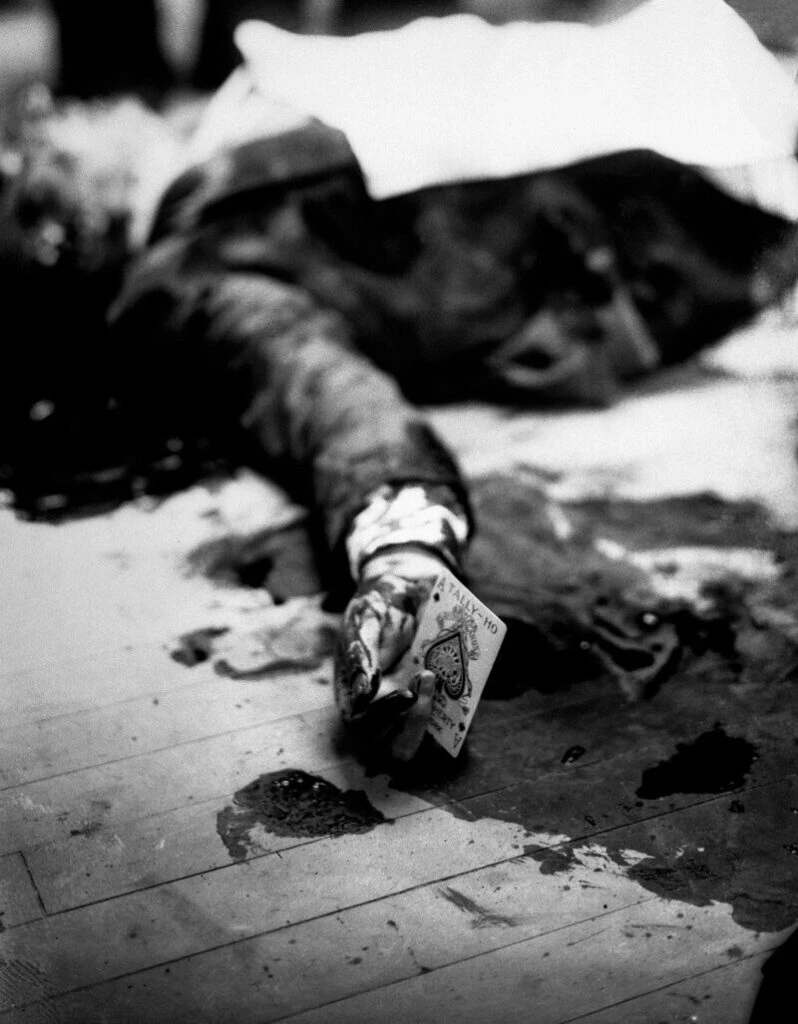
The playing card in Joe Masseria's hand
Before long, Joe Masseria was gunned down inside a Brooklyn restaurant. In a famous underworld gesture, his killer placed the Ace of Spades in his hand—the Mafia’s ultimate death mark. In 1931, Maranzano met a similar fate, leaving Lucky Luciano to assume control and name Frank Costello his official right-hand man.
The Godfather
Luciano and Costello elevated the syndicate to unprecedented heights, expanding lucrative gambling operations far beyond New York. Under their leadership, the mob took control of slot machine parlors in Florida and as far away as Cuba. Costello even managed to win the backing of powerful Louisiana Governor Huey Long. However, back home in New York, the gambling racket hit a major roadblock. Mayor Fiorello La Guardia refused to cooperate with mobsters and publicly ordered Costello’s slot machines dumped straight into the Hudson River. 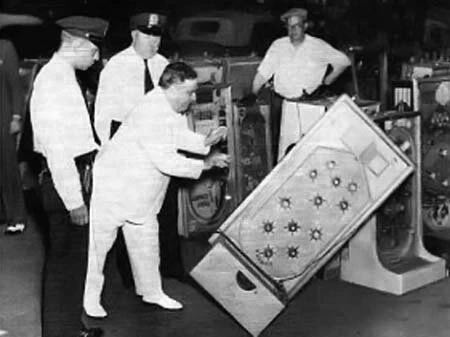
New York Mayor Fiorello La Guardia smashing mob slot machines
In 1936, Lucky Luciano was convicted and sentenced to 30 to 50 years in prison. Vito Genovese briefly stepped up to run the organization, but held power for less than a year before fleeing to Italy to avoid murder charges. That opened the door for Frank Costello to become acting boss of America’s most powerful crime family.
Costello approached organized crime differently than his predecessors. Blessed with a sharp business mind, he pushed the Mafia into legitimate commercial ventures, including gaining control over meatpacking industries. Furthermore, Costello was a master diplomat, building strong ties with police chiefs, influential businessmen, prominent politicians, and even judges. 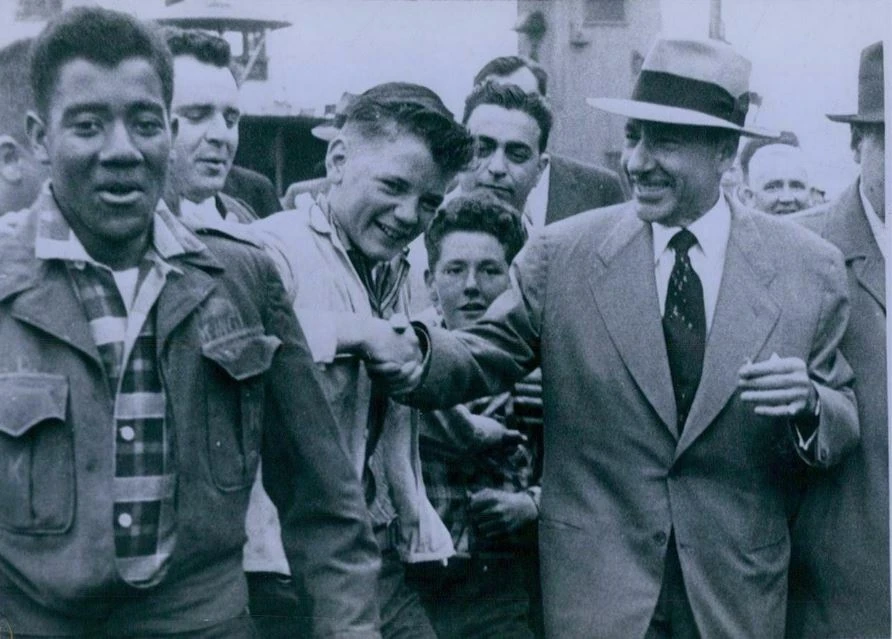
His remarkable political influence earned him the famous moniker "The Prime Minister of the Underworld." Over time, he became not only the most influential mobster in the country, but also one of the wealthiest. Yet all his money and political capital couldn't shield him from the storm heading his way in the 1950s.
The Kefauver Hearings
In 1950, the U.S. Senate launched a massive national crackdown on organized crime, led by Senator Estes Kefauver of Tennessee. The committee interrogated more than 600 mobsters, pimps, accountants, and attorneys linked to the Mafia. Kefauver’s primary goal was to expose the deep web of corruption connecting organized crime to local and federal government officials. 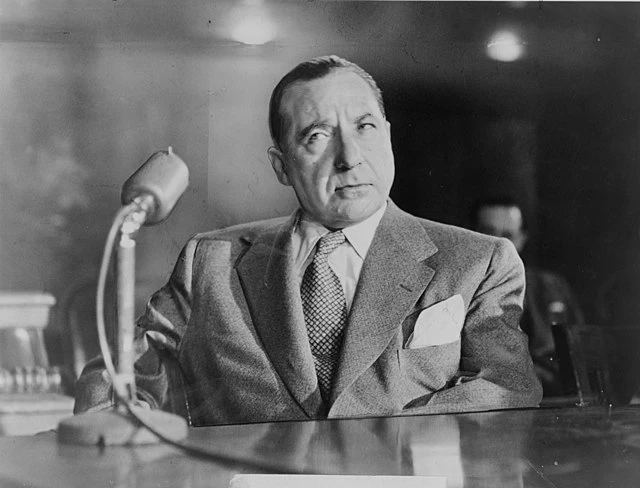
Kefauver succeeded in getting key underworld figures to testify on live television. In 1951, an estimated 30 million Americans tuned in to watch the televised Senate proceedings. The national spectacle was so captivating that schools even dismissed students early so they could watch the live broadcast.
The high point of the hearings was the subpoena of Frank Costello, who appeared before the committee in New York dressed in a impeccably tailored suit. He was one of the few high-ranking mob leaders who agreed to answer questions. Costello attempted to portray himself as a simple, legitimate businessman, but the evidence mounted against him made it clear that the mob boss was deeply rattled and dodging the truth. 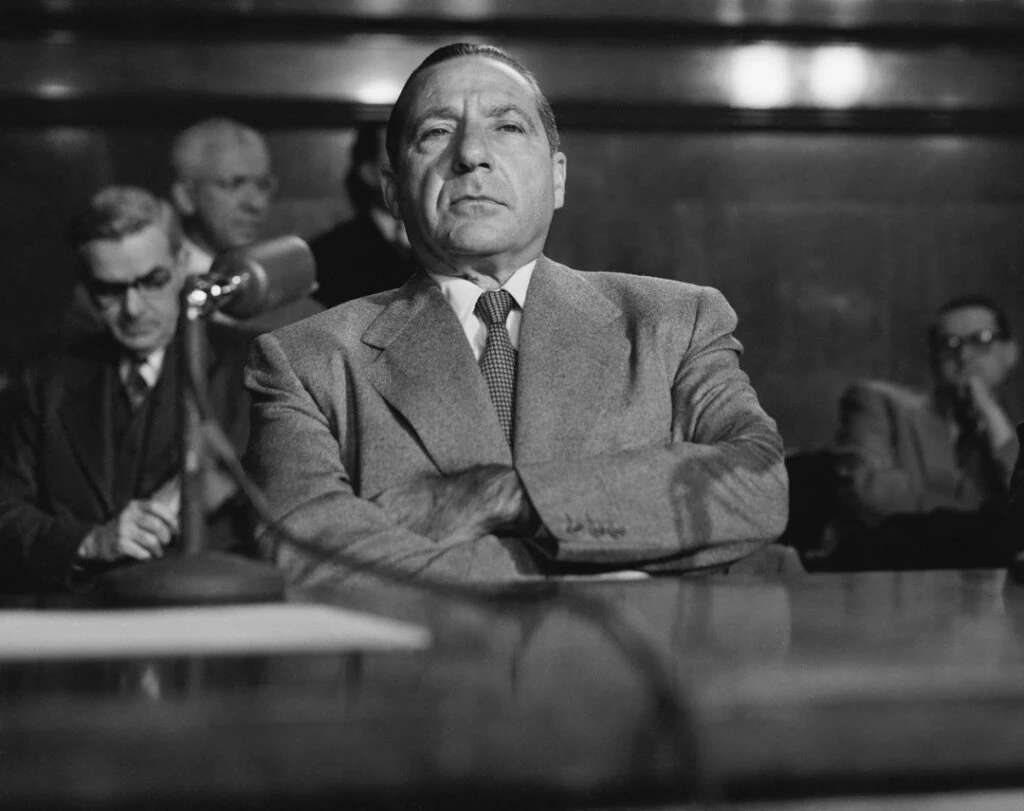
In the aftermath of the Kefauver investigation, Costello spent several brief stints behind bars, though his connections and top-tier legal team repeatedly secured his release. However, his high public profile and willingness to take the stand angered rival mobsters. In 1957, a hitman was sent to end his life.
A Failed Assassination and Retirement
Mob gunman Vincent "The Chin" Gigante shot at Costello inside his apartment lobby, shouting, "This is for you, Frank!" Hearing the yell, Costello instinctively turned his head, causing the bullet to merely graze his skull. Despite surviving the hit, Costello recognized the shooting for what it was: a clear signal that his era was over. He chose not to seek revenge against Gigante or the man behind the contract, his longtime rival Vito Genovese.
Shortly thereafter, Costello officially retired from mob life. Stepping away from criminal affairs, he settled into a quiet, comfortable retirement in his penthouse at the Waldorf Astoria, where old mob associates still occasionally dropped by for visits. On February 18, 1973, Frank Costello died peacefully at home following a heart attack. 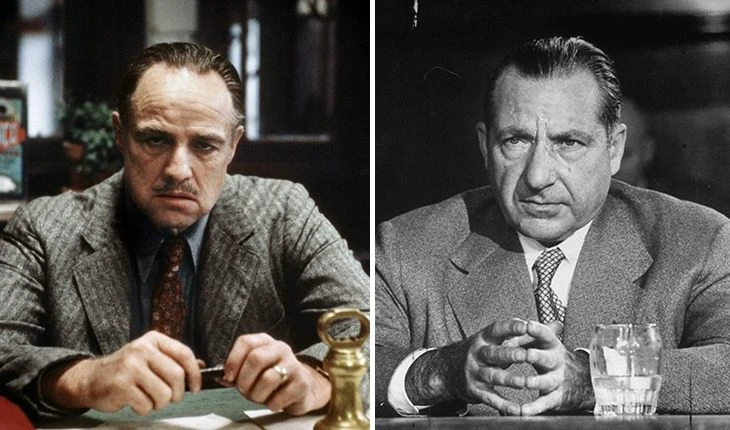
Costello's Legacy
The legendary underworld boss left an enduring mark not only on organized crime, but on American popular culture. While preparing for his iconic role as Don Vito Corleone in
The Godfather
, Marlon Brando spent endless hours reviewing archival tapes of Costello’s testimony from the Kefauver hearings. This allowed Brando to master Costello’s raspy voice, distinct mannerisms, and subtle hand gestures, bringing the character inspired by the real-life mobster to life.
Frank Costello was far more than a typical mobster; he was a charismatic strategist who reshaped crime and politics in America. What do you think was the secret behind his incredible longevity in such a deadly world? Share your thoughts in the comments below!