"Lived Once, Buried Twice": The Bizarre Tale of Marjorie McCall (6 photos)
The story of Ireland’s Marjorie McCall is one of the most chilling urban legends passed down through generations. Far more than just a spooky campfire tale, this piece of folklore has become shrouded in myth and rumor over the centuries. The woman at the center of it all even has a headstone in an old graveyard. Dubbed "the woman who died twice," her tale might sound unbelievable—yet given the medical realities of the early 18th century, it might not be so improbable after all. 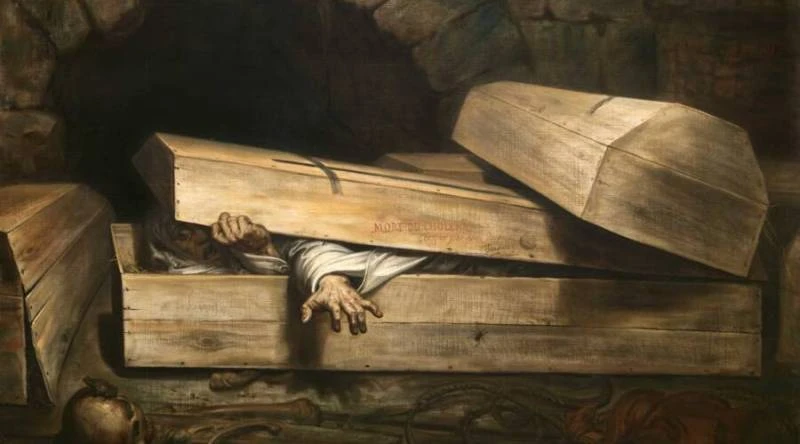
A Hasty Burial in the McCall Household
Since ancient times, few fears have gripped the human imagination quite like the dread of being buried alive. And these fears were far from unfounded: history is rife with documented cases of people pronounced dead who suddenly woke up. Even today, despite incredible leaps in medical science and precise methods for determining clinical death, rare misdiagnoses still occur. 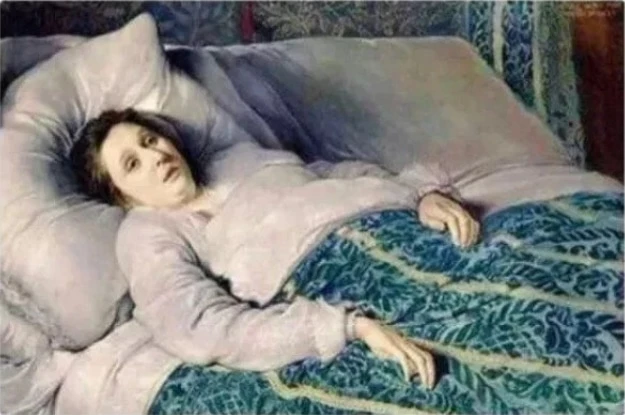
In the 18th century, medical understanding of human biology was rudimentary at best. The story of Marjorie McCall from Lurgan, Ireland, stands as a striking testament to that era’s limitations. In 1705, the wife of Dr. John McCall—who was reportedly not yet 30 years old—succumbed to an illness, likely a contagious fever.
With an epidemic raging through the area and dozens falling ill daily, Dr. McCall acted swiftly to bury his wife to prevent the disease from spreading. The McCalls were well-off, and shortly before her illness, John had given Marjorie a valuable gold ring set with a precious stone. The ring was fitted so tightly to her swollen finger that he couldn't get it off. Wrapped in her shroud, Marjorie was laid in her coffin, given a rushed funeral service, and promptly interred at Lurgan's Shankill Graveyard. 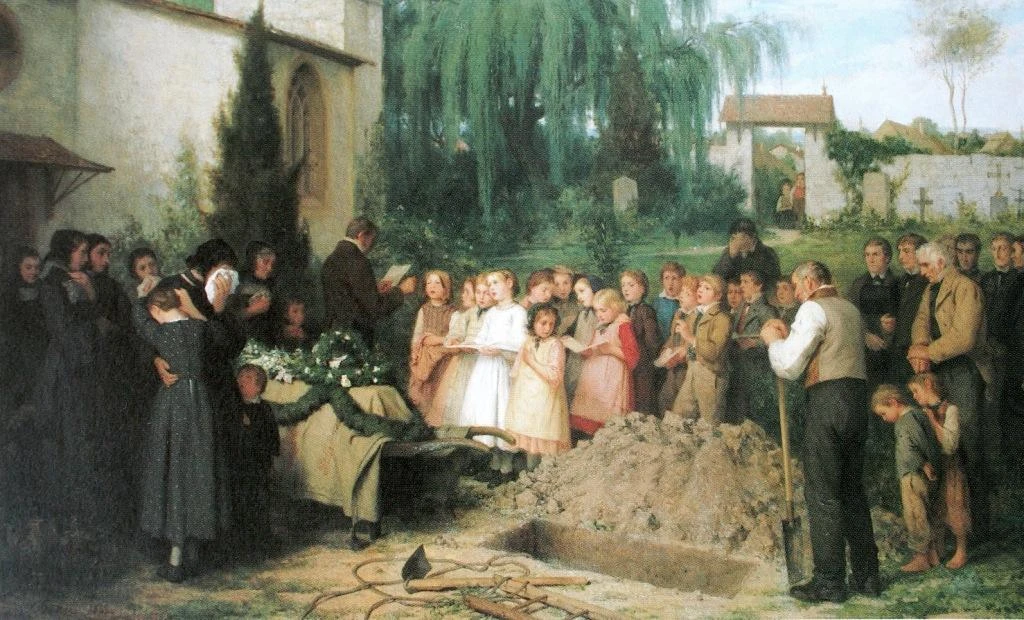
A sizeable crowd attended the funeral, and the sparkling gemstone on the deceased woman's hand did not go unnoticed. In those days, fresh graves were prime targets for resurrection men and body-snatchers—especially those buried with fine jewelry or clothes. That very night, grave robbers snuck into the cemetery determined to steal Marjorie’s ring. In the early 1700s, body-snatching was at its peak, with fresh corpses sold to private medical schools across Great Britain for dissection and anatomical study.
Back from the Grave
The body-snatchers quickly dug up the loose dirt of the fresh grave and hauled out the wooden coffin. The ring was still wedged tightly on Marjorie’s finger. Unlike her grieving husband, however, the thieves had no qualms about using brute force—they decided to slice off her finger to retrieve the prize. 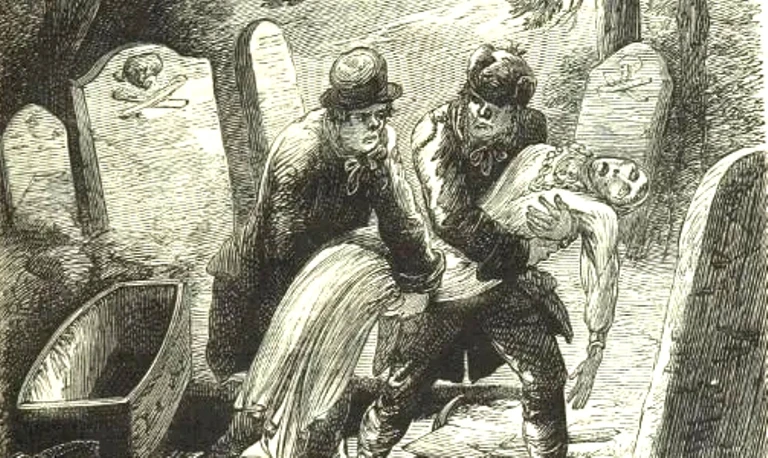
As the thief made a deep cut into her finger, fresh blood suddenly poured from the wound. Frozen in terror, the thieves watched as the "corpse" abruptly stirred. Marjorie sat bolt upright in her coffin, gasping for air and staring in horror at two strangers holding lanterns. Terrified out of their wits, the grave robbers fled the scene screaming. According to another version of the legend, the shock was so intense that both men dropped dead on the spot from heart failure.
Left alone in the pitch black of the cemetery, Marjorie climbed out of her coffin and stumbled back toward her house. Late into the night, she knocked frantically on the door where her husband and children were asleep. Woken by the banging, John McCall remarked to the children, "If your mother were still alive, I’d swear that was her knock." When he opened the door, he collapsed at the sight of his wife—deathly pale, clad in her burial shroud, her hand dripping blood from the severed finger.
Fact or Fiction?
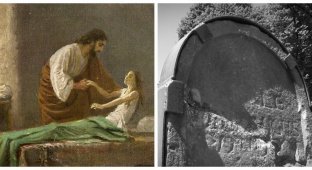
Legend has it that John died instantly from the sheer shock. He was reportedly buried in the very plot—and coffin—that had been prepared for his wife. As for Marjorie, she went on to live a full and healthy life. She eventually remarried, raised more children and grandchildren, and became a local legend. When she died for real many years later, she was laid to rest at Shankill Graveyard once more. Her grave remains there to this day. In the 1860s, a stonemason named William Graham erected a headstone over her final resting place inscribed with the famous words: "Marjorie McCall. Lived Once, Buried Twice." 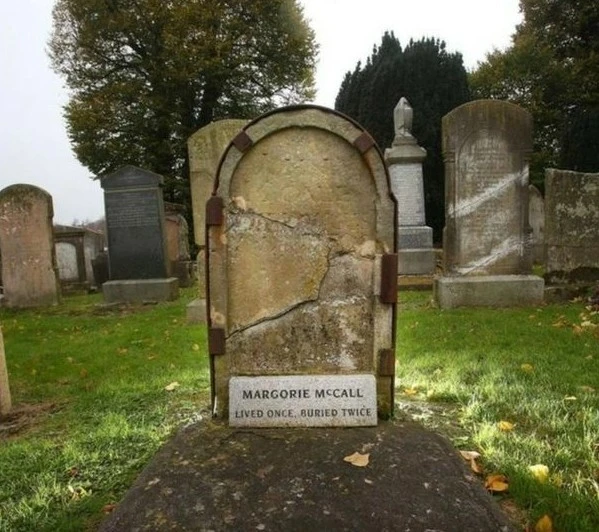
Marjorie McCall's headstone featuring the famous epitaph
That famous epitaph cemented Marjorie's story in Irish lore. Yet historians continue to debate whether she was a real person or a complete invention. Skeptics point out that parish records from 1705 contain no mention of her original burial. Still, the gravestone remains standing in Lurgan, drawing curious tourists and lovers of mystery from all over the world.
Could it all be just a tall tale? The lack of official documentation and the cinematic nature of the story lead many researchers to dismiss it as pure folklore. Nevertheless, the physical gravestone and centuries of retelling keep the legend very much alive.
The Lazarus Phenomenon: Real Science or Myth?
Modern medicine explains such occurrences as the "Lazarus syndrome"—a rare phenomenon where a patient spontaneously recovers vital signs after being pronounced dead. In the 18th century, when pulse and breathing were checked using primitive techniques, false declarations of death were surprisingly common. Marjorie McCall's ordeal may well be one of the earliest recorded examples of this phenomenon. 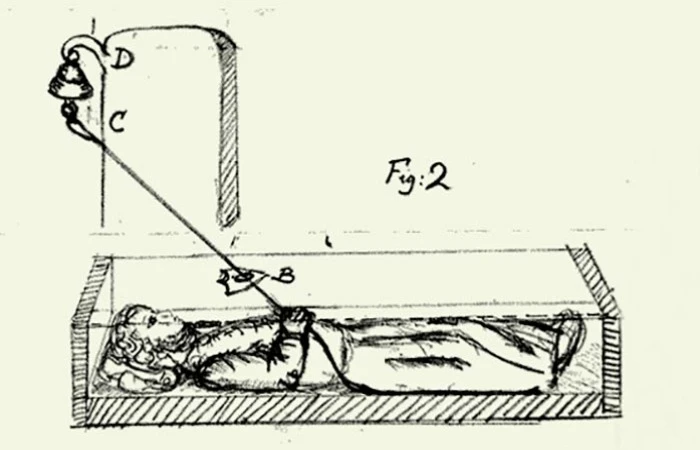
An antique diagram of a "safety coffin" equipped with an alert bell
In the 18th and 19th centuries, premature burial was a very real terror. To prevent tragic mistakes, inventors designed "safety coffins" fitted with bell cords tied to the occupant's wrist, allowing anyone buried alive to sound an alarm.
What do you make of Marjorie McCall’s story? Do you believe it really happened, or is it just an enduring myth? Share your thoughts in the comments below!