How Medieval Courts Hanged Pigs, Summonsed Rats, and Burned Roosters for Crimes Against Nature (10 photos)
In 1266, a pig was burned at the stake for killing a child. In 1508, rats were served with an official court summons. And in 1474, a rooster was executed for laying an egg. This isn't myth or folklore. From the 13th to the 18th century, European towns saw hundreds of actual trials involving animal defendants, complete with judges, defense attorneys, and witnesses. One defense lawyer from such a case even went on to lead the Parliament of Provence. Here is the story behind this strange chapter in legal history. 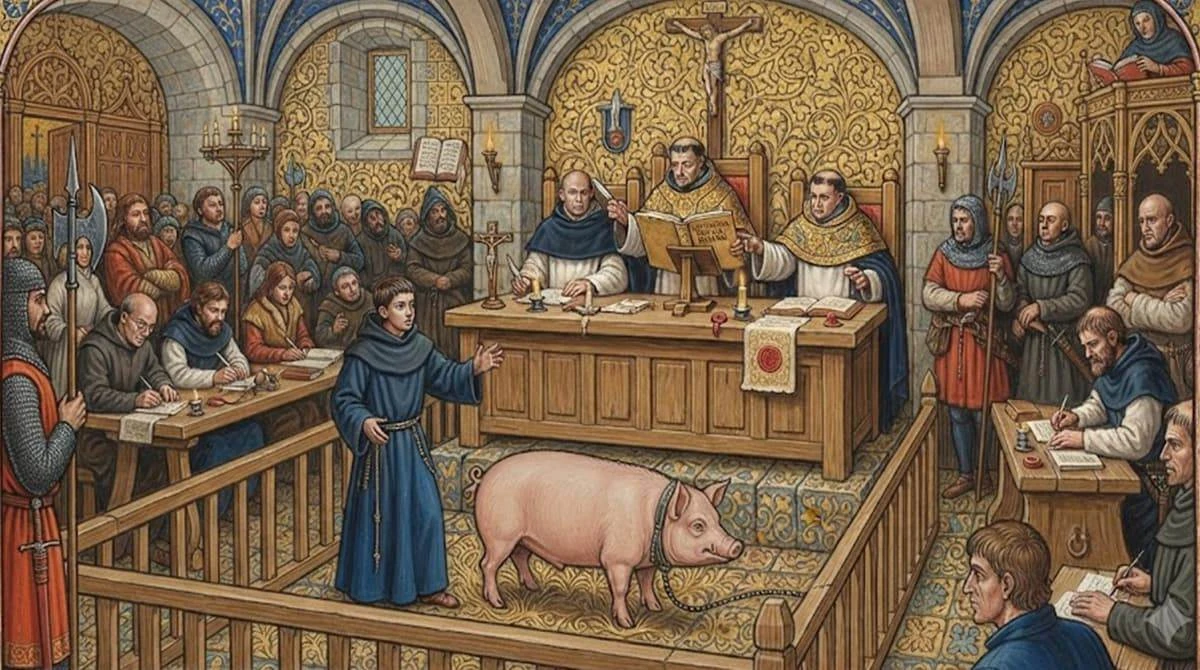
Beast as Sinner: The Logic Behind Medieval Law
To a modern reader, it seems baffling that a judge would seriously try a case against a pig as if it possessed free will. Yet the medieval worldview was vastly different. Animals were not viewed as unfeeling automata, but as moral agents—creatures capable of sinning and being held accountable for their actions. 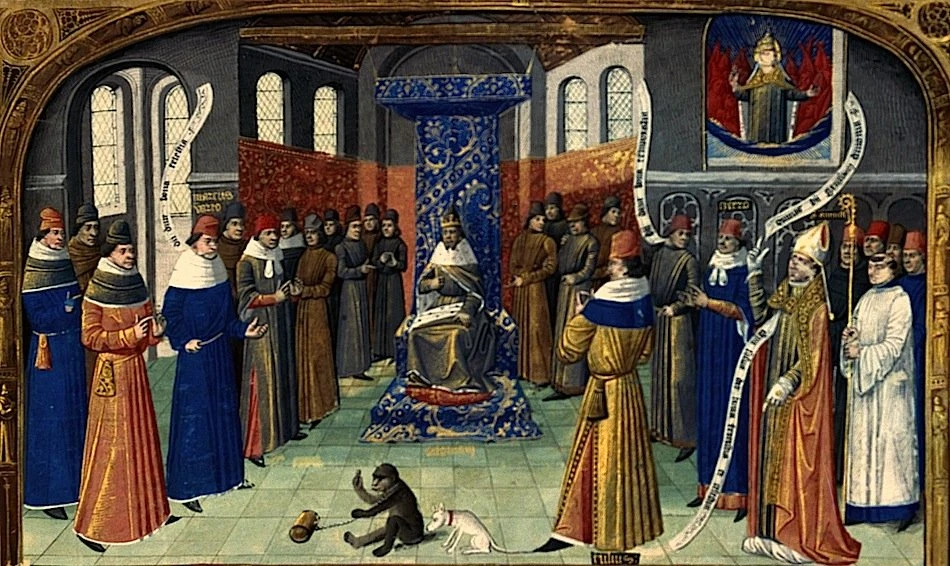
A book miniature depicting a royal court where a monkey and a dog are brought to trial. 15th century
If a sheep ruined crops, it was seen as a breach of the divine order. If a pig killed a child, the incident was not viewed merely as a tragedy, but as a crime requiring a full trial. In these cases, the court was no mere formality; it was a way to restore justice and moral order. If the culprit could be identified, tried, and punished, it meant the world was still governed by law and reason.
Pigs in the Dock
The earliest documented animal trial took place in 1266 in Fontenay-aux-Roses near Paris. A pig accused of killing a child was tried by the monks of Sainte-Geneviève Abbey and sentenced to burn at the stake. From then on, similar cases spread across Normandy, Île-de-France, and eventually all of Europe. 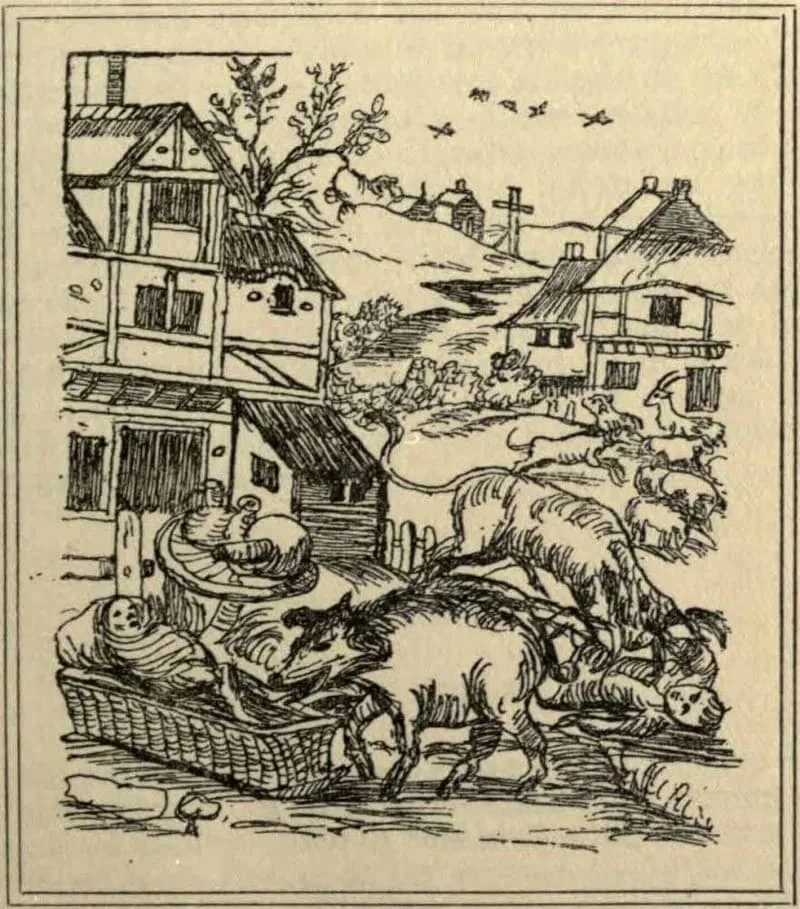
An engraving from the book "The Criminal Prosecution and Capital Punishment of Animals," depicting pigs attacking children. 1906
On January 9, 1386, in the Norman town of Falaise, the legal apparatus was on full display. A pig that had mauled an infant was found guilty and sentenced to a public hanging in the town square. Before the execution, the animal was dressed in a jacket, trousers, and gloves—the town needed to see that it was punishing a proper criminal, not just an anonymous beast. Financial records from the trial survive to this day: the city treasury paid the executioner 10 sous and 10 deniers, which included a new pair of gloves for himself. 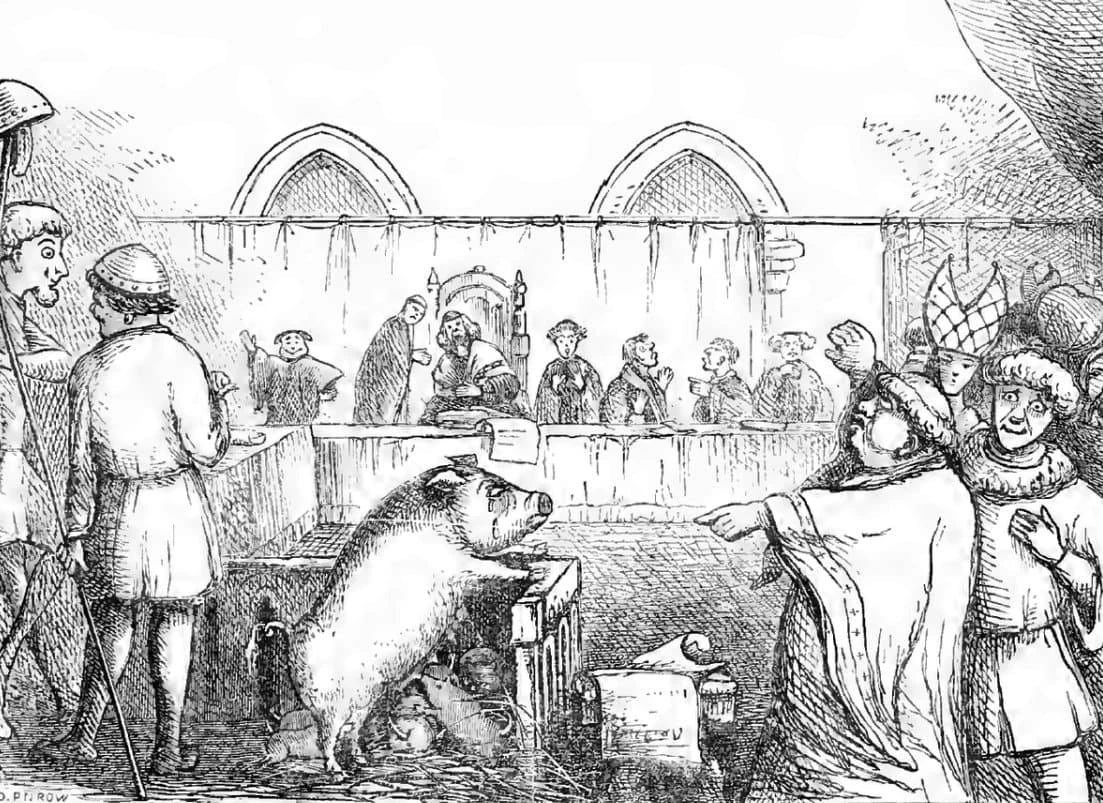
A 19th-century engraving depicting the 1386 trial of a pig in Falaise
In 1457, in Savigny, Burgundy, a sow was tried for killing a five-year-old boy named Jean Martin. The court showed selective leniency: the sow was hanged, but her six piglets were acquitted due to a lack of evidence that they took part in the attack.
In August 1474, a rooster was burned at the stake in Basel. Locals believed the bird had laid an egg at the devil's bidding and feared it would hatch a basilisk. The execution was carried out on the Kohlenberg square, where the rooster was burned along with the ill-fated egg.
Collective Guilt: The Monastery Case of 1379
On September 5, 1379, an incident near the Abbey of Saint-Marcel-lès-Jussey in France became a textbook example of medieval legal logic. Two herds of pigs were grazing together when they suddenly became agitated and trampled a boy named Perrinot Muet—the son of a local swineherd who was trying to protect him. 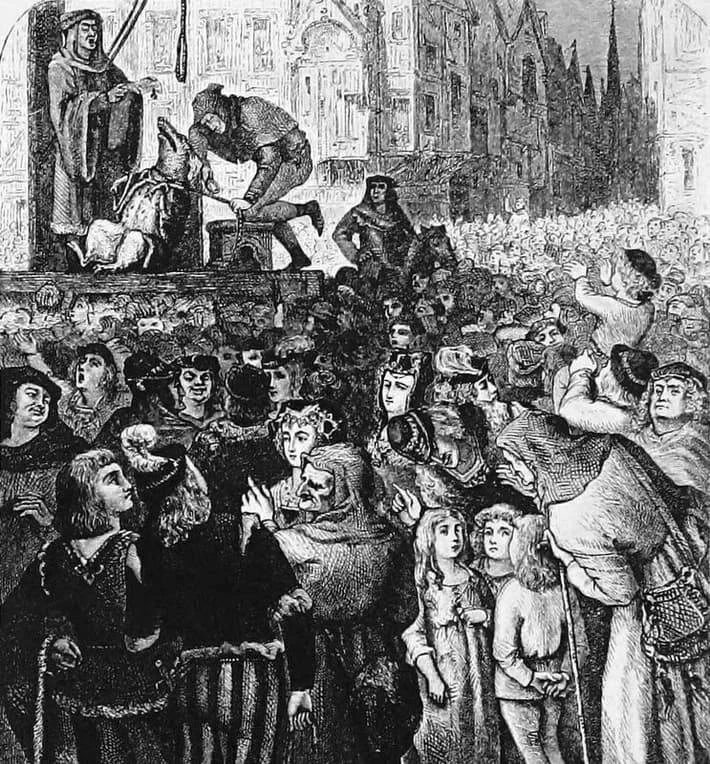
The execution of a pig dressed in human clothing. 19th-century engraving
The court ruled that not only the direct culprits were guilty, but also the rest of the pigs in both herds. By squealing and milling about, they had encouraged the attack, making them accomplices to the crime. The entire sounder was sentenced to death.
Unwilling to absorb such a massive financial loss, the monastery's prior, Friar Humbert de Poitiers, petitioned Philip the Bold, Duke of Burgundy. The duke granted clemency to the "bystanders," sparing the lives of all the pigs except the three main offenders, who were duly executed.
Lawyer Chasseneuz's Finest Hour
In 1480, the Bishop of Autun was embroiled in a lengthy dispute with snails that were destroying church lands. For three consecutive days, religious processions marched through the countryside, with priests pronouncing curses and ordering the snails to leave under threat of excommunication. The snails naturally ignored the order, but the practice took root: similar proceedings against caterpillars and other pests were held repeatedly in Autun and neighboring dioceses. 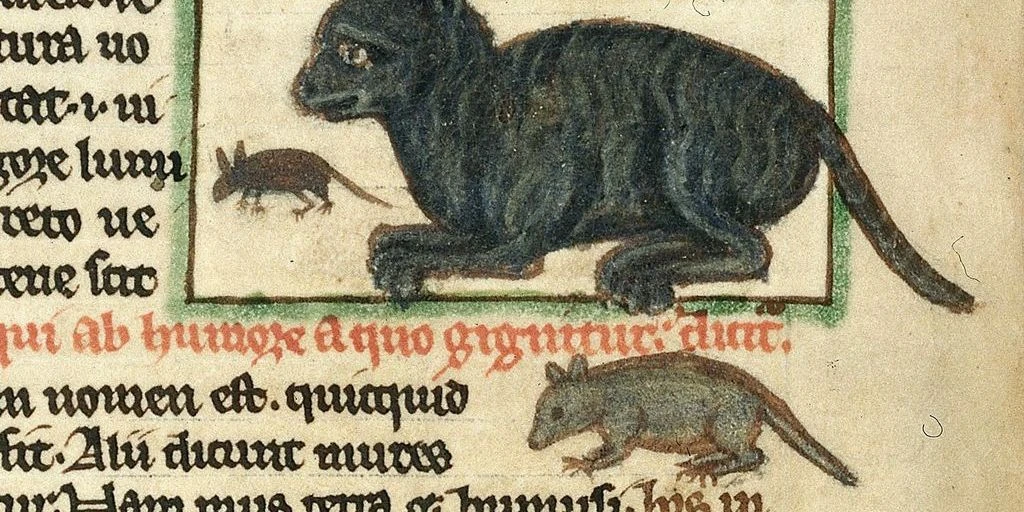
A cat and rats. Miniature from a 15th-century book
In 1508, in the same town of Autun, rats accused of destroying the barley crop were officially summoned to an ecclesiastical court via a notice read in every parish church. A young lawyer, Bartholomé de Chasseneuz, was appointed to defend the rodents. He took his duty seriously, arguing that the summons had not reached all the defendants because rats were scattered across various parishes. He then added that attending court posed a mortal danger to his clients, as cats lay in wait for them along the way.
The court found the argument valid and ordered the plaintiffs to guarantee safe passage for the rats, which they were unable to do. The case was dismissed without a verdict. News of the resourceful attorney spread across France, and in 1532, Chasseneuz became President of the Parliament of Provence, the region's highest court. 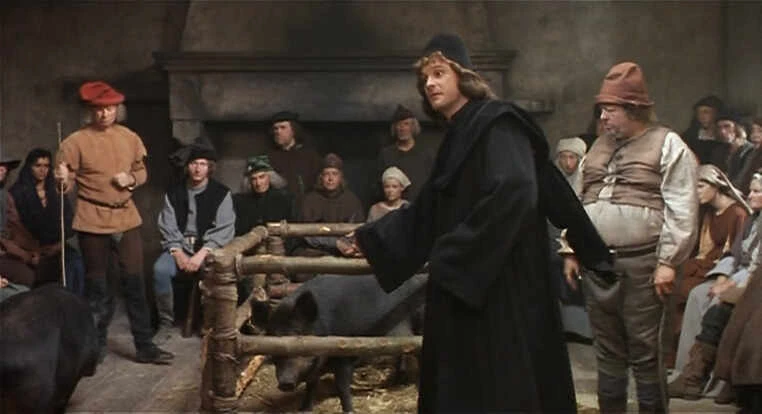
In the 1993 film "The Hour of the Pig," Parisian lawyer Richard Courtois defends a pig in a provincial court
Similar logic was applied to other pests. In 1519, in the Alpine town of Stelvio (then part of the County of Tyrol), moles and field mice were tried for destroying crops. The judge considered mitigating circumstances and granted the animals safe passage out of the area, giving pregnant females and their young an additional 14 days grace period.
Two Forms of Animal Justice
In 1906, American scholar Edward Payson Evans published "The Criminal Prosecution and Capital Punishment of Animals," documenting over two hundred cases spanning eight centuries. To this day, it remains the definitive source on the subject for historians. 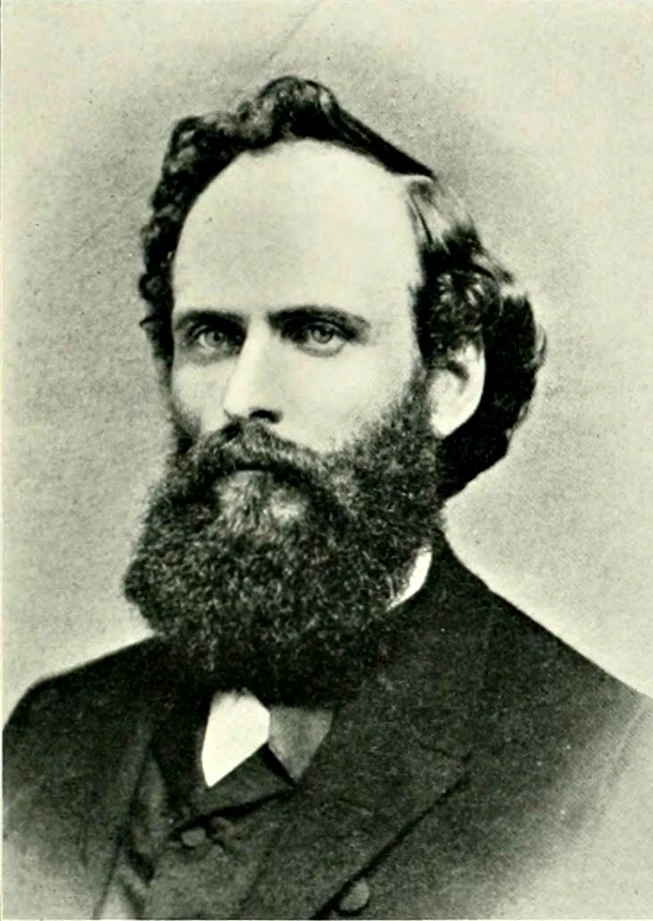
Scholar and educator Edward Payson Evans
Evans divided these cases into two categories. The first he called *Thierstrafen*—secular trials against domestic animals like pigs, bulls, and horses. These animals stood accused of murder or injury, and their punishments mirrored those given to humans: hanging, beheading, or burning at the stake. 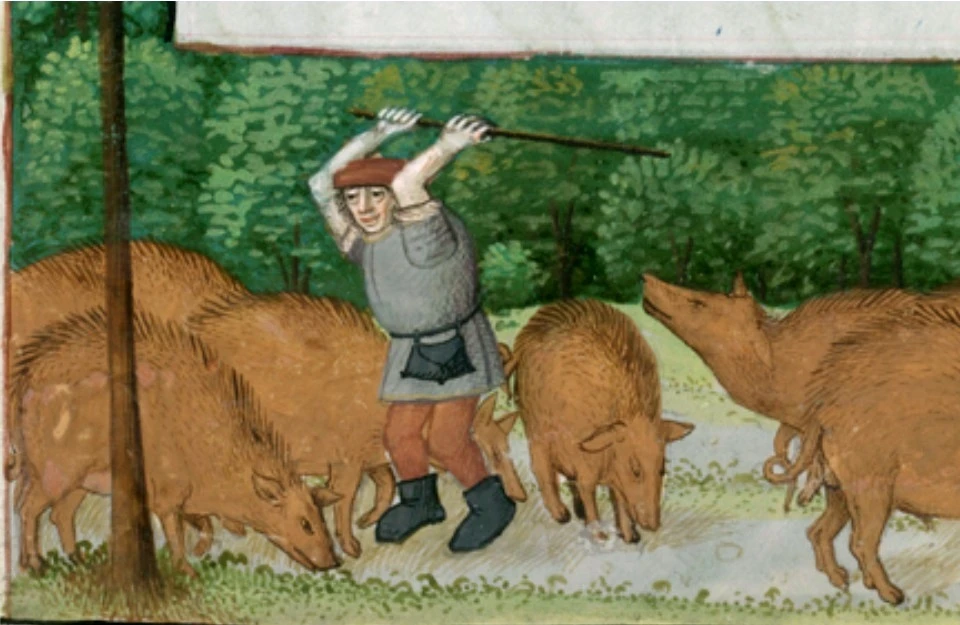
Pigs were prosecuted more often than any other domestic animal. 15th-century miniature
The second category, *Thierprocesse*, fell under ecclesiastical jurisdiction and involved pests such as rats, locusts, and weevils. Here, the goal was not punishment but expulsion through excommunication, ritual curses, or orders to leave the parish. The procedure became so standardized that in 1531 Chasseneuz published a legal treatise, "Consilium Primum," a practical guide on how to properly try and excommunicate animals. 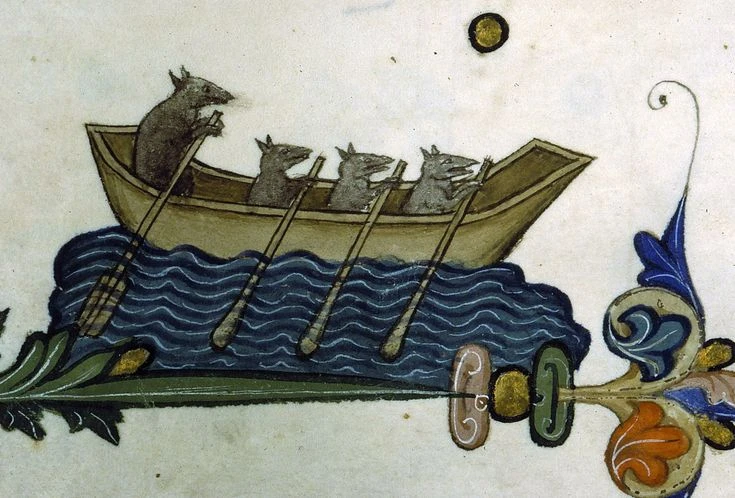
A period-style drawing: if a rat can be summoned to court, why not put it at the oars? Medieval imagination readily cast animals in human roles
However, modern medievalists urge caution. They suggest that some of these accounts were invented later, either as rhetorical exercises for law students or to satirize specific lawyers. It is precisely this blend of historical reality and legal legend that makes the subject so fascinating to researchers today.
When Executing an Animal Wasn't a Trial
Not every animal killing found in historical chronicles should be viewed as a formal trial. On April 8, 1554, Londoners discovered a dead cat hanging from a gallows in Cheapside, dressed in the vestments of a Catholic priest, complete with a shaved tonsure and a paper "wafer" placed between its paws. 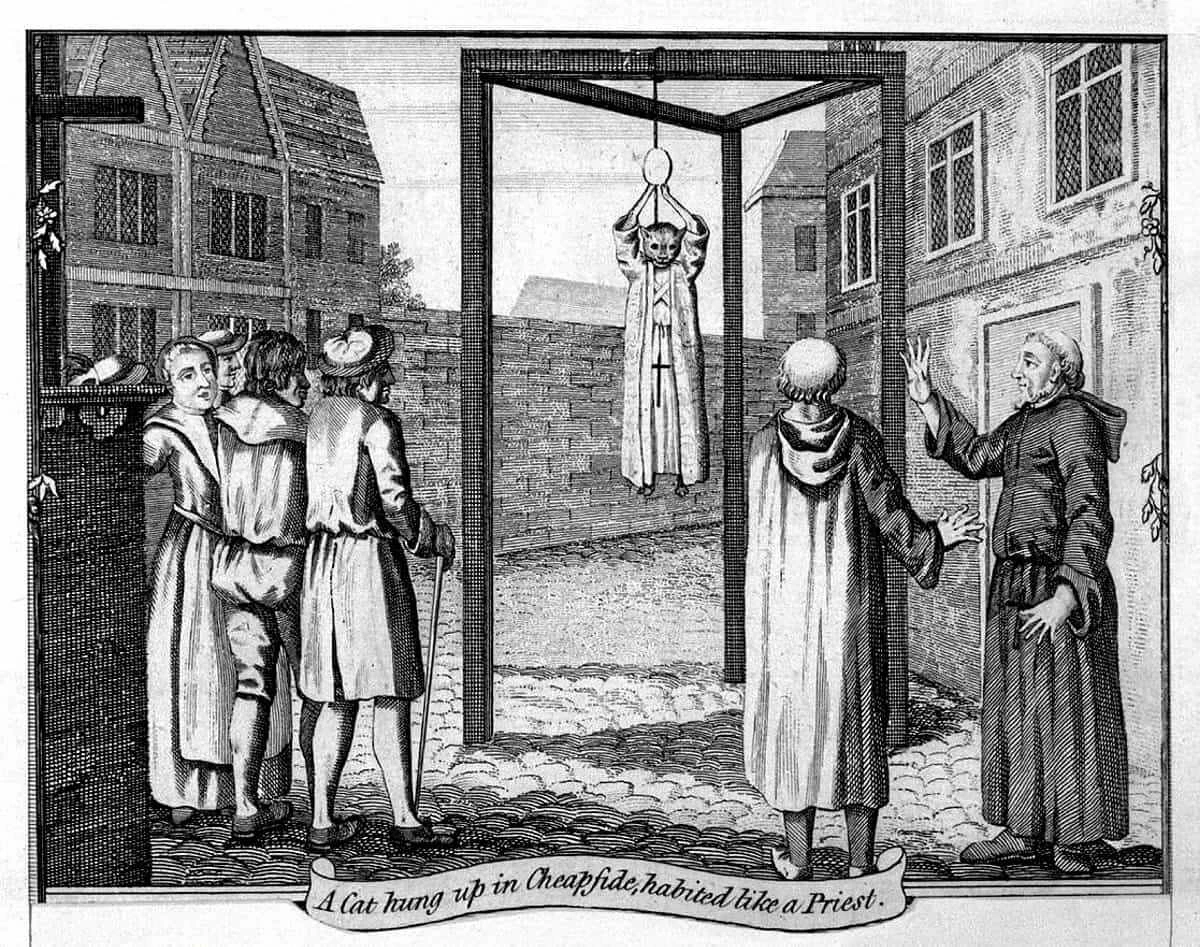
A cat dressed in priestly vestments and hanged in London's Cheapside. 1554
There was no trial involved. This was a political stunt by Protestants aimed at the Catholic Queen Mary Tudor, who had ascended the throne the previous year. The Queen took the act as a personal insult and offered a reward for the culprits, but they were never caught. Unlike the events in Falaise or Autun, there was no investigation or legal verdict—just a symbolic gesture designed to provoke outrage. 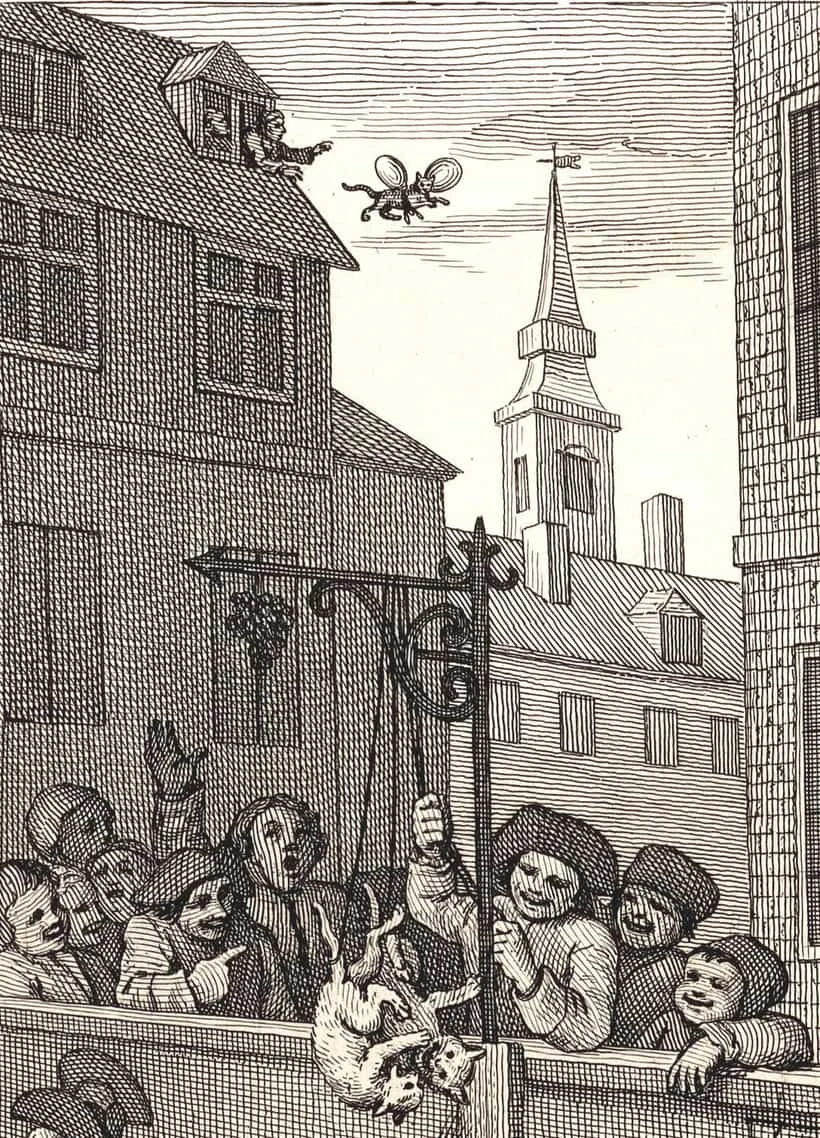
Cruelty to cats. Engraving by William Hogarth from "The Four Stages of Cruelty" series. 1751
European history contains many such incidents, which are easily confused with real trials. In both cases, the animal met a public end staged for an audience. The difference lies in whether there was a genuine legal process—an investigation, trial, and formal sentence—or if the execution was merely a symbolic medium used to send a message.
The Purpose Behind the Spectacle
Animal trials were a mirror of the medieval mind, reflecting a deep-seated fear of an unpredictable world. In an era plagued by epidemics, crop failures, and sudden death, the law offered people a comforting illusion of order—something to hold onto just to keep living. 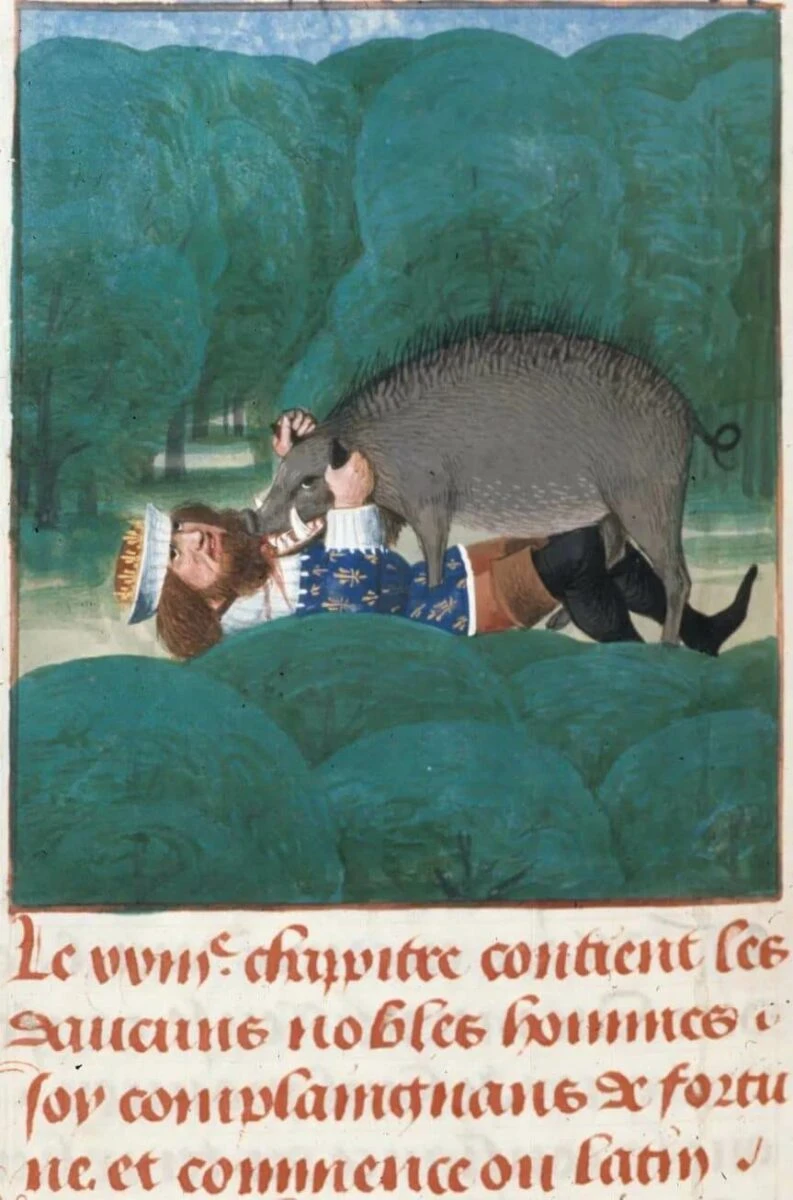
A book miniature depicting a king killed by a wild boar. 15th century
If an offender could be brought before a tribunal, tried, and sentenced, it meant that chaos could be controlled and the world still operated under intelligible rules. It was a form of collective therapy—a way for society to manage its dread of the unknown by channeling it through the familiar ritual of justice.
What do you think: were these trials a sign of barbarism, or a clumsy yet strangely pragmatic attempt to cope with the fear of an unpredictable world?