Spiders inside your home in September: Two of them aren't even spiders (13 photos)
In September, your apartment suddenly comes to life. A large brown spider darts across the floor, a many-legged creature scurries across the bathroom, and a daddy longlegs hangs near the ceiling. 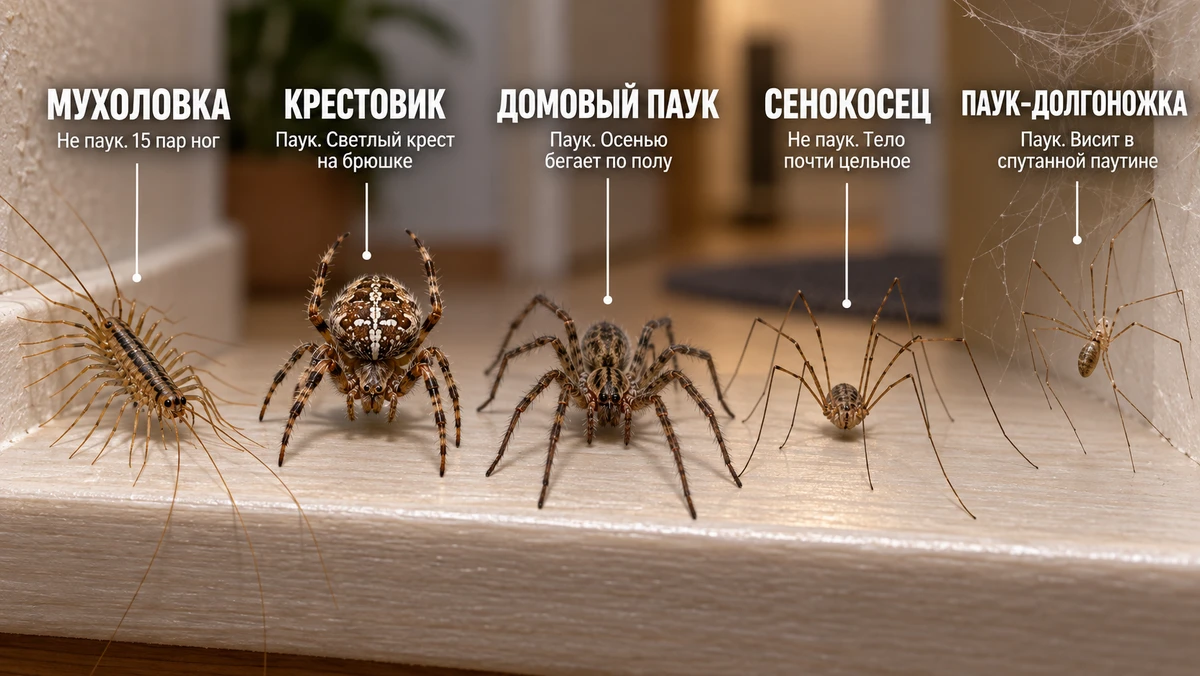
Two creatures on this list aren't actually spiders at all, but people confuse them with spiders all the time.
It might seem like the cooling weather is driving all these creepy-crawlies inside to get warm. In reality, many house spiders have been living right alongside us all summer. It's just that by autumn, mature males venture out in search of mates, making them far more visible.
That giant spider you spotted in September might have spent the entire summer hiding behind your wardrobe.
So it's not an uninvited guest—it's just a roommate you forgot to add to the group chat.
Let's take a look at who's showing up indoors this autumn, whether these visitors are dangerous, and which ones you should gently relocate outside.
House Centipede in the Apartment: Is It Dangerous?
The most terrifying-looking creature on this list isn't even a spider.
The house centipede (Scutigera coleoptrata) is a myriapod. Adult centipedes have 15 pairs of legs—that's 30 legs in total. Hatchlings start out with just four pairs, growing new ones each time they molt. 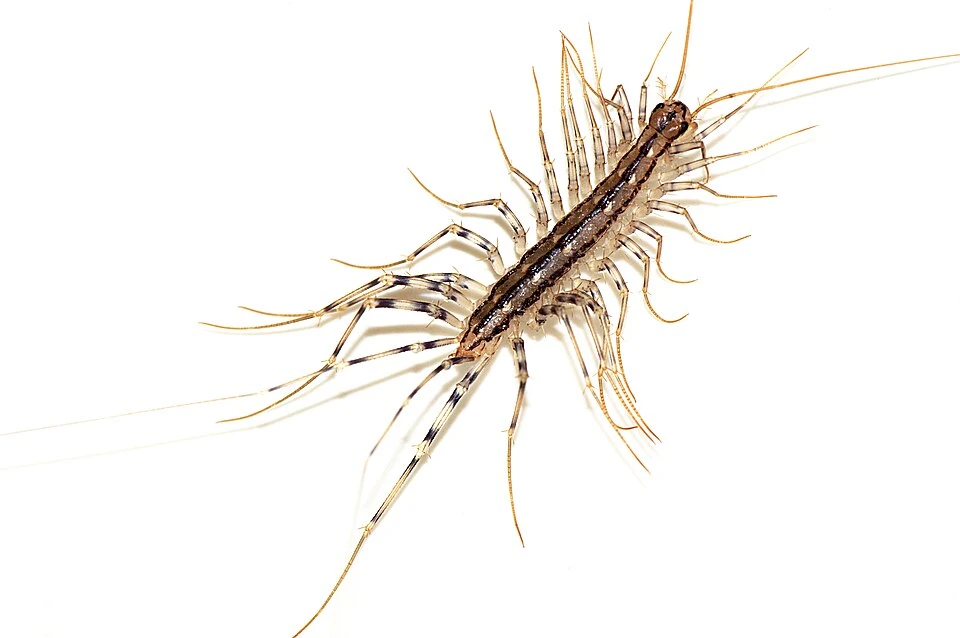
House centipedes can run at speeds of nearly half a meter per second.
By the time you've even grabbed a slipper, it's already moved into the next zip code.
In 2024, zoologists documented another impressive trick: house centipedes can completely regenerate a lost leg in a single molt cycle. For terrestrial arthropods, such rapid repair is remarkably rare. 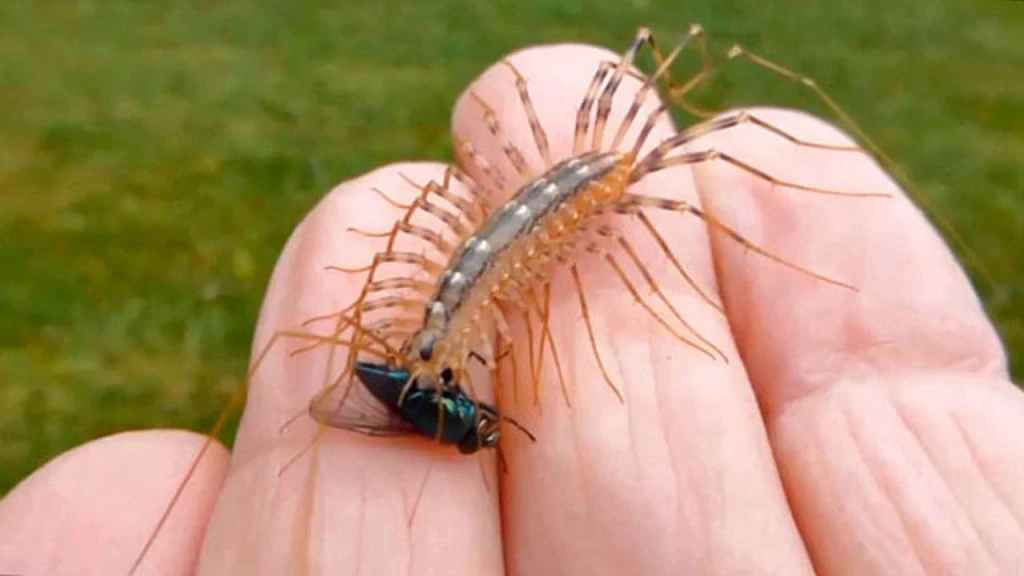
They also live surprisingly long lives. It can take up to three years for a house centipede to reach adulthood, and some individuals live as long as seven years.
A large centipede could have been living alongside you unnoticed for years.
Congratulations: you have a roommate who doesn't pay rent, but at least eats your cockroaches.
Indoors, house centipedes prefer dark, damp areas like basements, bathrooms, and spaces around pipes. They don't ruin furniture, clothes, or food. Instead, they hunt flies, silverfish, moths, small cockroaches, spiders, and other household pests. 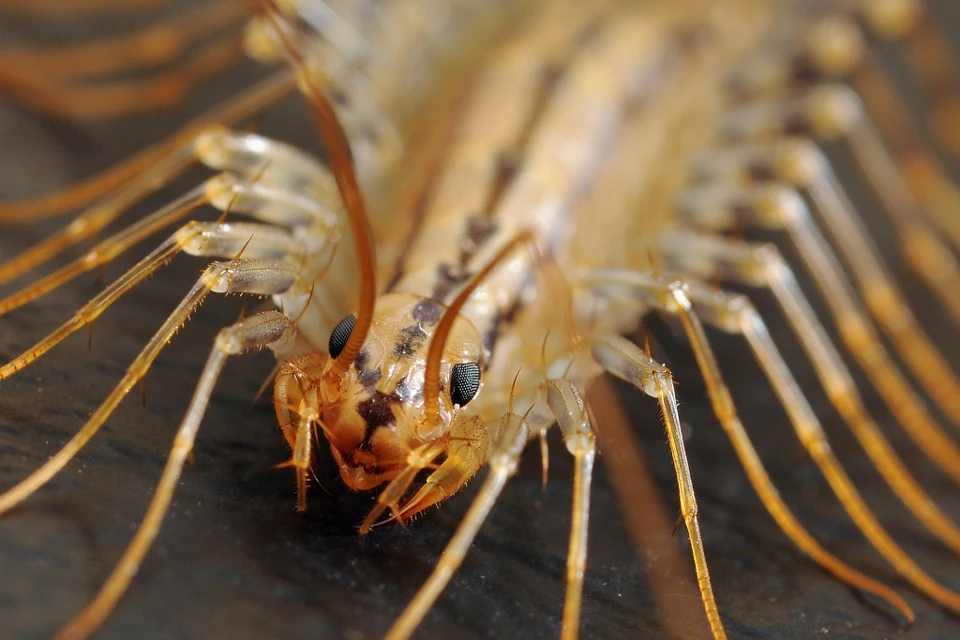
Can a house centipede bite a human? Technically, yes—their venomous claws can pierce human skin. In practice, however, this rarely happens, usually only if the creature is trapped or squeezed. The bite typically results in nothing worse than mild local pain, redness, and slight swelling.
While house centipedes look like pure nightmares, they act as effective pest controllers, gobbling up all the unwanted bugs in your home. Being relatively large, they are essentially at the top of the indoor food chain among tiny pests.
Cross Orb-Weaver in the Apartment: Is It Dangerous?
A circular, wheel-shaped web, a bulbous abdomen, and a distinctive white cross on its back—this is almost certainly the cross orb-weaver spider (Araneus diadematus). 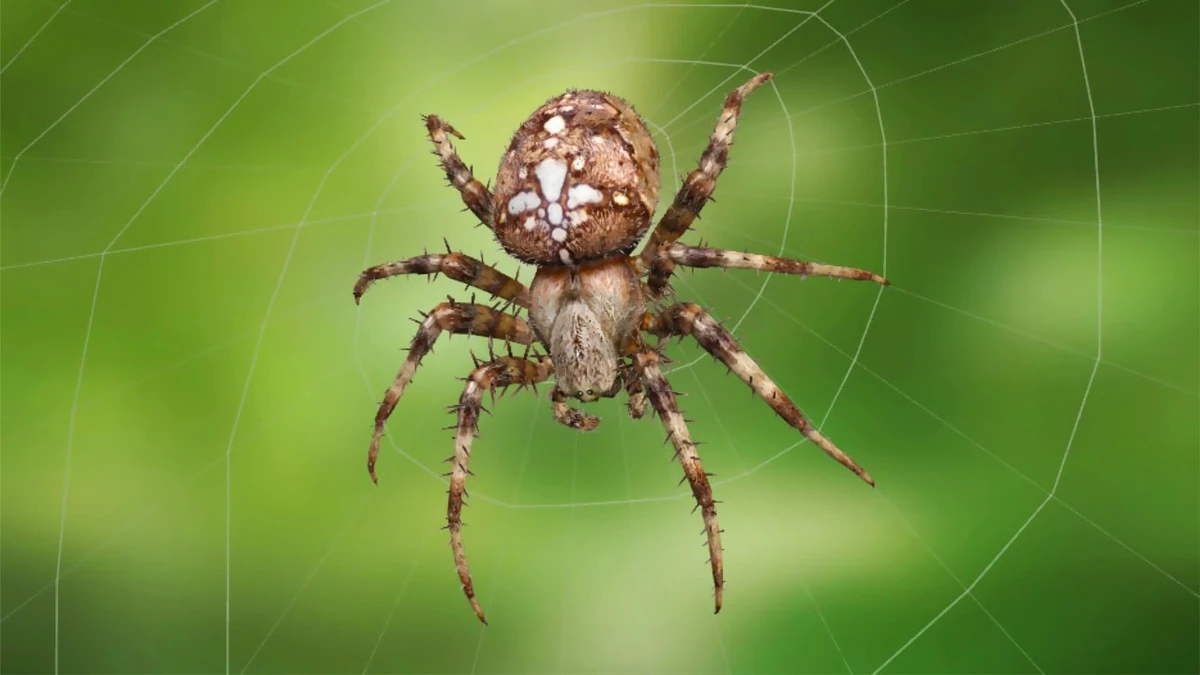
Its natural habitat includes gardens, bushes, fences, window exteriors, and balconies. In late summer and autumn, adult females grow quite large and their webs become especially conspicuous. That's why finding an orb-weaver inside is usually an accidental stray rather than a permanent resident.
Indoors, an orb-weaver eats small insects caught in its trap. Its typical prey includes flies, mosquitoes, gnats, fruit flies, and small moths; near windows, winged aphids, tiny beetles, and other random fliers might also get trapped.
It poses no real danger to humans. Like almost all spiders, the orb-weaver is venomous—otherwise it couldn't immobilize its prey. But it won't attack humans and will bite only in self-defense, such as if squished against skin. The bite usually causes little more than mild local pain and redness.
Come autumn, the female lays her eggs inside a protective silk cocoon. The adult generation dies off when the cold weather sets in, while the next generation overwinters inside the eggs. 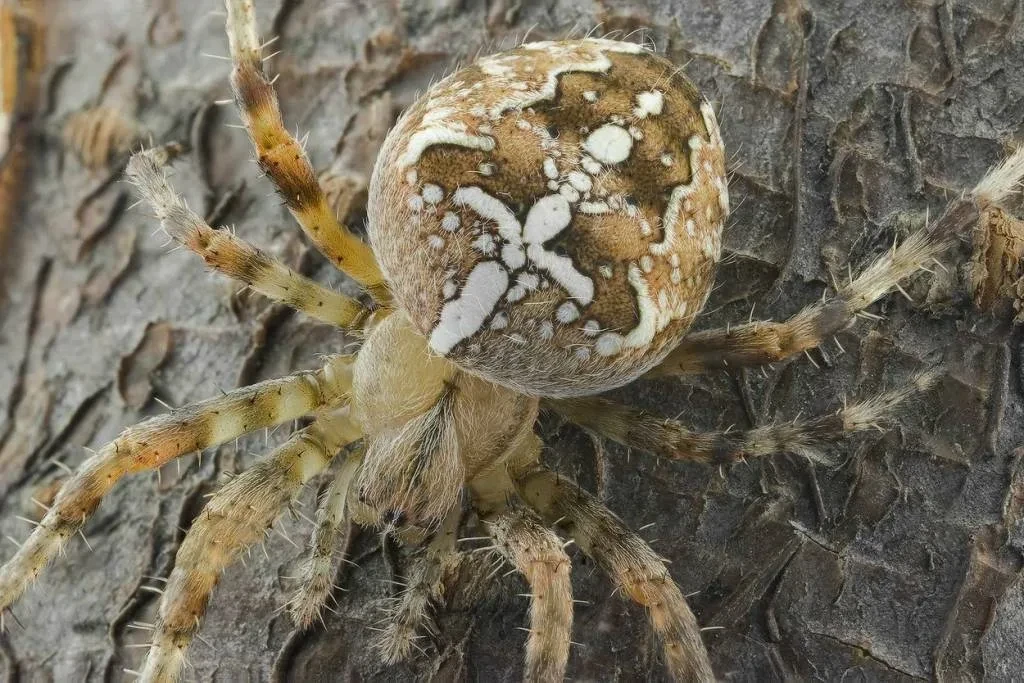
Fun fact: cross orb-weavers have even been to space. In 1973, two females named Arabella and Anita participated in a student experiment aboard the US space station Skylab. Zero gravity initially hindered their web-spinning, but after a few days, the spiders adapted. The astronauts even went off-script and fed them bits of filet mignon.
If an orb-weaver winds up in your home, it's best to gently relocate it outside to a bush, fence, or sheltered balcony where it can spin a proper web.
House Spiders: Why Are They Dashing Across the Floor?
That brownish-gray spider sprinting across your floor in September often belongs to the Tegenaria or Eratigena genus. These are commonly known as house spiders. 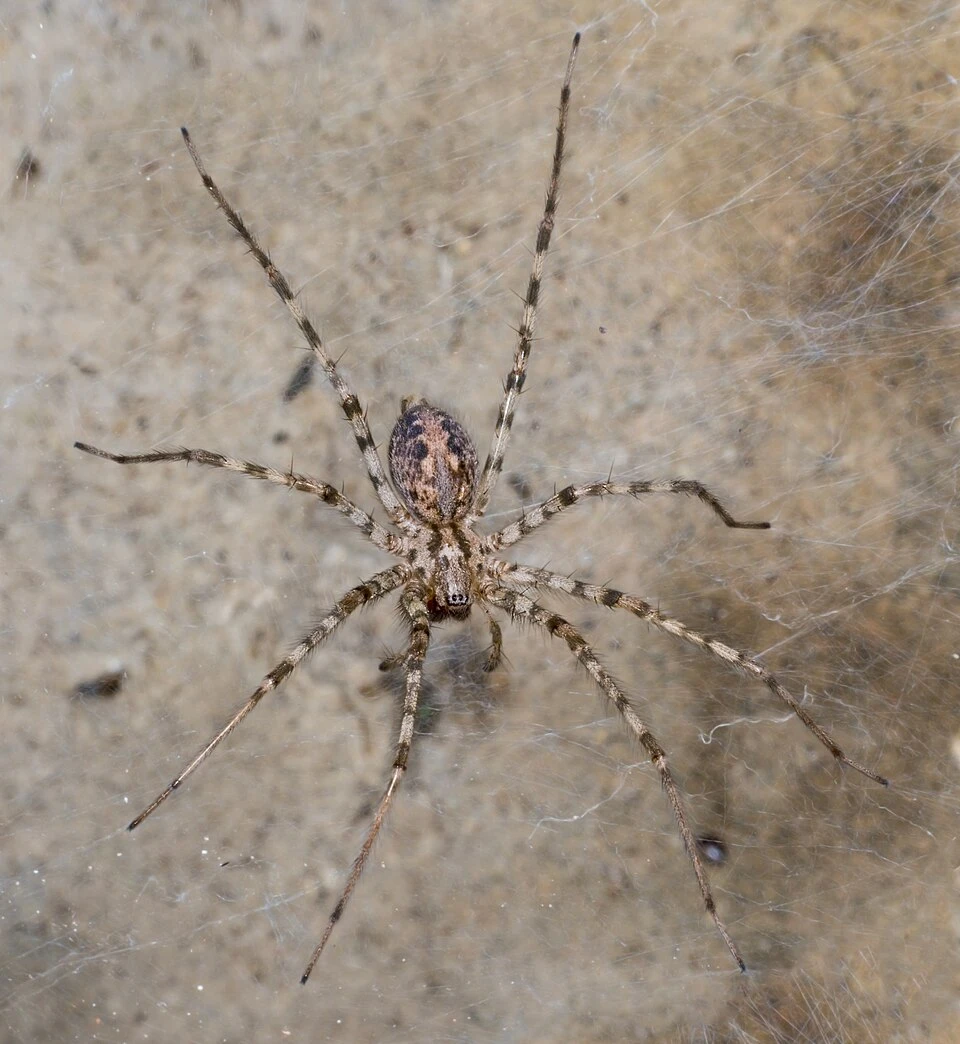
Instead of weaving symmetrical wheel-shaped webs like orb-weavers, they build flat, sheet-like webs complete with a funnel- or tube-shaped retreat in the corner. Females can hide in these funnels virtually unnoticed for months.
In autumn, males leave their shelters to hunt for females—hence their midnight sprints across bedrooms and living rooms.
House spiders feed on flies, gnats, moths, and other small prey. They have zero interest in human food. Seeing multiple spiders indoors is a sign that there's plenty of food and cozy hideouts, not that your apartment is dirty. 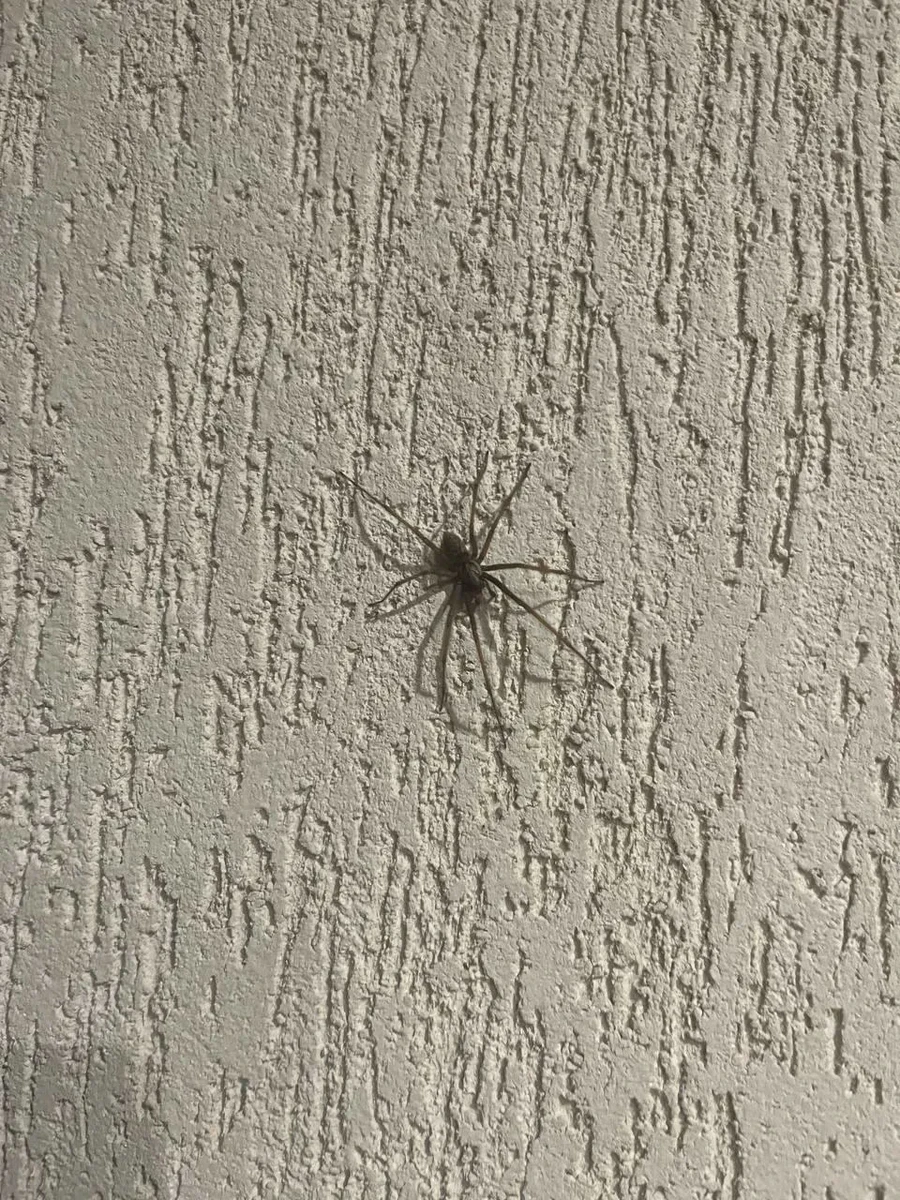
Ever spotted a spider trapped in the bathtub? Popular myth claims they crawl up through the drain, but that's not true. Spiders wander in from above, fall into the tub at night, or climb down looking for water, only to find themselves unable to scale the smooth porcelain walls.
Harvestmen (Daddy Longlegs): Are They Actually Spiders?
Here, the confusion starts with the name itself. 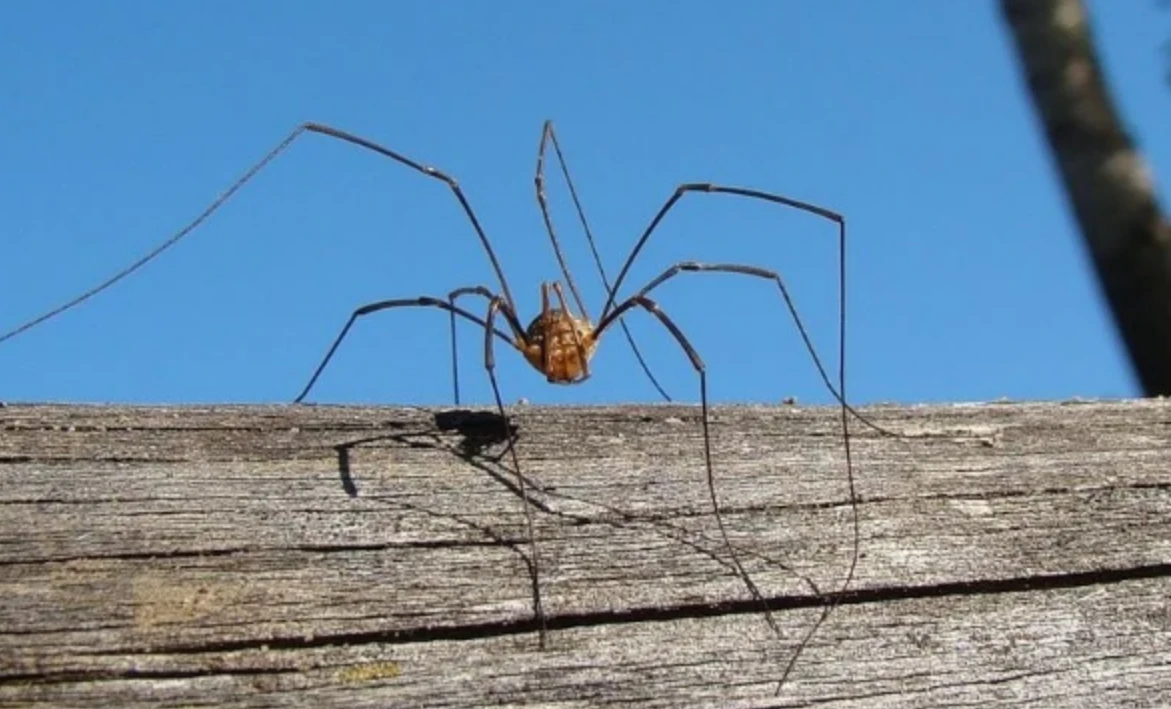
A true harvestman (often called a daddy longlegs) is an arachnid, but not a spider. Its body is a single fused oval shape without a thin waist. It lacks silk glands and venom glands entirely. It doesn't build webs and poses no harm to humans.
Harvestmen feed on small invertebrates, decaying matter, fungi, and plant matter.
They also have a dramatic survival technique: if a predator grabs a harvestman by the leg, it can detach the limb and escape. Adults cannot regrow lost legs. 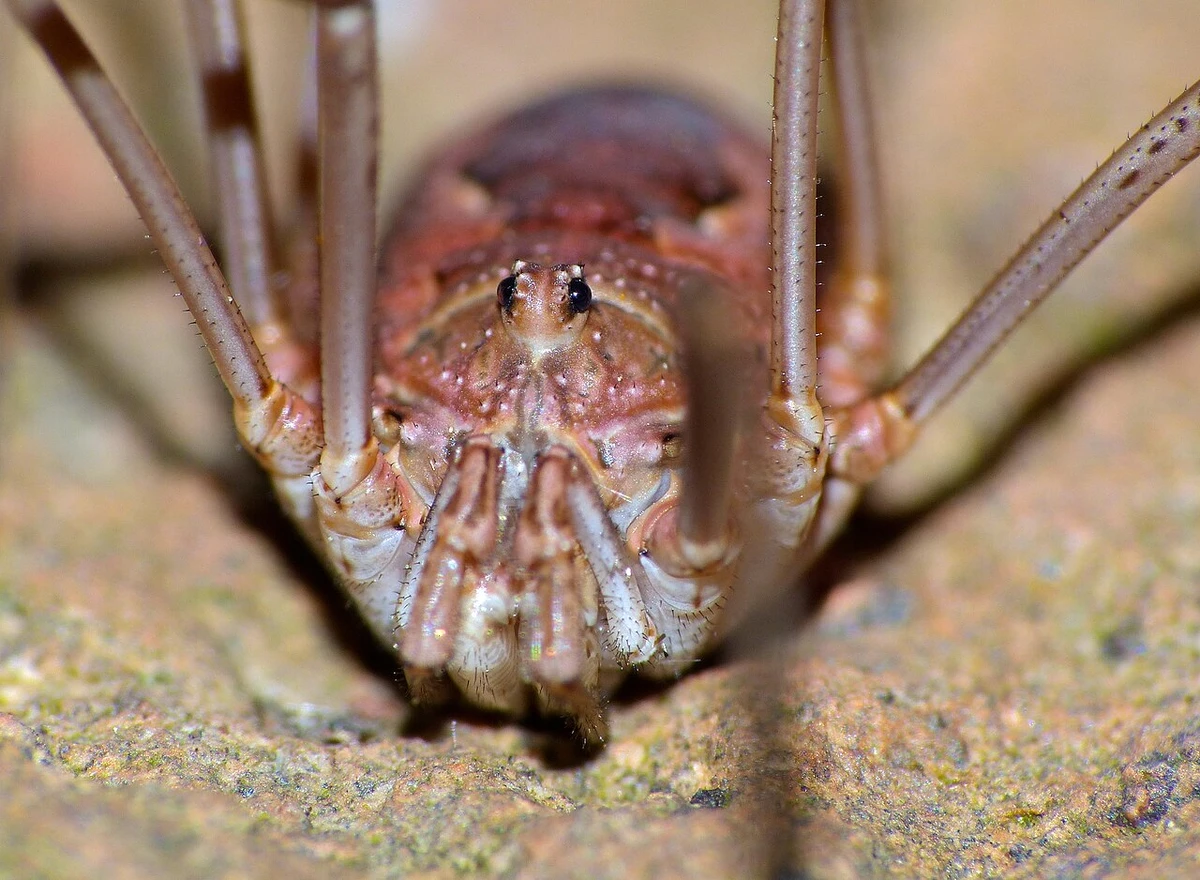
However, that spindly, long-legged creature hanging for months in a tangled web near your ceiling is likely not a harvestman at all.
It is a true spider.
Cellar Spiders Hanging from the Ceiling 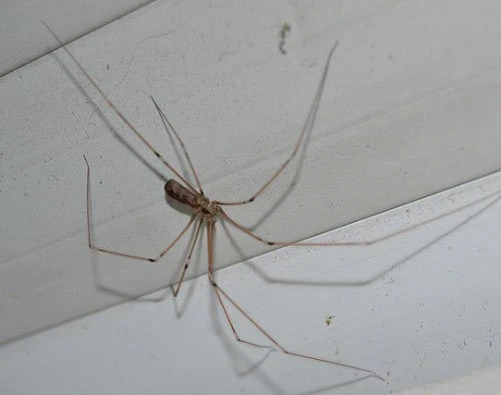
Pholcus phalangioides is commonly known as the cellar spider or skull spider (and also confusingly referred to as a daddy longlegs). You can easily distinguish it from a true harvestman: if there's a messy, delicate web present, you're almost certainly looking at a Pholcus.
If disturbed, it vibrates so rapidly in its web that it turns into a complete blur.
Despite its delicate appearance, this fragile-looking neighbor is a formidable spider hunter. A Pholcus can invade another spider's web and pluck the threads to mimic trapped prey. When the host comes out to inspect its catch, it becomes the victim instead. 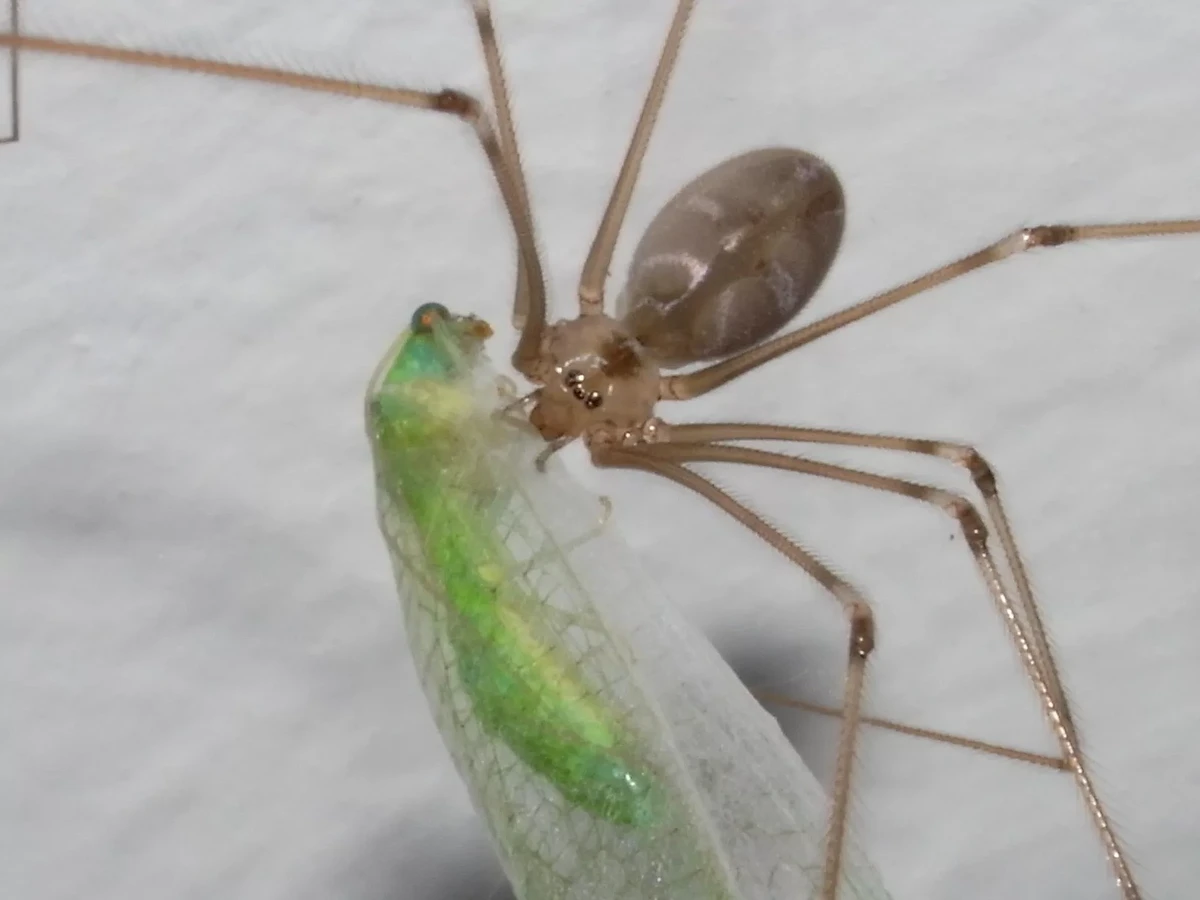
The cellar spider then stays at a safe distance, wrapping its opponent in silk until it stops struggling.
So the frailest-looking creature in this article is actually fully capable of devouring a giant house spider. For humans, however, it is entirely harmless.
Why Spiders Show Up Indoors in Autumn
For large house spiders, late summer and early autumn mark the mating season. Females typically stay near their webs, while mature males go wandering in search of a partner. 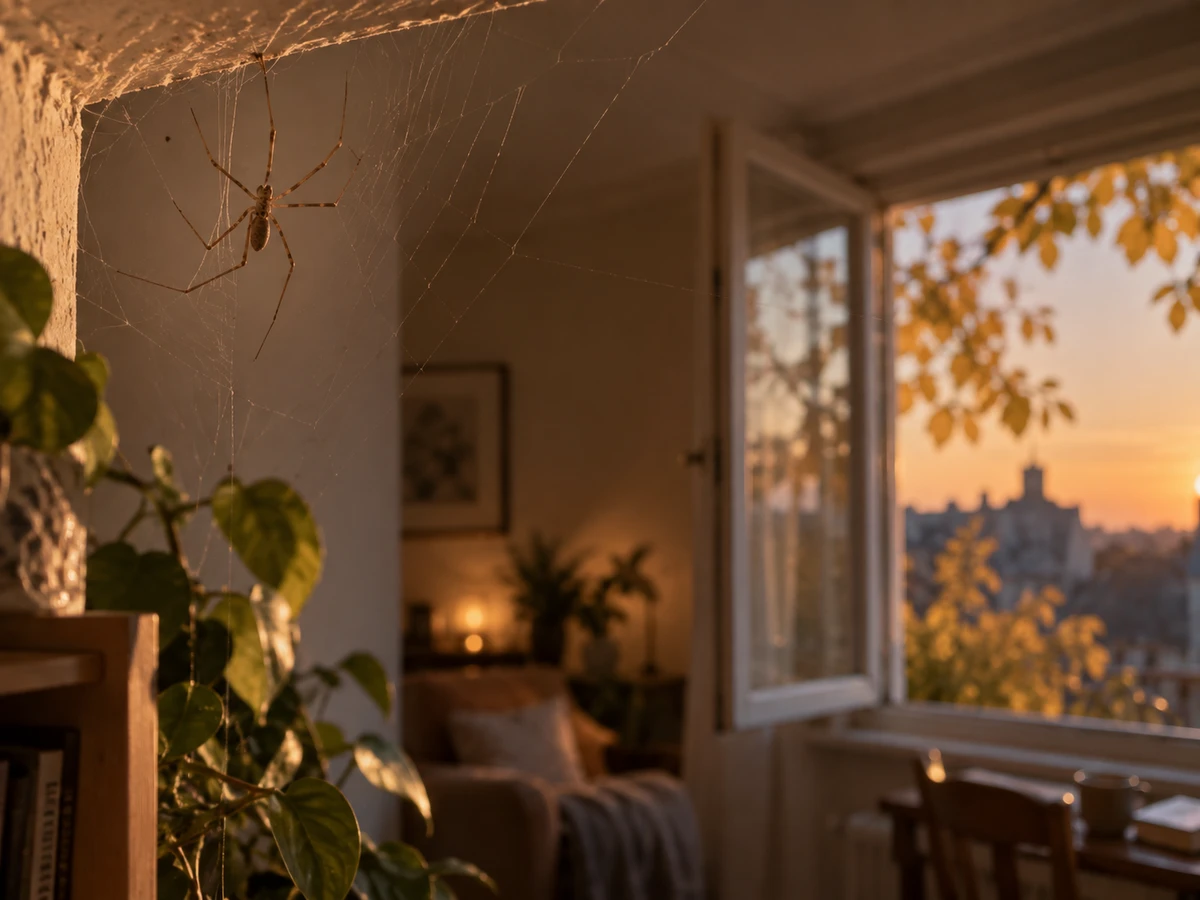
That big spider crossing your living room floor in the evening didn't necessarily wander in from outside—there's a good chance it spent the whole summer hiding behind your wardrobe.
This is supported by a UK study analyzing nearly 10,000 sightings of house spiders in the Tegenaria and Eratigena genera: 82% of sexed specimens were male, with sightings peaking in mid-September.
There are, of course, outdoor visitors as well. In autumn, large orb-weavers are especially visible near windows, balconies, and doorways. Other arthropods seek damp shelters or simply follow their prey indoors.
So "spider season" isn't a sudden population explosion inside your home—it's simply that more of them are out and about.