September Marks the Collapse of Wasp Society: They Go on a Bender and Turn Aggressive! (7 Photos)
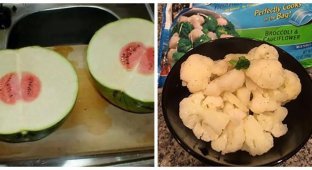
Every year around late August, wasps start acting completely unhinged. They get brazen—buzzing into your glass of juice, landing on the edge of your plate, diving onto a slice of watermelon. If you try to shoo one away, it just keeps coming back to ruin your afternoon! But in reality, the wasp has literally nothing left to do. It just wants a taste of something sweet and a peaceful departure from this world. 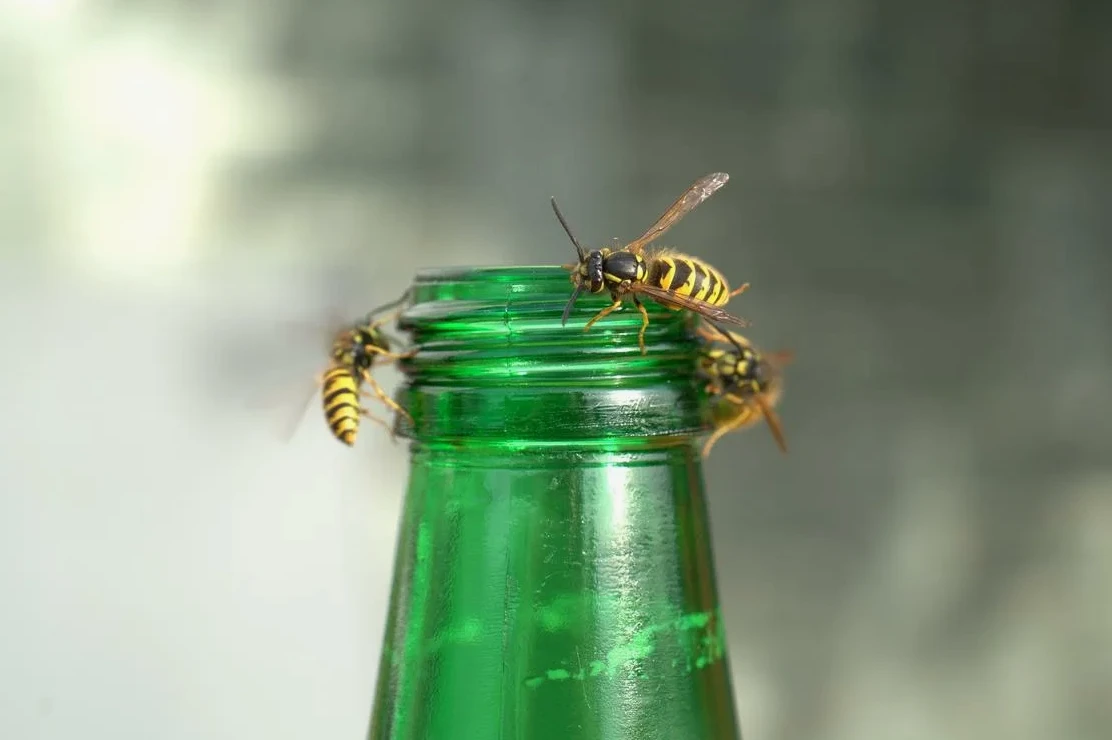
A final brew for one last stretch!
Wasps aren't actually becoming evil. By late summer, the society they’ve lived in their whole short lives completely collapses, leaving them unemployed, hungry, and forgotten. What we mistake for aggression is really just midlife restlessness! Adult wasps are predators. They hunt flies, caterpillars, and aphids, scavenge on carrion, dismember prey with their powerful jaws, and carry it back to the nest. You’d naturally assume they eat what they catch. Well, they don't. An adult wasp physically cannot consume solid meat. That classic "wasp waist"—the tiny pinch between thorax and abdomen—is so narrow that only liquids can pass through. Everything a wasp kills and brings home isn't for itself. It's baby food. 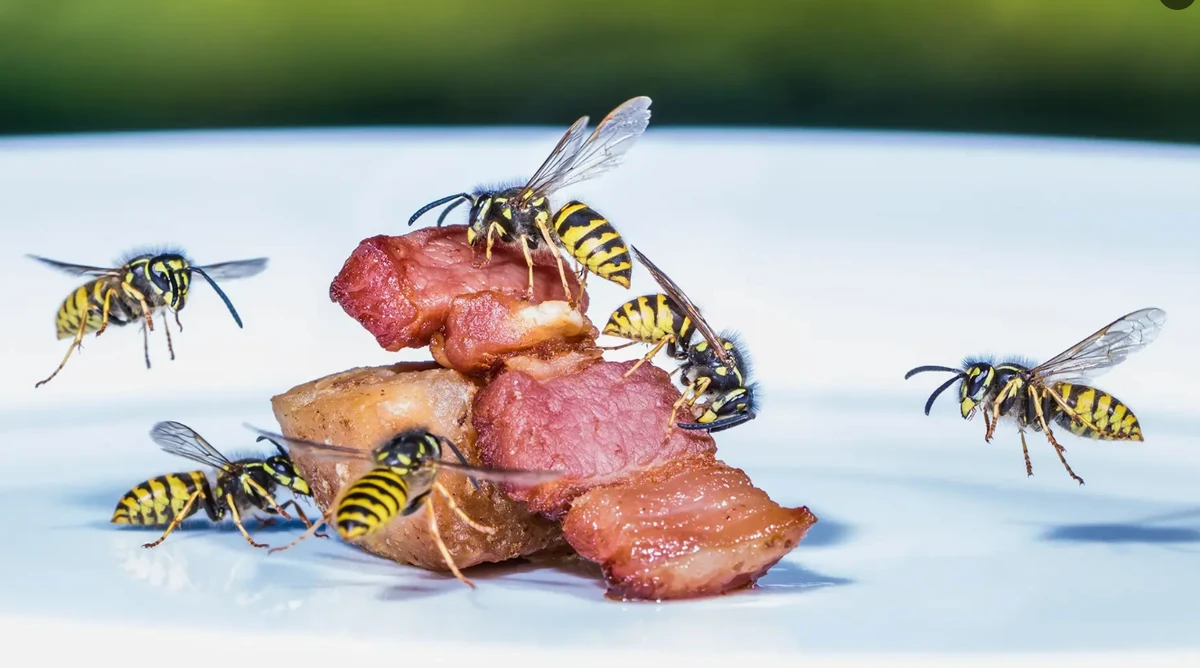
Only the best for the kids.
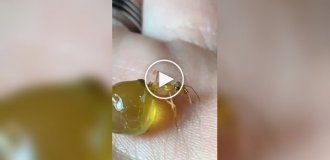
The wasp chews its catch into a pulp and feeds it to the larvae living in the nest's paper cells. That's where the bargain happens—the whole reason this system exists. In return for food, the larva secretes a tiny droplet of sweet fluid packed with sugars and amino acids, which the worker wasp licks up. This is its paycheck. Work a shift, feed a baby, get a shot of syrup. 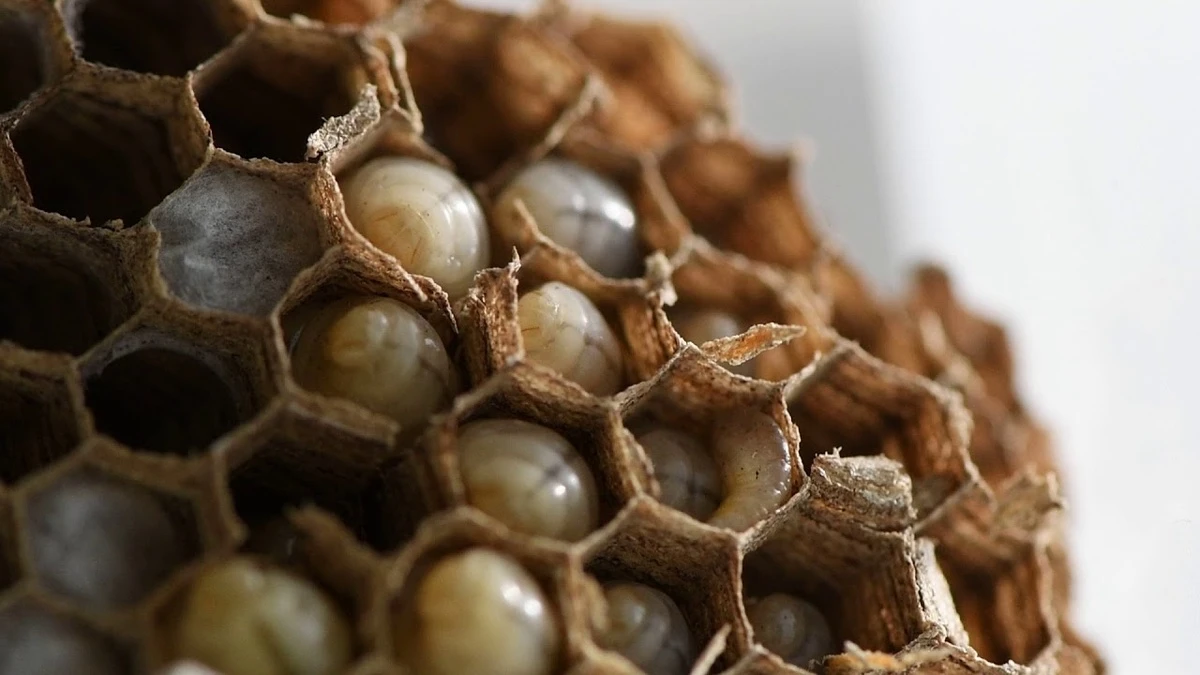
The weirdest boss ever—and it's only a couple of days old.
A wasp nest isn't like a honeybee hive with stored supplies. There isn't a single drop of honey, and nothing is saved for later. It's a closed economy where adult food is produced by children in exact proportion to the food adults bring them. As long as there are larvae in the nest, everyone stays fed, everyone has a job, and everyone is needed. The catch is that this economy only lasts until August. Toward late summer, the queen makes her final operational move: she rears winged males and young queens—the "reproductives" the nest worked all season to support. They fly out, mate in mid-air, and the males die shortly after. The fertilized young females crawl off to find cracks and crevices to hibernate. Next spring, these princesses will start the cycle all over again—building the first cells and feeding the first workers entirely on their own, just like their mother did. After that, the old queen simply stops laying eggs. Her job is complete. 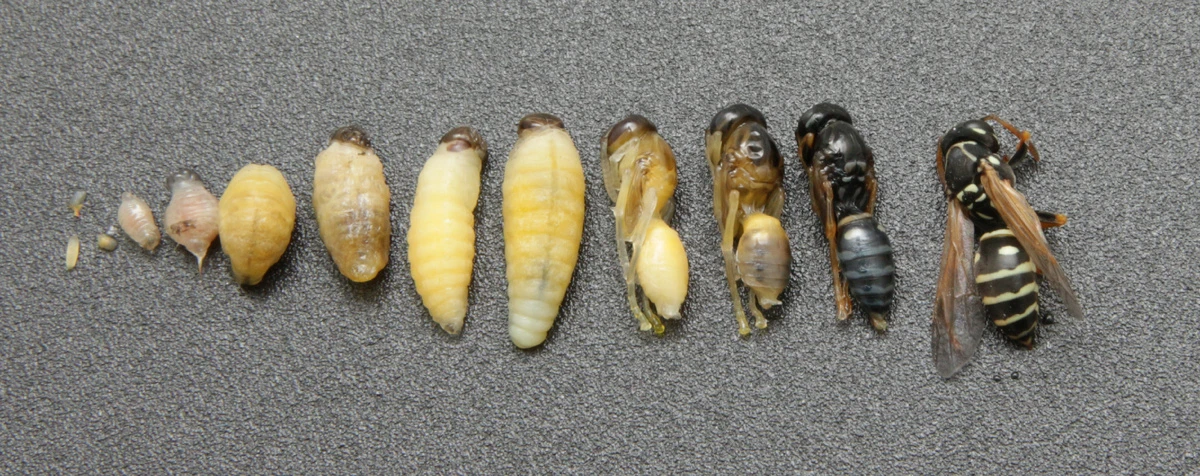
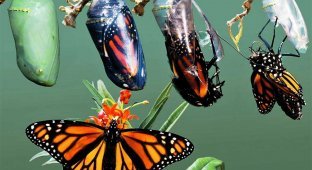
Life cycle of a standard wasp.
And that’s when everything falls apart. The last larvae pupate, and the cells empty out. Several hundred adult worker wasps are left in the nest with zero babies left to feed. That means no work—their entire profession has vanished. It also means no food—their only steady source of sugar has dried up. Imagine showing up to work one morning only to find the factory shuttered, management gone, and the cafeteria where you got paid completely demolished overnight. That’s essentially what happens in a wasp nest during the second half of August. The difference is that a wasp can’t resign and move to another town. All it can do is fly out and search for sugar wherever it can find it. 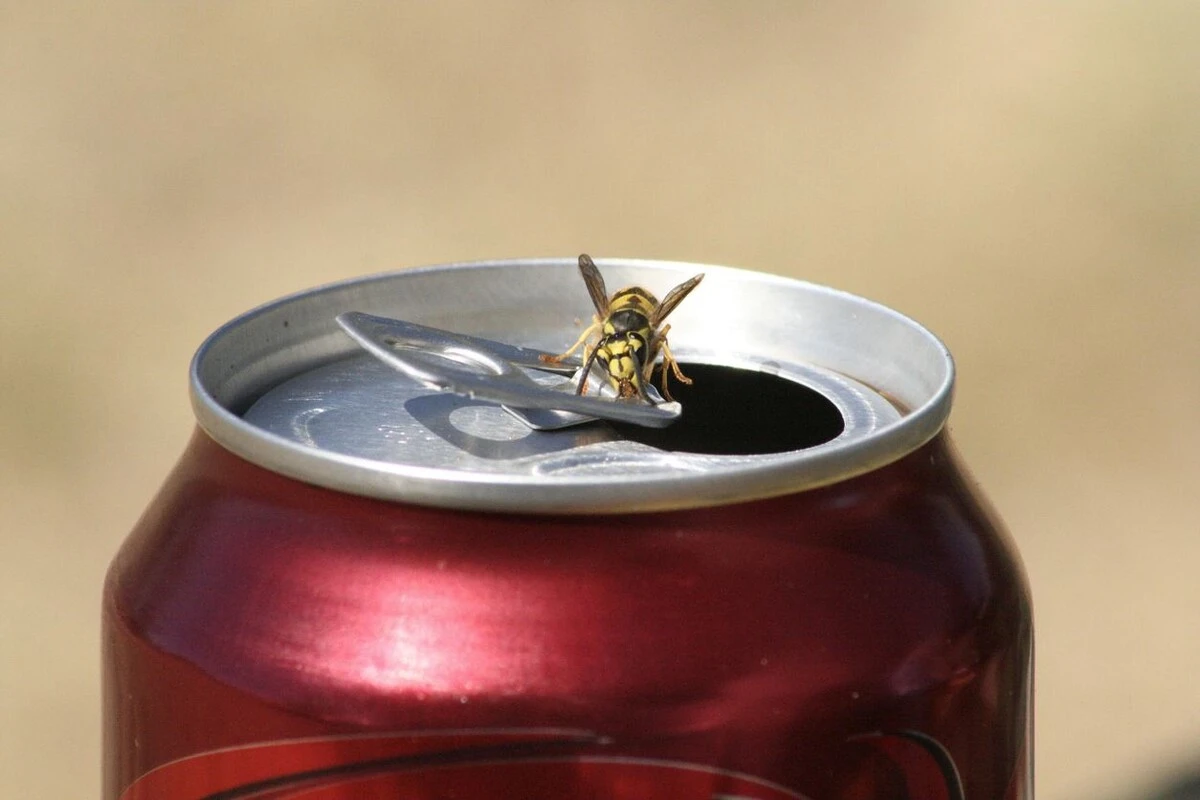
Mmm... Forbidden delicacies!
Luckily for them, September is the sweetest time of year. Everything is ripe! Unpicked apples coat the ground under every orchard tree. Plums drop and burst open. Grapes split open. It all ferments into a sweet, boozy feast! Sugar turns to alcohol, releasing aromas that draw in these out-of-work insects. Naturally, the unemployed wasp heads straight for it—and while it's at it, it goes for your drink, your homemade jam, watermelon rinds in the trash, a drop of sweet wine left in a glass, your plate, and you. There's no malice here. It’s just a creature that spent its whole life getting fed automatically, suddenly forced to hunt for food on its own during the final weeks of its life... 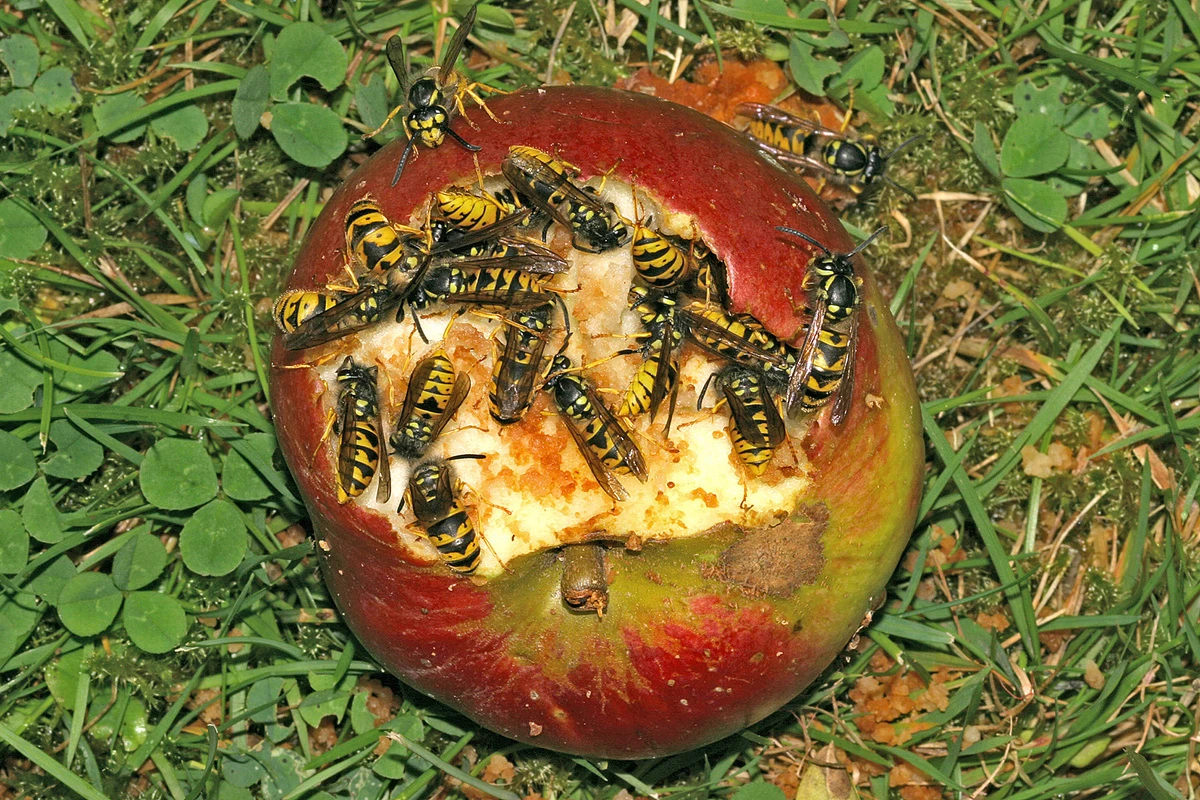
Not unemployed—just a freelance CONSUMER.
Of course, wasps don't get drunk like humans do—it's just a continuous, pleasurable binge out of pure boredom. The extra sugar boosts their energy, making them appear angrier and more aggressive, but that's all. By October, it all comes to an end. Every worker wasp dies—from hunger, cold, or old age. The queen who founded the nest in the spring dies too. The nest itself—which grew all summer into a ball as big as a soccer ball—is never reused. Next spring, a new queen won't move in; she’ll build a new one from scratch. The paper sphere just hangs in the attic, harmless enough to remove with your bare hands by winter. 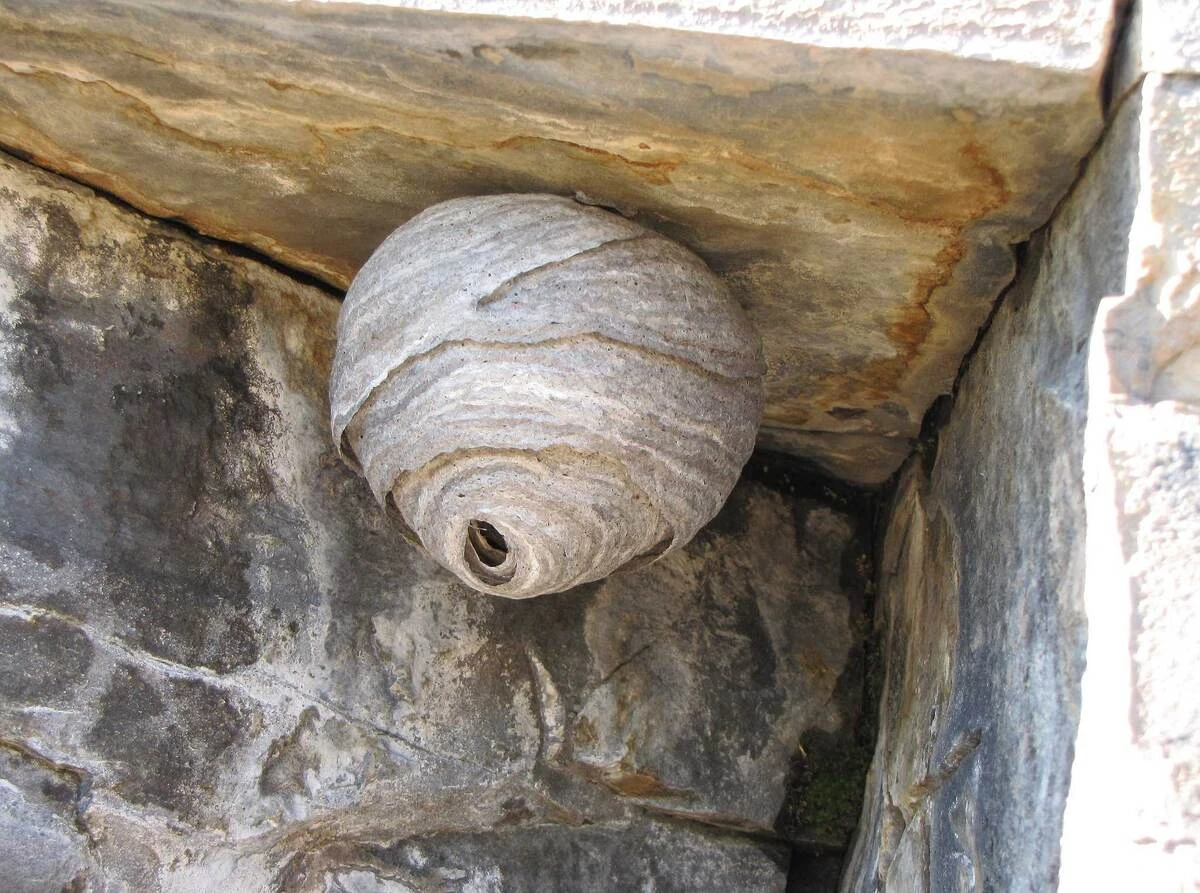
Ah, the memories! Our attic in the countryside was full of these when I was a kid.
Out of the entire colony, only the young, fertilized females tucked away under tree bark or inside wall cracks will survive the winter. So when a wasp lands on your porch in September and stubbornly tries to crawl into your cup, you're not dealing with a brazen pest. You're looking at the last citizen of a fallen empire with just two weeks left to live, simply trying to meet the end of the world with a bit of a buzz.