Snake Charmers, Penny Gingerbread, and Painted Horses: Life at Paris Funfairs in 1935 (34 photos)
Captured through the lens of Gaston Paris, the 1935 Paris funfairs offer a striking photo essay from an era often overlooked. As a photojournalist and the sole staff photographer for *VU* magazine, Paris photographed the crowds, performers, carousels, and carnival barkers with an intimacy rarely seen in documentary photography. These 34 images from the Roger-Viollet archives reveal the everyday spirit of working-class Paris in the 1930s. Here is the full story—from the photographer’s life to the thousand-year history of the Foire du Trône. 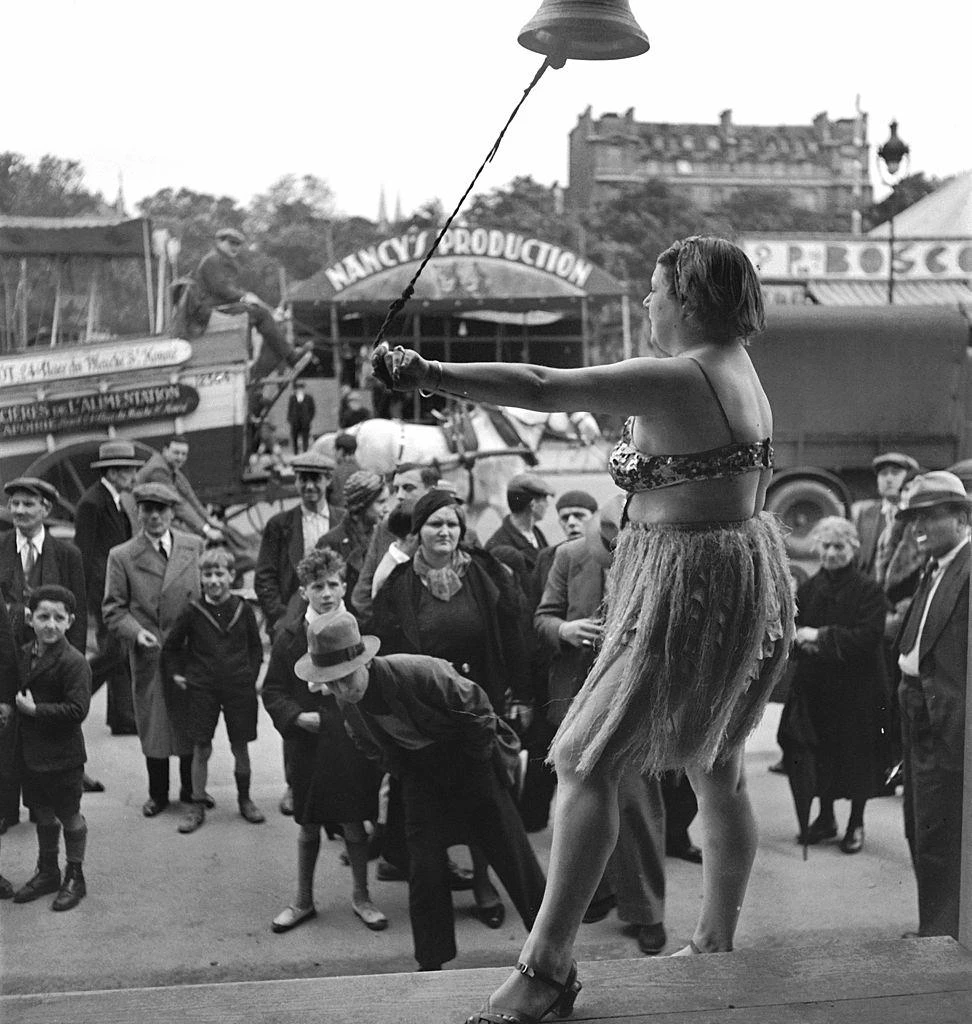
In 1935, photographer Gaston Paris wandered Paris’s fairgrounds with his camera. He photographed carnival performers, toy vendors, carousels, lottery booths, elegantly dressed city women, and children munching on gingerbread. This wasn't the postcard Paris—it was real, working-class, and bustling.
The Unsung Master of the Lens
Born in 1903, Gaston Paris passed away in Paris in 1964. Although a top-tier professional, he never made it into the photography history books—his name was largely forgotten. That changed in the 1990s when photo historian Michel Frizot bought a box of anonymous 1930s prints at a flea market. The composition, lighting, and precision all pointed to a master at work. So began the revival of Gaston Paris. 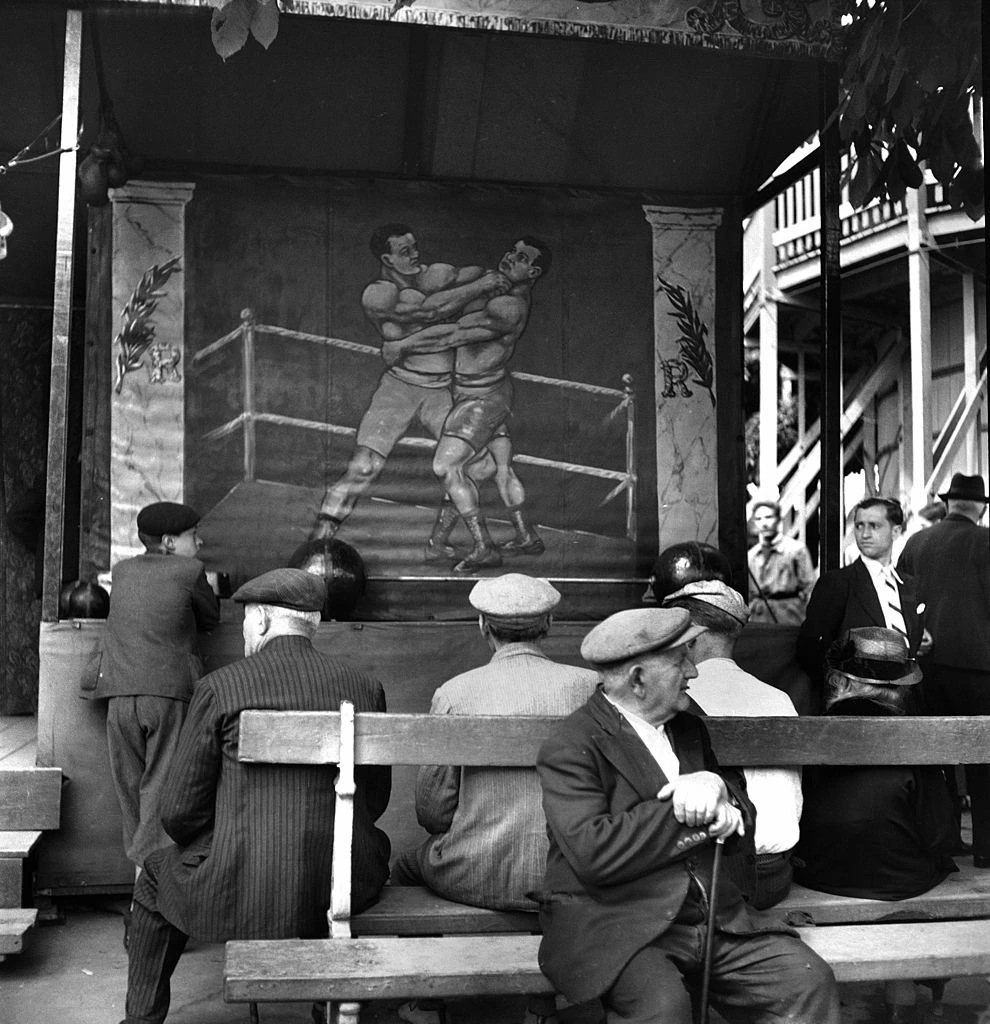
Fairground folk—a world unto itself with its own rules and hierarchy
Throughout the 1930s, he served as the only staff photographer for the weekly magazine *VU*. Founded in 1928 by Lucien Vogel, *VU* was a forerunner to *Life* and *Paris Match*—the first publication to put photography at the heart of its editorial vision. Within its pages, Paris worked alongside André Kertész, Robert Capa, Man Ray, and Germaine Krull, publishing over 1,300 photographs during his tenure. 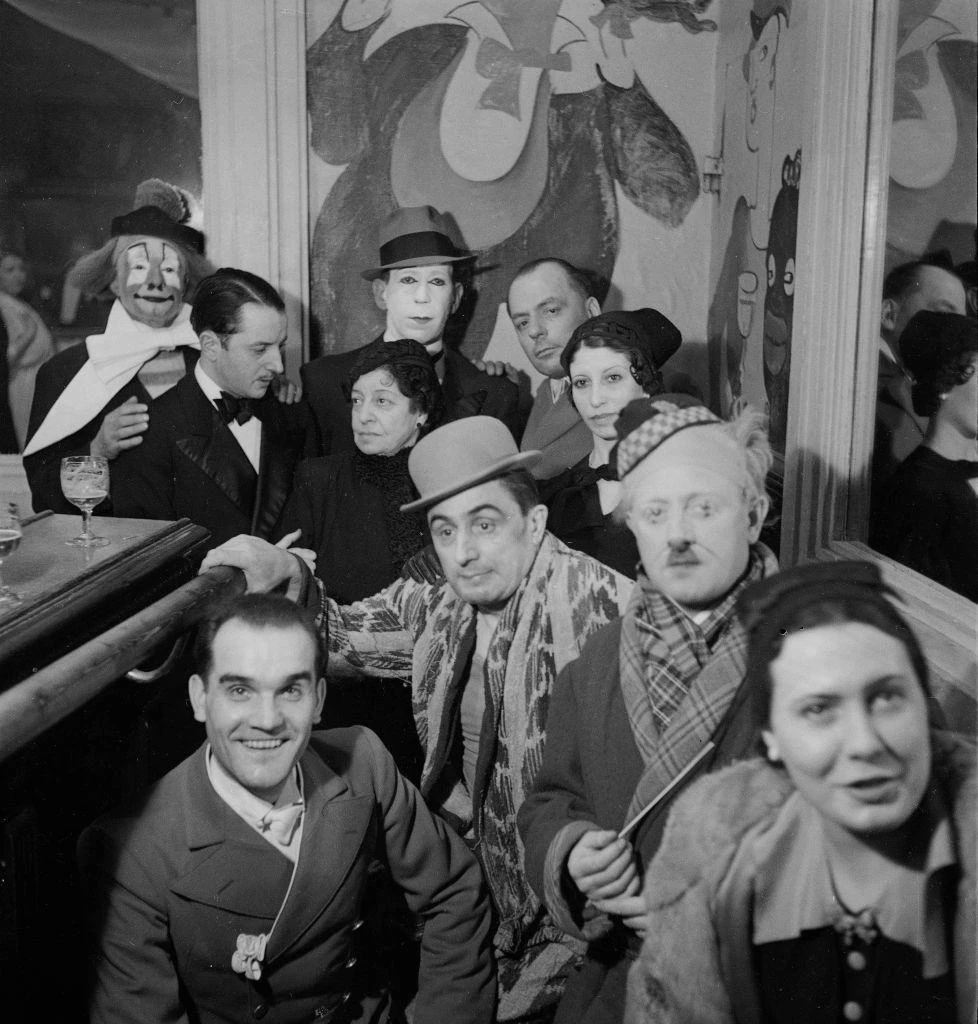
Fairgoers lost in the moment—each reacting in their own unique way
At the same time, Paris shot avant-garde series for the crime magazine *Détective*. Staged scenes featuring gangsters and femmes fatales offered a taste of surrealism fitting for the era. After his death, the Roger-Viollet agency purchased his entire archive—nearly 15,000 negatives—which are housed today at the Historical Library of the City of Paris.
Funfairs as a Refuge in Hard Times
The 1930s were a grim decade as the Great Depression took its toll on Europe. Unemployment mounted, and working-class families had little to spare. In this context, the funfair was more than mere entertainment—it was almost a social lifeline. For just a few centimes, people could forget the crisis for an hour: ride a carousel, try their luck at a raffle, or marvel at a snake charmer.
Funfairs were held both in central Paris and its suburbs. The grandest was the *Foire du Trône*—the "Fair of the Throne"—whose origins trace back to 957 AD, when the monks of Saint-Antoine Abbey distributed spiced honey gingerbread to the hungry. By 1935, the fair took over the Place du Trône (now Place de la Nation), drawing hundreds of thousands of Parisians every spring. 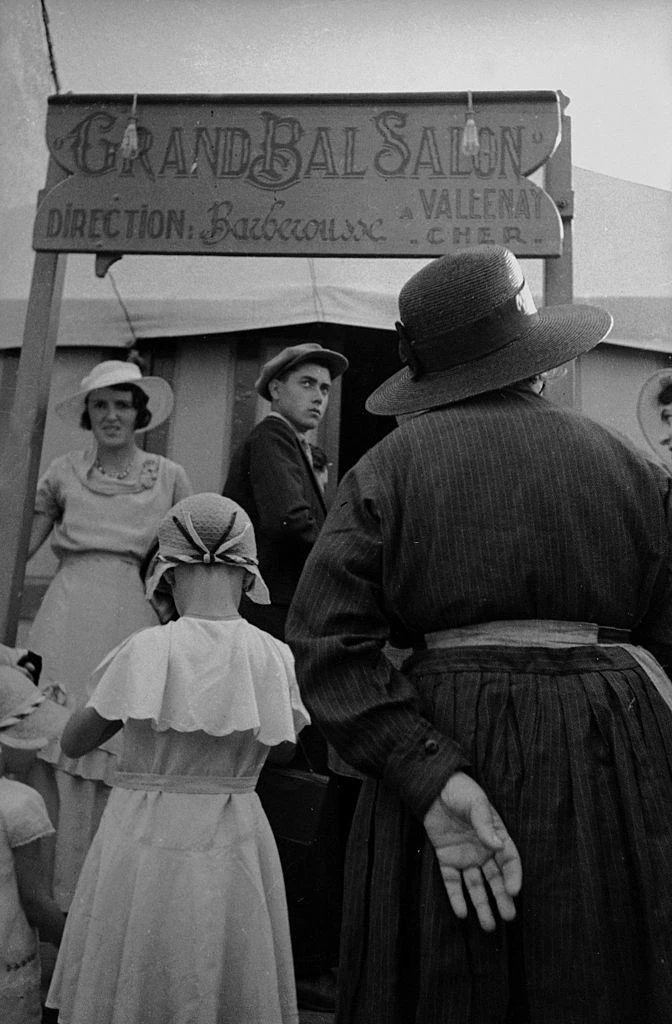
The fairground crowd: workers, women in their Sunday best, and children 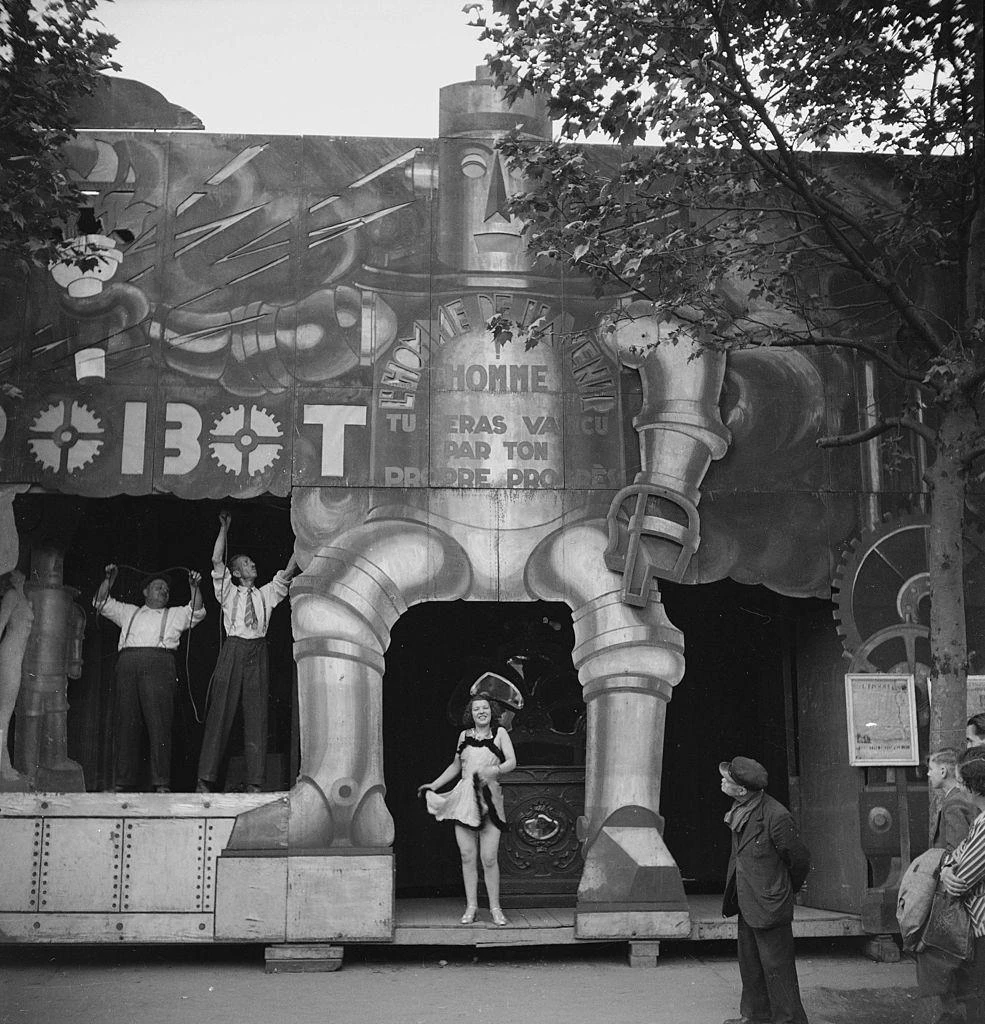
Gaston Paris didn't see the crowd as an anonymous mass, but as a collection of distinct faces
Women feature prominently in Paris’s photographs. They arrived dressed up for a day out, ran game stalls, performed on stage, and sold tickets. He photographed them without sentimentality, capturing them with the same candid directness as everyone else. 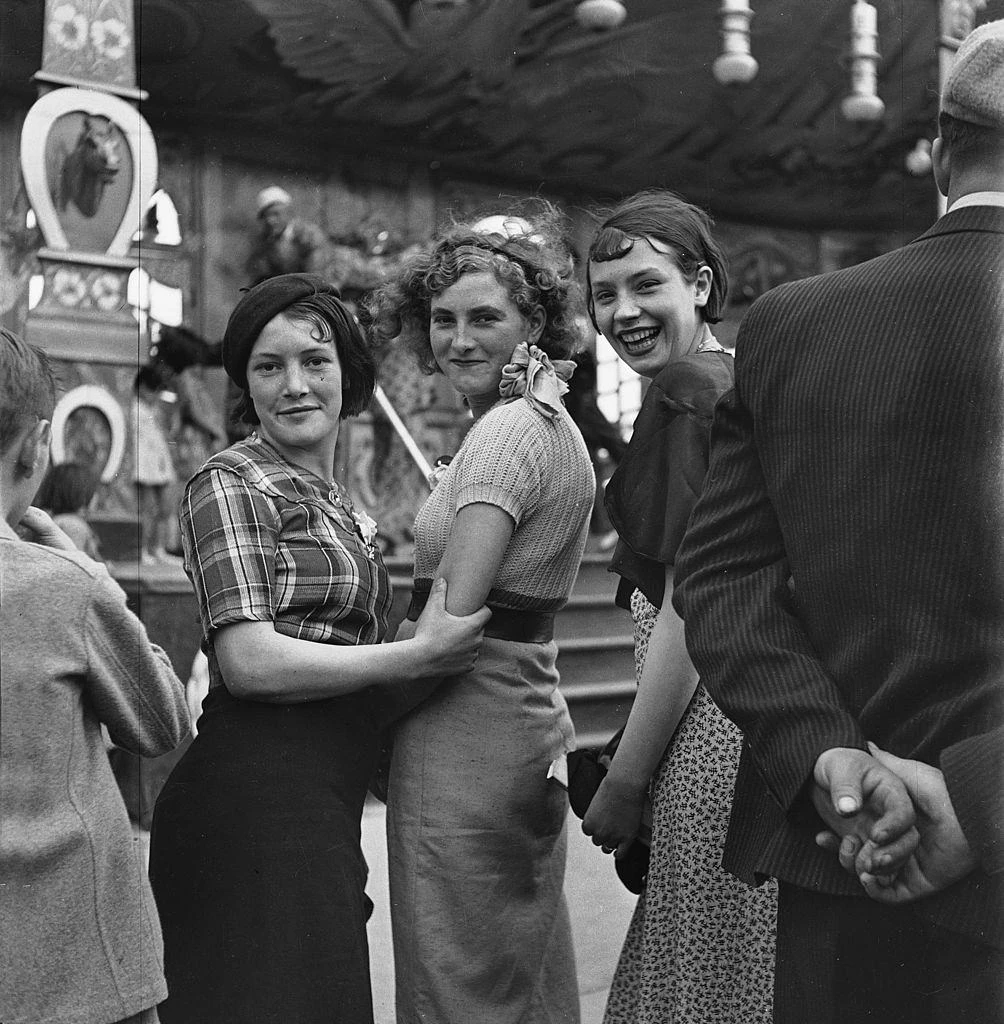
Women of the fair: spectators, performers, and workers sharing a single frame
Rides, Games, and Raffles
Queues formed around bottle-ring toss stalls and game booths. The rules were simple: toss a ring, win a prize. Lottery tents lured passersby with loud shouting and vibrant posters. For a few small coins, anyone could feel lucky for a moment.
Smaller fairs took place not only in Paris, but across rural villages as well. Though simpler and humbler, they boasted the same attractions and festive spirit. 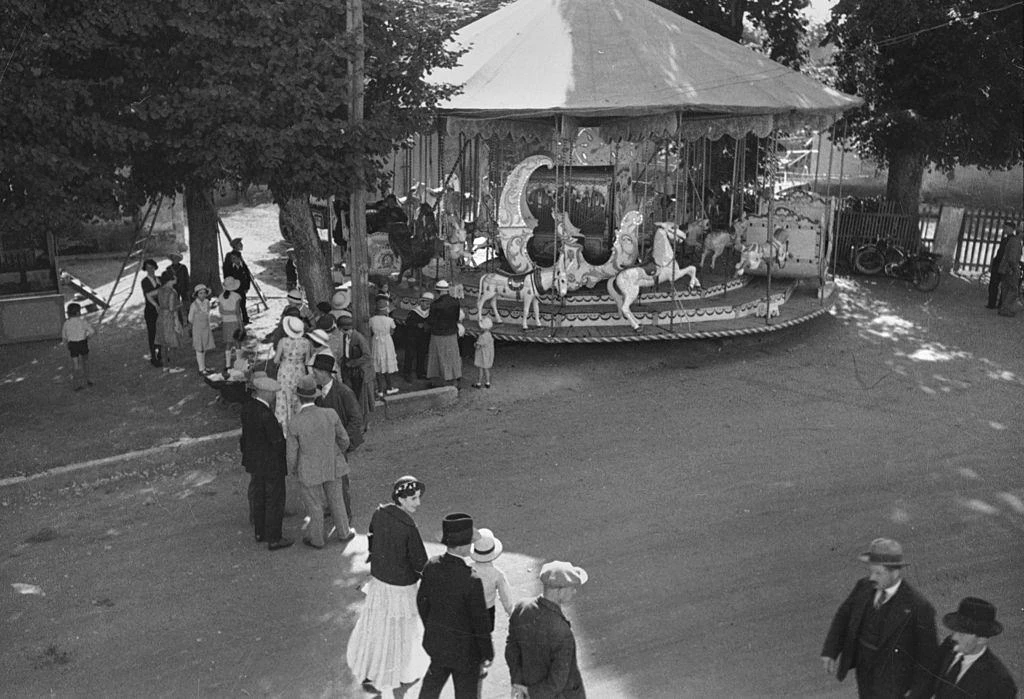
Village fairs were more modest, yet every bit as lively 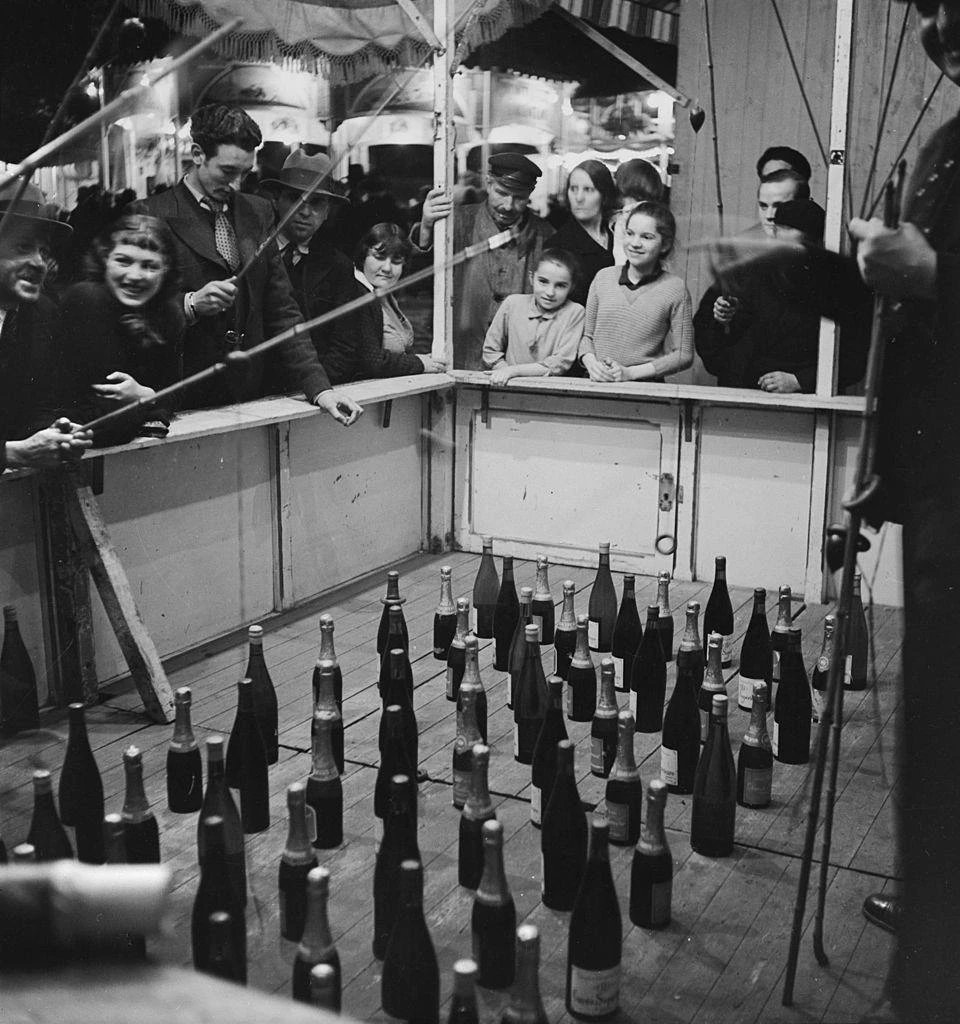
The bottle-ring toss—one of the fairground's classic attractions 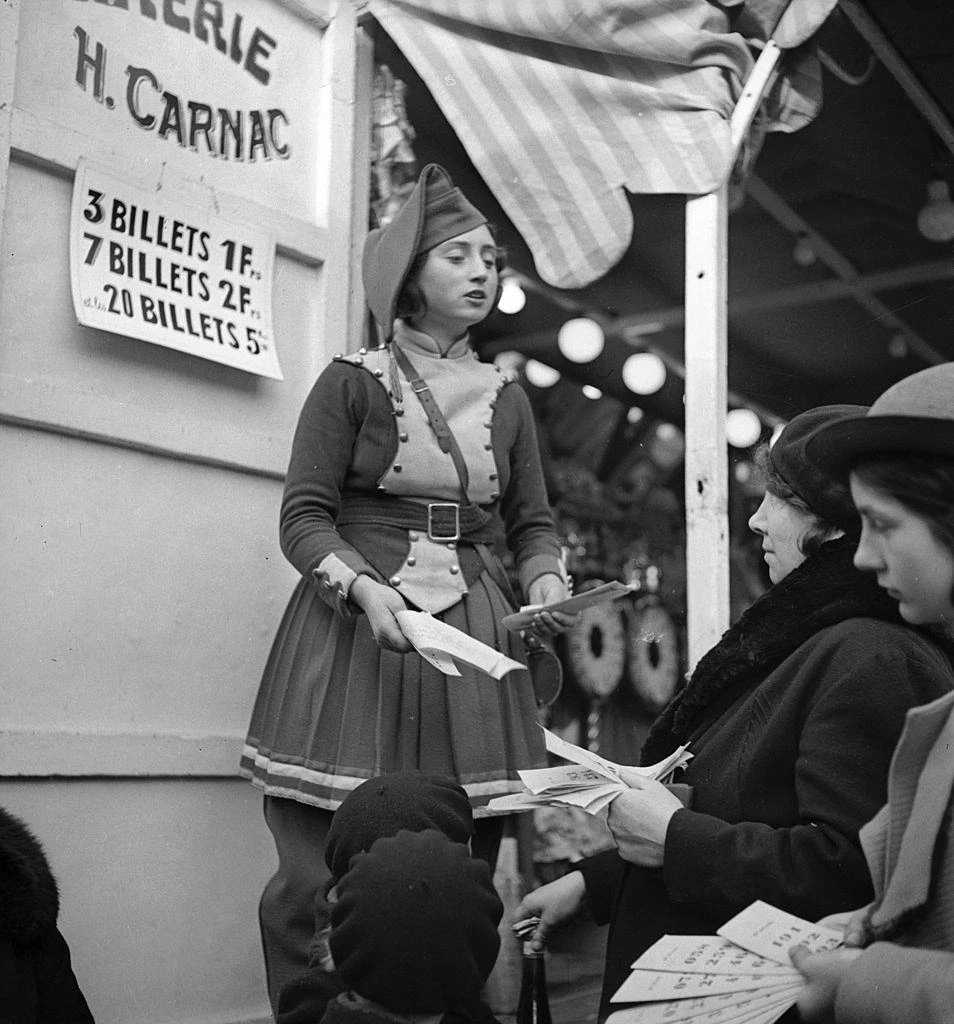
A raffle booth: hawking a crowd was an art form in itself
No respectable fair was complete without a carousel. Intricately painted horses, mechanical seats, and lively music drew constant crowds. Operators maintained their rides with obvious pride—they were both a livelihood and a labor of love. 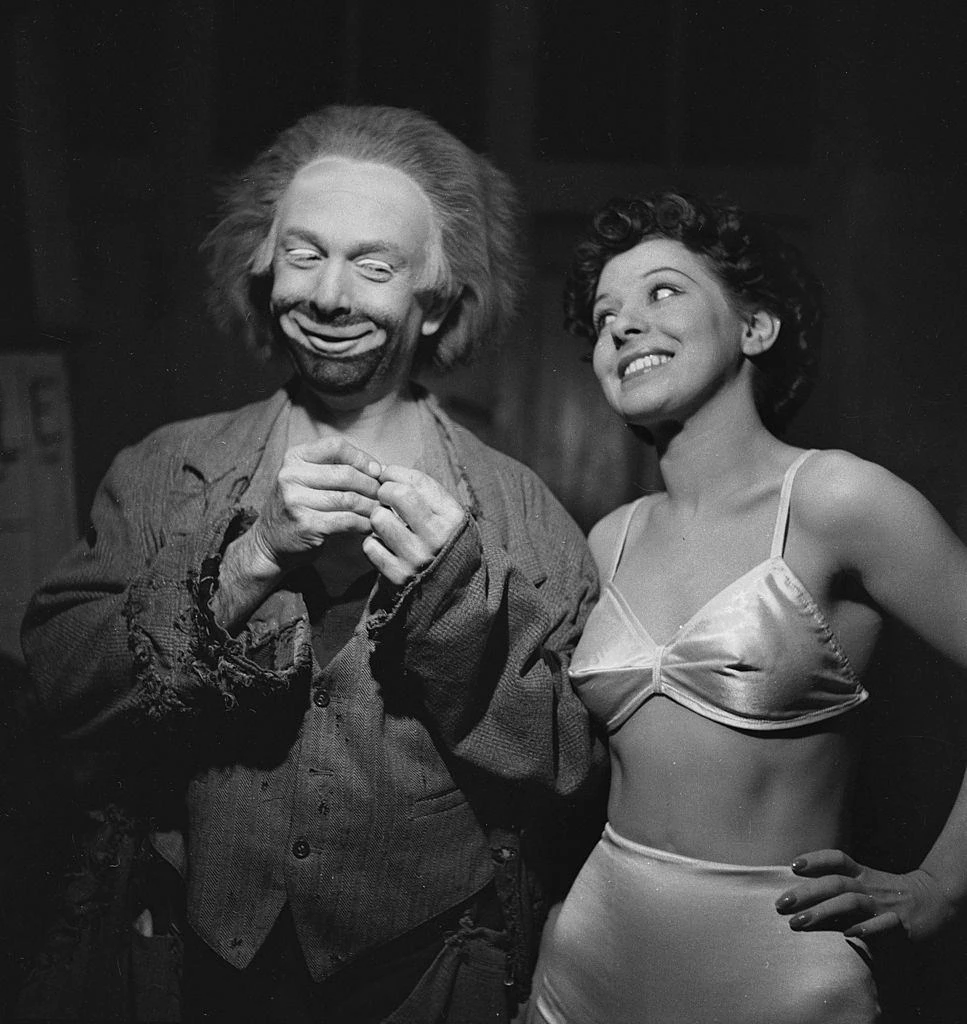
A cramped dressing room—a stark contrast to the glamour of the fairground stage 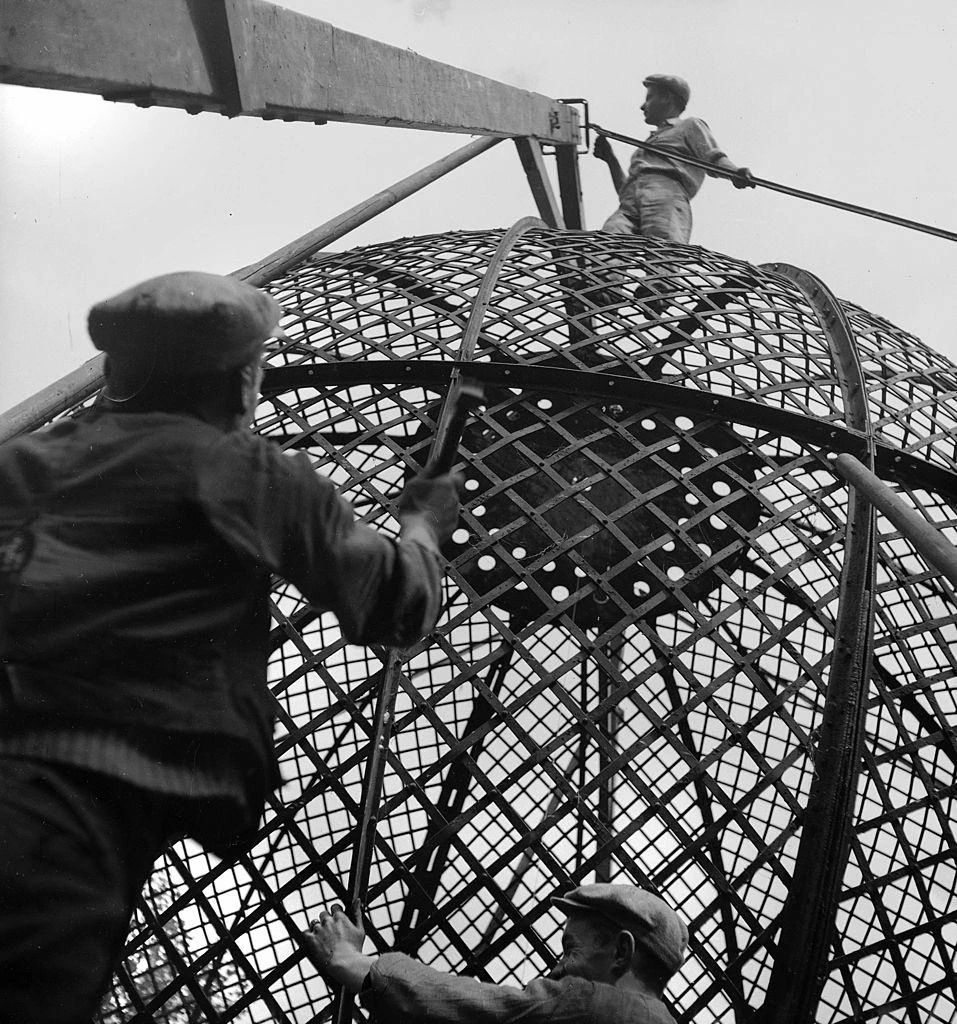
Life behind the scenes: preparing between showtimes 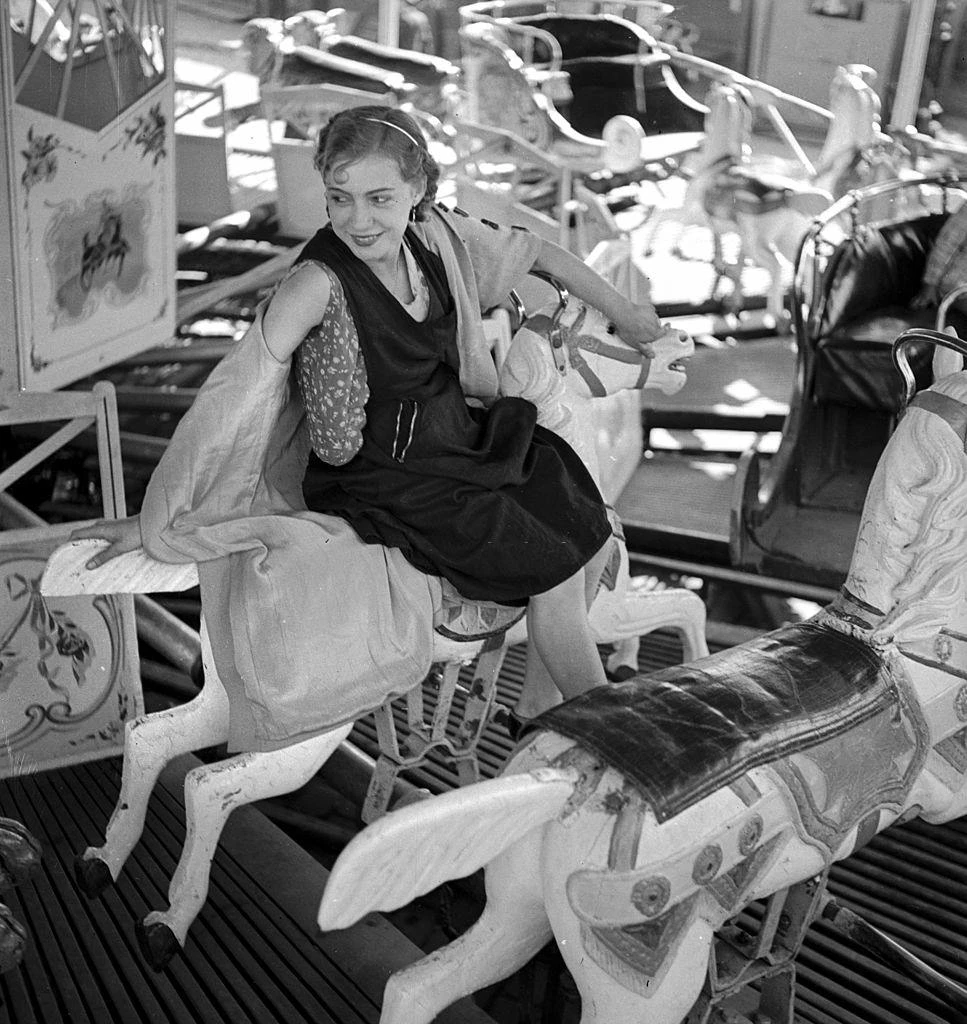
The carousel—the centerpiece of joy for young and old alike
Sideshow Wonders: The Snake Charmer and the Heavyweight Lady
1930s sideshows were designed to shock and awe. "Living curiosities" were among the biggest draws, enticing crowds with promises of the unbelievable. In one of Paris's shots, a poster advertises "the largest lady of high society." By the standards of the era, there was no cruelty intended—spectators viewed such performers with genuine wonder. 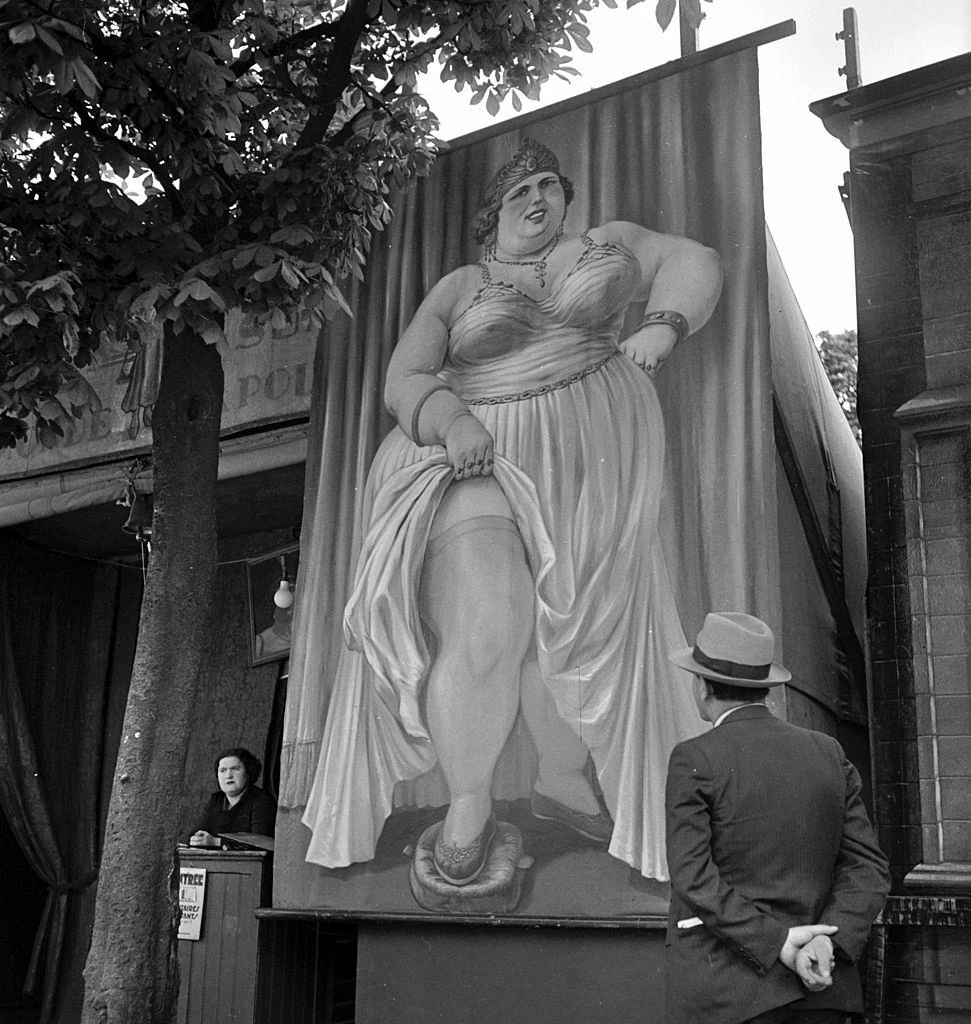
"The largest lady of high society"—a typical sideshow novelty of the era
The snake charmer was another fairground staple. Featuring a live snake, a flair for danger, and theatrical delivery, Paris captured her with the same cool precision he applied to every subject. 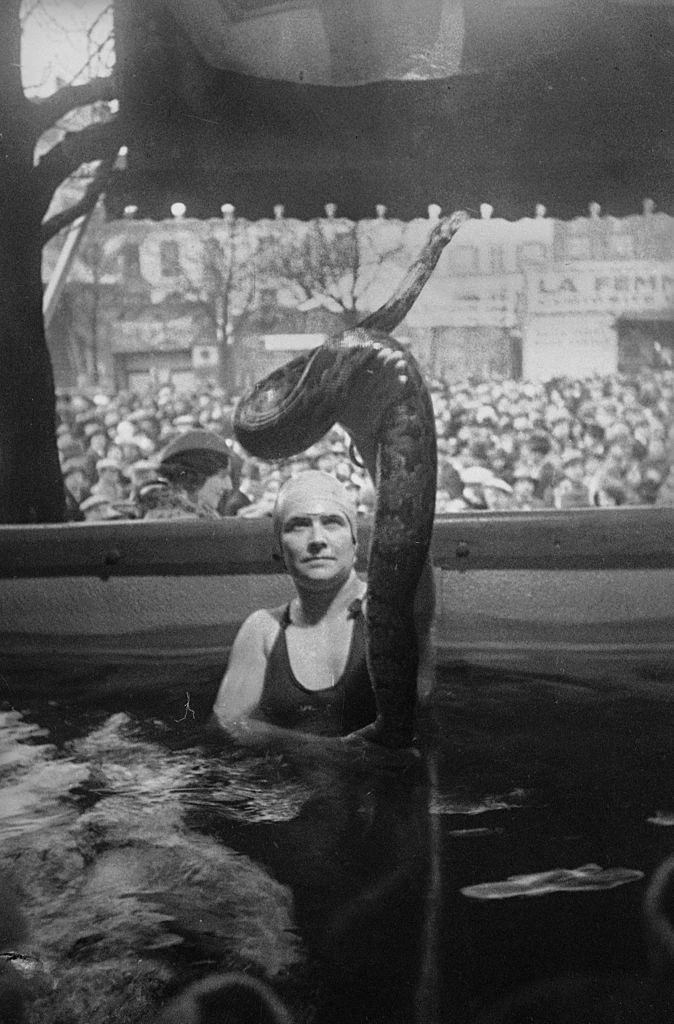
The live snake act: thrill-seeking on a schedule 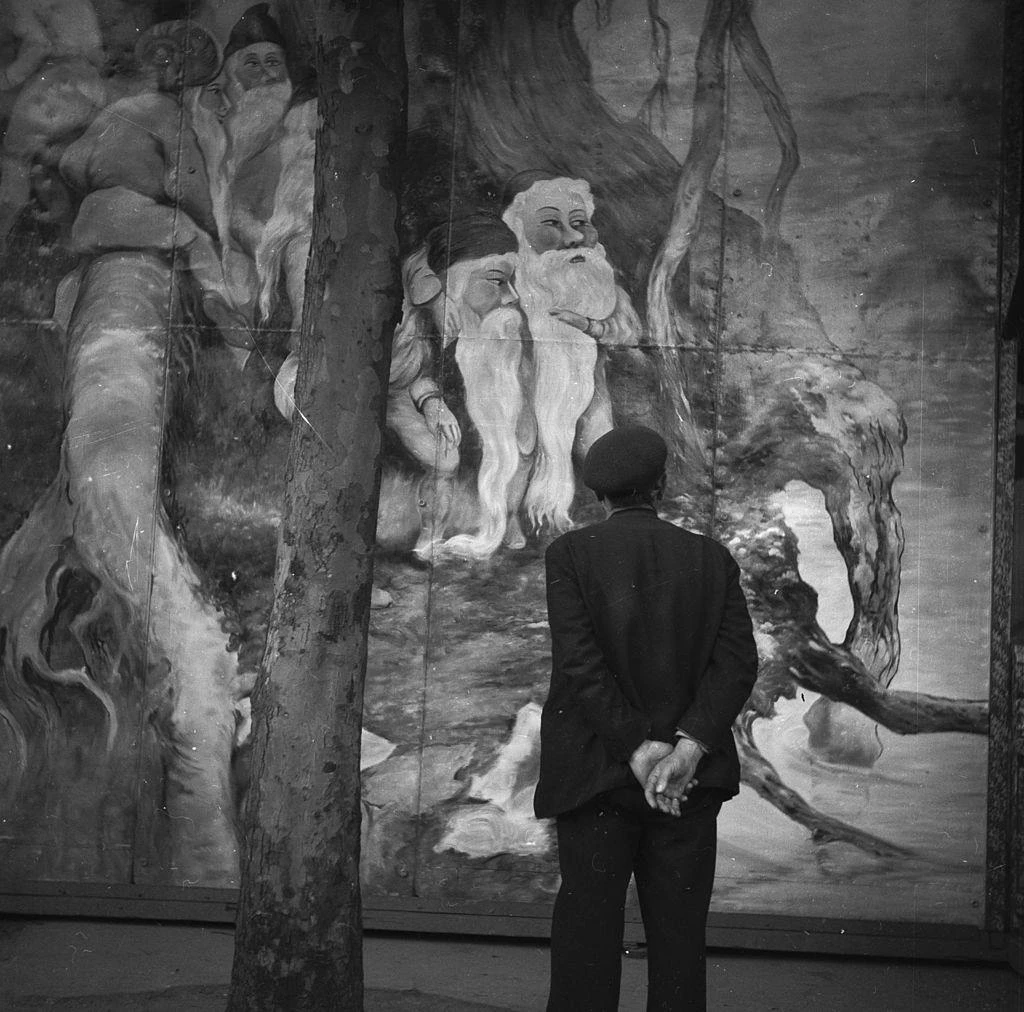
An eager crowd awaiting the next act
Masks were sold at every turn. Rows of painted papier-mâché faces gave the fair an almost theatrical air. Paris captured this haunting duality: real human faces in the crowd echoing the static ones on display. 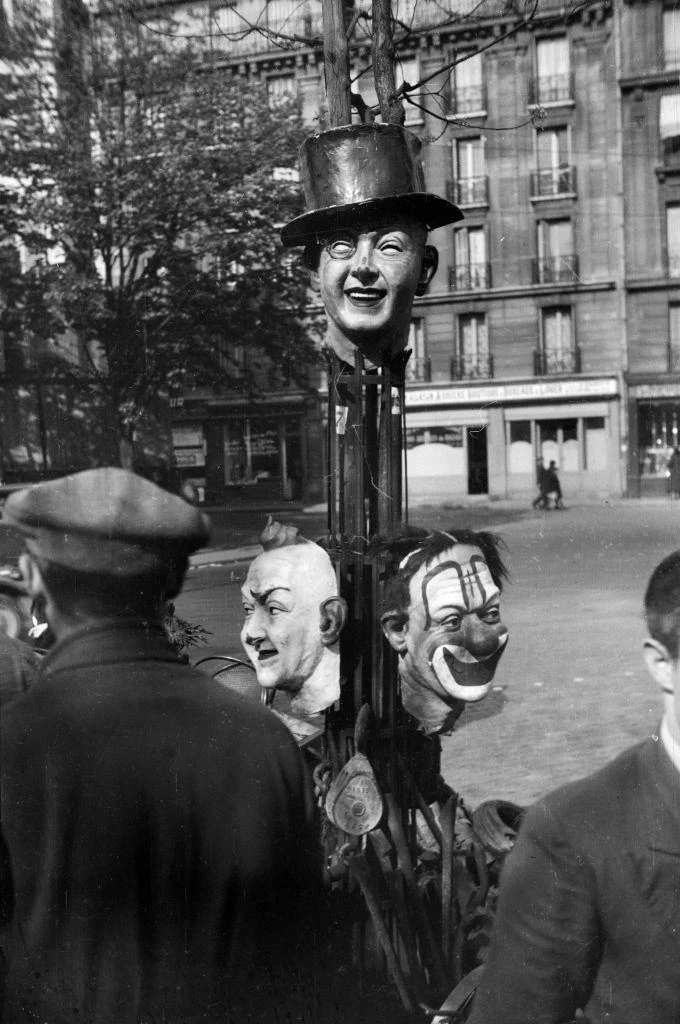
Papier-mâché masks: a fairground souvenir with a surreal twist
The Journey Is Half the Fun
Going to the fair was a true occasion. Women donned their finest clothes and walked together in groups. Paris caught these fleeting moments of anticipation—people en route before the festivities even began. 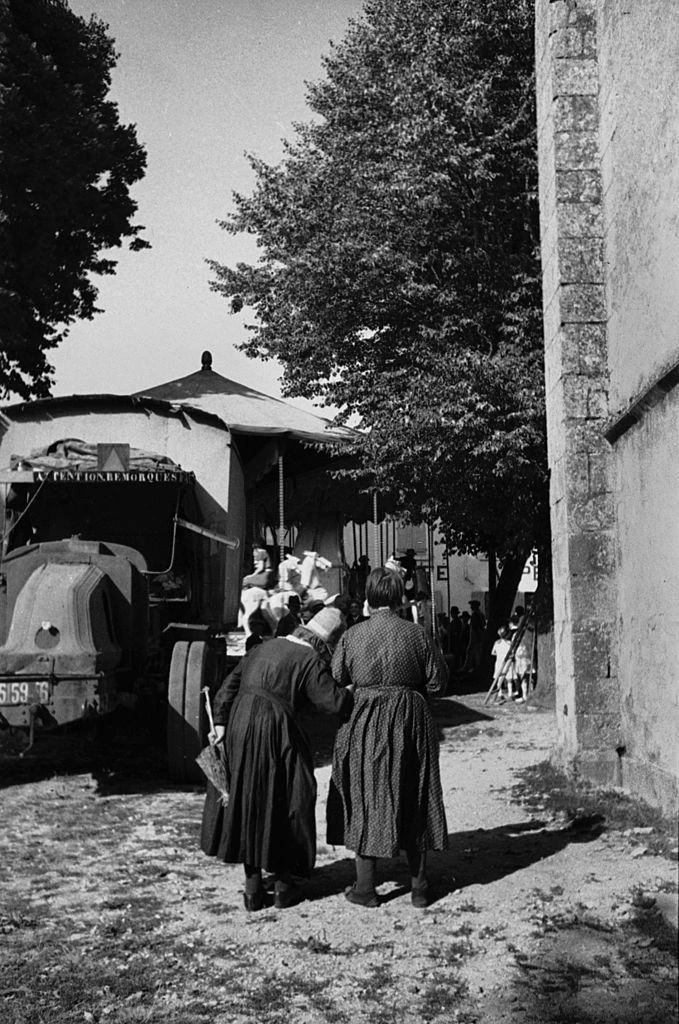
Young and old alike flocked to the fair. 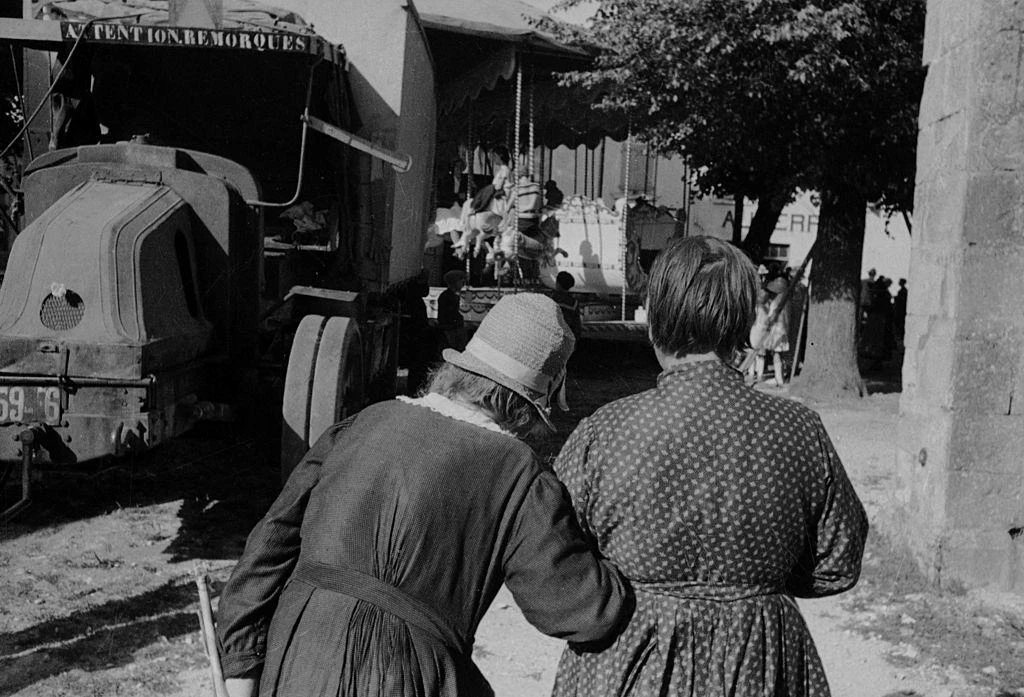
Women on their way to the fair. France, 1935 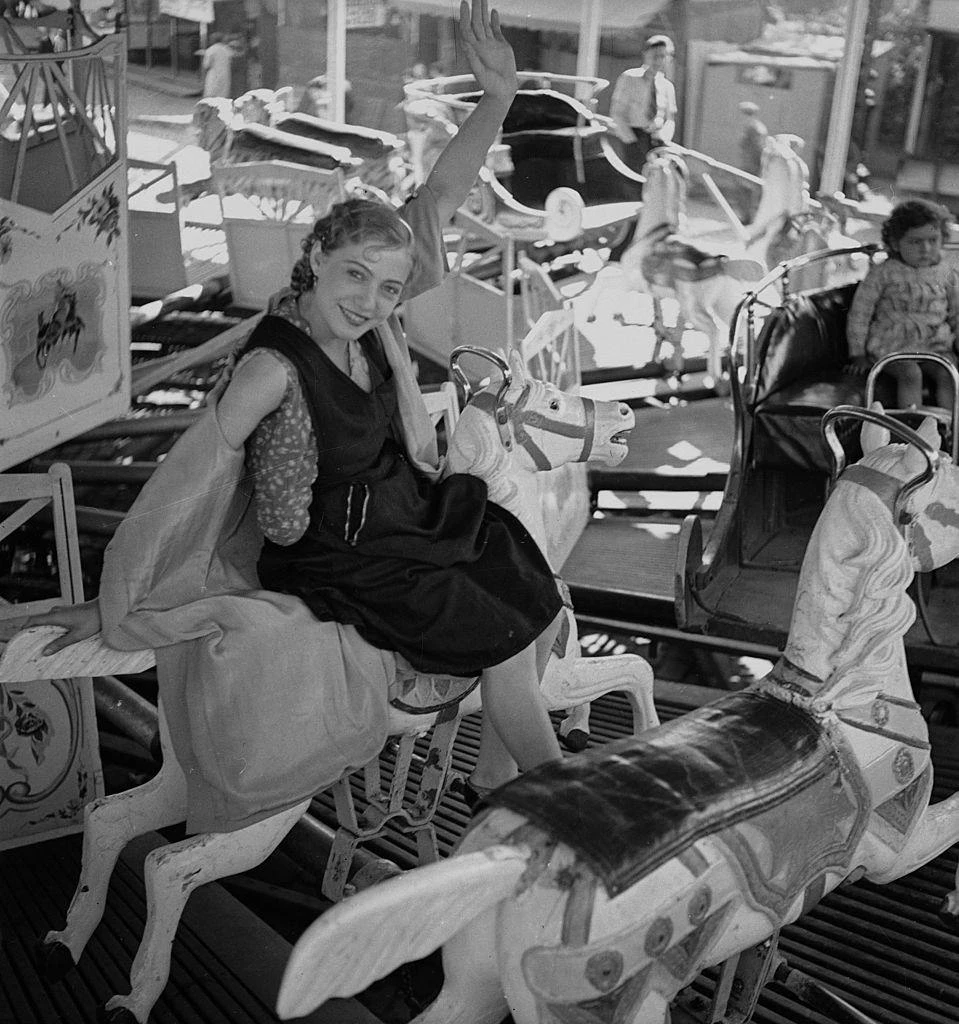
Visitors queue up for a popular attraction
The noise, lights, and aroma of frying treats—the fair was a feast for the senses
Fairground Folk: Life on the Road
Behind the rides were real families who journeyed from town to town. Their caravans served as both home and workshop, with trades handed down from parent to child. Paris spent time among them, photographing life offstage as well as under the spotlight. 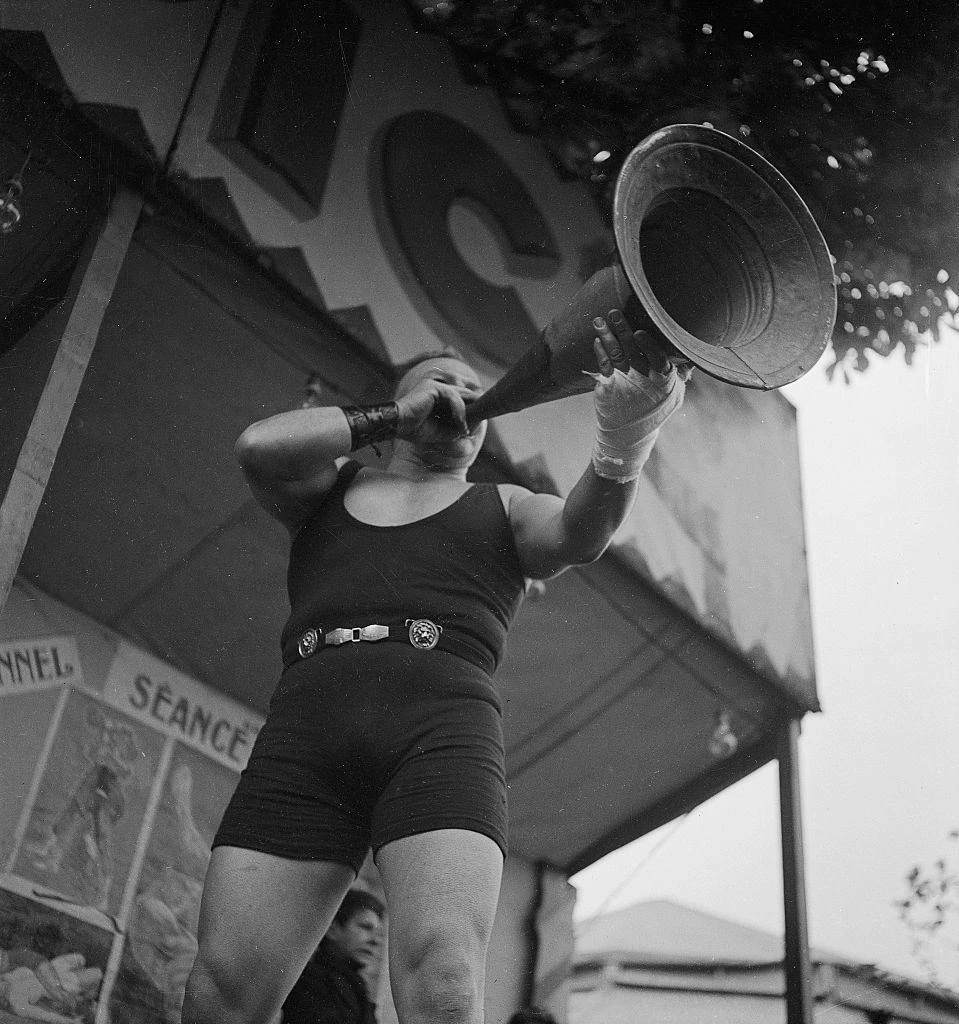
Fairground families lived in caravans—combining home and work on wheels
At the *Foire du Trône*, toy sellers hollered to draw buyers, waving bright novelties high above the crowd. Children tugged at their parents' sleeves, leaving adults to sigh and pull out their coin purses. 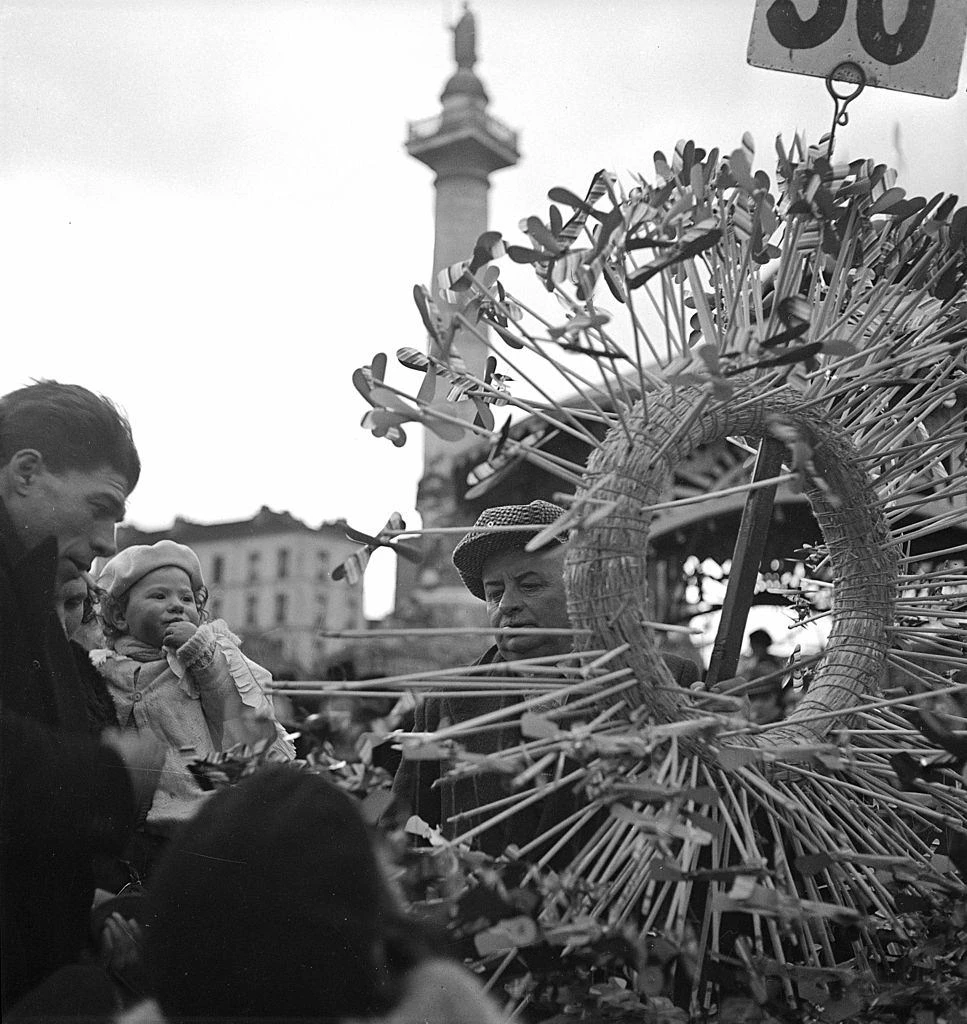
A toy seller at the Foire du Trône: a booming voice was essential to the job
The spectators were one of Paris’s favorite subjects. He captured moments when the mood of the crowd showed plainly on their faces: laughter, tense suspense, sheer astonishment. Not an anonymous mass, but vivid, individual reactions. 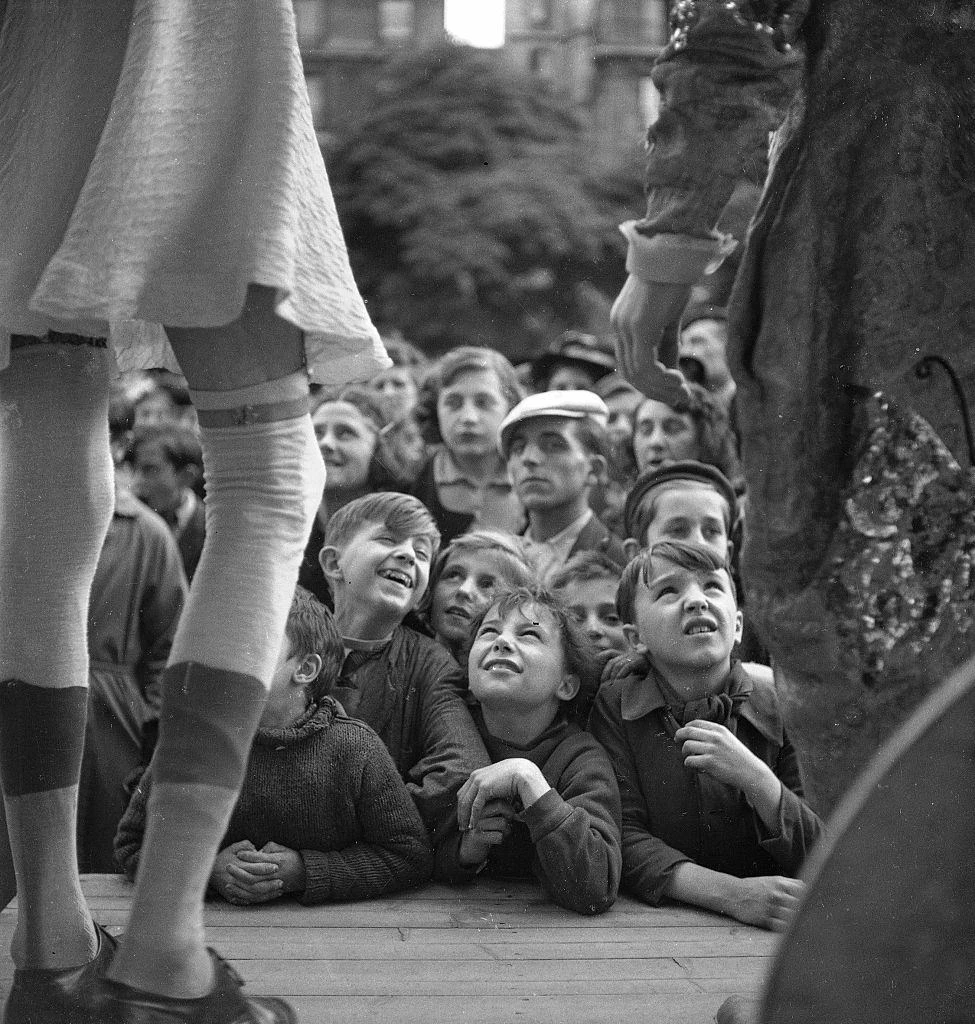
The crowd: distinct individuals united in a shared experience
Live music echoed through every fair. Musicians performed on open platforms, vying with the clatter of rides and the hum of the crowd. No famous stars—just working musicians plying their trade with practiced ease. 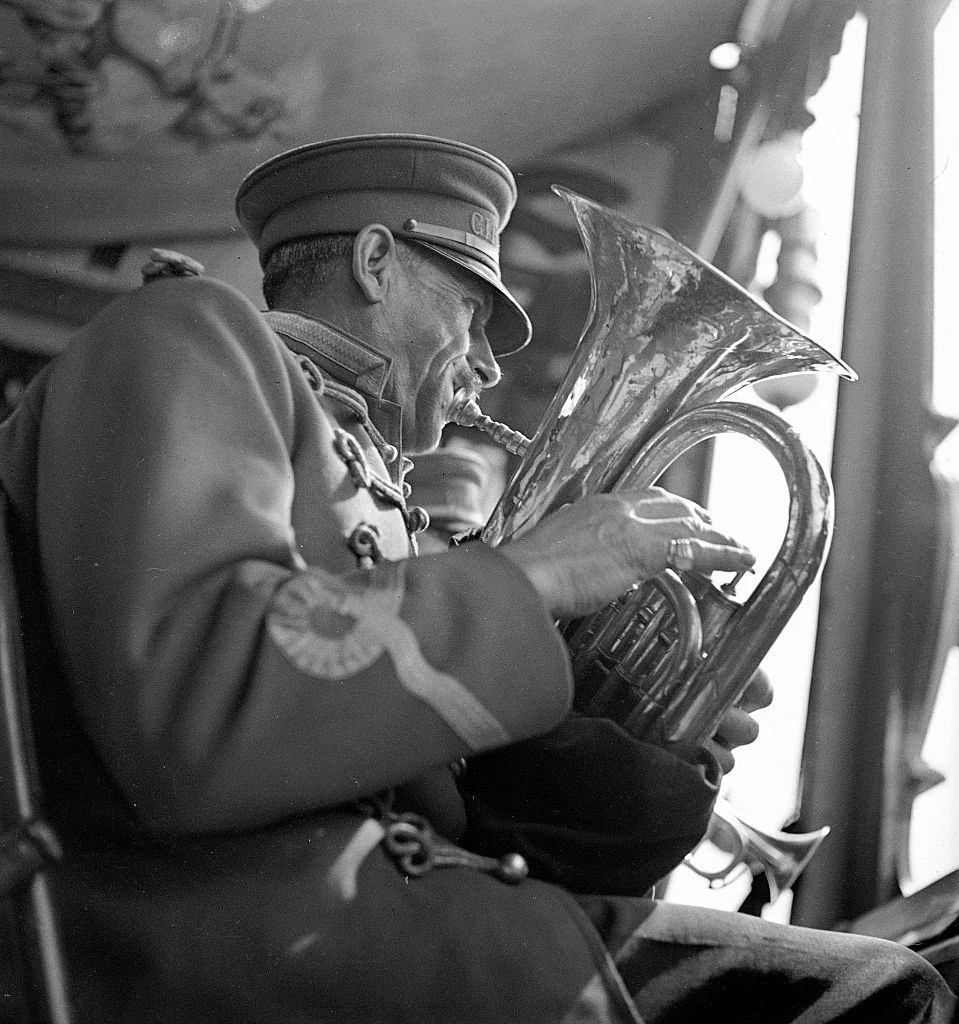
Fairground musicians—the heart and soul of the carnival atmosphere 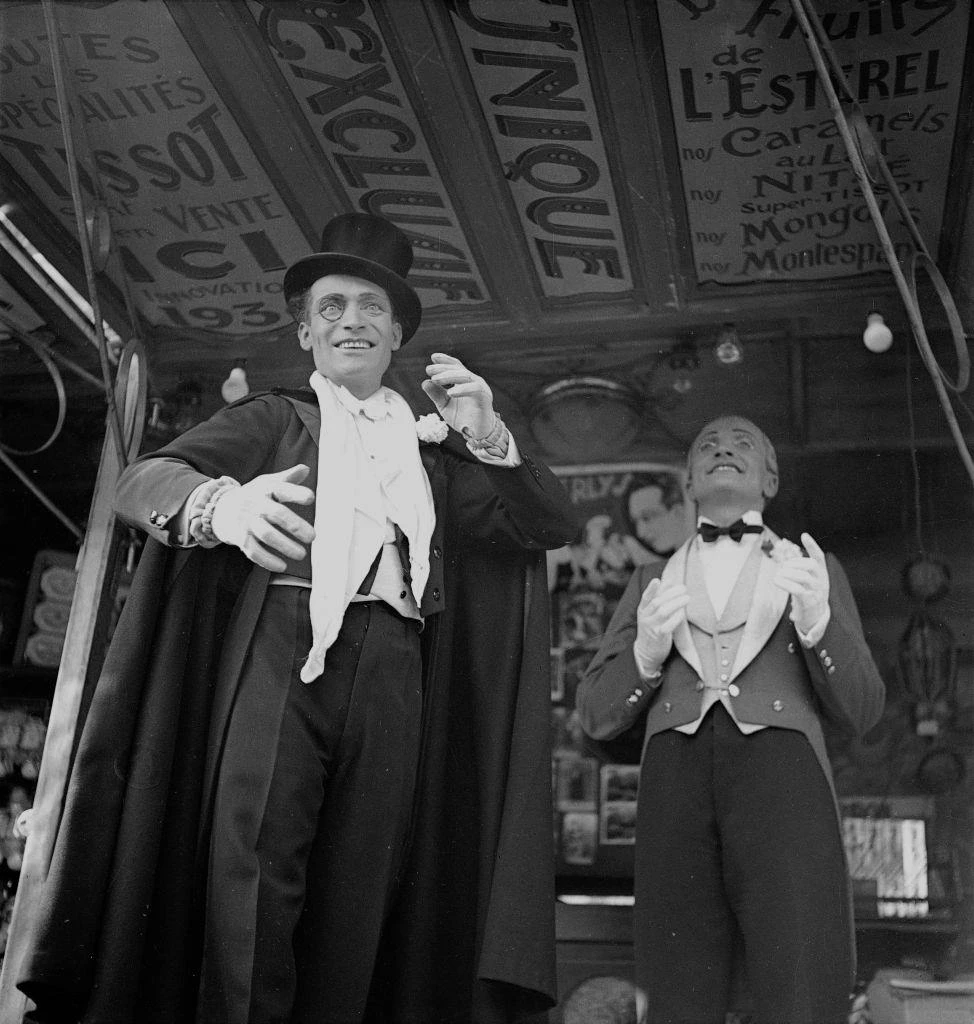
Performers between shows—offstage and out of character 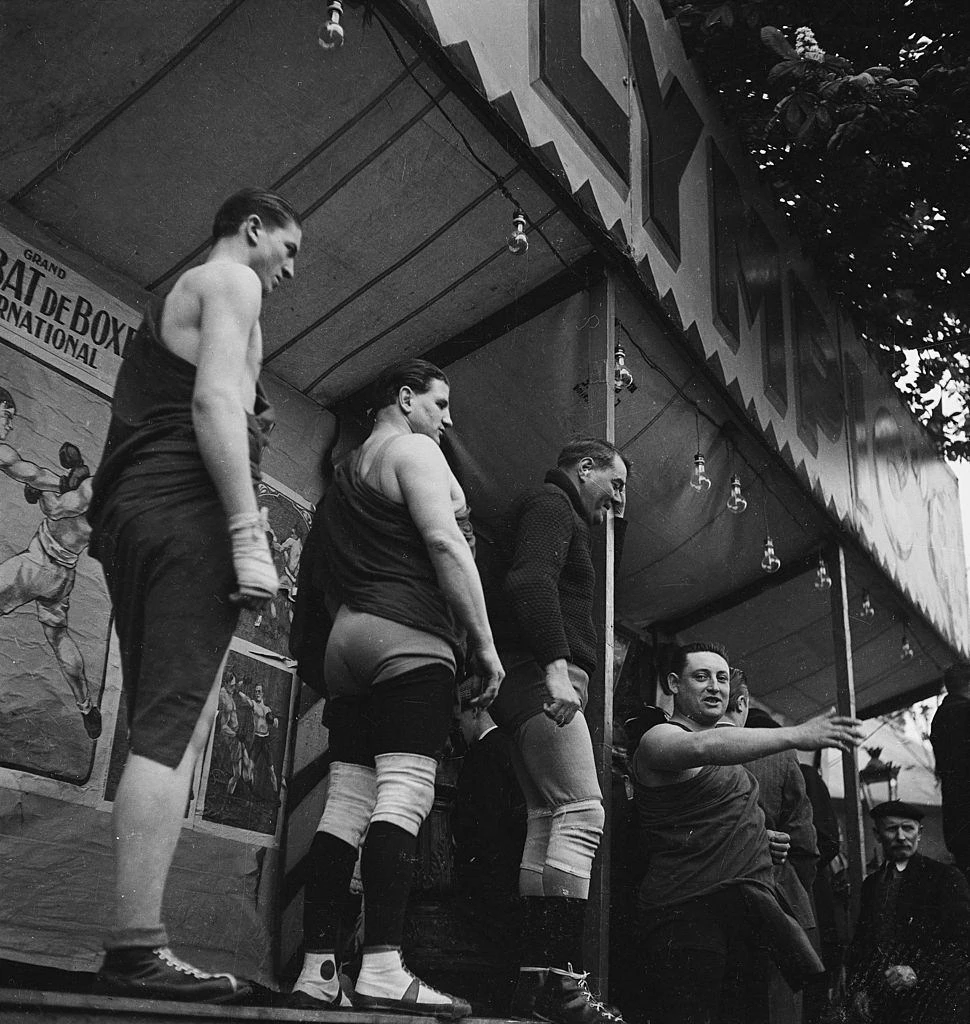
Daily life behind the festive facade 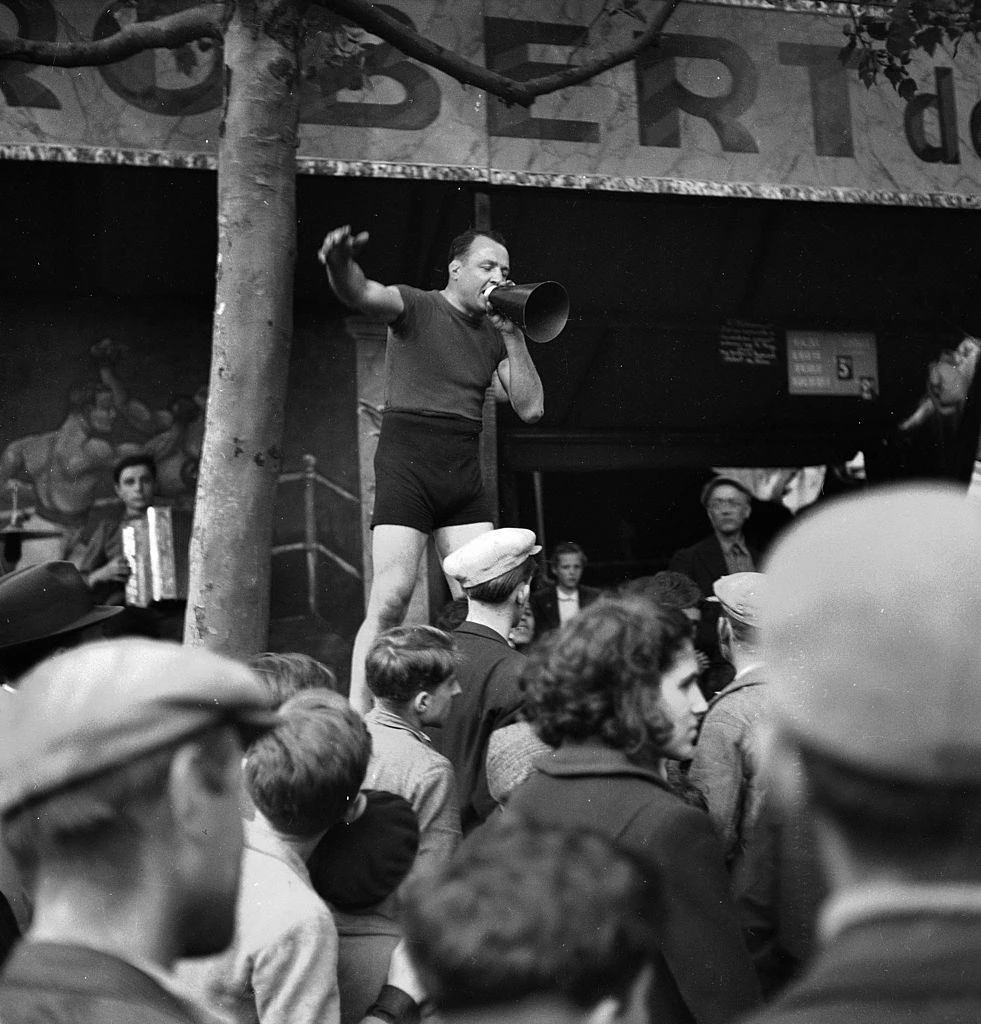
Fairground life carried on unabated, from dawn until late into the night
The Foire du Trône: The Main Event of the Season
The *Foire du Trône* was the undisputed king of Paris fairs. It offered more carousels, bigger rides, and denser crowds, taking over the Place du Trône (now Place de la Nation) every spring and attracting visitors from across the city and countryside. 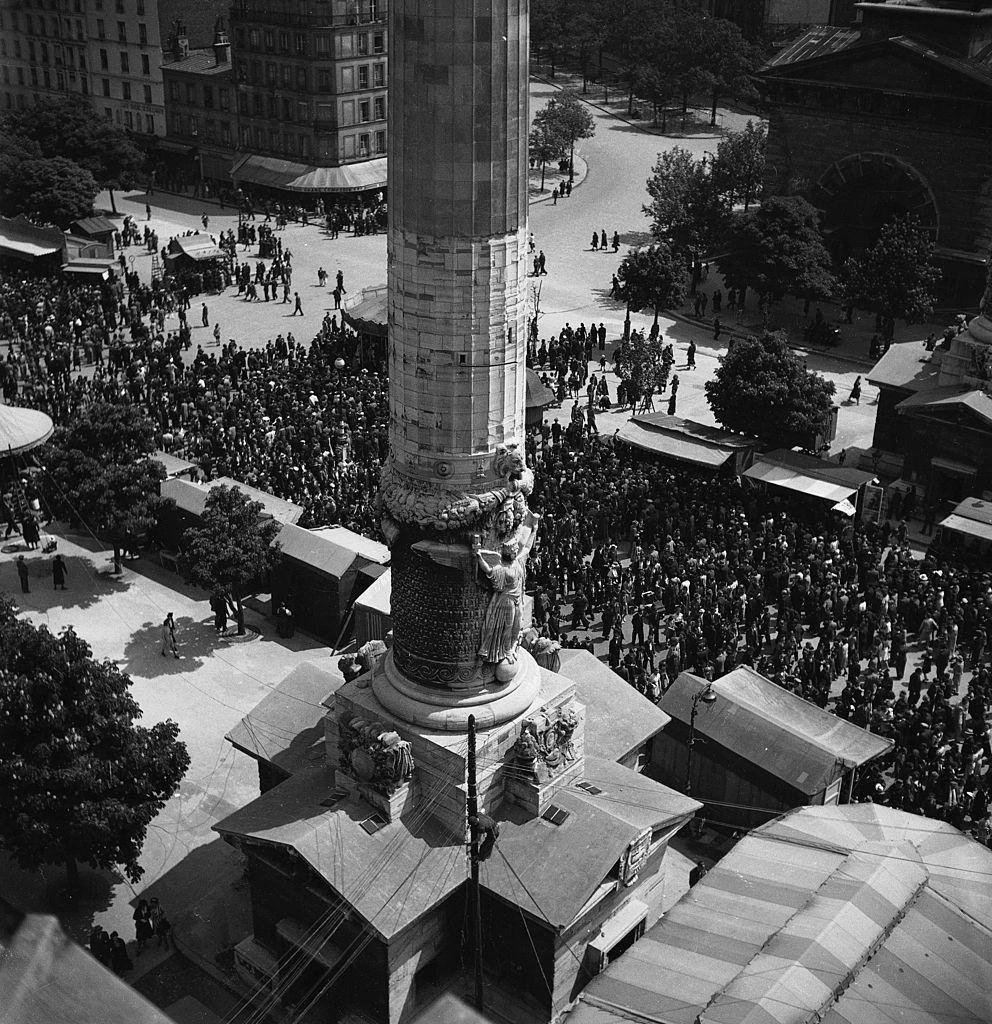
Foire du Trône: Paris’s premier spring festival with a thousand-year history 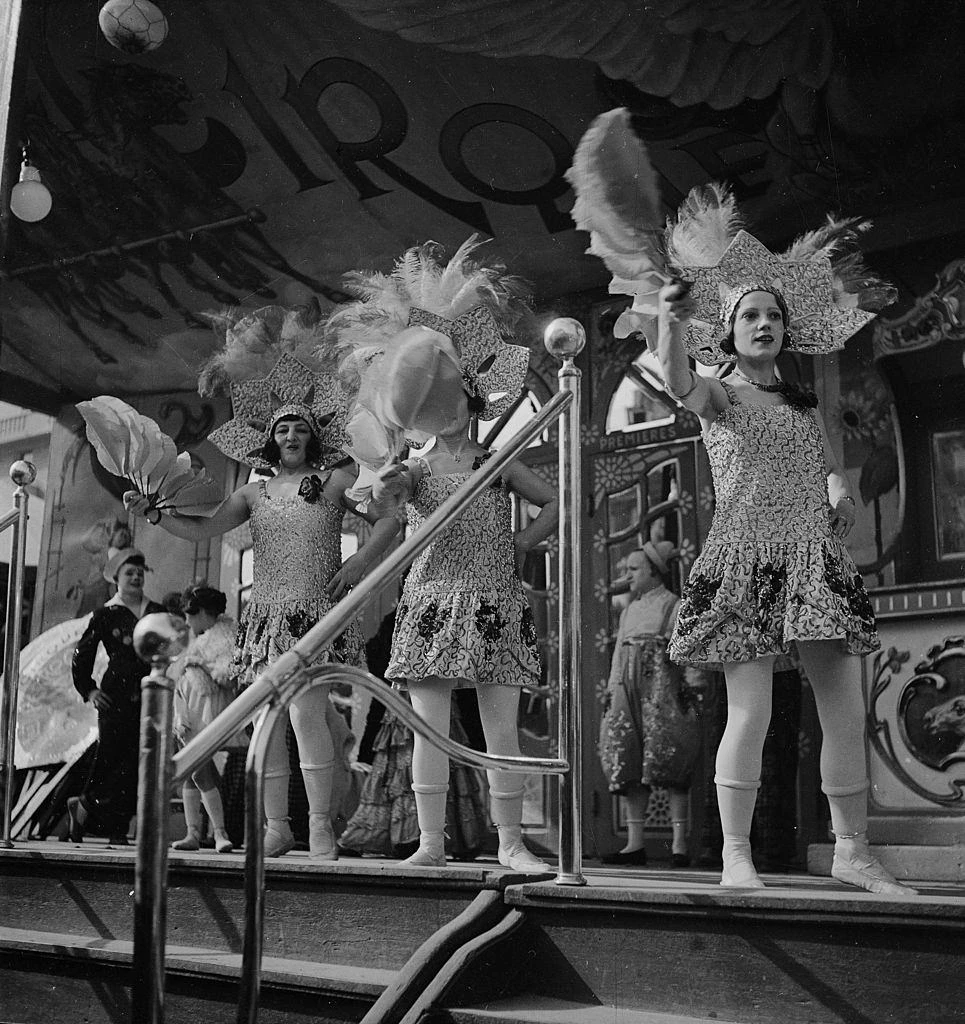
The Foire du Trône featured hundreds of attractions, from carousels to shooting galleries
To draw crowds, organizers staged street parades. Performers poured into the square with music and fanfare, drumming up excitement on the go. Paris captured these lively processions with obvious delight. 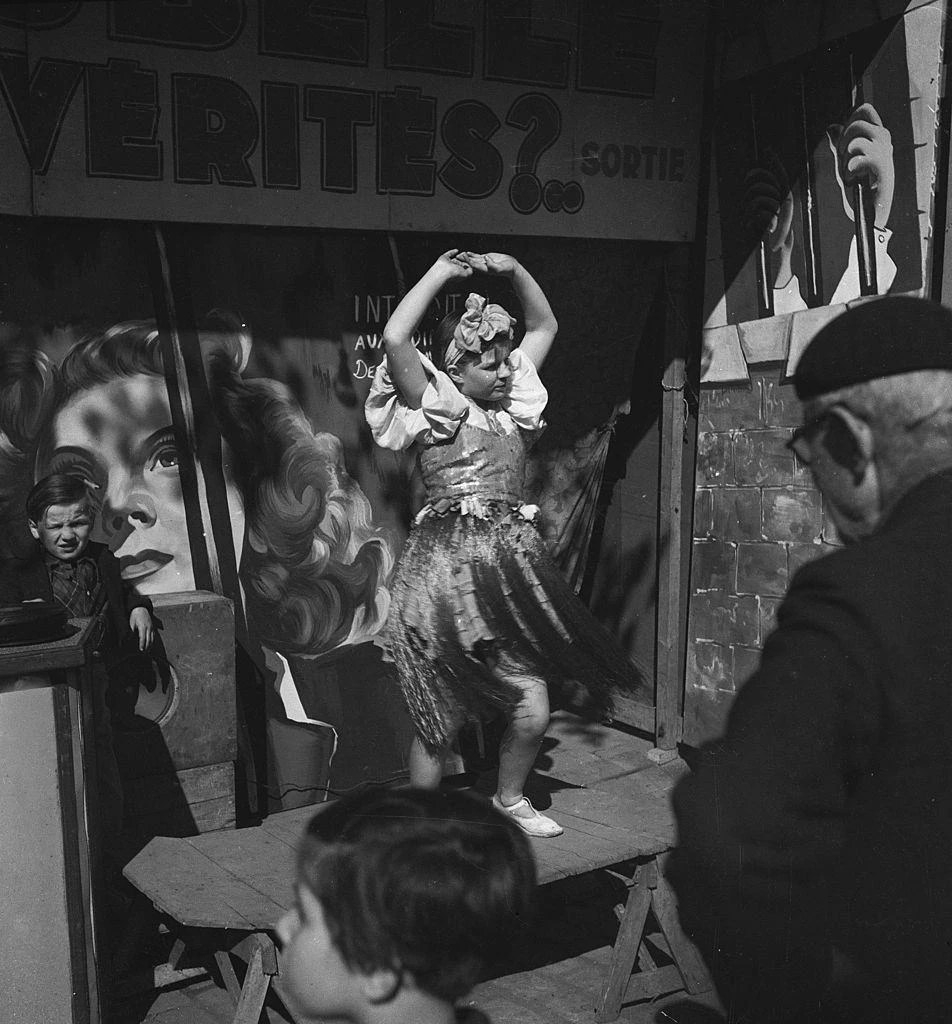
A street parade: gathering a crowd before the main show 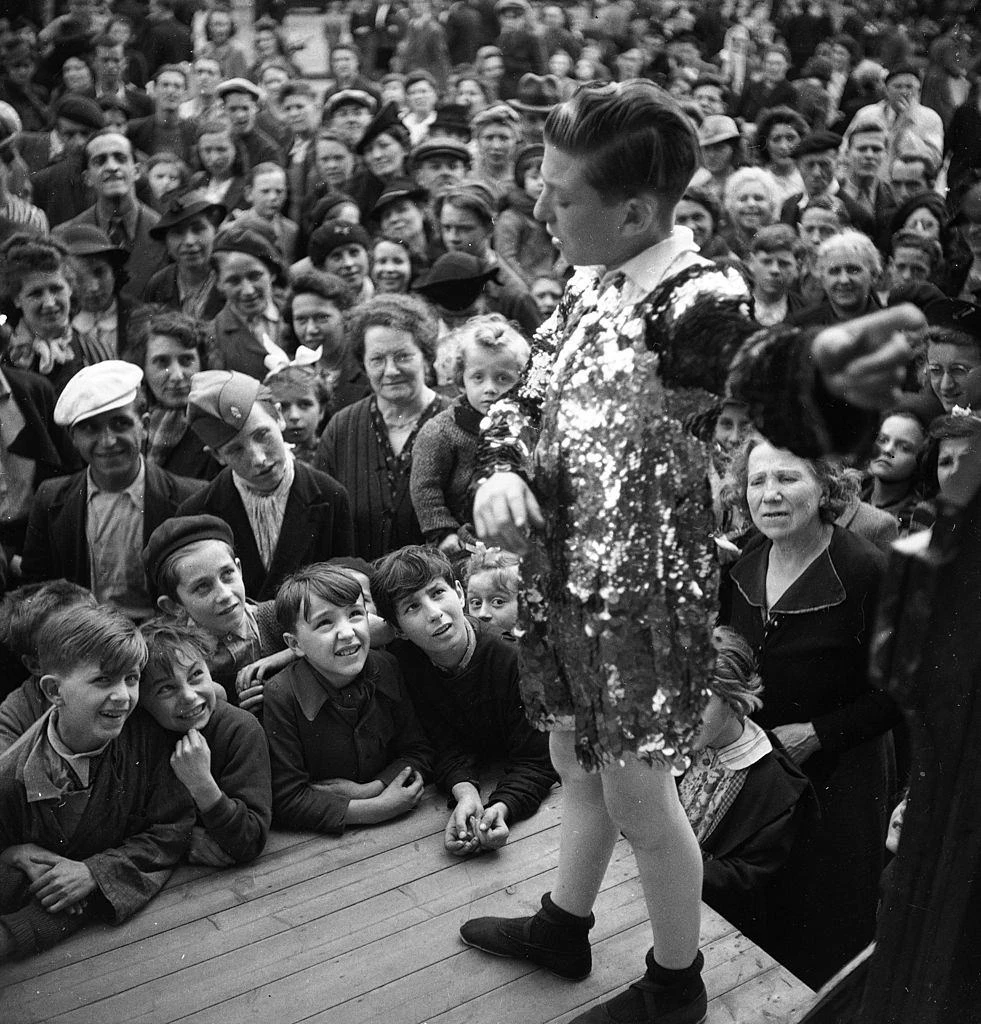
Waiting for the show: the anticipation was all part of the fun
The caravan doorway stood as a threshold between two worlds: public spectacle on the outside, private family life within. Paris captured several of these transitional moments—figures lingering in doorways between the stage and home. 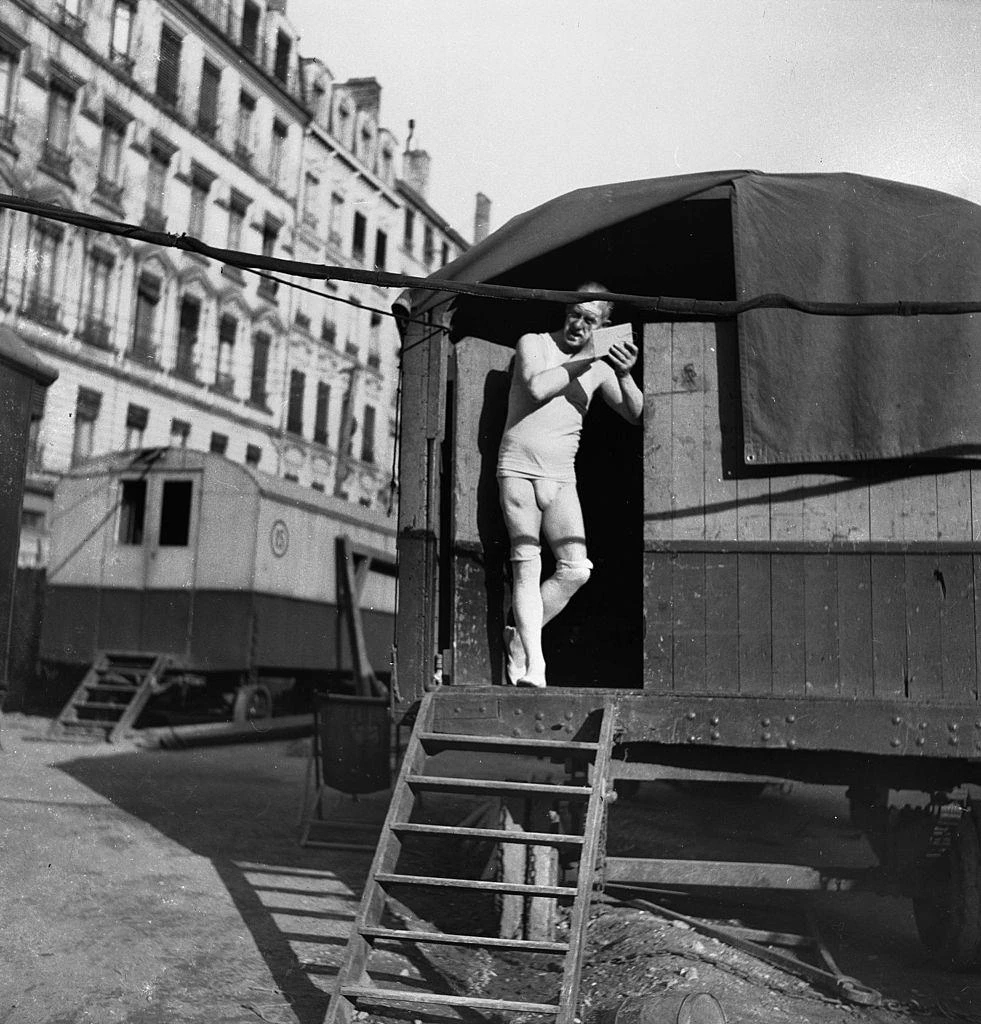
At the caravan door: the fine line between the public show and private life
Among the quieter images in the series is a child holding a slice of gingerbread. *Pain d'épices*—a traditional cake made with honey and spices—had been a carnival staple since the Middle Ages. In 957 AD, it was distributed by the monks of Saint-Antoine to feed the needy; by 1935, it remained a beloved treat sold at every fairground stall. 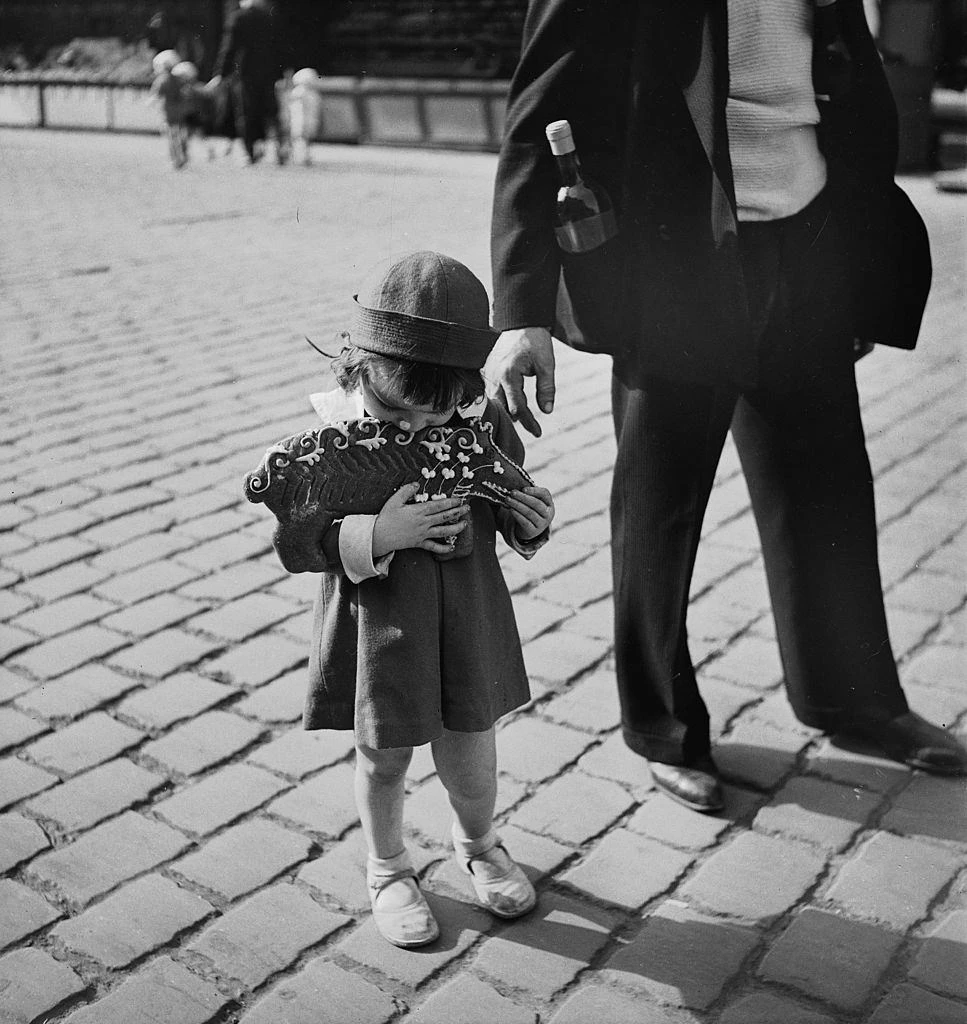
Pain d’épices gingerbread: a fairground delicacy steeped in a thousand years of history 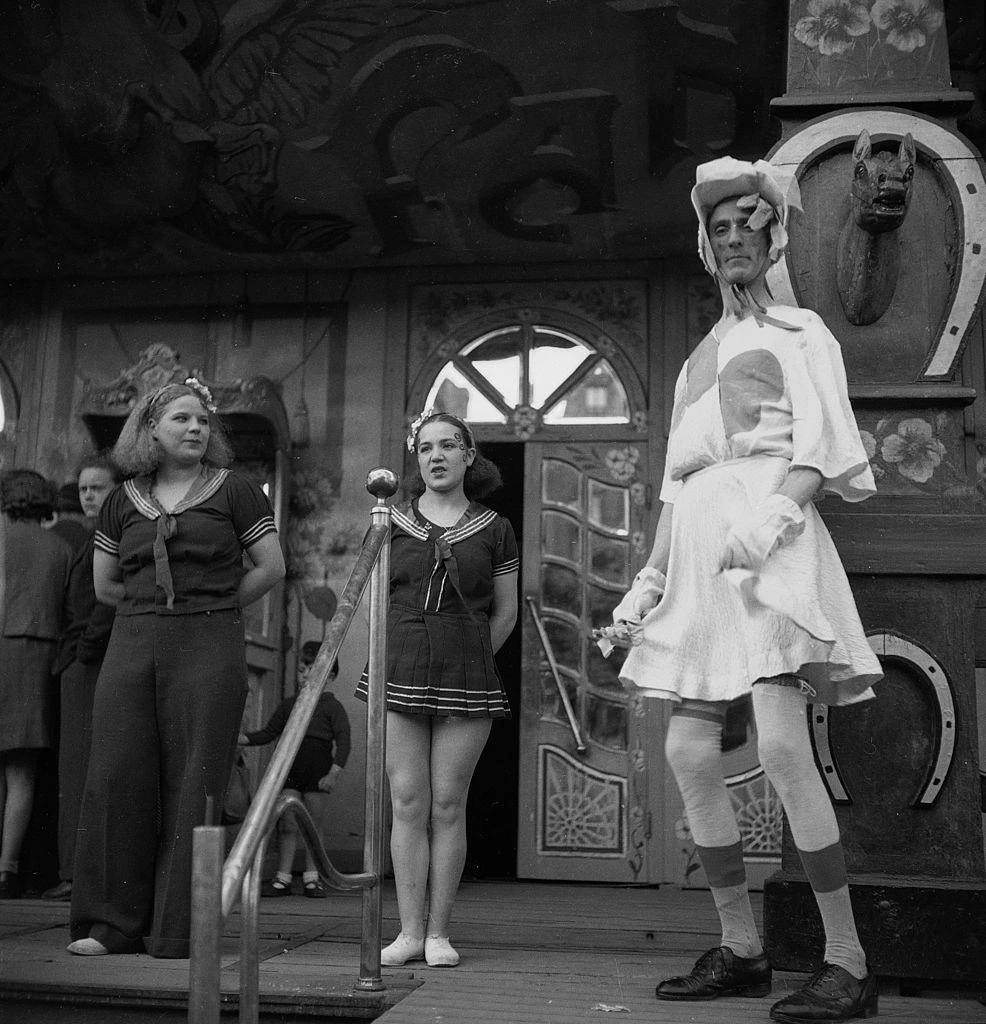
Fairground workers: life between moves
One of the most striking shots shows wooden carousel horses loaded onto a wagon. The ride was dismantled and hauled off to the next destination—a reminder that the entire spectacle was built on backbreaking manual labor by the very people who brought it to life. 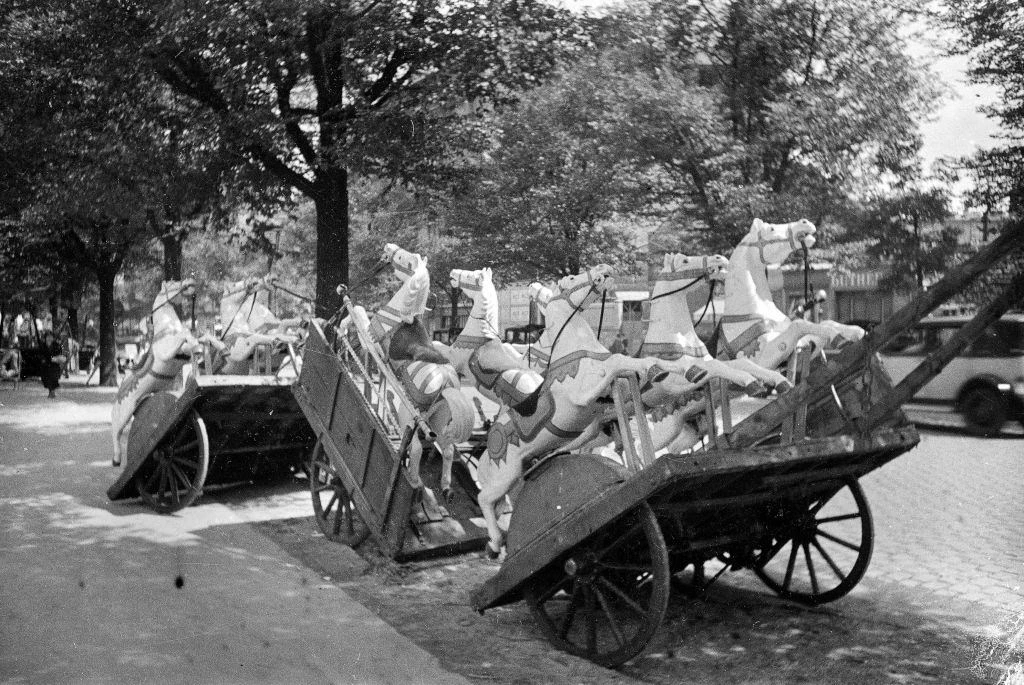
Carousel horses on a cart: packing up the party takes just as much hard work as building it
Gaston Paris’s series remains one of the finest photographic records of everyday working-class life in interwar Europe. He neither idealized the fairground nor looked down upon it, simply documenting life as it was with precision, respect, and a keen eye. Have you ever experienced a fair like this, or is it a bygone era?