The Wild Water Buffalo: The Herbivorous Giant Even Tigers Steer Clear Of (11 photos)
What comes to mind when you think of India? The iconic Taj Mahal, ancient yoga traditions, vibrant Bollywood, daring street food, and of course, its magnificent wildlife. Elephants, tigers, and towering wild buffalo immediately jump to mind. Granted, these animals range across other parts of Asia too, but today we’re focusing on the legendary water buffaloes featured in virtually every nature documentary about the Indian subcontinent. 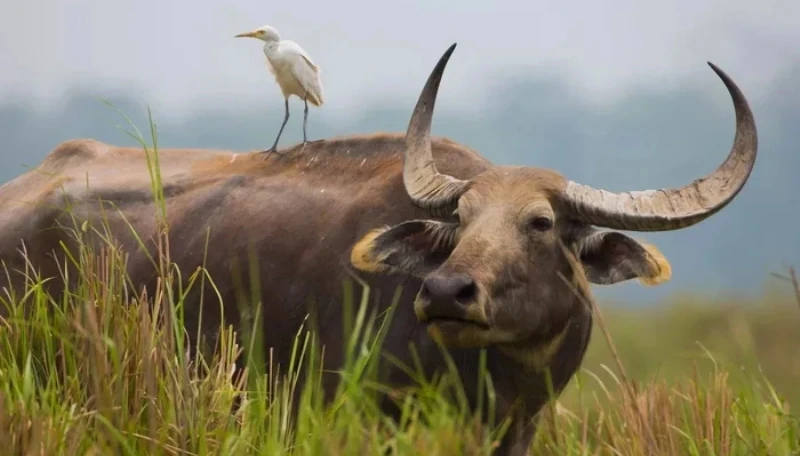
Just Call Him 'Arnee'
While often called the Indian buffalo, that name is a bit of a misnomer. Their range extends across Nepal, Cambodia, Vietnam, Myanmar, Thailand, and southern China. Still, the vast majority reside in India—around 3,500 out of a total global wild population of roughly 4,000. Their official name is the wild Asian water buffalo, or
Bubalus arnee
in Latin, with "arnee" being its traditional moniker. 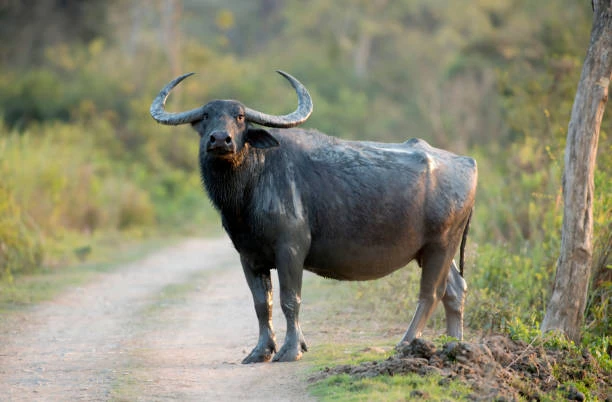
The wild water buffalo holds the title of the world's largest bovine. They can stretch over three meters long and stand up to two meters tall at the shoulder. A full-grown male can tip the scales at over 1.5 tons. Their defining feature is their massive, sweeping horns, which can boast a tip-to-tip span of over two meters. However, these formidable weapons belong mostly to the bulls; females either lack them entirely or have much smaller ones—and the cows themselves are significantly smaller. 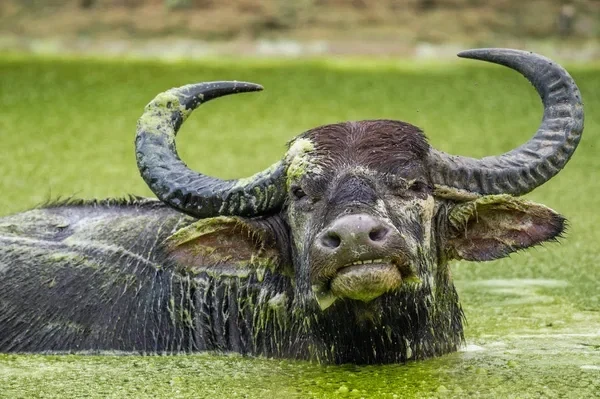
Perhaps their most notorious trait is their ferocious temperament. These bulls are aggressively territorial and known to attack without provocation, making them a serious danger to humans. Passersby can easily walk into harm's way simply by strolling past a body of water. True to their name, water buffalo love spending time near rivers and lakes, often submerging themselves completely until only their eyes, nostrils, and horn tips peek out. 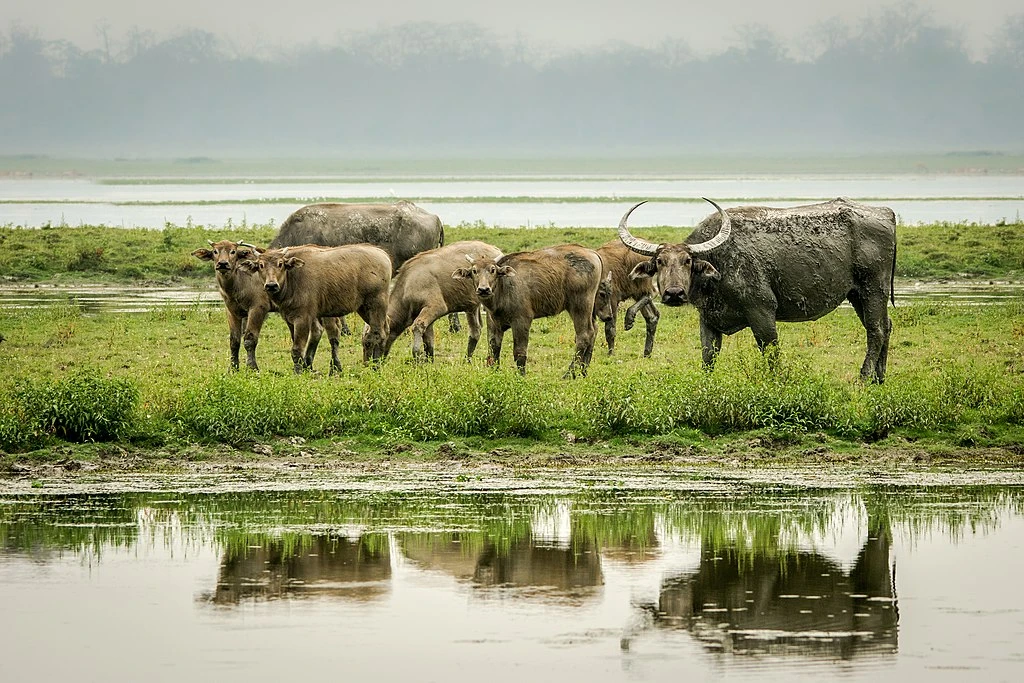
Lethal on Land and in Water
Wallowing in water and mud isn't just about cooling off in the tropical heat; it's a vital defense against parasites. Once baked in the sun, the caked-on mud creates a protective armor against biting insects. They also get a helping hand—or beak—from local wildlife. Herons and turtles frequently pick off pests, fearlessly clambering over the lounging giants to groom their thick hides. 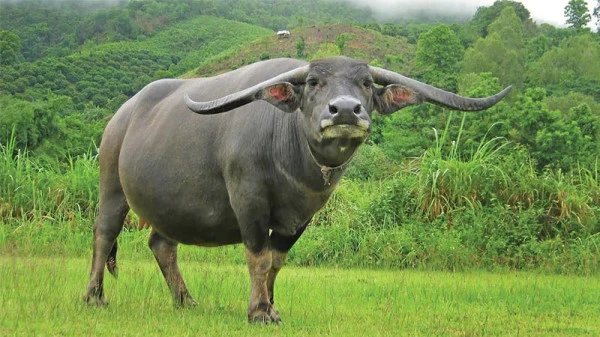
Their wide, splayed hooves give them sure footing on muddy riverbeds and squelching marshland. When enraged, a bull can charge through deep mire with the speed and force of a runaway freight train. While their diet consists mainly of lush aquatic vegetation, they aren't above raiding nearby agricultural crops, often causing devastating damage to local farms. 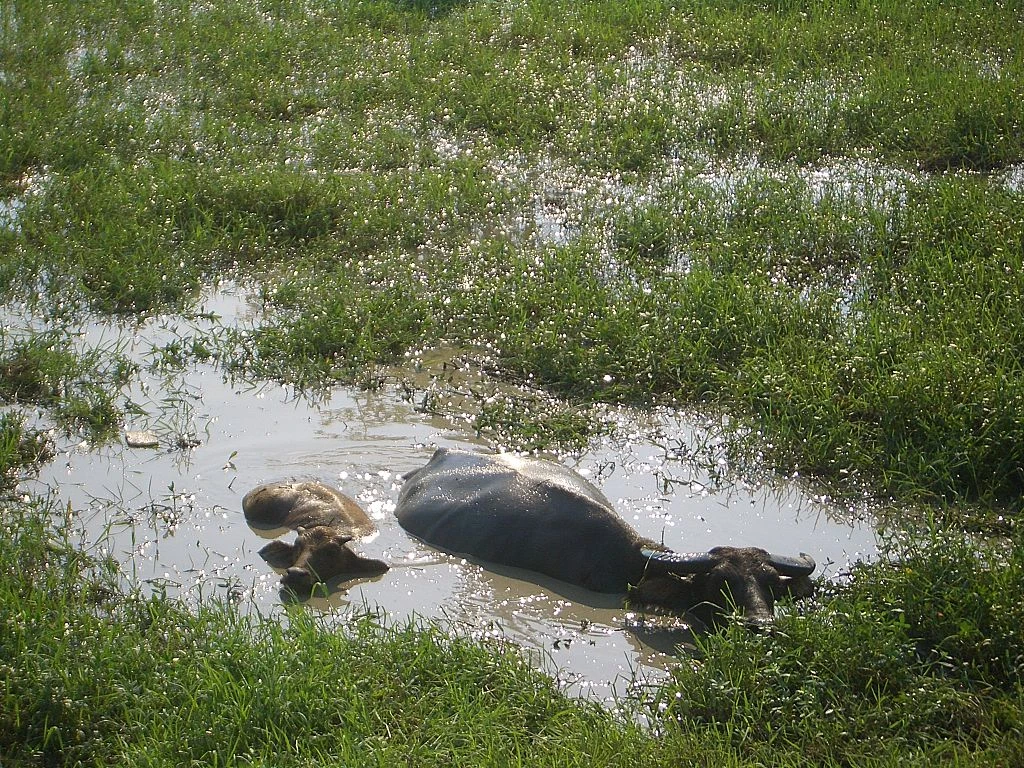
In the past, these buffalo were routinely seen sharing watering holes with Indian rhinoceroses—two jungle giants living in peaceful coexistence. Today, however, decimated rhino populations make such sightings exceedingly rare. Water buffalo typically live in herds of 15 to 25 individuals, though solitary old bulls—known for being exceptionally dangerous and unpredictable—are also common. 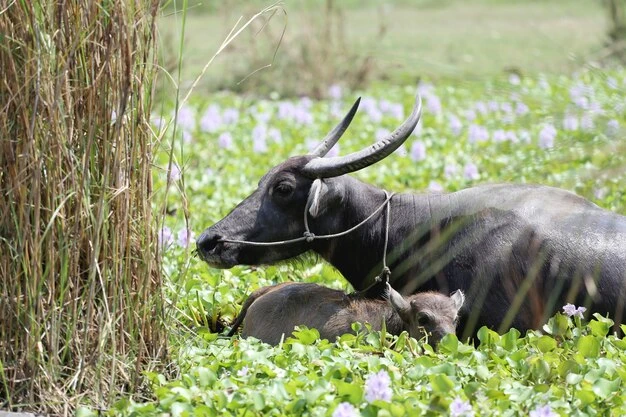
A full-grown bull fears practically nothing in the wild. Natural predators are virtually non-existent; even apex predators like Bengal tigers will rarely risk taking on an adult. Calves, on the other hand, are vulnerable targets for tigers, leopards, and crocodiles. However, getting past a protective herd to reach a young calf is a daunting, often fatal task for any predator. 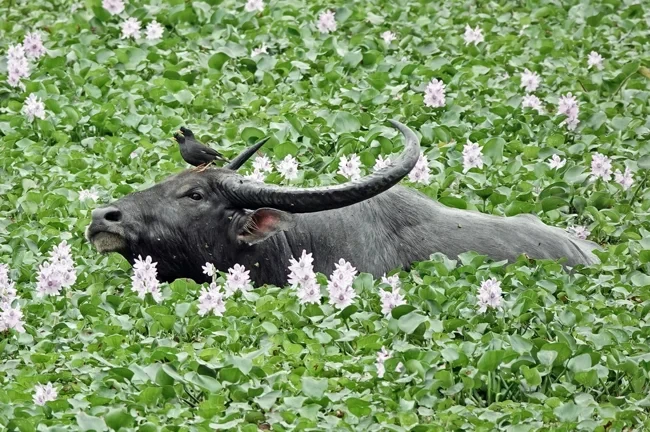
Buffalo and Humans
Humans domesticated the Asian water buffalo around 5,000 years ago. Since then, domestic breeds descended from their wild ancestors have spread to nearly every continent except Antarctica. They remain indispensable to agriculture in Asia's marshy regions, working where other livestock stumble. Domestic buffalo till paddy fields, haul heavy carts, and are even ridden as mounts. 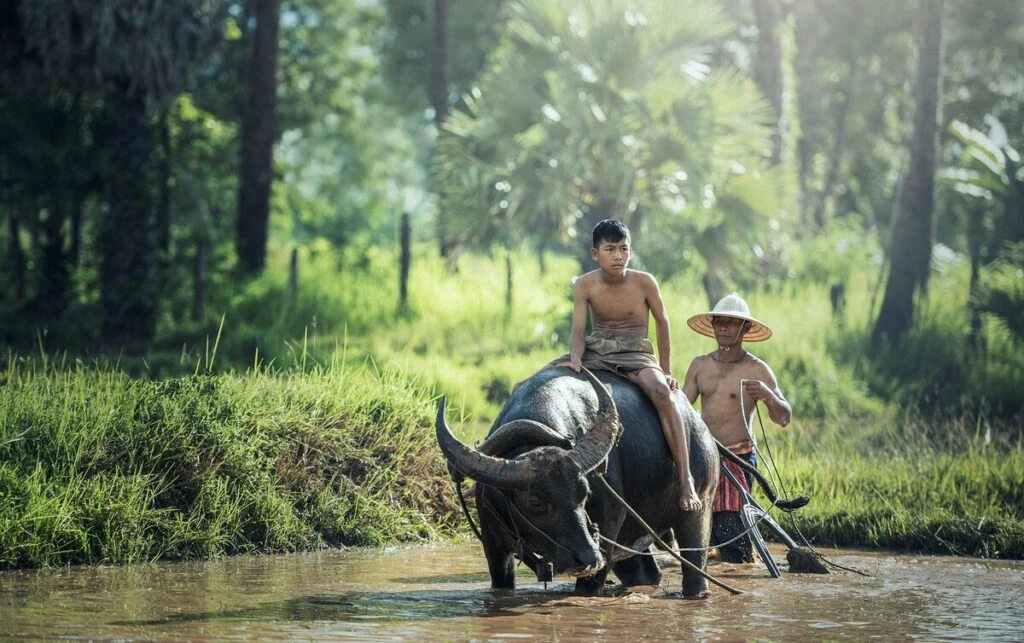
Their meat, hides, and milk are prized commodities. In fact, authentic traditional mozzarella cheese is made exclusively from water buffalo milk. While domestic buffalo are generally tamer, smaller, and lighter than their wild counterparts, they can still pose a serious threat if provoked. 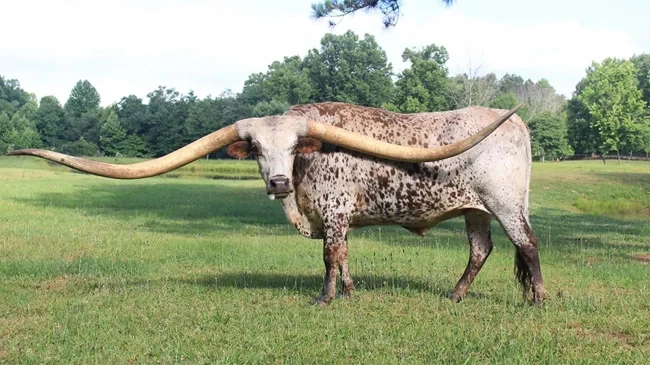
Longhorn
Interestingly, some domestic breeds boast even larger horns than their wild relatives. Take the longhorn-style water buffalo strains, for example—one individual held an absolute record horn length of 2.4 meters on each side! In the wild, such oversized racks would be a dangerous hindrance when navigating dense jungle foliage. 
Asian water buffalo are awe-inspiring creatures that have coexisted alongside humanity for millennia while remaining among the world's most formidable herbivores. Their sheer power, massive horns, and volatile tempers make them both indispensable allies and deadly neighbors. What do you think—can such powerful animals ever truly be tamed, or will their wild instincts always win out? Let us know in the comments below!