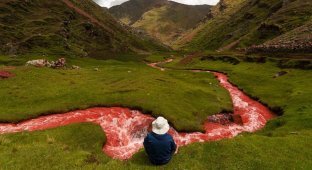
Caño Cristales: The Most Beautiful River on Earth (11 Photos)
Originating in the southern reaches of Colombia’s Serranía de la Macarena mountain range, Caño Cristales—known to locals as the "River of Five Colors" or "Liquid Rainbow"—flows eastward until it empties into the Guayabero River.
The river is famous for its vibrant spectrum of yellow, blue, green, black, and red. These vivid hues are created by unique aquatic plants, whose colors shift in intensity depending on the season. 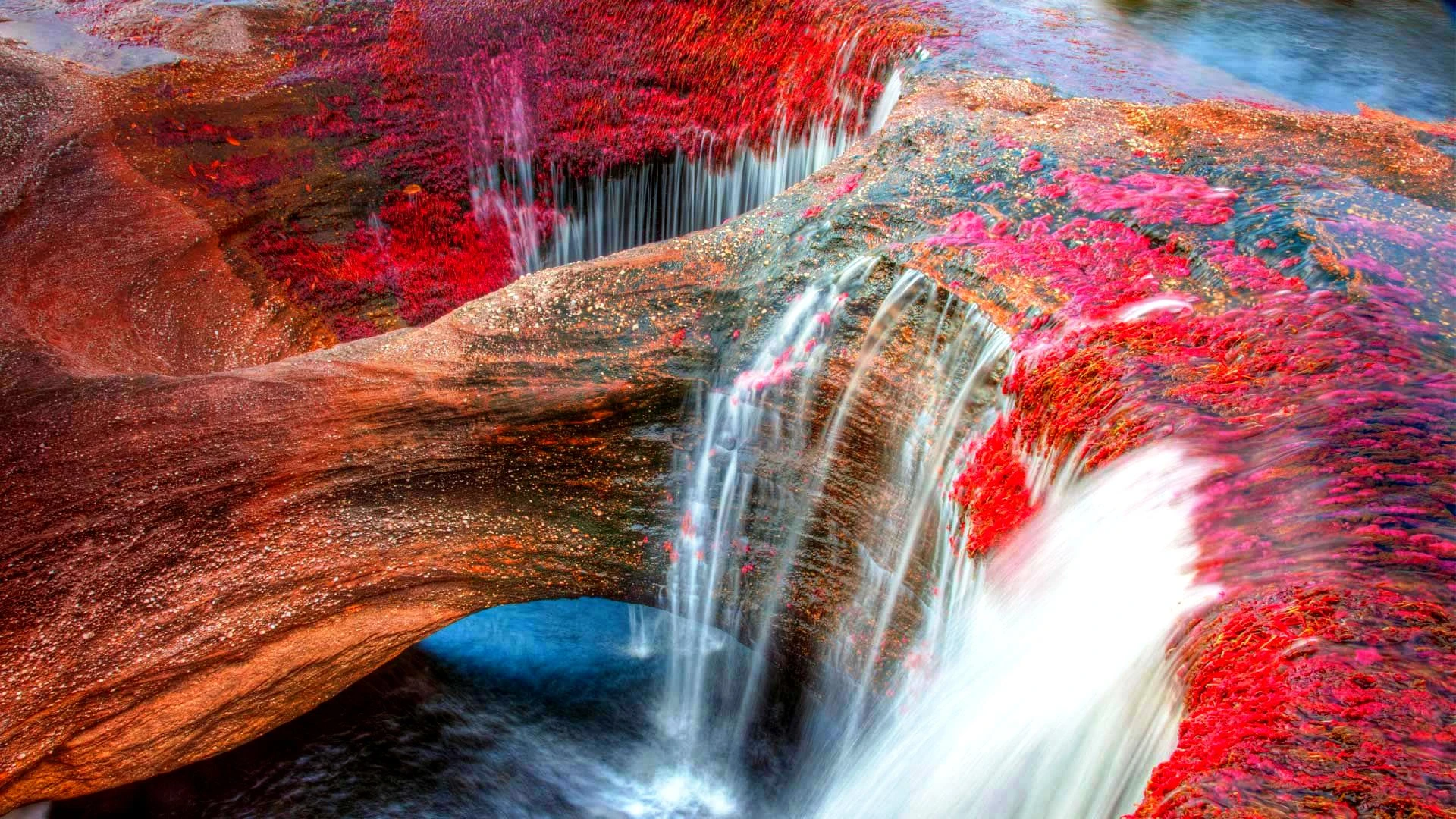
The water is crystal-clear, revealing the riverbed even at significant depths, though fish are virtually nonexistent due to the river’s unique ecological profile. During the warmer months, sunlight triggers the bloom of an endemic aquatic plant,
Macarenia clavigera
, turning the river a striking crimson. 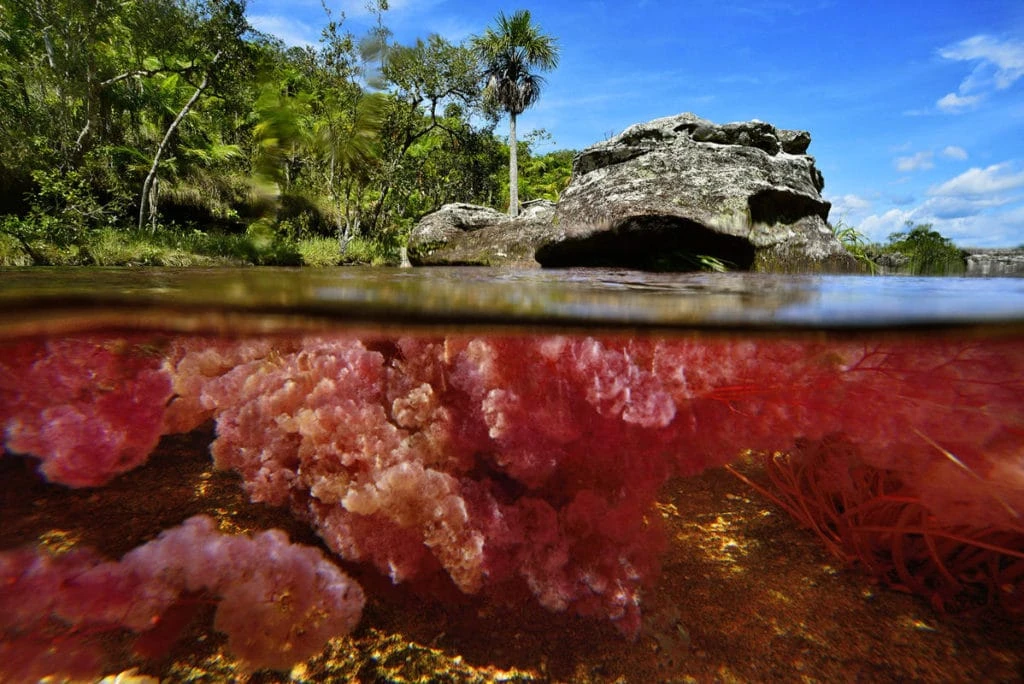
Shades of yellow, black, turquoise, and green are produced by other aquatic species. Because this burst of color peaks during the warm season, the river is open to visitors from June through November. Seeing it in person is a testament to nature's limitlessness. 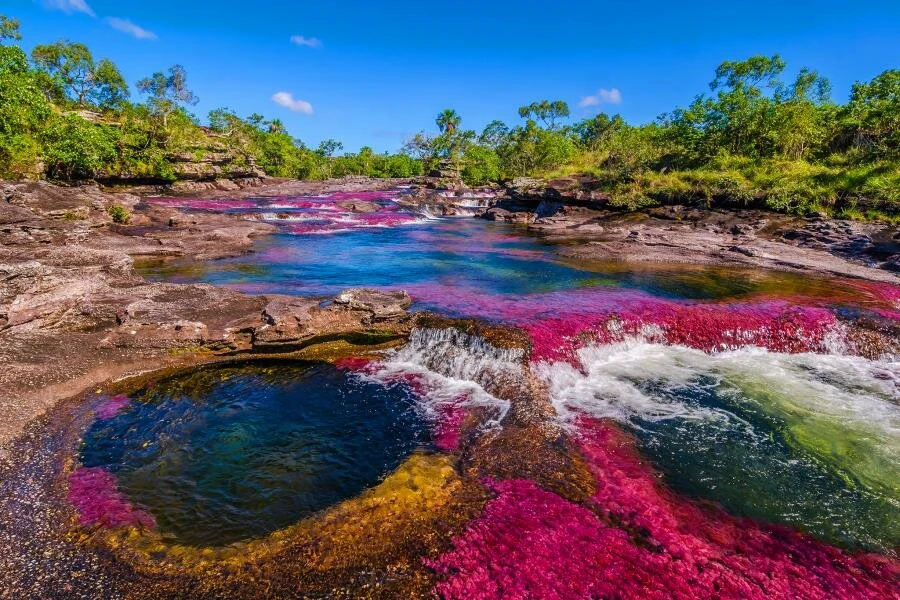
Stepping onto the banks of Caño Cristales, you immediately realize you've arrived somewhere extraordinary. Widely regarded as the most beautiful river in the world, reaching it is an adventure in itself: travelers fly from Villavicencio to the town of La Macarena, take a boat journey, and finish with a trek along remote trails leading to this natural marvel.
Winding through dense jungle, Caño Cristales is modest in size—less than 100 kilometers long and about 20 meters wide—making it tiny compared to the giant Amazon. Yet what it lacks in scale, it makes up for in brilliance, acting as a vivid kaleidoscope dominated by shades of red, yellow, blue, and green.
Long strands of
Macarenia clavigera
—purple, crimson, pink, and, in shaded spots, soft green—carpet the riverbed, swaying gently beneath the current. Found nowhere else on Earth, this plant forms a plush, living tapestry within Sierra de la Macarena National Natural Park. 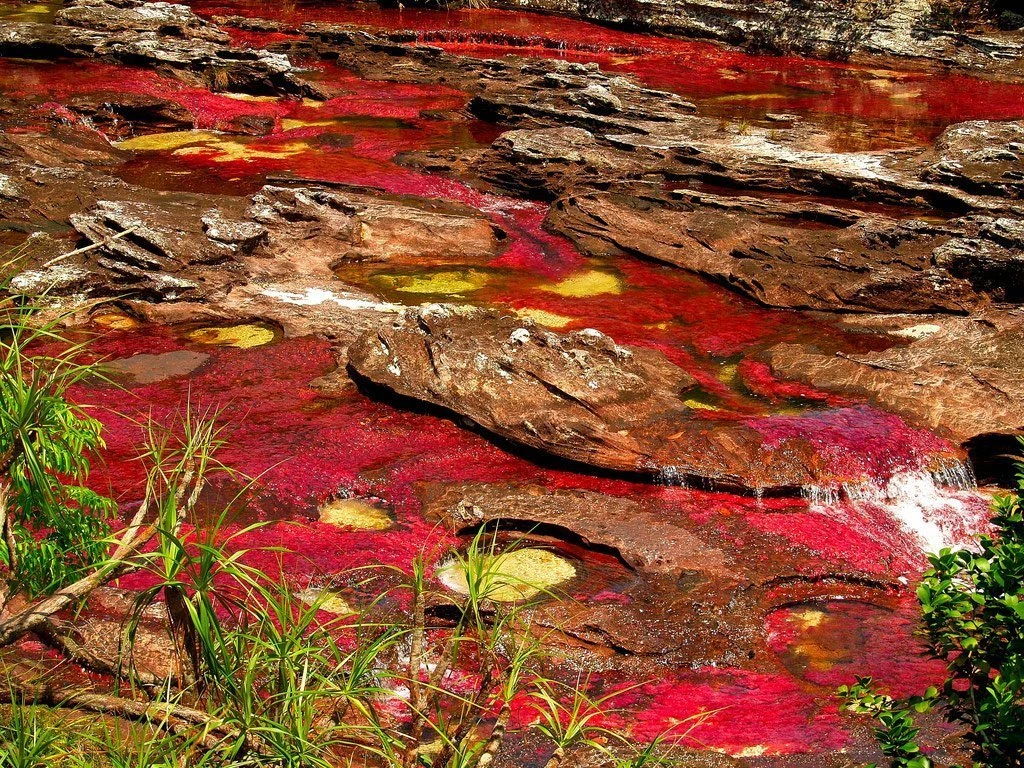
In deeper stretches, natural erosion has carved circular rock pits known as
moyas
—deep, colorful, natural pools. Swimming in these basins feels like a rebirth: a total sense of peace, weightlessness, and mental clarity. Far from civilization, there is only the sun, the jungle, the sky, moss-covered rocks, a falcon soaring high in the warm air, and cool, crystal-clear water invigorating every cell. 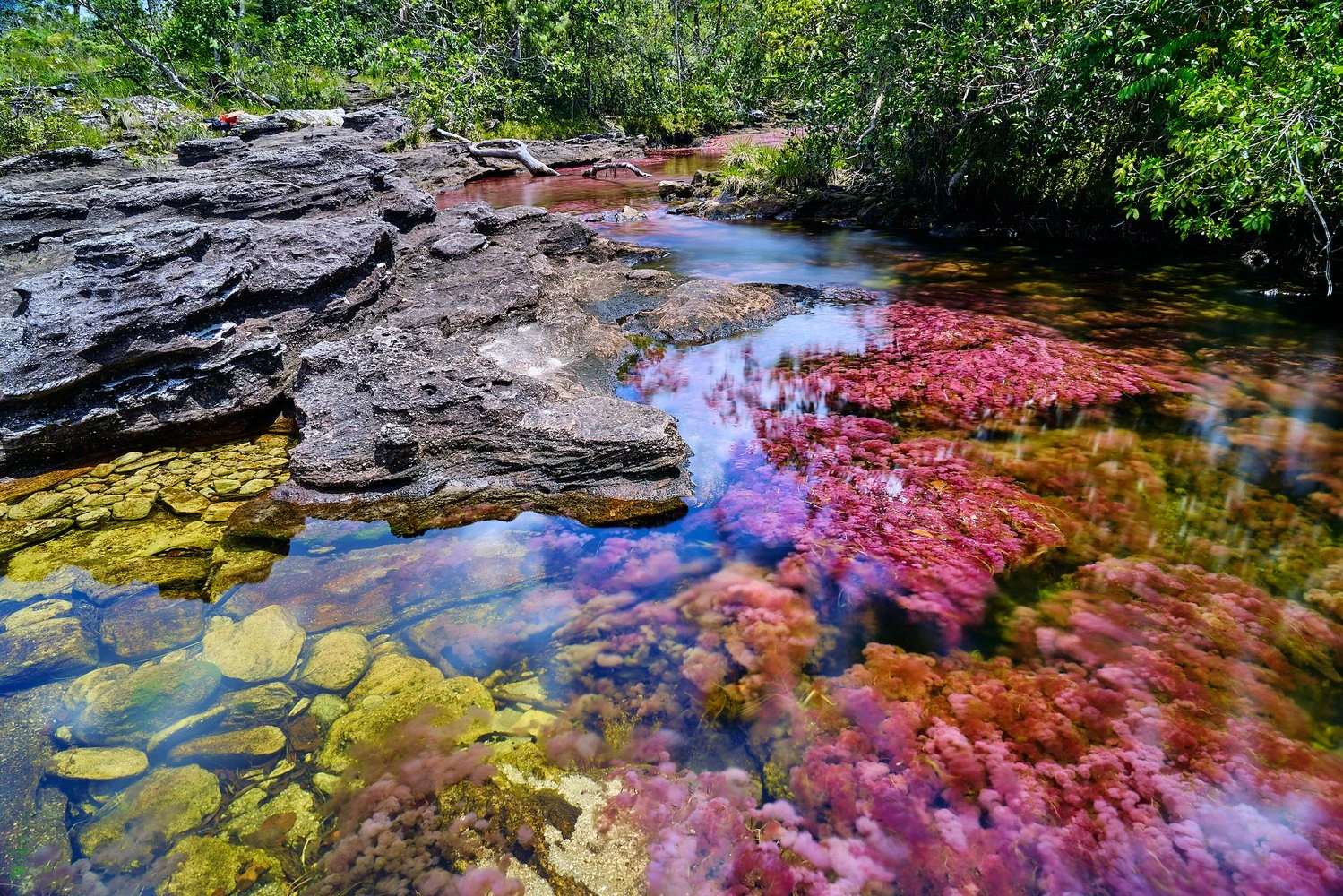
Recent studies by local naturalists reveal that the water is exceptionally pure—nearly equivalent to distilled water. Lacking essential minerals and salts, it is not suitable for drinking, nor can it support much aquatic life.
Because the oxygen-rich rainwater and mountain runoff flow over smooth rock, free of silt and sediment, other aquatic vegetation cannot take root. With virtually no food source available, only a few small, hardy fish species manage to survive here. 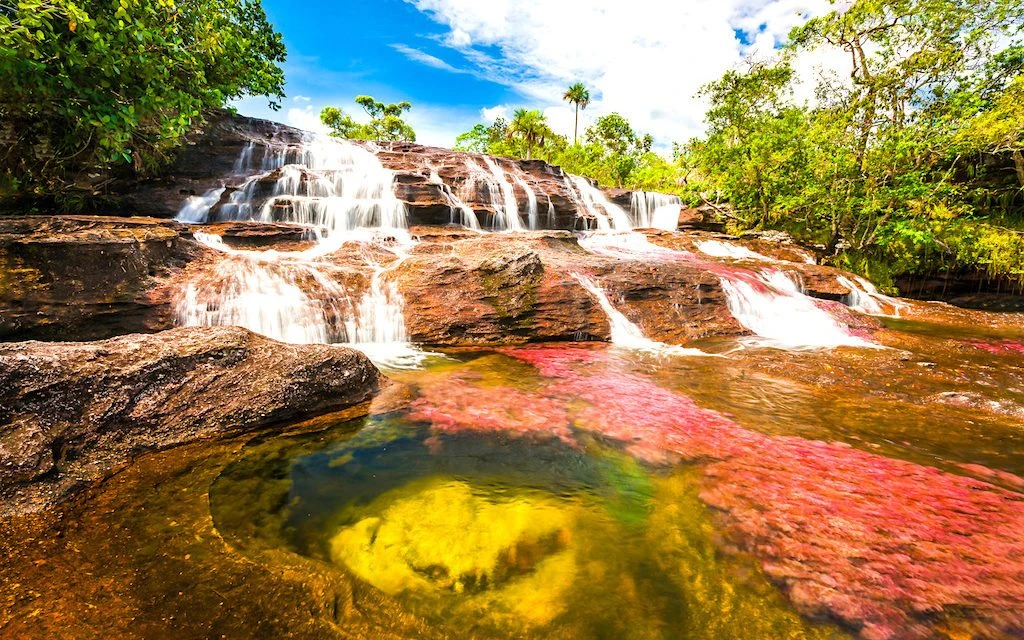
Visitors can also explore a cascading waterfall known as "The Staircase," where hidden grottos lie behind shimmering sheets of water and bats nest in the cliffs. Along the riverbanks, massive, flat rock formations lie scattered as if tossed by a giant's hand. 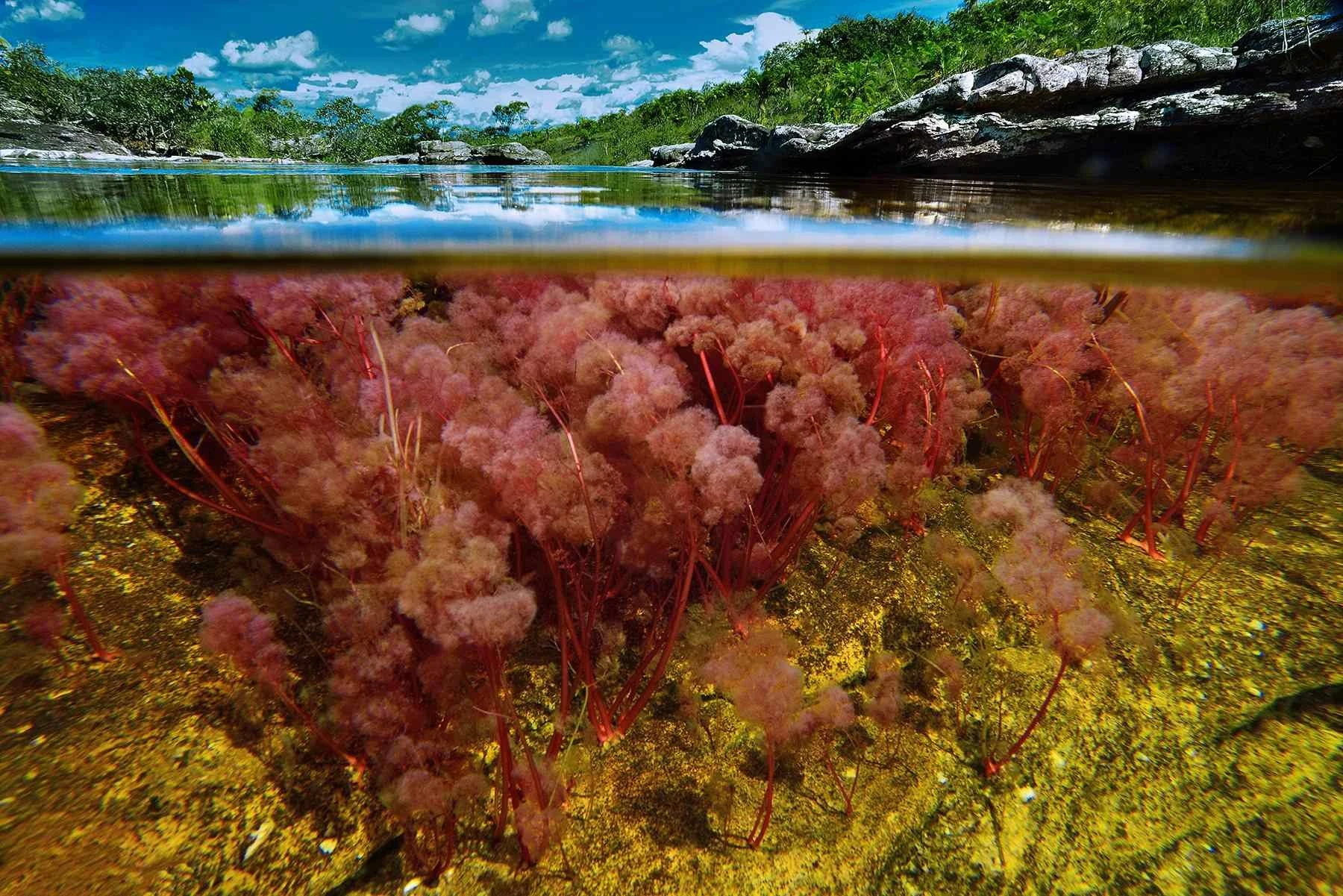
Dark, damp caves—legendary realms of witches and
Mohanes
, the mythical water spirits of Colombia said to guard hidden fortunes—add to the river's mystique. Long before Spanish colonization, indigenous peoples viewed these rivers, lakes, and caverns as portals to the underworld: a sacred realm of moisture, night, femininity, the womb, and the mystery of creation. 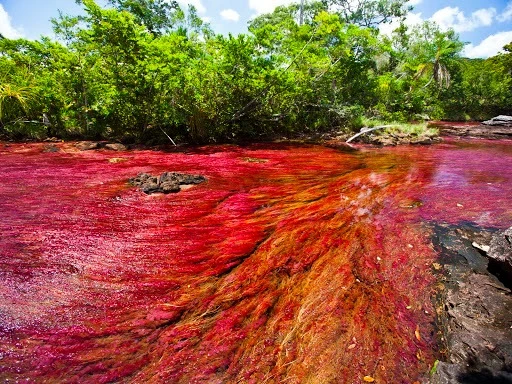
Access to the river is strictly prohibited during the winter and spring. As a protected natural heritage site, rigorous conservation measures are enforced to safeguard its fragile ecosystem. 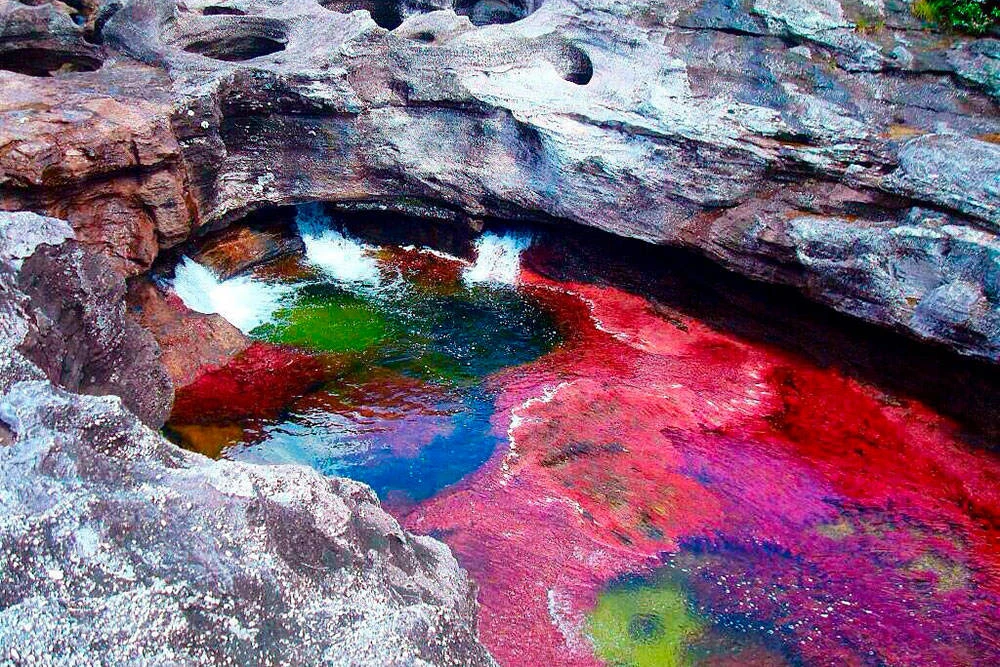
The Serranía de la Macarena mountain range dates back 1.2 million years. It forms the western extension of the Guiana Shield—a massive geological formation extending across Venezuela, Guyana, and Brazil that is considered one of the oldest on Earth. Other rivers in the region, such as Siete Machos, also showcase red algae, which cling tightly to the rocks where the currents run fastest. 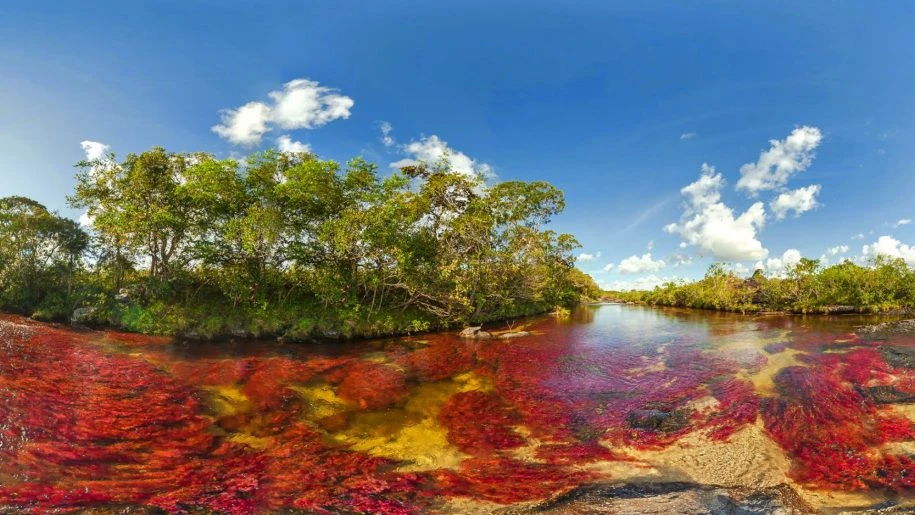
Scientists worldwide refer to the Macarena region as a "seedbed of biodiversity." Existing since the formation of the Andes, experts believe this ancient landscape served as a crucial evolutionary cradle, fueling the spread of species across the continent.