Which Living Animals Are the Closest Relatives of Dinosaurs? (5 Photos)
I polled 100 random social media users aged 30 to 60 and asked them one simple question: "Which living animal is closest to dinosaurs?" Most said crocodiles. Lizards came in second, followed by turtles. I can see why: they're scaly reptiles with a distinctly prehistoric look.
But every single one of those answers is wrong. 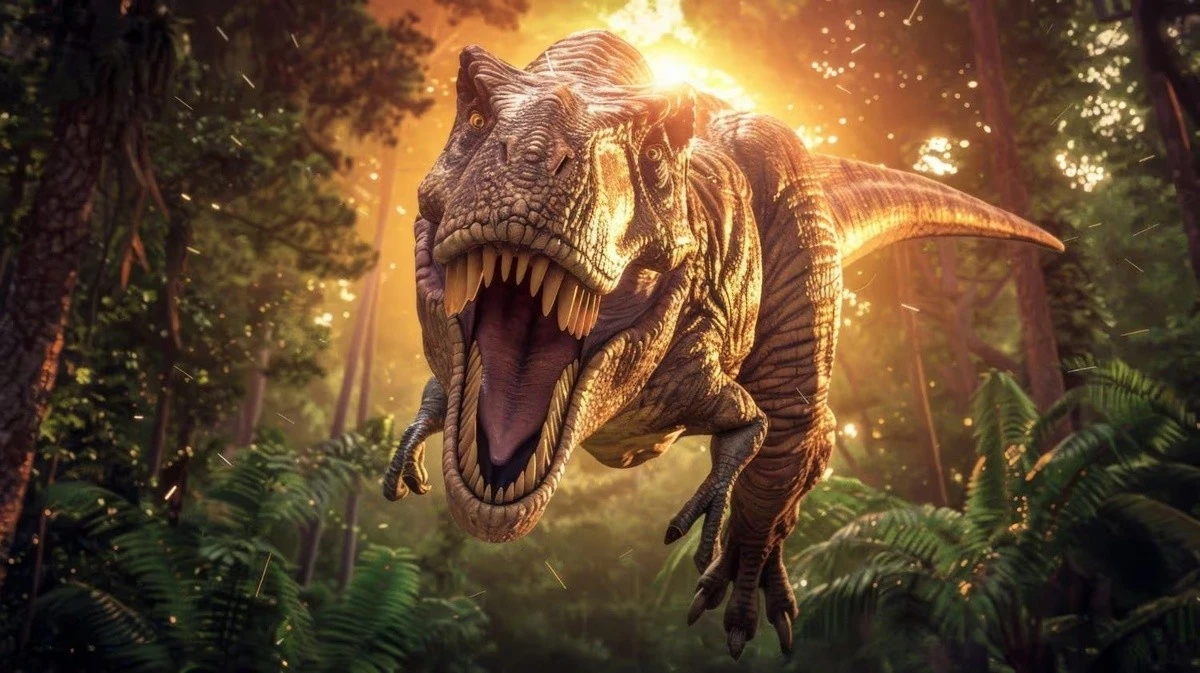
The closest living relatives of dinosaurs don't live in swamps or terrariums. They soar overhead, peck at seeds in the park, and sing outside your window in the morning—and sometimes at night. As you've probably guessed, they are birds. What's more, birds aren't just related to dinosaurs. They are dinosaurs. Literally.
Birds Are the Dinosaurs That Survived
According to modern cladistics—a classification system based on evolutionary relationships—birds belong to the dinosaur clade (Dinosauria). This isn't a metaphor or a simplified pop-science talking point; it is a solid taxonomic fact. Birds are direct descendants of a group of bipedal, mostly carnivorous dinosaurs known as theropods, and they are the only members of this lineage to survive the mass extinction event 66 million years ago.
Tyrannosaurus, Velociraptor, and Allosaurus were all theropods. And every one of them is more closely related to a modern sparrow than to a Stegosaurus or Triceratops, which belonged to entirely different dinosaur branches. 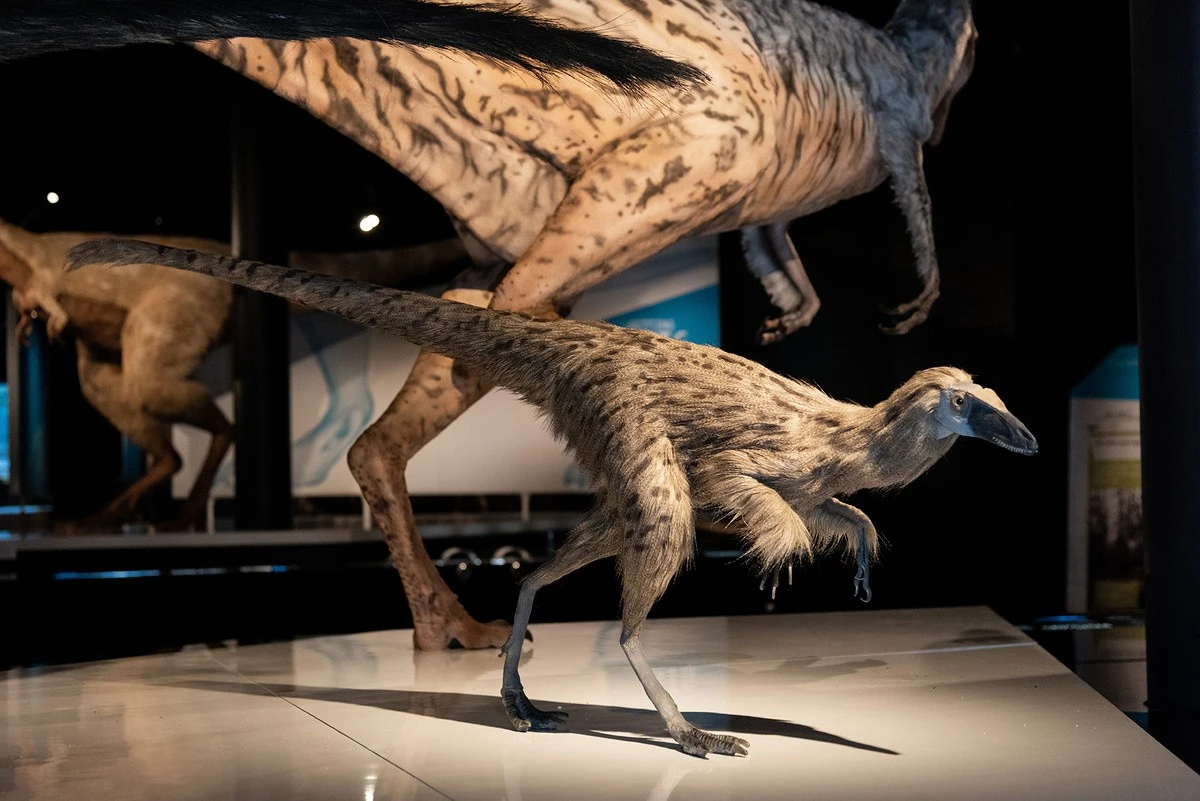
Dromiceiomimus, a genus of theropod dinosaur in the family Ornithomimidae
The evidence has been mounting for decades. Paleontologists first discovered that many theropods shared hollow bones with birds. Later, fossils with feather impressions began to turn up—first on small dinosaurs, then on larger ones. During the 1990s, a construction boom and resource extraction in China led to the discovery of dozens of feathered dinosaur species, some no bigger than a modern chicken. 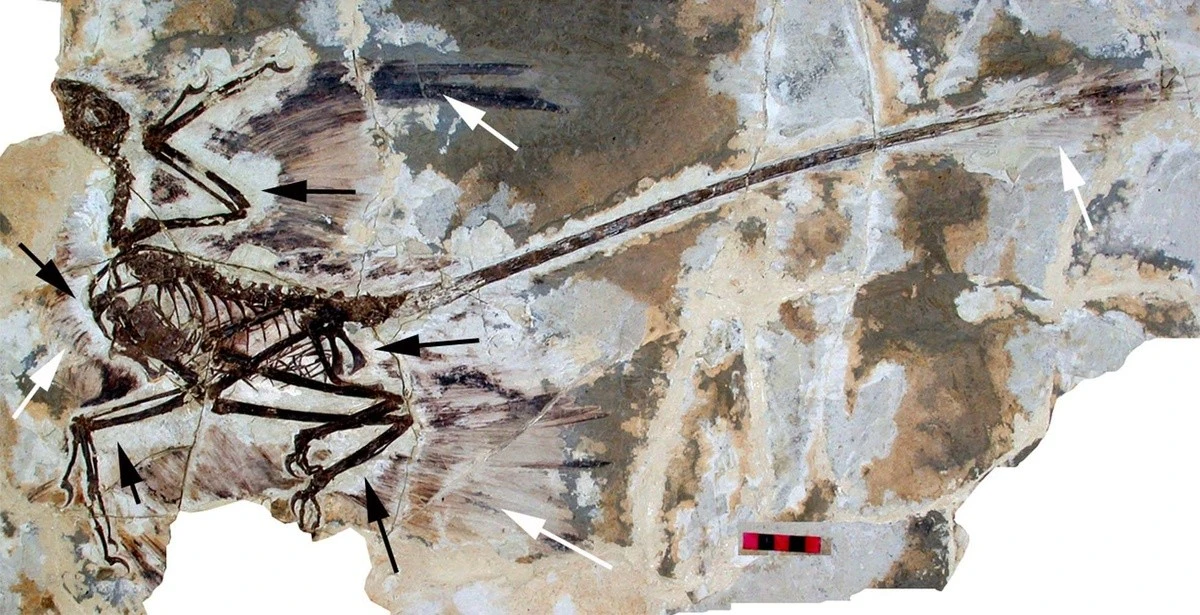
Holotype of Microraptor showing long feather impressions on its forelimbs
The boundary between "dinosaur" and "bird" quickly blurred. Archaeopteryx, long celebrated as the "first bird," turned out to be just one of many feathered dinosaurs.
Crocodiles Are Distant Dinosaur Cousins
Crocodiles belong to the archosaurs ("ruling reptiles"), a group that includes dinosaurs, pterosaurs, and crocodilians. But the last common ancestor shared by crocodiles and dinosaurs roamed the Earth in the Early Triassic period, roughly 250 million years ago.
From there, the evolutionary tree branched, and their paths parted forever. Crocodiles stayed crocodiles, their appearance remaining largely unchanged for hundreds of millions of years. Dinosaurs, meanwhile, rapidly evolved—and some of them became birds. In other words, a crocodile and a chicken are about as closely related as a human and a mouse: they share a common ancestor, but you have to go back a very long way to find it.
What About Lizards, Turtles, and Snakes?
Lizards and snakes aren't archosaurs at all. They belong to the group Squamata, having diverged from the dinosaur lineage even earlier—about 270 million years ago. Turtles represent another ancient, distinct reptile group that split off roughly 250 to 260 million years ago. 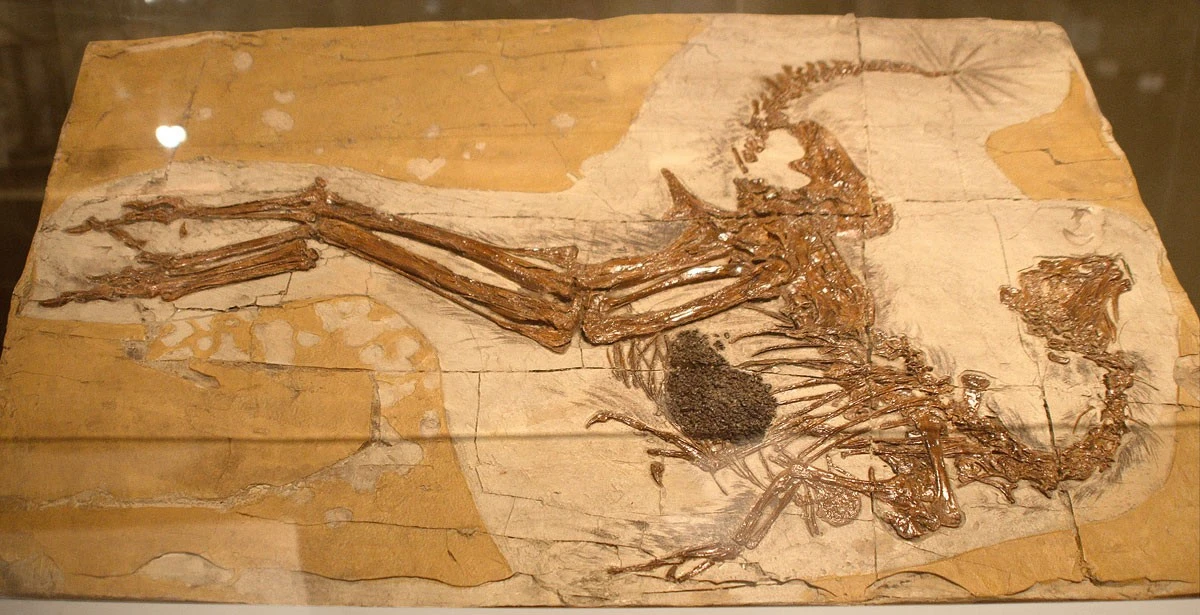
Fossil cast of Caudipteryx showing feather impressions and preserved stomach contents
The Chicken and the T. Rex
Here is a fact worth pondering: a humble chicken is genetically and evolutionarily closer to a fearsome Tyrannosaurus rex than a living crocodile is. The chicken is a direct descendant of theropods—the same group T. rex belonged to. A crocodile is a relative from a different archosaur branch that split off long before the first dinosaurs ever appeared.
If you picture the history of life on Earth as a branching tree, chickens and T. rex sit on the very same bough. Crocodiles occupy an adjacent, separate branch. Lizards, turtles, and snakes are off on an entirely different part of the tree.
In 2007, paleontologists even recovered collagen protein from a T. rex fossil—and its structure turned out to be closer to a chicken's than a crocodile's. It was direct biochemical confirmation of their close relationship. 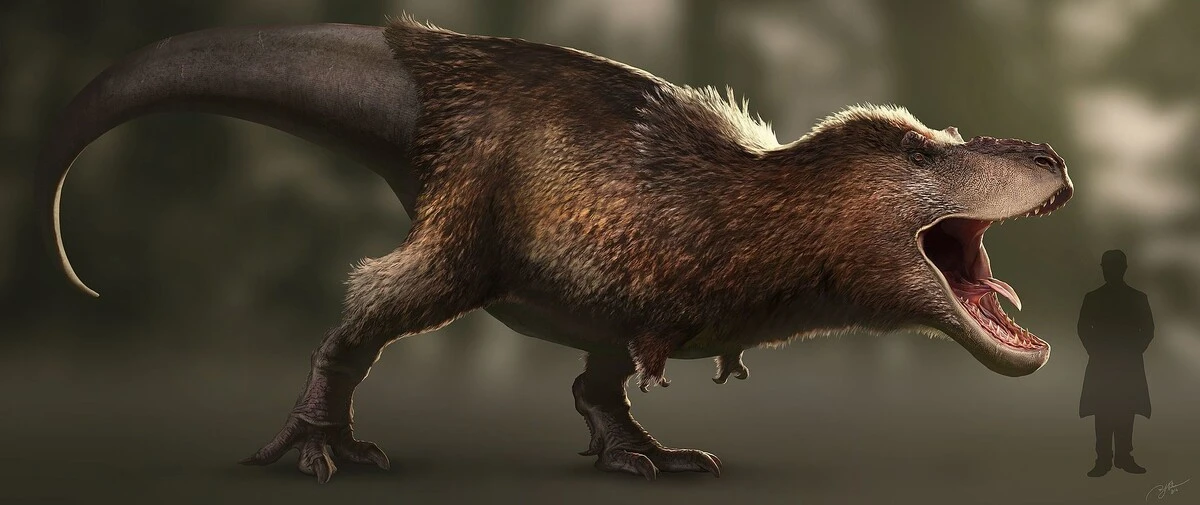
Life reconstruction of Tyrannosaurus rex
Food for Thought
The mass extinction didn't wipe out all dinosaurs. One lineage—the theropods—survived a planetary catastrophe and managed to adapt to a new world. Today, between 10,000 and 11,000 bird species live on Earth. That is significantly more than all mammal species combined (around 6,500).
So the next time you see pigeons darting around a park or crows calling out to each other, remember: you aren't just looking at relatives of dinosaurs. You are looking at actual dinosaurs. They may be small, feathered, and singing outside your window, but they are remarkably successful survivors of a world-ending event.