Belka, Strelka, and the Furry Pioneers: The History of Animals in Space (13 photos)
On August 19, 1960, a spacecraft carrying two stray dogs—Belka and Strelka—launched into Earth orbit. They became the first living creatures to survive an orbital flight and return safely home. Sharing the ride were a rabbit, forty mice, two rats, and several flies, all of which survived the mission unscathed. Three years earlier, a stray named Laika paved the way into orbit on a tragic one-way mission. After Belka and Strelka, space saw macaques, a cat, frogs, and even mice spinning in centrifuges to simulate Martian gravity. Here is the full story of space-faring animals—from the early casualties of the Space Race to the cutting-edge experiments taking place on the ISS in 2026. 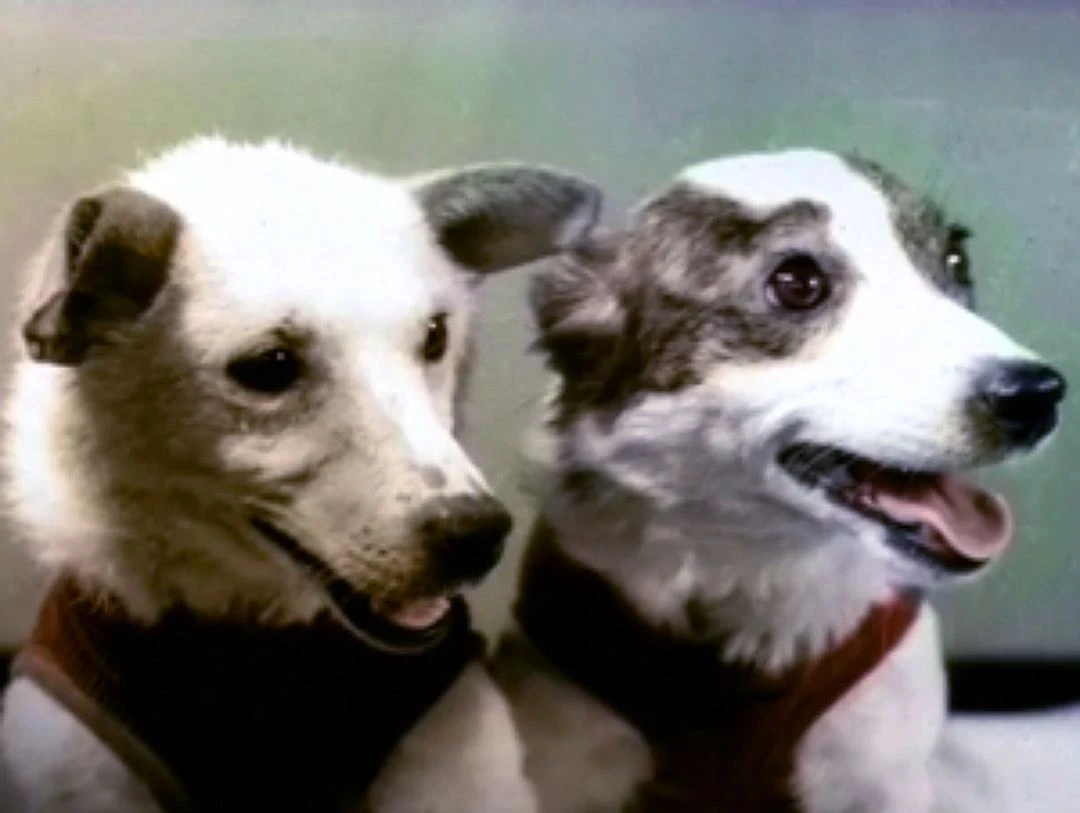
Laika
On November 3, 1957, Sputnik 2 reached Earth orbit, carrying the first warm-blooded creature beyond the atmosphere: Laika, a three-year-old stray dog. The goal was to test whether living organisms could survive at altitudes of 100 to 110 kilometers. The spacecraft was not designed to return to Earth—in 1957, the technology to deorbit a capsule simply did not exist. 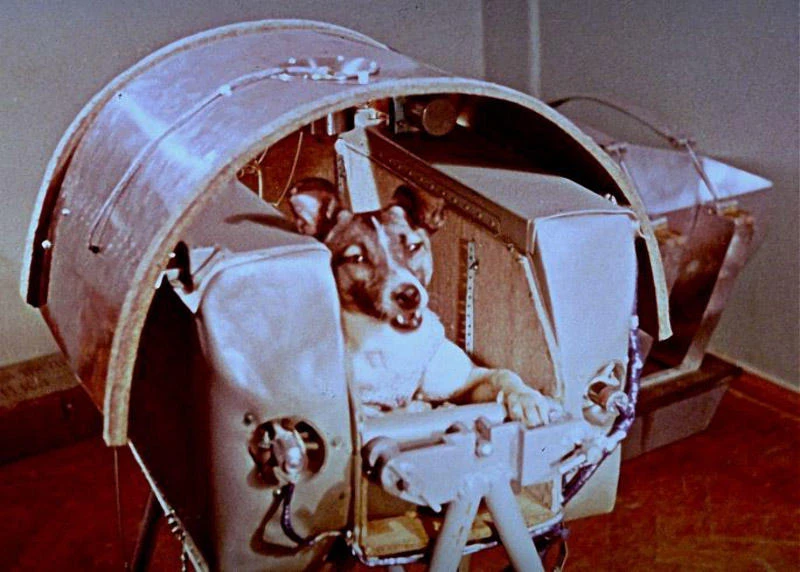
Laika being prepared for flight inside Sputnik 2's pressurized cabin
Laika died five to seven hours after launch when the thermal control system failed, causing cabin temperatures to soar past 100°F (40°C). Scientists had hoped she would survive for about a week in orbit. Soviet authorities concealed the true timeline of her death for decades, initially claiming she had survived for several days. Despite the tragic outcome, the mission proved a crucial point: a living organism could endure the stress of launch and weightlessness, clearing the path for human spaceflight.
Able
On May 28, 1959, Able, a rhesus macaque, and Miss Baker, a squirrel monkey, blasted off from Cape Canaveral aboard a Jupiter AM-18 rocket. The suborbital flight carried the animals 480 kilometers (300 miles) above Earth at speeds exceeding 16,000 km/h (10,000 mph), exposing them to peak forces of 38g. Out of the 16-minute flight, nine minutes were spent in weightlessness. Able, who was recruited from a Kansas zoo, showed high stress levels, recording elevated blood pressure and rapid breathing. 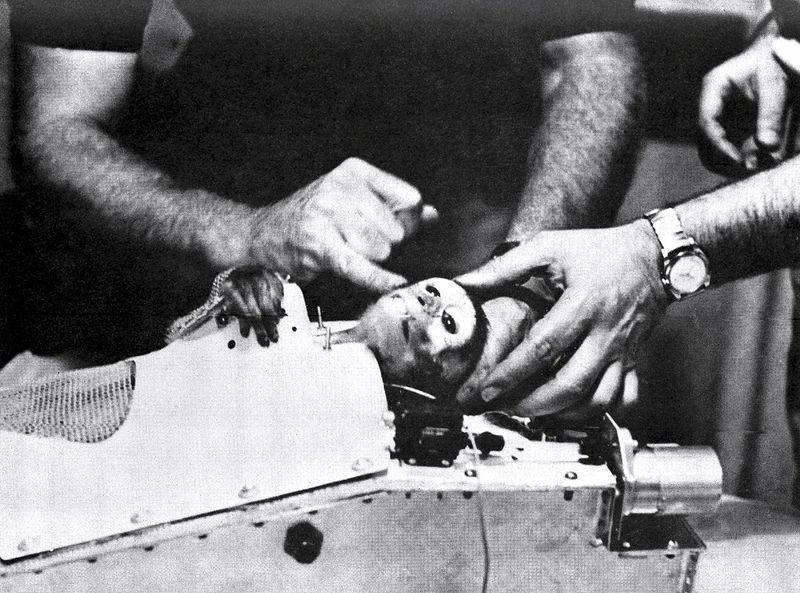
Able the macaque after landing, prior to surgery to remove her sensors
Both monkeys returned to Earth safely, becoming the first primates to survive space travel. However, the triumph was short-lived: a few days later, Able died on the operating table when her heart failed under anesthesia while doctors were removing electrodes embedded in her muscles and brain. Today, Able's taxidermied body is preserved at the Smithsonian's National Air and Space Museum in Washington, D.C.
Baker
Able’s flight companion fared much better. Miss Baker, purchased for the experiment from a pet shop in Miami, suffered no ill effects from the journey. She went on to live a long life at the U.S. Space & Rocket Center in Huntsville, Alabama. Thanks to her resilient nature, the squirrel monkey became a celebrity, with reporters frequently updating the public on her wellbeing and visitors bringing her bananas. 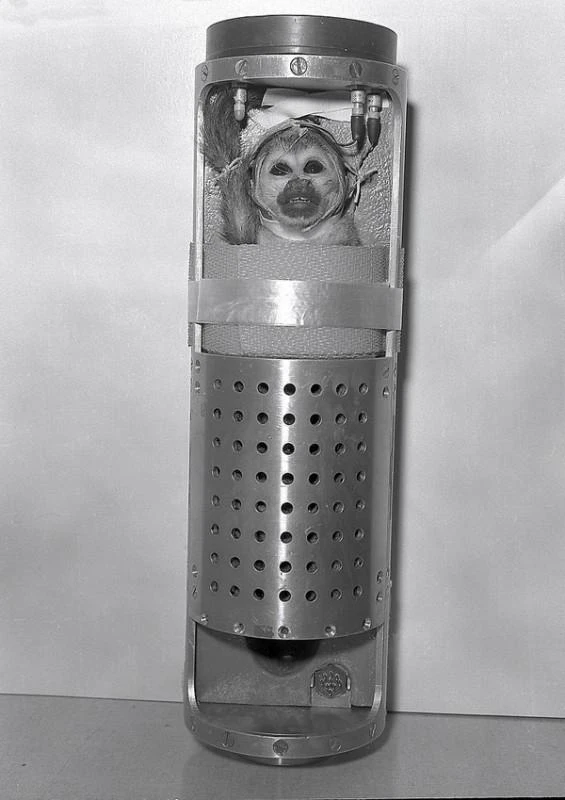
Miss Baker inside the BIOPACK container where she spent the duration of the flight
Miss Baker passed away from kidney failure on November 29, 1984, at the age of 27, setting a record as the oldest known squirrel monkey. She was buried on the grounds of the U.S. Space & Rocket Center in Huntsville, next to her first "husband," Big George. To this day, fans visit her grave and leave bananas on her tombstone.
Otvazhnaya, Snezhinka, and Marfusha
In July 1959, three passengers were launched into space together: two dogs, Otvazhnaya ("Brave One") and Snezhinka ("Snowflake"), alongside a rabbit named Marfusha ("Little Martha"). Their flight was part of an extensive Soviet suborbital rocket program used by engineers to test life-support systems long before Yuri Gagarin's historic mission. 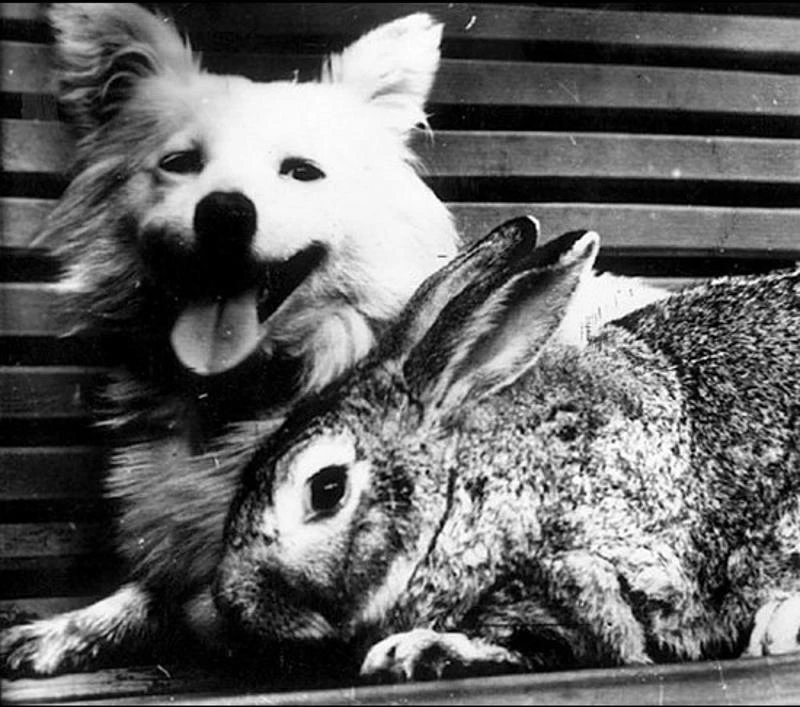
Otvazhnaya (left) and Marfusha the rabbit (right) before launch
Otvazhnaya proved to be one of the most seasoned space dogs in the Soviet program, flying a total of five times and returning safely after every launch. Though Snezhinka does not appear in this photo, she flew on the same mission; her capsule, along with Marfusha's, safely parachuted back to Earth.
Miss Sam
Miss Sam, a rhesus macaque, helped test the launch escape system designed for NASA's Mercury astronauts in the event of a booster failure. On January 21, 1960, she was launched from Wallops Island, Virginia, aboard a Little Joe 1B rocket carrying a model Mercury capsule. The flight took the monkey to an altitude of roughly 15 kilometers (9 miles) and lasted eight minutes and 35 seconds. 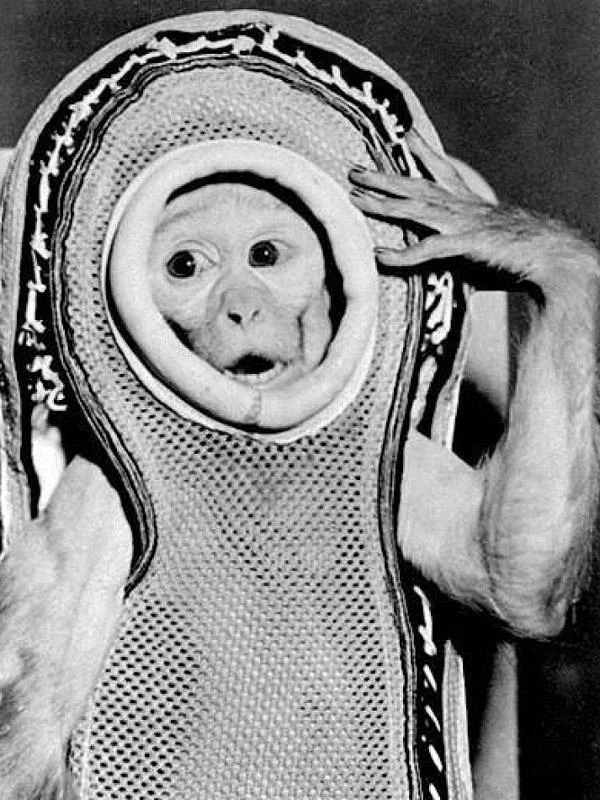
Miss Sam suited up prior to her test flight
A Marine Corps helicopter recovered Miss Sam's capsule from the Atlantic Ocean just 45 minutes after splashdown. She emerged in good health, playing a key role in validating safety systems that would help protect future human crews.
Belka and Strelka
This pair of Soviet strays became the most famous spacefaring animals in history. On August 19, 1960, after a year of rigorous training, Belka ("Squirrel") and Strelka ("Little Arrow") became the first living creatures to complete an orbital spaceflight and return safely to Earth. Launched from the Baikonur Cosmodrome aboard Sputnik 5, their spacecraft completed 17 orbits in just over 25 hours. 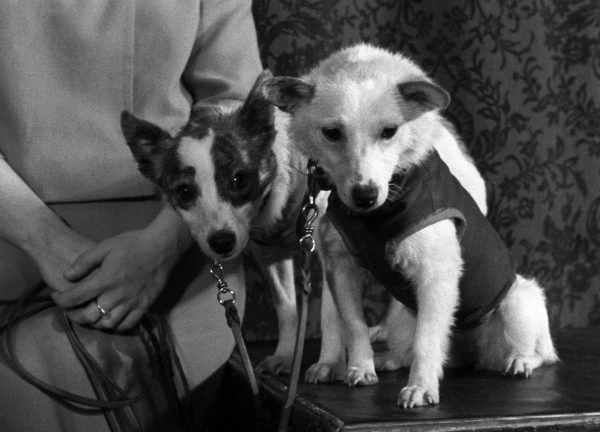
Belka and Strelka at a TASS press conference three days after their flight
Before launch, engineers faced a daunting challenge: maintaining a safe temperature inside the cabin, as the dogs struggled in the heat. For the flight, they were fitted with custom red and green suits. Television footage later broadcast images of the dogs floating in microgravity—Strelka remained cautious, while Belka barked excitedly. Neither dog flew in space again, spending the rest of their lives comfortably at a research institute.
Ham
Just eleven days after John F. Kennedy was sworn in as President, NASA launched a chimpanzee named Ham on a suborbital flight. Originally from Cameroon in West Africa, Ham had been captured as an infant by poachers and sold to the U.S. military. He trained in a specialized "chimp astronaut" program at Holloman Air Force Base alongside 65 other primates. 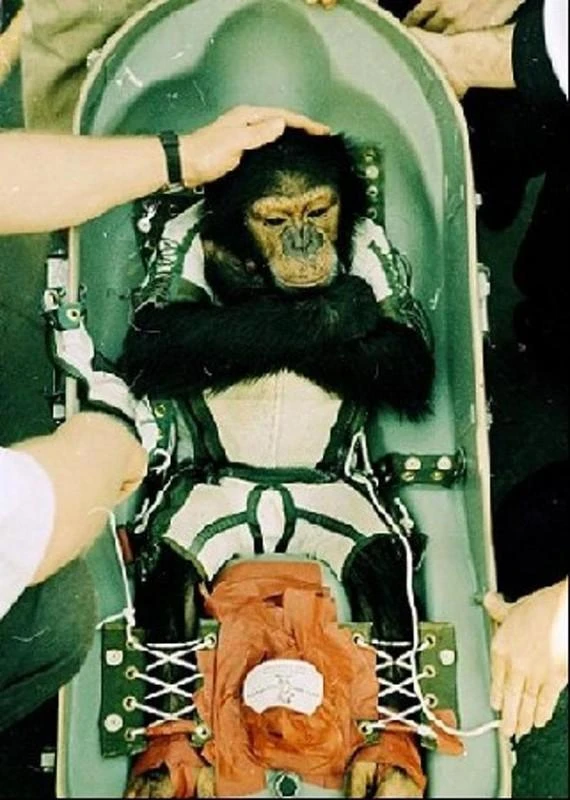
Ham rests on the deck of the recovery ship after splashdown
On January 31, 1961, the Mercury-Redstone 2 spacecraft carried Ham to an altitude of 253 kilometers (157 miles)—more than 70 kilometers higher than planned—traveling 679 kilometers in 16 minutes and 39 seconds. Despite a partial loss of cabin pressure, his flight suit protected him, and Ham suffered only a bruised nose. Rewarded with an apple slice and half an orange for pulling levers in response to light signals, he spent the next 17 years living comfortably in zoos in Washington, D.C., and North Carolina.
Félicette
On October 18, 1963, France launched the first—and to this day only—cat into space. Originally, a male cat named Félix was slotted for the mission, but he escaped the lab shortly before launch. In his place, a black-and-white Parisian stray designated C341 took the flight. Media outlets initially referred to her as Félix, but updated her name to Félicette once her sex was disclosed. 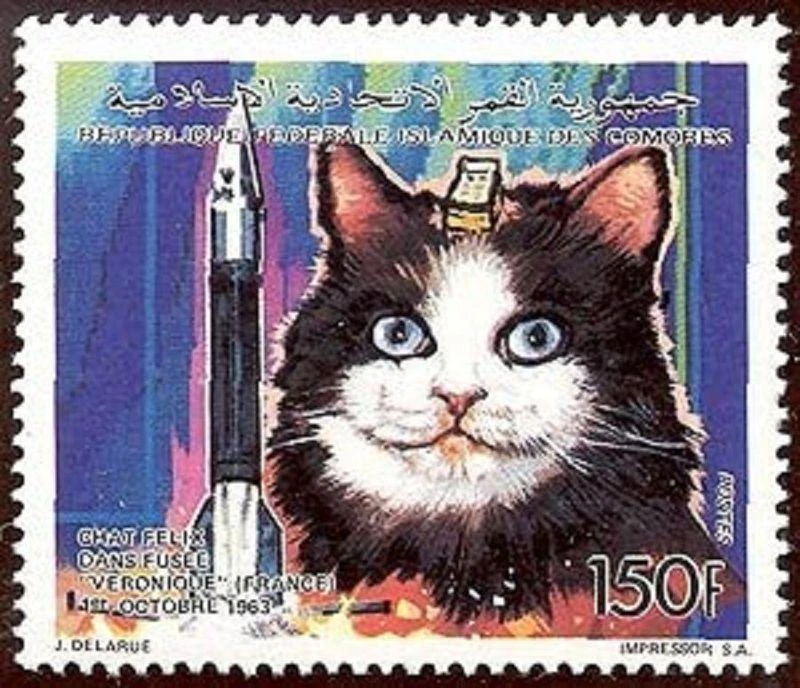
Félicette, the only cat ever to travel to space
The Véronique AG1 rocket lifted off from the Hammaguir launch site in the Algerian Sahara, carrying Félicette to an altitude of roughly 157 kilometers (97 miles). The flight lasted 13 minutes, including five minutes of weightlessness. Félicette landed safely and lived for several months while scientists monitored her condition. She was later euthanized so researchers could examine her brain. Six days later, France launched a second cat, but the rocket crashed upon ascent.
Unnamed Squirrel Monkeys
With the advent of the Space Shuttle, NASA sought to study how complex organisms handled extended spaceflight. On April 29, 1985, Space Shuttle Challenger launched on mission STS-51-B carrying the Spacelab-3 module. Onboard were two unnamed squirrel monkeys and two dozen white rats. 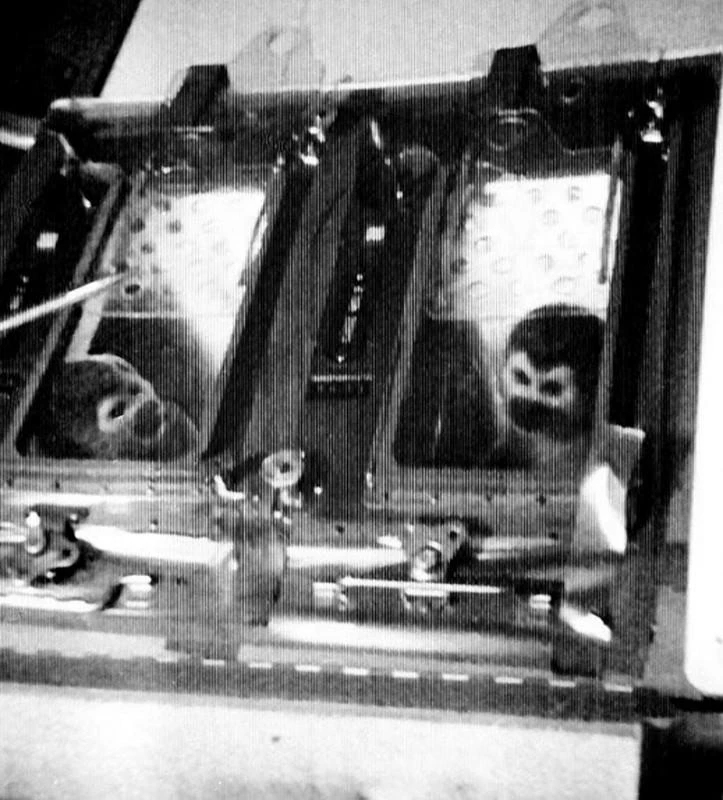
Squirrel monkeys looking out through their enclosure window
The mission concluded on May 6, 1985, with both monkeys returning to Earth unharmed. It was one of the few times NASA launched primates during the Shuttle era, as monkey flights had largely ended with the early days of the Space Race in the 1950s and 1960s.
Frogs
In 1992, amphibians took their turn. On September 12, Space Shuttle Endeavour launched on mission STS-47, carrying the Japanese Spacelab-J module for an eight-day orbital stay. Onboard, astronauts fertilized African clawed frog eggs in weightlessness to study how microgravity affected embryo development and tadpole hatching. 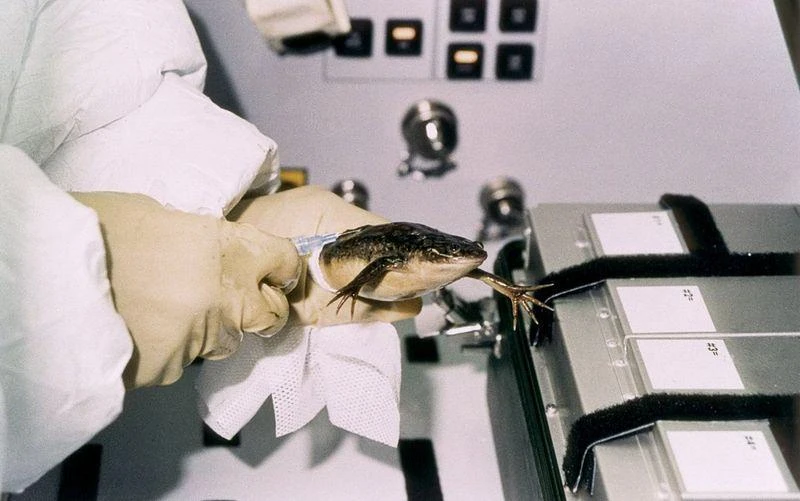
An astronaut holds a tadpole hatched in orbit
The findings were mixed: some tadpoles exhibited noticeable anomalies, including elongated tails, delayed organ development, and balance issues, while a control group showed no major abnormalities. Researchers concluded that the extreme G-forces during launch, alongside microgravity, may have played a role in these defects.
African Clawed Frogs
In April 1998, Space Shuttle Columbia launched on the 16-day Neurolab mission—the most comprehensive neuroscientific research program in spaceflight history. Among the test subjects were African clawed frog tadpoles, a long-standing model for studying the vestibular system, which governs balance. 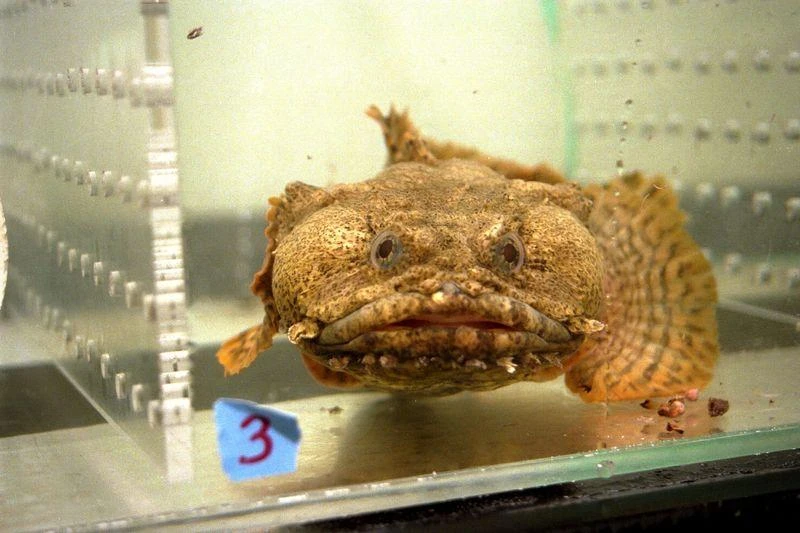
An African clawed frog tadpole, a frequent subject of orbital research
Researchers examined how microgravity affects inner ear structure and balance function across different developmental stages. Some tadpoles launched as embryos, while others had already developed vestibular systems. Scientists discovered that physical development continues normally without gravity, though post-flight balance recovery varies depending on the subject's age.
Mice and the Road to Mars
The concept of animals paving the way to interplanetary travel is no longer science fiction. An international team of scientists conducted an experiment on the International Space Station to answer a vital question: how much gravity do humans need to stay healthy during long-distance spaceflight? Inside the Japanese Kibo module, researchers installed a specialized MARS centrifuge housing 24 mice. 
The MARS centrifuge aboard the ISS creates artificial gravity for mice
By spinning at different speeds, the centrifuge simulated four gravity environments: microgravity, one-third Earth gravity, two-thirds Earth gravity, and full Earth gravity. Over the 28-day study, results revealed that preventing muscle atrophy requires at least 0.67g. These findings will help shape designs for future crewed missions to Mars—where gravity is roughly one-third of Earth's—helping engineers determine whether artificial gravity will be necessary for human safety.