Salvador Dali's Cookbook with Adult Illustrations (14 photos)
When we hear the name Salvador Dalí, images of melting watches and surrealist paintings usually come to mind. However, Dalí was not only a genius and artist, but also a culinary connoisseur. In 1973, he even published his own cookbook, Les Diners de Gala. Only 400 copies were printed. 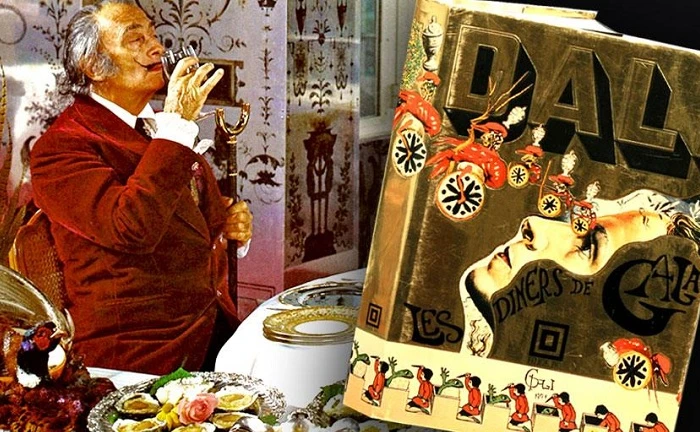
Today, anyone can buy Dalí's cookbook. That's because back in 2016, publishers decided to stop letting the genius's work gather dust on a forgotten shelf and reissued this culinary masterpiece. All 136 recipes in the book were inspired by the legendary dinners Dalí and his wife Gala enjoyed, including frog tarts, veal cutlets stuffed with snails, and more. Oh, and all this deliciousness is accompanied by rather fitting illustrations. 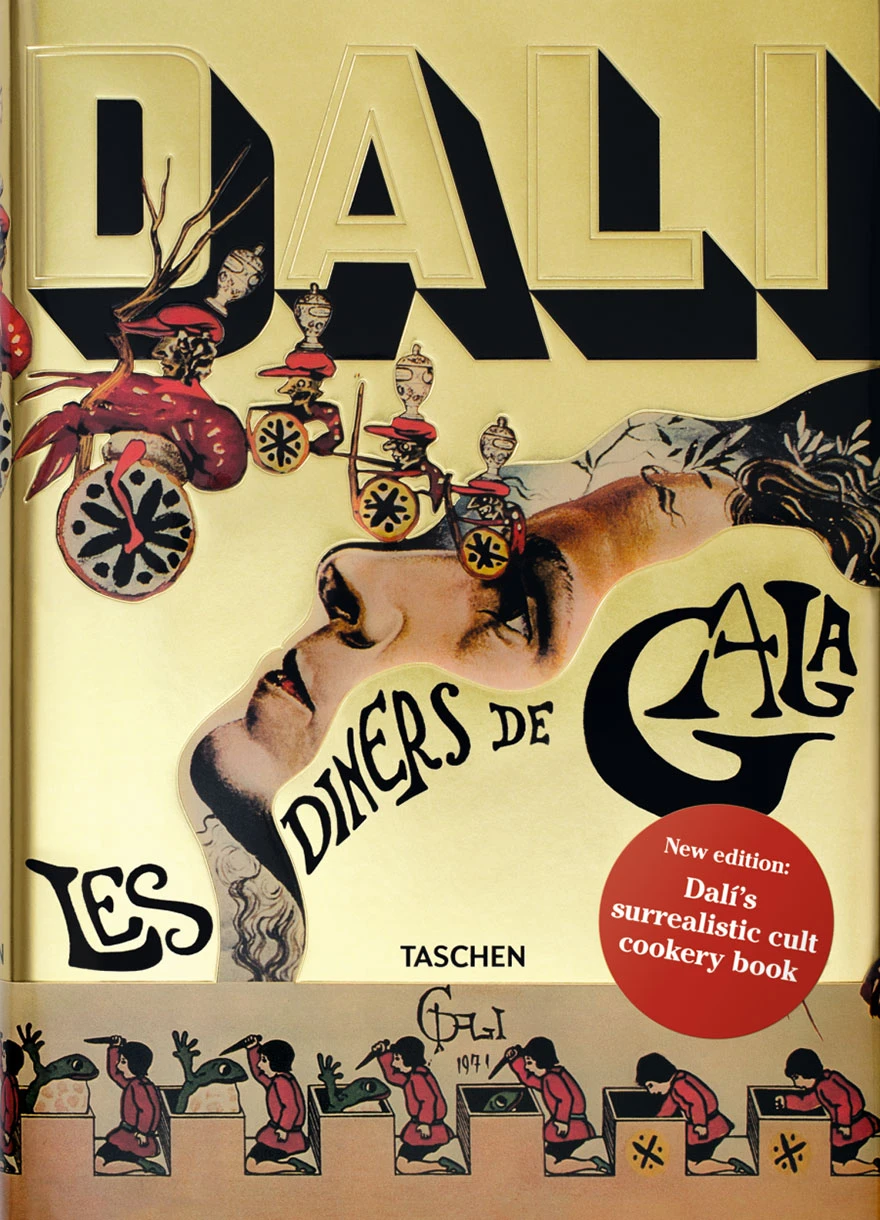
"Am I not a genius?" Dalí wrote in The Secret Life of Salvador Dalí, Told by Himself. "At six, I wanted to be a chef. At seven, Napoleon. And even later, my ambitions grew no less than my thirst for greatness."
Salvador would hardly have become Napoleon, but he could have become a chef. 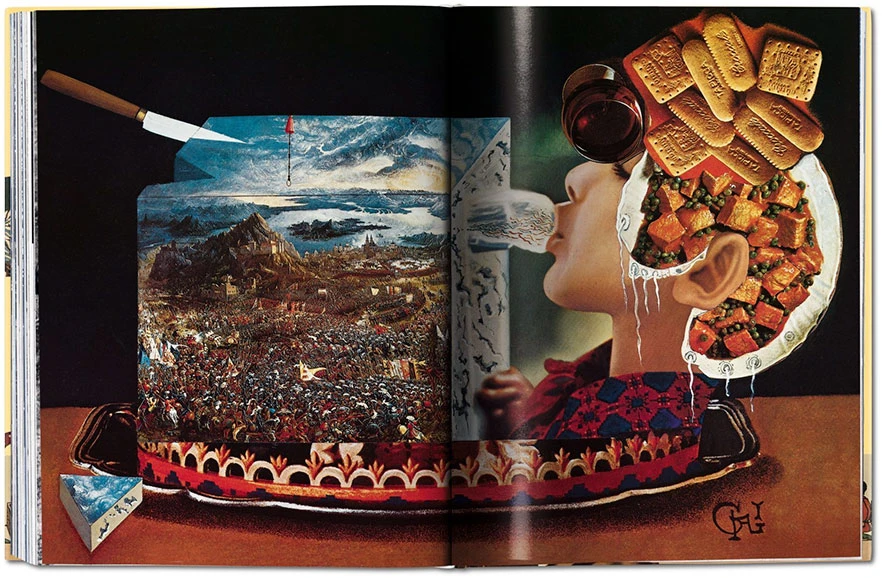
Dalí adored his wife Gala, doting on her. She became the muse for many of his works. "Without her, I am nothing," the artist said. He even named his cookbook "Les Diners de Gala." This play on two meanings: the title can be translated as either "Gala's Dinners" or "Gala Dinners." 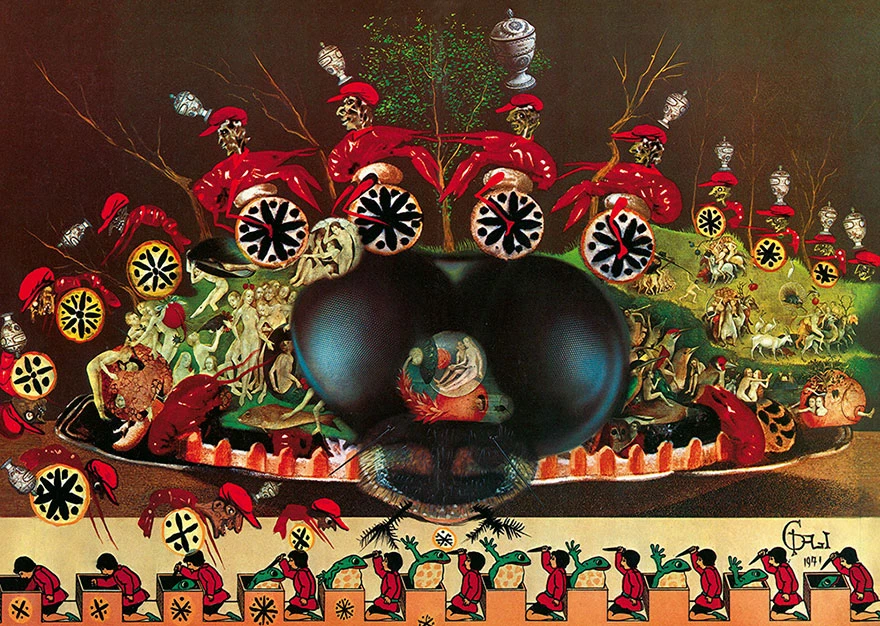
In the introduction to "Les Diners de Gala," Dalí frankly admits that the book is not for health food enthusiasts. People who eat only to survive shouldn't even open it. This book is about the enjoyment of food, about the ability to turn cooking into an art, about the earthly pleasure that food brings. 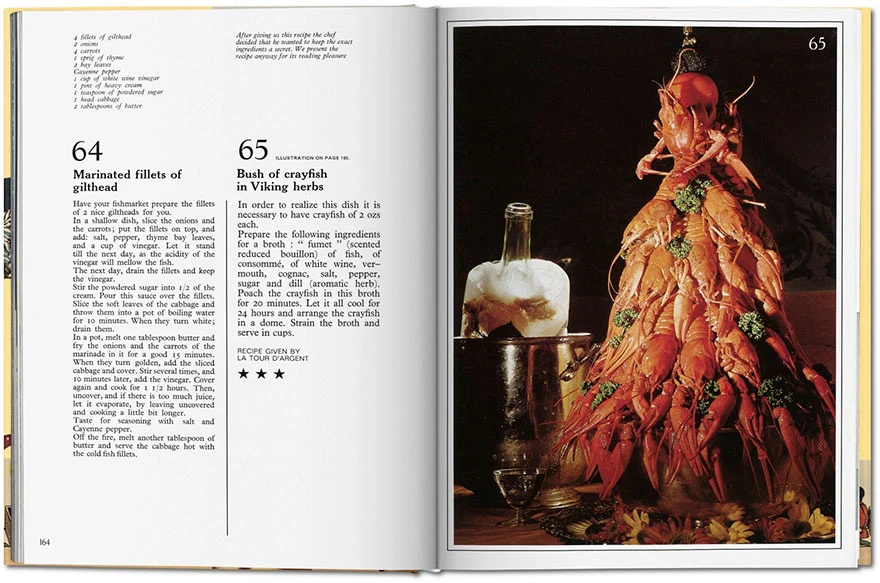
"We would like to say right away that all the recipes in "Les Diners de Gala," with their descriptions and illustrations, are entirely dedicated exclusively to the pleasures of taste. Therefore, do not look for dietary dishes here. We've deliberately ignored those diagrams and tables, where chemistry replaces gastronomy. If you're one of those calorie-counting types who turns the joy of food into a form of punishment, close this book immediately; it's too lively, aggressive, and daring for you." 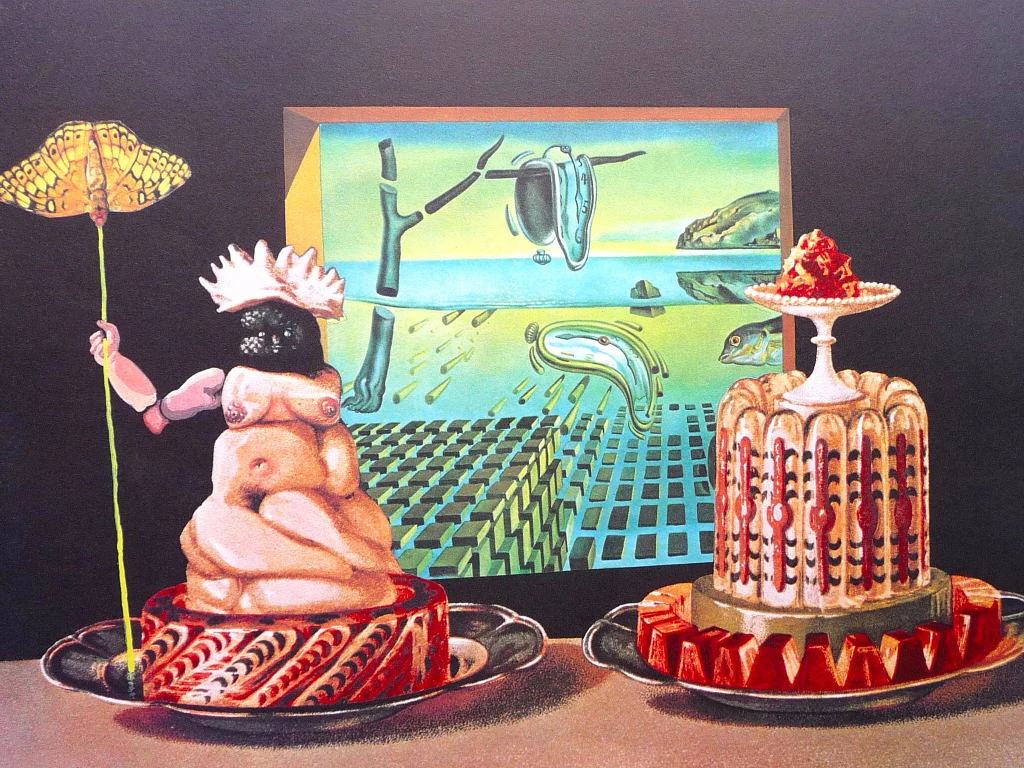
The recipes in "Les Diners de Gala" aren't presented in a dry, standard manner—ingredients, preparation method, result—but are framed by Dalí's witty asides. 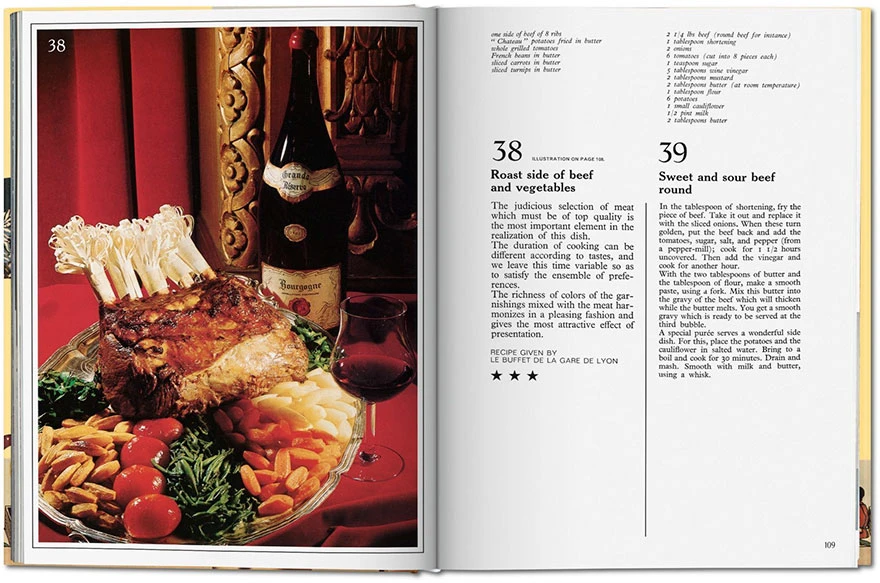
Dalí's half-philosophical, half-absurd statements about gastronomy are quite amusing. For example, about spinach:
"I want to eat only what has a clear and understandable form. And I hate the vile and degrading vegetable called spinach because it is as shapeless and indefinite as Liberty."
or this:
"The jaw is our best instrument for the perception of philosophical knowledge. The disgust that always accompanies me at the table is a strict overseer of my diet and forces me to choose my food with caution." 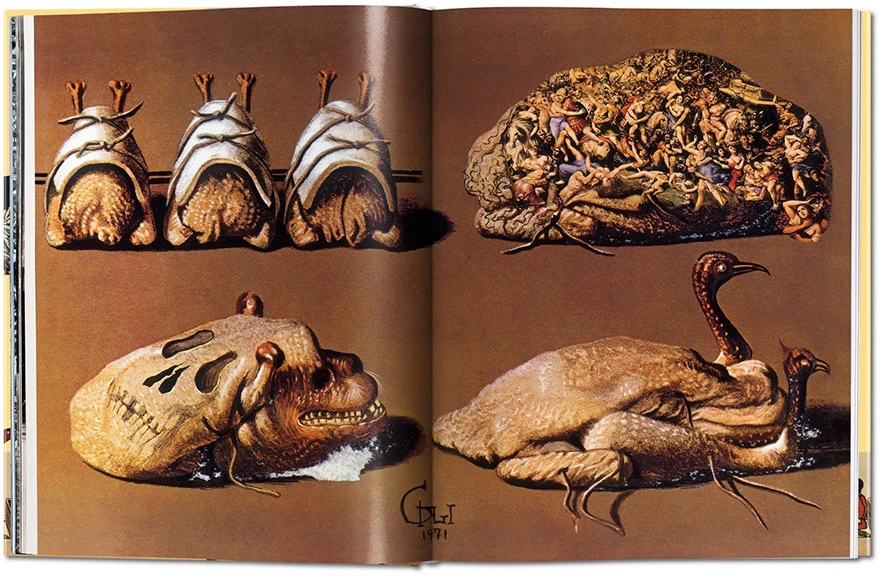
Dalí was a true gourmet and a great hedonist. This is evidenced, in particular, by the many recipes for exotic dishes contained in "Les Diners de Gala." Among them are "Peacock Royal" and "Thousand-Year Eggs Chinese Style." 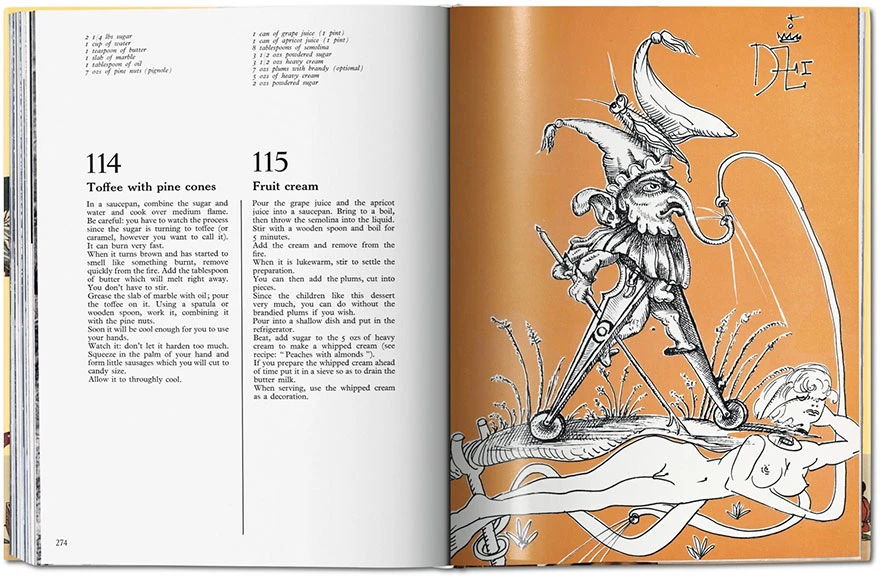
The cookbook "Les Diners de Gala" is also incredibly valuable because Salvador Dalí illustrated it himself. Each recipe illustration can be viewed as a separate work of art—perfect for display in a frame or on a museum wall. 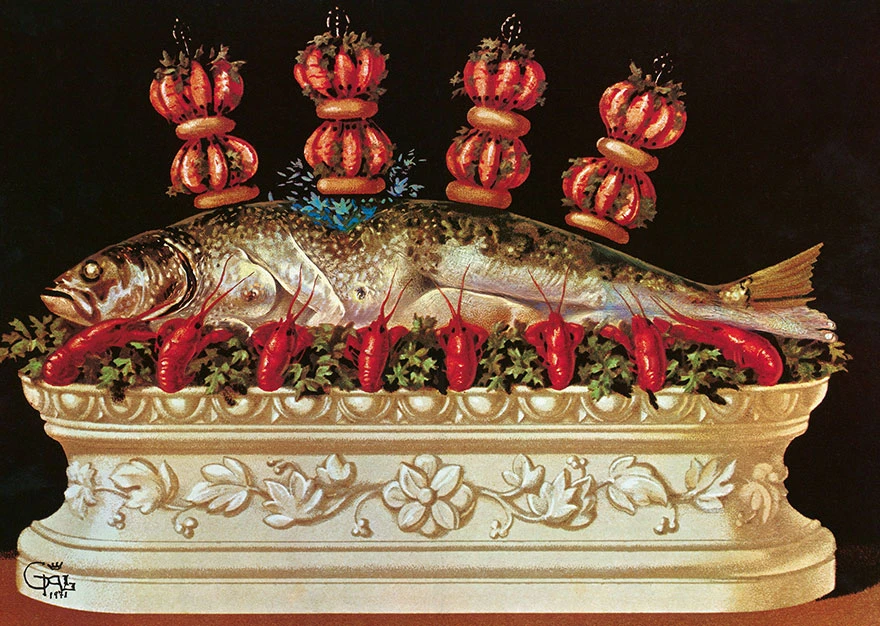
The surrealist images from "Les Diners de Gala" are a particularly important moment in the artist's oeuvre. These illustrations do not contradict the rest of Dalí's work, as might seem to those who don't connect culinary and fine art. On the contrary, they highlight the artist's signature style, cementing his position as the most famous and influential surrealist in world painting. 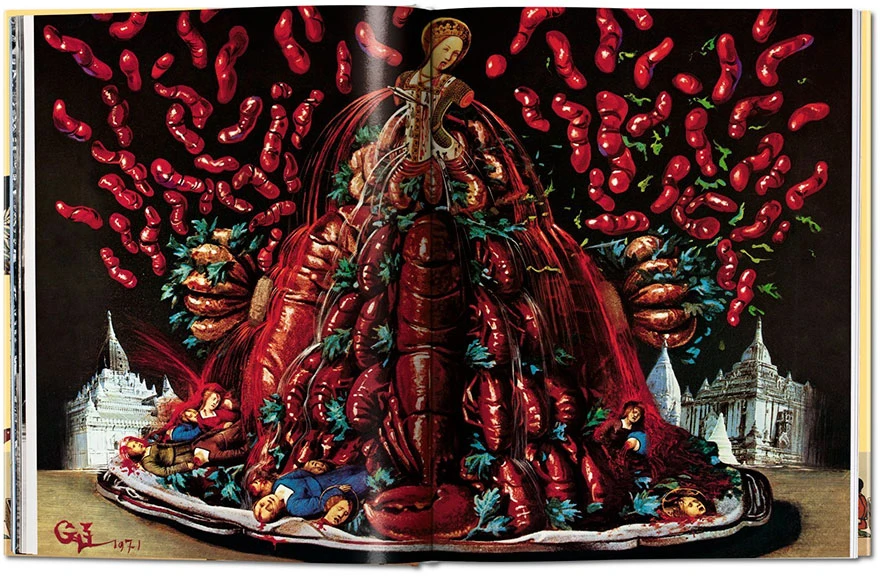
Take, for example, the image of a lady with severed hands, from which blood flows, drenching three red crayfish on a platter lined with decapitated corpses. This is a clear reference to the biblical story of John the Baptist, whose severed head was presented on a platter as a reward for dancing to the Jewish princess Salome. 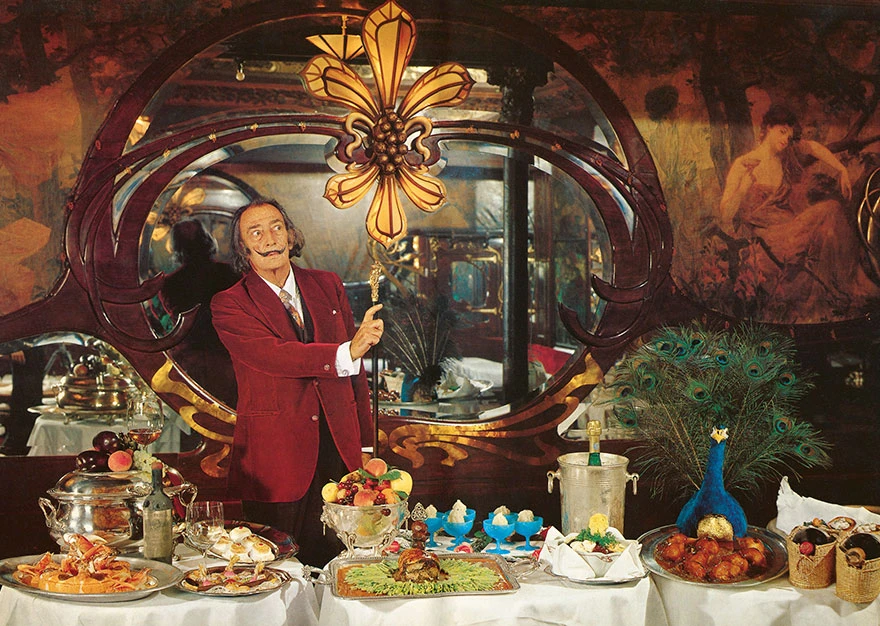
Only the author himself knew what such recipe illustrations were supposed to evoke in the human imagination. We are left to content ourselves with our own associations. Chapter 10, "I Eat Gala," is considered particularly special in the book. It is dedicated to aphrodisiacs—foods capable of enhancing passion. The illustrations for this chapter are very outrageous, eccentric, and explicit, just like Salvador Dalí himself. 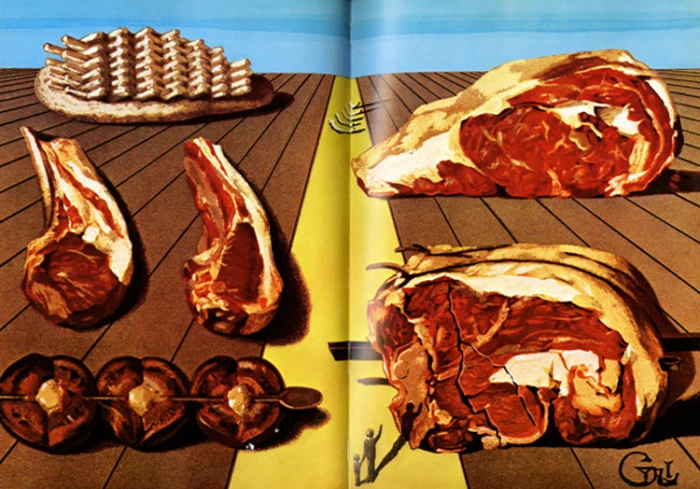
Incidentally, in his unique surrealist style, Dalí titled all 12 chapters "Les Diners de Gala." In addition to "I Eat Gala" (about aphrodisiacs), this volume includes such gems of Dalí's aphorisms as "The Polished Companions of Statistical Maggots" (a chapter on snail and frog dishes), "The Supreme Lilliputian Pleasures" (about first courses), "The Affectionate Royal Caprices" (about exotic dishes), "The Monarchic Flesh" (about poultry dishes), "Autumn Cannibalism" (about egg dishes), and "The Variegated Plumes" (about seafood). It also includes chapters on vegetables titled "Deoxyribonucleic Atavism," "Midnight Passions" (about desserts and sweets), and "Little Guilty Pleasures" (about various appetizers). Dalí clearly savors every word, describing the intricacies of preparing and eating all these dishes. 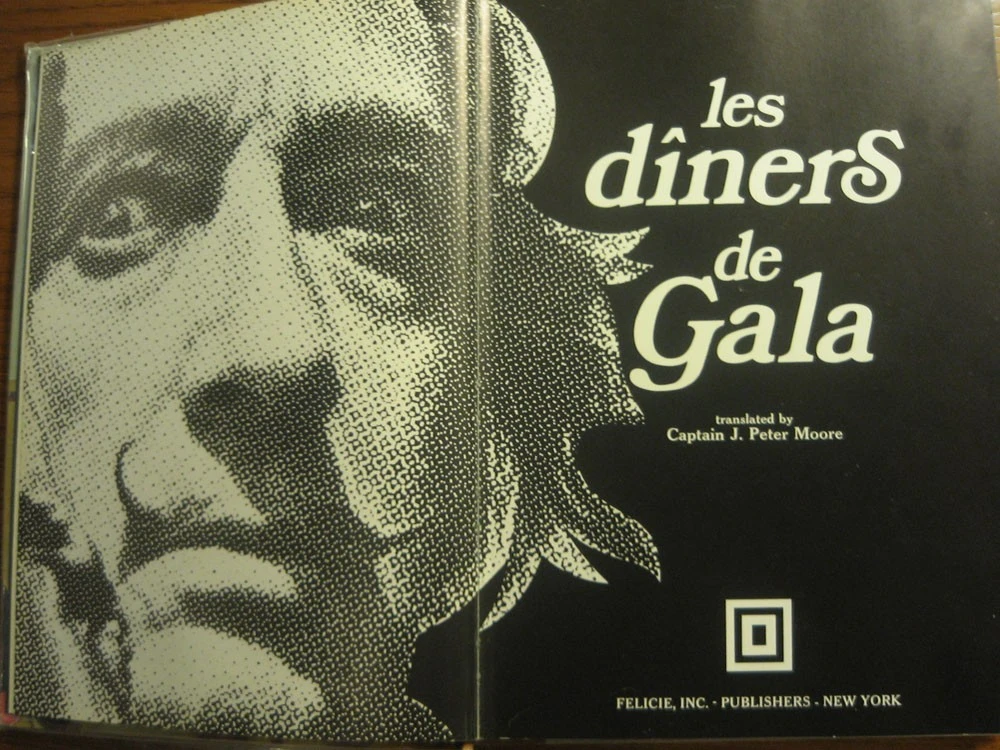
"Les Diners de Gala" is not a book of culinary hypotheses and fantasies: all 136 dishes were prepared in the best Parisian restaurants—Lasserre, La Tour d'Argent, Maxim's, and Le Train Bleu. The book itself is now available for purchase on Amazon or eBay, though given its rarity and limited print runs (a reprint was published by the German publishing house Taschen in 2016), it will be quite expensive. But you must admit, "Les Diners de Gala" is worth it!