The Germans occupied Denmark in a couple of hours, but they didn't leave for a very long time. And not all of them are alive (4 photos)
In early May 1945, German troops stationed in Denmark surrendered to Allied forces and prepared to evacuate their homeland, coinciding with the fall of Berlin and the Nazi regime.
During this period, Denmark faced a mine crisis. During their occupation of Danish territory, the Germans laid approximately 1.4 million mines along the coast to prevent a possible Allied landing. 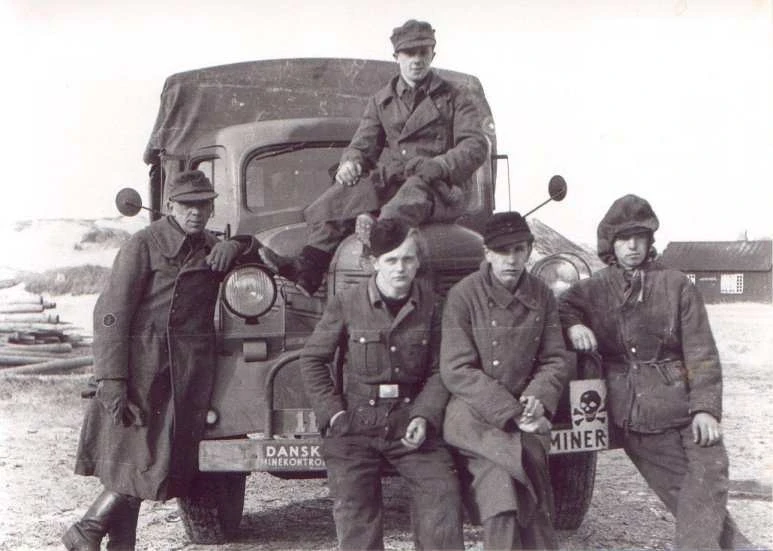
Unlike the traditional mines used by the victorious powers, the Germans developed complex mine devices of various types. They were difficult to detect, making life for the Danes extremely difficult.
Faced with this problem, Allied forces attempted to clear mines from the Danish coastline, relying on German prisoners of war. At the time, everyone assumed they knew the mined areas and how to clear them. Consequently, thousands of German prisoners of war were forced to work in the area under the supervision of Danish and British troops, using the most primitive methods. 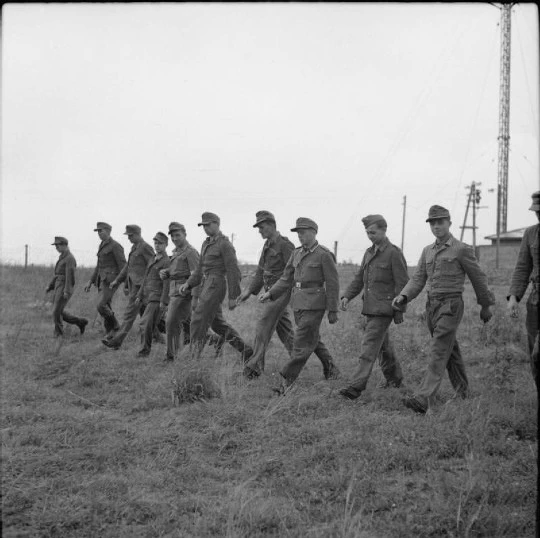
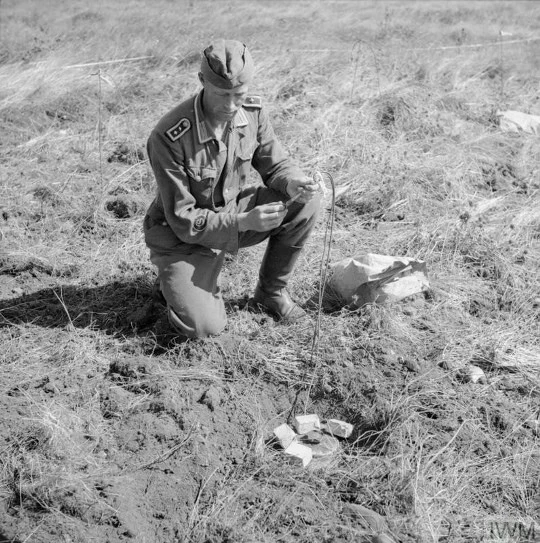
German prisoners of war searched using sticks and their hands. Upon discovering a mine, a German soldier would attempt to remove it and slowly dismantle it by hand, after which he would hand it over to officials. 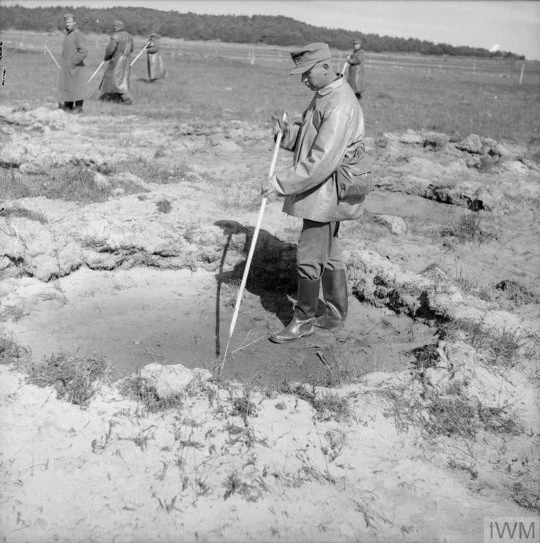
In many cases, mines exploded right in front of German prisoners of war, resulting in injuries or deaths. Clearing the areas proved difficult for the Germans. They discovered 16 different types of anti-tank and anti-personnel mines.
After clearing a certain area, the German prisoners were forced to walk through it in the presence of Danish civilians. This reassured them that the danger was gone and they could move freely through the area.
Harsh Treatment
During the work, German prisoners were subjected to cruel treatment. Furthermore, due to food shortages in the region after the war, their diet was very poor.
This exploitation of German soldiers constituted a violation of the Geneva Convention relative to the Treatment of Prisoners of War, as they were forced to perform life-threatening labor.
By 1946, approximately 2,000 German prisoners of war had died while clearing mines in Danish territory. Thousands suffered serious injuries, often resulting in amputations.