What Did Real Two-Handed Swords Actually Look Like? (22 Photos)
Italian fencing master Giacomo di Grassi, author of the 1570 treatise *Reasons for the Victorious Use of Arms for Attack and Defense*, wrote that a warrior wielding a two-handed sword was like "a galleon among many galleys," capable of holding his own against almost any weapon. 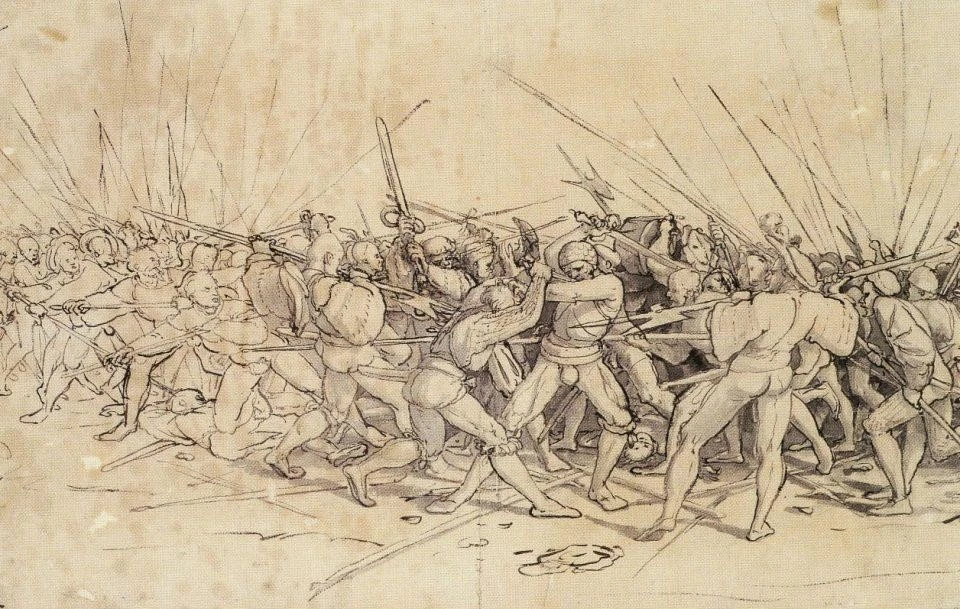
Yet despite glowing praise from renowned swordmasters and their intimidating presence, two-handed swords were never in widespread demand—especially in major pitched battles. In the crush of a melee, even swinging a one-handed weapon was difficult; swinging something this cumbersome was practically out of the question.
Tight combat conditions favored thrusting or vertical downward chops—roles far better suited to halberds, which packed both a thrusting spike and a chopping blade on a much longer lever. And that is to say nothing of production complexity and cost: in terms of sheer economics, massive swords couldn't compete with polearms.
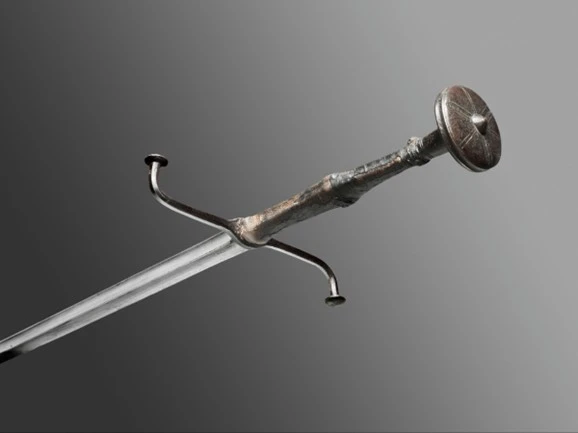
English-made sword, c. 1500. Length: 162 cm; weight: 3.17 kg. The garniture of armor belonged to King Henry VIII. From the Royal Armouries in London. 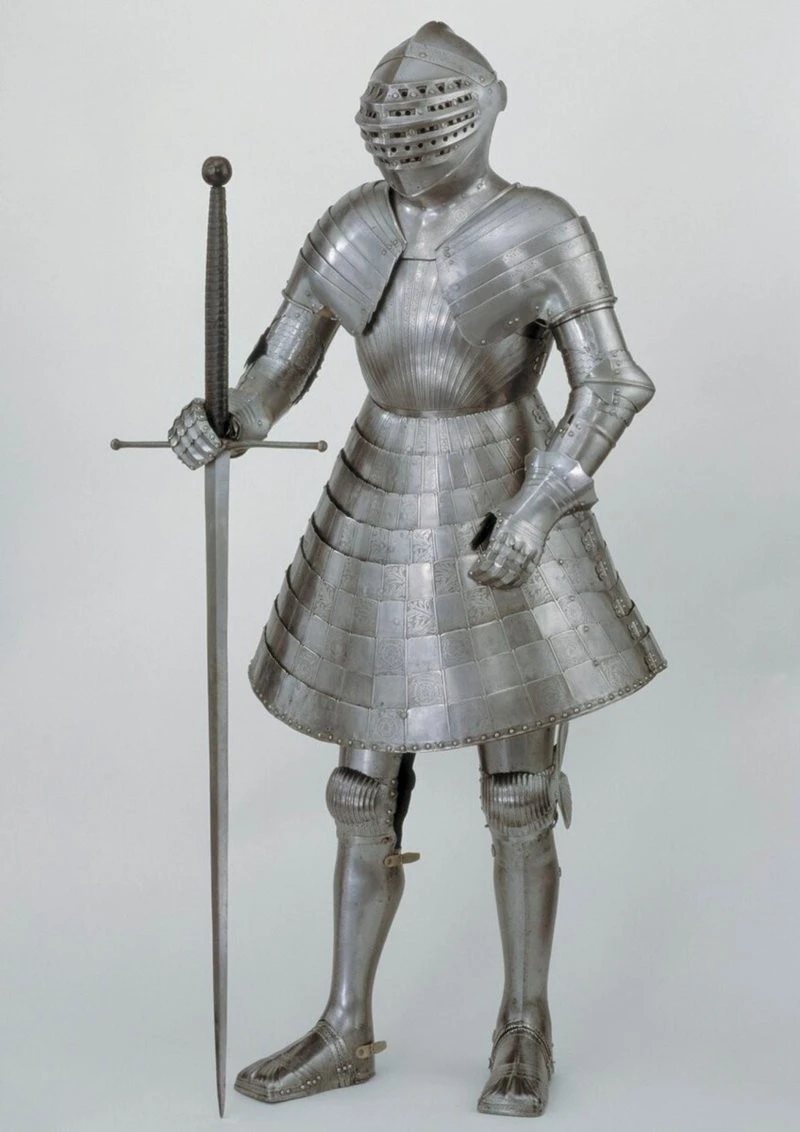
Even so, two-handed bladed weapons, which began emerging in the late 13th century, carved out a distinct niche during the late Middle Ages and the early modern period. In the ranks of the Swiss Reisläufer and the German Landsknechte, veteran "masters of the sword" acted as bodyguards and drew double pay (*Doppelsöldner*). Wielding these two-handed behemoths, they protected the regimental banner and commanders—a practice Giacomo di Grassi himself cited.
Intriguingly, period sketches by eyewitnesses to Landsknecht battles have survived. A few rare illustrations depict daring two-handed swordsmen hacking at enemy lines right at the spearhead of the assault, swinging their blades with abandon ahead of the pike formations. It is entirely plausible that these reckless shock troops were hurled into meat grinders to turn the tide of battle at all costs. After all, the regiment had to get its money's worth for paying them double.
These formidable, powerfully built men cut down their foes with colossal Zweihänders. That is where we'll start.
A late 16th-century Zweihänder. Length: 185 cm; weight: 4.75 kg. From the Germanisches Nationalmuseum in Nuremberg. 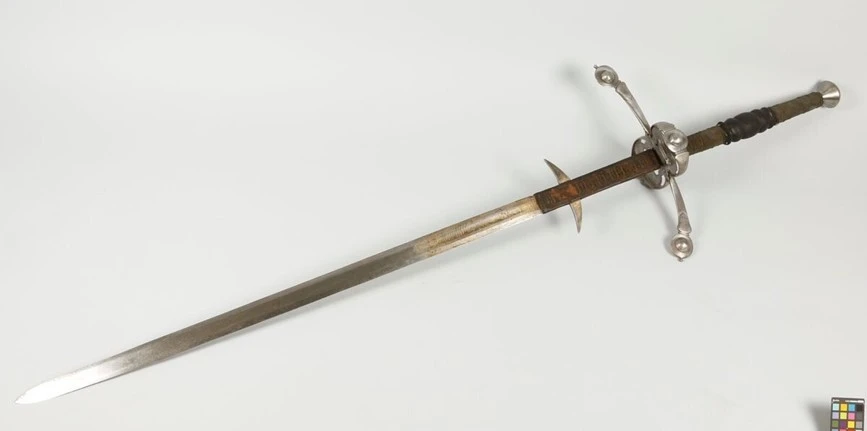
The Zweihänder represents the absolute pinnacle of two-handed sword design in terms of size. Reaching up to two meters in length, some examples weighed nearly five kilograms. Beyond their sheer scale, their defining feature was the parrying hooks (*Parierhaken*) shielding the unsharpened section of the blade—the ricasso. This portion was often wrapped in leather, allowing the wielder to shift their grip forward to deliver powerful thrusts. In addition to a standard crossguard, the hilts of German two-handed swords were typically reinforced with side rings.
The Landsknechte proudly carried their greatswords over the shoulder, unencumbered by scabbards. The Zweihänder's heyday fell in the first half of the 16th century. Thereafter, they steadily disappeared from the battlefield, relegated to occasional ceremonial duties.
A slightly smaller specimen: 168.5 cm in length and weighing 4.08 kg. Crafted circa the 1550s. From the Germanisches Nationalmuseum in Nuremberg. 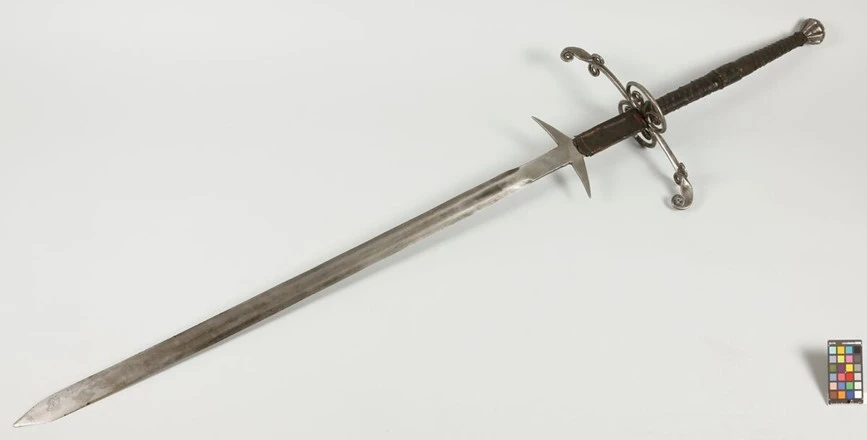
An Italian cousin to the Zweihänder: sleek and refined. Dated to c. 1570. Specs: 160 cm, 2.86 kg. From The Metropolitan Museum of Art (metmuseum.org). 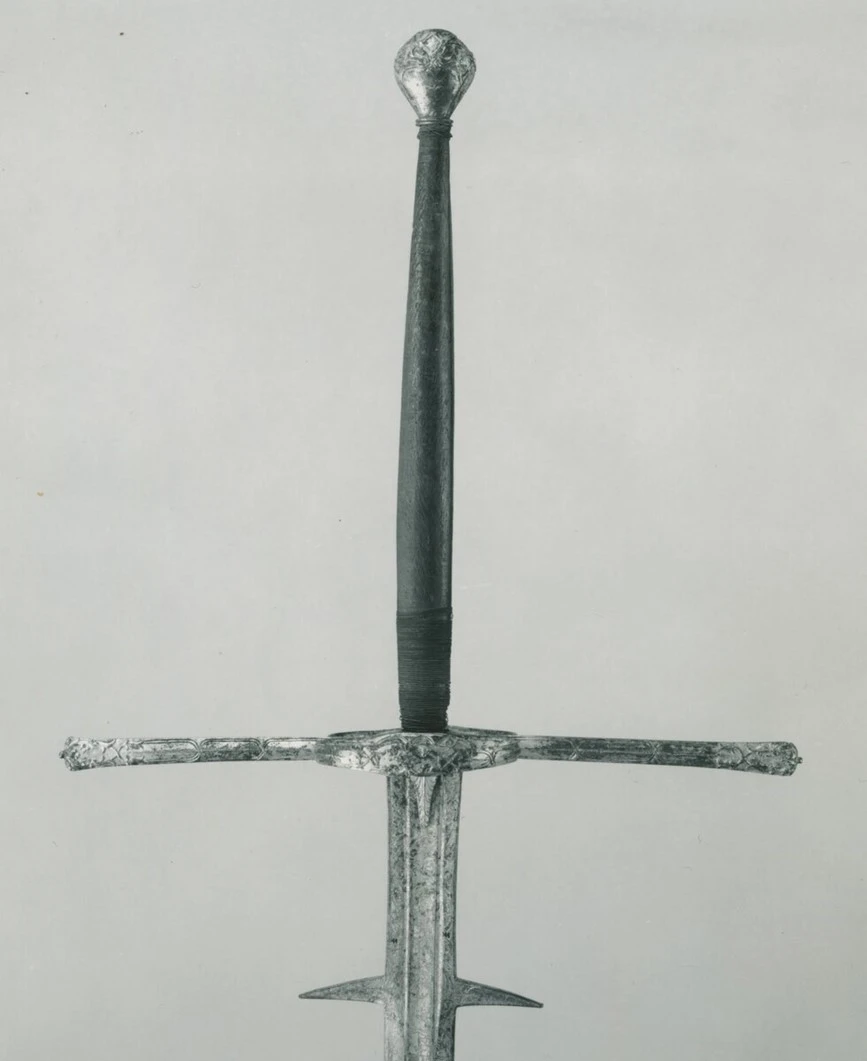
The same sword. 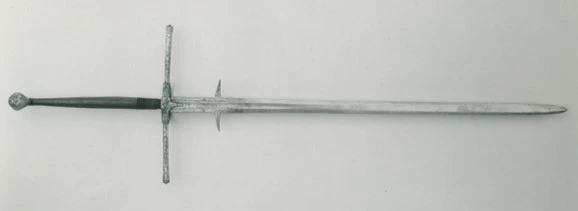
Here is a curious two-hander. Technically also a Zweihänder—German, mid-16th century, featuring a similar bottle-shaped grip and a pronounced ricasso, yet lacking the parrying lugs (often dubbed "boar's tusks"). The blade quality is somewhat cruder than in the pieces above. Dimensions: 164 cm, 3.7 kg. From the Swiss National Museum. 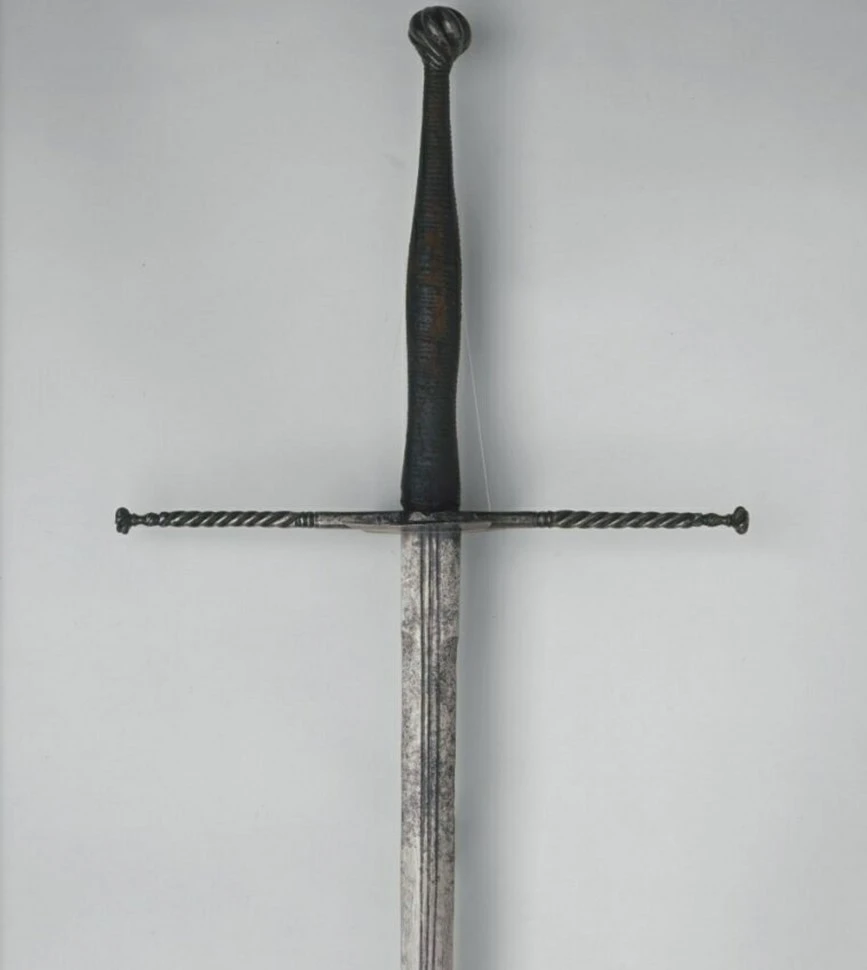
The same sword. 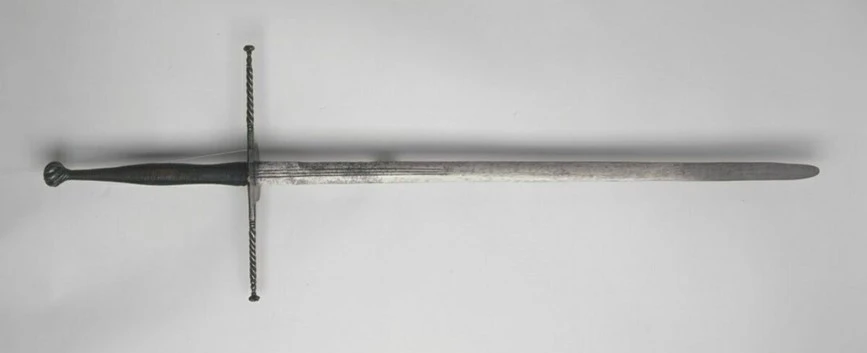
The Flamberg—a Zweihänder featuring a wavy, flame-like blade. We could stop there, but that wouldn't do it justice. It is worth emphasizing that a blade of this shape inflicted horrific, jagged wounds that were notoriously difficult to treat.
In truth, little is known about its actual battlefield use. Given that forging such an undulating blade was extraordinarily difficult, their owners were almost certainly men of considerable wealth. Flambergs were likely chosen not for tactical efficiency, but as ostentatious status symbols. After all, the Landsknechte were notorious peacocks, obsessed with flamboyant, garish fashion.
The popular legend that enemies gave no quarter to anyone caught carrying one, or that authorities outlawed them, is purely that: a myth.
As ceremonial weapons, on the other hand, flambergs were used with great enthusiasm starting from the late 16th century. Even today, the Pontifical Swiss Guard occasionally displays them.
Flamberg, second half of the 16th century. Overall length: 186 cm; weight: 4.38 kg. From the Germanisches Nationalmuseum in Nuremberg. 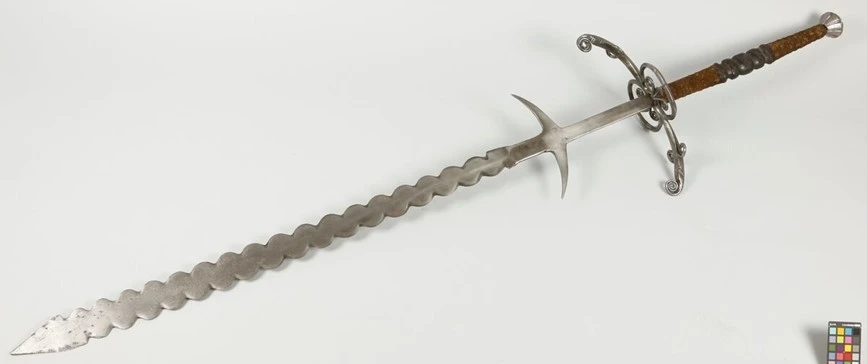
Also from the second half of the 16th century. Overall length: 192 cm; weight: 3.95 kg. From the Cleveland Museum of Art. 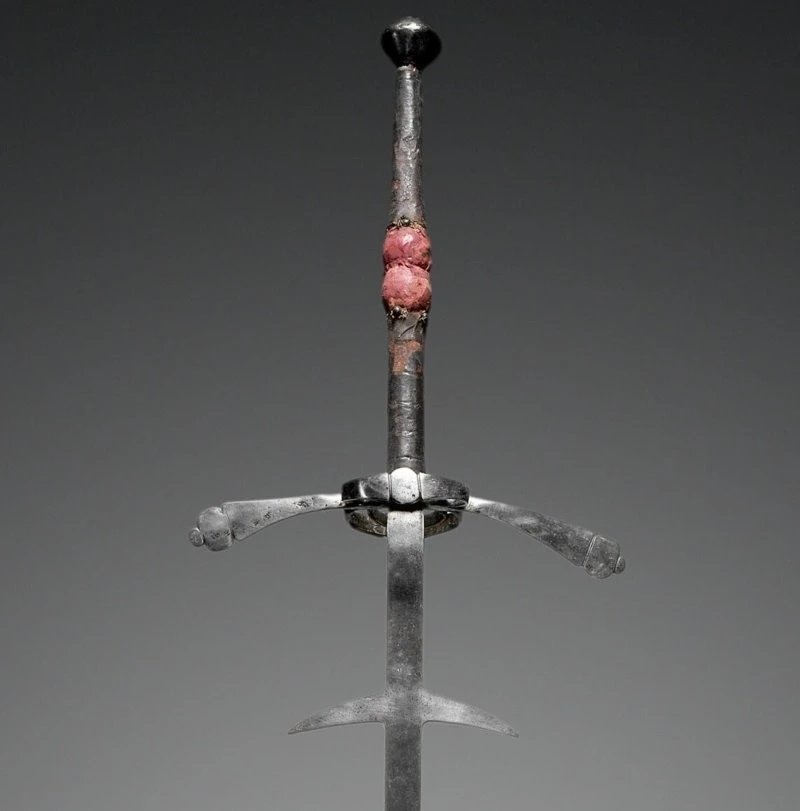
The same sword. 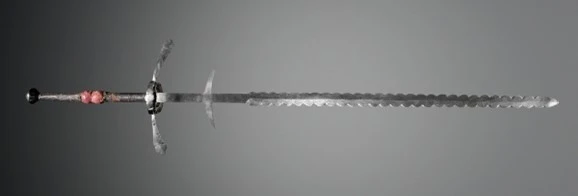
Leaving Central Europe behind, we travel to the Scottish Highlands, where Highlanders wielded two-handed swords from the 15th century onward. Inter-clan skirmishes were a frequent occurrence in the region, typically fought in small bands of a few dozen warriors. As a result, Highland claymores rarely gathered dust, seeing constant action against rival clans and southern neighbors alike.
The word "claymore" is an Anglicization of the Scottish Gaelic term meaning "great sword."
Surviving authentic Highland claymores (a Lowland variant appears below) are surprisingly rare—only about forty remain in good condition. Their hallmark feature is a forward-sloping crossguard terminating in quatrefoil finials, paired with a relatively broad blade. Traditionally, claymores were slung across the back using a specialized baldric. The rationale was simple: when trekking through rugged mountainous terrain, a warrior needed both hands free.
Active military use of the two-handed claymore waned in the 16th century. Yet Scots cherished their greatswords, passing them down from father to son as prized heirlooms. Even toward the end of the 17th century, they were known to dust them off: the Battle of Killiecrankie in 1689 marks the last documented instance of these swords seeing combat.
A classic claymore: 140 cm, 2.37 kg. Forged at the turn of the 16th century. From the British Museum. 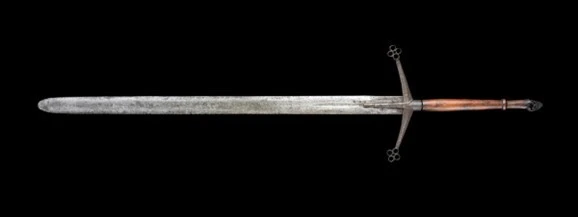
The same sword. 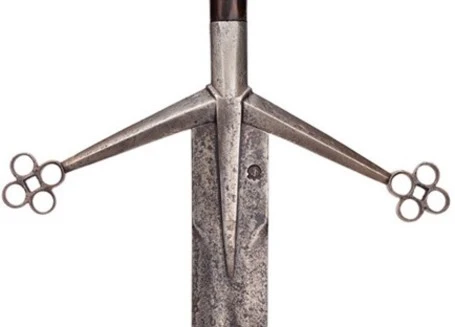
This 190 cm giant stands head and shoulders above its peers. Dated to the late 16th century, it is now housed in the Glasgow Museums collection (glasgowmuseums.com). 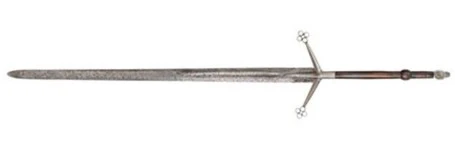
Descending into the Scottish Lowlands, we find a different take on the two-hander—the Lowland greatsword—with which many may be unfamiliar. Visually, it bears a much closer resemblance to Continental German swords. In fact, our next "Scotsman" (or at least its blade) was forged in the German lands.
Another two-handed sword, last quarter of the 16th century. Unfortunately, the museum did not provide dimensions or weight. From the Royal Armouries. 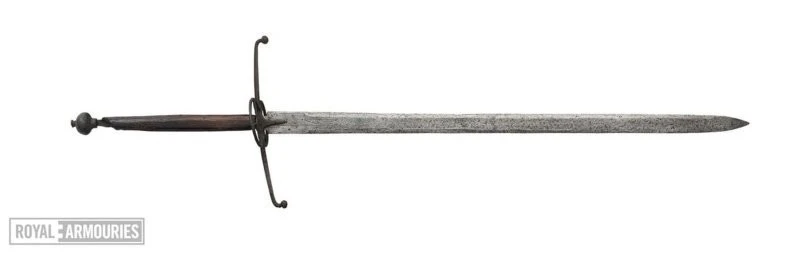
Museum collections also contain swords dwarfing even typical Zweihänders. The Tower of London holds a matched pair of late-medieval two-handers, each measuring over two meters long.
These are ceremonial bearing swords, crafted solely to lend grandeur to state processions and formal pageantry. Held upright by squires or retainers of high nobility, these towering blades broadcast power and prestige—nothing more. They were never meant for the battlefield, and it is doubtful anyone ever tried using them in earnest.
One of the pair. Dated to 1400–1430. Made in Passau. Length: 227 cm; weight: 6.4 kg. Royal Armouries at the Tower of London. 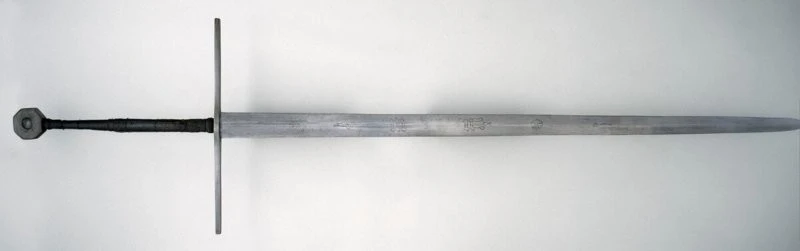
A similar blade—which clearly saw hard service judging by its battle-worn state—is on display in the Netherlands. Legend has it that it belonged to the giant Frisian rebel and folk hero Pier Gerlofs Donia, better known as Grutte Pier ("Big Pier"). Unlike the bearing swords mentioned earlier, this one was repeatedly tested in brutal combat.
Dated to the second half of the 15th century, it measures 213 cm in length and weighs 6.6 kg. From the Fries Museum in Leeuwarden. 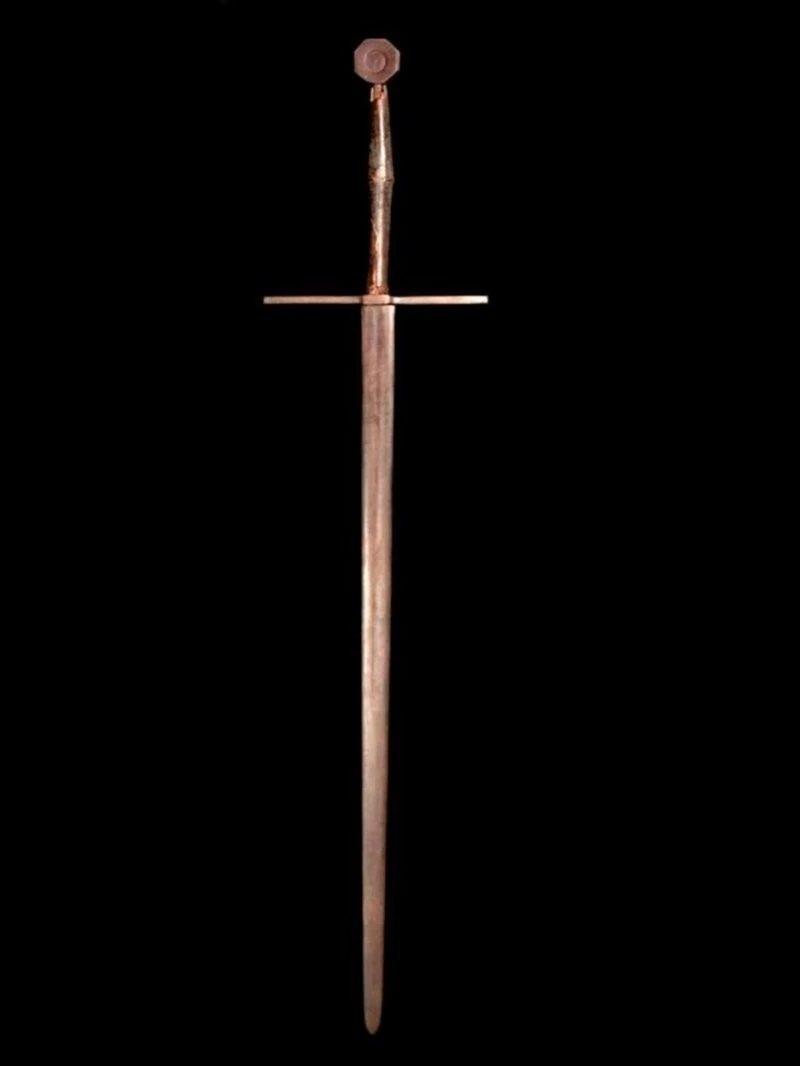
The Tower collection also houses a two-handed sword forged at the turn of the 15th century whose proportions are genuinely combat-ready. It is worth noting that prior to the 16th century, true two-handed swords—as distinct from hand-and-a-half or bastard swords—were exceedingly rare outside of ceremonial contexts. This makes tactical sense: a true greatsword is purely an infantry weapon, whereas those who could afford such costly masterworks generally fought on horseback.
Nevertheless, occasional references to their combat use surface as early as the late 12th century. The 14th-century chronicler Jean Froissart, for instance, recounts how a warrior-monk named Robessart tore through enemies with a two-handed sword in 1358.
Knights themselves might dismount under specific conditions, call on their squire for their trusted greatsword, and swing away. At Crécy in 1346, for example, English knights fought on foot.
Circa 1400. Length: 138 cm; weight: 2.45 kg. From the Royal Armouries at the Tower of London. 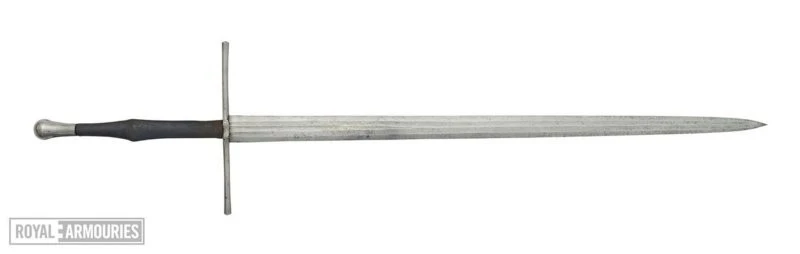
This sword was recovered from the Thames and dated to the first half of the 15th century. Similar specimens have been unearthed in Gascony near the Castillon battlefield (1453). Dimensions: 136 cm and 2.1 kg. From the Museum of London. 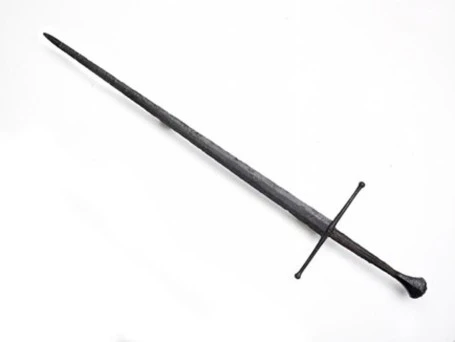
No overview would be complete without the so-called Danish two-handers. By the 15th century, they had evolved into their definitive, thrust-centric form.
A slender blade with a diamond cross-section, a ricasso noticeably narrower than the main blade, down-turned ring-shaped quillons, and an exceptionally long hilt—these are the hallmarks of the Danish sword. The "Dane" is arguably the most graceful of all greatswords, offering remarkable finesse and agility in the bind.
Sadly, none have survived in pristine condition, but thanks to archaeological finds, we still have authentic examples to study.
One of the rare surviving Danish swords, second half of the 15th century. Total length: 140 cm, with the grip accounting for 37 cm. The weight is unlisted, but it likely did not exceed 2.2 kg. From the National Museum of Denmark. 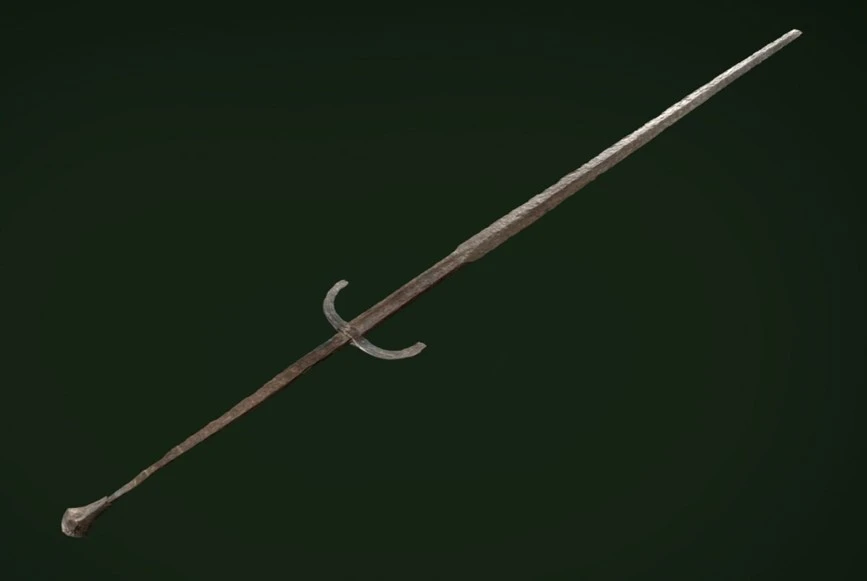
Finally, let's take a look at a spear-substitute in sword form: the estoc, or *Panzerstecher* (literally "armor-piercer")—a weapon that is both sort of two-handed and sort of a sword.
Its German name speaks for itself. Emerging in the late 14th century, the weapon was designed as a dedicated plate-armor killer. To puncture heavy armor, it featured a rigid, edgeless, triangular or diamond blade built exclusively for thrusting.
The hilt accommodated a two-handed grip, making it formidable on foot. Mounted knights strapped the estoc to their saddle, drawing it once their lance shattered to run down fleeing cavalry or dispatch unhorsed opponents.
Estocs could measure up to 160 cm. The early 16th-century specimen shown here is somewhat more modest: 128 cm and 1.58 kg. From the Philadelphia Museum of Art. 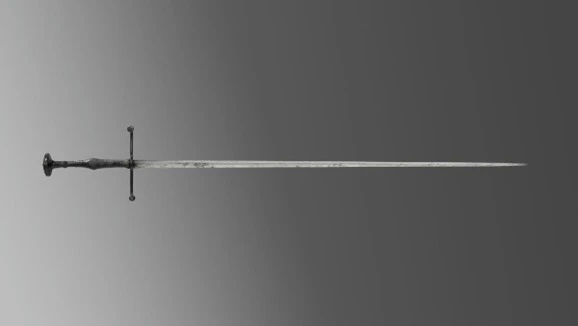
The same sword.