A 50-meter-long ocean dweller with a modular structure (7 photos)
One of the longest creatures in the world's oceans has no muscles, bones, or brain, and appears as a thin, luminous "ribbon" drifting at a depth of about a thousand meters.
This creature can exceed 50 meters in length, longer than any whale, shark, or squid, renowned for their gigantic size. This ocean dweller is called the giant siphonophore (Latin: Praya dubia). 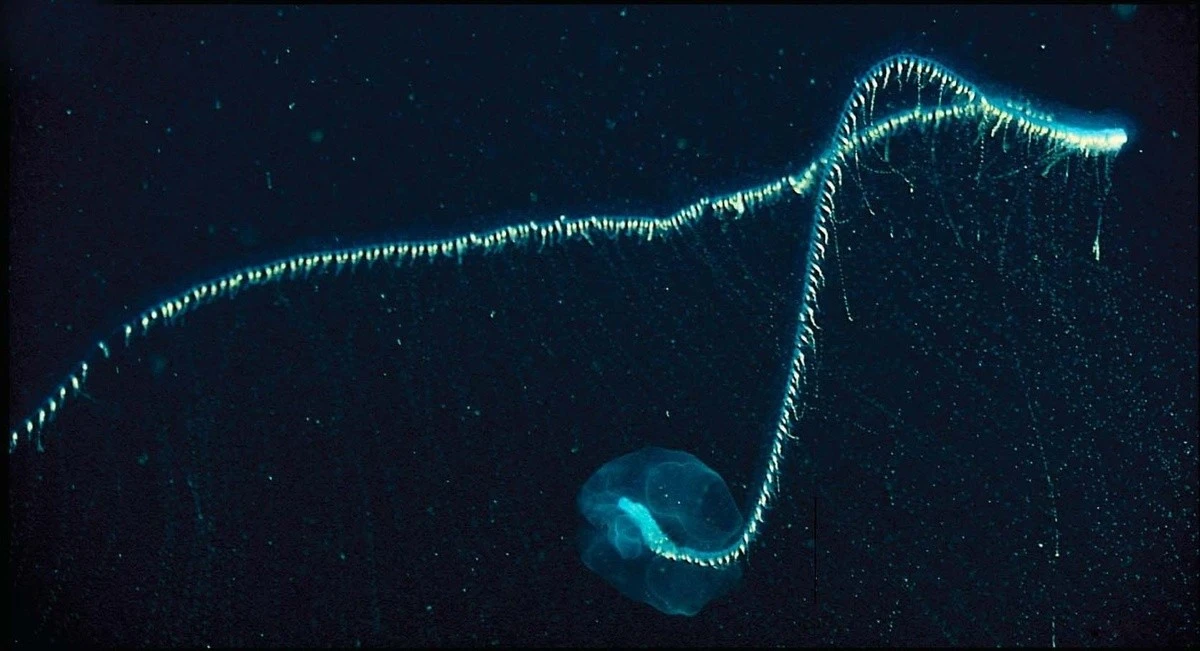
Not a jellyfish, but a colony
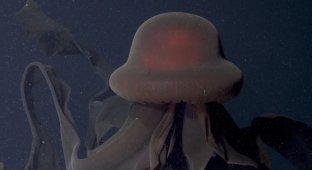
The giant siphonophore looks like a jellyfish, but it is not one in the traditional sense. It is a colonial organism, consisting of thousands of tiny, specialized individuals called zooids. Each zooid performs its own function, but they are all physically connected and act as a single organism.
Some zooids are responsible for movement, others for digestion, others for reproduction, and still others for hunting. Genetically, they are all identical—they are clones descended from a single larva. But morphologically, they differ so much that they look like different organs of a single body. 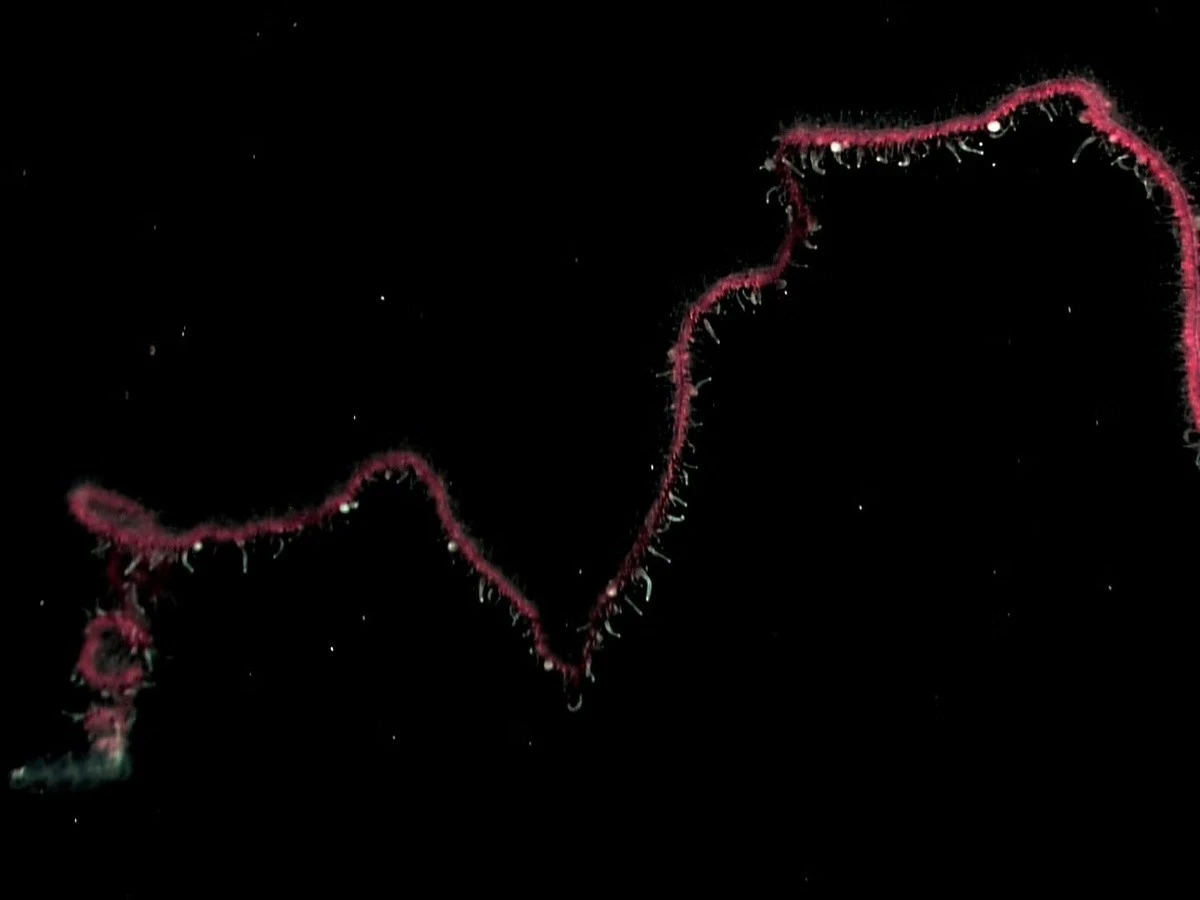
And here biologists ask a question: is the giant siphonophore a single organism or a colony? Formally, it is a colony. But functionally, it is a single creature, the parts of which are incapable of surviving separately.
Today, most scientists agree that the giant siphonophore is, in fact, a single organism, but with a modular structure. So, it's fair to call this creature one of the longest animals on the planet.
Dimensions
The length of the giant siphonophore can exceed 50 meters. For comparison, the record length of the blue whale is 33.5 meters.
However, the body of the giant siphonophore is not a massive torso of bones, flesh, and skin, but a thin, translucent ribbon just a few centimeters thick. It resembles a long, gelatinous cord, slowly swaying in the water. 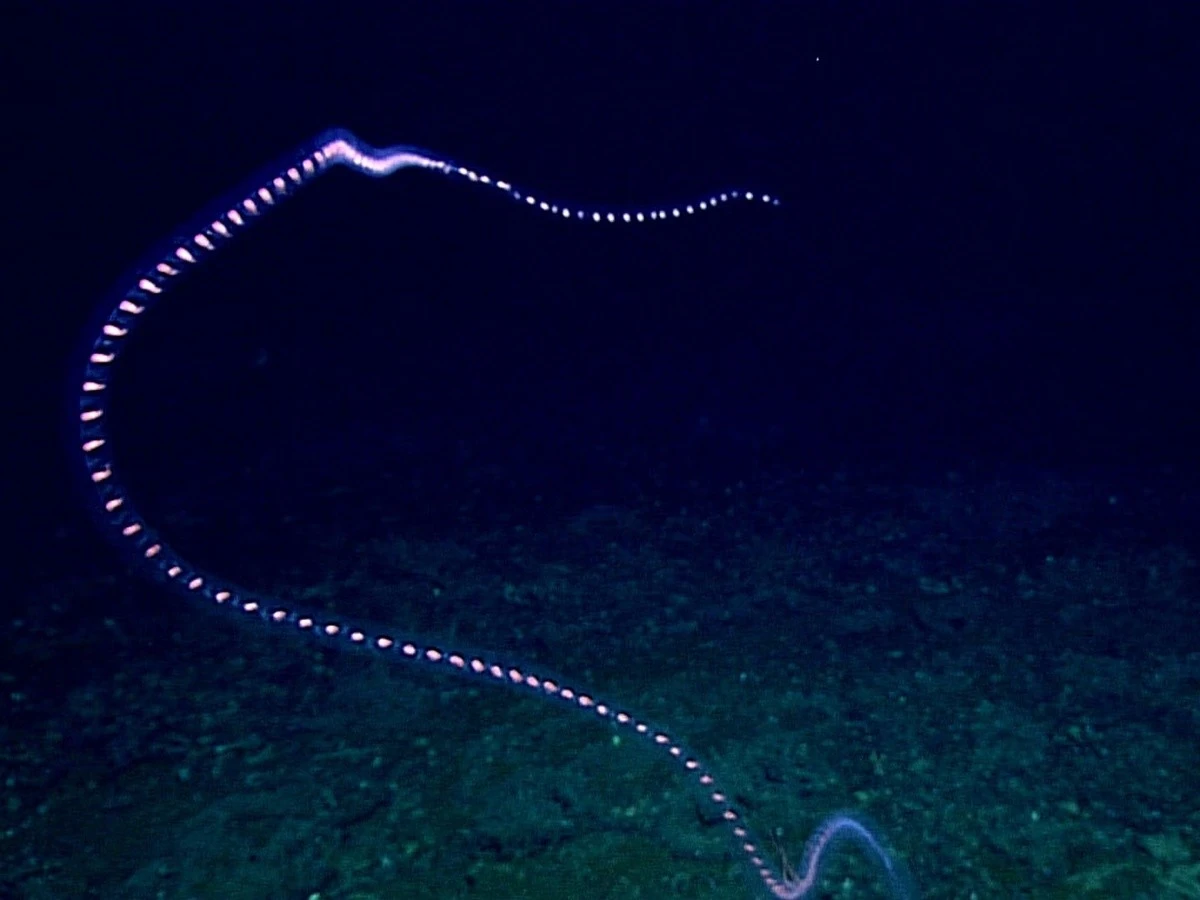
Accurately measuring the length of this creature is problematic. Firstly, the creature constantly contracts and expands, and never remains completely still. Secondly, the body of the giant siphonophore is so fragile that attempting to bring it to the surface simply destroys it.
Therefore, all our knowledge of this organism—including an approximate estimate of the body length of an adult—is based on remote observations using deep-sea vehicles.
Where it lives
The giant siphonophore is common in deep-sea zones throughout the world's oceans. Its typical habitat is depths of 700 to 1,000 meters, although individual specimens have been recorded even deeper. This area is known as the mesopelagic, or twilight zone—a layer of water where only a tiny fraction of sunlight penetrates. 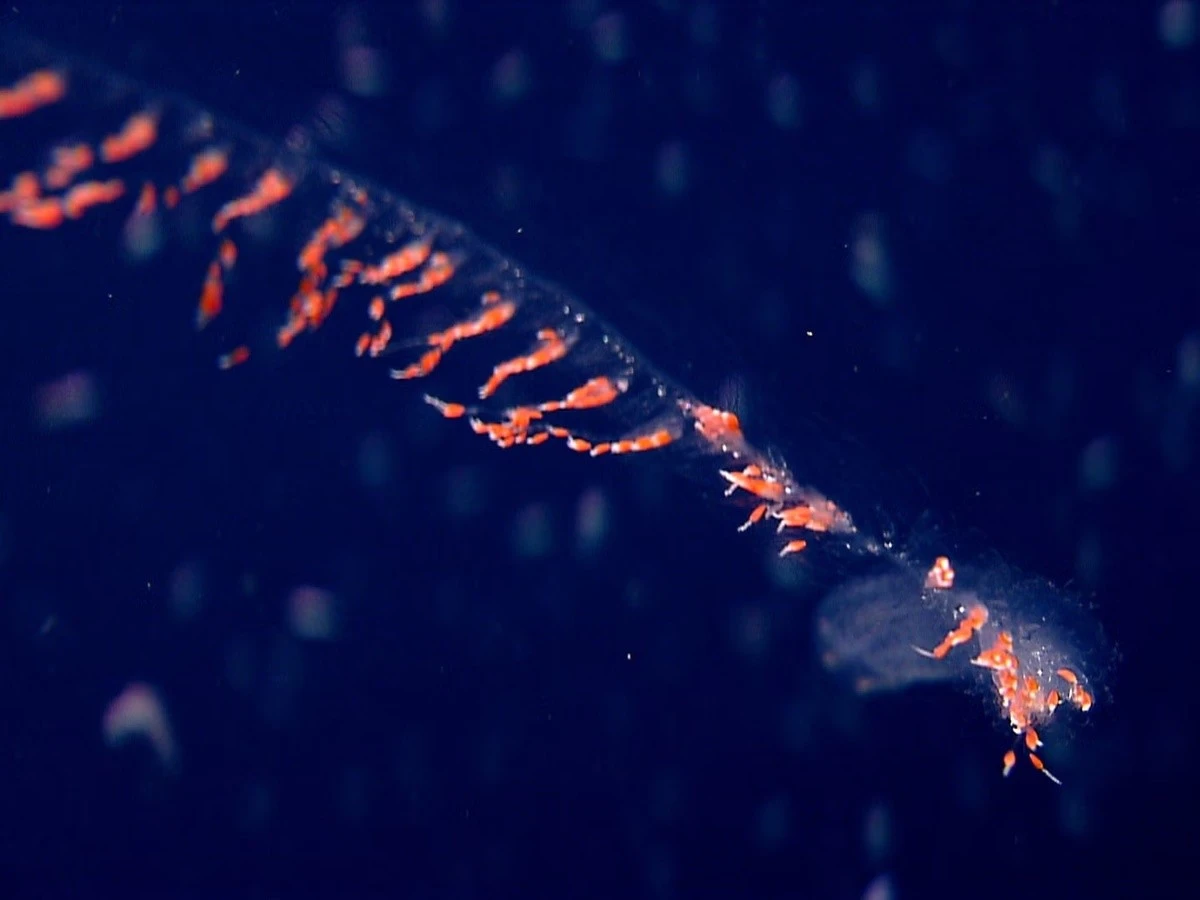
Lighting here is extremely poor, water temperatures range from 4–10°C, and pressure is tens of times greater than atmospheric pressure. It is precisely these extreme conditions that make the giant siphonophore elusive to observers: research at such depths is only possible with complex and very expensive equipment.
How it hunts
The giant siphonophore drifts vertically through the water, extending thin, hunting tentacles up to several meters long. These tentacles are studded with stinging cells called cnidocytes, which contain venom. 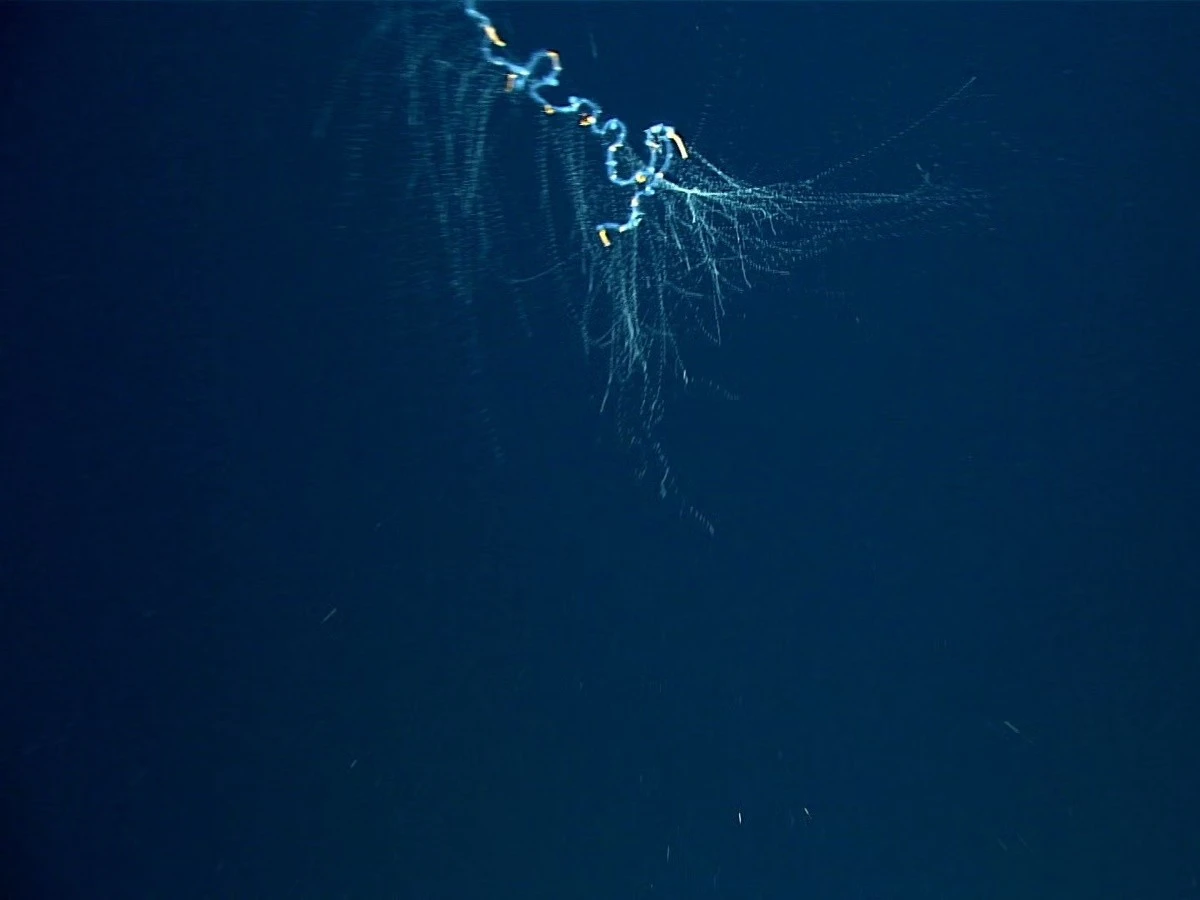
When small prey—a crustacean, a fish larva, or another gelatinous creature—touches a tentacle, the cnidocytes are instantly activated, injecting a paralyzing toxin. The immobilized prey is enveloped by tentacles and pulled toward specialized zooids responsible for digestion.
The giant siphonophore never chases prey. It simply "hangs" in the water like a net, waiting for something to come too close. This passive yet energy-efficient strategy allows the creature to thrive in low-prey environments.
Bioluminescence
Like many deep-sea organisms, the giant siphonophore is capable of luminescence. In the sea's darkness, it appears as a pale blue or greenish streak of light (sometimes flecked with red), slowly hovering in the black abyss. 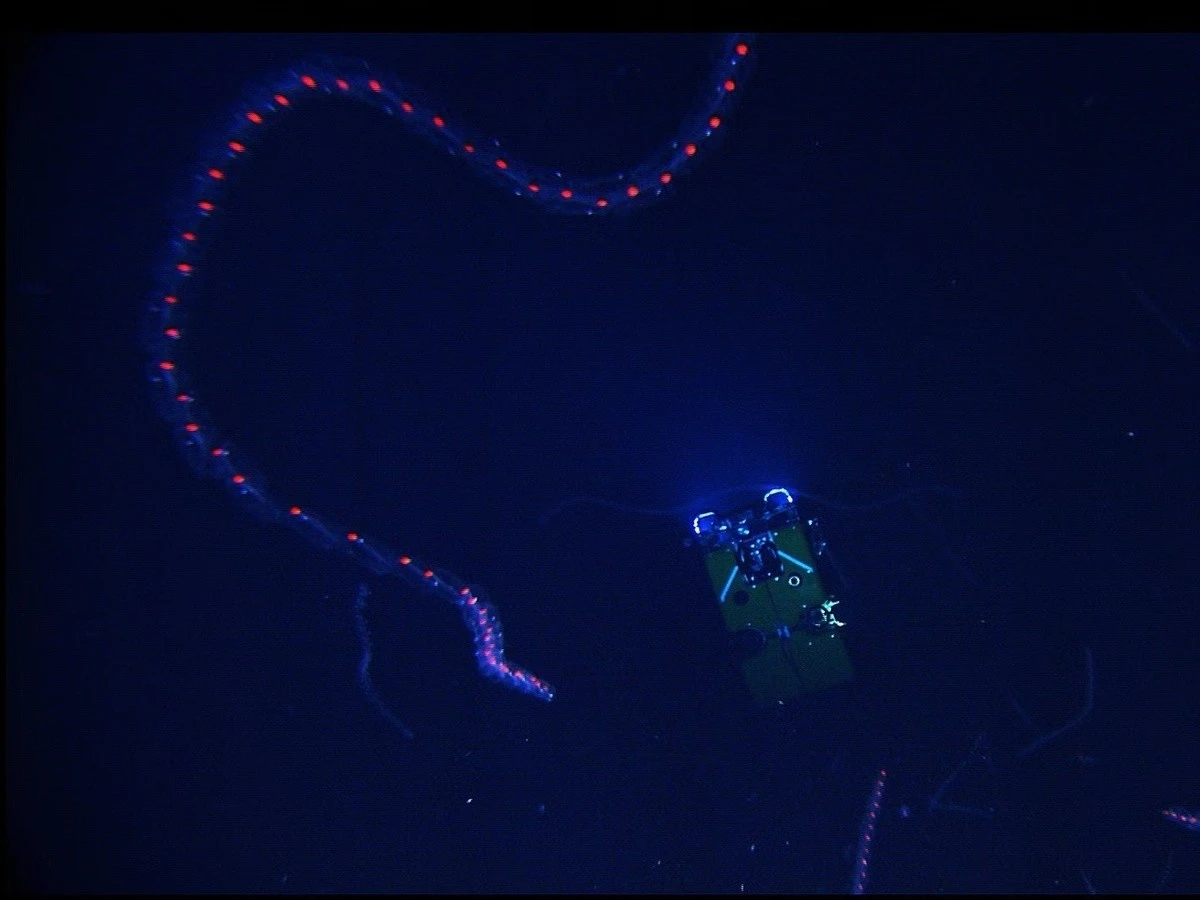
Bioluminescence in the giant siphonophore may serve several functions:
Attracting prey;
Deterring predators;
Communication between individuals.
Although communication is questionable, given that the giant siphonophore lacks a brain—only a distributed neural network.
Reproduction
The life cycle of the giant siphonophore involves alternating generations—sexual and asexual.
An adult colony produces sexual zooids—gonozooids. These release eggs and sperm into the water, where fertilization occurs. The fertilized egg develops into a free-swimming larva, which drifts through the plankton.
Over time, budding begins, forming new zooids, each of which remains physically connected to the mother organism. This is how the 50-meter-long "ribbon" of thousands of clones, each endowed with specific functions, gradually grows.
Thus, the giant siphonophore goes through two stages: the sexual stage—the birth of a new larva—and the asexual stage—the growth of the colony through budding. 
The giant siphonophore is one of the most unusual creatures known to science. Thin, fragile, and composed of thousands of clones, it lives where sunlight barely penetrates.
The ocean remains the least studied environment on Earth, with approximately 5% of it explored. Oceanographers estimate that up to a million unique species, unknown to us as of yet, may lurk at depths of hundreds and thousands of meters.
The giant siphonophore is a reminder of how many more amazing things remain to be discovered on the planet we call home.
As Carl Sagan said: "Somewhere, something incredible is waiting to be discovered."