Rats, Mines, Tuberculosis, and Other Unpredictable Things All Connected (14 photos)
What do dogs and Velcro have in common? Or painting and nuclear weapons? If you said nothing, you'd be very wrong. In fact, without some things, others simply wouldn't exist. 
These are the topics we'll be discussing in this article. Be prepared to dramatically expand your horizons and come armed with a few mind-boggling facts to fuel intelligent conversations.
Roller Coasters and Piety 
At the end of the 19th century, inventor LaMarcus Thompson gave Americans the largest amusement park, Coney Island. Its purpose was not to amuse the people. In fact, Thompson was trying to distract them from the popular pastimes of the time—visits to brothels and saloons.
Instead, locals were offered rides on high-speed cars amid stunning scenery and an adrenaline rush. Thompson's plan worked—over time, Americans became more pious. After the rides, tired and satisfied, they wandered off to their homes.
Vikings and Advertising 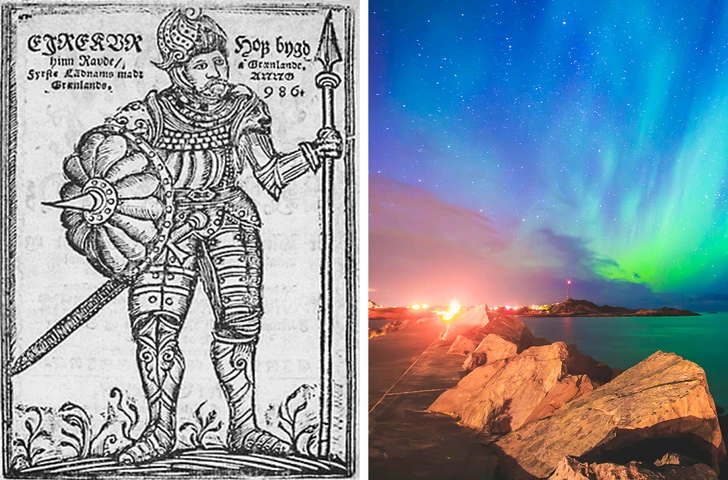
Many years ago, the Scandinavian explorer Erik the Red founded the first settlement in Greenland. Upon discovering the new land, he named it "Greenland." Unbeknownst to him, Erik employed one of the most effective and popular marketing techniques, still widely used today: "The right name is the first step to success."
The thing is, Eric the Red coined the name "Green Land," the appropriateness of which is still debated to this day, to contrast with the white ice of his homeland. He thought this would attract as many colonists as possible to the new land, and he was absolutely right. Within a year, dozens of ships carrying settlers were heading to Greenland (literally translated as "Green Land"). That's what a proper name means!
Dogs and Velcro 
"Well, what could be the connection?" you ask. There is! And the answer will surprise you.
It turns out that Georges de Mestral was inspired to invent Velcro while walking his dog. Returning home, he decided to examine under a microscope the burdock thorns that kept clinging to his dog's fur. This observation inspired him to apply a similar principle to the textile industry.
So, after decades of research and trial and error, De Mestral created Velcro fasteners for shoes, for which we are very grateful.
The Sun and Sneezing 
Did you know that, on average, one in four people on the planet sneezes when looking at the sun? But what's interesting isn't even that, but the fact that this trait is hereditary.
The urge to sneeze from sunlight is caused by retinal irritation, which leads to this reaction. A similar reaction can occur when a needle is held too close to the eye or when the stomach is full.
Printers and Fingerprints 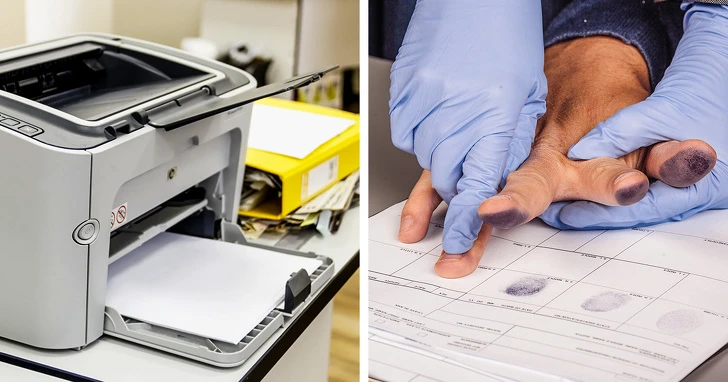
Did you know that most laser printers have their own "fingerprints"? These special marks (often called "yellow dots") act as a digital watermark and store information about the printer's serial number, date, and time of printing. If you look closely, you'll see tiny yellow dots spaced approximately 2.5 mm apart throughout the page where text appears.
These marks are designed to help combat counterfeiting. Furthermore, there are known cases where these tags have been used to solve data breaches. Similar technologies are currently being developed for 3D printers.
Olympic Games and Art 
We are accustomed to the idea that the Olympic Games are purely athletic competitions, having nothing to do with art. This is not entirely true. In the mid-20th century, the Olympics included art competitions dedicated to sports themes. In this way, the founder of the Games, Pierre de Coubertin, wanted to strengthen not only the physical but also the spiritual well-being of the participants.
Olympic arts competitions were held from 1912 to 1948. Medals were awarded in a wide variety of fields, from painting to architecture and music.
Pink and Masculinity 
Today, when choosing clothes for a newborn boy, you'll likely choose blue. But in the past, blue was associated with girls, and "girly" pink, as many of us are accustomed to thinking, was considered a shade of "masculine" red and traditionally reserved for boys. The color that suited both sexes was white.
However, over time, under the influence of various factors (not without the active feminist movement), the distribution of colors between the sexes has undergone dramatic changes. When it became possible to determine a child's sex, marketers used advertising to persuade mothers to urgently stock up on a wardrobe of the "right color" for their future child. Thus, pink finally "passed" to girls, although, as scientists claim, children themselves are indifferent to the color of their clothes. Stereotypes about "pink for girls and blue for boys" are formed in children only in an environment where this artificial division exists.
Pigeons and Cancer 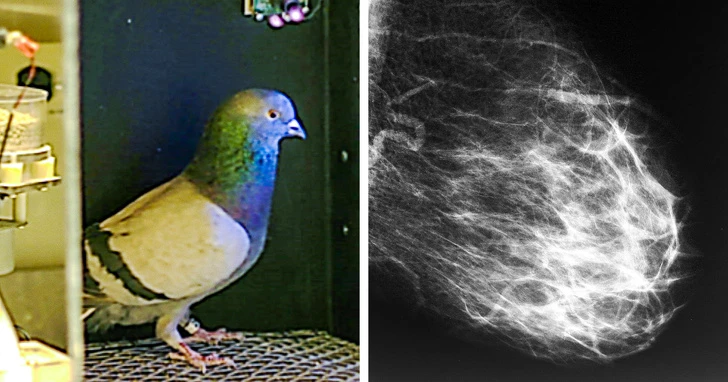
American scientists have managed to train pigeons to recognize malignant cells from histological images. This was made possible by two characteristics of these birds: a complete lack of imagination (unlike humans, birds don't tend to "make up" things) and a heightened sense of color.
During the experiment, the scientists fed the pigeons according to a specific system (when a bird found the correct answer, it was given a treat), and after just a month of training, each pigeon was correctly identifying 80% of the time. Surprisingly, the analysis of the overall result showed an accuracy of 99%.
Telegraph and Grief 
Few people know, but Samuel Morse, the creator of Morse code, was quite a skilled artist in his time. He had every chance of becoming a great artist, but fate decreed that he became famous in another field.
One day, Morse was away from home for a long time, and the only way to communicate with his family was by mail. First, he received news that his wife had fallen ill but was recovering, and three days later, another message fell into his hands: it said that his wife had died suddenly.
When, seven years later, Morse had a chance conversation about the possibility of transmitting messages over a distance using electricity, he became very enthusiastic about the idea. Twelve years later, in 1844, the first Morse code message was sent from Washington to Baltimore, with the words, "Wonderful are Thy works, O Lord."
Rats, Mines, and Tuberculosis 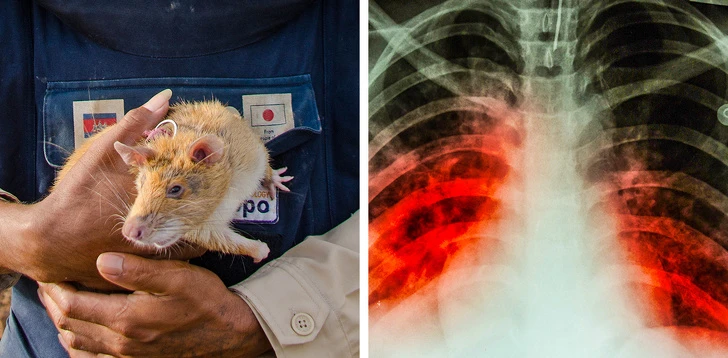
Giant hamster rats are considered valuable workers in Tanzania, thanks to their remarkable intelligence and sense of smell. These animals are used to detect mines and diagnose tuberculosis.
Their exceptionally keen sense of smell helps rats detect tuberculosis in its early stages. Some animals even undergo a special training program and become HeroRATS (literally, "hero rats")—they are sent to search for explosives in hot spots.
Captcha and Old Books 
The incomprehensible string of characters we call a captcha serves not only to verify the user's identity but also for more noble purposes. It turns out that some of the words in the images are fragments of phrases from old newspapers and books that the computer couldn't decipher. Only a human can decipher such text.
When a user answers a captcha, the gaps in the digital versions of the books are finally filled with the missing words. Every day, internet users worldwide solve approximately 200 million of these "microtasks." Amazing!
Tights and Speed Skating 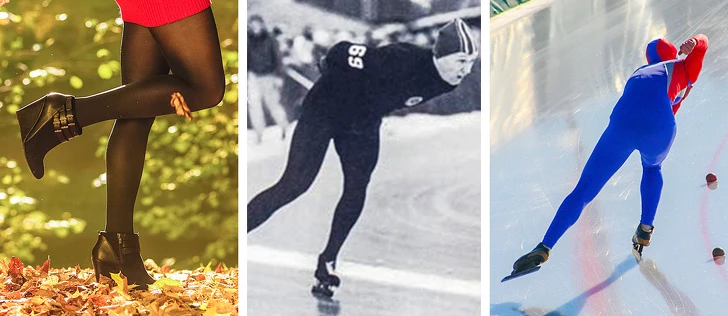
Thanks to the ingenuity of Soviet speed skater Viktor Kosichkin, the "nylon age" began in Soviet sports. He recalled that the realization that synthetics could work wonders came to him at the World Championships in Davos. There, Kosichkin was competing in the second group, and in the evening, he encountered a major problem: the cold was interfering with his normal run.
The athlete pondered how to resolve this issue. He didn't have any spare clothes, so he went into the locker room, where the German and American women were at the time, and asked them for "some kind of dress." The astonished girls gave him some tights. "Damn, they're too small!" thought Kosichkin, but then he cut them off and pulled the top half over his legs.
Painting and Nuclear Weapons 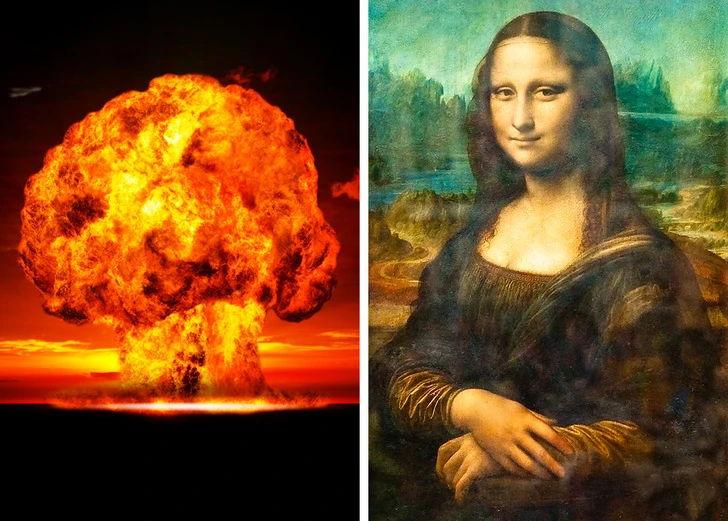
After the first use of nuclear weapons, new isotopes appeared in the world: strontium-90 and cesium-137. These two substances are present in trace amounts in paintings created after 1945, as the vegetable oil used to make paints absorbed them from the soil.
This is why it is now virtually impossible to counterfeit the paintings of the old masters. Radiation testing will show that these isotopes are absent from the paints.
Which of these facts surprised you the most, and which were you already familiar with?