A miracle of hostile technology: the three-wheeled Messerschmitt (6 photos)
Over its century and a half of history, the automobile industry has produced many unusual vehicles. Among them were luxurious and terribly impractical ones, like the Phantom Corsair, as well as tiny and awkward ones, like the Messerschmitt Kabinenroller. This comical little car, whose name only a select few can pronounce on first hearing, is a descendant of the fearsome Luftwaffe fighter planes that helped the Nazis conquer the world. 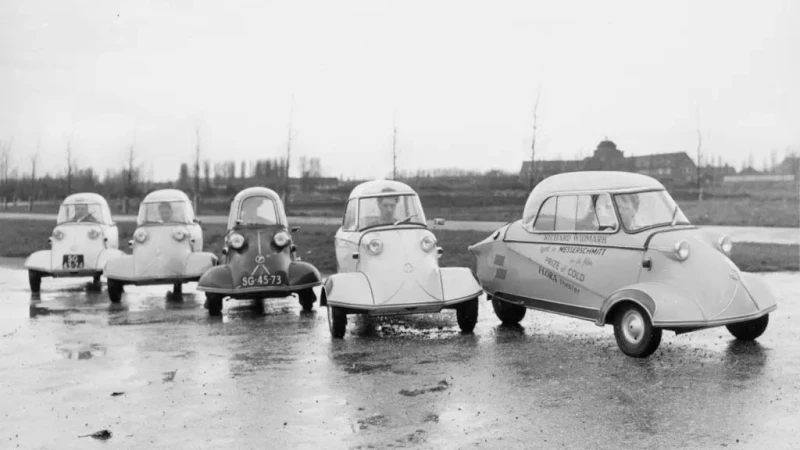
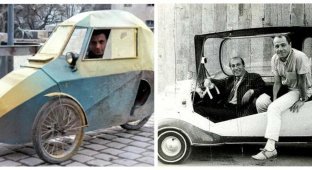
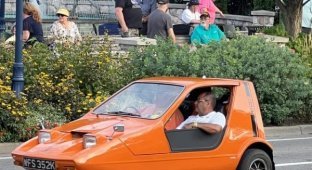
The Messerschmitt Kabinenroller was the most original creation of the German automotive industry in the post-war period. Created in 1954 for buyers with modest incomes, it was a cross between a car and a motorcycle. Its outline resembled the front of an airplane fuselage. But that wasn't the only similarity. The car had no doors, and the interior was accessed by folding the transparent canopy to the side. 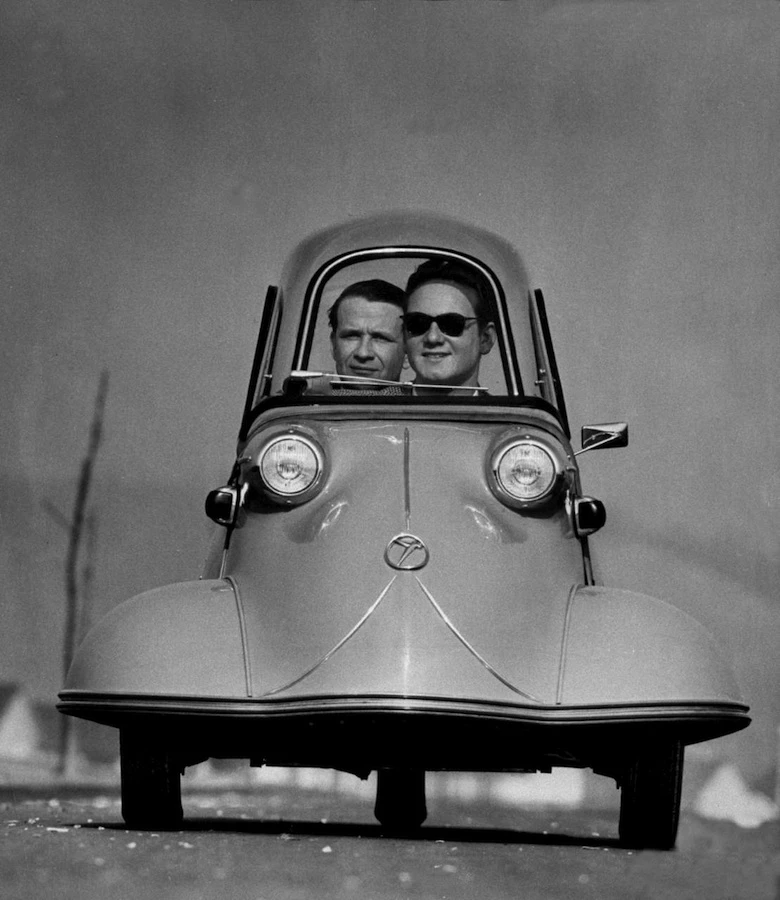
The Messerschmitt wasn't a car in the true sense of the word. It belonged to the "kabinenroller" class of motorized sidecars. This class included miniature vehicles consisting of an enclosed cabin on a scooter chassis. These vehicles were produced for a very short time, but during this time, they changed the second part of their name three times. Only the proud "Messerschmitt" remained unchanged, even though the motorized sidecar had no connection whatsoever to aircraft designer Willy Messerschmitt.
Start of Production
The history of these little vehicles began in 1946. After the war, Germany was home to many disabled people, and engineer Fritz Fend from Rosenheim decided to help them. Initially, these were primitive wheelchairs, either foot- or hand-powered. But in 1948, the inventor equipped them with a small motorcycle engine. Its output was only 3 hp, but for a wheelchair, this was more than sufficient. 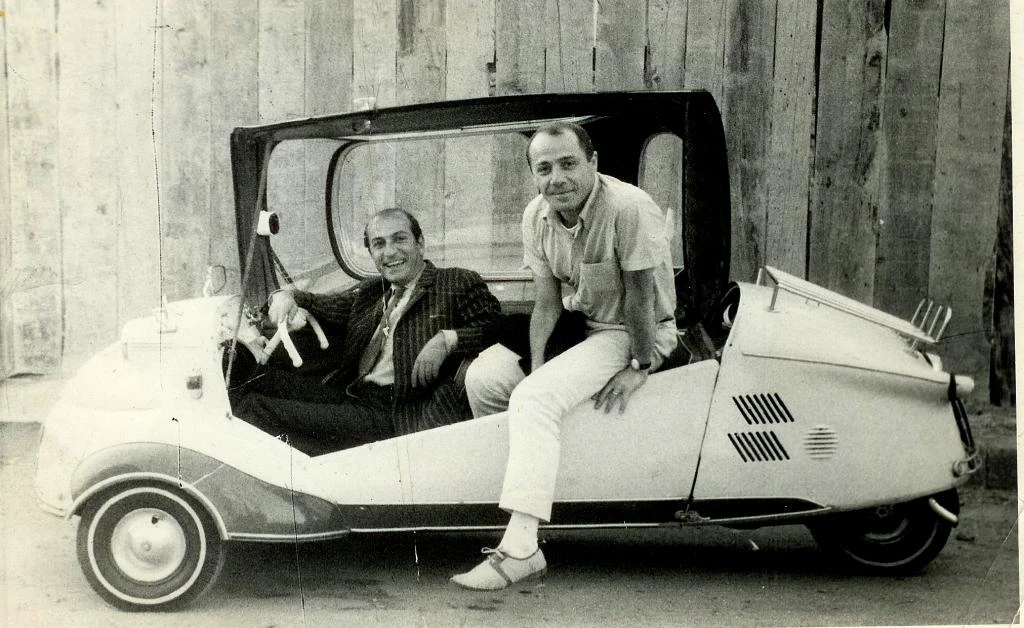
Fend's motorized wheelchairs had three wheels, with the single rear wheel being the drive wheel. Yes, the wheels were bicycle-like, the body was single-seater and open, and the whole thing weighed only 175 kg. Depending on the model, the motorized carriage cost buyers between 800 and 1,300 marks. This was a very affordable price, even for a disabled person. Fritz Fend quickly put the machines into production, and they began selling like hotcakes.
In 1950, Fend decided to update his model range and created a motorized carriage on three scooter wheels with a real, albeit small, body. The top of the vehicle folded down, providing access to two seats arranged one behind the other. The vehicle had only one headlight and a handlebar that resembled both a bicycle handlebar and an airplane control stick. Although the new model cost 2,000 marks, it found its fans. 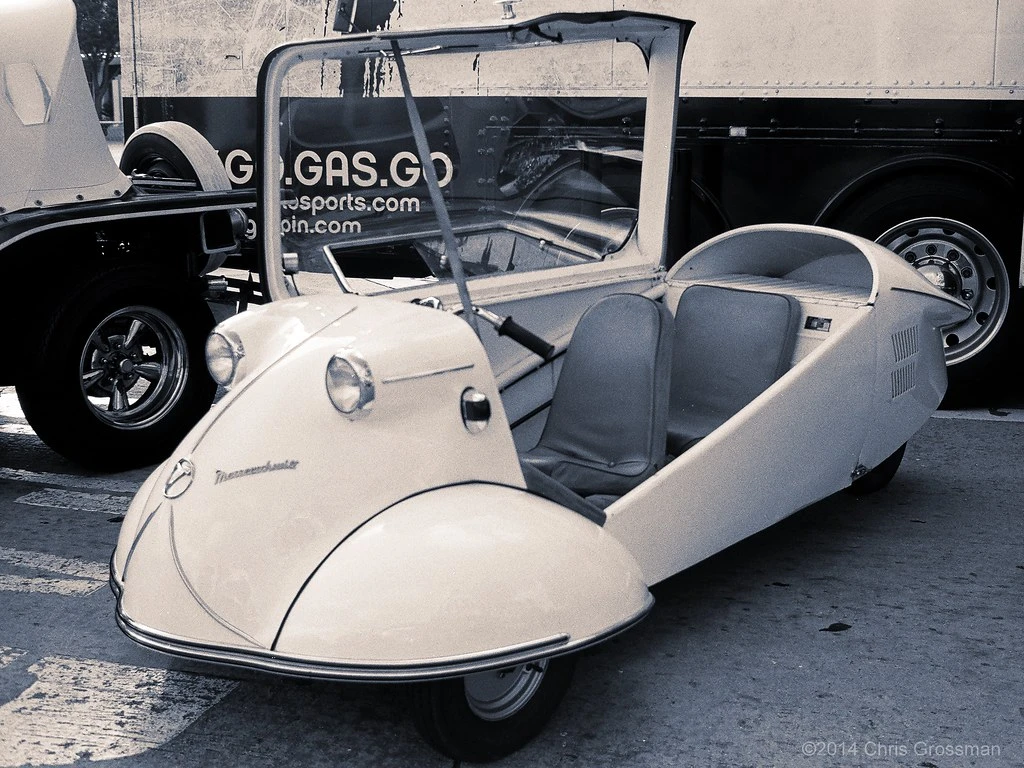
Fend produced 250 vehicles, and then sat down to work on the designs again. This time, he designed the first true "kabinenroller." The vehicle had a streamlined body with a plexiglass folding canopy and a sturdy tubular frame. Traditionally, it had three wheels, and the rear one was again the driving wheel. However, this time, the motorized vehicle was equipped with a more powerful 9 hp engine from Fichtel & Sachs. At the same time, the vehicle was lighter than the previous model, weighing only 150 kg. If desired, it could reach an impressive speed of 80 km/h.
A Big Name
While Fritz Fend's business was thriving, the aviation giant Messerschmitt was in its death throes. The company was banned from producing any aircraft products. Only a few workshops survived the bombings, and even they were idle. The management of the once-mighty manufacturer was willing to produce anything to avoid bankruptcy. No one knows exactly how Fend and the airline met. But in 1953, the Regensburg Machine Works in Bavaria, a subsidiary of Messerschmitt, began producing three-wheeled cars. 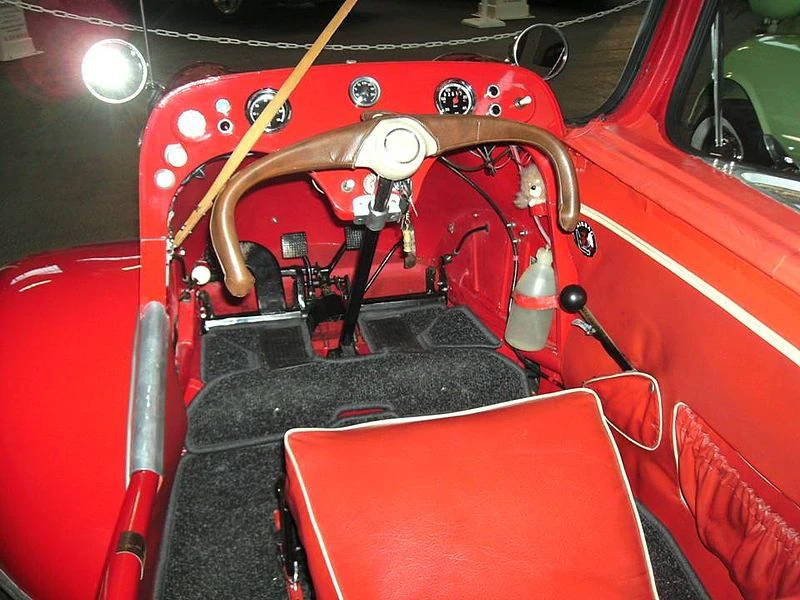
Also in 1953, a motorized carriage bearing the aircraft's name was unveiled at the Geneva Motor Show. Fend's well-known creation, which received a reputable brand name, caused a sensation. Experts found the car stylish and very practical. It was called the Messerschmitt KR-175, or "Messerschmitt Cabin Roller 175." The number denoted the engine's displacement in cubic centimeters.
By 1955, the next model, designated KR-200, was released. It had a 200cc engine producing 9.7 hp. All engines in the line were motorcycle engines and ran on a mixture of gasoline and machine oil. The modernized car weighed 240 kg, but reached a top speed of 100 km/h, a staggering figure for its class. Maximum fuel consumption was 3-3.5 liters per 100 km. 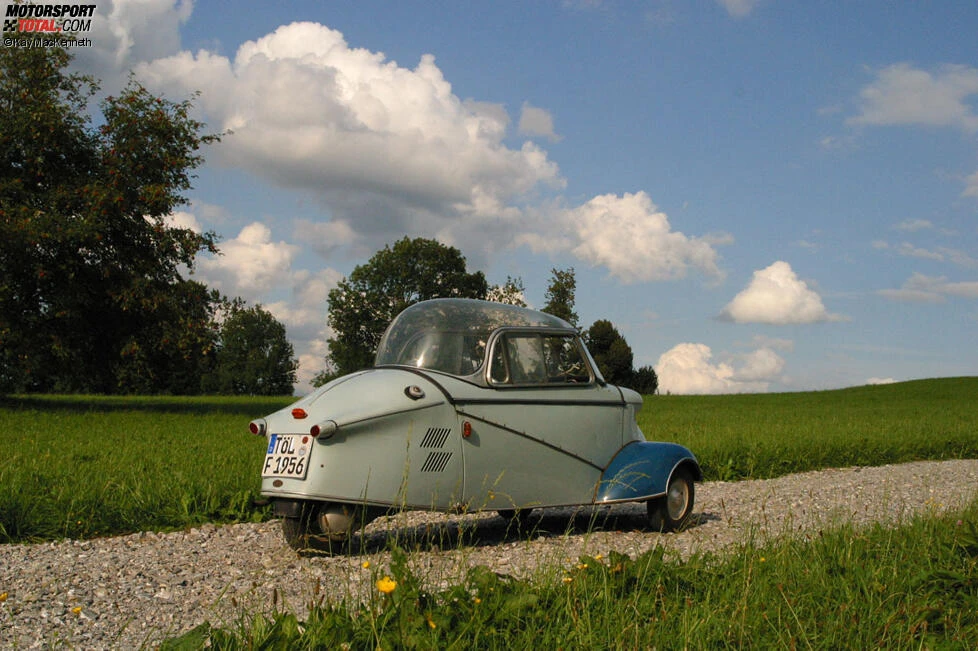
For promotional purposes, the Regensburg factory even assembled a sports version of the Messerschmitt. It achieved a speed of 140 km/h in tests! But even without the advertising, demand for the cars was enormous. In 1955-56, the plant produced 50 motorized sidecars a day. They sold well in West Germany and were exported to other countries. Unfortunately, everything ended in 1956. Messerschmitt was allowed to build aircraft again. Naturally, the comical motorized sidecars, which had enabled the company to survive the difficult times, were discontinued.