The Egyptian Merimde Civilization: The Ancestors of the Pyramid Builders Who Didn't Bury Their Children (9 photos)
The civilization of Ancient Egypt remains full of unsolved mysteries. The people who built majestic pyramids and temples even before the invention of the wheel are truly worthy of admiration. But Egyptian civilization didn't arise out of nowhere. People lived on the banks of the Nile long before its emergence, but we know very little about the culture of these ancient inhabitants. The civilization that preceded the ancient Egyptians was called Merimde, and its study began relatively recently. 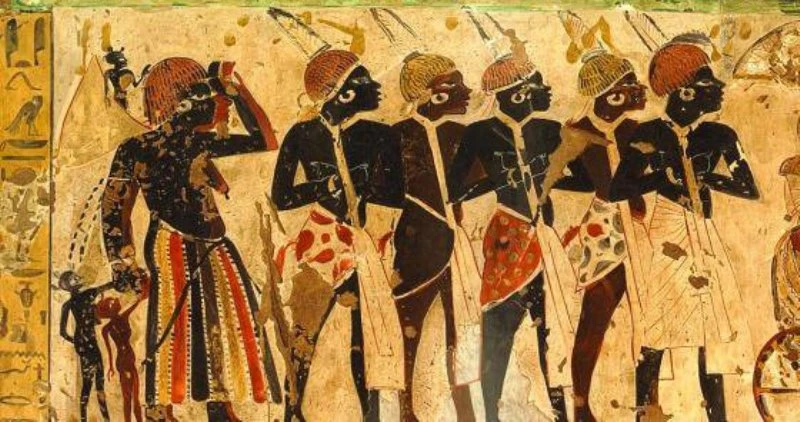
The ancient Merimde civilization existed from the late sixth millennium BC to the early fourth millennium BC. The culture was named after the archaeological site that proved key to its discovery. Archaeologist Hermann Junker discovered it in 1928 near the city of Benisalam, located 50 km northwest of Cairo. 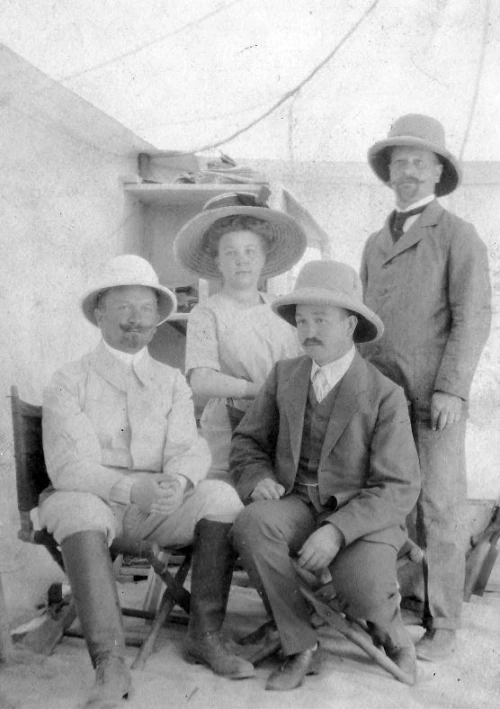
Hermann Junker (seated, right) with expedition members
Junker excavated at this site until 1939, when the war began. Over the course of ten years, the archaeologist accomplished a tremendous amount of work. Unfortunately, most of his notes and photographs were lost forever in the flames of World War II. Scientists were forced to start all over again almost half a century later. Excavations resumed in 1977 and lasted five years. 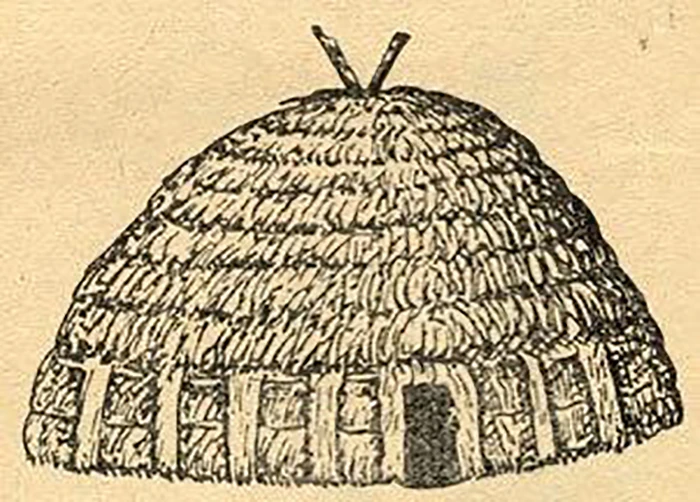
House of the Merimde Civilization
The Merimde civilization is the oldest Neolithic settlement in North Africa. These people built their first dwellings from wicker and reeds, and later from adobe. Their houses were quite large and domed. The main occupations of the settlement's inhabitants were cattle breeding and agriculture. Everyone was likely equal in their society, as scientists have found no evidence of differentiation.
Ancient Communism
This was ancient African communism: all adult members of the community had equal voting rights, and material goods were distributed equally. The produce of agriculture and livestock was sometimes supplemented by the catch of hunters and fishermen, who brought it into the "common pot." These people hunted hippos, crocodiles, and turtles, and also collected freshwater mollusks. 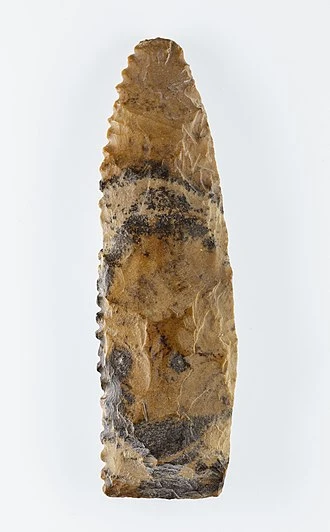
Fragment of a stone sickle
Grain harvested from the fields was stored in large clay containers dug into the ground. It is worth noting that the people of the Merimde civilization were skilled potters. They made vessels and intricate figurines from clay without the use of additives to promote hardening. 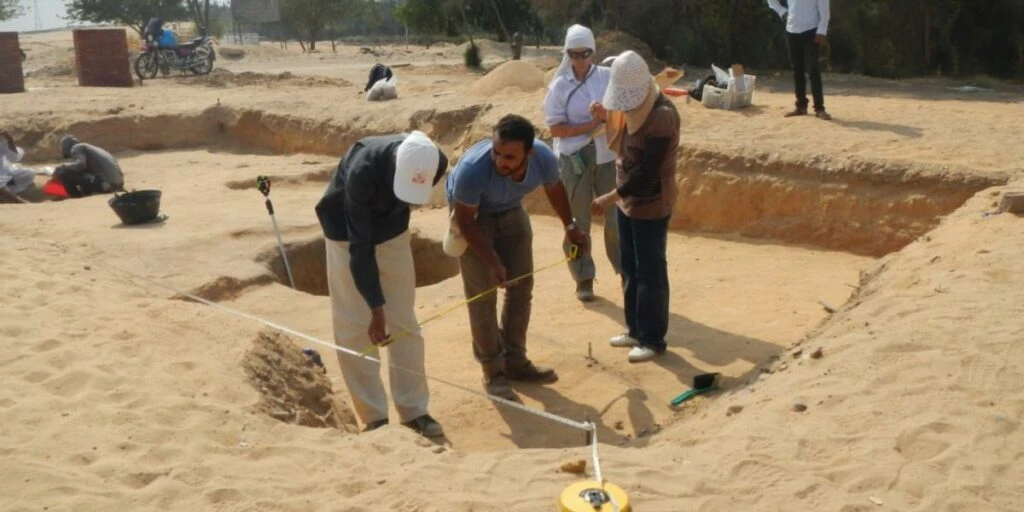
During excavations, scientists found the remains of grain vessels over two meters tall, as well as bowls, jugs, and figurines of people, bulls, and birds. Archaeologists also discovered jewelry made from shells and ostrich shells, indicating that this people had a sense of beauty.
Idol Head
The most famous work of the Merimde artists is a terracotta human head, made by an unknown artist in the 4th millennium BC. This is the first depiction of a human face found in Egypt. It was likely part of an idol. 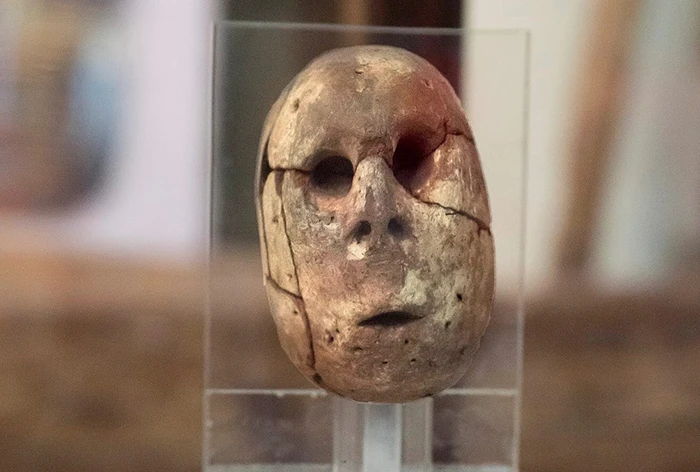
Idol's Head
The head has a mouth, nose, and eyes, and at the bottom is a hole where a pin once inserted, serving as a neck. Traces of paint remain on the terracotta head. It likely once had a mustache and beard, giving it the greatest possible resemblance to a human being. Other human images were also found during excavations, some of which looked like masks. 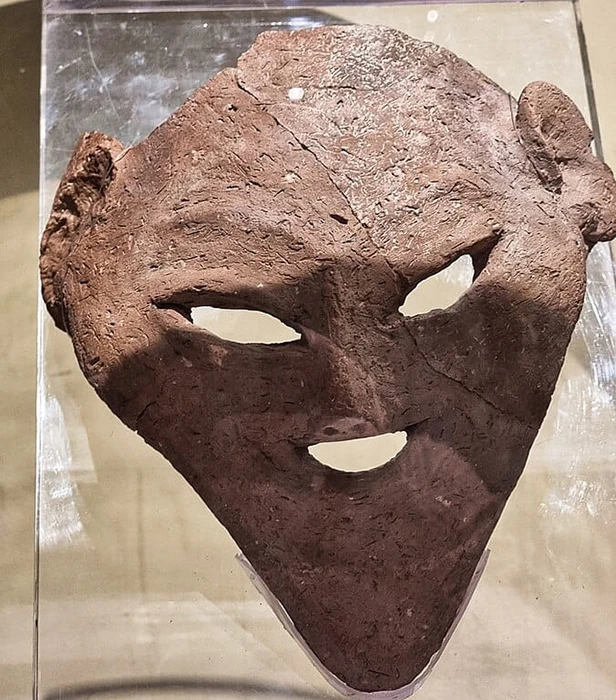
Mask
Surprisingly, these people were most likely trading even then. Some shells were atypical for the area and were clearly brought from the shores of the Red Sea. Unfortunately, we still don't know how the exchange took place or who the Merimde people's trading partners were.
Burial at home or in a garbage heap
But the most surprising fact was that the Merimde civilization had absolutely no cemeteries. Indeed, the ancestors of the ancient Egyptians, who had a true funeral cult, treated their dead rather coolly. The dead were buried right in their homes. 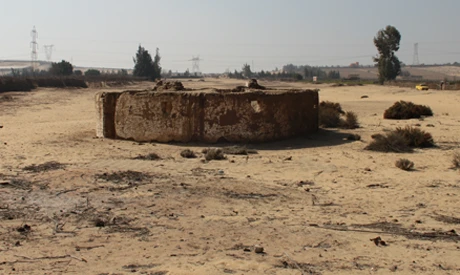
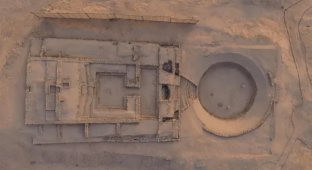
Part of the walls of a house
To do this, they dug an oval grave in the earthen floor, into which the body was placed in the fetal position, facing the entrance. The graves contained no offerings or ritual objects. The corpse was simply placed in the pit and covered with earth, and then the family lived in the house as if nothing had happened. Deceased children were treated even more simply—they were simply thrown into a garbage dump located outside the village. 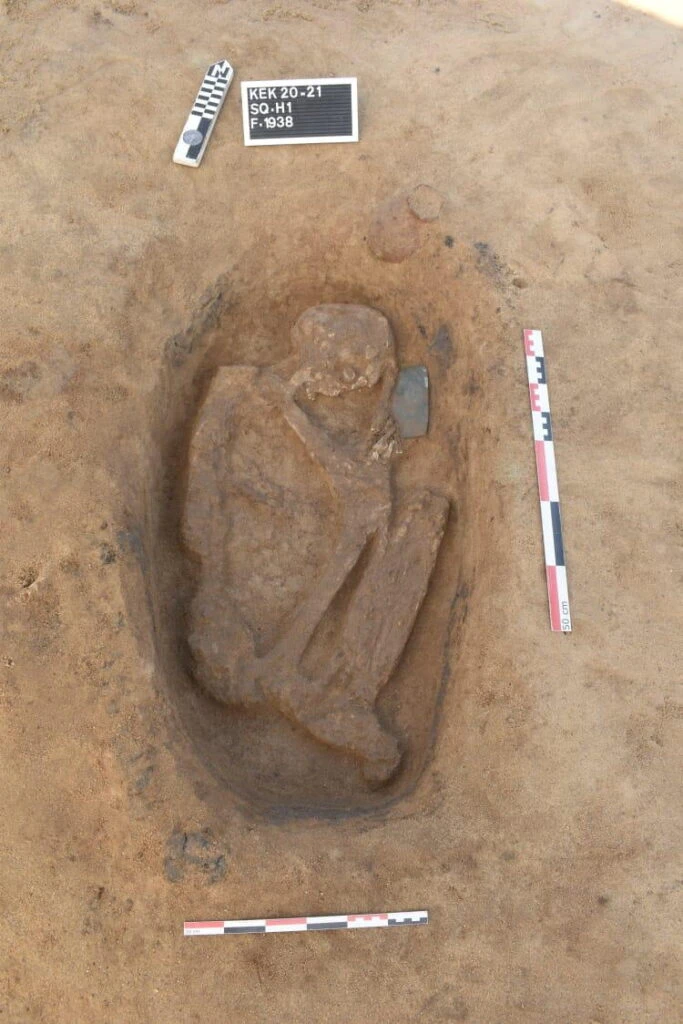
Almost all remains of the Merimde civilization were dolichocephalic, meaning their skulls were longer than normal relative to their width. This feature is common among North African peoples. Interestingly, the Egyptians were well aware of the existence of the Merimde civilization. According to their legends, they were the first people to inhabit the earth, immediately following the gods. Egyptian papyri describe that era as a time of decline in the arts and sciences, as well as a period of political chaos.
Ancient civilizations hold many mysteries that we have yet to unravel. For example, the meaning behind the image of the "astronaut" in the Mayan city of Palenque remains unknown.