Sergeant Stubby – the heroic dog of World War I (15 photos)
The brave fellow in the photograph is named Sergeant Stubby. This sturdy fellow is not just any dog, but a highly decorated soldier. His story began in 1917, when a stray puppy wandering near the Yale campus was adopted by a man named J. Robert Conroy, who later became a private in the U.S. Army. 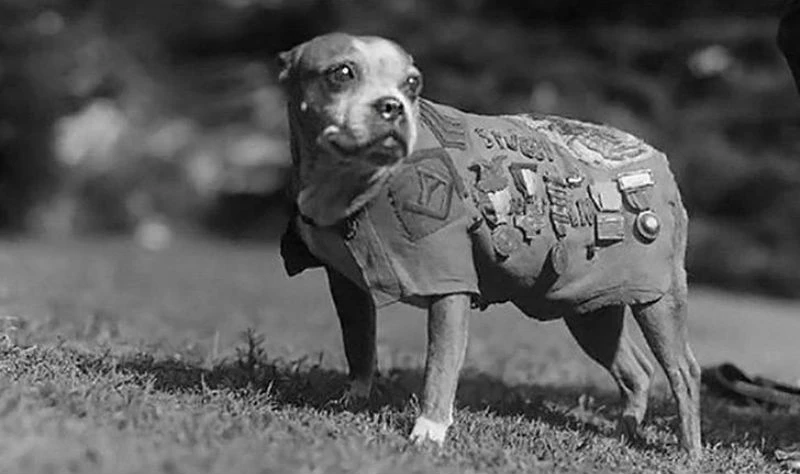
A dog named Stubby (meaning "short") became the mascot of Conroy's squadron during World War I, part of the 102nd Infantry of the 26th Yankee Division. 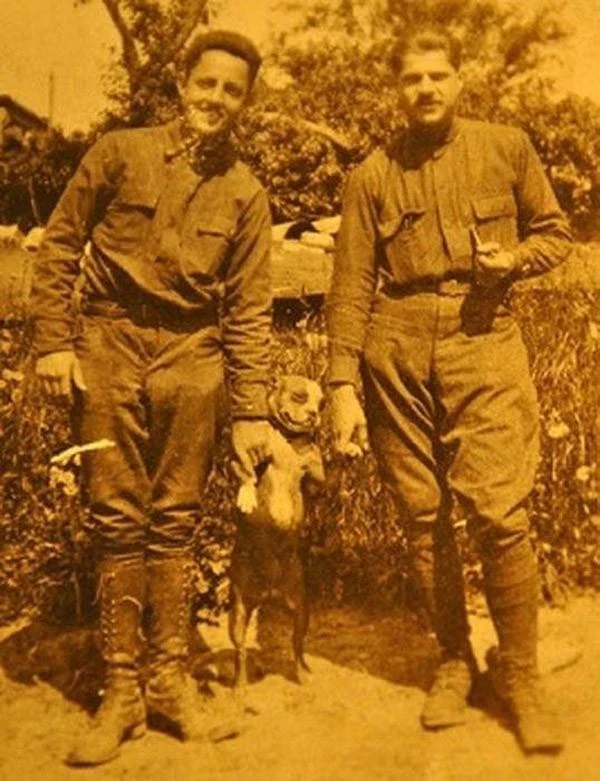
The four-legged "son of the regiment" performed his duties admirably, easily raising the soldiers' morale. During drill, the dog would parade alongside his master, dazzling the crowd with a well-rehearsed military salute. There was only one problem with this beloved companion: dogs were not allowed in the army. What's described here sounds like a real movie plot, but it's all the real story of little Stubby. 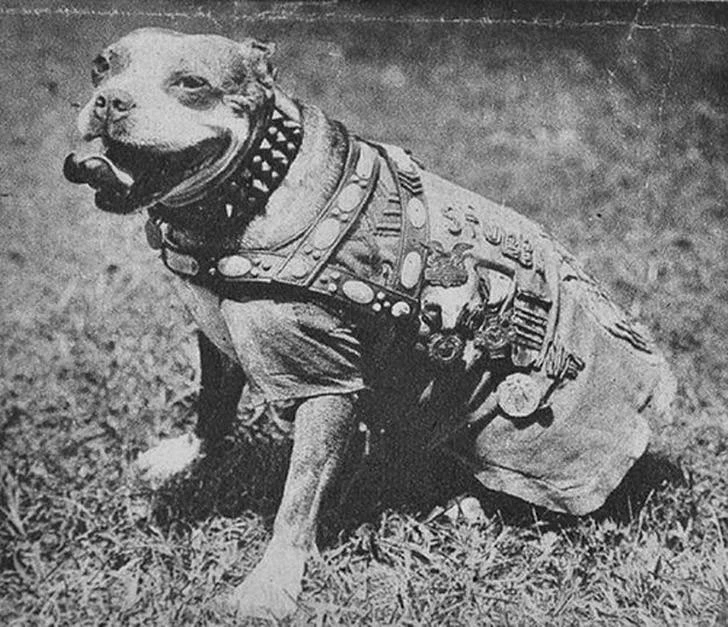
When the time came for the dog's owner's military unit to depart for Europe to fight in the war, Stubby was secretly transported aboard a naval ship. The ship's commander was not at all pleased with the revelation of such "smuggling," but he immediately changed his mind after seeing Stubby's patriotic "military salute." 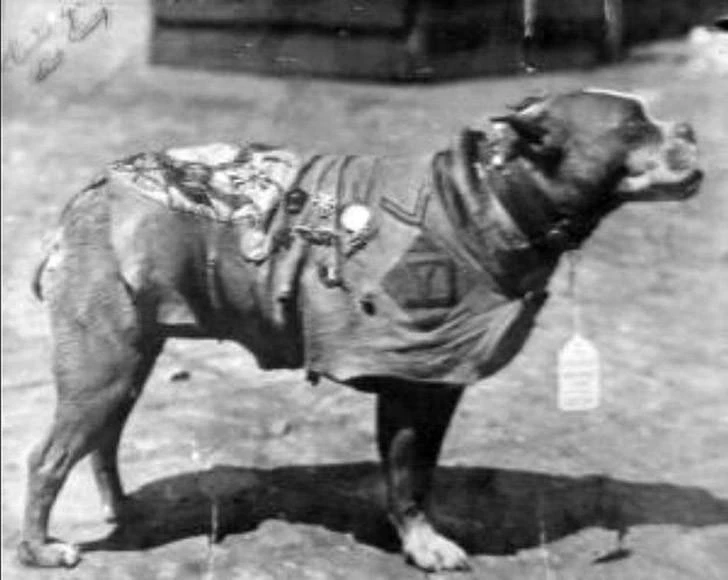
From then on, the dog always accompanied the 102nd Battalion on the front lines. Initially, Stubby's role was merely to provide moral support to the soldiers, but over time, he proved to be a true lifesaver.
Sources claim that this photograph depicts the 102nd Battalion. It is difficult to definitively confirm this claim, but the outline of a dog resembling Stubby's silhouette can be seen on the gas mask pouches of each soldier. This very dog was the unit's mascot. 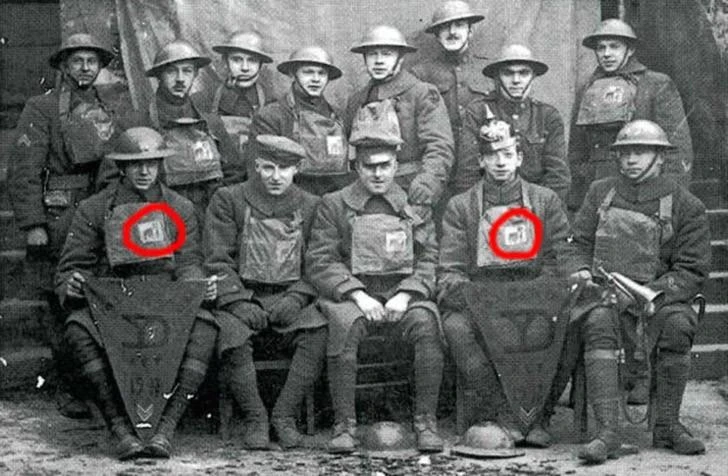
Early in his service, Stubby suffered from a gas attack. After being nursed back to health and fully restored to health, he developed an incredibly keen sense of smell. Subsequently, whenever he sensed an enemy attack using such weapons, the dog would immediately begin darting around the trench, alerting soldiers to the threat. This assistance gave the soldiers enough time to don gas masks and adjust Stubby's protective mask. 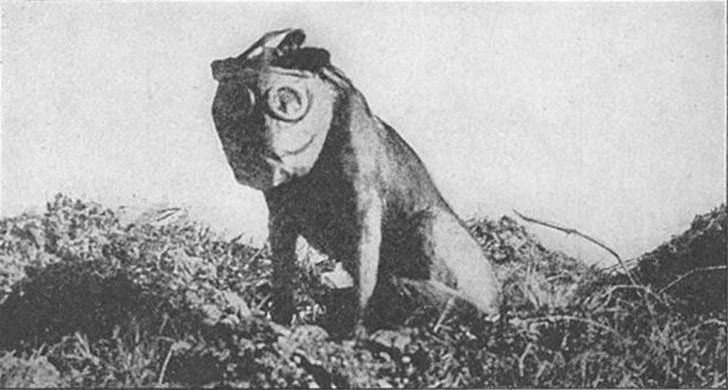
This photo shows a different dog, but his appearance gives an idea of what Stubby looked like in his protective gear. As you can see, he was a charming image.
Clever Stubby could easily recognize the enemy by the language they spoke. He was able to locate wounded soldiers and alert medics. Once, the dog even caught a German spy prowling among the Allied trenches. 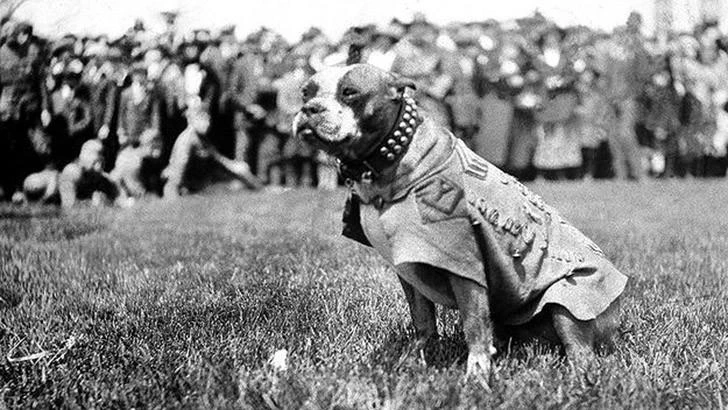
After apprehending the spy, Stubby made history as the first dog to achieve the rank of sergeant in combat. He was even awarded the Iron Cross, which he wore on his dog uniform along with his other insignia. 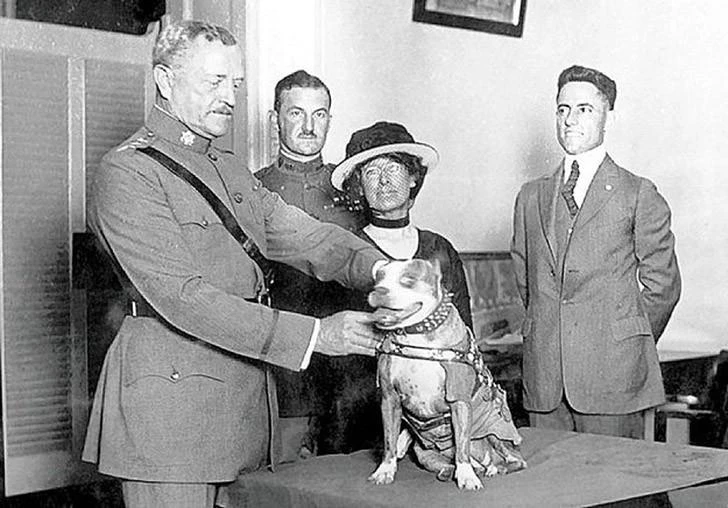
In this photo, the heroic dog receives his award from General John Pershing. The newly minted sergeant looks very respectable. 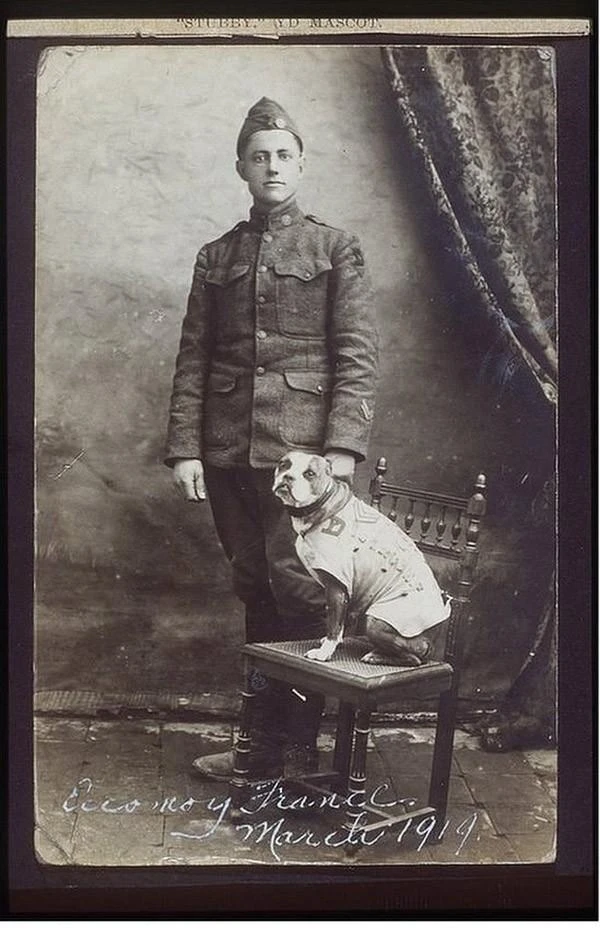
Here we see the respected sergeant with his subordinate (and master), Corporal J. Robert Conroy. Yes, that's not a slip of the tongue: Stubby has outgrown his rank. 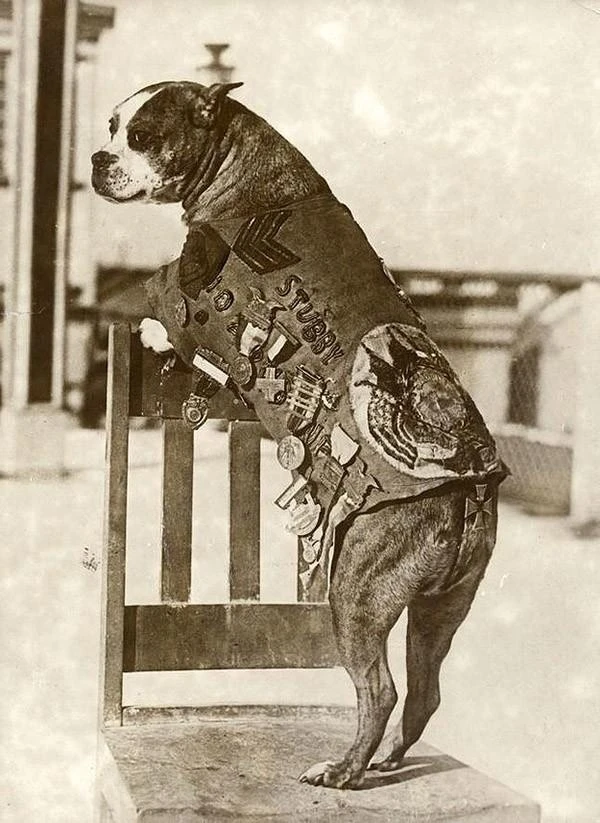
By the end of the war, Stubby had fought in 17 different battles. At one point, he was even seriously wounded by a grenade fragment. Life sometimes exacts a very high price for the gift of a unique sense of smell… 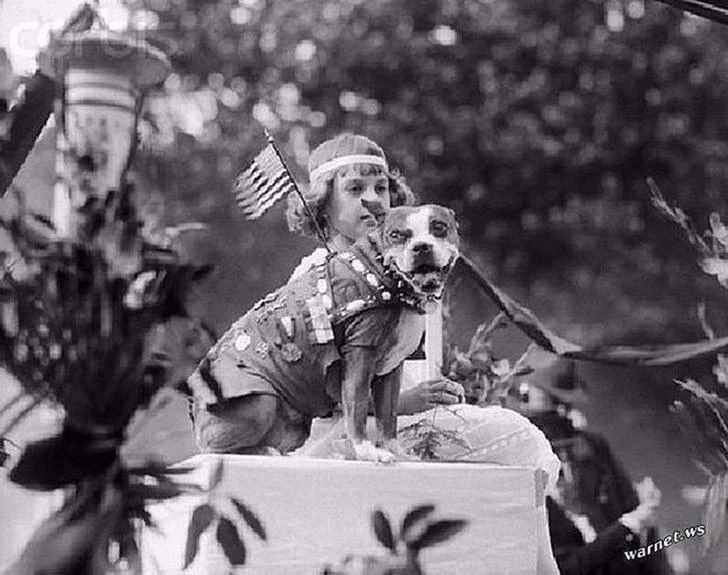
It's no surprise that soon after the war, Stubby became quite a well-known and popular figure. After the Armistice, while awaiting his departure home in France, the dog sergeant met with President Woodrow Wilson. As was later described: "The two shook hands."
In 1920, Stubby personally attended the Republican National Convention, and in 1921, he was even invited by US President Warren Harding to visit the White House. A few years later, Sergeant Stubby again visited the presidential residence for a meeting with Calvin Coolidge, the next leader of the country. 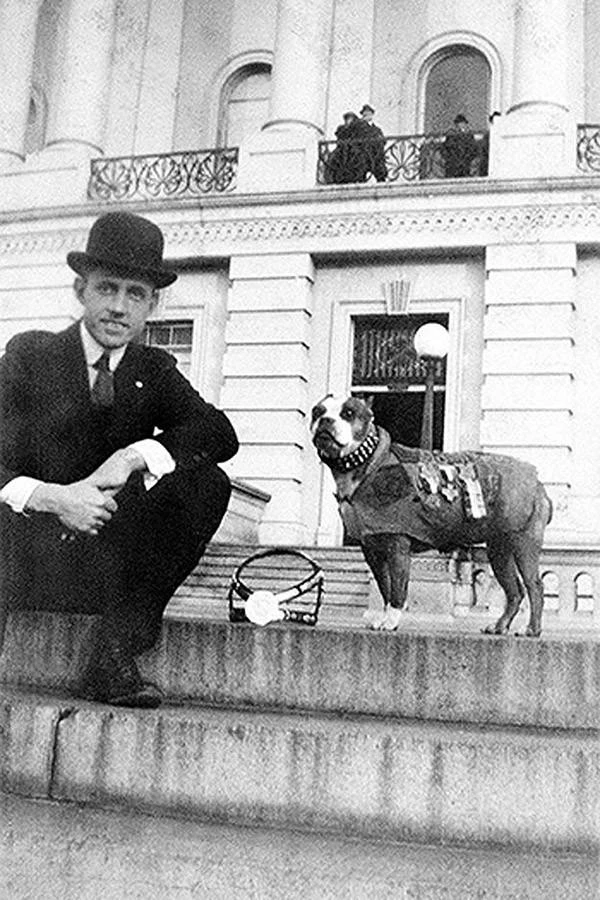
Pictured: Stubby and his owner/subordinate, J. Robert Conroy. 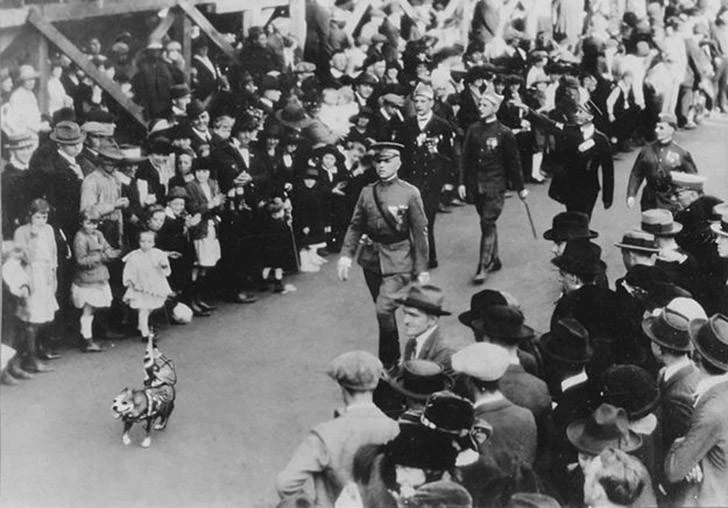
The dog returned to America as a national hero. Here he is, leading a military parade. 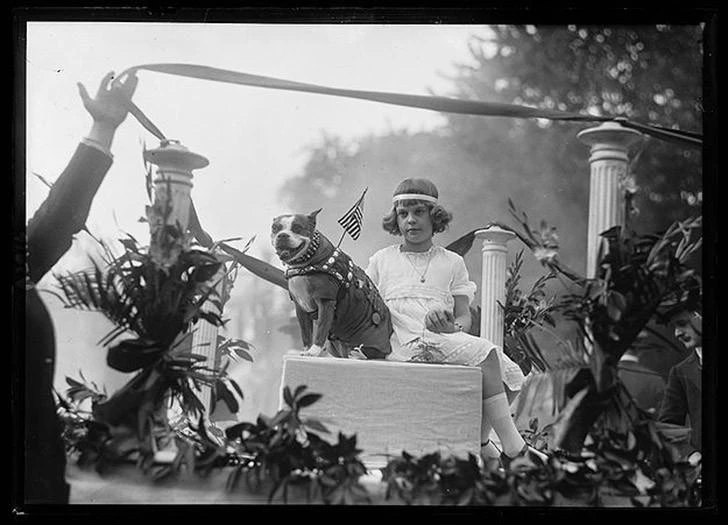
Stubby was awarded the title of life member of the American Legion and the National Navy. When J. Robert Conroy began studying law at Georgetown University, his dog became the school's mascot. Currently, the university's mascot is a dog named Jack. 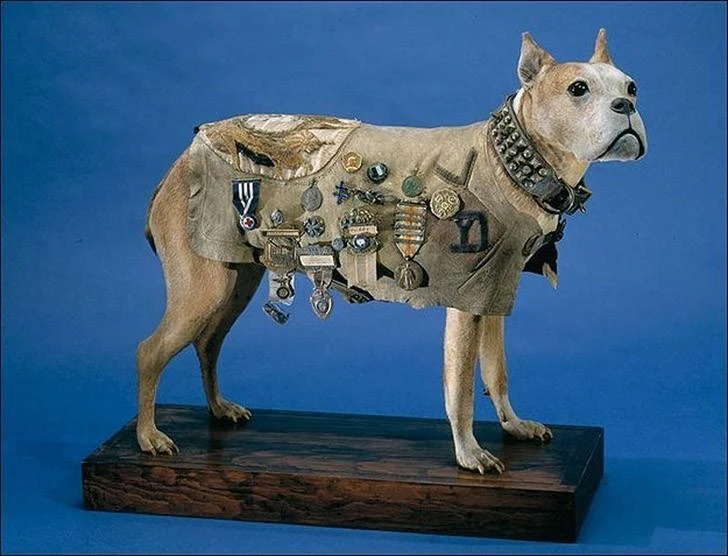
Stubby died of old age in 1926. His achievements were recognized so enormously that it was decided to memorialize his body. Stubby is currently on display at the National Museum of American History.