The Mystical Rakotzbrücke Bridge, Built by the Devil (11 photos)
There are many fascinating and mysterious places in the world. One such place is located in the arboretum of the German town of Gablenz, in Saxony. The Rakotzbrücke Bridge, built in 1860, is shrouded in many legends and mysteries. Why it's called the Devil's Bridge, and what happens to those who cross it, you'll find out in our article. 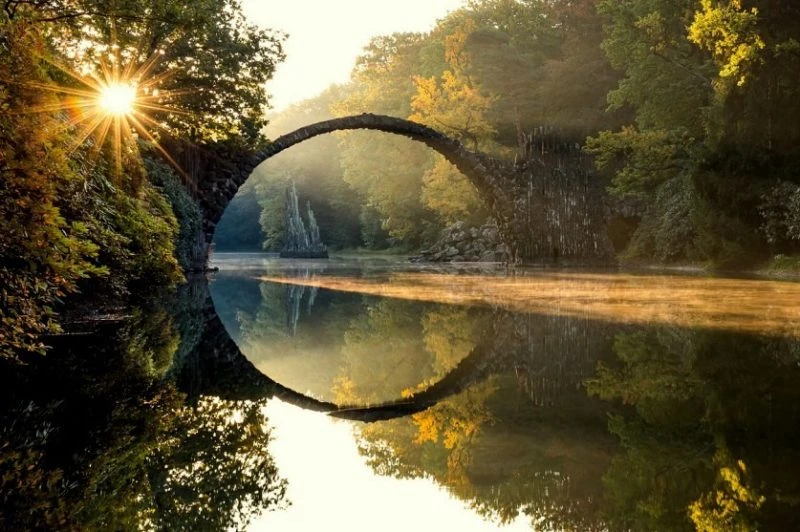
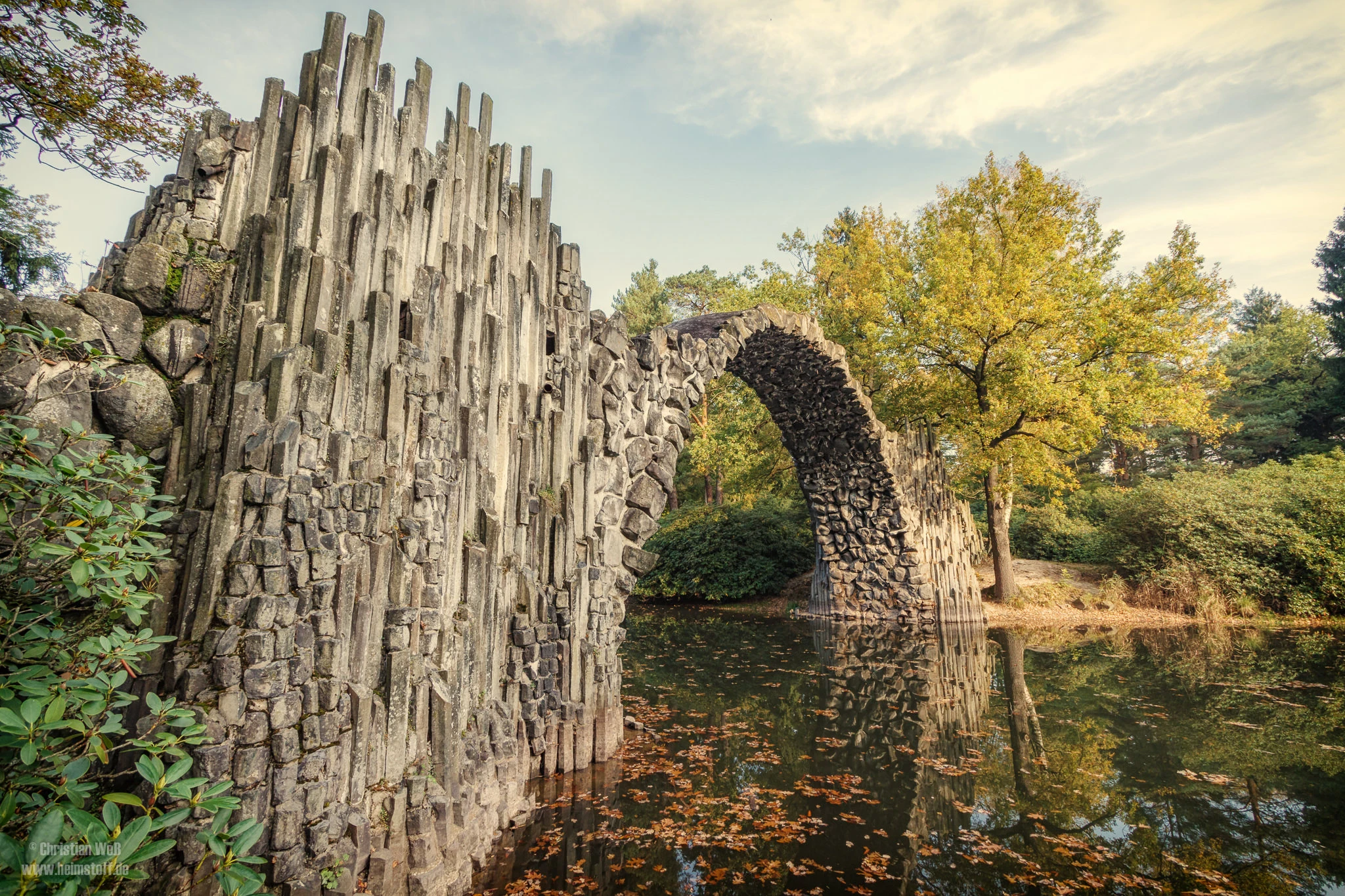
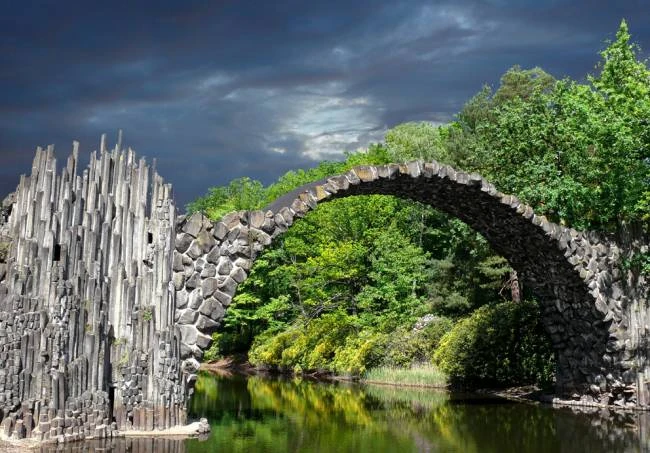
The unusual arched Rakotz Bridge was built from basalt near the Polish border. Such material had never been found locally; it had to be transported from as far away as Switzerland and Bohemia. The basalt cliffs, grottoes, and pyramids that adorn the park grounds were also hand-hewn from this same rock. 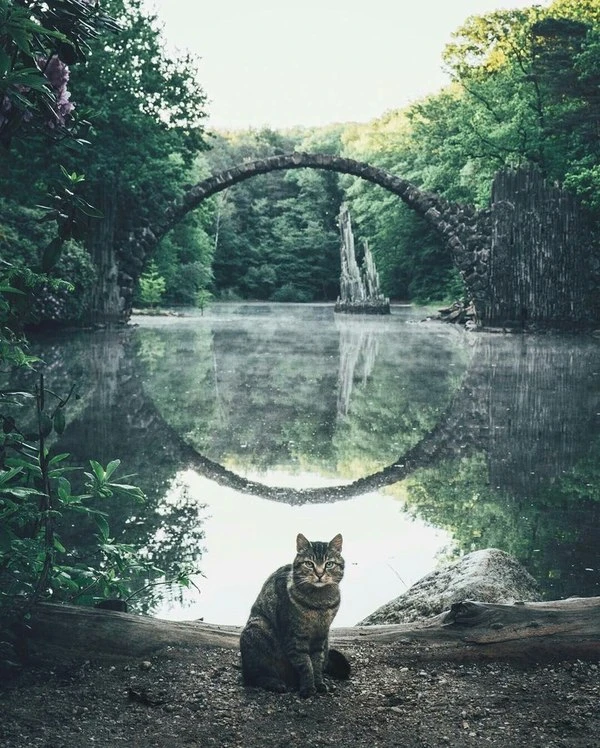
The name of the architect who created this unusual arched bridge has not been preserved. But it is said that during construction, he made a deal with the devil, who completed the project in his stead in exchange for the soul of the first person to cross. However, the architect decided to cheat and let a dog cross the bridge. Thus, the deceived evil spirit was left without a reward. Enraged, he threw himself into the water and never reappeared. Hence the name "Devil's Bridge." 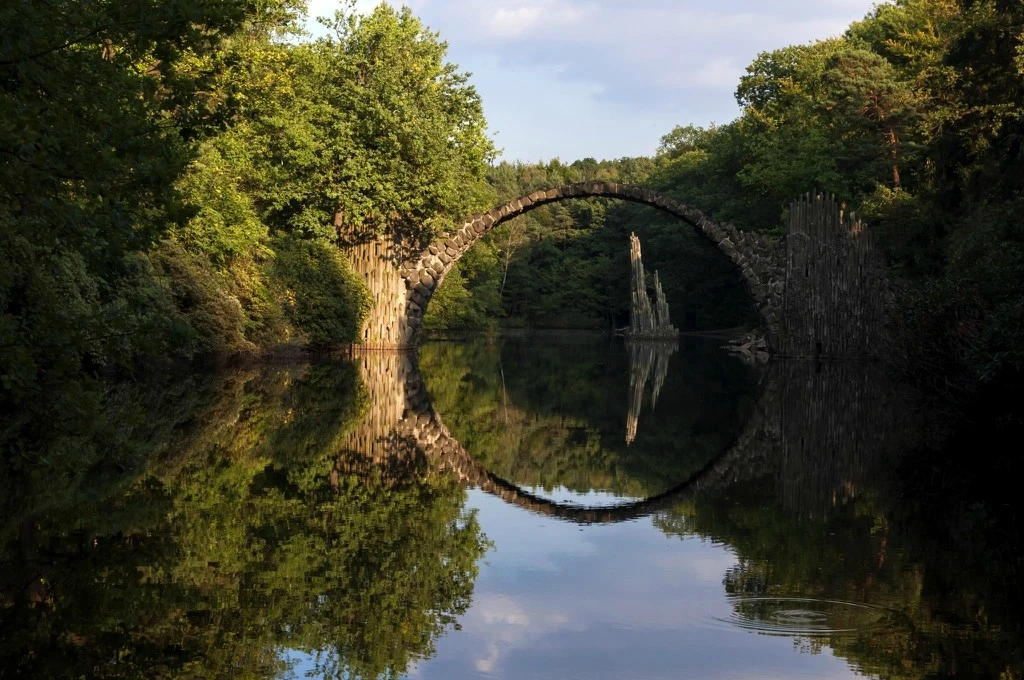
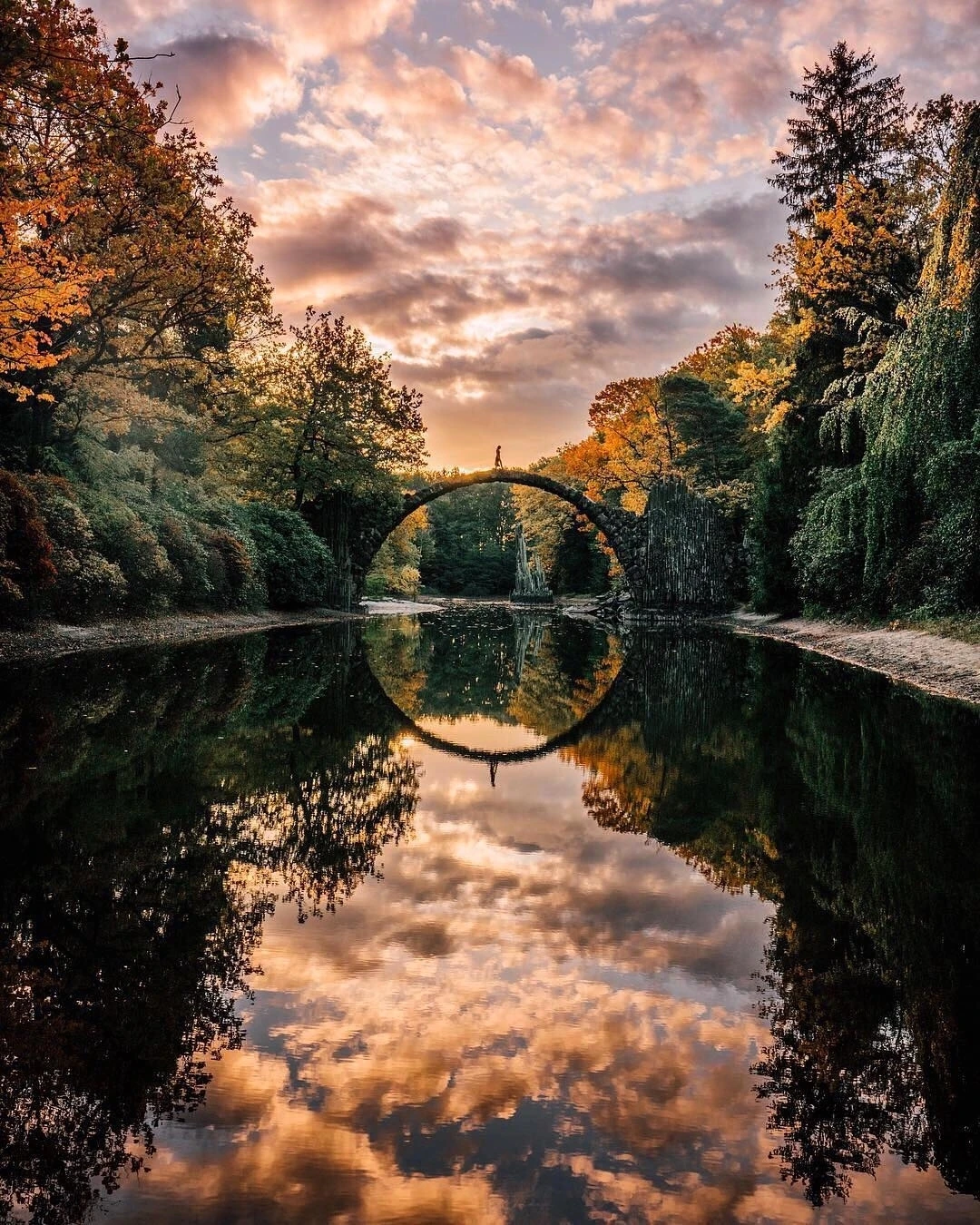
The Rakotz Bridge, stretching 35 meters, forms a perfect semicircle. This location is remarkable because, at a certain water level in the lake, the bridge and its reflection create a perfect circle, regardless of the vantage point. 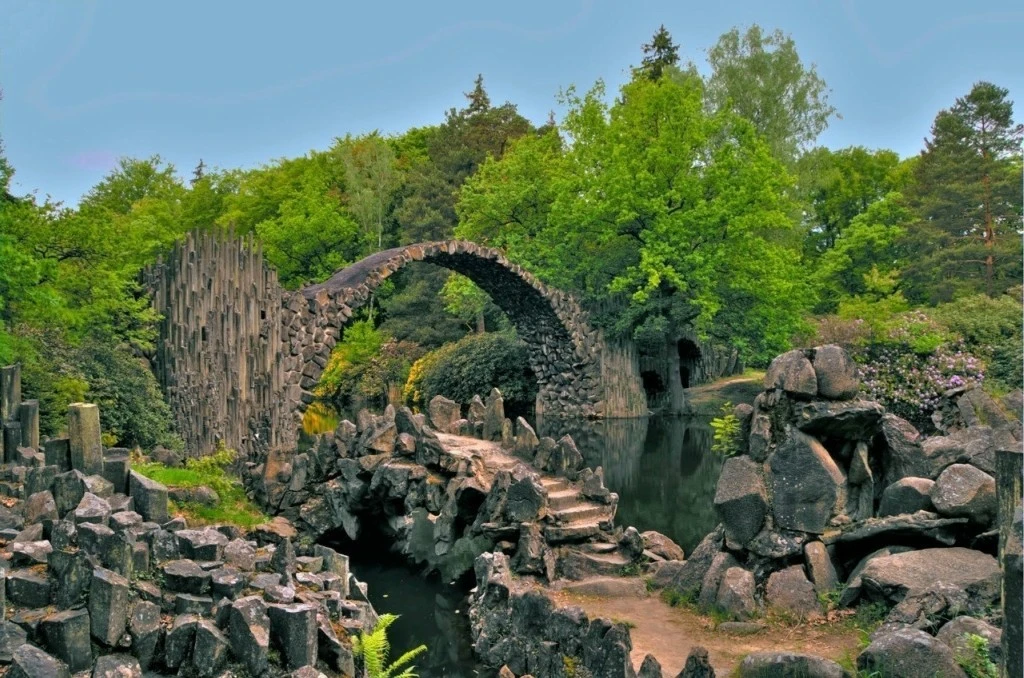
The perfect circle, reflected in the lake's water, draws the eye and seems to hypnotize and transport you to another dimension. 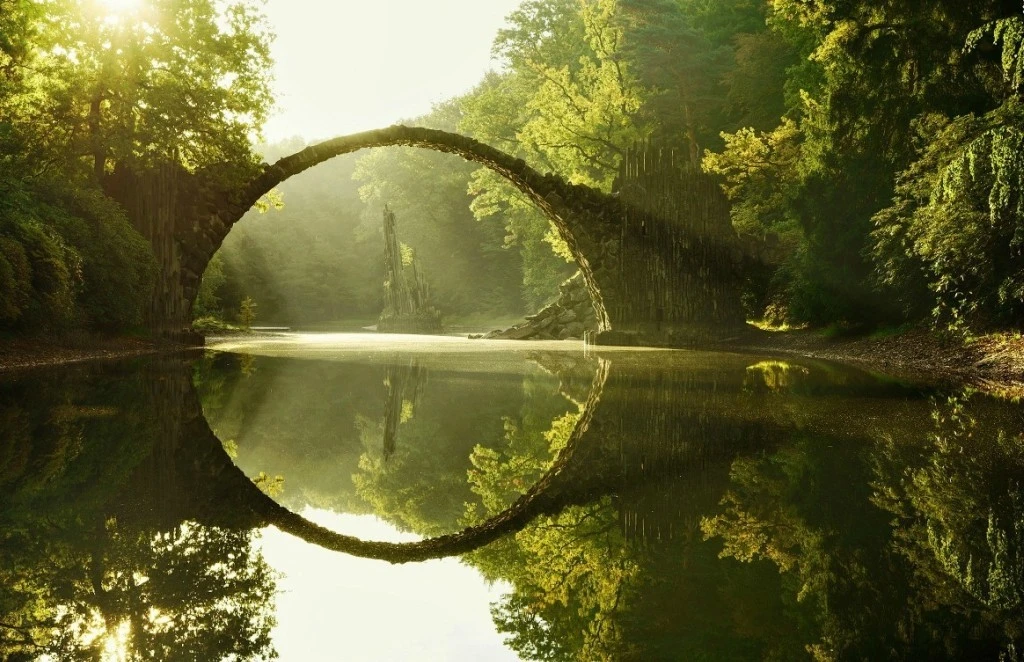
The bridge's arch is believed to serve as a portal to the other world. In 1983, two Swedish tourists did indeed mysteriously disappear from the park; they were last seen near the Devil's Bridge. 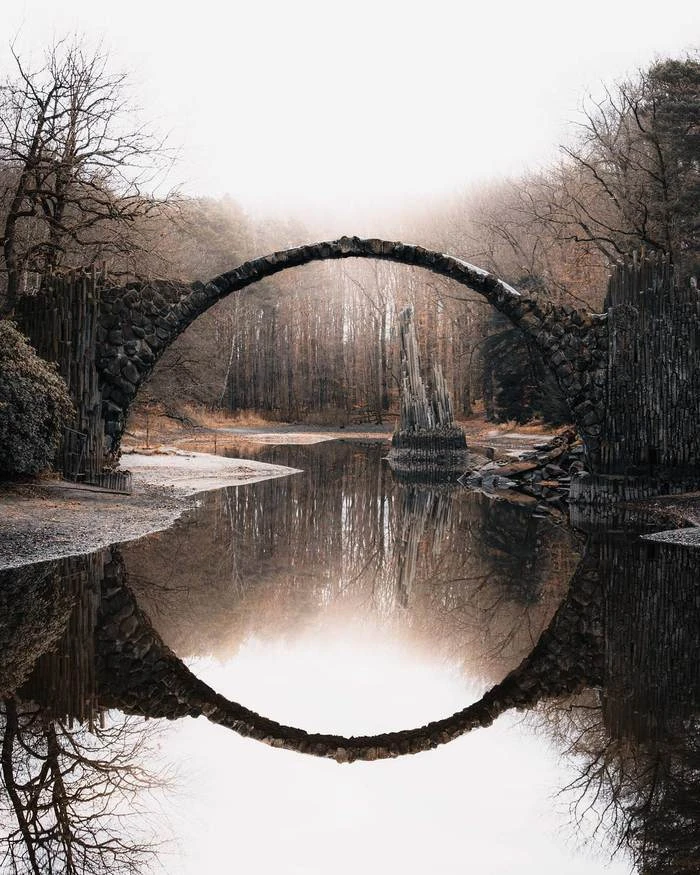
And putting all the mysticism aside, if you try to climb the bridge, you'll end up with an administrative penalty—walking on this landmark is prohibited. 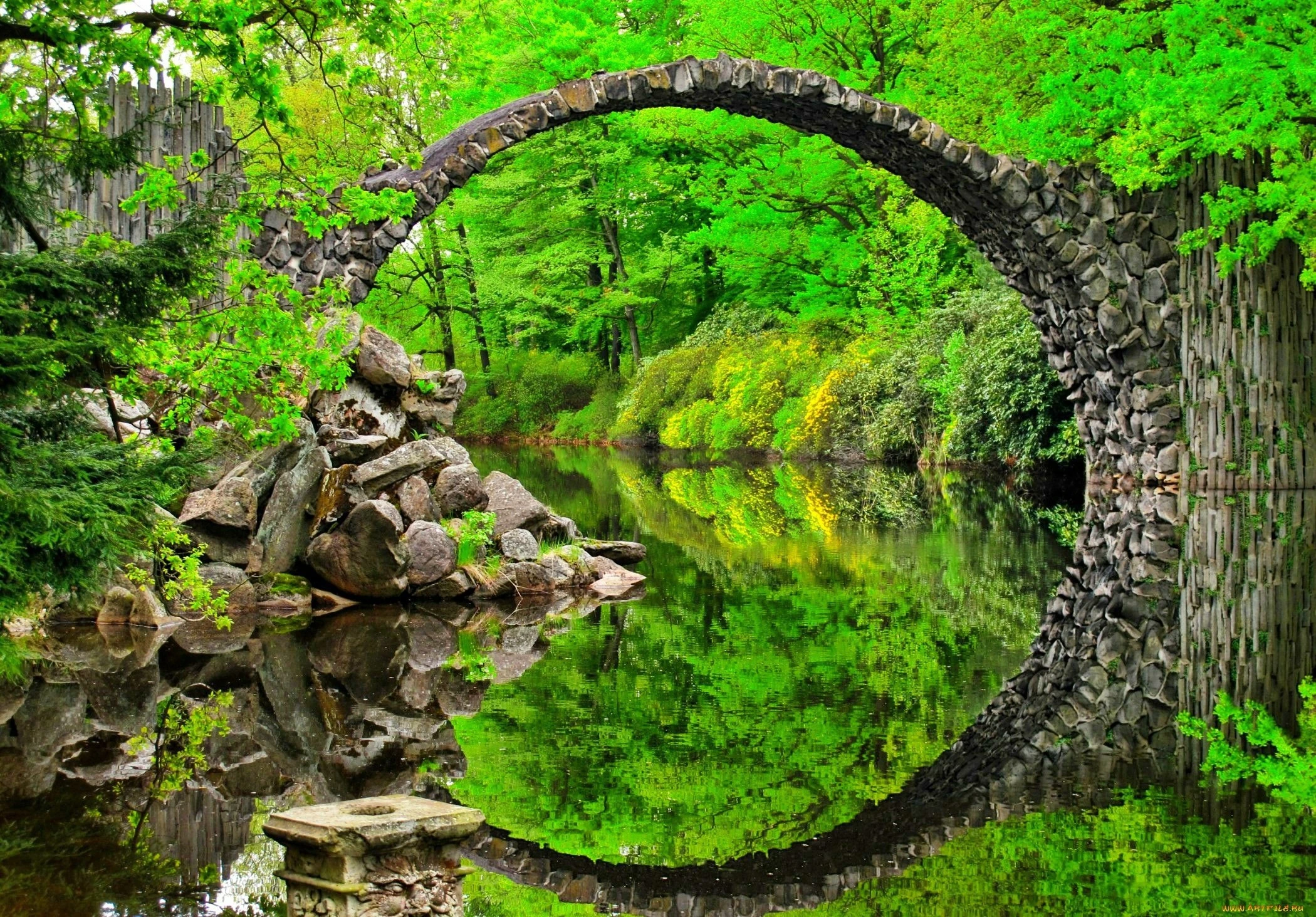
The reason is quite trivial: if numerous tourists regularly walk across the fragile basalt arch, it will soon collapse. After all, its function is more decorative than practical. 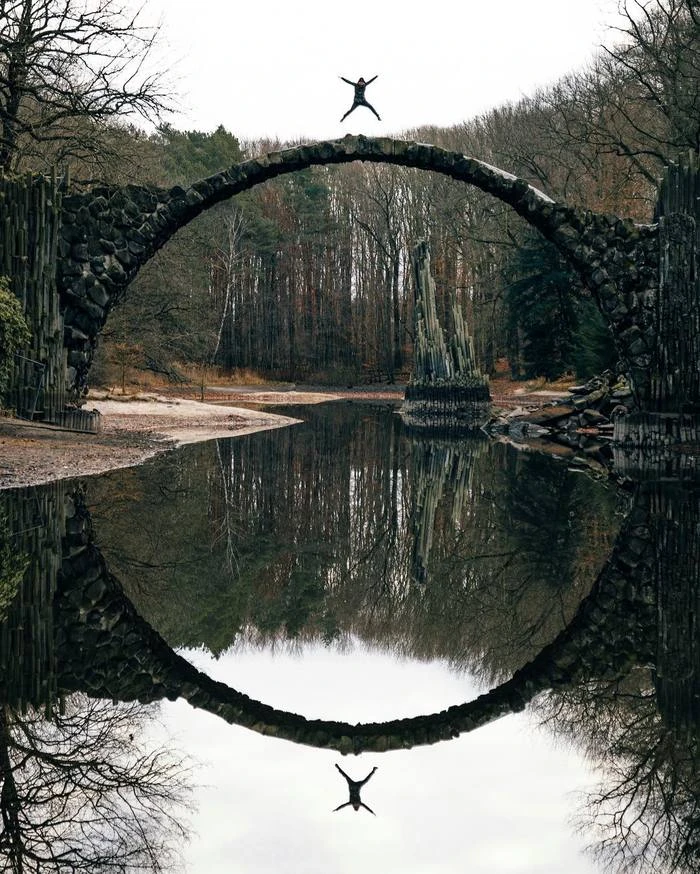
Nevertheless, no restrictions stop those who want to take spectacular photos for social media.