It's Proven That Objective Reality Doesn't Exist What really surrounds us (5 photos)
The chances that the real world exists independently and is technically "objective" are roughly zero point zero. Everything you sense and see around you is an elaborate fake, designed to keep you from going crazy from the true complexity of the Universe. 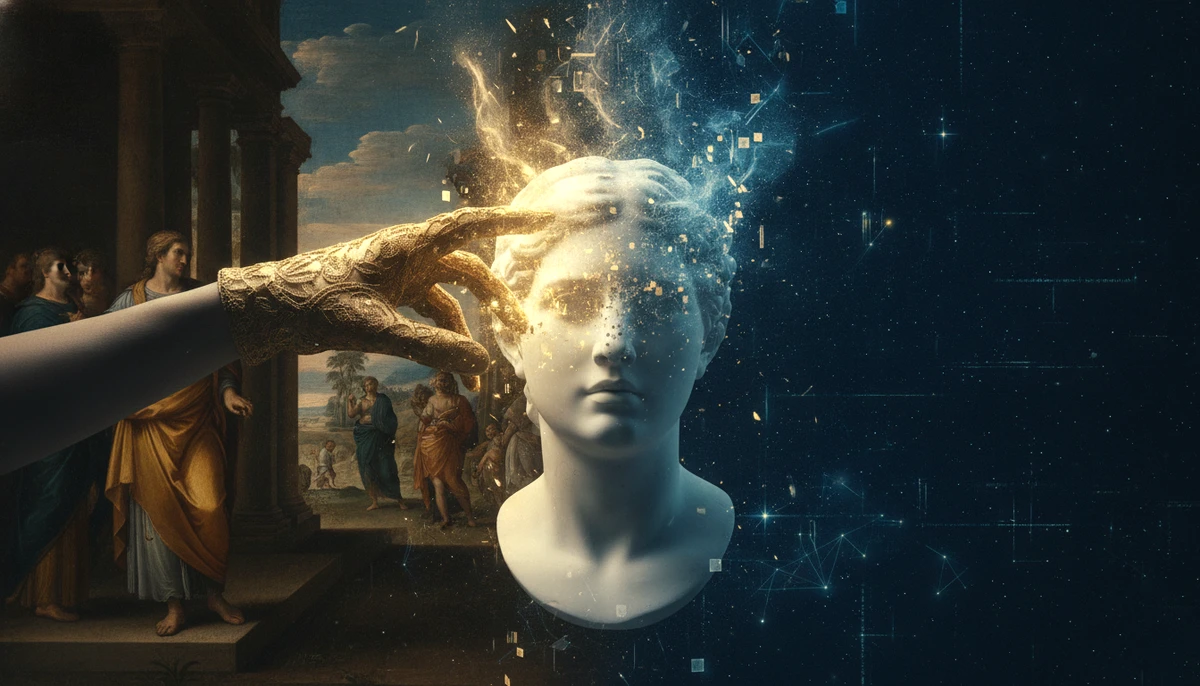
Today, the question of the existence of objective reality is at the forefront of cognitive science, neuroscience, and quantum physics. And the news from the field is grim: "objectivity" as we know it probably doesn't exist.
Black Box Hallucinations
Let's start with the fact that the brain is sealed within the skull. It has never "seen" light or "heard" sounds. All it receives is a stream of electrochemical impulses along nerve fibers. How does it construct an image? 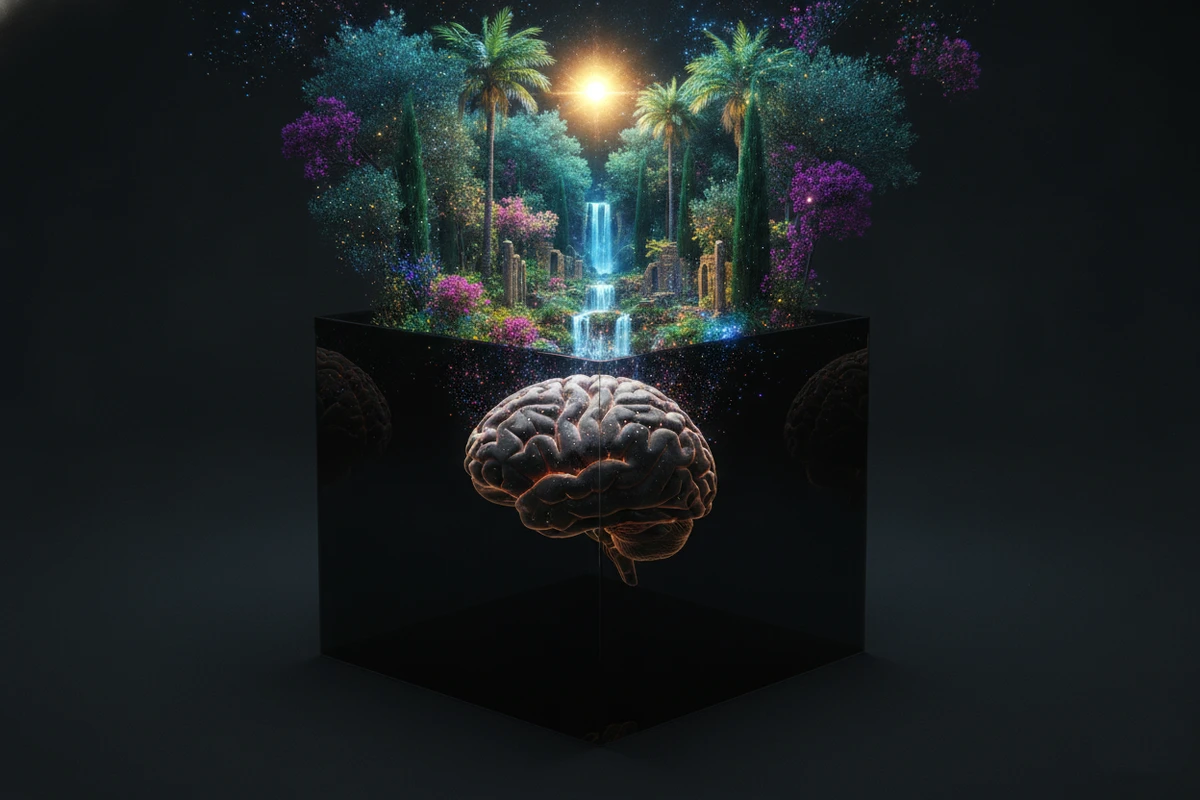
According to predictive coding theory, popularized by neuroscientist Anil Seth, perception is not a passive reflection of the world, but a "controlled hallucination." The brain doesn't wait for external signals to construct an image; It generates its own predictions about what should be "out there," based on previous experience, and uses sensory data only to minimize prediction error.
We don't see the surrounding reality, but our best guess about it. If your "hallucinations" match those of other people, we call it reality. If they don't, it's "schizophrenia," and you're welcome to see a psychiatrist. So, in fact, we all live in endless personal "hallucinations," they're just more or less synchronized with those of other people.
Evolution versus Truth
What then about the theory of evolution? If our senses were deceiving us, we would have long since become extinct! Natural selection should have weeded out those who see the world incorrectly. But it hasn't.
Cognitive psychologist Donald Hoffman, in his 2015 study, mathematically proved the opposite using evolutionary game theory. His theorem, "Fitness trumps Truth," showed that an organism that sees objective reality in its fullest form always loses to an organism that sees only simplified shortcuts useful for survival. 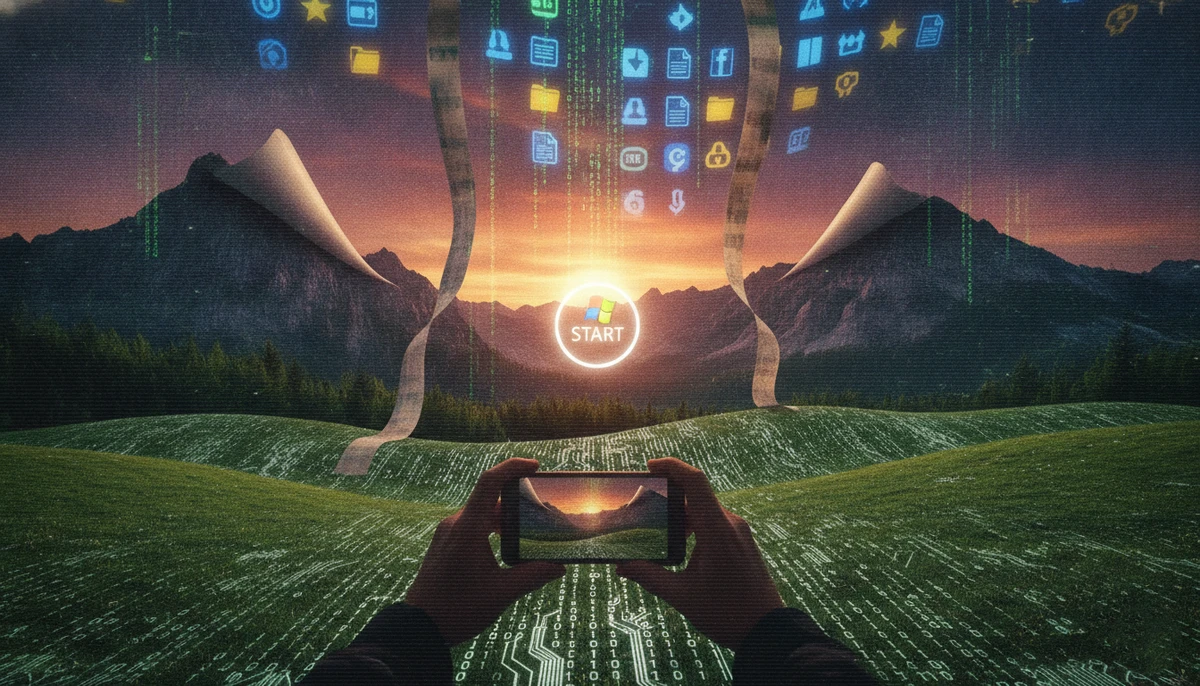
Hoffman compares our perception to the Windows desktop interface. If you see a blue file icon in the center of the screen, does that mean the file itself is blue, rectangular, and located in the center of the computer? Of course not. It's a convenient fiction, hiding millions of transistors and logic circuits behind it.
Reality isn't what we see, but a "user interface" created by evolution so we don't waste computational resources processing truths that are useless for reproduction and species survival. It's the same with reality: we see a "pillar" so we don't bump into it, but in reality, there's a seething ocean of quantum fields that's a real mess.
Quantum Disorder - Facts Depend on the Observer
While biology says we don't see reality as it is, quantum physics goes further: it even hints that reality "in itself" may not exist until the moment of measurement.
In 2018, physicists Frauchiger and Renner published a thought experiment (later confirmed experimentally by Proietti's group in 2019), known as "Wigner's Friend." 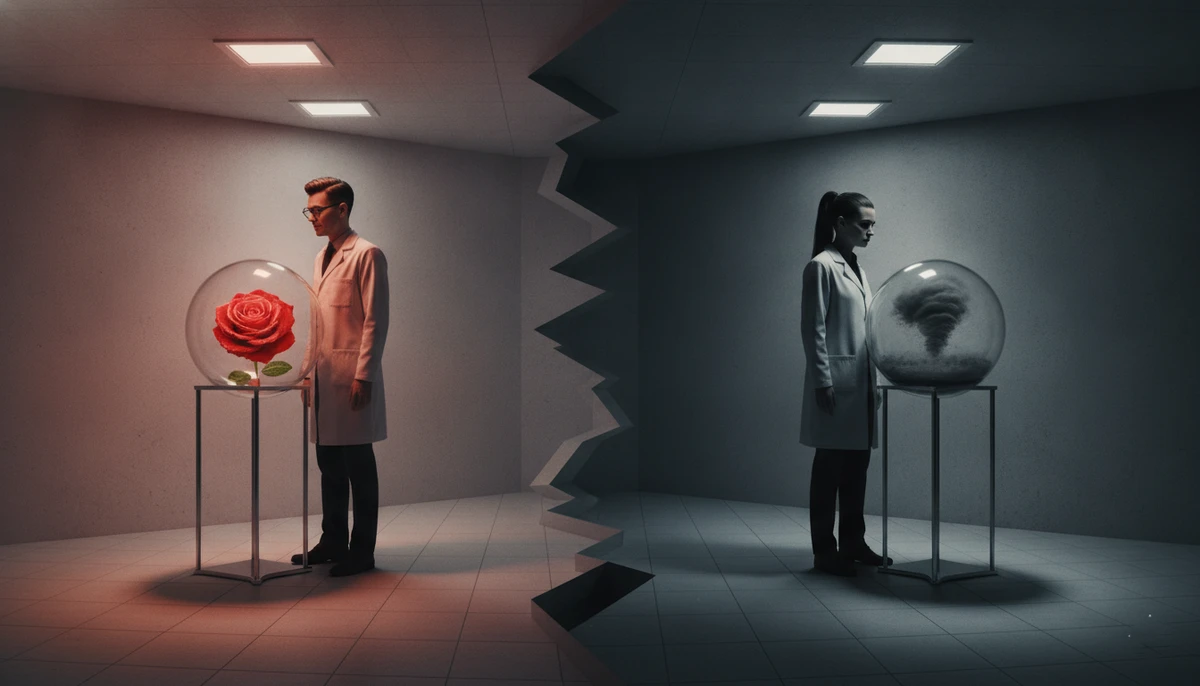
The results showed that two different observers can record two different, mutually exclusive facts about the same system, and both will be correct. One sees the photon in one state, the other in another. And this isn't because one of them has had too much to drink, but because at the quantum level, an objective reality independent of the observer simply hasn't been introduced.
This challenges the concept of observer-independent objectivity. If a "fact" depends on who is observing it, then the very notion of an objective world outside our perception begins to crumble. As physicist John Wheeler put it, we live in a "participatory universe," where the act of observation is not so much recording an event as creating one.
In 2020, the journal Nature Physics published a paper, "A Strong No-Go Theorem on the Wigner's Friend Paradox," which finally laid to rest any hope of "objectivity." Researchers proved that it's impossible to simultaneously believe three things: that our observations are real facts, that we have freedom of choice, and that the world is local (meaning nothing travels faster than light). Something has to be sacrificed. And most often, physicists sacrifice precisely the "objectivity of facts." In other words, the world is not a set of objects, but a set of interactions. No observer, no picture. 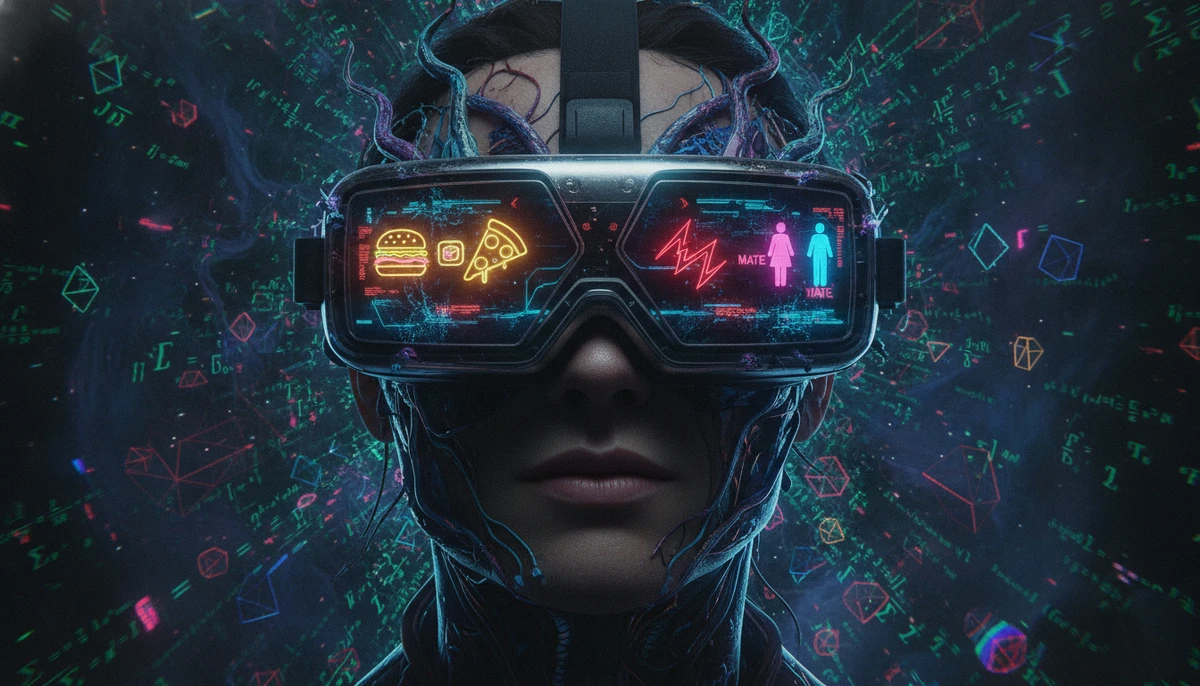
So, how do you live in a world where space and time are just compressed data, and your eyes are glasses with distorted lenses that can't be removed?
From the standpoint of strict scientific skepticism, it must be admitted: the hypothesis of an "objective world" that looks exactly as we perceive it is the least likely of all. Humans are biological machines optimized for collecting calories and finding partners for reproduction, not for understanding existence.
Does this mean that there is "nothing" out there? Hardly; solipsism is boring and unprovable. Most likely, there is some structure (mathematical or informational) beyond our perception, but it has nothing to do with color, smell, hardness, or even extension in space.