Is it true that people didn't wash at all in the Middle Ages? Shocking facts! (13 photos)
Many stereotypes still persist about the European Middle Ages. For example, you often hear that people in those days rarely washed, didn't even know about soap, and were even deathly afraid of water. It's also said that city streets were littered with waste, and noblewomen preferred to douse themselves with rose water instead of taking a bath. But is this true? Was medieval Europe truly utterly unsanitary? 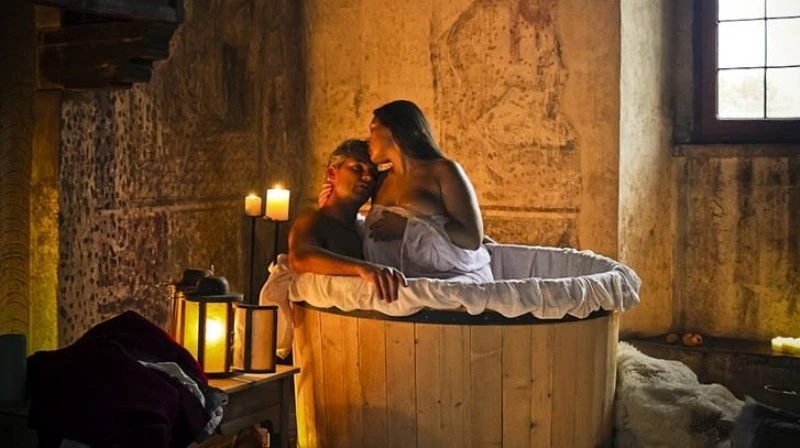
Was Europe really dirty?
Claims that Europeans neglected hygiene in the Middle Ages can be found not only in articles and videos by bloggers. Stories about "dirty" Europe are actively spread by major entertainment portals and even national media. Such stories are typically used to emphasize the exceptional cleanliness of the inhabitants of Ancient Rus'. But how true are these claims? 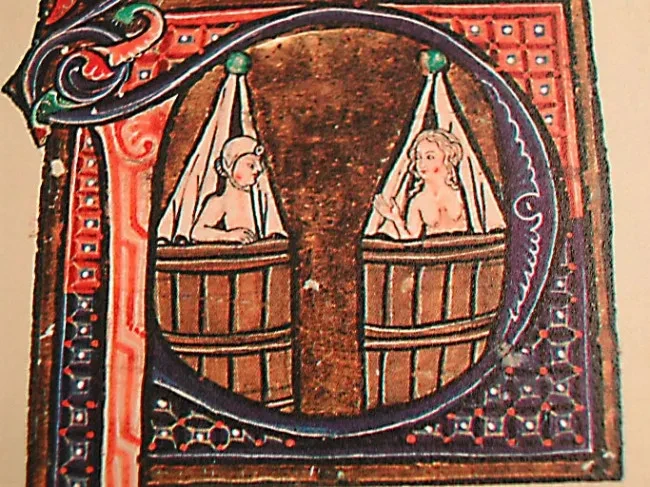
Medieval Baths
The Middle Ages are traditionally considered to be the period between the fall of the Roman Empire and the beginning of the Renaissance, that is, from the 5th to the 15th centuries. Hygiene in those days was indeed quite different from modern standards. Maintaining cleanliness was difficult: running water was rare, so bathing water had to be drawn from a well or pond and then heated.
Firewood was highly prized, especially in cities, where it had to be purchased. In rural areas, forests were owned by feudal lords, so peasants also had to pay for wood or were limited to collecting brushwood, which burned much less efficiently than logs. Furthermore, families in the Middle Ages were large, and washing was considered not only labor-intensive but also quite expensive.
Purest Kings and Court Rituals: How Hygiene Became a Sign of Status
But all this doesn't mean that Europeans ignored the rules of hygiene. Washing hands before eating or after work was common practice among both aristocrats and peasants. Hands were also washed after meals, as eating was mostly done with hands. At royal feasts, hand washing became a veritable ritual: servants brought large bowls of water and towels to the table. 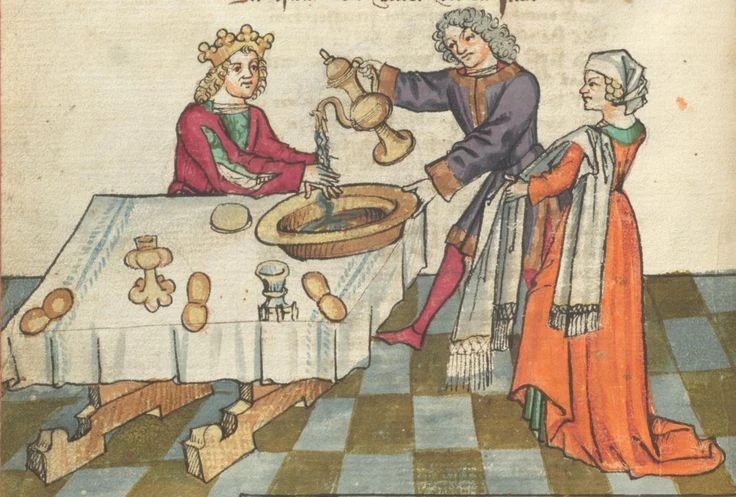
In one 13th-century treatise on court etiquette, the author gives readers the following instructions: "Keep your fingers clean and your nails well-groomed." As for washing the entire body, the nobility, of course, had more opportunities for water treatments. Some European monarchs even became famous for their cleanliness. For example, the English King John Lackland, who lived in the 12th and 13th centuries, always carried a bathtub and a personal bath attendant with him. 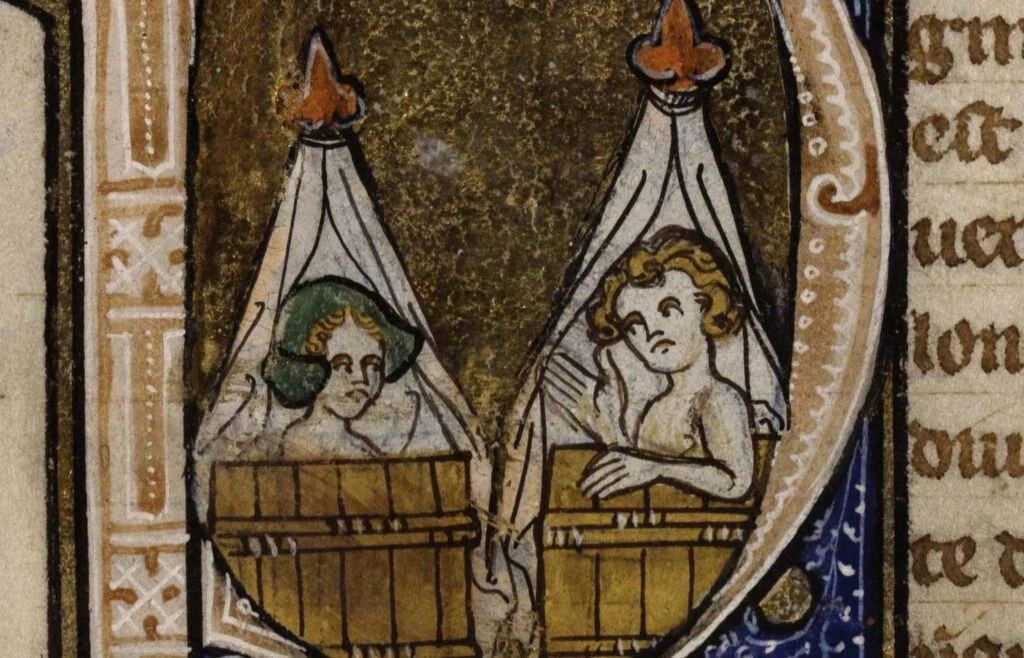
Emperor Charlemagne was a great fan of baths and often bathed in pools and natural bodies of water. He not only washed thoroughly but also performed physical exercises in the water. Chronicles indicate that Charlemagne encouraged his children and courtiers to practice cleanliness. The king often organized mass bathing events, inviting even his guards and servants. These celebrations of cleanliness and health sometimes attracted up to 100 people!
Public Baths in the Middle Ages
Public baths were common in medieval cities. They were called "stupa" or "bath houses," and included both ancient establishments built by the Romans and more modern structures. Public baths served more than just a place to wash. People came there to exchange news, have a snack, drink, and even close business deals. In fact, they served as a kind of club. Some establishments combined the functions of a bathhouse, a banquet hall, and a brothel. 
Public Bath
Alexander Neckam, a writer and theologian, wrote about public baths in medieval Western Europe in the 12th century. He lived at various times in London and Paris, where, according to him, dozens of baths operated. These establishments were popular among all social classes, from artisans to merchants. Baths were found not only in large cities but also in small towns, and sometimes even in villages. To conserve resources, they were often attached to bakeries, where large ovens were constantly in operation.
The bathhouse industry flourished especially in Paris. There was even a bathhouse attendants' guild with strict rules. These communities remained quite closed, as the business was lucrative and often passed down as a family inheritance. In some guilds, bathhouse attendants swore an oath to keep prostitutes, vagrants, lepers, and other "vile" people out of the "holy of holies" of purity. However, in other communities, the presence of prostitutes in the bathhouses was tolerated.
How did the church view bodily cleanliness?
There were special occasions in the lives of Europeans when washing was considered an obligatory ritual. Bathing was inevitable before major religious holidays, such as Christmas and Easter. The bride and her bridesmaids were also required to wash before the wedding ceremony. 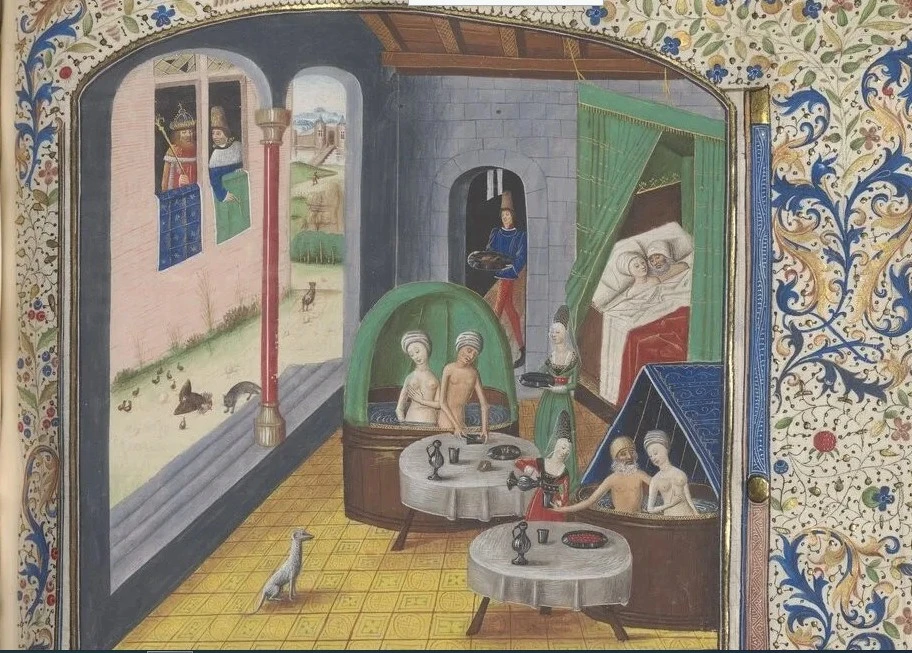
Bathing couples. Illustration for the book by Valère Maxime
It's worth noting that the quality of bathing in public baths left much to be desired. The water in the pools was rarely changed, and from a hygiene standpoint, such bathing raises serious questions. The Church, which played a significant role in society at the time, also paid attention to the baths. One Catholic monk in the 13th century wrote about it this way:
"Anyone who has bathed in a bathhouse with his wife and other women and seen them naked is required to fast on bread and water for three days." 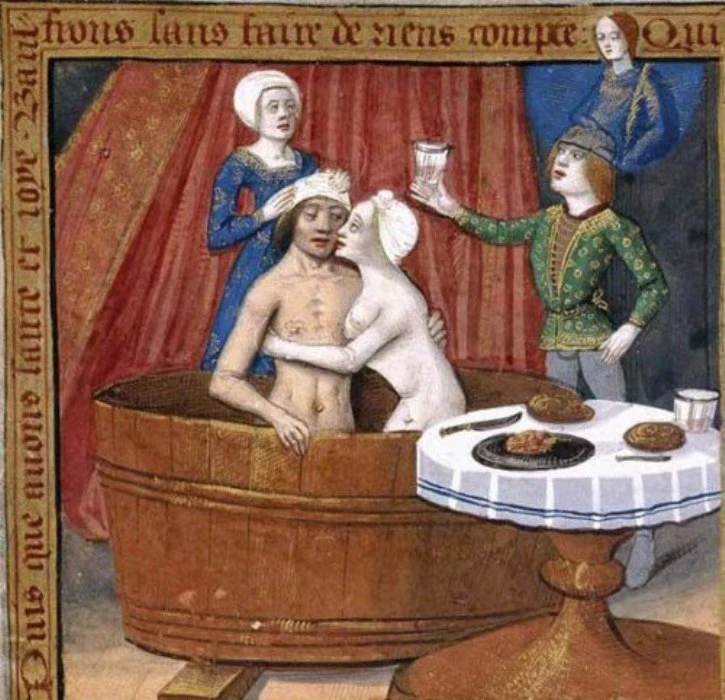
As one might expect, the Church disapproved of men and women bathing together. However, it was generally supportive of bathhouses and personal hygiene. Pope Gregory I, in the 6th century, urged Catholics not to neglect hygiene. From the 12th to 15th centuries, some monasteries operated bathhouses, which were accessible not only to monks but also to pilgrims and parishioners.
Soap and Personal Hygiene Products
Soap existed in the Middle Ages, although it was very different from what we have today. It was made from animal fat and wood ash, sometimes with the addition of herbs or oils for fragrance. For the nobility, soap was a luxury—it could be scented, with lavender or rosemary added. High-quality soap was made from olive oil in the Mediterranean, and Castile soap from Spain was particularly renowned.
Commoners used coarser options or dispensed with soap altogether, using sand, ash, or herbal infusions to cleanse their bodies. They often washed with lye—a solution of ash and water that had cleansing properties. They also used herbal infusions, especially soapwort, which produced lather when rubbed together. 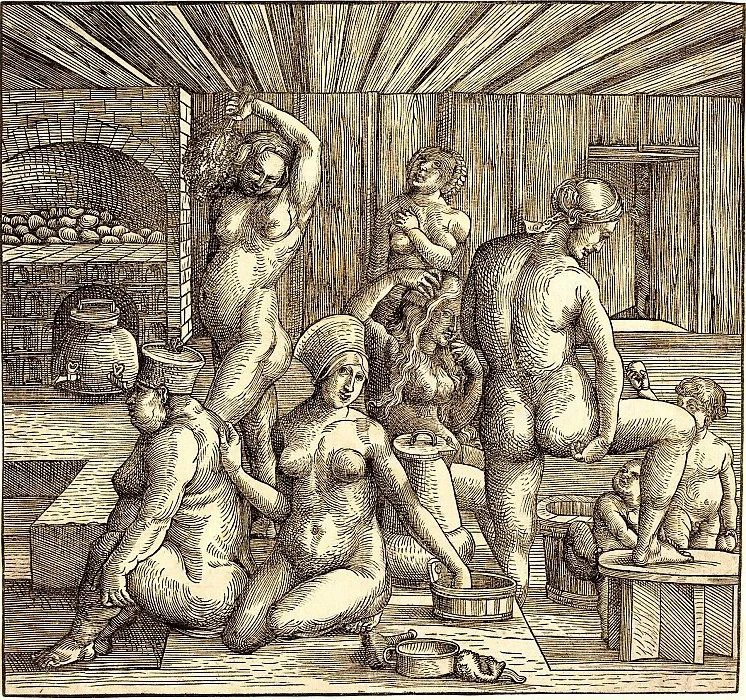
Albrecht Dürer, "Women in the Bath," 15th-16th centuries
Europeans washed not only in bathhouses but also at home. In the didactic poem "Regimen Sanitatis Salernitanum," the author advises washing hands in the morning after waking up, washing with cold water, and brushing teeth. Europeans had fairly good oral hygiene. They cleaned their teeth with toothbrushes and special sticks.
Herbal compounds and abrasive mineral powders were used as toothpaste. Dental elixirs were replaced by apple or grape vinegar, to which herbal infusions were added. Caries was rare in medieval Europe. The main factor in this was not so much maintaining dental hygiene as the almost complete absence of sugar in the diet.
Hygiene in Villages and Among the Poor
In rural areas, access to hygiene was limited. Peasants rarely could afford regular visits to the bathhouse, and heating water for washing was a labor-intensive process. Often, washing was reduced to dousing themselves with cold water from a well or river, which in winter became a real ordeal. Nevertheless, even in villages, people tried to maintain cleanliness, especially before important events such as church holidays or weddings. 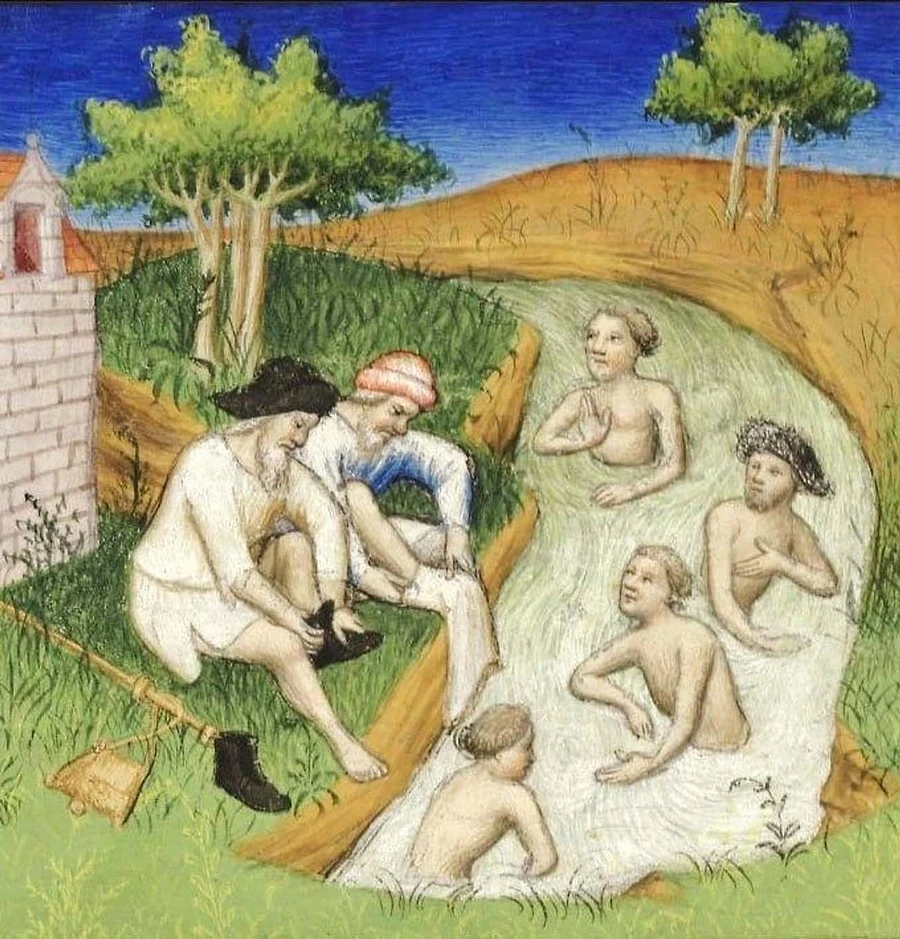
Pilgrims bathing in the Jordan River. "The Travels of Marco Polo," France, 1470-1475
Despite the difficulties, peasants found ways to maintain hygiene with available means. In the summer, they washed in rivers, and if resources were sufficient, they heated small bathhouses. Historical records indicate that even in poor families, cleanliness was considered a sign of dignity, and people tried to take care of themselves as much as possible. The difference between the city and the village was certainly noticeable, but this does not mean that peasants lived in complete filth.
How did the myth of medieval slobs come about?
But how did the persistent myth that Medieval Europe was completely mired in unsanitary conditions arise? Its emergence was fueled by stories from the lives of individual monarchs. Queen Isabella of Castile is often mentioned, who, according to legend, prided herself on having bathed only twice in her life. 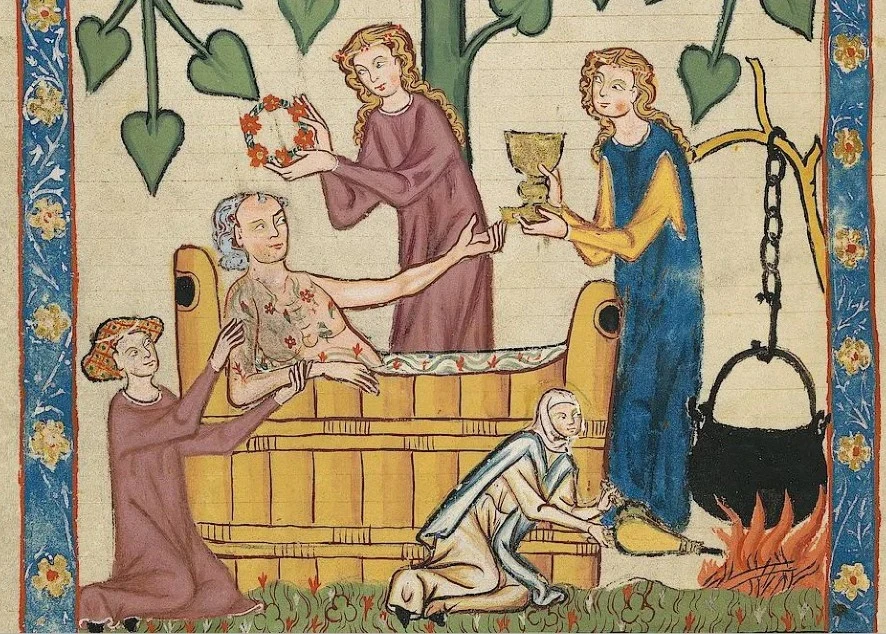
Bathing in a Herbal Infusion
But this doesn't mean the queen ignored hygiene completely—she may have used other methods of cleansing her body. Many historians, moreover, consider this story of the "dirty queen" to be nothing more than a historical anecdote. It's quite possible that Isabella truly did bathe rarely. However, her fame back then can be explained by the fact that she was an exception to the rule—her behavior provoked discussion and condemnation among her contemporaries.
The stereotype that people in the Middle Ages did not wash arose much later than the Middle Ages themselves. In the 18th century, during the Age of Enlightenment, the "Dark Ages" were actively criticized, portraying them as a time of ignorance and unsanitary conditions. Writers and historians of that period deliberately exaggerated the backwardness of medieval society to highlight the achievements of their era.
How did things change in the modern era?
Surprisingly, during the Renaissance and early modern periods (16th–18th centuries), attitudes toward hygiene in Europe worsened. Doctors of the time began to associate water with the spread of disease, claiming that it could "weaken" the body. As a result, bathhouses became less popular, and people began to rely on perfumes, powders, and frequent changes of linen to mask odors. Thus, in some respects, the Middle Ages were "cleaner" than later eras.
Plague and syphilis epidemics led to the closure of many public bathhouses. Doctors of the time believed that hot water and steam facilitated the penetration of diseases through the skin's pores. Fear of infection led people to abandon bathing. 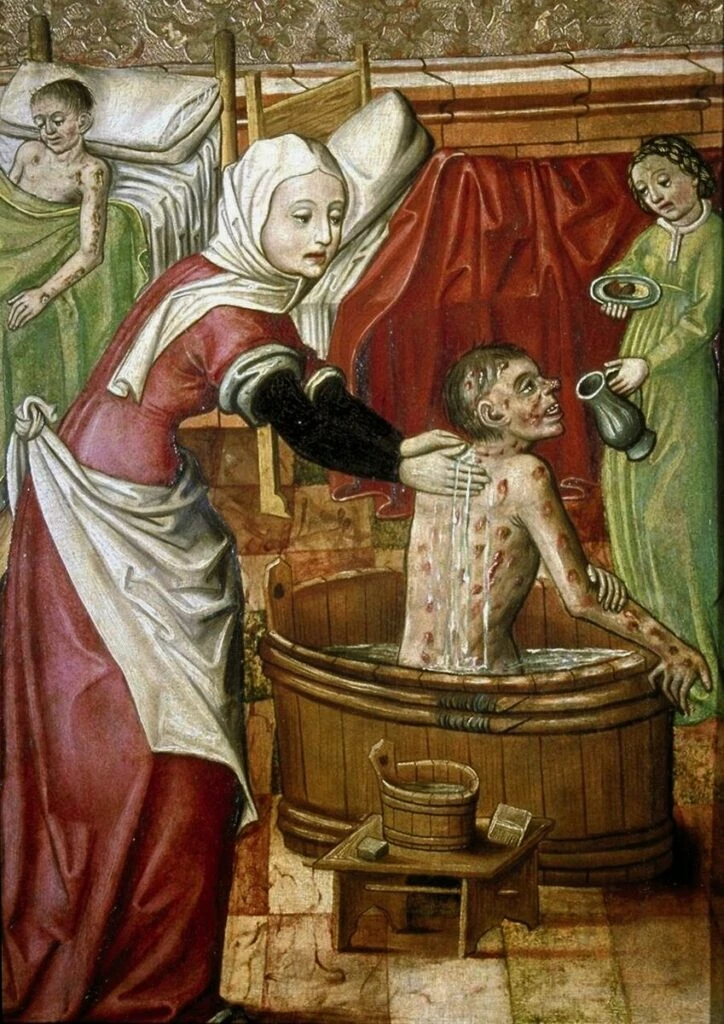
The rise of religious influence also played a role. Bathing began to be considered sinful. The Church preached that physical purity was less important than spiritual purity, and that excessive attention to the body was a path to temptation. Saints deliberately abstained from washing, considering dirt a sign of piety.
Changes in fashion also affected hygiene. In the 16th century, voluminous costumes with many layers of fabric became fashionable. Such clothing was difficult to wash, and people preferred to mask odors with perfume and powder. Aristocrats literally bathed in perfume to conceal unpleasant body odors. 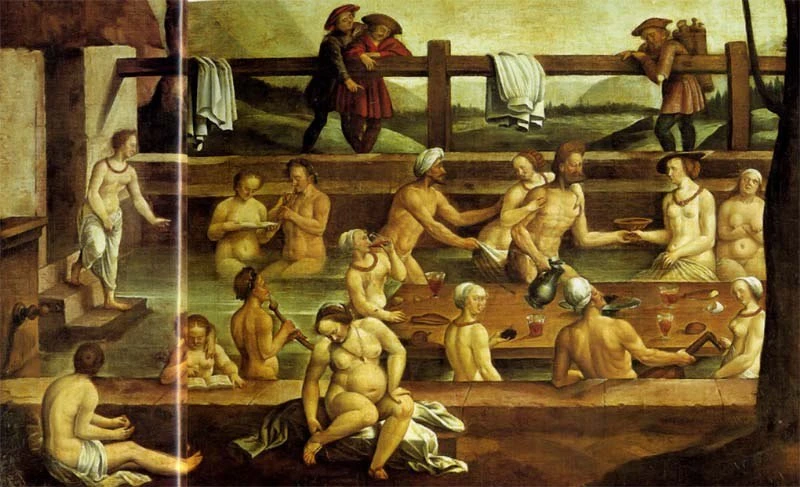
Public bathhouse of the 16th century: soon such establishments will truly almost disappear for a time
This shift in perceptions of hygiene was linked to advances in medicine and new theories about disease. For example, hot water was believed to open the pores and allow "bad fumes" to penetrate the body. As a result, the nobility preferred dry brushing or infrequent washing. This demonstrates that ideas about hygiene were heavily influenced by scientific and cultural changes.
Bottom Line: Did They Wash or Not?
So, did people wash in medieval Europe? Definitely! Although hygiene standards were far from modern, people maintained their cleanliness using available means—from public baths to herbal infusions. The myth of "unwashed Europe" is largely exaggerated and based on later stereotypes. Cleanliness varied by region, status, and time, but overall, medieval Europeans strove for order and cleanliness. 
Bathing in a city fountain
Thus, the image of "unwashed Europe" is more the result of later misconceptions and myths than the reality of the Middle Ages. Of course, the level of hygiene was different from today, but the desire for cleanliness was still very much alive. Why do you think the myth of dirty Europe has proven so persistent and popular to this day?