Bride School of the Third Reich: How the Nazis Created the "New Woman" (6 photos)
One of the hallmarks of a totalitarian state is its unceremonious interference in the personal lives of its citizens. The Third Reich, which existed in Germany from 1933 to 1945, was particularly notorious for this. All aspects of people's lives were strictly regulated, including family relationships. It's clear that this wasn't done to make Germans happier. The Nazis' sole goal was to consolidate their power. 
To promote their ideas among the civilian population, the Nazis founded numerous organizations and institutions that reached Germans of all ages and genders. One of these was the "School for Brides of the Third Reich." The school's goal was to create a "new woman" who would fit perfectly into Nazi ideology. 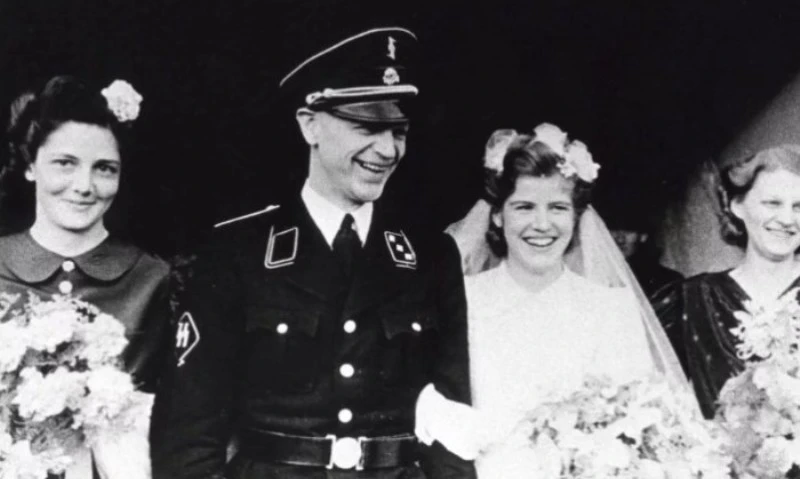
SS member's wedding, December 1942
The concept of the "new woman" already existed. It was voiced by the last German Emperor, Wilhelm II. The monarch once said that a true German woman is "Kinder, Küche, Kirche" ("Children, Kitchen, Church"). This idea resonated with the Nazis. In 1934, Hermann Goering wrote in his book "The Nine Commandments of the Workers' Struggle," addressing women: "Take a pot, a dustpan, a broom, and get married."
Hitler's associates believed that women had no place in politics, public life, or science. Their natural duty was to serve men, keep the home fires burning, and raise children. Ideologists meddled not only in the public and private lives of German women. They also established how women should dress and behave.
Under Strict Restrictions
Women who were members of the Nazi Party (NSDAP) or who were the wives of party members were under the strictest surveillance. They were forbidden from wearing provocative clothing, using cosmetics, or smoking. Divorce was also frowned upon. Women who abandoned their families were considered frivolous and promiscuous. 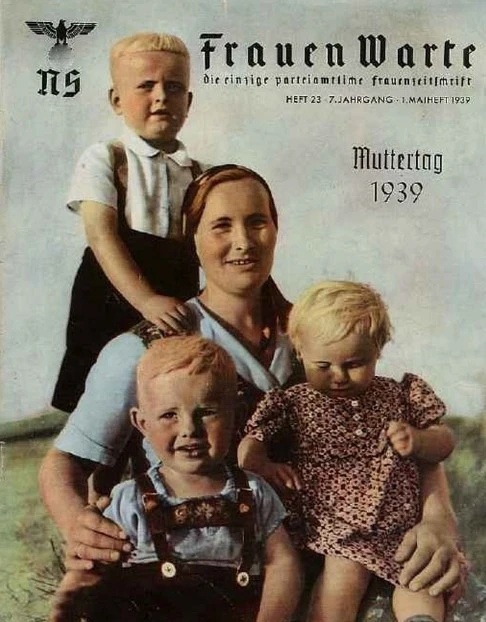
A relationship between a German woman and a foreigner became a serious offense. Contact with men of other races and Jews was considered particularly horrific. Such women were ostracized in society and later publicly humiliated. It was not uncommon for German women to be sent to a concentration camp for such relationships.
To discourage girls from pursuing careers in politics, business, or science, the Reich banned higher education for women. Women were required to complete only compulsory secondary education. After that, their path lay in the "School for Brides," where ideal women for the Third Reich were trained. 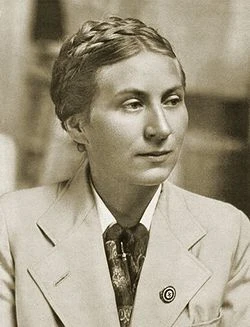
Gertrude Scholtz-Klink
The first such school opened in 1937. Its founder was Gertrud Scholtz-Klink, who led the women's branch of the NSDAP. The institution was located on Schwanenwerder Island, located in Berlin on the Havel River. Several more such schools soon appeared in the capital, and then they began to open throughout Germany.
Not Just Ideology
The ideal woman, according to Nazi Party leaders, should be a supporter of the chosen course of the state. She should accept only the ideology established by the NSDAP and teach this to her children. Admission to the school was carried out with the utmost pomp. At the assembly, Nazi banners were carried before the rows of students, and then each one swore an oath of allegiance to Hitler. 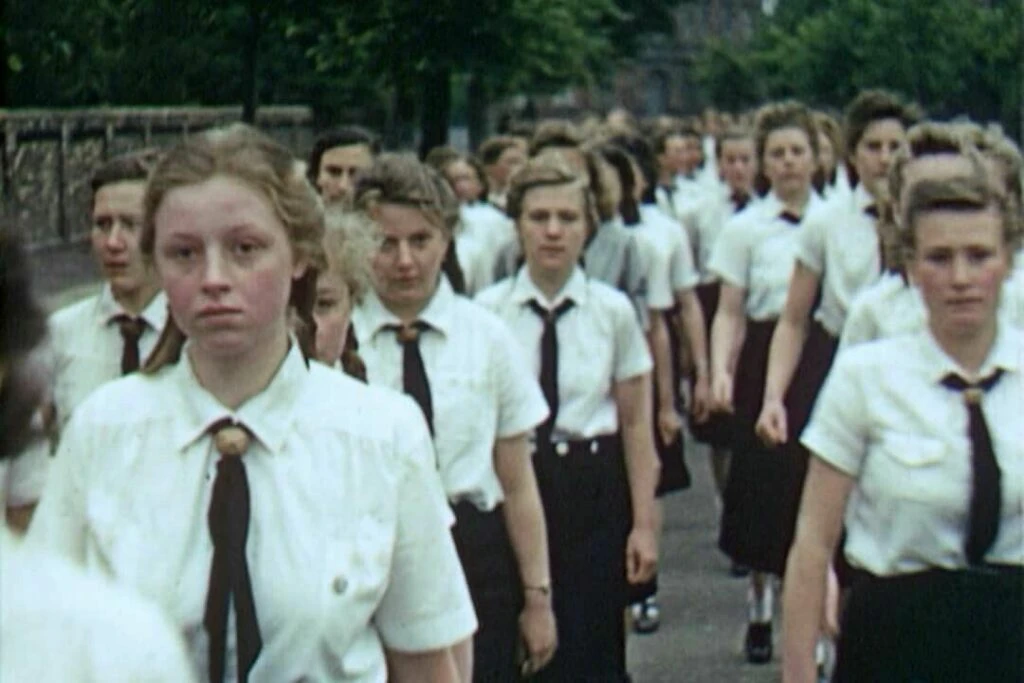
But the curriculum wasn't limited to ideology. Girls were also taught home economics: cooking, sewing, childcare, and gardening. Particular attention was paid to caring for their husbands. Ideal German women were taught to wash and iron military uniforms, shine shoes, and even maintain weapons. To maintain a high level of patriotism, literature classes were held, where they studied national folklore—German legends, fairy tales, and poetry. Physical training was also not forgotten.
After completing the full course, the women took exams. Afterward, they were awarded certificates confirming their "perfection." Such a document was considered a ticket to a bright and happy future with a worthy man. According to the Nazi leadership, girls who graduated from the school were expected to become officers' wives. 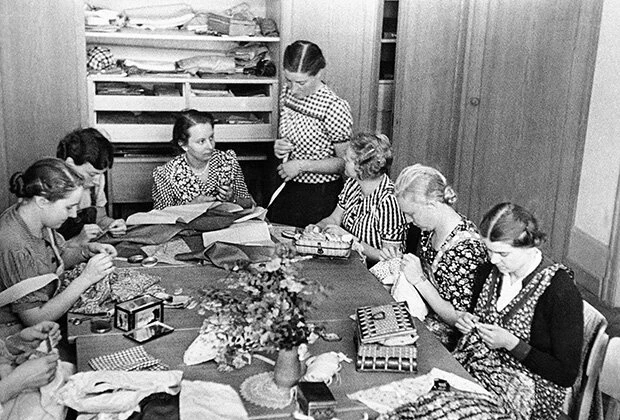
But time soon brought changes to the Nazis' plans. Toward the end of the war, the Reich began to experience a labor shortage. The "Children, Kitchen, Church" principle had to be put on the back burner, and women took their places at the machine tools in factories and in the wards of military hospitals. By the end of 1944, the Germans had no time for girls' schools at all, and they were abolished.