Cocoa Beans as Money, the Pope as a Referee, and a Broken Switch: How Chocolate Became Chocolate (15 photos)
The Aztecs wouldn't have recognized what we call chocolate. And they certainly wouldn't have approved. Their drink was cold, bitter, and smelled of chili—and it was intended for warriors and priests, not children and girls. Between that chocolate and this one, there are five centuries of transformations, three continents, and several accidental discoveries. On July 11, the entire world celebrates Chocolate Day: we tell you how the Aztecs' bitter water became the most beloved delicacy on earth. 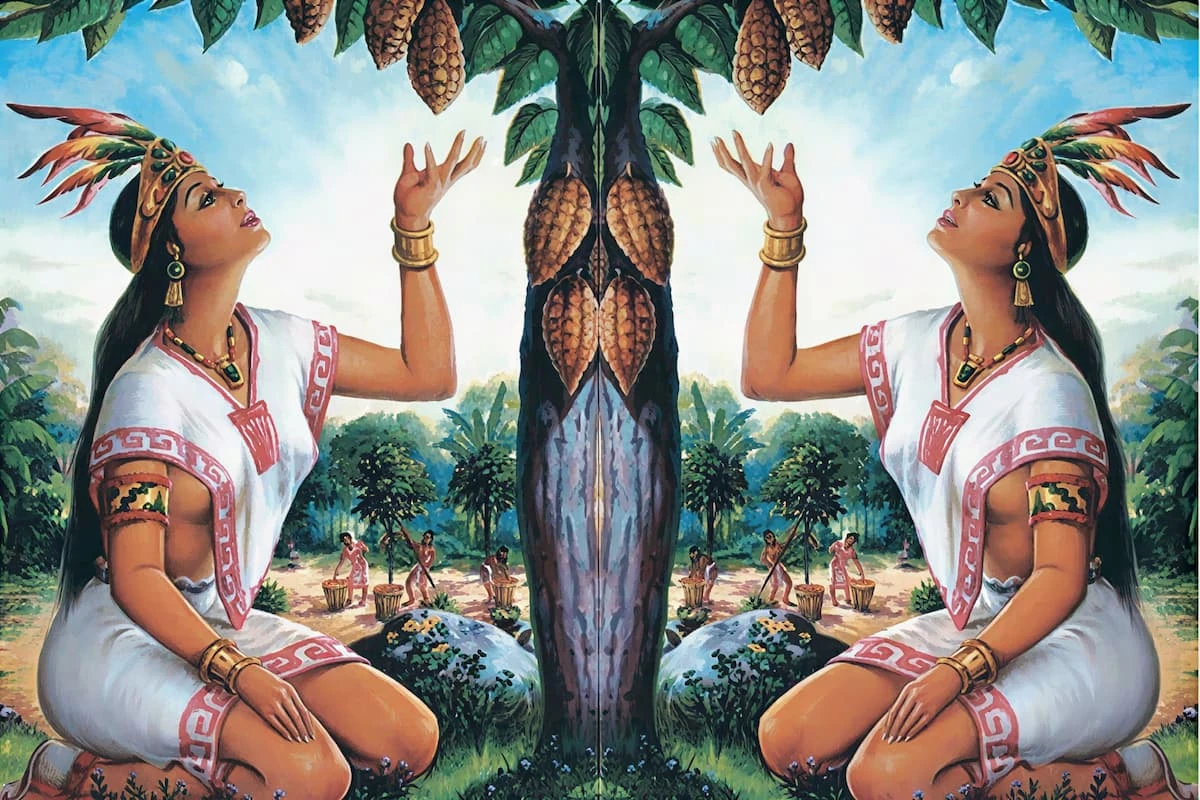
Bitter Water: How It All Began
The Mayans and Aztecs weren't the first to try cocoa. Traces of theobromine, a substance found in cocoa, were found in ceramic vessels on the coast of Chiapas, Mexico. These vessels belonged to the Mokaya people. The finds date back to around 1900 BC. This means people were drinking cocoa even before most of the civilizations we know from history books emerged.
The Olmecs, the first major civilization in the Americas, gave the drink its name. In their language, cacao was called "kakawa." The word has been recorded since around 1000 BC. It was the Olmecs who were apparently the first to cultivate the cacao tree—Theobroma cacao, literally "food of the gods." 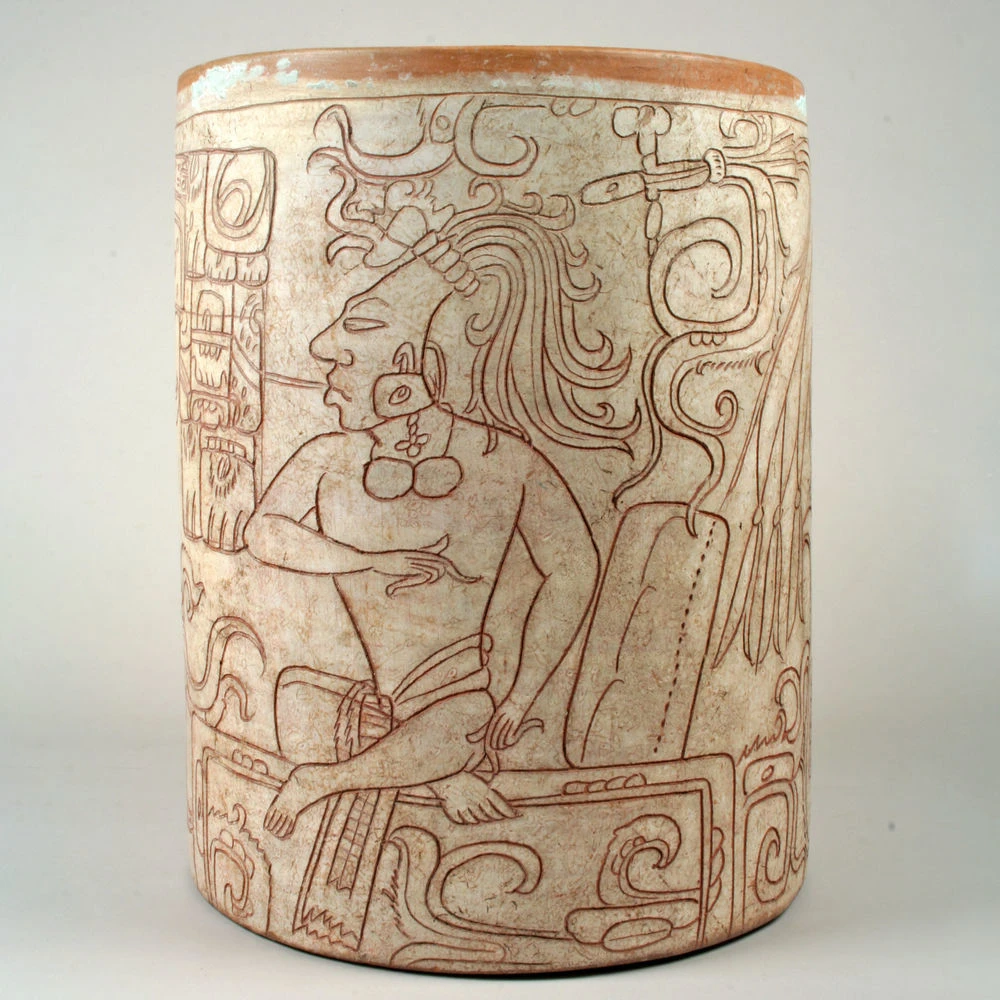
The Mayans buried nobles with cacao vessels—the drink was also needed in the afterlife.
The Mayans made cacao part of their religion. The cacao tree appears in their cosmos as a sacred plant: according to legend, the gods were reborn in the form of this tree. The drink was consumed at weddings, funerals, and ritual feasts. Mayan burials from the sixth century BC contain vessels inscribed with the word "kakaw"—apparently food for the afterlife.
Money You Can Drink
The Aztecs adopted cacao from their predecessors and turned it into currency. One cacao bean cost a tamal—a corn tortilla—and a hundred beans cost a turkey. Montezuma II, the ruler of the Aztecs, kept a huge storehouse of cacao—a tribute from conquered peoples. 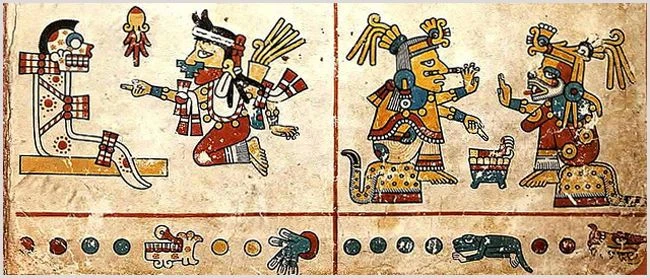
The Aztecs whipped the drink by pouring it from a height between vessels to achieve a rich foam.
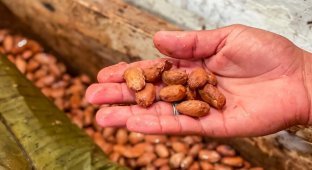
The drink was called "xocolatl" - "bitter water" in Nahuatl. It was made from roasted and ground beans, mixed with water, chili, and cornmeal, then whisked for a long time, pouring from vessel to vessel. It was served cold. Warriors drank it before battle and priests before rituals. There was no sweetness there—sugarcane didn't grow in Mesoamerica.
It's from the word "xocolatl" that our word "chocolate" comes, via the Spanish "chocolate." Thus, the bitter Aztec water eventually gave its name to everything we eat today.
Spain has kept the secret for 100 years
In 1502, Christopher Columbus, during his fourth voyage, encountered a Mayan trading canoe laden with beans. The bonds didn't interest him—they looked insignificant against the backdrop of gold prospecting. Almost 20 years passed before Europe took notice of cocoa. 
At Montezuma's court, Cortés was served "xocolatl"—the Spanish conqueror appreciated not the taste, but the value of the beans as currency.
In 1519, Hernán Cortés entered the Aztec capital of Tenochtitlan. At Montezuma's court, he was served "xocolatl." Cortés appreciated, above all, the economic aspect—cacao beans were currency. By 1528, the recipe, along with the beans, had reached Spain. The Spanish court added sugar, honey, and cinnamon—and the drink was transformed. Bitter water became sweet and hot.
For nearly a century, Spain kept cocoa a secret. Jesuit monks processed the beans in monasteries. The recipe never spread beyond the Iberian Peninsula. In 1569, the bishops of Mexico even sent an envoy to the Pope with a delicate question: does a chocolate drink break Lent? Pope Pius V tasted the drink and ruled it did not. Lent continued with chocolate. 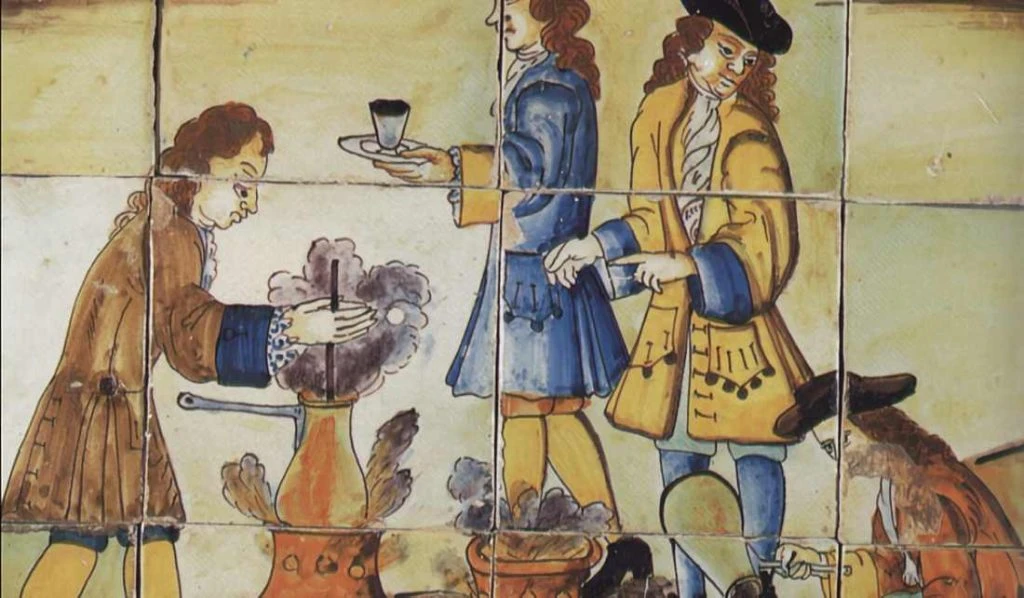
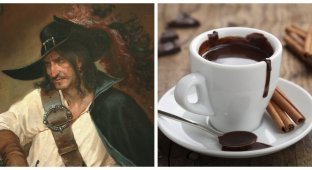
The Spaniards were the first to serve chocolate hot and sweet—it was this version that conquered Europe.
Chocolate Houses: Politics in a Cup
In the 17th century, the secret finally came out. Spanish princesses, when marrying European monarchs, took chocolate with them as part of their dowries. In 1615, Anne of Austria brought it to France when she married Louis XIII. At the court of Louis XIV, chocolate gained a reputation as an aphrodisiac and became a fashionable drink among the aristocracy. 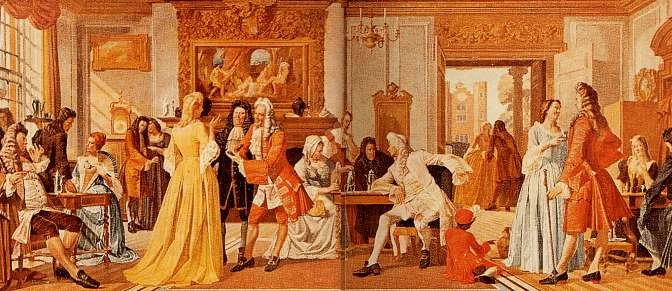
London chocolate houses competed with coffee houses, but were considered a far more aristocratic place.
Chocolate arrived in London in the 1650s. In 1657, a French merchant opened the first chocolate house in a side street off Bishopsgate. Soon, dozens of such establishments were operating across the city. The most famous were White's on St. James's Street (opened in 1693) and Coco Tree on Pall Mall (c. 1698). White's was a gathering place for Whigs, Coco Tree for Tories. Chocolate became a drink with a political flavor. 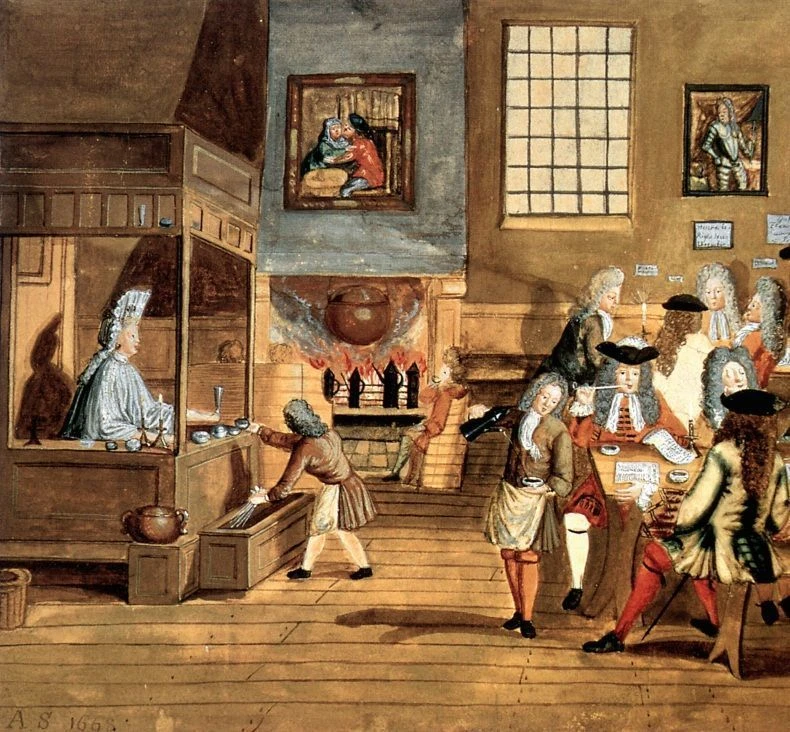
Jonathan Swift called White's "the ruin of the English nobility"—fortunes were lost there.
Charles II was so afraid of what was being discussed there that in 1675 he attempted to close down chocolate and coffee houses. He failed: six days later, he rescinded his own decree under public pressure. White's remains open to this day—as London's oldest gentlemen's club.
A Dutchman with a press changes everything
By the 19th century, chocolate was still a drink—thick, rich, and expensive. Excess cocoa butter prevented it from being turned into a hard bar. In 1828, Dutch chemist Casparus van Houten patented a hydraulic press. The machine squeezed most of the butter out of the beans, leaving behind a dry powder that was easily soluble in water. Chocolate immediately became cheaper. 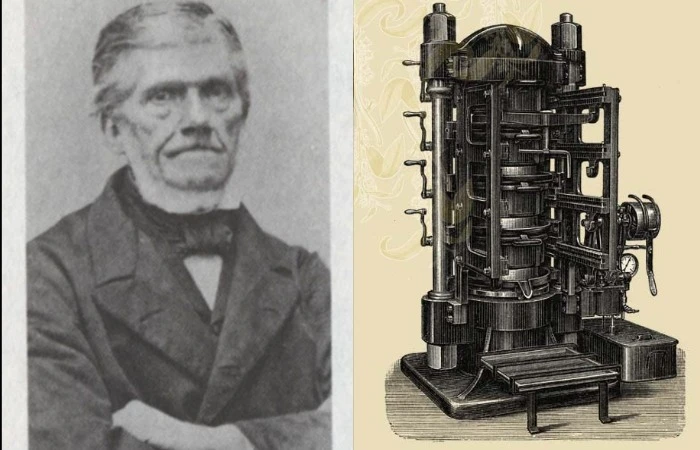
Van Houten's press produced cocoa powder—without it, there would be no hard bar or milk chocolate.
When the patent expired in 1838, other manufacturers rushed to experiment. The British company J.S. J.S. Fry & Sons, founded by Quakers in Bristol, decided to try the opposite: adding butter back to cocoa powder along with sugar. In 1847, they created a paste that could be poured into molds. The first solid chocolate bar in history was sold in England. 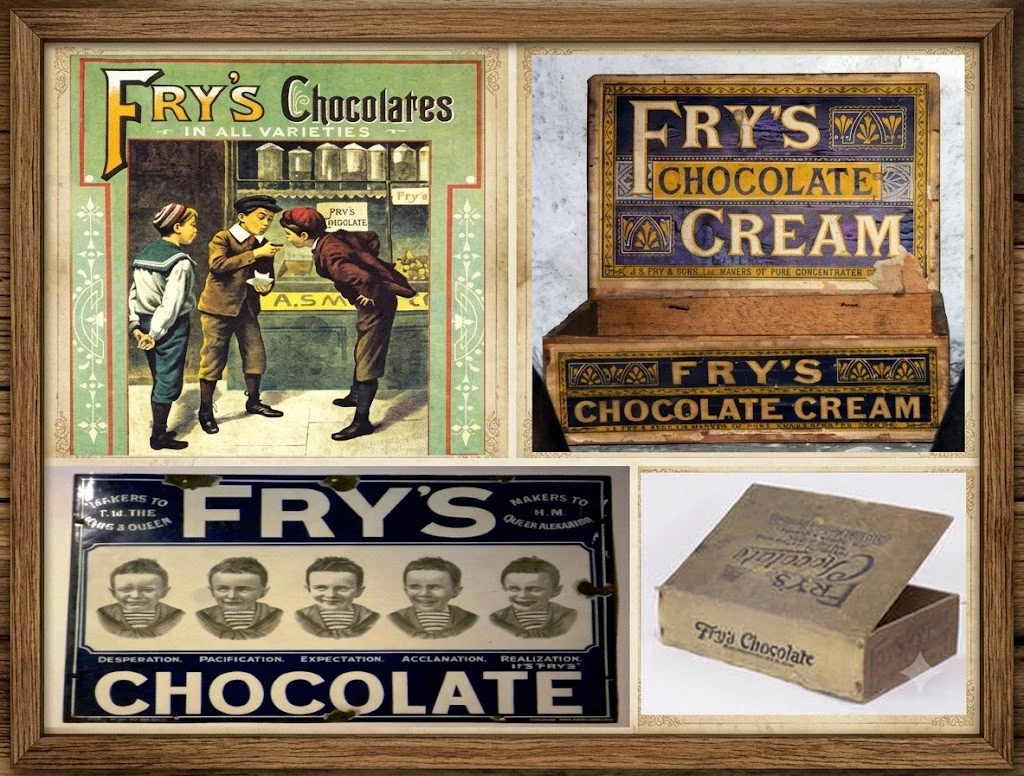
J.S. Fry & Sons released its first chocolate bar in 1847—the company was founded by Quakers who saw chocolate as an alternative to alcohol.
Nestlé Milk and Lindt's Accident
In 1875, Swiss Daniel Peter solved a problem that had been vexing for years: how to add milk to chocolate without it going sour. His neighbor in Vevey, chemist Henri Nestlé, had recently developed powdered milk—a non-perishable powder. Peter mixed it with cocoa butter and sugar. Thus, milk chocolate was born. 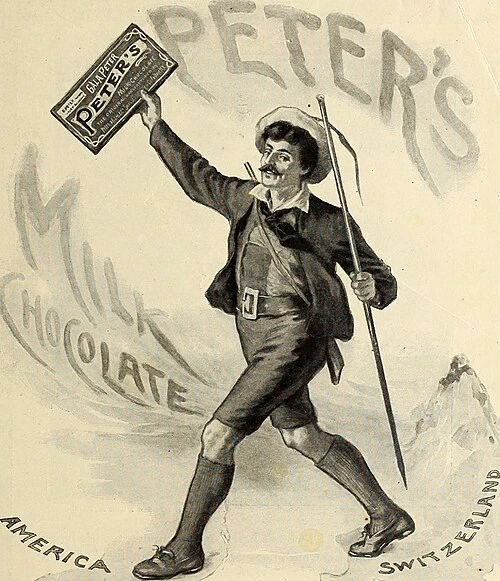
Daniel Peter spent eight years trying to add milk to chocolate—Nestlé and its milk powder proved the key to the mystery.
Four years later, in December 1879, a young chocolatier in Bern, Rodolphe Lindt, forgot to turn off the mixer before leaving for the weekend. When he returned, he found the machine running for two days straight. The chocolate inside had become completely different: smooth, aromatic, and melting on the tongue. Lindt called the process "conching," from the Spanish word concha ("shell"), as the machine resembled a shell in its shape. He kept the technology secret for 20 years, and in 1899, he sold it to the Swiss company Sprüngli for 1.5 million gold francs. 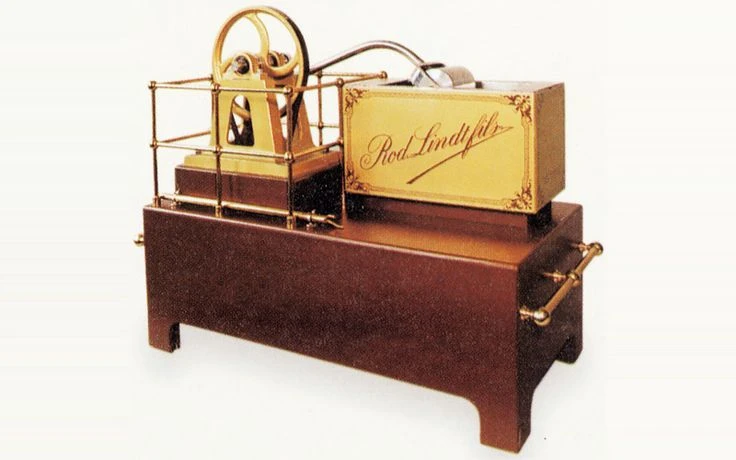
Conching—Lindt's lucky mistake: an unattended machine created chocolate as we know it today.
Chocolate for Everyone: Factories and Soldiers
By the end of the 19th century, chocolate was no longer a privilege. Cadbury in Birmingham, Nestlé in Switzerland, Hershey in Pennsylvania—factories one after another switched to mass production. Prices fell. The chocolate bar reached the masses. 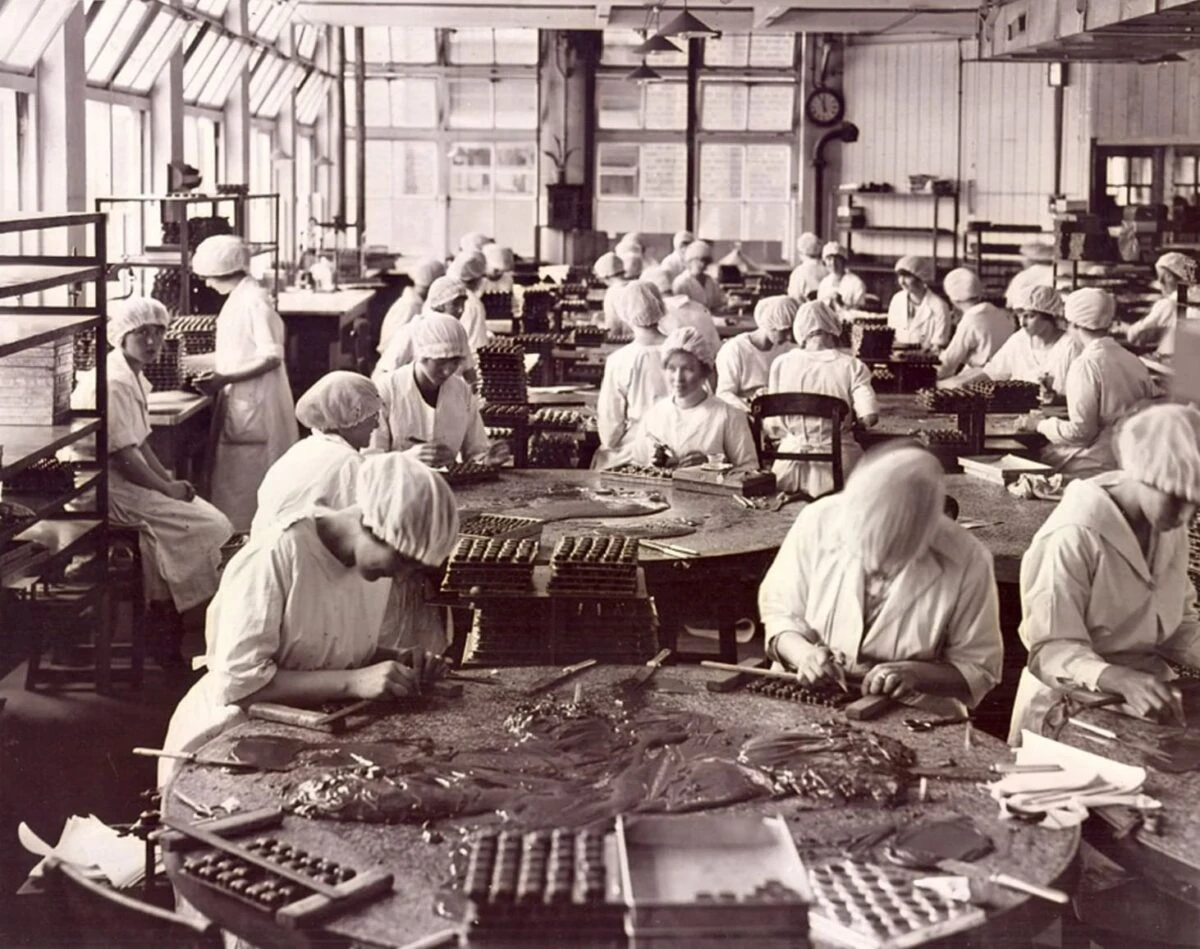
Cadbury built entire housing blocks for workers around the factory—the Quaker owners believed that a good life was more important than profit.
Milton Hershey started with caramel: by 1894, his Lancaster Caramel Company was bringing in a million dollars a year. At the 1893 Chicago World's Fair, he saw German chocolate machines and said, "Caramel is a fad, chocolate is forever." In 1900, he sold the caramel business for a million dollars and invested the money in a chocolate factory. The first Hershey bar was released that same year. 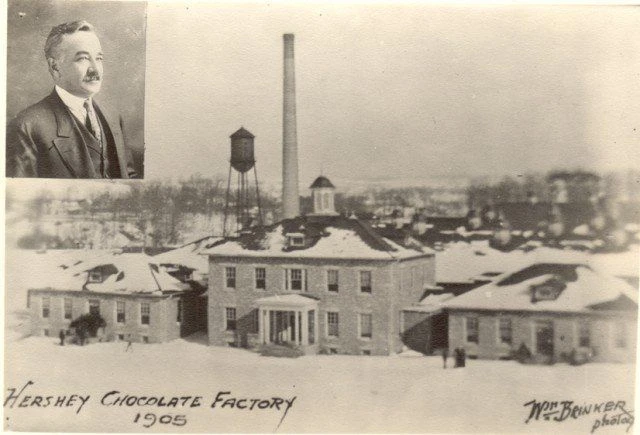
In 1905, the Hershey factory in Pennsylvania became the largest chocolate manufacturer in the world.
During World War II, Hershey chocolate literally went to the front. In 1937, the US Army asked the company to create a chocolate ration for soldiers. There was one condition: the taste had to be "a little better than boiled potatoes"—to prevent hungry soldiers from eating the emergency rations prematurely. By the end of the war, the Hershey plant was producing 24 million bars per week. 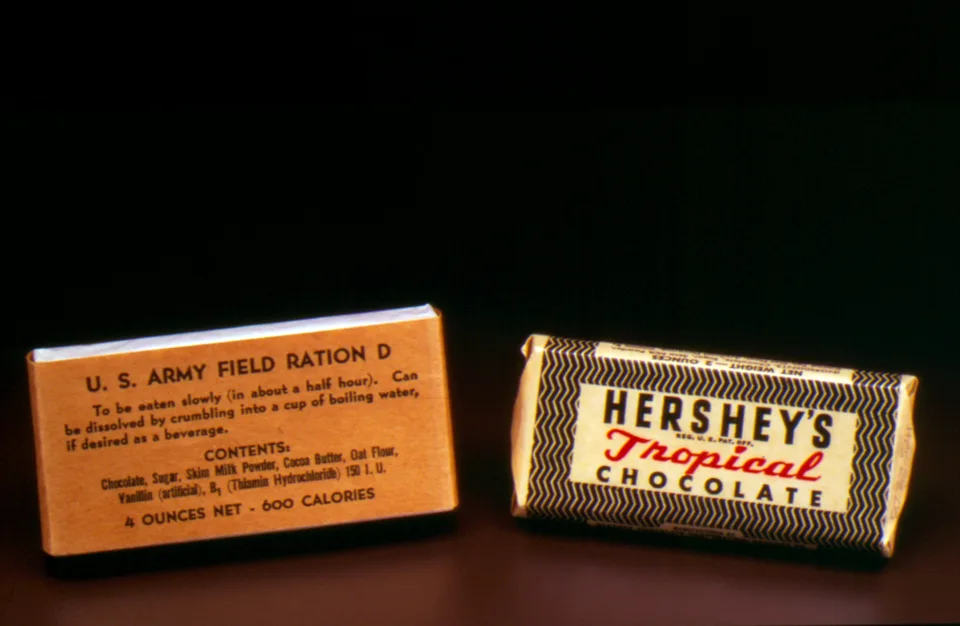
"Ration D" was deliberately made tasteless—soldiers were supposed to eat it only in emergencies, not snack on it out of boredom.
Today, the world processes approximately 4.5 million tons of cocoa beans annually. More than 70 percent of the harvest comes from West Africa—primarily Côte d'Ivoire and Ghana. The tree is still called Theobroma—"food of the gods." The Aztecs were right. They just didn't foresee milk and sugar. 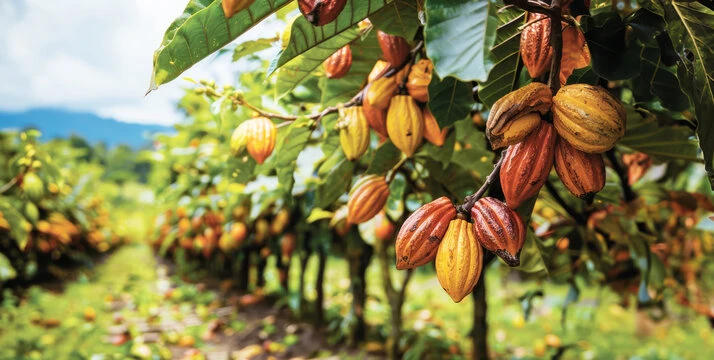
Theobroma cacao—"food of the gods" in Greek. The Aztecs knew this long before the term itself was coined.
What surprised you most about the history of chocolate—its history as a currency or the fact that its modern flavor emerged by accident, due to an unclosed switch?