Why do people in Spain run from the bulls: The history of the San Fermin festival in Pamplona (13 photos)
Every year in midsummer, videos and photos from the San Fermin festival, held in the Spanish city of Pamplona in the province of Navarre, appear online and on television. The festival lasts a week, from July 6th to 14th, and is filled with all sorts of events—carnivals, performances, sporting competitions, and concerts. But the most interesting part is not these events, but the "encierros"—street races with raging bulls. How did this dangerous custom come about, and what does it mean? 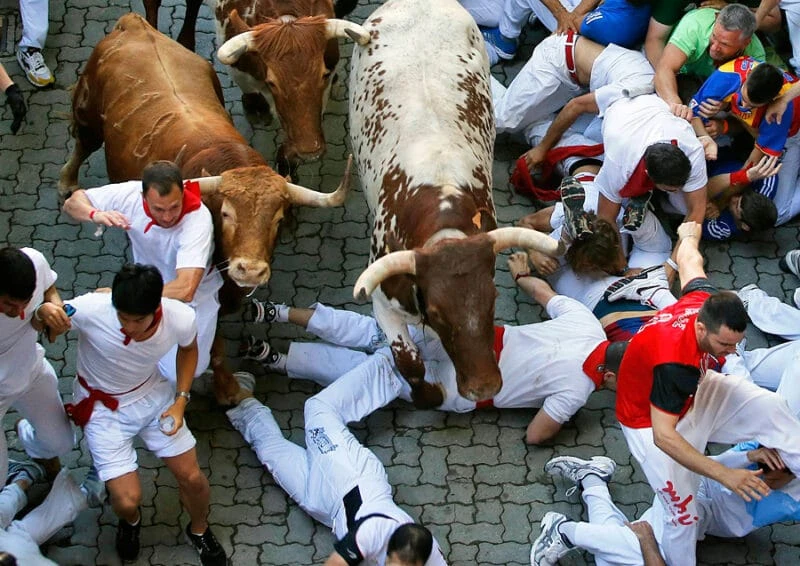
Anyone, both Pamplona residents and visitors, is welcome to participate in the Running of the Bulls. However, there are a few rules that should not be ignored. Firstly, participants must be of legal age, absolutely healthy, and preferably sober. Secondly, participants are only allowed to hold a rolled-up newspaper, which can distract the bull. Touching the bull with your hands or taunting him is also prohibited, but who cares? 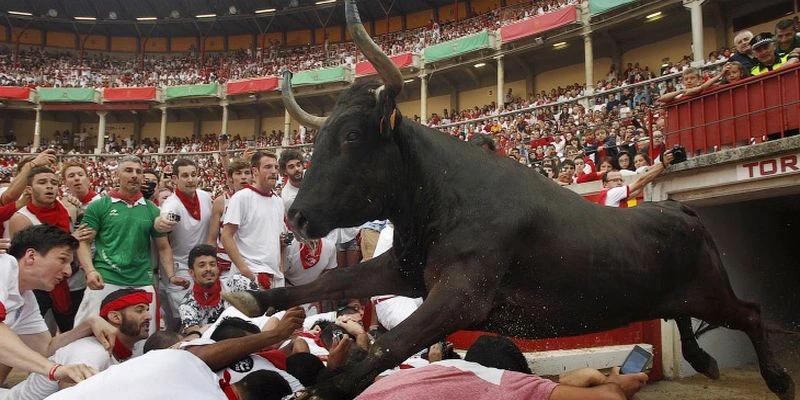
Accidents with serious injuries, and sometimes even fatalities, occur every year at the festival. However, locals take a philosophical approach to this, believing that only those physically unprepared, foolish, or drunk can die. Hundreds of thousands of visitors from all over the world come to Pamplona for San Fermin, spending millions of dollars in the city. But it wasn't always this way, and this fun festival for local daredevils and tourists was once a serious religious holiday. 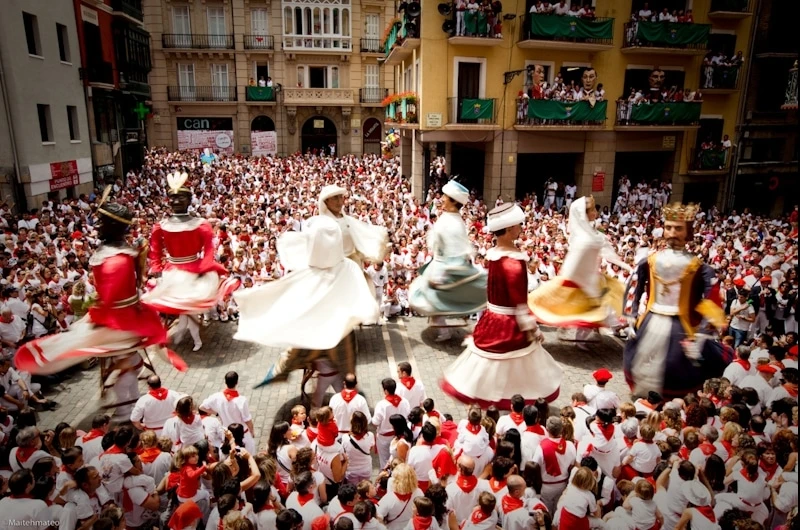
The holiday is dedicated to San Fermin, a 13th-century bishop who saved the inhabitants of Pamplona from the plague. Once limited to religious processions, hymns, and services, the religious holiday gradually evolved into a completely secular one, accompanied by mass celebrations, drinking parties, and fireworks. 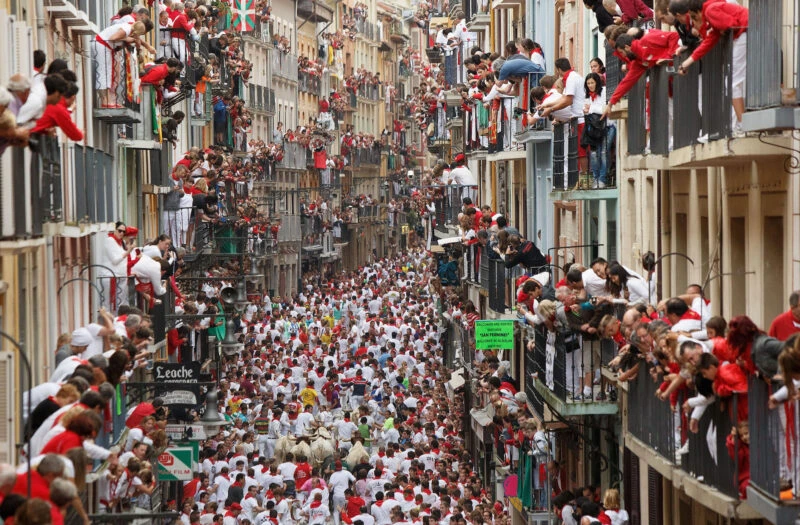
Today, the celebration begins at noon on July 6th with the launch of a flare from the balcony of Pamplona City Hall. By this time, the city's main square is filled with citizens wearing traditional Basque dress—white trousers and shirts belted with red sashes. The city councilor proclaims "Hail to San Fermin!" in Spanish and Basque, and the celebration begins. Those gathered in the square begin congratulating each other and dousing themselves with champagne. 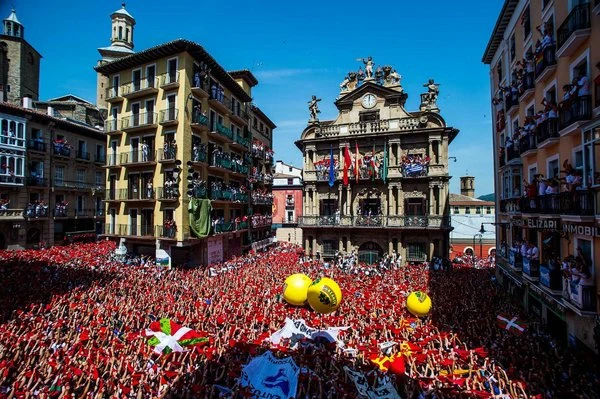
On the first day, concerts and plays, folk music performances, mask parades, and fireworks displays take place throughout Pamplona. Throughout this time, guests continue to arrive in the city, and by evening, hotel rooms become desperately short. Consequently, many tourists and Spaniards from other cities end up sleeping in the open air. 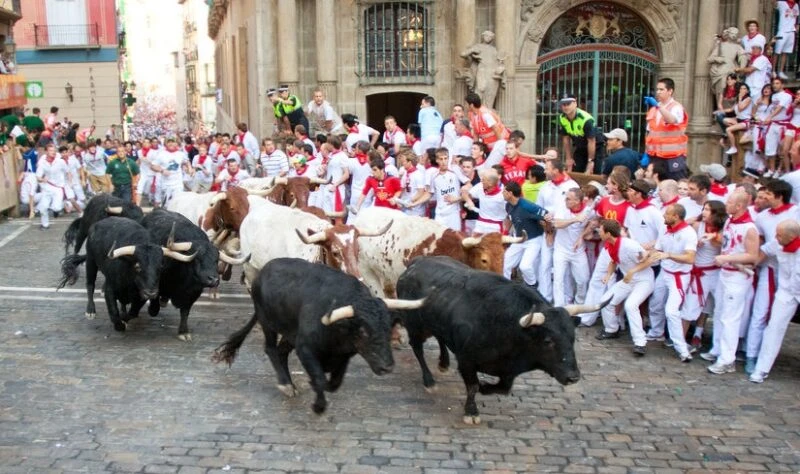
The next day, July 7th, a ceremonial procession with the statue of San Fermin passes through the city, and a solemn church mass is celebrated. Then, as before, the city plunges into a whirlwind of festive bustle. All these events are undoubtedly very interesting, but most visitors to Pamplona don't come here for them. They are interested in the extreme bull run through the streets of the ancient city, called the "encierro" (from the word "enclosed"). 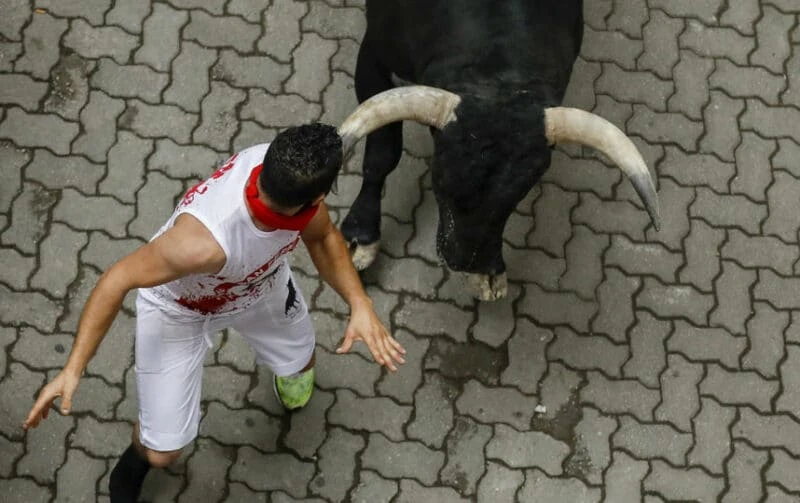
Every holiday morning, the city is awakened by noisy orchestras at 6:30 AM. And at 8:00 AM, the bulls brought for the traditional bullfight are released from special pens set up in one of the city's districts. Centuries ago, this was simply the herding of a herd of bulls into the bullring, but today it's a deadly and incredibly exciting spectacle not for the faint of heart. 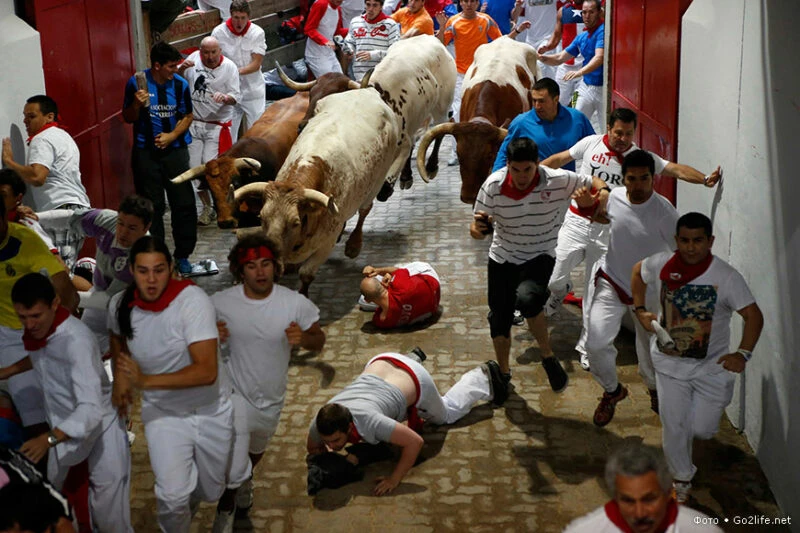
The bulls run along a designated route, restricted by massive wooden barriers. And before them run brave citizens and tourists, determined to challenge fate and the aggressive animals. It's worth noting that the Spanish bull, bred for bullfighting, is completely unlike ordinary bulls. For centuries, breeders have selected the most vicious and powerful animals to create an incredibly dangerous breed for fighting. 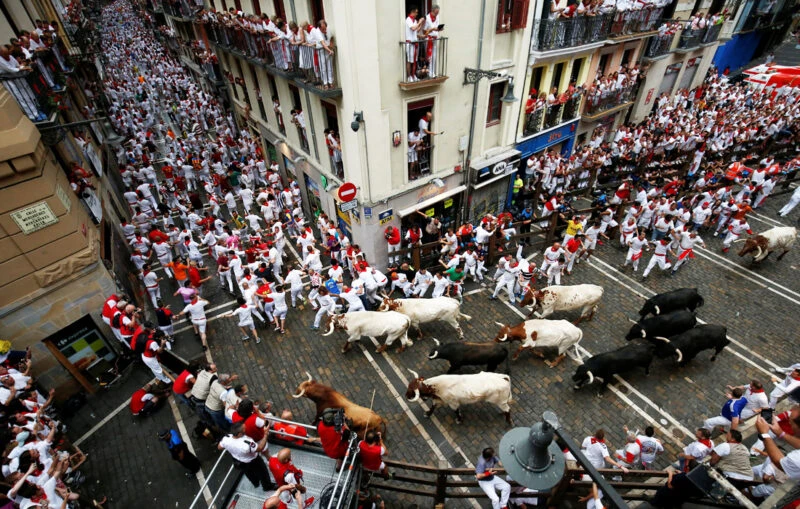
Most often, bull-running victims are tourists who have no experience with bull running, are unfamiliar with the city streets, and, unfortunately, are often drunk. Pamplona authorities have repeatedly tried to ban this dangerous pastime, dating back to the Middle Ages, but tradition prevailed. In 1867, the municipality was forced to relent and recognize bull running as an integral part of the San Fermin festival. Now, all runs are held at the participants' own risk, and claims from victims are not accepted. 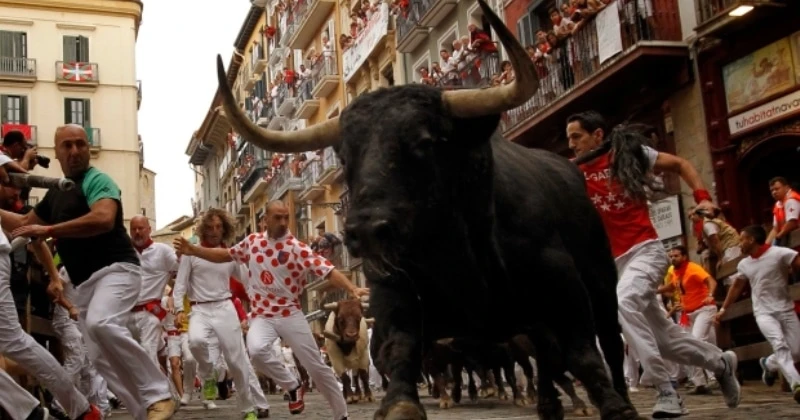
Despite the regulations, no festival is without casualties. The most unfortunate year for Pamplona was 1924, when bulls killed 13 people and maimed another 200. But despite the danger of the event, there are always plenty of people willing to participate. There's even a special category of runners, known locally as "aficionados"—sick encierros. This means someone has been hurt by a bull but returns to the race to prove something to themselves and others. 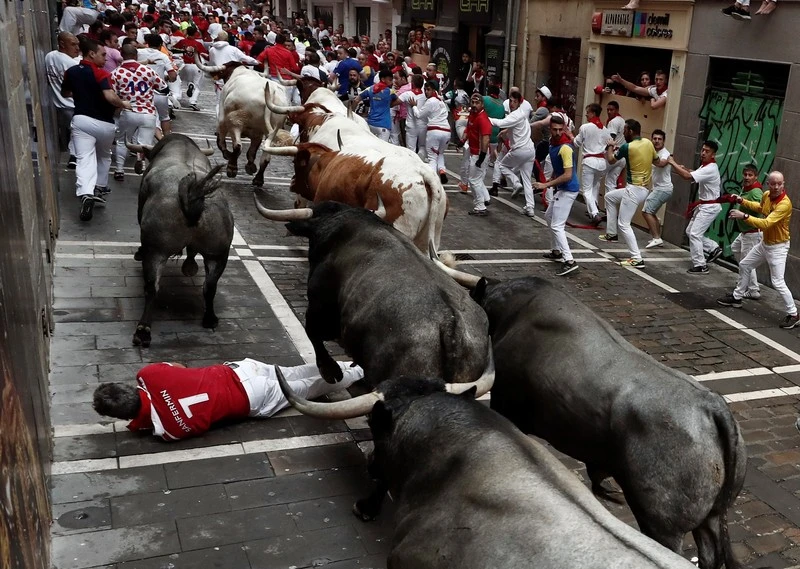
At the end of the run, the bulls enter the arena, where they are herded into corrals—pens for livestock. That evening, at 6:30 PM, these bulls will take part in an equally brutal spectacle—the Spanish bullfight. This time, the animals will be confronted not just by brave daredevils, but by professional bullfighters. The bullfight lasts for several hours, and most of the bulls die in it. 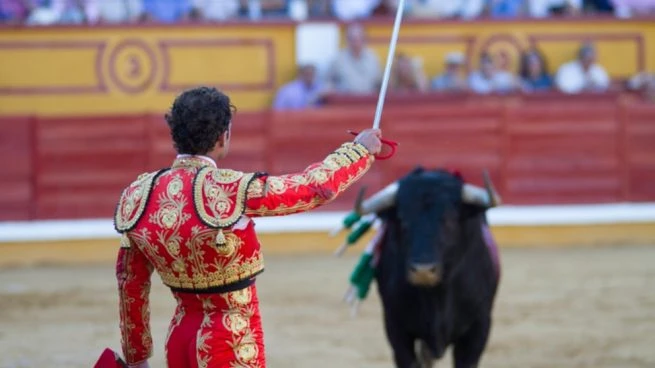
The next day, at exactly 8:00 AM, everything repeats itself again, and once again the bulls, new ones, run through Pamplona to the arena along an 850-meter route, and once again, the brave men rush ahead of them, shouting. And so it is every day of the festival. It all culminates on the evening of July 14th with a solemn mass in Pamplona's main cathedral, after which a crowd of thousands in the square and surrounding streets sings the ancient hymn to the end of the festival: "Poor me, poor me! "The San Fermin festival is over!" 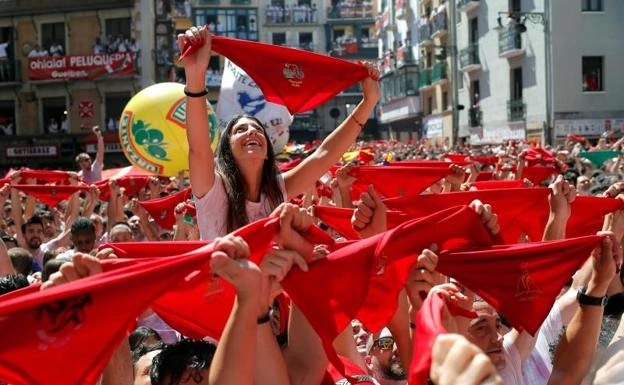
One could say that the traditional running of the bulls in Pamplona is nothing more than a thrilling amusement ride for the brave, turning the routine work of herding a herd of bulls from the entrance to the bullring into a thrilling attraction for the brave. Would it be better if the fighting bulls were leisurely driven through the streets by sleepy shepherds with sticks?