A South African fisherman encountered a terrifying parasite that became part of a live fish (8 photos)
There are many parasites in nature that live off other creatures, but none have adapted to their role as well as Cymothoa exigua. This tiny crustacean, nicknamed the "tongue-eating woodlouse," actually deprives its host of a tongue and takes its place, performing the full functions of that organ. 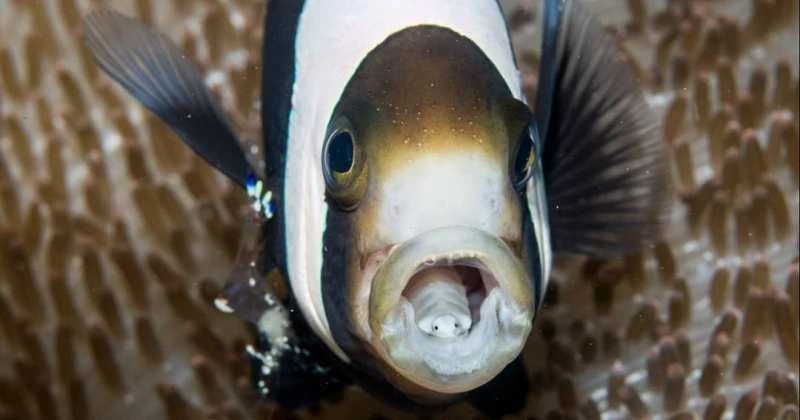
Don Marx of Cape Town caught a 2.7-kilogram carpenterfish off Cape Agulhas, the southernmost point of Africa, where the Atlantic and Indian Oceans meet. A keen marine biologist, he always carefully inspects his catch. 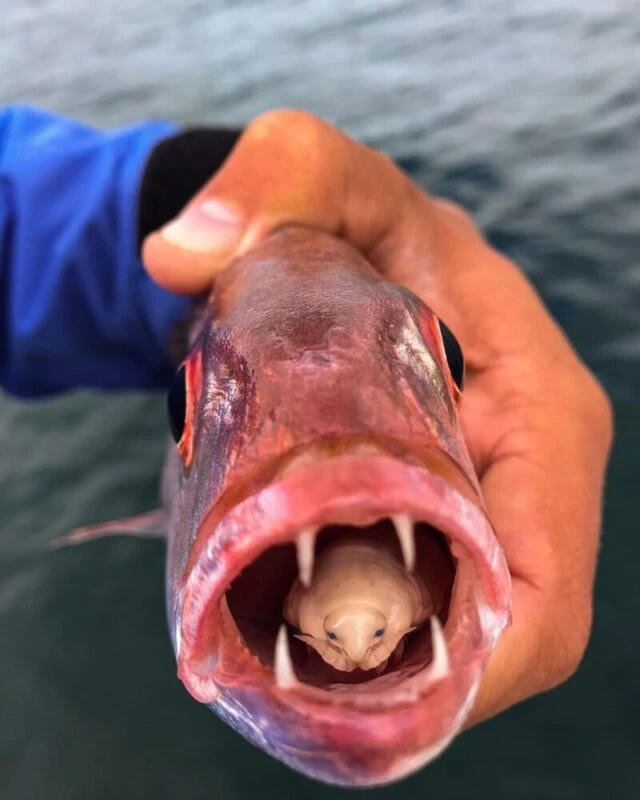
To his surprise and horror, a creepy, pale creature with blue eyes, the likes of which he had never seen before, peered out of the fish's mouth at Don. The fisherman realized he was dealing with something unusual and sent a photo of the fish's mouth to Nico Smit, a zoologist at Northwestern University. 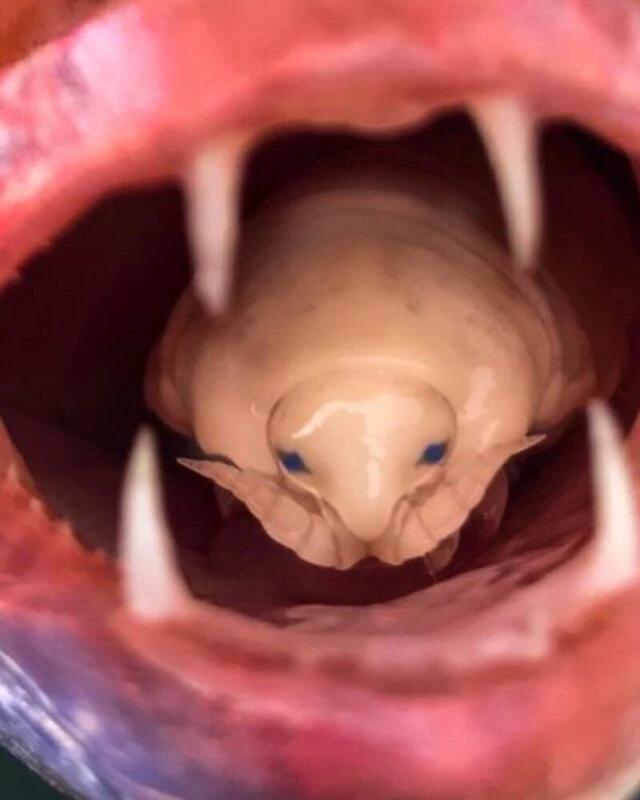
The scientist quickly identified the creature as Cymothoa exigua and told Marx he was extremely lucky. Previously, tongue woodlice had not fallen into the hands of ichthyologists near the southern tip of the Dark Continent, and this catch could be considered a small but significant discovery. 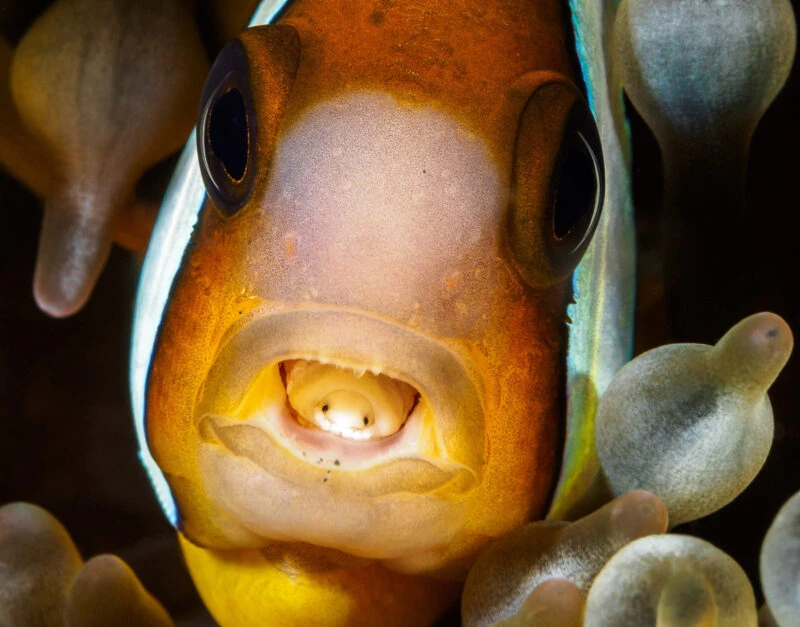
Fortunately, this terrifying parasite is harmless to humans and lives exclusively in the mouths of fish, preferring the spotted pink snapper (Lutjanus guttatus), found in all oceans except the Arctic Ocean. However, if a "favorite" species is unavailable, the crustacean may choose other fish as its host. 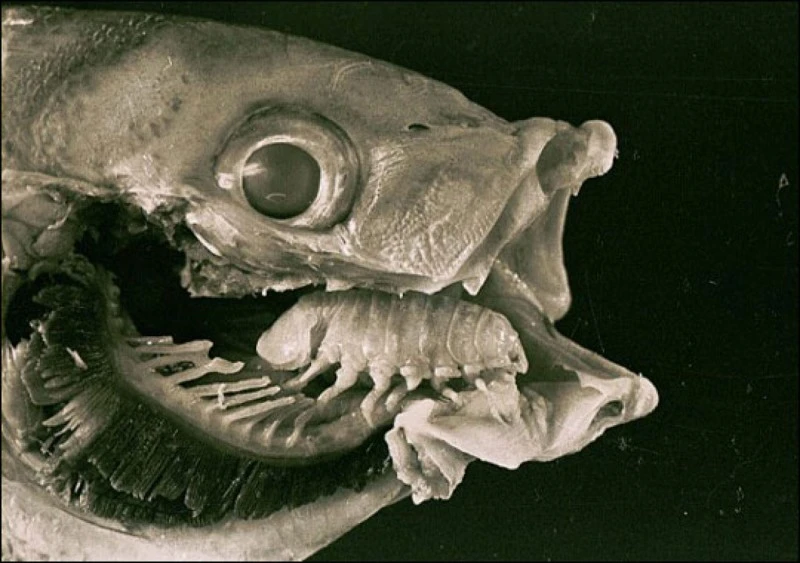
The parasite enters the fish's mouth through the gills and attaches with its tenacious legs to the base of the tongue. The crustacean begins actively sucking blood from the organ, depriving it of normal nutrition, which quickly causes the tongue to atrophy. The woodlouse then attaches itself to the stump of the tongue and takes its place. 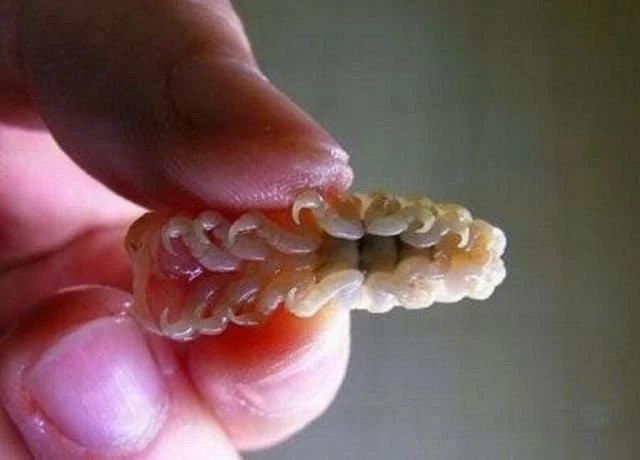
In the fish's mouth, the parasite feeds on blood from the vessels that supply the remaining tongue muscles and mucus. In exchange, the arthropod fully performs all the functions of the destroyed organ and tries not to interfere with its host. Scientists have determined that Cymothoa exigua almost never kills its host, as this would also endanger the parasite. 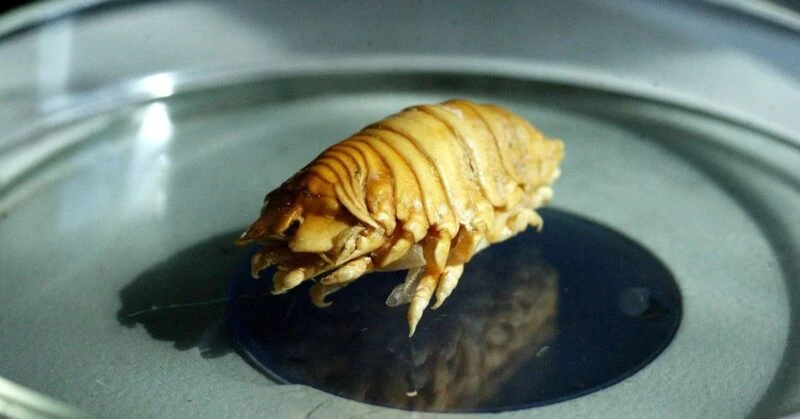
When examining fish infected with woodlice, ichthyologists found that they were slightly smaller and heavier than their healthy counterparts, but generally felt well. Only the presence of two or more parasites in a single fish can be fatal, as they will consume too many nutrients from the victim's blood and, as they grow, will block the fish's throat. 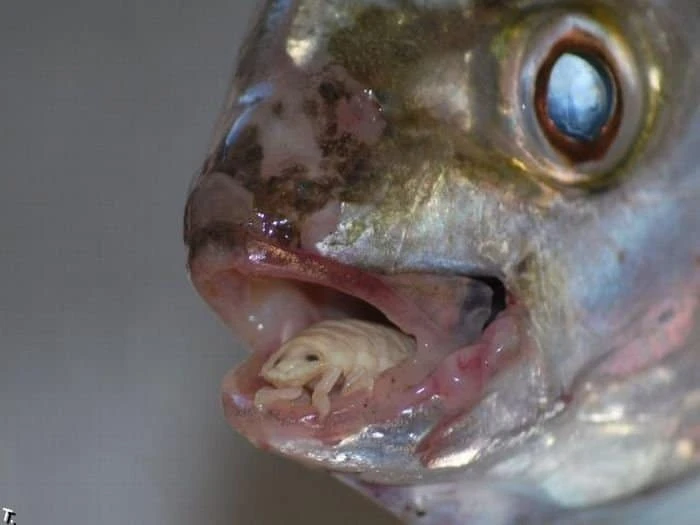
Interestingly, all tongue lice burrowing through the water in search of a host are males. Only after finding a host and firmly establishing themselves in its mouth do the parasites transform into females and become capable of reproduction. Fertilization requires a free-swimming male lice. If the lice enter the fish's mouth, conception occurs; if not, the parasite will not produce offspring.
Cymothoa exigua is most commonly found in the warm waters of the Pacific Ocean off the coasts of California and Mexico, but occasionally, fish with the parasite in their mouths are caught in fishermen's nets as far away as France and the UK. Judging by the fact that Don Marx caught a fish with a parasite off the coast of South Africa, the habitat of the tongue woodlouse is steadily expanding.