A ruthless female executioner: why everyone feared Division Commander Shchors's wife like fire (13 photos)
Fruma Khaikina was feared like fire. Because she killed people without hesitation: she had around 200 people to her credit.
A slender, dark-haired, and very determined woman named Fruma lived three lives. They were different lives, under different surnames. Or rather, not even that. She died at the age of eighty, but her life, her true life, one of three that comprised the years of her earthly existence, was very short and bright, like a meteorite. 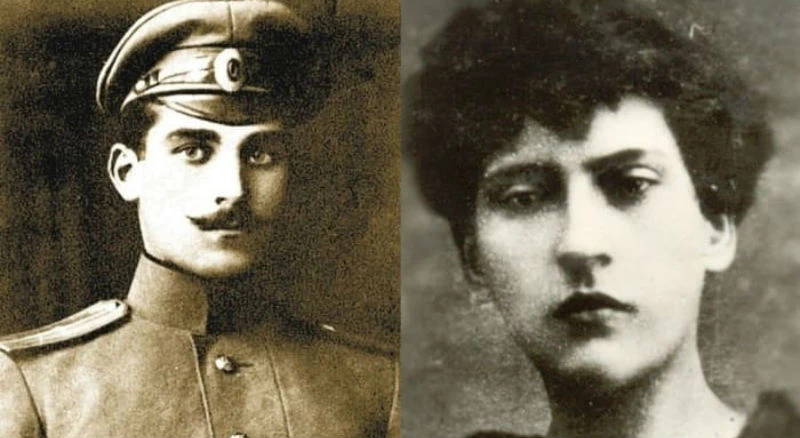
Life One. Khaikina 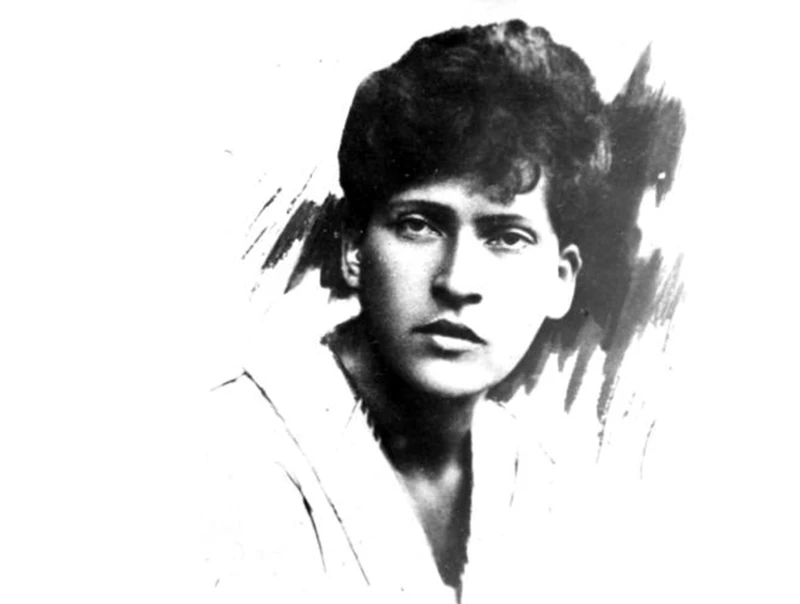
On February 6, 1897, in Novozybkov, Chernigov Governorate, a daughter, Fruma, was born to a Jewish official. She was homeschooled for two years and, as befits a girl from a respectable Jewish family, diligently learned to sew. Because, pray tell, who would sew her dowry, which she would eventually need?
In fact, very little information remains about her childhood and youth. She herself, apparently, later didn't particularly like to recall those years in the Jewish shtetl. It was said that she seemed well-mannered, that she had been a student. And that she grew up a beauty. 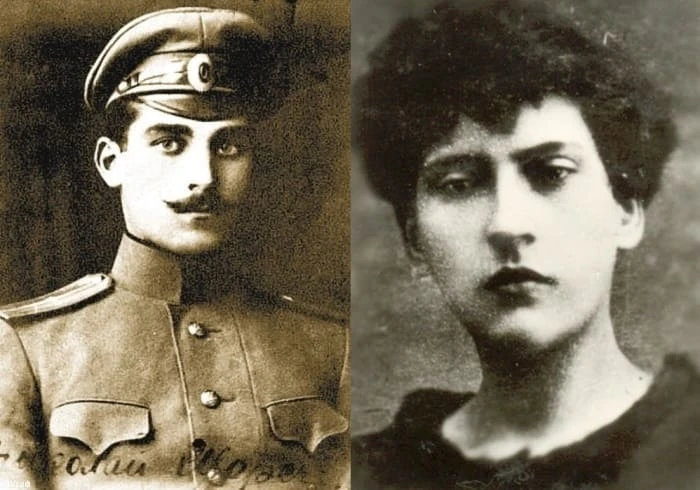
Nikolai Shchors and his wife Fruma Khaikina.
Second Life. Shchors
Fruma Khaikina joined the revolutionary movement in 1917. In 1918, she appeared in the city of Unecha (now in the Bryansk region) at the head of a detachment of Chinese and Kazakhs who had been hired to build a railway before the revolution. Now out of work, they quickly formed combat units from them, including those attached to local Chekas. 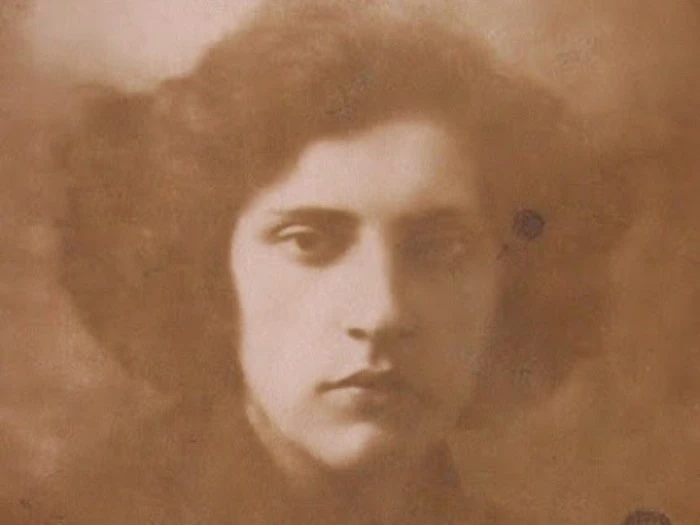
Fruma Khaikina-Shchors.
The detachment's combat mission was to restore revolutionary order at the border station, and also, as the instructions to local emergency commissions in 1918 stated, "to monitor counterrevolutionary agitation, the local bourgeoisie, unreliable counterrevolutionary elements, kulaks, speculators, and other enemies of Soviet power, and to take preventive and deterrent measures against them."
From this list of job responsibilities, it's clear that the recent student was the complete boss of Unecha. She wore a leather jacket and leather pants, always accompanied by her Chinese men and with a Mauser pistol at her side. Fruma had no hesitation in using this Mauser when necessary. She was the head of the local Cheka and a member of the Unecha Revolutionary Committee. 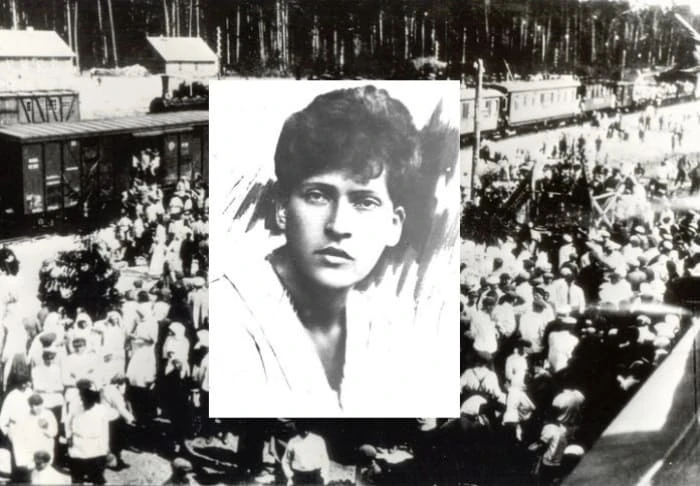
At Unecha station, Fruma Khaikina felt like the absolute mistress of the house.
There are recollections of how Fruma, in particular, enforced revolutionary order in the border area. As soon as she saw a White Guard or a representative of the bourgeoisie displaying an "alien mood," this short, thin girl would order, "Shoot!" And the Chinese would carry out the sentence immediately. 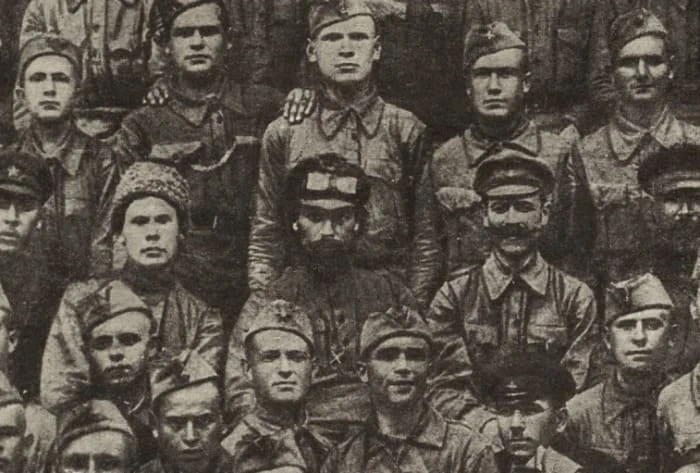
Nikolay Shchors among the cadets of the command staff school, newspaper "Prozhektor." 1935.
There are even more piquant recollections. "Khaya in leather pants"—as they called her, both to her face and behind her back—decided the fates of the inhabitants of Unecha, sitting on the porch of the building designated as the Cheka headquarters. "Everyone obeys her. She searches them herself, judges them herself, and executes them herself: she sits on the porch, judges them here, and executes them here," Teffi recounts an eyewitness account in her memoirs.
And further: "And she's not shy about anything. I can't even tell this in front of a lady; I'd rather tell it to Mr. Averchenko alone." He's a writer, so he'll be able to convey the message in poetic form. Well, in short, I'll say that even the most ordinary Red Army soldier sometimes wanders off to the side. Well, this commissar never leaves and shows no embarrassment…" 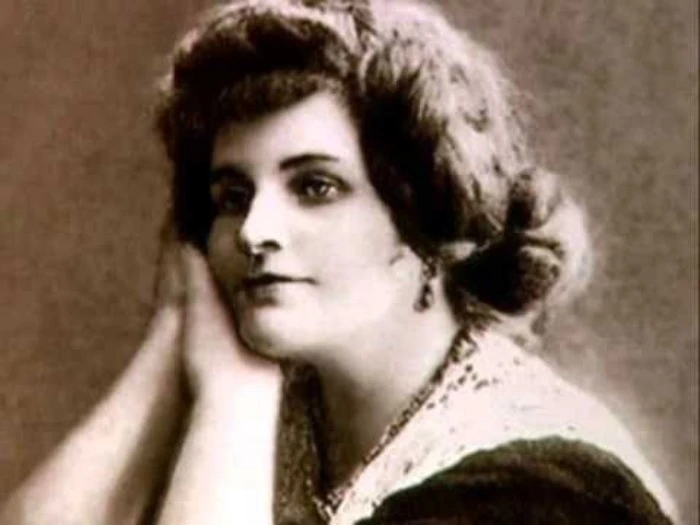
Nadezhda Teffi.
Khaikina arrived in Unecha in the winter. A few months later, in the spring of 1918, Shchors, the commander of the Bolshevik partisan detachment, arrived. Naturally, the regiment commander and the mistress of the local Cheka couldn't help but meet. They did. And soon the Chekists, Shchors's fellow soldiers, and other motley crew learned that the "Red Commander" and "Khaya in Leather Pants" had fallen in love.
They were probably especially brought together by the mutiny in the Bogunsky Regiment, which Shchors had been involved in forming. The rebels smashed the Cheka, occupied the regimental headquarters, seized the telegraph office, destroyed the railway line, and sent a message to the Germans asking them to occupy Unecha. Shchors only escaped because he managed to escape the mutineers who were trying to arrest him. The mutiny was suppressed, but the representatives of the new government had to endure several very turbulent days. In the late autumn of 1918, Fruma married, and her surname became Shchors. But even after this, Fruma never parted with her leather pants and Mauser. The military units under Shchors's command also had their own Cheka services, and the Red Army commander's wife successfully led them. 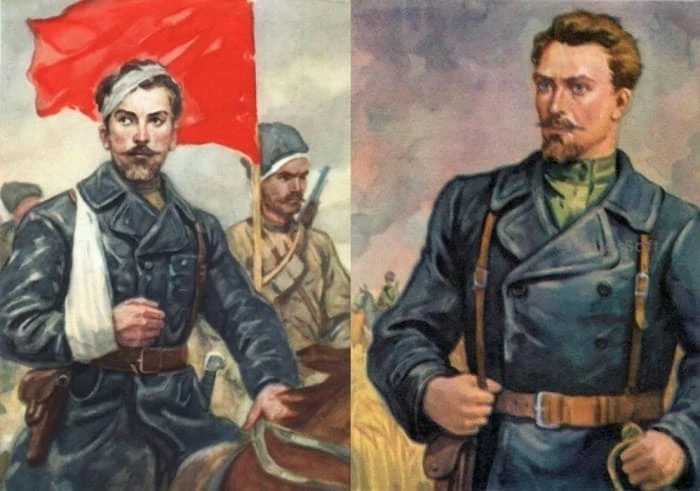
Mykola Shchors.
By mid-December, Shchors's unit had driven German and Haidamak troops—as the military personnel of the Hetman regime, which ruled Ukraine at the time—out of the districts neighboring Unecha, particularly Klintsy. A new, revolutionary order had to be established in the territories cleared of counterrevolutionary activity. This is what Fruma Shchors was doing. Years later, people recalled how this determined woman rode through Klintsy on horseback, wearing her signature leather pants, with a Mauser pistol at her side. Under her leadership, everyone who collaborated with the Haidamaks was identified and executed. Neither women nor teenagers were spared. 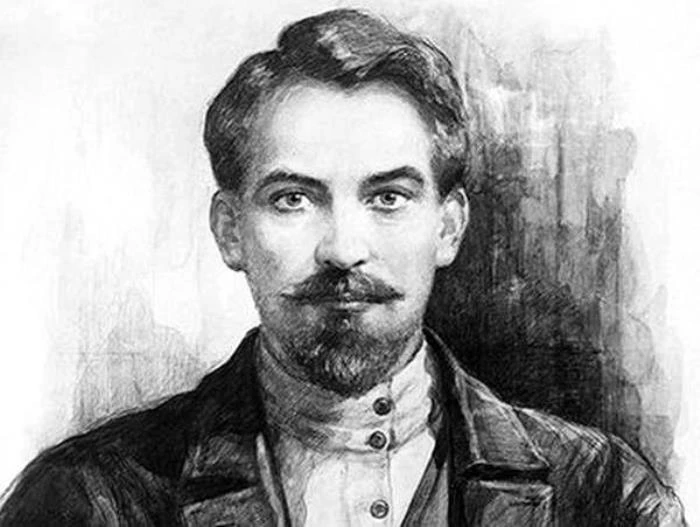
Nikolai Shchors.
On August 30, Shchors was killed during a battle with Petliurites. Fruma decided it was best to leave the Bryansk region, under a pretext that many at the time considered far-fetched: she was taking her husband's body to bury it as far away as possible and thus save it from possible abuse by Petliurites. For some reason, Samara was chosen as the burial site.
This is where the story of "Khaya in Leather Pants" ends. 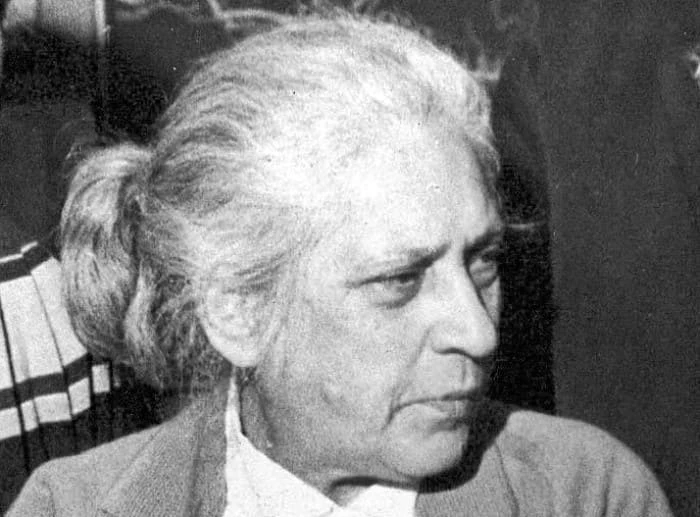
Fruma Khaikina (Rostova-Shchors).
The Third Life. Rostova
After becoming a widower, Fruma Efimovna took her last name Rostova, discarding both her maiden and husband's names. She received a technical education and participated in construction projects under the GOELRO system at Moscow's aircraft factories. 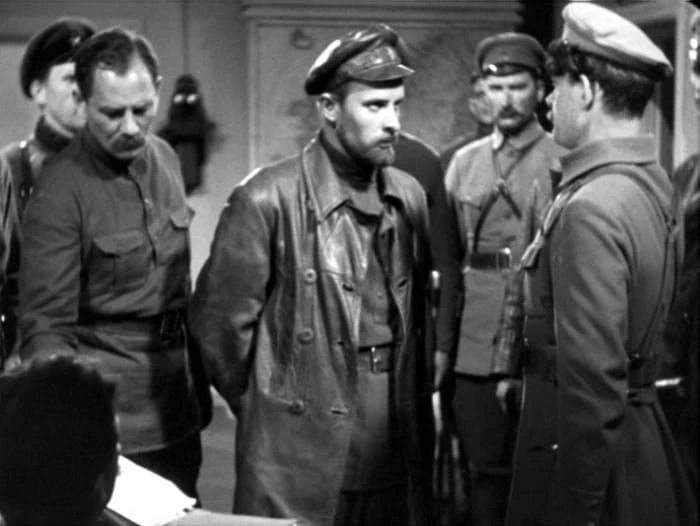
Still from A. Dovzhenko's film "Shchors," 1939.
But after 1935, when Stalin decided that the Ukrainian people also needed their own hero like Chapaev and the "canonization" of the Bogun commander began, Fruma Yefimovna worked primarily as "Shchors's widow." She served as a consultant on Dovzhenko's film about Shchors, attended rehearsals for the opera "Shchors," and assisted in preparing the collection "The Legendary Divisional Commander," which included her memoirs, for publication. She performed frequently during this period and participated in various official events. As the widow of a Civil War hero, she was given an apartment in the "house on the embankment." 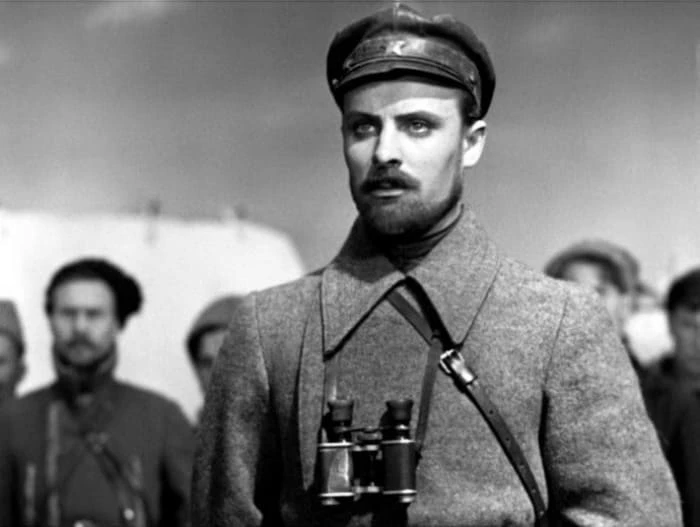
Still from A. Dovzhenko's film "Shchors," 1939.
Her daughter from her marriage with Shchors, Valentina, married the famous Soviet physicist I. M. Khalatnikov. 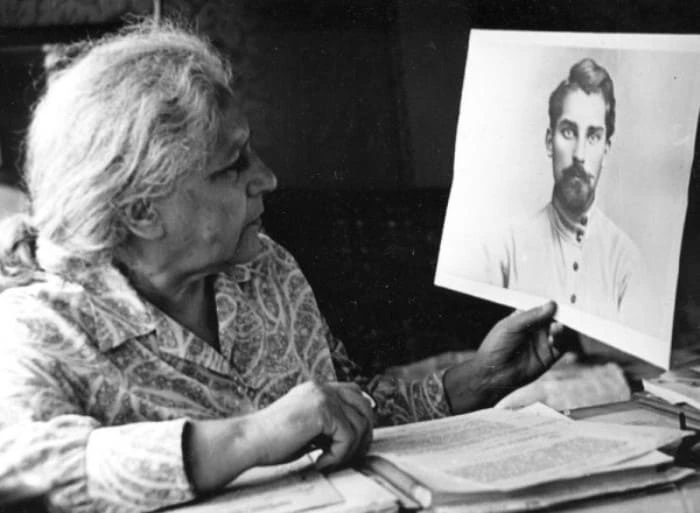
Fruma Khaikina-Shchors-Rostova died in 1977.