Every flight is the same. The captain asks to put their phones on airplane mode, and the entire cabin obediently flips the switch, somewhere in the back of their minds believing that otherwise the plane might crash. 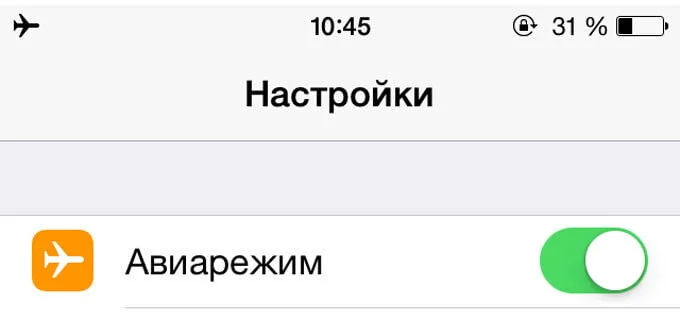
So, relax. No phone in history has ever crashed a single plane. Not even once. And the ban itself wasn't even invented by pilots.
And why airplane mode is actually needed? The story is far more interesting than the tale of planes crashing.
Phones were banned for the sake of ground towers, not for the sake of aircraft.
The ban on in-flight calls was introduced in 1991, and it wasn't the aviation authorities who imposed it, but the American Communications Commission. And they weren't worried about the aircraft, but about the cellular network on the ground.
It sounds strange... A cell tower is designed for you to travel along the ground, carefully transmitting your phone from one tower to the next. Now imagine a phone at an altitude of 10 kilometers, hurtling at 900 kilometers per hour. It sees dozens of towers at once and tries to lock onto them all.
For the ground network, this is roughly equivalent to one subscriber shouting into every microphone in the city at once. That's what they were afraid of: that phones flying in the air would clog the cellular network below.
So, the ban from the very beginning was about maintaining order in ground communications, not flight safety. It's funny that today's phones almost never use that ancient frequency, and the rule has remained in place ever since.
What about interference with aircraft? There was fear, but almost no evidence.
You might rightly ask: okay, the network, but we were always afraid that a phone would disrupt navigation. Where did this come from?
It was done out of caution. Older planes from the 1970s and 1980s were much more sensitive to interference, and electronics in a passenger's pocket could theoretically emit a parasitic signal that would fall into the frequency range of a navigation device. Theoretically. So the regulators simply decided it was better to be safe than sorry, and to have everything turned off just in case.
But when they started seriously investigating this, the picture turned out to be dull. Both in the 1990s and in recent studies, experts have yet to find a single confirmed case of a passenger's phone actually disrupting an aircraft system. Moreover, new airliners are specifically designed and certified to ignore phones in the cabin.
Then why is airplane mode still required?
There are several reasons, and they are reasonable.
First, it's still the law. The ban hasn't been lifted; it's written into the regulations.
Second, there's only one time when it's actually better to hold onto your phone: during takeoff and landing. That's when the slightest chance of interference is at least somewhat significant, because the devices operate at their most accurate near the ground. And it's at this point that the phone reaches the ground-based towers and starts broadcasting its signal. At altitude, none of this matters, but in those few minutes near the ground, it does.
But the main reason is that most aviation incidents occur during takeoff and landing. And it's precisely during these moments that the crew needs you to be here and now, not on your phone. And a person glued to a screen simply ignores the safety briefing.
Basically, disabling airplane mode acts like a gentle nudge that pulls you away from the screen just when it could save your life. And asking everyone to click a single button at once is much easier than individually persuading each person to look up and listen.
Where radio waves really scared aviation
The only case in recent years where wireless communications have truly alarmed aviation wasn't due to a cell phone in the cabin. Because of 5G towers on the ground, right next to airports.
At the beginning of 2022, the US switched on the new 5G standard at frequencies around 3.7 gigahertz. The problem is that the radio altimeter, the instrument used by airplanes to measure their altitude during landing, especially in foggy conditions when the runway is not clearly visible, operates very close to the radio altimeter, just above 4 gigahertz. The margin between these frequencies turned out to be too narrow, raising concerns that powerful 5G towers near the runway would interfere with the altimeter's readings at the most crucial moment.
This caused a stir. Some foreign airlines simply canceled flights to the US in January 2022. Ultimately, an agreement was reached: telecom operators around fifty airports throttled their transmitters for six months, creating buffer zones, and aircraft altimeters began to be replaced and filtered to prevent them from being triggered by the extraneous signal. Incidentally, no such fuss occurred in Europe, where 5G operates on frequencies further from the altimeter and at lower power.
So what's the bottom line?
Airplane mode during takeoff and landing provides a small amount of protection against interference and prevents the phone from interfering with ground networks, but most importantly, during these dangerous moments, it keeps you grounded in reality, not staring at the screen. 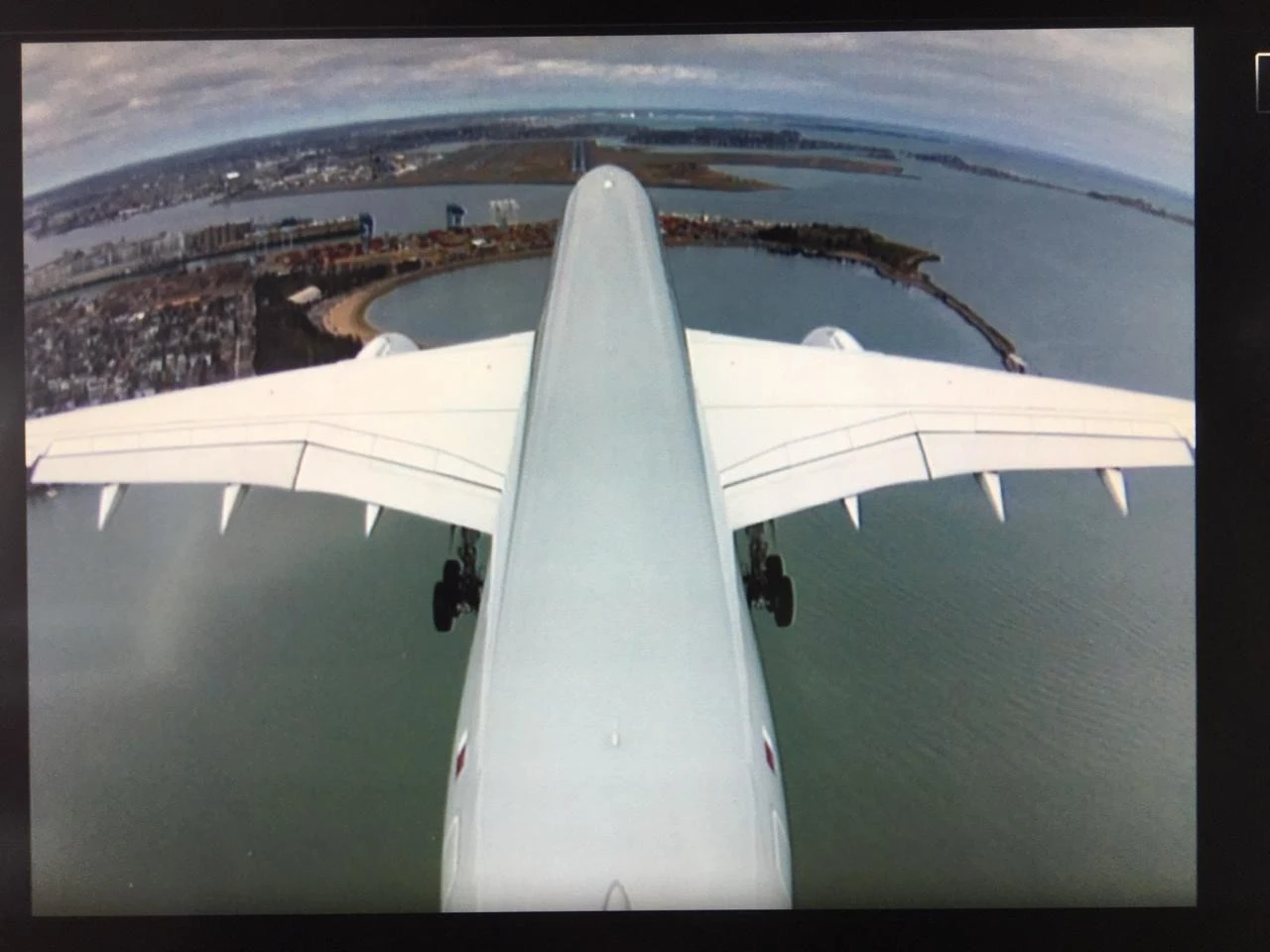
Add your comment
You might be interested in:
















Protective film Removing it with a power screwdriver

How to start a 102-liter engine

When a child plays hide-and-seek at a professional level

Man sets up bedroom camera and discovers the reason for his

Super dads who swoop in to save the day

Precision carpentry

Looks like it's time to buy WinRAR

How to hang wallpaper neatly

Athlete in Bavarian dress flies over a lake on a hydrofoil
